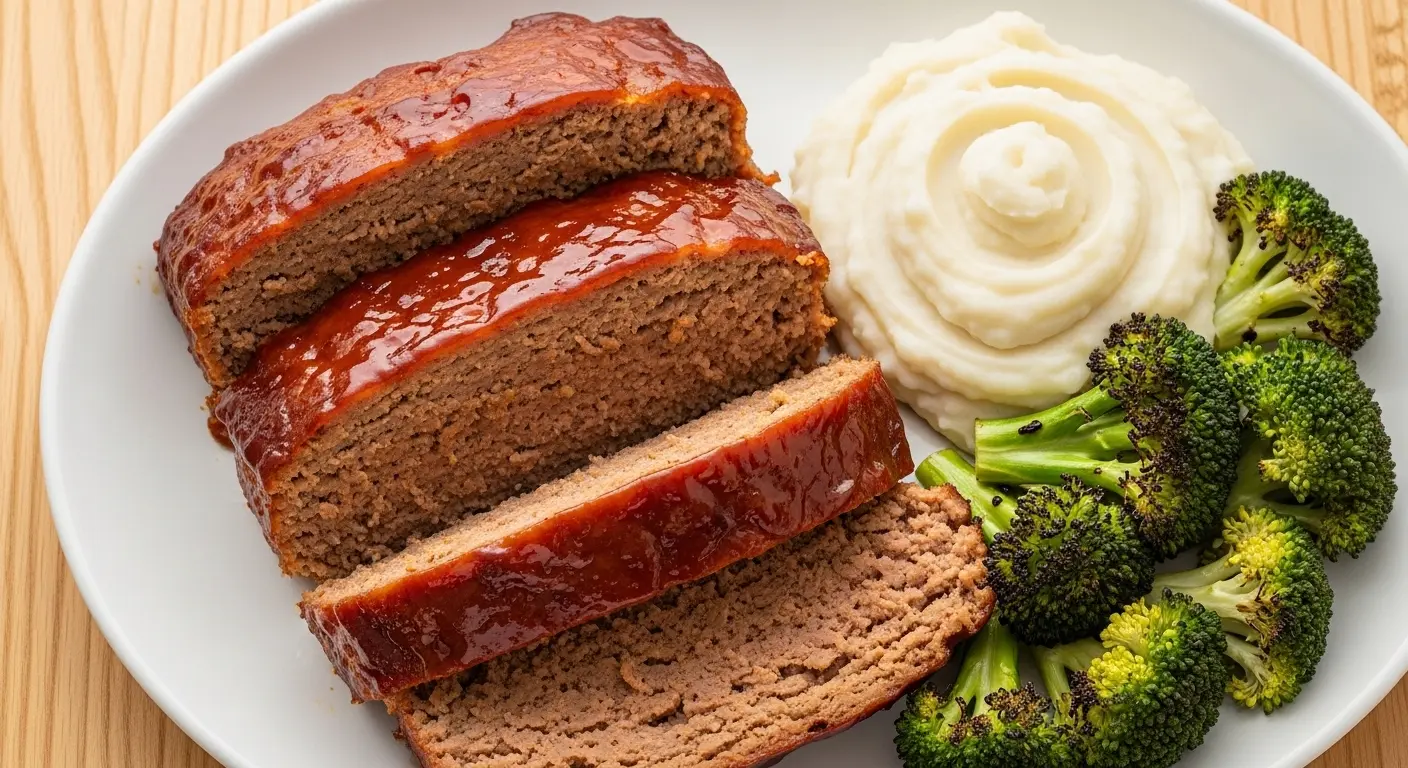
Few dinners hit the comfort food mark quite like a well-made meatloaf recipe. It’s the kind of dish that fills your kitchen with the most incredible aroma, brings everyone to the table without hesitation, and delivers that deep, savory satisfaction that only real home cooking can pull off.
This classic meatloaf is made with ground beef, breadcrumbs, a handful of pantry staples, and a sweet-tangy ketchup glaze that caramelizes beautifully in the oven.
It’s the version most people grew up eating — tender, juicy, packed with flavor, and topped with that iconic sticky glaze.
What makes this recipe stand out is the attention to technique. Sautéing the onions before mixing them in adds a subtle sweetness and depth that raw onions simply can’t match. Using a mix of ketchup and Worcestershire sauce inside the meat mixture (not just on top) layers the flavor from the inside out.
The result is a meatloaf that’s moist all the way through, holds together beautifully when sliced, and tastes even better the next day as a leftover sandwich.
If you’re feeding a family on a weeknight or just craving something deeply satisfying, this recipe is exactly what you need.
For a gluten-free spin on this classic comfort dish, check out this Meatloaf Recipe Without Breadcrumbs that delivers the same great flavor without the flour-based binders.
Why You’ll Love This Meatloaf Recipe
This meatloaf recipe earns its place at the weekly dinner rotation for so many good reasons.
It’s a forgiving recipe that’s hard to mess up, even if you’re not an experienced cook.
The ingredient list is short and budget-friendly, relying mostly on pantry staples you likely already have on hand.
The ketchup glaze on top does double duty — it keeps the exterior moist during baking while caramelizing into a sticky, slightly sweet topping that everyone fights over.
Leftovers are arguably better than the original meal, especially when sliced cold and tucked between two slices of bread with a smear of mustard.
Here’s a quick summary of why this recipe is a keeper:
- Juicy and tender texture thanks to the combination of egg, milk, and breadcrumbs as binders
- Deep, layered flavor from Worcestershire sauce, garlic, and sautéed onion
- Easy prep — just 15 minutes of hands-on work before it goes in the oven
- One-bowl mixing means minimal cleanup
- Feeds a crowd — this recipe serves 6 to 8 people generously
- Meal-prep friendly — assemble the night before and bake fresh the next day
- Leftover-friendly — reheat beautifully or use cold in sandwiches
You might also enjoy: Air Fryer Turkey Meatloaf
Ingredients
The secret to a truly great meatloaf lies in the balance of ingredients. The ground beef provides the base, the breadcrumbs and milk add tenderness, and the egg helps bind everything together so each slice holds its shape. The Worcestershire sauce gives it that unmistakable savory depth that elevates it beyond a simple seasoned beef loaf.
For the Meatloaf:
- 2 lbs (900g) ground beef (80/20 fat ratio recommended for best flavor)
- 1 cup (115g) plain or Italian-seasoned breadcrumbs
- ½ cup (120ml) whole milk
- 2 large eggs, lightly beaten
- 1 medium yellow onion, finely diced
- 3 cloves garlic, minced
- 2 tablespoons Worcestershire sauce
- 2 tablespoons ketchup (for inside the mixture)
- 1 teaspoon Italian seasoning
- 1 teaspoon garlic powder
- 1 teaspoon onion powder
- 1 teaspoon smoked paprika
- 1½ teaspoons salt
- ½ teaspoon black pepper
- 1 tablespoon olive oil (for sautéing the onion)
- 2 tablespoons fresh flat-leaf parsley, finely chopped
For the Ketchup Glaze:
- ½ cup (120ml) ketchup
- 2 tablespoons brown sugar
- 1 tablespoon Worcestershire sauce
- 1 teaspoon yellow mustard
- 1 teaspoon apple cider vinegar
Read Also: Swedish Meatball Recipe
Kitchen Equipment Needed
Having the right tools on hand makes the process smooth and stress-free. You don’t need anything fancy here — just a handful of basics that most home kitchens already have.
- Large mixing bowl
- 9×5-inch loaf pan OR rimmed baking sheet lined with parchment paper
- Small skillet (for sautéing the onion)
- Small mixing bowl (for the glaze)
- Instant-read meat thermometer — critical for ensuring the meatloaf reaches 160°F (71°C)
- Wooden spoon or rubber spatula
- Chef’s knife and cutting board
- Measuring cups and measuring spoons
- Parchment paper or aluminum foil
- Pastry brush or spoon (for applying the glaze)
This pairs wonderfully alongside a classic side dish — try making Creamy Mashed Potatoes to complete the meal.
Recommended Products for This Recipe
These are products I genuinely recommend based on quality and performance for making the best meatloaf possible.
1. USA Pan Loaf Pan (9×5 Inch)
A high-quality loaf pan is one of the most important tools for this recipe. The USA Pan has a commercial-grade, corrugated surface that promotes even heat distribution, so your meatloaf cooks through uniformly without dry edges or a raw center. The nonstick coating makes removal and cleanup effortless.
2. ThermoPro Instant Read Meat Thermometer
Knowing when your meatloaf is perfectly done — not underbaked and not dried out — is the single biggest challenge home cooks face. The ThermoPro reads temperature in 2 to 3 seconds with pinpoint accuracy, taking all the guesswork out of the process. No more cutting into the loaf to check if it’s done.
3. Lea & Perrins Worcestershire Sauce
Worcestershire sauce is one of the most important flavor components in a classic meatloaf, adding a deep, fermented umami backbone that makes the beef taste richer and more complex. Lea & Perrins is the original and most widely recommended brand for a reason — it has the perfect balance of tangy, savory, and sweet.
4. Lodge 10-Inch Cast Iron Skillet
Sautéing the onions is one of the key steps that separates a good meatloaf from a great one. A cast iron skillet holds heat evenly and gives the onions a beautiful golden caramelization that adds tremendous flavor to the finished dish. Lodge’s pre-seasoned cast iron is a workhorse that gets better with every use.
5. Progresso Italian Style Breadcrumbs
Italian-seasoned breadcrumbs add an extra layer of herbal flavor to the meatloaf that plain breadcrumbs simply don’t provide. Progresso’s Italian Style breadcrumbs are finely ground and consistent in texture, which helps them blend seamlessly into the meat mixture without creating clumps or altering the loaf’s structure.
The same rich beefy flavors that make this meatloaf so satisfying also shine in this hearty Beef Stroganoff.
Step-by-Step Instructions
Step 1: Preheat the Oven and Prepare Your Baking Vessel
- Preheat your oven to 350°F (175°C) and allow it to fully come to temperature before the meatloaf goes in.
- If using a loaf pan, line it with parchment paper, leaving some overhang on the sides so you can easily lift the meatloaf out after baking. Lightly grease the parchment with a small amount of cooking spray or oil.
- If baking free-form on a baking sheet, line a rimmed baking sheet with a layer of foil, then place a sheet of parchment paper on top. This makes cleanup significantly easier.
- Set the prepared pan aside while you prep the other ingredients.
Step 2: Sauté the Onion
- Heat 1 tablespoon of olive oil in a small skillet over medium heat until it shimmers but is not smoking.
- Add the finely diced yellow onion and cook, stirring occasionally, for 5 to 7 minutes until the onion is softened and just starting to turn golden at the edges.
- Add the minced garlic to the pan and cook for an additional 60 seconds, stirring constantly so the garlic doesn’t burn. It should smell fragrant but not browned.
- Remove the skillet from the heat and spread the onion and garlic mixture on a small plate or tray.
- Allow the mixture to cool for at least 5 minutes before adding it to the meat — adding hot onions directly to raw beef can begin cooking the surface of the meat prematurely and affect the final texture.
Step 3: Mix the Glaze
- In a small bowl, whisk together ½ cup (120ml) ketchup, 2 tablespoons brown sugar, 1 tablespoon Worcestershire sauce, 1 teaspoon yellow mustard, and 1 teaspoon apple cider vinegar.
- Stir until the brown sugar is fully dissolved and the mixture is smooth and glossy.
- Set the glaze aside — you’ll use half of it partway through baking and the rest toward the end.
Step 4: Prepare the Meatloaf Mixture
- In a large mixing bowl, add the 2 lbs (900g) of ground beef.
- In a separate small bowl, lightly beat the 2 eggs, then add the ½ cup (120ml) of whole milk and stir together.
- Pour the egg and milk mixture over the ground beef.
- Add the 1 cup (115g) breadcrumbs, the cooled sautéed onion and garlic, the 2 tablespoons ketchup, and the 2 tablespoons Worcestershire sauce directly to the bowl.
- Add the seasonings: 1 teaspoon Italian seasoning, 1 teaspoon garlic powder, 1 teaspoon onion powder, 1 teaspoon smoked paprika, 1½ teaspoons salt, ½ teaspoon black pepper, and 2 tablespoons finely chopped fresh parsley.
- Using clean hands, mix everything together until just combined. Work the mixture gently and avoid overworking it — overmixing compresses the meat proteins too tightly, which results in a dense, tough meatloaf rather than a tender one.
- Stop mixing as soon as you no longer see streaks of egg, breadcrumbs, or dry seasoning. The mixture should feel cohesive and slightly sticky but not paste-like.
Step 5: Shape and Place the Meatloaf
- Transfer the meat mixture to your prepared loaf pan or baking sheet.
- If using a loaf pan: Press the mixture firmly and evenly into the pan, smoothing the top with your fingers or the back of a spoon. Press firmly enough to eliminate any air pockets, which can create uneven cooking.
- If baking free-form: Shape the mixture on the baking sheet into a compact oval loaf approximately 9 inches (23cm) long, 5 inches (13cm) wide, and about 3 inches (7.5cm) tall. Pat the sides and top smooth so the loaf holds its shape during baking.
- Spoon or brush half of the glaze mixture evenly over the top and sides of the meatloaf, covering every surface so the glaze can begin to set during the first stage of baking.
Step 6: Bake the Meatloaf
- Place the meatloaf in the center rack of your fully preheated 350°F (175°C) oven.
- Bake uncovered for 40 minutes. Baking uncovered allows the top and sides to develop a proper crust and enables the glaze to begin caramelizing without steaming — this is important for texture and appearance.
- After 40 minutes, remove the meatloaf from the oven and spoon or brush the remaining half of the glaze over the top and sides.
- Return the meatloaf to the oven and continue baking for an additional 15 to 20 minutes, until the glaze is deeply caramelized and sticky, and the internal temperature reads 160°F (71°C) on an instant-read thermometer inserted into the thickest part of the center.
- If the glaze begins to darken too quickly before the internal temperature is reached, loosely tent a piece of foil over the top of the meatloaf for the remaining cooking time.
Step 7: Rest, Slice, and Serve
- Remove the meatloaf from the oven and allow it to rest, uncovered, on a cooling rack for 10 to 15 minutes before slicing. This resting period is crucial — it allows the internal juices to redistribute throughout the loaf rather than running out the moment you cut into it.
- If you used a loaf pan with parchment overhang, use the paper “handles” to gently lift the meatloaf out onto a cutting board.
- Using a sharp chef’s knife, slice the meatloaf into portions approximately ¾ inch (2cm) thick. A sharp knife makes clean slices — a dull or serrated knife will tear the meat.
- Plate and serve immediately with your favorite sides.
This recipe brings the same kind of hearty, satisfying energy as a big bowl of Hamburger Soup — perfect for those nights when you want serious comfort food.
Tips for Success
A handful of small techniques can make a big difference between a good meatloaf and a truly exceptional one. Keep these tips in your back pocket every time you make this recipe.
- Do not skip sautéing the onions. Raw onions in a meatloaf often remain slightly crunchy and sharp-tasting even after baking. Sautéed onions are soft, sweet, and integrate seamlessly into the meat, contributing to moisture and flavor without any harsh bite.
- Do not overmix the meat. This is the number one mistake people make. Overworking the ground beef activates too much protein structure, resulting in a dense, rubbery texture. Mix just until combined and stop.
- Use 80/20 ground beef for best results. The fat content in 80/20 beef keeps the meatloaf moist and flavorful during the long baking time. Leaner beef (90/10 or 93/7) can result in a drier, less flavorful loaf unless you compensate with extra milk or a fat source.
- Always use a meat thermometer. Cooking times can vary based on the exact shape and thickness of your loaf, your specific oven, and the fat content of your beef. The thermometer is the only reliable way to confirm doneness.
- Let it rest before slicing. Cutting into the meatloaf immediately after it comes out of the oven causes all the juices to rush out onto the cutting board. Wait 10 to 15 minutes and you’ll get much juicier slices.
- Chill the shaped loaf before baking (optional but beneficial). If time allows, cover the shaped meatloaf and refrigerate it for 30 minutes to 1 hour before baking. This helps it hold its shape and develop a firmer texture.
- Apply glaze in two stages. Glazing at the beginning AND partway through baking builds up a thicker, more caramelized coating than glazing only at the start or only at the end.
This technique of building deep flavors through simple layering works just as well in a crowd-pleasing Cowboy Casserole.
Serving Suggestions
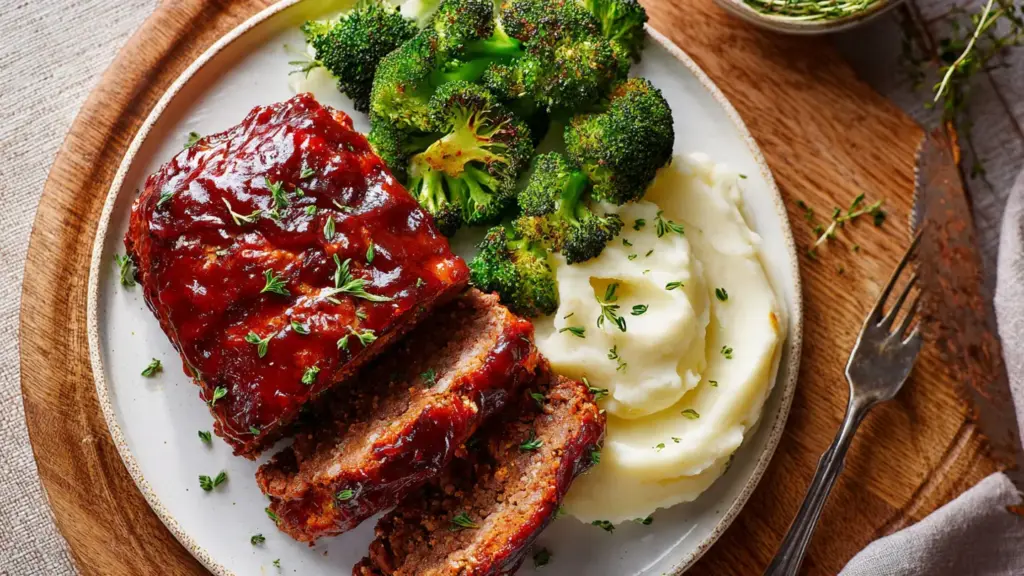
Classic meatloaf is a true centerpiece dinner — it has enough personality to anchor a full plate, and it pairs beautifully with a wide range of side dishes. Traditional pairings lean into the comfort food theme, while a few lighter options can balance out the richness of the beef.
Some of the best side dishes to serve with this meatloaf include:
- Creamy Mashed Potatoes — the classic pairing, full stop. Creamy, buttery mashed potatoes are the perfect canvas for the meatloaf’s savory juices
- Garlic Mashed Potatoes — for a slightly more aromatic variation on the mashed potato theme
- Green Bean Casserole — a natural companion dish that brings creamy, tender beans to the table
- Roasted Broccoli — a simple, slightly crispy vegetable side that cuts through the richness of the beef
- Corn Casserole — sweet, creamy corn is a wonderful flavor contrast against the savory meatloaf glaze
- Roasted Potatoes — if you prefer crispy over creamy, golden roasted potatoes deliver that satisfying crunch
- Creamed Spinach — rich and velvety, this pairs beautifully with the ketchup glaze’s tangy notes
- Dinner Rolls — soft, pillowy rolls for mopping up the plate
Read Also: Collard Greens Recipe
Variations to Try
Once you’ve mastered the classic version, this recipe serves as a fantastic base for all kinds of delicious variations. Each swap changes the character of the dish while keeping the comforting spirit intact.
- Turkey Meatloaf: Substitute ground turkey for the ground beef for a leaner option. Since turkey is drier than beef, add an extra tablespoon of olive oil or a tablespoon of cream cheese to the mixture to compensate for the reduced fat content.
- BBQ Meatloaf: Replace the ketchup glaze entirely with your favorite barbecue sauce. Brush it on in the same two-stage method for deep, smoky caramelization. Brown sugar can be omitted since most BBQ sauces are already sweetened.
- Stuffed Meatloaf: Press half the meat mixture into the loaf pan, lay a line of shredded cheese (cheddar, mozzarella, or pepper jack work well) down the center, then cover with the remaining meat mixture. Seal the edges well so the cheese doesn’t leak out during baking.
- Italian Meatloaf: Add ½ cup (50g) finely grated Parmesan cheese to the meat mixture, substitute marinara sauce for the ketchup glaze, and top with a layer of shredded mozzarella for the last 10 minutes of baking.
- Bacon-Wrapped Meatloaf: Layer strips of bacon over the top of the shaped meatloaf before baking. The bacon bastes the loaf as it cooks, adding a smoky, savory exterior layer that takes this already-great dish to another level entirely.
- Mini Meatloaves: Divide the mixture into a standard 12-cup muffin tin and bake individual portions at 350°F (175°C) for 20 to 25 minutes. Great for meal prep and much faster than a full-size loaf.
- Meatloaf Without Breadcrumbs: Use rolled oats, crushed crackers, or almond flour in place of breadcrumbs. See our full guide on this variation: Meatloaf Without Breadcrumbs
Storage and Reheating
Meatloaf is one of the best make-ahead and leftover-friendly dishes in the home cook’s repertoire. Stored properly, it keeps beautifully and reheats without sacrificing much of its original moisture or flavor.
- Allow the meatloaf to cool completely before storing — at least 30 minutes at room temperature before transferring to the fridge
- Refrigerator: Store sliced or whole meatloaf in an airtight container for up to 3 to 4 days
- Freezer (cooked): Wrap individual slices tightly in plastic wrap, then place in a zip-top freezer bag. Freeze for up to 3 months. Thaw overnight in the refrigerator before reheating
- Freezer (uncooked): Shape the loaf, wrap tightly in plastic wrap and a layer of foil, and freeze for up to 3 months. Thaw completely in the refrigerator before baking
- Reheat in the oven: Place slices in a baking dish, add a splash of beef broth or water, cover tightly with foil, and warm at 325°F (165°C) for 15 to 20 minutes
- Reheat in the microwave: Place a slice on a microwave-safe plate, cover loosely, and heat on medium power in 30-second increments until warmed through — about 1.5 to 2 minutes total
- Leftover idea: Cold meatloaf sliced thin and layered into a sandwich with mustard and pickles on toasted white bread is a next-day meal that many people love just as much as the original
For more ideas on how to use ground beef in comforting, crowd-pleasing meals, try this easy Easy Meatballs Recipe.
Nutritional Facts
The following nutritional values are approximate and based on 1 serving (1/8th of the full recipe). Actual values will vary depending on the fat content of the beef used, the brand of breadcrumbs, and any modifications made to the recipe.
| Nutrient | Per Serving |
|---|---|
| Calories | ~320 kcal |
| Total Fat | 15g |
| Saturated Fat | 5.5g |
| Cholesterol | 110mg |
| Sodium | 680mg |
| Total Carbohydrates | 18g |
| Dietary Fiber | 0.8g |
| Sugars | 7g |
| Protein | 28g |
| Iron | 3.2mg |
| Potassium | 480mg |
This recipe uses approximately 2 lbs (900g) of 80/20 ground beef and makes 6 to 8 servings. Using leaner ground beef will reduce fat and calorie counts while slightly affecting moisture. Using Italian-seasoned breadcrumbs may increase sodium slightly.
This meatloaf shares similar hearty, protein-rich comfort food energy with this satisfying Italian Meatballs Recipe.
Health Benefits of Key Ingredients
While meatloaf is classic comfort food rather than a “health food,” several of its core ingredients do provide meaningful nutritional value that makes it a more balanced meal than it might appear.
Ground beef, the main ingredient, is one of the most bioavailable sources of complete protein available, containing all essential amino acids needed for muscle maintenance and repair.
It is also a top dietary source of heme iron — the form of iron most efficiently absorbed by the human body — along with zinc, B12, and creatine, all of which support energy metabolism, immune function, and cognitive health.
Here’s a breakdown of the nutritional highlights of each key ingredient:
- Ground Beef (80/20): Rich in protein, heme iron, zinc, B12, and conjugated linoleic acid (CLA), a fatty acid associated with various health benefits
- Eggs: One of the most nutrient-dense foods available, providing choline, selenium, vitamin D, and high-quality protein. The egg in this recipe also acts as a structural binder
- Garlic: Contains allicin, a bioactive compound with demonstrated antimicrobial and cardiovascular benefits; also a source of vitamin C, vitamin B6, and manganese
- Yellow Onion: Rich in quercetin and other flavonoids with anti-inflammatory properties; also provides vitamin C and prebiotic fiber that supports gut health
- Worcestershire Sauce: A fermented condiment that contributes glutamate compounds (natural umami) along with small amounts of potassium and B vitamins
- Flat-Leaf Parsley: An underrated source of vitamin K, vitamin C, and folate; adds both color and micronutrients to the finished dish
- Smoked Paprika: Contains capsaicin compounds and vitamin A precursors (beta-carotene) that support immune function and eye health
For a nutritious and satisfying vegetable side to balance this meal, try the Broccoli Salad Recipe.
Frequently Asked Questions
1. What is the best meat to use for meatloaf?
The most widely recommended option is 80/20 ground beef, meaning 80% lean meat and 20% fat. This fat ratio provides the moisture and richness that keeps meatloaf juicy throughout its long baking time.
Leaner beef (90/10 or 93/7) can be used, but you’ll need to compensate for the reduced fat by adding a little extra milk or a tablespoon of olive oil to the mixture. Some traditional recipes use a combination of ground beef, ground pork, and ground veal for an even more tender and complex result.
2. How do I know when my meatloaf is done?
The most reliable method is an instant-read meat thermometer. Insert it into the thickest part of the center of the loaf — when it reads 160°F (71°C), the meatloaf is fully cooked and safe to eat.
Do not rely on color alone as an indicator of doneness, as ground beef can appear cooked on the outside while remaining undercooked at the center. The thermometer removes all guesswork.
3. Why is my meatloaf dry or crumbly?
The two most common causes are using beef that is too lean (90/10 or higher) and overmixing the meat mixture.
Overworking the ground beef tightens the protein structure, squeezing out moisture and making the finished loaf dense and dry. Use 80/20 beef, mix only until just combined, and ensure you’re adding enough milk and egg to the mixture as written.
4. Can I make meatloaf ahead of time?
Yes, and it actually improves with a rest. You can assemble the raw meatloaf, cover it tightly, and refrigerate it for up to 24 hours before baking.
You can also bake it fully, cool it, and store it in the refrigerator for up to 4 days. Many people find that the flavors develop and deepen overnight, making day-two meatloaf taste even better than it did fresh from the oven.
5. Can I make this meatloaf without a loaf pan?
Absolutely. Shaping the meatloaf free-form on a parchment-lined rimmed baking sheet is actually preferred by many experienced cooks.
Baking free-form allows heat to circulate around all sides of the loaf, which promotes a more evenly browned crust and allows excess fat and moisture to drain away rather than pooling around the loaf. The result is a firmer, better-textured exterior with a juicy interior.
You might also enjoy: Classic Sloppy Joe
Final Thoughts
A great meatloaf recipe is one of those timeless kitchen skills worth having in your back pocket for life.
It’s humble, unfussy, and deeply satisfying — the kind of meal that never goes out of style no matter how food trends come and go.
This version gives you everything that makes a classic meatloaf so universally loved: a tender, juicy interior, a deeply caramelized glaze, and that warming, savory flavor that feels like a hug on a plate.
Once you try it, you’ll understand why this dish has held its place at American dinner tables for generations.
Give this meatloaf recipe a try this week and see how quickly it earns a permanent spot in your dinner rotation.
If you make it, drop a comment below to let me know how it turned out — or share a photo and tag us! We’d love to hear your thoughts and any tweaks you made to call it your own.
Recommended:
- Meatloaf Without Breadcrumbs
- Air Fryer Turkey Meatloaf
- Garlic Mashed Potatoes
- Green Bean Casserole
- Italian Meatballs
- Cottage Pie
- Classic Stuffed Bell Peppers
- Beef Bourguignon
- Potato Salad
- Classic Shepherd’s Pie