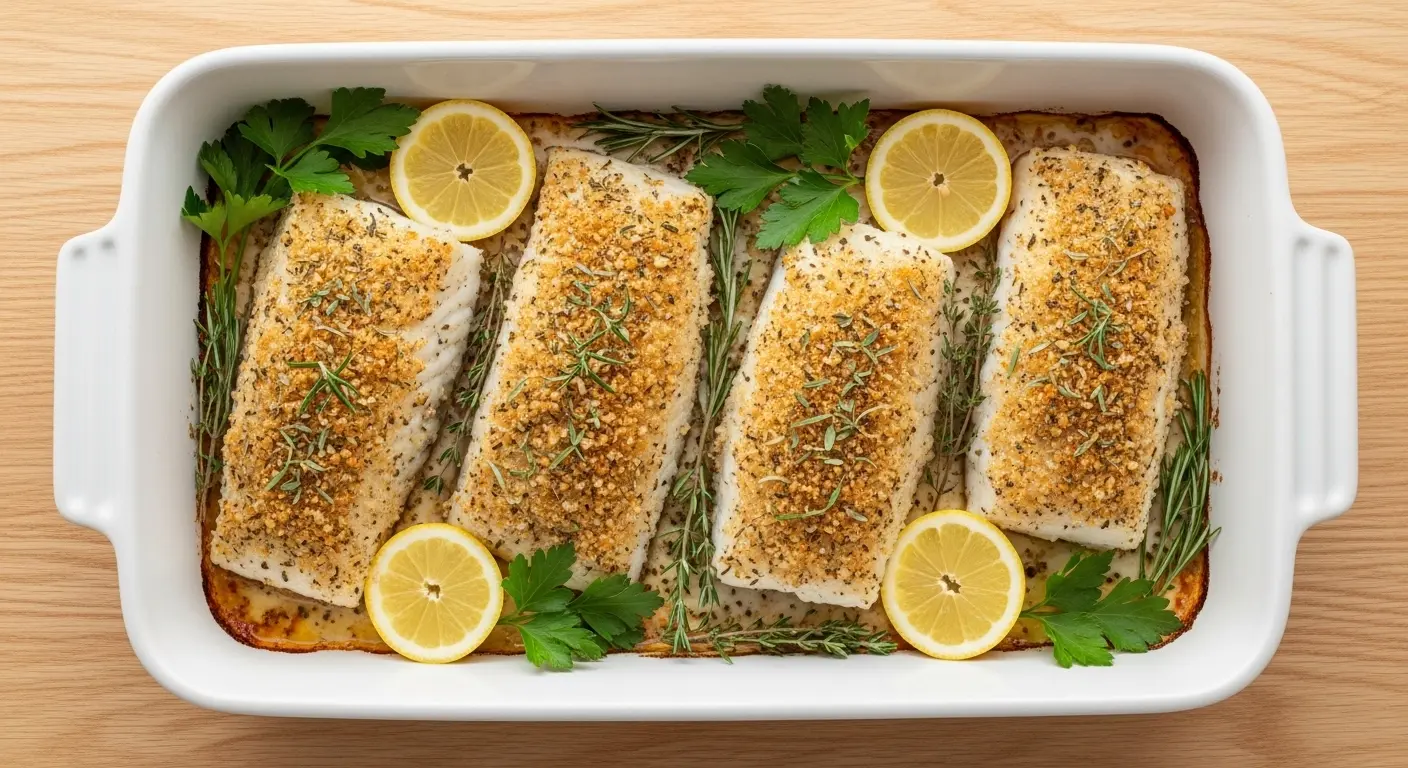
This baked cod recipe is one of those weeknight heroes you’ll keep coming back to, time and time again.
Cod is a mild, lean white fish that absorbs seasoning beautifully, and when baked properly, it comes out flaky and tender with just the right amount of golden color on top.
What makes this version so reliable is the combination of simple pantry ingredients and a high-heat bake that creates a slightly crisp, buttery crust without drying out the fish.
It’s the kind of meal that looks and tastes impressive but genuinely takes very little effort to pull off.
Whether you’re a seasoned home cook or someone just starting to explore seafood, this recipe is forgiving, fast, and absolutely delicious.
You might also enjoy: Baked Salmon Recipe for another easy, oven-baked seafood dinner the whole family will love.
Why You’ll Love This Baked Cod Recipe
Cod is one of the most approachable fish to cook because it has a mild flavor that doesn’t overwhelm the palate.
That makes it perfect for anyone who finds strongly flavored fish like mackerel or sardines a bit too intense.
The bake time is short, just around 15 to 20 minutes at high heat, which means dinner is on the table fast.
It’s also an incredibly versatile dish that works with a wide range of side dishes, from roasted vegetables to rice to a simple salad.
This recipe uses a garlicky, lemon-herb butter topping that keeps the fish moist and adds a rich, savory flavor in every bite.
The butter melts into the fish as it bakes, basting it naturally and creating that golden, glossy finish you see on restaurant-quality cod.
Here’s why this recipe stands out:
- Ready in about 30 minutes from start to finish
- Uses simple, everyday ingredients you likely already have
- Works well with fresh or properly thawed frozen cod fillets
- Easily customizable with different herbs, spices, or toppings
- Naturally low in carbohydrates and high in lean protein
- Minimal cleanup required, especially if you use a foil-lined baking dish
- Pairs beautifully with a huge variety of side dishes
- Kid-friendly thanks to the mild flavor and non-fishy taste
Read Also: Salmon Skillet Recipe
Ingredients
For the best results, use the freshest cod fillets you can find. Fresh cod should be bright white, moist, and smell clean like the ocean. If using frozen cod, thaw it completely in the refrigerator overnight and pat it very dry before baking. Excess moisture is the number one reason baked fish turns out soggy instead of flaky.
- 4 cod fillets (about 6 oz / 170g each), about 1 inch / 2.5 cm thick
- 3 tablespoons unsalted butter, melted
- 3 cloves garlic, minced
- 2 tablespoons freshly squeezed lemon juice (about 1 lemon)
- 1 teaspoon lemon zest
- 1 teaspoon dried oregano
- 1 teaspoon paprika (sweet or smoked)
- 1/2 teaspoon onion powder
- 1/2 teaspoon salt, or to taste
- 1/4 teaspoon black pepper
- 2 tablespoons fresh parsley, finely chopped (for garnish)
- Lemon slices, for serving
- Optional: 2 tablespoons capers, for a briny punch of flavor
- Optional: 1/4 teaspoon red pepper flakes, for a little heat
This recipe is inspired by the classic oven-baked cod you’d find in Mediterranean and American home cooking traditions. The lemon-butter-garlic combination is the most widely loved seasoning base for baked cod, and it’s what most home cooks and food writers tend to reach for.
Homemade Tartar Sauce Recipe makes a fantastic dipping sauce to serve alongside this dish.
Kitchen Equipment Needed
You don’t need any fancy tools to make this recipe. A basic baking dish and a few kitchen staples are all it takes. One thing that does make a difference is using a glass or ceramic baking dish rather than a thin metal pan, since glass and ceramic hold heat more evenly and help the cod cook gently without overcooking the edges.
- Glass or ceramic baking dish (9×13 inch / 23×33 cm)
- Aluminum foil (for lining the dish and easy cleanup)
- Small mixing bowl (for the butter sauce)
- Pastry brush or spoon (for coating the fish)
- Sharp knife and cutting board
- Measuring spoons
- Instant-read meat thermometer
- Zester or microplane (for lemon zest)
- Paper towels (for drying the fish)
Read Also: Air Fryer Salmon Recipe
Recommended Products for This Recipe
These are products recommended based on quality and performance that can genuinely elevate this baked cod recipe.
1. Pyrex 9×13 Glass Baking Dish
A quality glass baking dish distributes heat evenly, which is critical for fish that can go from perfectly flaky to overcooked in just a minute or two. The Pyrex baking dish is durable, easy to clean, and see-through so you can monitor browning without opening the oven. It’s a kitchen essential that will serve you for years.
2. Wild-Caught Atlantic Cod Fillets
The quality of your fish matters enormously in a simple recipe like this. Wild-caught Atlantic cod has a cleaner flavor, firmer texture, and better nutritional profile than farmed alternatives. Sourcing high-quality cod means the seasoning enhances rather than masks the natural taste of the fish.
3. Smoked Paprika
Using smoked paprika instead of regular sweet paprika adds a subtle smokiness that takes the flavor of baked cod to another level. A good quality smoked paprika has real depth of flavor that elevates simple fish dishes without overpowering them. It’s a small upgrade with a big impact.
4. Microplane Zester/Grater
Lemon zest is a key flavor component in this recipe, and a Microplane makes zesting effortless while keeping the bitter white pith out of your dish. This tool is also great for grating garlic, Parmesan, and ginger. It’s one of those kitchen tools that seems minor but gets used constantly.
5. Instant-Read Digital Thermometer
Fish can overcook easily, and an instant-read thermometer takes the guesswork out of knowing exactly when your cod is done. You’re aiming for an internal temperature of 145°F (63°C). This is the single most reliable way to get perfectly cooked fish every time without cutting into it and losing moisture.
For a luxurious seafood starter to serve before this main course, try making Lobster Bisque to round out your dinner.
Step-by-Step Instructions
1. Preheat the Oven and Prepare the Baking Dish
- Preheat your oven to 400°F (200°C) and allow it to fully heat up before placing the fish inside. A properly preheated oven is essential for getting even cooking and a slightly golden top.
- Line your 9×13 inch (23×33 cm) baking dish with aluminum foil, pressing it into the corners and letting it overhang the edges slightly. This makes cleanup much easier and prevents the fish from sticking.
- Lightly spray or brush the foil with a small amount of oil or cooking spray to further prevent sticking.
- Set the prepared dish aside while you prepare the fish and sauce.
2. Prepare the Cod Fillets
- Remove the cod fillets from the refrigerator about 10 minutes before baking. Bringing them slightly closer to room temperature helps them cook more evenly.
- Lay the fillets on a double layer of paper towels and pat them thoroughly dry on both sides. This step is critical. Moisture on the surface of the fish will steam rather than roast, preventing any browning or caramelization.
- Check the fillets for any remaining pin bones by running your fingers along the flesh. If you feel any, use kitchen tweezers or needle-nose pliers to pull them out.
- Place the dried fillets in the prepared baking dish in a single layer, leaving at least half an inch (1.2 cm) of space between each piece so they bake evenly rather than steaming each other.
3. Make the Lemon Garlic Butter Sauce
- Add 3 tablespoons of melted unsalted butter to a small mixing bowl.
- Add 3 cloves of minced garlic to the butter and stir to combine. The garlic will gently cook as the butter sauce sits on the hot fish in the oven.
- Squeeze in 2 tablespoons of fresh lemon juice and add 1 teaspoon of lemon zest. Fresh lemon juice adds brightness and acidity that balances the richness of the butter. The zest adds an even more concentrated lemon flavor without extra liquid.
- Stir in 1 teaspoon of dried oregano, 1 teaspoon of paprika (sweet or smoked), 1/2 teaspoon of onion powder, 1/2 teaspoon of salt, and 1/4 teaspoon of black pepper.
- If you’re using optional capers, stir in 2 tablespoons now. If you’d like a little heat, add 1/4 teaspoon of red pepper flakes as well.
- Mix everything together until fully combined into a cohesive, fragrant sauce.
4. Season and Coat the Cod
- Using a pastry brush or the back of a spoon, generously coat the top and sides of each cod fillet with the lemon garlic butter sauce.
- Make sure each fillet is well coated. The butter sauce is what keeps the fish moist during baking and provides all the flavor.
- Pour any remaining sauce evenly over the tops of the fillets. Don’t leave any of that flavorful sauce behind in the bowl.
- If desired, place a thin slice of lemon on top of each fillet before baking. This is purely optional but adds visual appeal and a little extra lemon flavor.
5. Bake the Cod
- Place the baking dish in the center rack of the preheated 400°F (200°C) oven.
- Bake for 15 to 20 minutes, depending on the thickness of your fillets. As a general rule, bake fish for 10 minutes per inch (2.5 cm) of thickness. A 1-inch fillet will take about 15 to 18 minutes; a thicker piece may need 20 to 22 minutes.
- Do not cover the dish with foil while baking. Covering the fish will steam it rather than roast it, and you’ll lose that lightly golden, caramelized top.
- The cod is done when it flakes easily when pressed with a fork at the thickest part, and when it turns from translucent to opaque white throughout. Alternatively, use an instant-read thermometer to check the internal temperature, which should read 145°F (63°C) at the thickest part.
- Avoid overbaking. Overcooked cod will be dry and tough instead of tender and moist. When in doubt, pull it out a minute early and check.
6. Rest and Garnish
- Remove the baking dish from the oven and let the cod rest for 2 to 3 minutes before serving. This short rest allows the juices to redistribute throughout the fish.
- While the fish rests, finely chop 2 tablespoons of fresh parsley.
- Sprinkle the fresh parsley generously over the tops of the fillets for a pop of color and fresh herby flavor.
- Serve immediately with additional lemon slices on the side for squeezing over the fish at the table.
This approach of baking with lemon-garlic butter is beautifully adaptable, just like the technique used in Baked Chicken with Alfredo Sauce for an equally effortless oven dinner.
Tips for Success
Getting baked cod right consistently comes down to a few key details. Once you understand why each step matters, you’ll nail it every time without any second-guessing.
- Pat the fish completely dry. This is the single most important step. Excess surface moisture creates steam in the oven and results in soggy, pale fish rather than a golden, flavorful crust.
- Don’t overcrowd the baking dish. Leave space between each fillet so hot air circulates around each piece. Crowded fillets steam each other and cook unevenly.
- Use center-cut fillets when possible. The thicker, more uniform center cuts cook evenly and are less likely to dry out at the edges. Thin tail pieces can overcook while the thick middle is still underdone.
- Check for doneness with a thermometer. The target internal temperature is 145°F (63°C). Don’t rely solely on visual cues, especially with thick fillets.
- Use fresh lemon juice, not bottled. Bottled lemon juice has a flat, slightly chemical flavor that can make the whole dish taste a bit off. Freshly squeezed lemon juice is brighter and more aromatic.
- Don’t skip the rest period. Even two minutes of resting allows the fish to firm up slightly and the juices to settle, making it easier to plate without it falling apart.
- Room temperature fish bakes more evenly. Taking the fillets out of the fridge 10 minutes before baking reduces the temperature shock and leads to more even cooking throughout.
You might also enjoy: Roasted Broccoli Recipe as a quick, easy side dish that pairs perfectly with baked cod.
Serving Suggestions
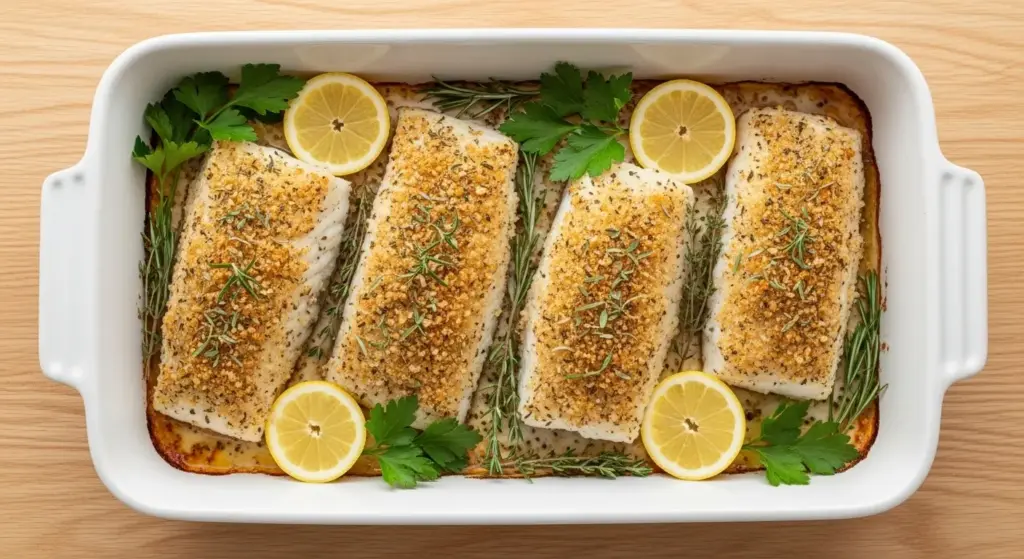
Baked cod has a mild, clean flavor that pairs well with a wide variety of side dishes, making it one of the most flexible weeknight dinners in your rotation. The lemon-butter sauce that pools at the bottom of the baking dish is incredibly good spooned over rice or potatoes, so don’t let it go to waste.
Here are some great ways to serve baked cod:
- Serve over Garlic Mashed Potatoes and spoon the pan juices over everything
- Pair with Roasted Potatoes for a hearty, satisfying plate
- Serve alongside Creamy Mashed Potatoes for a comforting, classic fish dinner
- Add Easy Tartar Sauce on the side for dipping
- Serve over a bed of fluffy white rice or herbed couscous to soak up the lemon butter sauce
- Pair with a simple steamed green vegetable like asparagus, green beans, or broccolini
- Add a side of Broccoli Salad for a lighter, more colorful plate
- Place flaked cod over a bed of mixed greens with vinaigrette for a light dinner salad
- Serve with crusty garlic bread to mop up the pan juices
Read Also: Seafood Chowder Recipe
Variations to Try
Once you’ve mastered the classic version, it’s fun to experiment with different flavor profiles using the same basic technique. The baking method stays the same; only the seasoning and toppings change.
- Parmesan Crusted Cod: Mix 1/4 cup (25g) of finely grated Parmesan with 2 tablespoons of panko breadcrumbs and press the mixture onto the buttered fillets before baking for a crunchy, cheesy crust.
- Mediterranean Cod: Top the fillets with diced tomatoes, kalamata olives, capers, and a drizzle of olive oil before baking for a Greek-inspired version.
- Cajun Baked Cod: Replace the oregano and paprika with a generous coating of Cajun seasoning blend for a spicy, bold Southern flavor.
- Herb Butter Cod: Use a compound herb butter made with softened butter, chopped dill, chives, and tarragon in place of the melted butter sauce for a more aromatic result.
- Tomato and Basil Cod: Spoon a thin layer of crushed tomatoes and fresh basil over the fillets along with the butter for a light, Italian-style bake.
- Asian-Inspired Cod: Replace the lemon butter with a mixture of soy sauce, sesame oil, grated ginger, and honey for a savory-sweet glaze.
- Breadcrumb-Topped Cod: Mix panko breadcrumbs with melted butter, garlic, and parsley, then press onto the top of each fillet for a simple, crunchy crust.
For another great fish preparation, check out this Fish Chowder Recipe that uses cod as the main ingredient.
Storage and Reheating
Baked cod is best enjoyed fresh from the oven, but leftovers can absolutely be stored and repurposed. The key to reheating fish without drying it out is to use low heat and add a little moisture.
- Refrigerating: Store cooled leftover cod in an airtight container in the refrigerator for up to 2 days. Fish doesn’t hold quite as long as meat, so try to use it within 48 hours for the best flavor and texture.
- Freezing: Baked cod can be frozen, though the texture after thawing won’t be quite as flaky as freshly made. Wrap individual portions tightly in plastic wrap and then in foil, and freeze for up to 1 month.
- Reheating in the oven: Place leftover cod in a baking dish, add a small splash of water or broth to the bottom of the dish, cover tightly with foil, and heat at 275°F (135°C) for 10 to 15 minutes until just warmed through. The low temperature and added moisture help prevent the fish from drying out.
- Reheating in the microwave: Place the cod on a microwave-safe plate, add a tiny splash of water, cover loosely with a damp paper towel, and heat in 30-second intervals on medium power until warmed. Avoid high power, which quickly dries out fish.
- Using leftovers creatively: Flake cold leftover cod into fish tacos, mix it into a warm grain bowl, fold it into scrambled eggs, or stir it into a light pasta dish.
This recipe pairs wonderfully with the same accompaniments as the ones featured in this Salmon Chowder Recipe.
Nutritional Facts
The following nutritional information is an estimate per serving (based on 4 servings), using the ingredients as listed. Values may vary slightly depending on the size of the fillets and the exact amount of sauce absorbed.
| Nutrient | Amount Per Serving |
|---|---|
| Calories | ~230 kcal |
| Protein | ~34g |
| Total Fat | ~10g |
| Saturated Fat | ~5g |
| Carbohydrates | ~2g |
| Fiber | ~0.3g |
| Sugar | ~0.4g |
| Sodium | ~390mg |
| Cholesterol | ~95mg |
| Omega-3 Fatty Acids | ~0.5g |
This baked cod recipe is naturally low in carbohydrates, making it a great fit for low-carb and keto-style eating plans.
It’s also a high-protein, moderate-fat dish that keeps you feeling satisfied without being overly heavy.
Another excellent light, protein-packed seafood option is this Crab Cake Recipe.
Health Benefits of Key Ingredients
Cod is not just delicious but genuinely one of the most nutritious fish you can include in your regular diet. Combined with the other ingredients in this recipe, this is a dish that tastes indulgent while actively supporting good health.
Here’s a look at the health benefits of the key ingredients in this baked cod recipe:
- Cod: An excellent source of lean protein, cod supports muscle maintenance and repair. It’s low in fat and calories, rich in B vitamins (especially B12, which supports neurological health), and provides phosphorus and selenium, two minerals important for bone health and immune function.
- Garlic: Contains allicin, a compound with well-documented antibacterial and anti-inflammatory properties. Regular garlic consumption has been linked to improved cardiovascular health, including lower blood pressure and LDL cholesterol levels.
- Lemon juice and zest: A rich source of vitamin C, which supports immune health, collagen production, and iron absorption. The acidity also helps balance the richness of the butter and enhances the overall flavor of the dish.
- Olive oil (if used): A staple of the heart-healthy Mediterranean diet, olive oil is rich in monounsaturated fats and polyphenols that have anti-inflammatory properties.
- Paprika: Contains capsaicin and antioxidants, particularly vitamin A and beta-carotene, which support eye health and immune function.
- Parsley: More than just a garnish, parsley is rich in vitamins C and K, folate, and flavonoids. It has diuretic properties and is known to support kidney health.
- Butter (in moderation): Provides fat-soluble vitamins A, D, E, and K2, as well as butyrate, a short-chain fatty acid that supports gut health.
This dish is a wonderful example of how a meal can be both nourishing and satisfying, which is exactly why seafood features so prominently in healthy eating patterns like the Mediterranean diet. For another comforting and nutritious seafood dish, try this Seafood Stew Recipe.
Frequently Asked Questions
1. Can I use frozen cod for this recipe?
Yes, absolutely. Frozen cod works well in this recipe as long as it is thawed properly first.
The best method is to transfer the frozen fillets to the refrigerator the evening before and let them thaw slowly overnight. Never thaw fish at room temperature or in hot water, as this can compromise texture and food safety.
Once thawed, pat the fillets completely dry with paper towels before proceeding with the recipe. Any excess moisture left on the fish will prevent browning and can make the result soggy.
2. How do I know when the cod is fully cooked?
The most reliable way is to use an instant-read thermometer. The internal temperature should reach 145°F (63°C) at the thickest part of the fillet.
Visually, fully cooked cod will have changed from translucent to completely opaque white, and it will flake apart easily when pressed with a fork at the thickest point. If the flesh still holds together as a single piece without breaking, it likely needs another two to three minutes in the oven.
3. Can I use this recipe with other types of white fish?
Yes, this lemon garlic butter preparation works beautifully with most white fish varieties.
Haddock, halibut, pollock, tilapia, and sea bass all respond well to this seasoning and baking method. Keep in mind that thinner fillets like tilapia will cook faster than thick cod fillets, so check for doneness a few minutes earlier to avoid overcooking.
4. Can I make this recipe dairy-free?
Yes. Simply replace the unsalted butter with the same amount of good-quality olive oil or a plant-based butter alternative.
The lemon-garlic flavor profile works just as well with olive oil, and many people actually prefer the slightly lighter result. The fish will be just as moist since the oil still coats and protects the flesh during baking.
5. Why is my baked cod watery or soggy?
The most common reason is that the fish wasn’t dried thoroughly before baking.
Water on the surface of the fish creates steam in the oven, which prevents browning and results in a watery texture. Make sure to pat the fillets completely dry with paper towels before applying the butter sauce. Another possible cause is overcrowding the baking dish, which causes the fish to steam rather than roast. Use a large enough dish so each fillet has space around it.
Read Also: Mexican Fish Soup Recipe
Final Thoughts
This baked cod recipe is the kind of dish that earns a permanent spot in your weekly rotation.
It’s fast, healthy, budget-friendly, and genuinely delicious, all at the same time.
The lemon-garlic butter sauce is the perfect match for cod’s naturally mild flavor, enhancing it without masking what makes the fish so appealing in the first place.
Once you try it, you’ll wonder why you ever reached for more complicated weeknight dinners.
Give this recipe a go, and don’t hesitate to leave a comment below with your results, your favorite variations, or any questions you have along the way. Sharing your experience helps others discover the joy of cooking good food at home.
Recommended:
- Thai Fish Soup Recipe
- Caribbean Fish Soup Recipe
- Mediterranean Fish Soup Recipe
- Chinese Fish Soup Recipe
- Fish Chowder Recipe
- Shrimp and Grits Recipe
- Collard Greens Recipe
- Fruit Salad Recipe
- Classic Deviled Eggs Recipe
- Corn Chowder Recipe