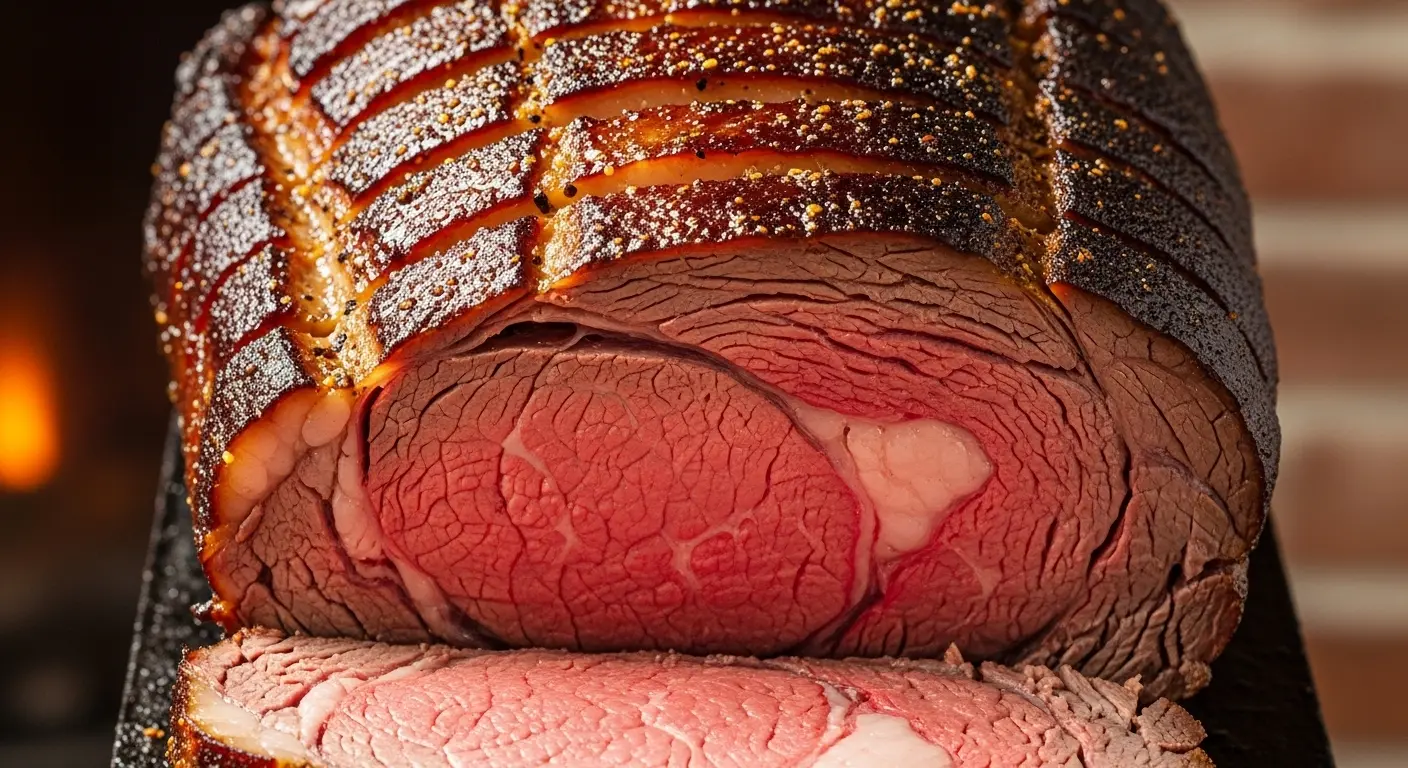
Nothing compares to the sight of a perfectly roasted prime rib taking center stage at your dinner table. This prime rib recipe delivers a show-stopping roast with a beautifully caramelized herb crust on the outside and tender, juicy, pink perfection on the inside.
I’m going to walk you through everything you need to know to nail this impressive cut of meat. From selecting the right roast at the butcher counter to achieving that restaurant-quality crust, this guide takes the intimidation out of cooking prime rib at home.
The best part? Once you get the technique down, you’ll realize that prime rib is actually one of the most hands-off fancy dinners you can make.
Most of the work happens in the oven while you prep sides and set the table. My method uses a reverse-sear technique that guarantees even cooking from edge to edge, eliminating any gray bands of overcooked meat.
Why You’ll Love This Prime Rib Recipe
This recipe transforms an expensive cut of meat into an unforgettable meal that’s worth every penny. The simple herb rub creates an incredible crust that locks in all those natural juices.
You’ll appreciate how forgiving the reverse-sear method is compared to traditional high-heat roasting. It gives you much more control over the final temperature, so you’re not gambling with a pricey piece of beef.
- Restaurant-quality results at home – Achieve that perfect medium-rare doneness with a professional-looking crust
- Surprisingly simple technique – The reverse-sear method is more foolproof than traditional roasting
- Feeds a crowd – One roast easily serves 6-8 people with generous portions
- Make-ahead friendly – Season the roast up to 24 hours in advance for deeper flavor
- Minimal active cooking time – Most of the process is hands-off oven time
This pairs beautifully with my scalloped potatoes for a complete special occasion feast.
Ingredients
This recipe keeps things simple with a focus on quality ingredients that enhance rather than mask the beef’s natural flavor. The herb crust adds aromatic depth without overpowering the meat.
- 1 (6-7 pound) bone-in prime rib roast (also called standing rib roast)
- 3 tablespoons olive oil
- 6 cloves garlic, minced
- 2 tablespoons fresh rosemary, finely chopped
- 2 tablespoons fresh thyme, finely chopped
- 1 tablespoon kosher salt
- 2 teaspoons black pepper, freshly ground
- 1 teaspoon smoked paprika
- 2 cups beef broth (for au jus)
Kitchen Equipment Needed
Having the right tools makes the difference between guessing and knowing exactly when your roast is perfectly done. A reliable meat thermometer is absolutely essential for this recipe.
- Roasting pan with rack – Elevates the roast for even air circulation
- Instant-read meat thermometer – Non-negotiable for perfect doneness
- Small mixing bowl – For combining the herb rub
- Sharp carving knife – Makes slicing much cleaner and easier
- Cutting board – Preferably one with a juice groove
- Aluminum foil – For tenting during the rest period
Recommended Products for This Recipe
After making prime rib dozens of times, I’ve found that certain products genuinely make the process easier and deliver better results. These are my tried-and-true recommendations.
1. ThermoPro Digital Meat Thermometer
This thermometer has saved me from overcooking more expensive roasts than I can count. It gives you an accurate reading in just 3-4 seconds, and the rotating display makes it easy to read from any angle. The backlit screen is especially helpful when you’re checking the roast in a dim kitchen.
2. All-Clad Stainless Steel Roasting Pan
I upgraded to this roasting pan five years ago and haven’t looked back. The heavy-gauge stainless steel distributes heat evenly, preventing hot spots that can cause uneven cooking. The included V-rack keeps the roast elevated so air circulates underneath for even browning.
3. Wusthof Classic Carving Knife
A sharp carving knife makes all the difference when slicing your finished roast. This 9-inch blade glides through the meat without tearing or shredding, giving you those beautiful, Instagram-worthy slices. The length is perfect for making long, smooth cuts across a large roast.
4. Maldon Sea Salt Flakes
While regular kosher salt works great in the rub, finishing each slice with a pinch of these delicate flaky crystals takes it to the next level. The texture and clean, bright saltiness really makes the beef’s flavor pop without being harsh.
Step-by-Step Instructions
The key to perfect prime rib is patience and precision. Follow these detailed steps and you’ll have a roast that rivals any steakhouse.
1. Prepare the Roast
- Remove the prime rib from the refrigerator and let it sit at room temperature for 2-3 hours before cooking (this ensures even cooking throughout)
- Pat the entire roast completely dry with paper towels (moisture is the enemy of a good crust)
- If your butcher hasn’t already done so, trim any excess fat cap to about ¼ inch thickness
- Position the roast bone-side down on your cutting board
2. Make the Herb Rub
- In a small bowl, combine the olive oil, minced garlic, rosemary, thyme, kosher salt, black pepper, and smoked paprika
- Mix thoroughly until it forms a paste-like consistency
- The mixture should be thick enough to cling to the meat but spreadable
3. Season the Roast
- Using your hands or a brush, spread the herb mixture evenly over the entire top and sides of the roast
- Press the mixture firmly into the meat so it adheres well
- Don’t forget to season the ends of the roast
- For best results, you can prepare the roast to this point and refrigerate it uncovered for up to 24 hours (this dry-brining process enhances flavor and crust formation)
4. Set Up Your Roasting Station
- Preheat your oven to 250°F (120°C) for the low-and-slow initial roasting
- Place a roasting rack inside your roasting pan
- Position the seasoned roast bone-side down on the rack (the bones act as a natural roasting rack)
- Insert your meat thermometer probe into the thickest part of the roast, making sure it doesn’t touch bone or fat
5. Slow Roast the Prime Rib
- Place the roasting pan in the center of your preheated oven
- Roast at 250°F until the internal temperature reaches 120°F for medium-rare (this typically takes 3-4 hours, or about 30-35 minutes per pound)
- Resist the urge to open the oven door frequently as this releases heat and extends cooking time
- For medium doneness, pull the roast at 130°F
6. Increase Oven Temperature
- Once the roast reaches your target temperature, remove it from the oven
- Increase the oven temperature to 500°F (260°C)
- Allow the oven to fully preheat for at least 10-15 minutes (this high heat is crucial for developing that gorgeous crust)
7. Create the Crust
- Return the roast to the 500°F oven
- Roast for 8-12 minutes until the exterior develops a deep golden-brown crust
- Watch carefully during this stage as the high heat can quickly go from perfectly browned to burnt
- The internal temperature will rise another 5-10 degrees during this searing phase
8. Rest the Roast
- Remove the prime rib from the oven when it’s beautifully browned
- Tent loosely with aluminum foil
- Let it rest for at least 20-30 minutes before carving (this allows the juices to redistribute throughout the meat)
- The internal temperature will continue to rise by about 5 degrees during resting
9. Make Au Jus
- While the roast rests, place the roasting pan with drippings on the stovetop over medium heat
- Add the beef broth and scrape up all the browned bits from the bottom of the pan
- Simmer for 5-7 minutes until slightly reduced
- Strain through a fine-mesh sieve into a serving pitcher
10. Carve and Serve
- Transfer the roast to a cutting board with a juice groove
- Using a sharp carving knife, cut along the bones to remove them in one piece
- Slice the boneless roast into ½ to ¾-inch thick slices
- Arrange the slices on a warm platter and serve immediately with the au jus on the side
You might also enjoy: Filet Mignon Recipe
Tips for Success
These insider tips will help you avoid common pitfalls and achieve prime rib perfection every time. Small details make a huge difference with expensive cuts like this.
- Choose the right grade – Look for USDA Prime or Choice grade beef with good marbling throughout for the best flavor and tenderness
- Temper your meat – Never skip the 2-3 hour room temperature rest before cooking; cold meat straight from the fridge cooks unevenly
- Invest in a quality thermometer – Guessing doneness by time alone is risky; temperature is the only reliable indicator
- Don’t skip the resting period – Cutting into the roast too soon causes all those precious juices to run out onto the cutting board instead of staying in the meat
- Save those bones – The rib bones make incredible beef stock or can be roasted separately as “dinosaur bones” for snacking
- Account for carryover cooking – Always remove the roast from the oven 5-10 degrees before your target temperature
Another favorite: Beef Wellington Recipe
Serving Suggestions
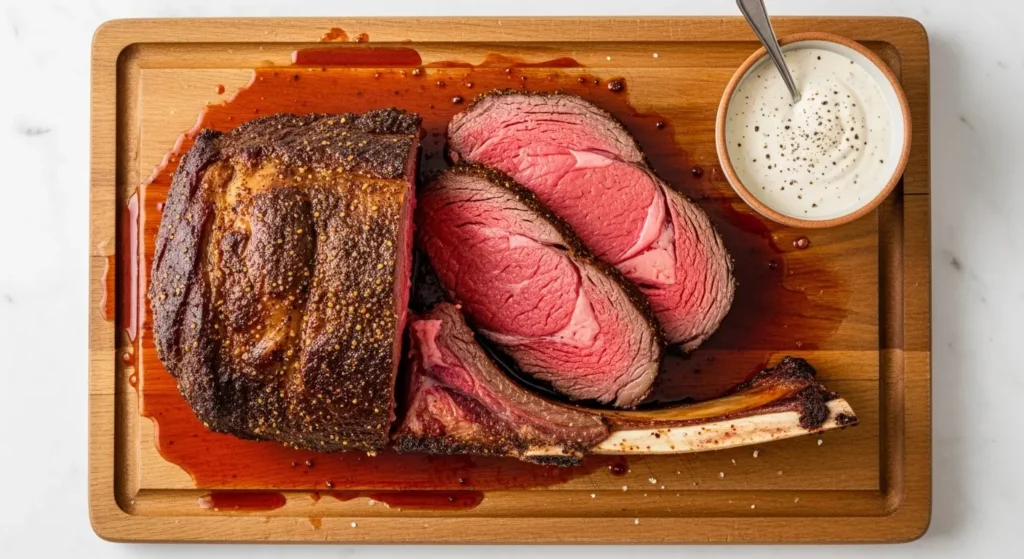
Prime rib deserves sides that match its elegance without competing for attention. These accompaniments complement the rich, beefy flavors beautifully.
Classic steakhouse sides work wonderfully here. I always serve this roast with creamy mashed potatoes or scalloped potatoes to soak up that incredible au jus.
- Roasted Brussels Sprouts with Bacon – The smoky, caramelized flavors balance the richness of the beef
- Creamed Spinach – A luxurious vegetable side that feels appropriately special
- Honey Roasted Carrots – The subtle sweetness plays nicely against the savory roast
- Dinner Rolls – Perfect for mopping up every last drop of au jus
- Yorkshire pudding – The traditional British accompaniment that captures drippings beautifully
- Horseradish cream sauce – Mix prepared horseradish with sour cream and a squeeze of lemon for a classic condiment
Variations to Try
While classic prime rib needs little improvement, these variations add interesting flavor dimensions for return engagements. Each brings something unique to the table.
- Coffee-crusted prime rib – Replace the smoked paprika with finely ground espresso and add brown sugar for a complex, slightly sweet crust
- Peppercorn-crusted – Press a mixture of cracked black, white, pink, and green peppercorns into the roast for bold, spicy flavor
- Herb butter basted – Make a compound butter with herbs and garlic, then baste the roast every 30 minutes during the slow roast phase
- Asian-inspired – Use a rub of five-spice powder, ginger, garlic, and soy sauce for an umami-rich twist
- Mediterranean style – Incorporate oregano, lemon zest, and fennel seeds into your herb crust
- Bone-in vs boneless – Boneless rib roasts cook faster (about 20-25 minutes per pound) but bones add flavor and presentation appeal
Read Also: Beef Bourguignon Recipe
Storage and Reheating
Leftover prime rib is a luxury problem to have. Proper storage keeps it delicious for several days of enjoyable meals.
- Refrigeration – Wrap sliced or whole leftover prime rib tightly in plastic wrap or aluminum foil and refrigerate for up to 4 days
- Freezing – For longer storage, wrap portions in plastic wrap, then aluminum foil, and freeze for up to 3 months
- Gentle reheating method – Place slices in a baking dish with a few tablespoons of beef broth, cover tightly with foil, and warm at 250°F for 10-15 minutes
- Cold preparations – Thinly sliced cold prime rib makes exceptional sandwiches on crusty bread with horseradish mayo
- Repurposing ideas – Dice leftovers for prime rib hash, add to scrambled eggs, or use in a French dip sandwich
Nutritional Facts
Per serving (based on 8 servings, approximately 6 ounces cooked meat):
- Calories: 520
- Protein: 48g
- Fat: 36g
- Saturated Fat: 15g
- Carbohydrates: 1g
- Fiber: 0g
- Sugar: 0g
- Cholesterol: 145mg
- Sodium: 580mg
- Iron: 4mg
Health Benefits of Key Ingredients
While prime rib is certainly an indulgence, quality beef does offer nutritional benefits when enjoyed as part of a balanced diet. Understanding what you’re eating helps you make informed choices.
High-quality beef provides complete protein with all essential amino acids your body needs for muscle maintenance and repair. The marbling in prime rib contains both saturated and monounsaturated fats, including oleic acid, the same heart-healthy fat found in olive oil.
- Complete protein source – Prime rib delivers all nine essential amino acids necessary for tissue repair, enzyme production, and immune function
- Rich in B vitamins – Particularly B12, which supports nerve function, red blood cell formation, and energy metabolism
- Excellent iron content – Provides heme iron, the most bioavailable form that prevents anemia and supports oxygen transport
- Zinc for immune health – One serving provides about 40% of your daily zinc needs, supporting immune function and wound healing
- Selenium content – This trace mineral acts as an antioxidant and supports thyroid function
- Fresh herbs add antioxidants – Rosemary and thyme contain compounds that may have anti-inflammatory properties
Frequently Asked Questions
1. What’s the difference between prime rib and ribeye?
Prime rib is a large roasting cut that includes several ribeye steaks still attached to the bone. When you slice prime rib, each individual slice is essentially a ribeye steak. The term “prime” refers to the cut location (the primal rib section) rather than the USDA grade, though many people do buy USDA Prime grade for this roast.
2. How much prime rib should I buy per person?
Plan on about 1 pound per person if buying bone-in, or ¾ pound per person for boneless. This accounts for bone weight and some shrinkage during cooking. For a dinner party of 8, a 7-8 pound bone-in roast works perfectly with some leftovers.
3. Can I cook prime rib ahead of time?
You can partially cook it ahead using the reverse-sear method. Do the low-temperature roast phase up to 24 hours in advance, then refrigerate. About 30 minutes before serving, bring to room temperature and finish with the high-heat sear. The texture won’t be quite as perfect as cooking straight through, but it’s a workable solution for tight timing.
4. Why is my prime rib tough?
Toughness usually results from overcooking rather than undercooking. Prime rib becomes increasingly tough as it cooks past medium doneness. Always use a meat thermometer and pull the roast at 120-125°F for medium-rare. Also ensure you’re slicing against the grain, which shortens the muscle fibers and makes each bite more tender.
5. Do I need to sear prime rib before roasting?
The reverse-sear method (slow roast first, high-heat sear after) actually produces better results than traditional searing before roasting. Starting with low heat allows for more even cooking throughout, and finishing with high heat creates a superior crust without risking overcooked outer layers. This method gives you much more control over the final doneness.
Read Also: Mississippi Pot Roast Recipe
Final Thoughts
Making prime rib at home might seem intimidating at first, but once you’ve done it, you’ll realize it’s actually one of the more forgiving special occasion roasts. The reverse-sear method takes most of the guesswork out of the equation.
Give this recipe a try for your next celebration dinner and watch how impressed your guests will be. I’d love to hear how yours turns out, so drop a comment below with your results or any questions that come up while you’re cooking!
Recommended:
- Slow Cooker Pot Roast Recipe
- Thanksgiving Turkey Recipe
- Dry Brine Turkey Recipe
- Cornish Hen Recipe
- Turkey Gravy Recipe
- Collard Greens Recipe
- Sausage Stuffing Recipe
- Green Bean Casserole Recipe
- Hashbrown Casserole Recipe
- Maple Glazed Carrots Recipe