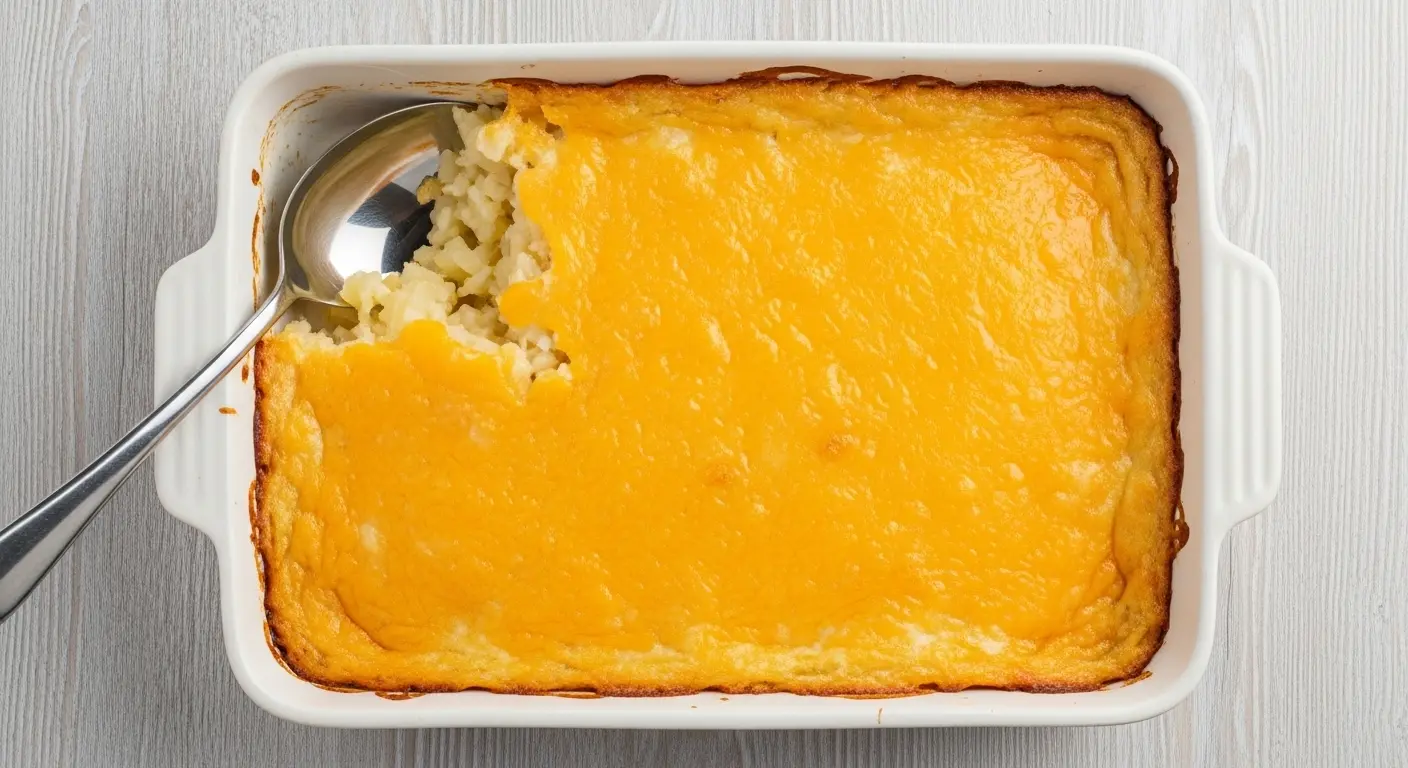
If you have ever needed one dish to win over every person at the table, this hashbrown casserole recipe is it. Golden, bubbling cheese on top, a rich and creamy center packed with tender shredded potatoes, and a flavor that tastes like pure comfort — this casserole is the kind of thing people ask for at every holiday, potluck, and Sunday brunch.
It pulls together with just a handful of everyday ingredients, and the whole thing goes into the oven with almost no effort on your part.
The key to getting that perfect creamy texture is thawing your frozen hashbrowns before mixing. Excess moisture is the enemy here — soggy potatoes mean a watery casserole, and nobody wants that. Squeezing out any remaining liquid ensures every bite comes out rich and cohesive, not wet.
Sharp cheddar is the go-to cheese for most traditional versions of this dish, and for good reason. Its bold flavor cuts through the richness of the sour cream and soup base, giving the whole casserole a satisfying, savory depth that mild cheeses just cannot match.
This recipe is inspired by the beloved Cracker Barrel version, which has been a staple of American comfort food for decades. You will find a faithful, homemade take here that is just as indulgent — but made entirely in your own kitchen.
For more cozy casserole ideas, you might also love this Chicken Broccoli Rice Casserole for another hearty bake that the whole family will enjoy.
Why You’ll Love This Hashbrown Casserole Recipe
This is the kind of dish that disappears from the table before anything else does.
It works just as well as a breakfast or brunch side as it does a dinner accompaniment, which means you get double the mileage out of one recipe.
The ingredient list is short, and most of it is pantry-ready. No specialty items, no complicated techniques.
Because it uses frozen hashbrowns, there is almost no prep work involved. The potatoes are already shredded and ready to go.
It is endlessly customizable. Add cooked bacon, swap out the cheese, throw in some diced jalapeños — the base is incredibly forgiving.
The casserole reheats beautifully, so leftovers taste just as good the next day (if there are any left at all).
It feeds a crowd without any fuss. One 9×13-inch dish serves 8 to 10 people comfortably, making it ideal for family gatherings and holiday tables.
- Perfect for holidays, potlucks, brunch, and dinner sides
- Ready in about an hour with minimal prep
- Uses simple, affordable pantry ingredients
- Kid-friendly and universally loved
- Make-ahead and freezer-friendly
- Reheats well for easy leftovers
You might also enjoy: Funeral Potatoes Recipe
Ingredients
Most of these ingredients are probably already in your kitchen, which is part of what makes this recipe so satisfying to make.
The cream of chicken soup is what binds everything together and gives the casserole its signature savory depth. Sour cream adds a subtle tang that keeps the dish from feeling too heavy. Freshly shredding your own cheddar makes a noticeable difference — pre-shredded cheese contains anti-caking coatings that prevent it from melting as smoothly.
- 1 (30 oz / 850 g) bag frozen shredded hashbrowns, thawed
- 1 (10.5 oz / 298 g) can condensed cream of chicken soup
- 1 cup (240 g) sour cream
- 1/2 cup (115 g) unsalted butter, melted
- 1/2 cup (80 g) yellow onion, finely diced
- 2 cloves garlic, minced
- 2 cups (225 g) sharp cheddar cheese, freshly shredded, divided (1.5 cups for the mix, 0.5 cup for the topping)
- 1 tsp garlic powder
- 1/2 tsp onion powder
- 1/2 tsp salt
- 1/4 tsp black pepper
Read Also: Cheesy Potatoes Recipe
Kitchen Equipment Needed
You do not need anything fancy to pull this off. A large mixing bowl and a baking dish are the real workhorses here.
A 9×13-inch baking dish is non-negotiable for this recipe — it gives the casserole the right depth and surface area so that the center cooks through while the edges get golden and bubbly. A box grater is highly recommended if you are shredding your cheese fresh (which you should).
- 9×13-inch casserole baking dish
- Large mixing bowl
- Box grater (for freshly shredding the cheese)
- Rubber spatula or large spoon
- Measuring cups and spoons
- Chef’s knife and cutting board
- Nonstick cooking spray or butter for greasing the dish
- Paper towels (for patting the hashbrowns dry)
For another comforting potato bake, check out this Potato Casserole Recipe.
Recommended Products for This Recipe
These are products I genuinely recommend based on quality and performance — they make this recipe easier and the results noticeably better.
1. Lodge Enameled Cast Iron Baking Dish
A cast iron baking dish distributes heat more evenly than standard glass or ceramic, which means your hashbrown casserole gets those gorgeous golden, bubbling edges without overcooking the center. The enamel coating also makes cleanup a breeze, even with baked-on cheese.
2. Microplane Box Grater
Freshly grated cheese is one of the biggest upgrades you can make to this recipe. Pre-shredded cheese includes anti-caking agents that keep the shreds from melting smoothly. A quality box grater makes fast work of the block and gives you that perfectly melty, gooey layer on top.
3. Pyrex Deep 9×13 Baking Dish with Lid
The lid is the key feature here. If you are making this casserole ahead of time, being able to cover it tightly and store it in the fridge overnight without transferring it to another container is a serious convenience. Pyrex also holds heat well for transporting to potlucks.
4. Cabot Sharp Cheddar Cheese Block
Cabot is consistently one of the highest-rated sharp cheddars available, and the flavor difference in a cheese-forward dish like this is noticeable. The bold, slightly tangy profile of a quality sharp cheddar cuts through the richness of the sour cream and soup base perfectly.
5. Campbell’s Condensed Cream of Chicken Soup (Pack of 4)
This is the pantry staple at the heart of the most popular versions of this recipe. Buying in bulk means you are always ready to make this casserole at a moment’s notice. It is worth keeping a few cans on hand.
Another favorite: Tater Tot Casserole
Step-by-Step Instructions
Step 1: Preheat the Oven and Prepare Your Baking Dish
- Set your oven to 350°F (175°C) and allow it to fully preheat before adding the casserole.
- While the oven heats, spray your 9×13-inch baking dish generously with nonstick cooking spray, or rub the interior with a thin coat of softened butter.
- Make sure the coating reaches all the corners and up the sides — this prevents sticking, especially along the edges where the cheese tends to caramelize.
Step 2: Thaw and Dry the Hashbrowns
- Remove the frozen hashbrowns from the freezer and allow them to thaw at room temperature for about 30 minutes, or microwave them on 50% power for 3 to 4 minutes, stirring once halfway through.
- Once thawed, spread the hashbrowns across a clean kitchen towel or several layers of paper towels.
- Pat them firmly to remove as much moisture as possible — this is a critical step that prevents a watery casserole.
- Squeeze the towel or paper towels around the potatoes to draw out excess liquid.
- Transfer the dried hashbrowns to a large mixing bowl.
Step 3: Prepare the Creamy Casserole Mixture
- In the same large mixing bowl with the hashbrowns, add the full can of condensed cream of chicken soup (do not add water — use it straight from the can).
- Add the 1 cup (240 g) of sour cream, the 1/2 cup (115 g) of melted butter, the finely diced yellow onion, and the minced garlic.
- Add the garlic powder, onion powder, salt, and black pepper.
- Add 1.5 cups (170 g) of the freshly shredded sharp cheddar cheese into the bowl (reserving the remaining 0.5 cup for topping).
- Using a rubber spatula or large spoon, stir everything together until thoroughly combined. Every shred of potato should be coated in the creamy mixture.
- Taste a small amount and adjust the seasoning if needed — you may want a pinch more salt depending on your soup brand.
Step 4: Fill the Baking Dish
- Spoon the entire potato mixture into your prepared 9×13-inch baking dish.
- Use the back of your spatula to spread it into an even layer, pressing it gently into the corners.
- The mixture should fill the dish comfortably without overflowing.
Step 5: Add the Cheese Topping
- Sprinkle the reserved 0.5 cup (55 g) of freshly shredded sharp cheddar cheese evenly across the top of the casserole.
- For extra coverage, add a little more cheese if you like — there is no such thing as too much cheese in this dish.
- The cheese on top will melt into a golden, slightly crispy layer as it bakes, which is one of the best parts of the finished casserole.
Step 6: Bake Until Bubbling and Golden
- Place the baking dish on the center rack of your preheated 350°F (175°C) oven.
- Bake uncovered for 45 to 55 minutes, or until the edges are actively bubbling, the cheese on top is melted and golden brown in spots, and the center of the casserole is piping hot all the way through.
- If the cheese starts to brown too quickly before the center is cooked through, loosely tent a piece of aluminum foil over the top and continue baking.
- To test doneness, insert a thin knife into the center — it should slide in easily and feel hot to the touch.
Step 7: Rest and Serve
- Remove the casserole from the oven and allow it to rest on the counter for 10 to 15 minutes before serving.
- This resting period allows the creamy filling to firm up slightly, making it easier to scoop into clean portions.
- Use a large spoon or spatula to serve, making sure everyone gets some of the golden, cheesy topping.
This casserole pairs beautifully with Breakfast Casserole for a complete spread at your next brunch gathering.
Tips for Success
A few smart techniques make the difference between a good hashbrown casserole and a truly great one.
The single most important tip is to remove as much moisture as possible from your thawed hashbrowns. Watery potatoes are the most common reason this dish turns out loose or soupy, and the fix is simple: squeeze them dry before mixing.
- Always thaw and dry your hashbrowns. Moisture from frozen potatoes is the number one cause of a watery casserole. Pat them dry thoroughly with kitchen towels and squeeze out as much liquid as you can before mixing.
- Grate your cheese fresh. Block cheese melts significantly smoother than pre-shredded. The anti-caking agents on bagged shredded cheese can create a grainy or greasy texture in the finished dish.
- Use cold sour cream straight from the fridge. This helps keep the mixture thick and cohesive before it goes into the oven.
- Do not dilute the soup. Use the condensed cream of chicken soup directly from the can without adding water. Adding liquid will thin out the casserole.
- Let it rest before serving. Ten to fifteen minutes of resting time allows the casserole to set up slightly and makes scooping into clean portions much easier.
- Cover loosely if the top browns too fast. If the cheese is getting dark before the center is cooked through, tent a sheet of foil over the dish and continue baking.
- Taste and season before baking. Depending on the brand of cream of chicken soup you use, saltiness can vary. A quick taste of the raw mixture lets you adjust before it goes in the oven.
Read Also: Au Gratin Potatoes Recipe
Serving Suggestions
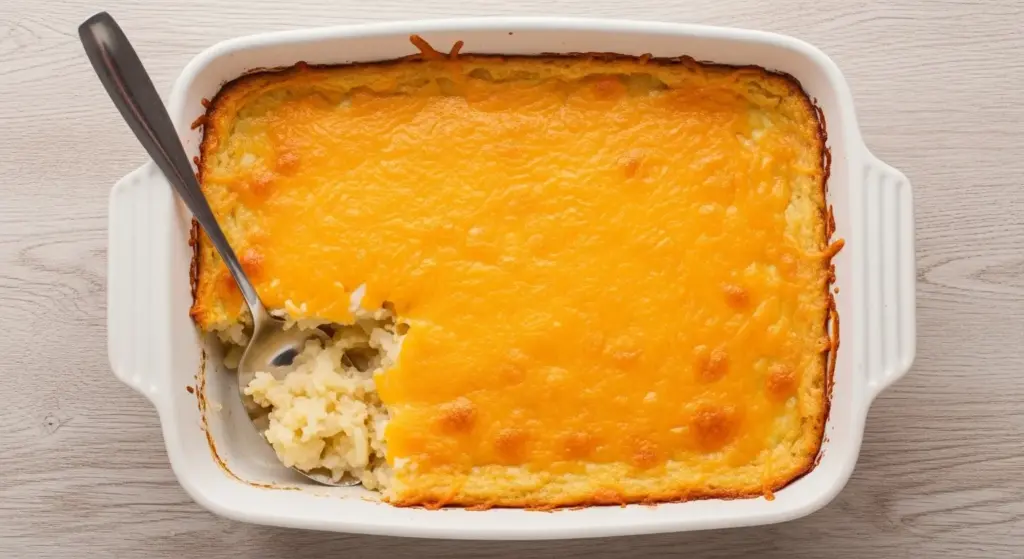
Hashbrown casserole is one of those rare dishes that feels at home on a breakfast table, a holiday dinner spread, or a casual weeknight plate.
For breakfast or brunch, it is an ideal companion to eggs, crispy bacon, and warm biscuits. For dinner, it pairs perfectly alongside roasted meats, baked chicken, or a simple green salad.
- Scrambled or fried eggs for a classic breakfast plate
- Crispy Sausage Balls as a savory brunch side
- Sausage Gravy poured over the top for an indulgent morning plate
- Baked ham or glazed pork tenderloin for a holiday dinner pairing
- Roasted Broccoli for a lighter vegetable contrast
- Broccoli Salad for a fresh, crunchy side to balance the richness
- Classic Deviled Eggs for a party or potluck spread
- Green Bean Casserole for a full comfort-food holiday table
This casserole also works beautifully alongside Scrambled Eggs for a quick and satisfying everyday breakfast.
Variations to Try
The classic version is perfect as-is, but this casserole is also a great canvas for personalizing to your taste or using up what you have on hand.
These variations stay true to the spirit of the original while giving you a little room to experiment.
- Add cooked protein: Stir in 1 cup of diced cooked ham, crumbled crispy bacon, or shredded rotisserie chicken to turn this into a hearty one-dish meal.
- Swap the cheese: Colby Jack, Pepper Jack, or Gruyere all melt beautifully and add their own character. Pepper Jack gives the dish a welcome heat.
- Add a crunchy topping: Mix 2 cups of crushed cornflakes with 3 tablespoons of melted butter and sprinkle over the cheese topping before baking for a crispy, golden crust (similar to Funeral Potatoes Recipe).
- Use cream of mushroom instead: Swap the cream of chicken soup for cream of mushroom soup if you prefer a vegetarian version or a slightly earthier flavor profile.
- Make it spicy: Stir in 1/2 cup of diced pickled jalapeños or a dash of hot sauce into the potato mixture for a kick.
- Make it a slow cooker version: Transfer the assembled (unbaked) mixture to a large slow cooker and cook on low for 4 to 5 hours until hot and cooked through.
- Use diced potatoes: Swap shredded hashbrowns for frozen diced potatoes for a chunkier texture similar to the version served with Cracker Barrel’s breakfast plates.
Read Also: Sweet Potato Casserole Recipe
Storage and Reheating
This casserole stores extremely well, which makes it one of the best dishes for meal prepping or making ahead for a gathering.
Proper storage keeps the texture creamy and the flavor just as good on day two or three as it was fresh out of the oven.
- Refrigerator: Allow the casserole to cool completely before covering the dish tightly with plastic wrap or aluminum foil. Store in the refrigerator for up to 4 days.
- Freezer: Portion the cooled casserole into individual servings or store the full dish (if freezer-safe) covered tightly. Freeze for up to 3 months. Thaw overnight in the refrigerator before reheating.
- Make-ahead: You can assemble the full casserole (unbaked) up to 24 hours in advance, cover it, and refrigerate. When ready to bake, add 5 to 10 extra minutes to the baking time to account for the cold starting temperature.
- Reheating single portions: Place individual servings in a microwave-safe dish and cover loosely with a damp paper towel. Microwave in 60-second intervals, stirring between each, until heated through.
- Reheating the whole dish: Cover the dish with foil and bake at 325°F (165°C) for 20 to 25 minutes, or until the center is hot. Remove the foil for the final 5 minutes to re-crisp the cheese topping.
For another casserole that reheats beautifully, try this Chicken Casserole Recipe.
Nutritional Facts
The following nutritional estimates are based on one serving of this recipe (approximately 1 cup), assuming 10 servings per 9×13-inch dish. Exact values will vary based on the brands and specific products used.
| Nutrient | Per Serving (approx.) |
|---|---|
| Calories | 320 kcal |
| Total Fat | 22 g |
| Saturated Fat | 13 g |
| Cholesterol | 60 mg |
| Sodium | 500 mg |
| Total Carbohydrates | 22 g |
| Dietary Fiber | 1.5 g |
| Sugars | 2 g |
| Protein | 9 g |
| Calcium | 220 mg |
| Potassium | 370 mg |
| Vitamin C | 7 mg |
| Iron | 1.2 mg |
Note: These values are estimates provided for general reference only. For precise dietary tracking, use a nutrition calculator with your exact ingredient brands and quantities.
This recipe is naturally gluten-free when made with certified gluten-free soup and hashbrowns. It is not dairy-free or vegan as written.
For another satisfying potato dish, check out this Scalloped Potatoes Recipe.
Health Benefits of Key Ingredients
While this casserole is decidedly comfort food, several of its core ingredients do bring real nutritional value to the table.
Understanding what each ingredient contributes can help you make informed tweaks to suit your dietary goals without sacrificing the flavors that make this dish so beloved.
Potatoes, the foundation of this casserole, are an excellent source of potassium, vitamin C, and vitamin B6 — nutrients that support cardiovascular health, immune function, and energy metabolism. They also provide a meaningful amount of dietary fiber when consumed with the skin (though hashbrowns are typically peeled).
Cheddar cheese contributes calcium and phosphorus, both essential for strong bones and teeth. It also provides protein and fat-soluble vitamins like A and K2.
- Potatoes: Rich in potassium, which supports heart health and normal blood pressure regulation. Also a good source of vitamin C and B6.
- Cheddar cheese: A strong source of calcium and phosphorus for bone health, plus protein for muscle support.
- Sour cream: Provides probiotics (in cultured varieties) that can support gut health, along with fat-soluble vitamins A and D.
- Garlic: Contains allicin, a compound with well-documented anti-inflammatory and immune-supporting properties. Even small amounts contribute meaningful antioxidant activity.
- Onion: Provides quercetin, a powerful antioxidant flavonoid that supports immune function and has anti-inflammatory effects.
- Butter: A source of fat-soluble vitamins A, D, E, and K2, which play roles in immune function, vision, and cardiovascular health when consumed in moderation.
For a lighter but equally satisfying potato dish, check out this Twice Baked Potato Recipe.
Frequently Asked Questions
1. Do I have to thaw the frozen hashbrowns before making this casserole?
Thawing is strongly recommended. Frozen hashbrowns release a significant amount of water as they cook, and if that moisture has nowhere to go, it will make the casserole watery and loose. Thawing them first — and then patting them dry — ensures a creamy, cohesive texture that holds together when scooped.
2. Can I make hashbrown casserole ahead of time?
Absolutely. You can assemble the full casserole (without baking it) up to 24 hours in advance. Cover it tightly with plastic wrap and refrigerate overnight. When you are ready to bake, remove it from the refrigerator while the oven preheats and add 5 to 10 extra minutes to the bake time since you are starting from cold.
3. What is the difference between hashbrown casserole and funeral potatoes?
The two dishes are nearly identical. Both use shredded potatoes, cream of chicken soup, sour cream, and cheddar cheese. The main distinction is that funeral potatoes traditionally include a crispy topping made from crushed cornflakes and butter, while hashbrown casserole is typically finished with just melted cheese on top. Both are equally delicious.
4. Can I use fresh potatoes instead of frozen hashbrowns?
Yes, you can. Peel and shred 2.5 to 3 pounds (1.1 to 1.4 kg) of russet potatoes using the large holes of a box grater. Place the shreds in a colander, rinse thoroughly under cold water to remove excess starch, then squeeze out as much liquid as possible using a clean kitchen towel. Fresh-shredded potatoes will need slightly longer baking time — plan for 55 to 65 minutes — and may need a foil tent in the last 15 minutes to prevent over-browning.
5. What can I substitute for cream of chicken soup?
There are a few good options. Cream of mushroom soup works well and gives the casserole a slightly earthier flavor (and makes it vegetarian-friendly). You can also make a quick homemade substitute: melt 2 tablespoons of butter in a saucepan, whisk in 2 tablespoons of flour to form a roux, then slowly add 1 cup of chicken or vegetable broth and 1/4 cup of milk, whisking constantly until thickened to a soup-like consistency. Season with salt and pepper before using.
For more comforting potato inspiration, check out this Loaded Potato Soup Recipe.
Final Thoughts
This hashbrown casserole recipe is one of those dishes that earns a permanent spot in your rotation after the very first time you make it.
It is simple enough for a Tuesday night but impressive enough for Christmas morning or a holiday potluck. The creamy filling, the golden cheese topping, and the satisfying texture of tender shredded potatoes all come together in a way that just works.
Once you make it once, you will understand exactly why it has been showing up at family gatherings for generations.
Go ahead and give it a try — and when you do, come back and leave a comment below to let me know how it turned out. Did you add any fun mix-ins or toppings? Share your version in the comments or tag us if you post it. We would love to see yours!
Recommended:
- Breakfast Potatoes Recipe
- Corn Casserole Recipe
- Tuna Noodle Casserole Recipe
- Squash Casserole Recipe
- Cowboy Casserole Recipe
- Broccoli Casserole Recipe
- Garlic Mashed Potatoes Recipe
- Smashed Potatoes Recipe
- Roasted Potatoes Recipe
- Ham and Potato Soup Recipe