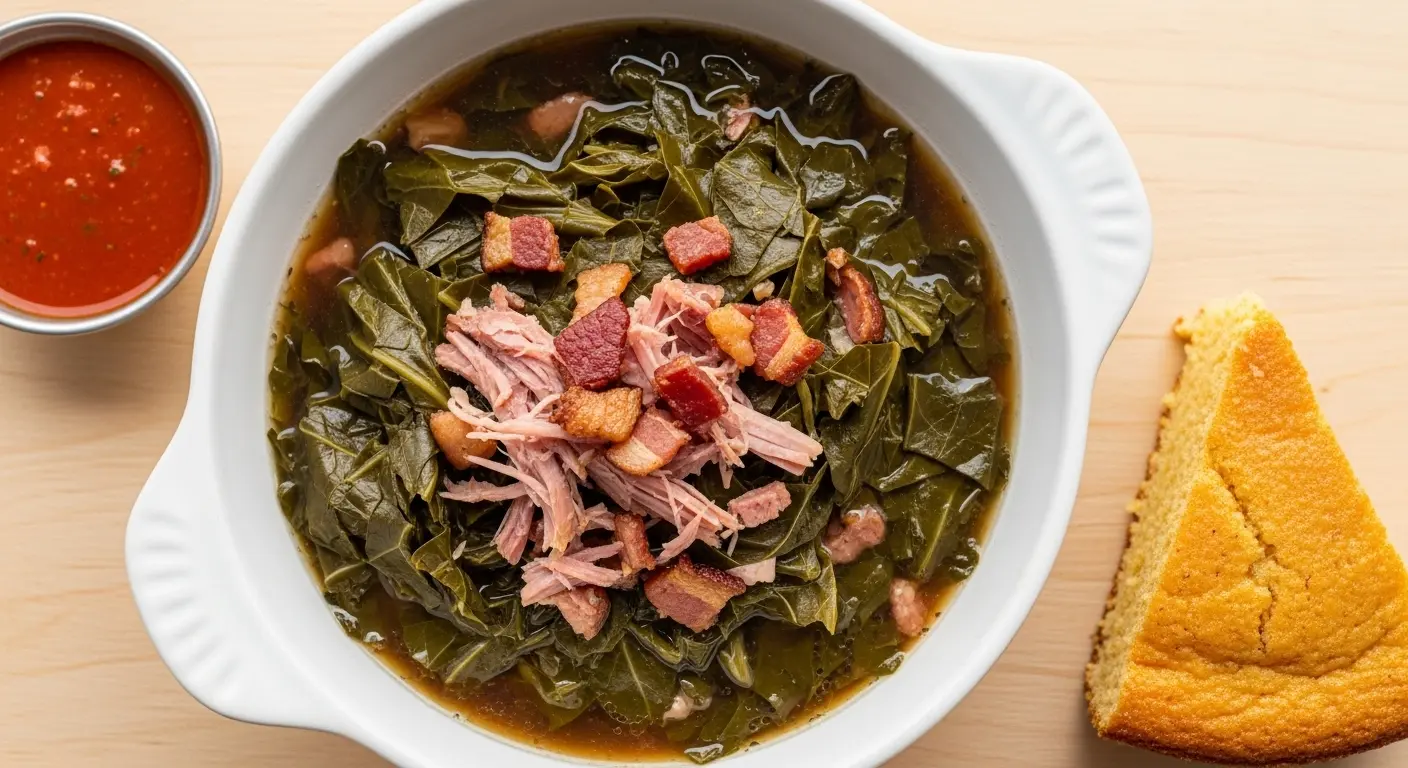
If you’ve been searching for the perfect collard greens recipe, you’ve officially found your new go-to. This is Southern comfort food at its most honest — slow-simmered leafy greens cooked down in a rich, smoky broth with bacon, ham hock, onion, garlic, and a splash of apple cider vinegar to tie it all together.
This isn’t a rushed weeknight shortcut version.
This is the real deal: deeply flavored, fall-apart tender greens with a pot likker (that’s the cooking broth!) so good you’ll want to soak up every last drop with a big piece of warm cornbread.
Collard greens have deep roots in Southern and African American culinary tradition, and this recipe pays proper respect to that heritage.
They’re the kind of dish that fills your whole kitchen with an irresistible aroma as they simmer low and slow, reminding you why simple ingredients prepared with patience always produce the most memorable food.
This pairs beautifully with Southern Fried Chicken for a truly classic Southern spread.
Why You’ll Love This Collard Greens Recipe
You don’t need to be a Southern cook to nail this recipe.
With the right technique and a handful of pantry staples, anyone can turn out a pot of greens that rivals what you’d find at the best soul food kitchen in town.
Here’s what makes this version so special:
- Deeply smoky flavor from both bacon and a ham hock — double the smokiness means double the depth
- Tender, not mushy — low-and-slow cooking gets the texture just right without going to mush
- Rich pot likker that’s as delicious as the greens themselves, perfect for dipping cornbread
- Simple ingredients that you can find at any grocery store any time of year
- Flexible protein options — swap the ham hock for smoked turkey legs or wings for a different spin
- Feeds a crowd — this recipe makes a generous pot that’s perfect for holiday meals or Sunday dinners
- Even better the next day — the flavor only deepens as the greens sit overnight in the pot likker
For another hearty Southern side, this Baked Mac and Cheese is a soul food staple that pairs perfectly with these greens.
Ingredients
The ingredient list for this collard greens recipe is short, but every single item earns its place in the pot. The backbone of the flavor comes from the smoked meat, so don’t skip the ham hock.
- 2 large bunches of fresh collard greens (about 2 lbs / 900g), washed and stems removed
- 4 slices thick-cut bacon, chopped
- 1 smoked ham hock (about 1 lb / 450g)
- 1 medium yellow onion, diced
- 4 cloves garlic, minced
- 4 cups (960ml) chicken broth
- 1 cup (240ml) water
- 2 tablespoons apple cider vinegar
- 1 teaspoon granulated sugar
- 1 teaspoon smoked paprika
- 1/2 teaspoon crushed red pepper flakes (adjust to taste)
- 1/2 teaspoon black pepper
- 1/2 teaspoon salt (or to taste)
- Hot sauce, for serving (optional)
You might also enjoy: Creamed Spinach Recipe
Kitchen Equipment Needed
Nothing fancy required here — just a few trusty kitchen staples. The most important piece of equipment is a large, heavy-bottomed pot that holds heat evenly for that long simmer.
- Large Dutch oven or stockpot (at least 7-quart capacity)
- Sharp chef’s knife
- Cutting board
- Tongs or long-handled wooden spoon
- Colander or salad spinner for washing greens
- Measuring cups and spoons
- Slotted spoon for serving
Read Also: Fried Cabbage Recipe
Recommended Products for This Recipe
These are products that I genuinely recommend based on quality and performance — they make a real difference in how this recipe turns out.
1. Smoked Ham Hock
A quality smoked ham hock is the secret to an incredibly rich and deeply flavored pot likker. Look for ones that are well-smoked with visible color on the skin — the smokier, the better. Using a high-quality smoked ham hock eliminates any need to add liquid smoke or extra seasonings.
2. Lodge 7-Quart Enameled Cast Iron Dutch Oven
Cast iron distributes heat evenly across the bottom and sides of the pot, which is exactly what you need for a long, slow simmer. The enamel coating means you won’t get any metallic flavor transfer, and cleanup is a breeze even after hours of cooking.
3. OXO Good Grips Large Salad Spinner
Cleaning collard greens properly is non-negotiable — they can harbor grit and even tiny bugs in the folds of the leaves. A large salad spinner makes washing and spinning dry a whole bunch of collards quick and efficient, without leaving excess water on the leaves that can dilute your pot likker.
4. Apple Cider Vinegar (Bragg Organic)
Apple cider vinegar is the ingredient that brightens the whole pot and cuts through the richness of the pork. Bragg organic ACV has the right balance of acidity and mild fruity notes that work perfectly in this recipe — it’s a big step up from generic store brands.
5. Smoked Paprika (La Chinata or Similar)
Not all smoked paprika is created equal. A high-quality Spanish smoked paprika like La Chinata adds a deep, woodsy smokiness that regular paprika simply cannot match. It layers beautifully with the ham hock and bacon for a more complex, rounded flavor profile.
For another great Southern side, try this Sweet Potato Casserole alongside your greens.
Step-by-Step Instructions
Step 1: Wash and Prep the Collard Greens
- Fill a large, clean sink or a very large bowl with cold water.
- Submerge the collard greens completely and swish them around vigorously to loosen any grit, dirt, or debris.
- Lift the greens out of the water (leaving the grit behind in the water), drain the sink, and repeat this washing process 2-3 times until the water runs completely clear with no visible sediment.
- Once clean, take one leaf at a time and fold it in half lengthwise along the center rib.
- Using your hands, strip the tough central stem away from the leaf by pulling it from the bottom of the leaf upward — it should tear away cleanly.
- Discard the stems (or save them to add to vegetable stock).
- Stack 5-6 leaves on top of each other, roll them up tightly into a cigar shape, and cut crosswise into strips about 1/2 inch (1.25cm) wide.
- Set the cut greens aside while you prepare the remaining ingredients.
Step 2: Cook the Bacon
- Place your Dutch oven or large stockpot on the stovetop over medium heat.
- Add the chopped bacon to the cold pot (starting in a cold pot helps the fat render out more slowly and evenly, resulting in crispier bacon).
- Cook the bacon, stirring occasionally, for about 8-10 minutes until the pieces are deeply browned and crispy.
- Using a slotted spoon, transfer the crispy bacon pieces to a paper towel-lined plate and set aside — you’ll add these back in at the end.
- Leave all the rendered bacon drippings in the pot. This is pure flavor and will be the cooking fat for the next steps. Do not drain it.
Step 3: Sauté the Onion and Garlic
- With the bacon drippings still hot in the pot over medium heat, add the diced yellow onion.
- Cook the onion, stirring occasionally, for about 5-6 minutes until it turns soft, translucent, and lightly golden around the edges.
- Add the minced garlic and crushed red pepper flakes to the pot.
- Stir constantly and cook for just 60 seconds — garlic burns quickly and bitter burnt garlic can affect the whole pot, so don’t walk away during this step.
- You should smell a deeply savory, slightly spicy aroma rising from the pot.
Step 4: Add the Broth and Ham Hock
- Pour in the chicken broth and water, scraping up any browned bits stuck to the bottom of the pot with your wooden spoon — those little bits are packed with flavor.
- Nestle the smoked ham hock down into the liquid.
- Add the smoked paprika, black pepper, and sugar, and stir everything together.
- Bring the liquid to a full boil over medium-high heat, then reduce the heat to medium-low to maintain a steady, gentle simmer.
- Cover the pot and let the ham hock simmer in the broth for 30 minutes before adding the greens. This gives the broth a head start at extracting flavor from the smoked meat.
Step 5: Add the Collard Greens
- Begin adding the prepared collard greens to the pot in large handfuls.
- After each handful, stir and press the greens down into the hot broth — they will begin to wilt rapidly.
- Continue adding greens in batches, waiting for each addition to wilt slightly before adding the next, until all the greens are in the pot. This step takes about 3-4 minutes total.
- Once all the greens are in, add the salt and stir everything well to combine.
- Make sure the greens are submerged as much as possible in the broth — they don’t need to be fully covered, but they should be surrounded by liquid.
Step 6: Simmer Low and Slow
- Cover the pot with a tight-fitting lid and reduce the heat to low.
- Allow the greens to cook, covered, for 1.5 to 2 hours, stirring every 30 minutes to ensure even cooking and to check the liquid level.
- If the pot looks like it’s drying out, add an additional 1/2 cup (120ml) of water or broth to keep the greens moist.
- At the 1.5-hour mark, taste a piece of collard green — it should be very tender, soft, and deeply flavored with no bitterness. If they’re still a bit tough, cover and continue simmering for another 20-30 minutes.
- Avoid overcooking past the point of tenderness — collard greens that cook too long develop an unpleasant sulfur smell and mushy texture.
Step 7: Finish and Season
- Remove the ham hock from the pot and place it on a cutting board.
- Using two forks, pull the meat off the bone — it should fall apart easily after the long simmer.
- Discard the bone and any fatty skin you don’t want, and stir the pulled ham meat back into the greens.
- Add the apple cider vinegar to the pot and stir well — this brightens the whole dish and adds a subtle tang that balances the richness of the pork.
- Return the reserved crispy bacon pieces to the pot and stir to combine.
- Taste the greens and adjust the seasoning, adding more salt, pepper, or a splash more vinegar as needed.
- Serve immediately with hot sauce on the side for those who like extra heat.
Read Also: Sauteed Cabbage Recipe
Tips for Success
Getting this collard greens recipe perfect comes down to a few key techniques that make all the difference between great greens and truly unforgettable greens.
- Wash, wash, wash: Collard greens are notoriously gritty. Always wash them at least 3 times in fresh water until no sediment remains in the basin — gritty greens are a textural nightmare.
- Start bacon in a cold pot: Rendering bacon from a cold start means the fat releases slowly and you get crispier, more evenly cooked bacon pieces.
- Don’t rush the simmer: The long, slow cook time is what transforms tough, slightly bitter raw collards into silky, tender, deeply flavored greens. Shortcutting this step will result in underseasoned, chewy greens.
- Add vinegar at the end: Apple cider vinegar added too early will dull in flavor. Adding it in the last few minutes of cooking preserves its bright, tangy punch.
- Save your pot likker: The rich cooking broth is liquid gold. Use it to dip cornbread, stir it into soups, or drink it straight — it’s packed with nutrients and flavor.
- Make it ahead: These greens taste noticeably better the next day after sitting overnight in the pot likker. If you have time, make them a day in advance.
- Taste before serving: Every ham hock has a different salt level, so always taste and adjust at the very end before you bring the pot to the table.
Another great Southern classic to add to your table: Shrimp and Grits
Serving Suggestions
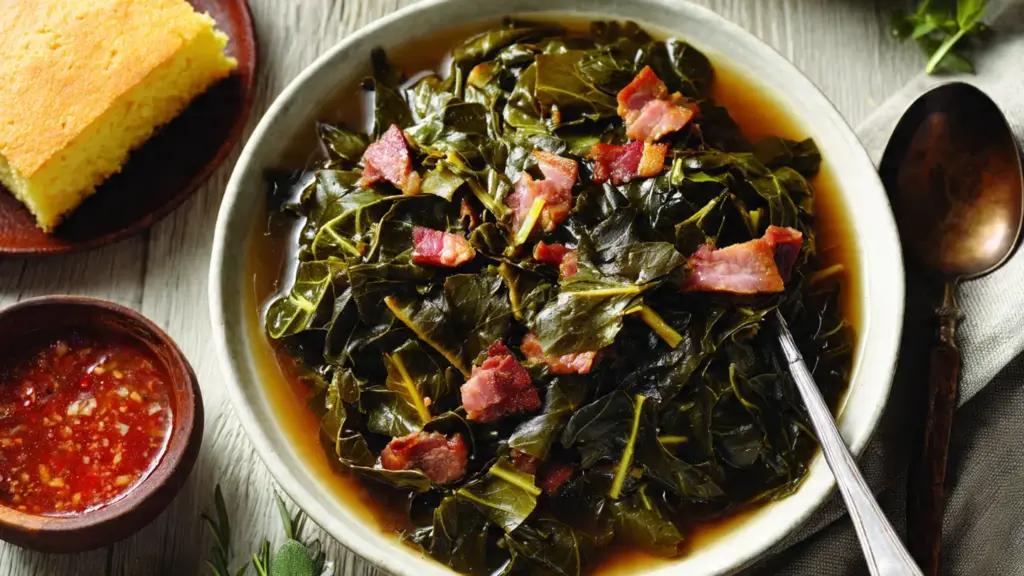
Collard greens are one of those perfect side dishes that can anchor an entire Southern meal.
They’re hearty, deeply savory, and pair well with pretty much every classic Southern main dish you can think of.
- Sweet Cornbread — the ultimate pairing; use it to soak up every drop of the pot likker
- Easy Fried Chicken — the classic match for a true Southern Sunday dinner spread
- Garlic Mashed Potatoes — creamy and buttery, they’re wonderful alongside the smoky greens
- Classic Red Beans and Rice — earthy, filling, and they complement the greens perfectly
- Meatloaf — hearty and comforting, especially with gravy
- Potato Salad — a cool, creamy contrast to the hot, smoky greens at cookouts
Read Also: Skillet Cornbread
Variations to Try
Once you’ve mastered the classic version of this collard greens recipe, there are plenty of delicious ways to change it up based on your tastes or dietary needs.
- Smoked turkey instead of ham hock: Swap the pork ham hock for smoked turkey legs or smoked turkey wings for a version that’s just as rich and smoky but pork-free.
- Vegan collard greens: Skip the meat entirely, use vegetable broth, and add a tablespoon of liquid smoke plus extra smoked paprika to recreate that deep smokiness without any animal products.
- Spicy collard greens: Double the crushed red pepper flakes and add a sliced fresh jalapeño along with the onion for greens with a serious kick.
- Mixed greens pot: Combine collard greens with mustard greens and turnip greens in equal parts for a layered, complex flavor that’s a staple at many Southern family tables.
- Slow cooker collard greens: After cooking the bacon and sautéing the onion and garlic, transfer everything to a slow cooker and cook on LOW for 6-8 hours for a completely hands-off version.
- Collard greens with black-eyed peas: Stir in a can of drained black-eyed peas during the last 30 minutes of cooking for a heartier, more filling dish that’s a traditional New Year’s Day combination symbolizing luck and prosperity.
You might also enjoy: Brunswick Stew as another classic Southern comfort dish.
Storage and Reheating
Good news — collard greens store and reheat beautifully, and as mentioned, they genuinely taste even better the next day as the flavors continue to develop.
- Refrigerator: Allow the greens to cool to room temperature, then transfer to an airtight container along with the pot likker. Store in the fridge for up to 4 days.
- Freezer: Collard greens freeze exceptionally well. Place cooled greens with their liquid into a freezer-safe container or zip-top freezer bag, removing as much air as possible. Freeze for up to 3 months.
- Stovetop reheat: Warm the greens in a small pot over medium-low heat, adding a splash of chicken broth or water if the liquid has been absorbed. Stir occasionally until heated through, about 5-7 minutes.
- Microwave reheat: Place a portion in a microwave-safe dish, cover loosely, and heat in 60-second intervals, stirring between each, until hot.
- From frozen: Thaw overnight in the refrigerator before reheating using either method above for best results.
For another make-ahead Southern side, try this Green Bean Casserole.
Nutritional Facts
The following is an approximate breakdown per serving (based on 6 servings, including ham hock meat):
| Nutrient | Amount Per Serving |
|---|---|
| Calories | ~220 kcal |
| Total Fat | 12g |
| Saturated Fat | 4g |
| Cholesterol | 45mg |
| Sodium | 680mg |
| Total Carbohydrates | 10g |
| Dietary Fiber | 5g |
| Sugars | 2g |
| Protein | 18g |
| Vitamin A | 90% DV |
| Vitamin C | 45% DV |
| Vitamin K | 350% DV |
| Calcium | 20% DV |
| Iron | 10% DV |
Nutritional values are estimates and will vary based on specific brands and portion sizes used.
Another nutritious and satisfying side: Roasted Broccoli
Health Benefits of Key Ingredients
This collard greens recipe isn’t just delicious — it’s genuinely good for you.
Collard greens are one of the most nutritionally dense leafy greens you can eat, which is why they’ve been a dietary staple for so long.
- Collard greens are an exceptional source of vitamin K, delivering over 300% of your daily recommended value in a single serving, which plays a critical role in bone health and blood clotting regulation.
- Collard greens are also rich in vitamins A and C, both powerful antioxidants that support immune function, skin health, and eye health.
- Collard greens contain significant amounts of fiber, which promotes healthy digestion, helps maintain steady blood sugar levels, and contributes to lower cholesterol.
- Garlic contains allicin, a compound with well-documented anti-inflammatory and antimicrobial properties, and regular consumption has been associated with improved cardiovascular health.
- Apple cider vinegar brings more than just flavor — it contains acetic acid, which has been studied for its role in supporting healthy blood sugar regulation and aiding digestion.
- Bacon and ham hock, while higher in fat and sodium, contribute high-quality protein and B vitamins, and the fat from the pork actually helps your body absorb the fat-soluble vitamins (A and K) found in the collard greens more efficiently.
For another leafy green option loaded with nutrition, try this Kale Soup.
Frequently Asked Questions
1. How long does it take to cook collard greens?
For truly tender, Southern-style collard greens, you’re looking at a minimum of 1.5 hours of simmering, with 2 full hours being the sweet spot for the best texture.
Cooking them quickly over high heat will not produce the same results — the long, slow simmer is what breaks down the tough fibers and mellows any natural bitterness in the leaves.
2. Why are my collard greens bitter?
Slight bitterness is natural in raw collard greens, but that bitterness should disappear almost entirely after the long simmer.
If your greens still taste bitter after cooking, they likely need more time — keep simmering and taste every 15-20 minutes. The apple cider vinegar added at the end also plays a key role in balancing and cutting through any residual bitterness.
3. Can I make collard greens without meat?
Absolutely. Omit the bacon and ham hock, use vegetable broth instead of chicken broth, and add 1 tablespoon of liquid smoke plus extra smoked paprika to replicate that characteristic smoky depth.
The greens will still be delicious, deeply seasoned, and satisfying — just with a different flavor profile.
4. What is pot likker and can I use it?
Pot likker (also spelled pot liquor or pot licker) is the savory, nutrient-rich broth left behind in the pot after your collard greens finish cooking.
It’s deeply flavored and loaded with vitamins and minerals leached from the greens and the smoked meat. Use it for dipping cornbread, as a base for soups and stews, to cook rice or beans, or simply drink it warm from a mug.
5. Can I use frozen or bagged pre-cut collard greens?
Yes, both frozen and pre-cut bagged collard greens work in this recipe.
Pre-cut bagged greens save significant prep time and are widely available in most grocery stores. Frozen collard greens will be slightly softer in texture but will still absorb the flavors of the broth beautifully — just add them directly to the pot frozen and adjust the cooking time as needed.
Read Also: Broccoli Salad Recipe
Final Thoughts
This collard greens recipe is one of those dishes that connects you to something bigger than just dinner.
It’s a tradition, a comfort, and honestly a little bit of love in every bite.
Whether you’re making these for a New Year’s Day celebration, a Sunday family dinner, or just because you’re craving something truly satisfying, this recipe will not let you down.
Give this recipe a try and let me know how it goes in the comments below.
Did you make any swaps, like using smoked turkey or adding extra heat? I’d love to hear about your version — and if you share it on social media, tag me so I can see your beautiful pot of greens!
Recommended:
- Cabbage Soup
- Creamy Mashed Potatoes
- Black Bean Soup
- Honey Butter
- Chicken Stew
- Buttermilk Biscuit
- Corn Casserole
- Sausage Gravy
- Mississippi Pot Roast
- Chicken and Dumplings