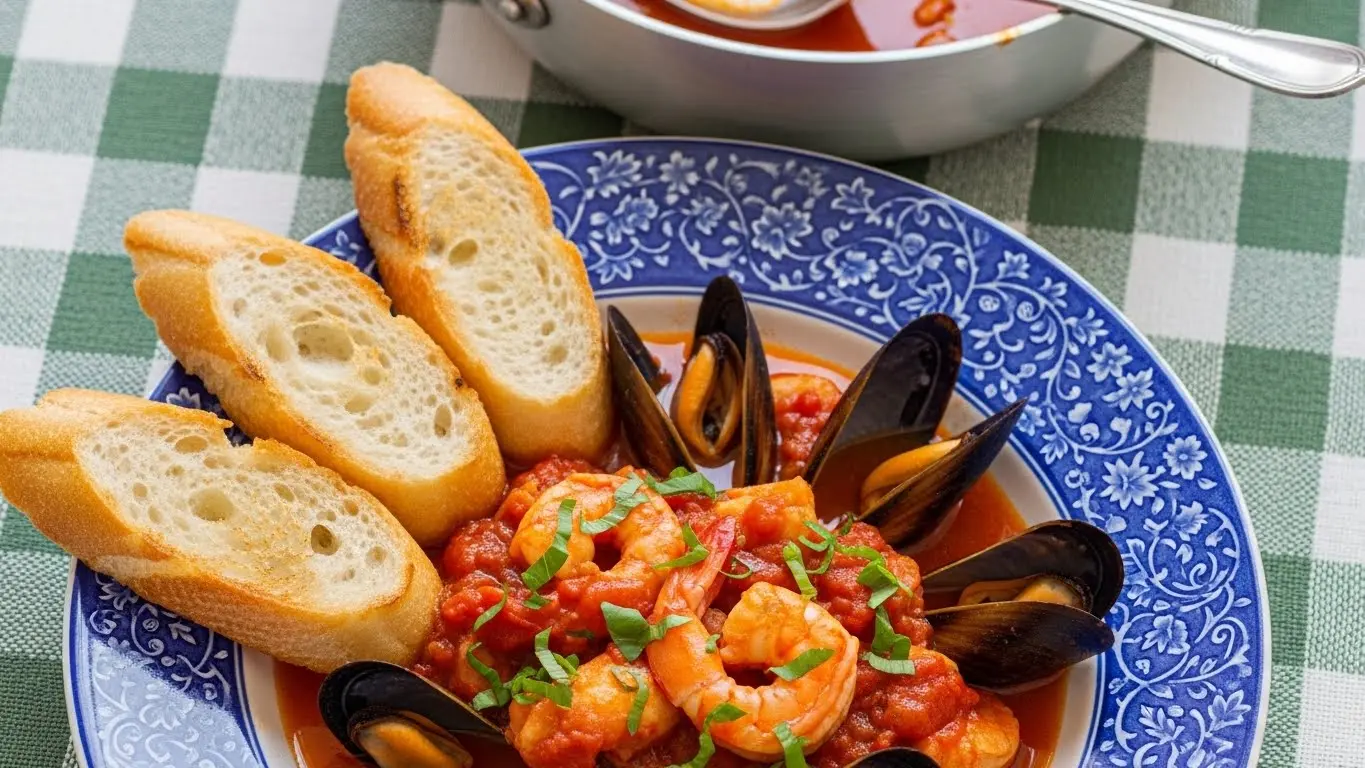
When the weather turns cool and you’re craving something warm and satisfying, a bowl of hearty seafood stew hits the spot every time. This seafood stew recipe brings together tender fish, plump shrimp, and sweet scallops in a rich tomato broth that tastes like it simmered all day.
But here’s the best part: you can have this restaurant-quality dish on your table in under an hour.
I’ve made this stew countless times over the years, and it never fails to impress. The first time I served it was for a casual dinner party, and my guests couldn’t believe I’d whipped it up in less than 45 minutes.
The beauty of a good seafood stew lies in its simplicity. You don’t need fancy techniques or hard-to-find ingredients.
Just fresh seafood, aromatics, tomatoes, and a splash of white wine. The flavors meld together beautifully, creating something that feels special enough for company but easy enough for a weeknight.
This recipe works beautifully for cozy family dinners or when you want to impress guests without spending hours in the kitchen. Plus, it’s incredibly versatile—you can swap out seafood based on what looks fresh at the market or what you happen to have on hand.
Another favorite: Oyster Stew Recipe
Why You’ll Love This Seafood Stew Recipe
This seafood stew checks all the boxes for a perfect comfort food dish. It’s packed with protein, loaded with vegetables, and comes together faster than ordering takeout.
The broth is where the magic happens—tomatoes, garlic, and white wine create a base that’s both light and deeply flavorful. Each bite gives you tender seafood that’s been gently poached to perfection, not rubbery or overcooked like you sometimes get at restaurants.
Here’s what makes this stew stand out:
- Quick cooking time: Ready in 40 minutes from start to finish
- Flexible seafood options: Use whatever’s fresh or swap based on preferences
- Budget-friendly: Looks and tastes expensive but won’t break the bank
- Naturally gluten-free: Perfect for guests with dietary restrictions
- Impressive presentation: Looks like you spent hours on it
- Healthy and satisfying: Packed with lean protein and vegetables
- Make-ahead friendly: Prep ingredients in advance for even faster cooking
Ingredients
The ingredient list might look long, but I promise most of these are pantry staples you already have. The key is using the freshest seafood you can find—it makes all the difference in the final dish.
For the base and aromatics:
- 3 tablespoons olive oil
- 1 large onion, diced
- 4 cloves garlic, minced
- 1 fennel bulb, thinly sliced (optional but highly recommended)
- 1 red bell pepper, diced
- 2 celery stalks, diced
- 1 teaspoon red pepper flakes (adjust to taste)
- 1 bay leaf
- 1 teaspoon dried oregano
- ½ teaspoon dried thyme
For the liquid base:
- 1 cup dry white wine (Sauvignon Blanc or Pinot Grigio work great)
- 1 (28-ounce) can crushed tomatoes
- 2 cups seafood stock or fish stock (chicken stock works in a pinch)
- 1 (8-ounce) bottle clam juice
- 2 tablespoons tomato paste
- 1 teaspoon sugar (to balance acidity)
For the seafood:
- 1 pound firm white fish (halibut, cod, or sea bass), cut into 2-inch chunks
- ½ pound large shrimp, peeled and deveined
- ½ pound sea scallops
- ½ pound mussels, scrubbed and debearded (optional)
- ½ pound littleneck clams, scrubbed (optional)
For finishing:
- ¼ cup fresh parsley, chopped
- 2 tablespoons fresh basil, chopped
- Salt and black pepper to taste
- Crusty bread for serving
You might also enjoy: Chicken Stew Recipe
Kitchen Equipment Needed
You don’t need a fancy kitchen to make this stew, but having the right equipment makes the process smoother. Here’s what I recommend having on hand before you start cooking.
- Large Dutch oven or heavy-bottomed pot (5-6 quart capacity)
- Sharp chef’s knife
- Cutting board
- Wooden spoon for stirring
- Ladle for serving
- Measuring cups and spoons
- Large serving bowls
Recommended Products for This Recipe
After making this seafood stew dozens of times, I’ve discovered a few products that genuinely make the cooking process easier and improve the final result. These are items I reach for every single time I make this dish.
1. Le Creuset Enameled Cast Iron Dutch Oven
This Dutch oven distributes heat so evenly that you’ll never have hot spots that might overcook your delicate seafood. The heavy lid traps moisture perfectly, and the enameled interior makes cleanup surprisingly easy even after cooking with tomatoes.
2. Wild-Caught Gulf Shrimp
The difference between wild-caught and farm-raised shrimp is noticeable in this recipe. Wild-caught shrimp have a sweeter, cleaner flavor and firmer texture that holds up beautifully in the stew without turning mushy.
3. San Marzano Crushed Tomatoes
These Italian tomatoes have a naturally sweet flavor and lower acidity that creates a more balanced, restaurant-quality broth. Once you try them, regular canned tomatoes just won’t taste the same.
4. Fish Stock Concentrate
Having quality fish stock concentrate on hand means you can make this stew any time without hunting down fresh seafood stock. It adds incredible depth of flavor and keeps for months in the refrigerator.
Step-by-Step Instructions
Making seafood stew is all about layering flavors and adding the seafood at just the right time. Follow these detailed steps, and you’ll have a pot of restaurant-quality stew that’ll make you look like a pro.
1. Prepare Your Seafood
- Remove shrimp from their shells and devein them, leaving the tails on if you prefer a more rustic presentation
- Pat all seafood dry with paper towels to prevent excess moisture in the stew
- Cut the fish into uniform 2-inch chunks so they cook evenly
- Check mussels and clams, discarding any that are open and won’t close when tapped
- Remove any beards from mussels by pulling firmly toward the hinge
- Keep all seafood refrigerated until you’re ready to add it to the pot
- Season the fish chunks lightly with salt and set aside
2. Build the Flavor Base
- Heat olive oil in your Dutch oven over medium heat until it shimmers
- Add diced onion and cook for 5 minutes, stirring occasionally until softened and translucent
- Toss in the fennel, bell pepper, and celery, cooking for another 5-7 minutes
- The vegetables should soften but not brown—lower heat if needed
- Add minced garlic and red pepper flakes, stirring constantly for about 60 seconds
- The garlic should become fragrant but not browned or it’ll taste bitter
- Stir in tomato paste and cook for 2 minutes to remove the raw taste
This pairs beautifully with my homemade biscuit recipe for soaking up the delicious broth.
3. Add the Liquid Components
- Pour in white wine and scrape up any browned bits from the bottom of the pot
- Let the wine simmer for 3-4 minutes to cook off the alcohol and reduce slightly
- Add crushed tomatoes, seafood stock, and clam juice, stirring to combine
- Drop in the bay leaf, oregano, and thyme
- Sprinkle in the teaspoon of sugar to balance the acidity
- Bring everything to a gentle boil, then reduce heat to maintain a simmer
- Let the base simmer uncovered for 15 minutes to allow flavors to meld
4. Cook the Seafood in Stages
- Add the firm white fish chunks first since they take longest to cook
- Nestle them into the broth and simmer gently for 3-4 minutes
- Add mussels and clams (if using) and cover the pot with a lid
- Cook for 3-4 minutes until the shells begin to open
- Add shrimp and scallops, gently stirring them into the stew
- Cover again and cook for another 3-4 minutes until shrimp turn pink and scallops are opaque
- Remove from heat immediately—overcooking makes seafood rubbery
5. Final Seasoning and Serving
- Discard any mussels or clams that haven’t opened after cooking
- Remove the bay leaf and discard it
- Taste the broth and adjust seasoning with salt and black pepper
- Stir in chopped fresh parsley and basil
- The herbs should be added at the end to preserve their bright flavor
- Ladle the stew into wide, shallow bowls
- Make sure each serving gets a good variety of seafood
- Garnish with extra herbs if desired and serve immediately
Read Also: Venison Stew Recipe
Tips for Success
After years of making this stew, I’ve learned a few tricks that guarantee perfect results every time. These tips will help you avoid common pitfalls and elevate your dish from good to outstanding.
Seafood selection and preparation tips:
- Choose seafood that’s been stored properly at the market—it should smell like the ocean, not fishy
- Cut fish into similar-sized pieces so everything cooks evenly
- Don’t rinse shellfish in freshwater; just scrub them under cold running water
- Keep raw seafood refrigerated until the moment you add it to the pot
- Remove scallops from packaging and pat them completely dry for better texture
Cooking technique tips:
- Don’t let the broth boil vigorously once seafood is added—gentle simmering is key
- Resist stirring too much after adding seafood or you’ll break up the fish
- Use a timer for each seafood addition to prevent overcooking
- If your pot seems crowded, cook in two batches rather than cramming everything in
- Let the stew rest for 5 minutes off heat before serving to let flavors settle
Flavor enhancement tips:
- Add a pinch of saffron threads for a luxurious Mediterranean touch
- A splash of Pernod or ouzo adds authentic French bouillabaisse flavor
- Toast the tomato paste in the pot before adding liquids for deeper flavor
- Use homemade seafood stock if you have time—it makes a noticeable difference
- Finish with a drizzle of good quality olive oil for richness
Serving Suggestions
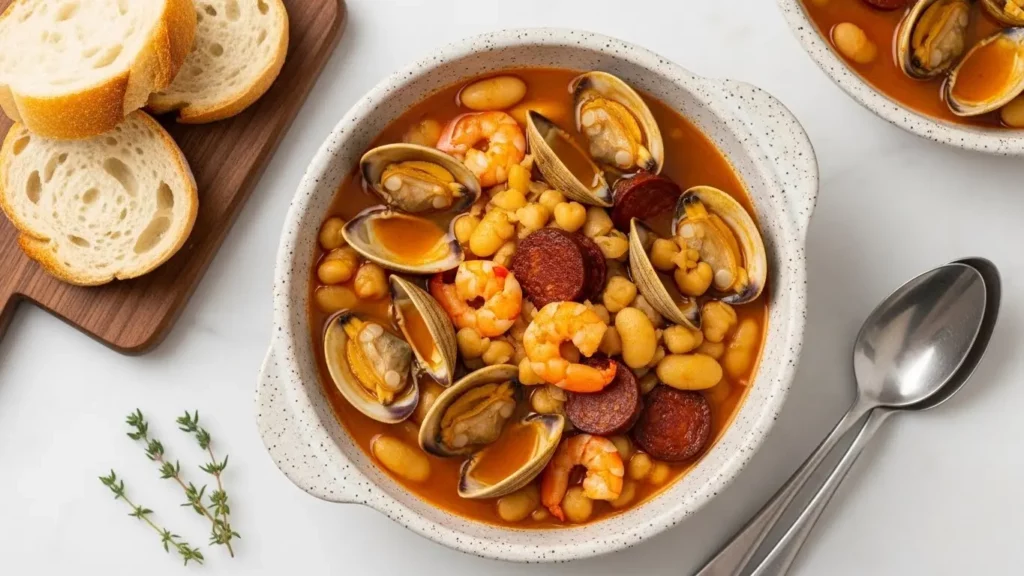
This seafood stew shines as the star of the meal, but the right accompaniments take it from delicious to unforgettable. The key is choosing sides that soak up the incredible broth without competing with the delicate seafood flavors.
My go-to serving style is ladling the stew into wide, shallow bowls with thick slices of toasted crusty bread on the side. The bread becomes a vehicle for every last drop of that tomato-wine broth.
For a more substantial meal, here’s what I recommend:
- Dinner Rolls : Brush slices with butter, garlic, and parsley, then toast until golden
- Simple green salad: Dress arugula with lemon juice and olive oil for a bright contrast
- Honey Roasted Carrots : Asparagus or broccolini work particularly well
- Creamy polenta: The smooth texture complements the chunky stew beautifully
- Buttered egg noodles: A classic pairing that never disappoints
- White rice: Keeps it simple and lets the stew shine
- Grilled sourdough: The tangy bread pairs wonderfully with seafood
For drinks, I always pour the same white wine I used for cooking. A crisp Sauvignon Blanc or unoaked Chardonnay cuts through the richness perfectly.
You might also enjoy: Zuppa Toscana Recipe
Variations to Try
One of the best things about this seafood stew is how adaptable it is to different tastes, dietary needs, and what’s available at your local market. I’ve experimented with countless variations over the years, and these are my favorites.
Seafood swap variations:
- Use lobster tails cut into chunks for a more luxurious version
- Add squid rings in the last 2 minutes of cooking for Mediterranean flair
- Include chunks of salmon for a richer, fattier option
- Try crab meat stirred in at the very end to keep it tender
- Use all shrimp for a budget-friendly version that’s still impressive
Flavor profile variations:
- Add coconut milk and curry paste for a Thai-inspired twist
- Stir in chorizo for Spanish-style seafood stew
- Use Italian sausage for a heartier Cioppino-style dish
- Add fresh corn kernels and Old Bay seasoning for a Lowcountry version
- Include diced potatoes for a more filling one-pot meal
Dietary modification variations:
- Make it spicier by doubling the red pepper flakes and adding cayenne
- Skip the wine and use extra stock with a splash of lemon juice
- Add more vegetables like zucchini or spinach for extra nutrients
- Make it dairy-free by finishing with olive oil instead of butter
- Turn it into a chowder by adding cream and potatoes
Storage and Reheating
While seafood stew is best enjoyed fresh, you can store leftovers successfully if you follow a few important guidelines. The key is separating the seafood from the broth if possible, since seafood continues to cook and can become tough when stored together.
Proper storage guidelines:
- Let the stew cool to room temperature before refrigerating (within 2 hours)
- Store in an airtight container in the refrigerator for up to 2 days
- If possible, remove seafood from broth and store separately
- Don’t freeze this stew—the texture of the seafood deteriorates significantly
- Keep crusty bread separate so it doesn’t get soggy
Reheating instructions:
- Reheat only the amount you’ll eat to prevent repeated heating
- Warm the broth gently over medium-low heat until steaming
- Add refrigerated seafood back in during the last 2-3 minutes
- Don’t let the stew boil during reheating or seafood will toughen
- Add fresh herbs after reheating to brighten the flavors
- Taste and adjust seasoning before serving—flavors dull when refrigerated
Read Also: Irish Stew Recipe
Nutritional Facts
This seafood stew is not only delicious but also remarkably nutritious. Packed with lean protein, vitamins, and minerals, it’s a meal you can feel good about serving your family.
Per serving (approximately 2 cups):
- Calories: 385
- Protein: 42g
- Carbohydrates: 18g
- Dietary Fiber: 4g
- Sugars: 8g
- Total Fat: 14g
- Saturated Fat: 2g
- Cholesterol: 185mg
- Sodium: 890mg
- Potassium: 1,250mg
- Vitamin A: 35% DV
- Vitamin C: 95% DV
- Calcium: 12% DV
- Iron: 25% DV
- Omega-3 fatty acids: 1.2g
Note: Nutritional values are approximate and will vary based on specific seafood choices and portion sizes. This recipe makes approximately 6 servings.
Health Benefits of Key Ingredients
Every component of this seafood stew contributes valuable nutrients to your diet. From heart-healthy omega-3s to immune-boosting vitamins, this dish is as good for your body as it is for your taste buds.
The combination of different seafood types creates a powerhouse of nutrition in a single bowl. Each type brings its own unique benefits, and together they provide a comprehensive range of essential nutrients.
Key health benefits include:
- Omega-3 fatty acids from fish and shellfish support heart health and reduce inflammation
- High-quality protein helps build and repair muscles while keeping you satisfied
- Selenium in seafood acts as a powerful antioxidant and supports thyroid function
- Vitamin B12 from shellfish is essential for nerve function and red blood cell formation
- Iron from clams and mussels prevents anemia and boosts energy levels
- Lycopene from tomatoes may reduce risk of certain cancers and heart disease
- Garlic contains compounds that may lower blood pressure and cholesterol
- Low calorie density means you can enjoy a generous portion without overindulging
Frequently Asked Questions
1. Can I make seafood stew ahead of time?
I recommend making only the broth base ahead of time, not the complete stew with seafood. You can prepare the tomato-vegetable base up to 2 days in advance and refrigerate it.
When you’re ready to serve, simply reheat the base and add your fresh seafood, cooking it according to the recipe instructions—this ensures the seafood stays tender and doesn’t overcook.
2. What’s the best type of fish to use in seafood stew?
Firm white fish works best because it holds its shape during cooking. Halibut, cod, sea bass, and grouper are all excellent choices. Avoid delicate fish like tilapia or sole, which tend to fall apart too easily in the stew.
3. Why is my seafood tough and rubbery?
Overcooking is the most common culprit for tough seafood. Shrimp, scallops, and fish cook incredibly quickly—usually in just 3-4 minutes. The stew should be at a gentle simmer, not a rolling boil, when you add the seafood, and you should remove it from heat as soon as the seafood is just cooked through.
4. Can I substitute the white wine with something else?
Absolutely! You can replace white wine with an equal amount of additional seafood stock plus 2 tablespoons of lemon juice or white wine vinegar. The acid helps brighten the flavors in a similar way to wine, though you’ll miss some of the depth that wine provides.
5. How do I know if mussels and clams are safe to eat?
Before cooking, tap any open shells—they should close within a few seconds if alive. Discard any that stay open or have broken shells. After cooking, discard any that remain closed, as this indicates they were dead before cooking and shouldn’t be eaten.
Final Thoughts
This seafood stew has earned its place as one of my most-loved recipes for good reason. It’s the kind of dish that makes you feel accomplished in the kitchen while actually being surprisingly straightforward to prepare.
The combination of tender seafood, aromatic vegetables, and that rich tomato-wine broth creates something truly special. Every spoonful is packed with flavor and textures that work together beautifully.
I hope this recipe becomes a regular in your cooking rotation, especially during cooler months when you’re craving something warm and comforting. Don’t be afraid to make it your own by adjusting the seafood selection or tweaking the seasonings to match your preferences.
Give this seafood stew recipe a try this week and let me know how it turns out! I’d love to hear about any variations you tried or what you served alongside it. Drop a comment below or share a photo—your feedback always makes my day!
Recommended:
- Lamb Stew Recipe
- Cowboy Stew Recipe
- Kimchi Stew Recipe
- Crockpot Beef Stew Recipe
- Brunswick Stew Recipe
- Vegetable Soup Recipe
- Cabbage Soup Recipe
- Italian Wedding Soup Recipe
- Pasta Fagioli Recipe
- Chicken Gnocchi Soup Recipe