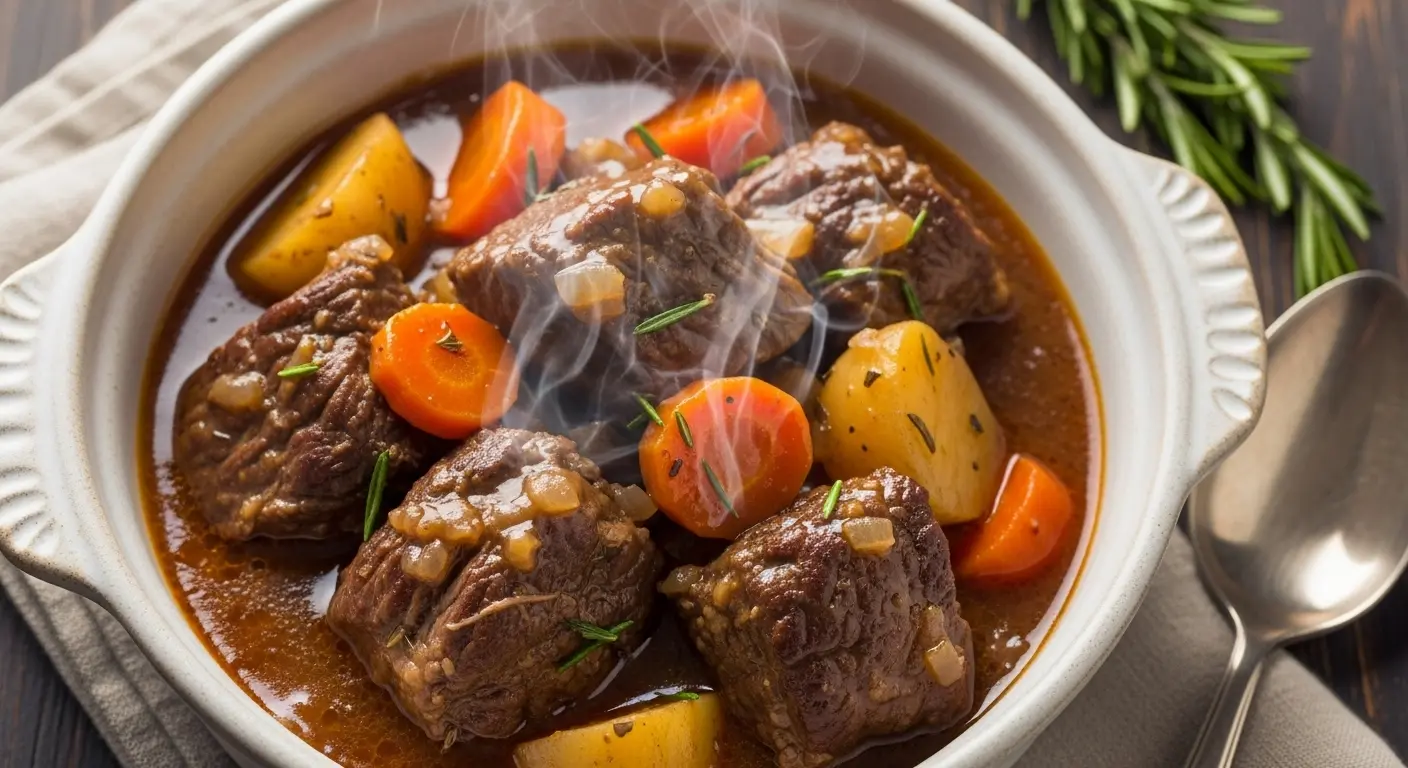
A good crockpot beef stew recipe is one of those meals that feels like a warm hug in a bowl. Tender chunks of beef, golden potatoes, sweet carrots, and a deeply savory broth all come together after a slow, low-and-slow cook that does all the hard work for you.
What makes this version stand out is the searing step before everything goes into the slow cooker. Browning the beef in a hot skillet develops a rich, golden crust that adds layers of flavor the stew simply wouldn’t have otherwise. Add in Worcestershire sauce, tomato paste, garlic, and a splash of red wine, and the broth becomes something truly special.
This is the kind of recipe you can throw together on a Sunday morning, set it to cook, and come home to a dinner that tastes like it took all day. Because it did, and that’s exactly the point.
You might also enjoy this equally cozy Chicken Tortilla Soup for another hearty slow-cooked meal.
Why You’ll Love This Crockpot Beef Stew Recipe
This isn’t just any stew. It’s the kind of meal that earns a permanent spot in your weekly rotation.
The beef becomes fall-apart tender after hours of slow cooking, absorbing all the flavors of the broth and vegetables around it. Chuck roast works best here because the fat and connective tissue break down over time, creating that melt-in-your-mouth texture you can’t get from leaner cuts.
Everything cooks in one pot, which means minimal cleanup and maximum satisfaction. The slow cooker does the heavy lifting while you go about your day.
It’s also incredibly forgiving and easy to customize. Swap the vegetables, adjust the spices, or add a splash of extra broth for a thinner consistency.
Here’s what makes this recipe so great:
- The seared beef creates a rich, deep flavor base that transforms the entire stew
- Potatoes and carrots cook to the perfect tender texture without turning to mush
- Worcestershire sauce and tomato paste add a savory depth that elevates the broth
- Frozen peas stirred in at the end add a pop of color and a fresh bite
- It reheats beautifully, making it perfect for leftovers the next day
- Feeds a crowd easily and scales up without any issues
You might also love making this Slow Cooker Chili on a cold night for another comforting, hands-off dinner.
Ingredients
This recipe uses simple, wholesome ingredients that build into a rich, hearty stew. Using beef chuck roast and cutting it yourself gives you the most tender results, though pre-cut stew meat works just fine as a shortcut.
- 2 lbs (900g) beef chuck roast, cut into 1.5-inch (4cm) cubes
- 3 tablespoons all-purpose flour
- 1 teaspoon salt, plus more to taste
- 1/2 teaspoon black pepper
- 2 tablespoons olive oil
- 1 medium yellow onion, diced
- 4 cloves garlic, minced
- 3 medium carrots, peeled and cut into 1-inch (2.5cm) chunks
- 3 stalks celery, cut into 1-inch (2.5cm) pieces
- 1.5 lbs (680g) Yukon gold potatoes, cut into 1.5-inch (4cm) chunks
- 3 cups (720ml) beef broth
- 1/2 cup (120ml) dry red wine (or extra beef broth)
- 2 tablespoons Worcestershire sauce
- 2 tablespoons tomato paste
- 1 teaspoon dried thyme
- 1 teaspoon smoked paprika
- 2 bay leaves
- 1 cup (150g) frozen peas (added at the end)
- 2 tablespoons cornstarch + 2 tablespoons cold water (for thickening, optional)
- Fresh parsley, chopped (for garnish)
Read Also: Mississippi Pot Roast Recipe
Kitchen Equipment Needed
You don’t need any special tools for this recipe beyond a slow cooker and a good skillet. Having the right size crockpot makes a big difference in how evenly everything cooks.
- 6-quart slow cooker / crockpot
- Large heavy-bottomed skillet or cast iron pan for searing
- Cutting board and sharp chef’s knife
- Wooden spoon or silicone spatula
- Measuring cups and spoons
- Small mixing bowl (for cornstarch slurry)
- Ladle for serving
- Tongs for handling the beef
This technique works wonderfully in other slow-cooked dishes too, like this Slow Cooker Pot Roast.
Recommended Products for This Recipe
These are products that have been carefully selected based on quality and performance to help you make the best possible crockpot beef stew.
1. Crock-Pot 6-Quart Slow Cooker
A 6-quart slow cooker is the ideal size for this recipe, giving the beef and vegetables plenty of room to cook evenly without overcrowding. The oval shape is especially practical for larger cuts of meat. A programmable timer means dinner is ready exactly when you need it.
2. Lodge Cast Iron Skillet
A cast iron skillet gets ripping hot and holds heat evenly, which is exactly what you need to get a proper sear on the beef. That golden-brown crust is where the flavor really starts. This skillet is durable, naturally non-stick over time, and will last a lifetime.
3. Kitchen Bouquet Browning and Seasoning Sauce
A small splash of this browning sauce deepens the color of the stew broth from pale brown to a rich, restaurant-quality mahogany. It adds just a hint of extra savory depth without overpowering the other flavors. It’s optional but truly makes a visual and flavorful difference.
4. OXO Good Grips Fat Separator
After hours of slow cooking, there can be excess fat sitting on top of the broth. A fat separator makes it easy to pour off the clean, flavorful broth while leaving the fat behind. The result is a cleaner, more polished final stew.
Another favorite for cozy slow cooker dinners: Crockpot Taco Soup
Step-by-Step Instructions
Step 1: Prepare the Beef
- Remove the beef chuck roast from the refrigerator about 20 minutes before cooking so it’s not ice cold when it hits the pan. Cold meat tends to steam rather than sear.
- Using a sharp knife and cutting board, trim off any large, thick pieces of external fat. Small marbled fat running through the meat is fine and will add flavor.
- Cut the beef into roughly 1.5-inch (4cm) cubes. Try to keep them uniform in size so they cook evenly.
- Place the beef cubes into a large bowl or directly on a clean surface. Sprinkle with 1 teaspoon of salt and 1/2 teaspoon of black pepper, tossing to coat all sides.
- Add 3 tablespoons of all-purpose flour to the beef and toss well until every piece is lightly coated. This flour will help thicken the stew as it cooks and creates a better crust when searing.
Step 2: Sear the Beef
- Heat a large heavy-bottomed skillet or cast iron pan over medium-high heat. Add 2 tablespoons of olive oil and allow it to get very hot before adding the beef. The oil should shimmer.
- Working in batches of 5-6 pieces at a time, place the beef in the skillet in a single layer. Do not overcrowd the pan, or the beef will steam instead of sear.
- Let the beef cook undisturbed for about 2 minutes until a deep brown crust forms on the bottom. Flip each piece and sear for another 1-2 minutes on the other side.
- Transfer the seared beef to the slow cooker insert. Repeat with remaining beef, adding a little more oil if needed between batches.
- Once all the beef is seared and transferred to the crockpot, reduce the skillet heat to medium and do not wipe it out. Those browned bits on the bottom (the fond) are full of flavor.
Step 3: Sauté the Aromatics
- Add the diced onion to the same skillet with all the remaining drippings. Cook over medium heat for 3-4 minutes, stirring occasionally, until the onion is softened and translucent.
- Add the minced garlic to the pan and stir continuously for 30 seconds until fragrant. Watch carefully so the garlic doesn’t burn.
- Pour in the 1/2 cup (120ml) of dry red wine (or extra beef broth if not using wine). Using your wooden spoon, scrape up all the browned bits stuck to the bottom of the pan. These deglazed bits dissolve into the liquid and add enormous flavor to the broth.
- Let the wine cook down for about 1 minute, then pour the entire contents of the skillet, including all the liquid, over the beef in the slow cooker.
Step 4: Add the Vegetables and Broth
- Add the carrot chunks to the slow cooker, distributing them around and on top of the beef.
- Add the celery pieces next, tucking them in among the other ingredients.
- Add the Yukon gold potato chunks. Yukon golds hold their shape beautifully during long slow cooking without turning mushy, which is why they’re the preferred choice here.
- Pour in 3 cups (720ml) of beef broth, ensuring the liquid comes about three-quarters of the way up the ingredients. It doesn’t need to fully submerge everything.
- Add 2 tablespoons of Worcestershire sauce and 2 tablespoons of tomato paste, stirring gently to help the tomato paste dissolve into the liquid.
- Sprinkle in 1 teaspoon of dried thyme and 1 teaspoon of smoked paprika, then stir again to combine everything.
- Tuck 2 bay leaves into the stew near the top so they’re easy to find and remove later. Do not submerge them.
Step 5: Slow Cook the Stew
- Place the lid securely on the slow cooker.
- Cook on LOW for 8-10 hours for the most tender, fall-apart beef, or on HIGH for 4-5 hours if you’re shorter on time. LOW is always preferred for the best texture and flavor development.
- Resist the urge to lift the lid while cooking. Every time the lid is removed, heat escapes and adds 20-30 minutes to the cooking time.
- About 30 minutes before serving, remove the bay leaves and discard them.
Step 6: Thicken the Broth (Optional)
- Check the consistency of the broth. If it looks too thin for your liking, this step will fix it quickly.
- In a small bowl, whisk together 2 tablespoons of cornstarch with 2 tablespoons of cold water until completely smooth with no lumps. This is called a slurry.
- Pour the cornstarch slurry into the slow cooker and gently stir it into the stew.
- Replace the lid and cook on HIGH for an additional 20-30 minutes, or until the broth has thickened to your desired consistency.
- Note: The potatoes also naturally release starch as they cook, which helps thicken the stew on its own. You may find the thickening step isn’t necessary.
Step 7: Add the Peas and Finish
- Add 1 cup (150g) of frozen peas directly to the stew during the last 10-15 minutes of cooking. There is no need to thaw them first.
- Stir them in gently and replace the lid. Cook until the peas are heated through and bright green.
- Taste the stew and adjust seasoning with additional salt and pepper as needed.
- Ladle into bowls and garnish with freshly chopped parsley before serving.
For another deeply satisfying beef dish, try this Beef Stroganoff.
Tips for Success
These small adjustments make a big difference in the final result of your crockpot beef stew.
- Never skip the searing step. Browning the beef first is the single most impactful thing you can do for flavor. The Maillard reaction creates hundreds of new flavor compounds that simply don’t develop in a slow cooker.
- Cut vegetables into large, uniform pieces. Smaller pieces will turn to mush after 8+ hours of cooking. Aim for at least 1.5-inch chunks for the potatoes and carrots.
- Use Yukon gold potatoes over russet. Russets tend to fall apart and thicken the stew to a starchy paste. Yukon golds hold their shape much better.
- Add peas and fresh herbs at the very end. Delicate ingredients like frozen peas and fresh parsley should go in during the last 10-15 minutes, not at the beginning, or they’ll lose all color and texture.
- Don’t lift the lid. Every peek lets out heat and significantly extends the cooking time.
- Season in layers. Season the beef before searing, add aromatics while sautéing, and taste and adjust the final stew before serving.
- Deglaze the pan thoroughly. Those browned bits left in the skillet after searing the beef are concentrated flavor. Don’t leave them behind.
Read Also: Stuffed Pepper Soup Recipe
Serving Suggestions
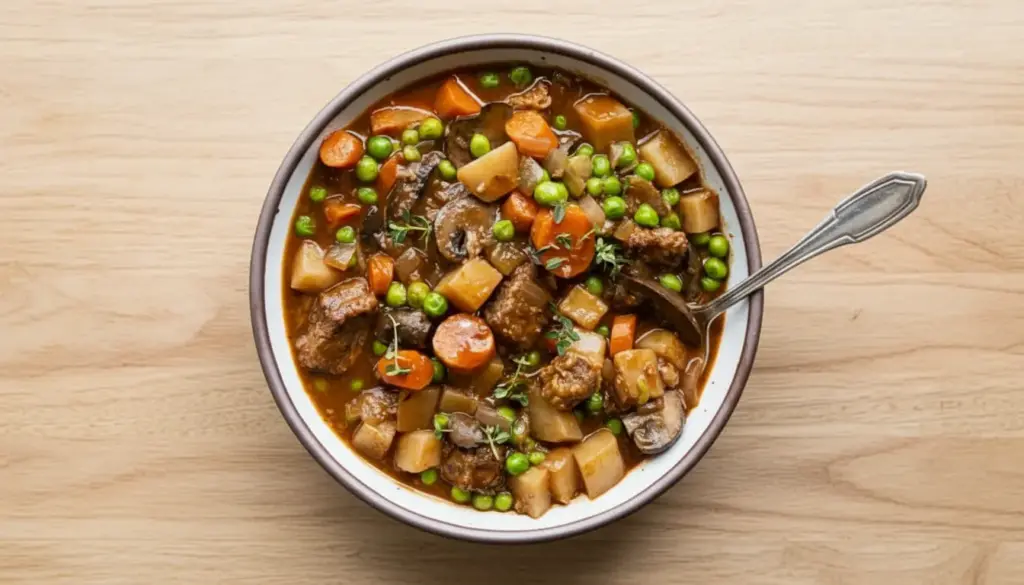
Crockpot beef stew is a complete meal on its own, but the right side dish takes it from satisfying to truly memorable.
A thick slice of Cheesy Garlic Bread is one of the most popular pairings for a reason. It’s perfect for soaking up every last drop of the rich, flavorful broth.
Here are more great ways to serve this stew:
- Crusty bread or biscuits for dipping and soaking up the broth
- Creamy Mashed Potatoes underneath the stew for an ultra-comforting meal
- Egg noodles or wide pasta for a heartier, more filling bowl
- Dinner Rolls fresh from the oven alongside the stew
- A simple green salad to balance the richness of the broth
- Skillet Cornbread for a Southern-inspired pairing that works beautifully
Variations to Try
Once you have the base recipe down, this crockpot beef stew is endlessly customizable based on what you have on hand or what flavors you love most.
- Guinness Beef Stew: Replace the red wine with one cup of Guinness stout for an Irish-inspired twist with deep, malty flavors.
- Mushroom Beef Stew: Add 8 oz (225g) of sliced cremini or button mushrooms to the slow cooker for an earthy, umami-packed variation.
- Spicy Beef Stew: Add 1/2 teaspoon of crushed red pepper flakes and a diced jalapeño with the aromatics for a warming, spicy kick.
- Sweet Potato Variation: Swap half the Yukon gold potatoes for sweet potatoes, which add a natural sweetness that contrasts beautifully with the savory broth.
- Tomato-Forward Version: Double the tomato paste and add one 14 oz (400g) can of diced tomatoes for a stew with a richer, more tomato-based broth.
- Barley Addition: Stir in 1/3 cup of pearl barley with the initial ingredients for a heartier, more filling stew with extra texture.
- Herb-Forward Version: Add a small bunch of fresh rosemary and thyme sprigs tied together at the beginning, then remove before serving.
You might also enjoy this Cowboy Stew for a fun, hearty variation on the slow-cooked stew concept.
Storage and Reheating
Crockpot beef stew stores and reheats beautifully, making it an ideal meal prep option for the week ahead.
Allow the stew to cool completely before transferring to storage containers to prevent condensation from watering down the broth.
- Refrigerator: Store in an airtight container for up to 4 days. The flavors deepen overnight, so leftovers are often even better than the first bowl.
- Freezer: Transfer to freezer-safe containers or zip-lock bags in portion-sized amounts. Freeze for up to 3 months. Note that potatoes can become slightly grainy after freezing; if you plan to freeze, consider leaving them out and adding fresh potatoes when reheating.
- Reheating on the stovetop: Pour into a saucepan and heat over medium-low heat, stirring occasionally, until heated through. Add a splash of beef broth if the stew has thickened too much in storage.
- Reheating in the microwave: Transfer to a microwave-safe bowl, cover loosely, and heat in 90-second intervals, stirring between each, until hot throughout.
- Reheating in the slow cooker: Place leftovers back in the slow cooker on LOW for 1-2 hours until warmed through. This is ideal for large batch reheating.
Read Also: Brunswick Stew Recipe
Nutritional Facts
(Per serving, based on 6 servings. Values are estimates and may vary based on specific ingredients used.)
| Nutrient | Amount Per Serving |
|---|---|
| Calories | ~420 kcal |
| Total Fat | 14g |
| Saturated Fat | 4.5g |
| Cholesterol | 85mg |
| Sodium | 680mg |
| Total Carbohydrates | 34g |
| Dietary Fiber | 5g |
| Sugars | 6g |
| Protein | 36g |
| Vitamin A | 120% DV |
| Vitamin C | 30% DV |
| Iron | 25% DV |
| Potassium | 900mg |
Another great high-protein comfort meal to try is this Chicken Stew.
Health Benefits of Key Ingredients
This crockpot beef stew isn’t just comfort food. The ingredients work together to deliver real nutritional value with every bowl.
Beyond its amazing taste, this stew packs in a seriously impressive range of nutrients from the combination of beef, root vegetables, and herbs.
Here’s a closer look at what makes each ingredient so beneficial:
- Beef chuck roast is an excellent source of complete protein, iron, zinc, and B vitamins, particularly B12, which supports energy metabolism and nervous system health. The slow cooking method also breaks down collagen in the meat into gelatin, which supports joint and gut health.
- Carrots are loaded with beta-carotene, the precursor to Vitamin A, which supports eye health, immune function, and skin. A single serving of this stew provides over 100% of your recommended daily Vitamin A intake.
- Yukon gold potatoes provide a good source of potassium, Vitamin C, and resistant starch. Potassium is essential for heart health and helps manage blood pressure.
- Celery is low in calories but rich in Vitamin K, folate, and antioxidants. It adds flavor without adding unnecessary calories to the dish.
- Garlic contains allicin, a naturally occurring compound with well-documented anti-inflammatory and immune-boosting properties. It’s most potent when freshly minced.
- Tomato paste is a concentrated source of lycopene, a powerful antioxidant linked to reduced risk of certain chronic diseases. Cooking tomatoes actually increases the bioavailability of lycopene.
- Peas add plant-based protein, fiber, and Vitamins C and K, rounding out the nutritional profile of the stew with a pop of color and a fresh flavor.
For another nutrient-rich comfort meal, try this Vegetable Soup.
Frequently Asked Questions
1. What is the best cut of beef for crockpot beef stew?
Beef chuck roast is the best choice for crockpot beef stew by a wide margin. The high fat and connective tissue content in chuck breaks down beautifully during the long, slow cooking process, creating incredibly tender, flavorful beef.
Leaner cuts like sirloin or round steak can be used in a pinch, but they tend to dry out and become chewy over extended cooking times rather than becoming tender. Pre-cut “stew meat” from the grocery store is usually chuck and works perfectly well.
2. Do I have to sear the beef before adding it to the slow cooker?
Technically, no, but the flavor difference is significant. Searing creates a deep, caramelized crust on the beef through the Maillard reaction, which adds layers of complexity to the entire stew broth.
If you’re truly short on time, you can skip this step and add the flour-coated beef directly to the slow cooker. The stew will still taste good, but it won’t have that same rich, restaurant-quality depth of flavor.
3. Can I cook crockpot beef stew on HIGH instead of LOW?
Yes, you can cook the stew on HIGH for 4-5 hours instead of LOW for 8-10 hours. However, LOW is strongly recommended if your schedule allows.
The slower the cook, the more time the collagen in the chuck roast has to break down into gelatin, resulting in silkier broth and more tender beef. Cooking on HIGH can sometimes leave the meat slightly less tender and the broth a little thinner.
4. How do I thicken beef stew in the slow cooker?
There are a few good methods. The easiest is the cornstarch slurry method: mix 2 tablespoons of cornstarch with 2 tablespoons of cold water, stir it into the stew, and cook on HIGH for another 20-30 minutes.
Coating the beef in flour before searing is the first line of thickening defense. The potatoes also release starch as they cook, naturally thickening the broth. If the stew still seems too thin at the end, stir everything well and let it sit uncovered for 10 minutes before serving.
5. Can I make crockpot beef stew ahead of time?
Absolutely, and this is one of the best things about this recipe. The stew actually tastes better the next day after the flavors have had time to meld together overnight in the refrigerator.
You can prep all the vegetables and cube the beef the night before, storing them separately in the fridge. In the morning, sear the beef, add everything to the slow cooker, and start cooking. Leftovers reheat beautifully on the stovetop or in the microwave with a splash of extra broth to loosen things up.
Read Also: Hamburger Soup Recipe
Final Thoughts
This crockpot beef stew recipe is the kind of dish that makes you want to put on a cozy sweater, light a candle, and settle in for the evening. It’s hearty, deeply satisfying, and filled with flavors that only develop through hours of patient, slow cooking.
The best part is how little active effort it requires. You do a bit of prep work up front, and the slow cooker handles everything else. Come dinnertime, you’re rewarded with a rich, thick stew that tastes like it took far more effort than it actually did.
Give this recipe a try the next time the weather turns cool or you’re craving something truly comforting. If you make it, leave a comment below and let me know how it turned out! I’d love to hear if you added any fun variations or personal twists.
Recommended:
- Crock Pot Beef Short Ribs
- Chicken and Dumplings
- Beef Bourguignon
- Lamb Stew
- Irish Stew
- Venison Stew
- Loaded Potato Soup
- Chicken Vegetable Soup
- Beef and Barley Soup
- Caldo de Res