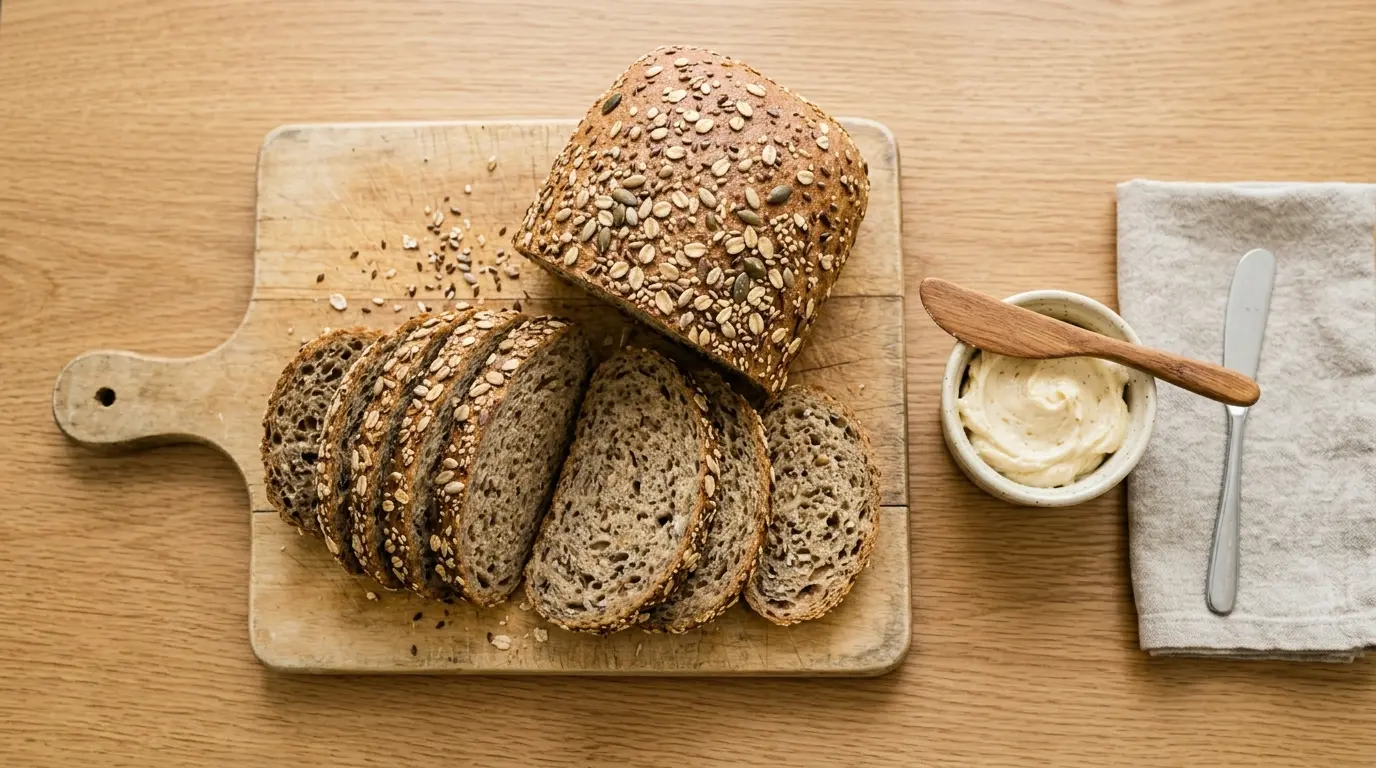
If you’ve been looking for a multigrain bread recipe that actually works at home, you’ve landed in exactly the right place.
This isn’t just another dense, dry loaf that crumbles the moment you slice it. It’s soft on the inside, golden and chewy on the outside, and packed with the nutty, earthy flavor that only a blend of whole grains can give.
What makes multigrain bread special is the texture and depth of flavor you simply can’t get from plain white bread. When you combine wheat, oats, flaxseed, sunflower seeds, and other grains, each one brings something to the table: fiber, healthy fats, protein, and a richness that makes every bite satisfying.
The best part? This recipe uses pantry-friendly ingredients and doesn’t require advanced baking skills. Once you try it, you’ll wonder why you ever bought the store-bought version.
You might also enjoy: Whole Wheat Bread Recipe
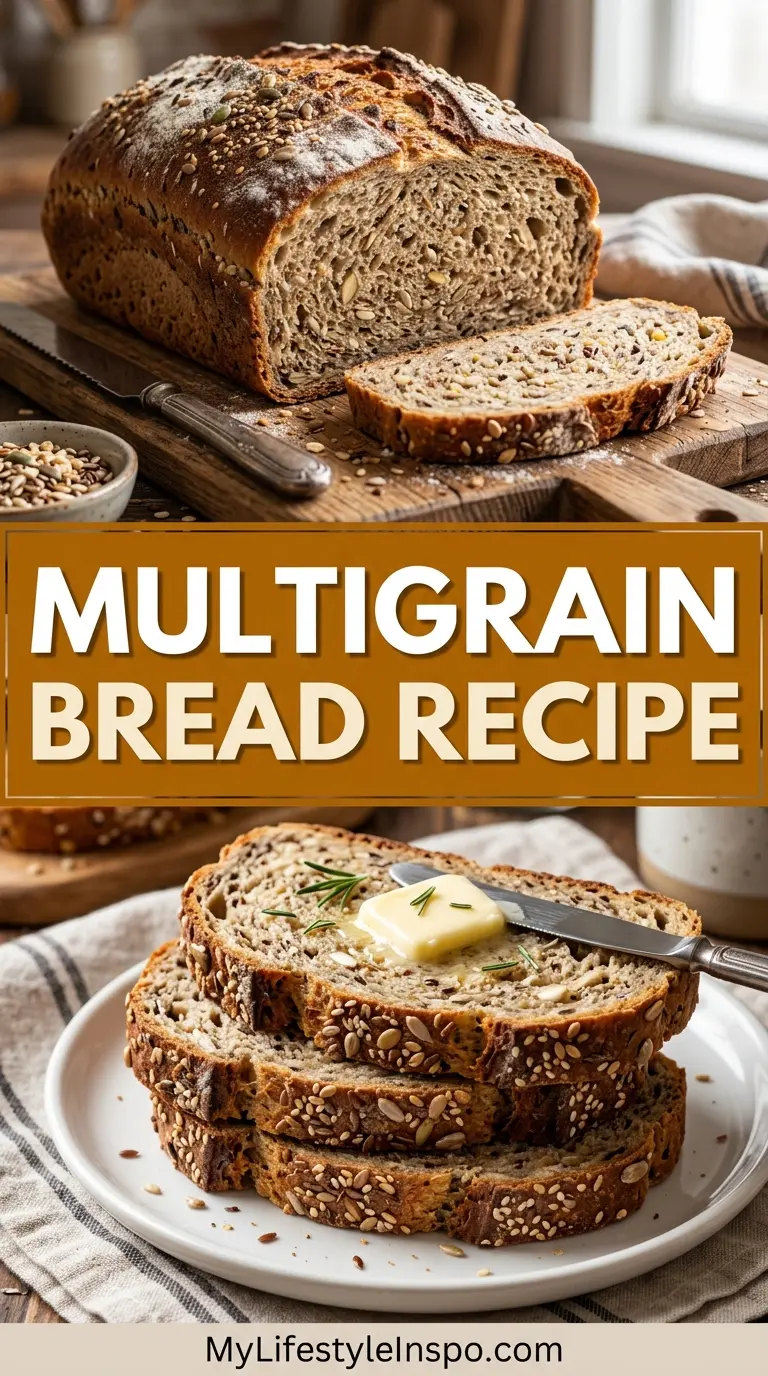
Why You’ll Love This Multigrain Bread Recipe
This multigrain bread recipe is genuinely one of those bakes you’ll come back to again and again.
The flavor is incredible. You get a slightly nutty, malty taste from the blend of grains that is so much more interesting than plain sandwich bread.
It’s also wonderfully versatile. This loaf works for everything from morning toast to packed lunches to a dinner side.
It’s genuinely filling. The combination of grains and seeds provides slow-digesting carbohydrates that keep you fuller longer.
Here’s what else you’ll love:
- A soft, tender crumb that doesn’t fall apart when sliced
- A beautifully golden crust with a light chew
- No fancy equipment required, just basic baking tools
- Ingredients that are easy to find in any grocery store
- Freezer-friendly, so you can bake a double batch and save one for later
- Far more nutritious than store-bought bread with fewer additives
If you love hearty homemade loaves, you’ll also want to check out this Sandwich Bread Recipe for a classic everyday option.
Ingredients
You’ll use a straightforward mix of pantry staples alongside a few whole grains. The multigrain blend is what defines this bread and gives it its signature character.
Here is everything you need:
- 1 cup (240 ml) warm water (around 110°F / 43°C)
- 1 cup (240 ml) warm whole milk
- 2 tablespoons (30 ml) honey
- 2 1/4 teaspoons (7 g) active dry yeast (one standard packet)
- 2 tablespoons (28 g) unsalted butter, softened
- 1 1/2 teaspoons (9 g) salt
- 1 cup (90 g) old-fashioned rolled oats
- 1/4 cup (40 g) flaxseeds (ground or whole)
- 1/4 cup (35 g) sunflower seeds, hulled
- 2 tablespoons (18 g) sesame seeds
- 2 tablespoons (16 g) millet
- 1 cup (120 g) whole wheat flour
- 2 to 2 1/2 cups (240 to 300 g) bread flour, plus more for kneading
For the topping:
- 1 egg, lightly beaten (for egg wash)
- 2 tablespoons rolled oats (for sprinkling)
- 1 tablespoon mixed seeds (for sprinkling)
For a deeper, more complex grain flavor, you can also try this alongside a Rye Bread Recipe if you enjoy dark, earthy loaves.
Kitchen Equipment Needed
You don’t need much to pull this off. A few standard kitchen tools will do the job beautifully.
Here’s what to gather before you start:
- Large mixing bowl
- Stand mixer with dough hook (or your hands for kneading)
- Digital kitchen scale (for precise measurements)
- Instant-read thermometer (for checking water and bread doneness)
- 9×5 inch loaf pan
- Plastic wrap or a clean kitchen towel
- Bench scraper
- Wire cooling rack
- Pastry brush (for egg wash)
- Measuring cups and spoons
Read Also: Artisan Bread Recipe
Recommended Products for This Recipe
These are products I genuinely recommend based on quality and performance. They will make a real difference in your baking results.
1. Bob’s Red Mill 10 Grain Hot Cereal
This versatile 10-grain cereal blend is one of the best ways to add a variety of whole grains to your bread in one shot. It contains wheat, rye, corn, oats, soy, and more, giving you incredible flavor complexity without sourcing a dozen separate grains. You can substitute 1/2 cup for an equivalent portion of oats and millet in this recipe.
2. Lodge Loaf Pan, Cast Iron
A cast iron loaf pan conducts heat exceptionally evenly, giving your multigrain bread a consistent, deep-golden crust all the way around. Unlike thinner aluminum pans, it won’t warp under high heat and it improves with every use. This is a tool that genuinely pays off over years of baking.
3. King Arthur Whole Wheat Flour
King Arthur whole wheat flour is milled finer than many competitors, which means it produces a lighter texture in your bread while still delivering that wholesome whole grain flavor. It is a consistent, high-quality flour that home bakers have relied on for generations.
4. Brød and Taylor Folding Proofer
A dedicated bread proofer maintains a perfect, steady temperature for your dough to rise. If you’ve ever had a loaf that didn’t rise enough because your kitchen was too cold, this is the tool that solves that problem. It folds flat for storage, making it practical for home kitchens.
5. OXO Good Grips Bench Scraper
A quality bench scraper is essential for working with sticky multigrain dough. It helps you cleanly separate the dough from your work surface, shape the loaf efficiently, and cut through without tearing. It is one of those small investments that makes the whole process dramatically smoother.
Another fantastic beginner-friendly option is this No-Knead Bread Recipe, which requires even less equipment and yields a wonderful rustic loaf.
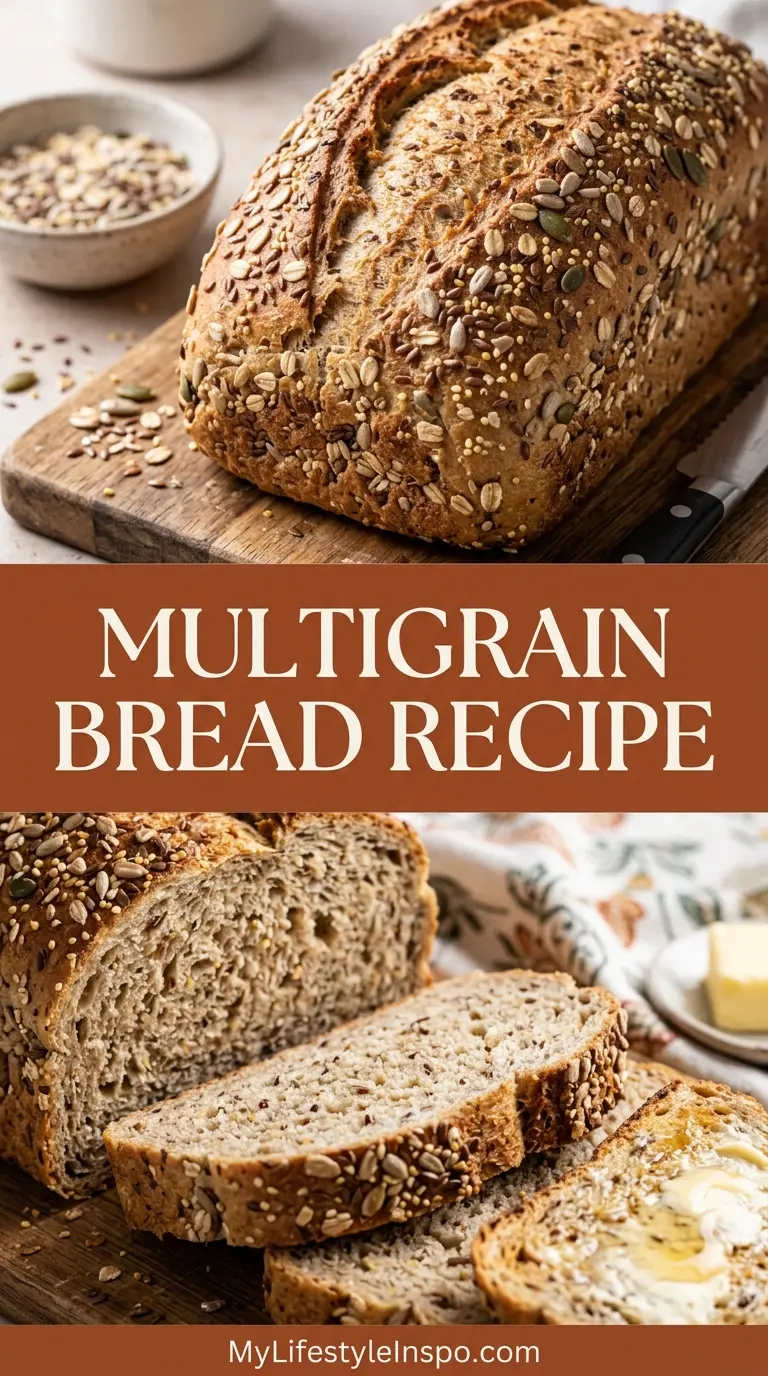
Step-by-Step Instructions
Step 1: Activate the Yeast
- Combine the warm water and warm milk in a large bowl or the bowl of your stand mixer. The liquid should feel comfortably warm to the touch, not hot. Aim for 105 to 110°F (40 to 43°C) using your instant-read thermometer.
- Add the honey and stir gently to combine.
- Sprinkle the active dry yeast over the surface of the liquid. Do not stir yet.
- Let the mixture sit for 5 to 10 minutes. You are looking for the yeast to become frothy and foamy on top. This tells you the yeast is alive and active.
- If the yeast does not foam after 10 minutes, your water may have been too hot or the yeast may be expired. Start fresh.
Step 2: Soak the Grains
- While the yeast activates, combine the rolled oats, flaxseeds, sunflower seeds, sesame seeds, and millet in a small bowl.
- Pour about 1/4 cup (60 ml) of hot water (not boiling) over the grain mixture and stir to coat.
- Let this sit for 5 minutes. Soaking the grains slightly softens them, which prevents them from creating dry, scratchy pockets in your finished bread.
- Drain any excess liquid that has not been absorbed and set the grain mixture aside.
Step 3: Build the Dough
- Once the yeast mixture is foamy, add the softened butter and salt. Stir briefly to distribute.
- Add the soaked grain mixture to the yeast mixture and stir it in.
- Add the whole wheat flour and stir until it is incorporated. The mixture will look shaggy and rough at this point. That is normal.
- Add the bread flour one cup at a time, mixing after each addition. You are looking for a dough that is soft and slightly tacky but not overly sticky. It should pull away from the sides of the bowl.
- You may not need the full 2 1/2 cups of bread flour. Stop adding once the dough comes together and holds its shape without sticking excessively to your hands.
Step 4: Knead the Dough
- If using a stand mixer, attach the dough hook and knead on medium-low speed for 8 to 10 minutes. The dough is ready when it is smooth, elastic, and slightly tacky. It should pass the windowpane test: stretch a small piece of dough thin enough to see light through without it tearing.
- If kneading by hand, turn the dough out onto a lightly floured surface and knead for 10 to 12 minutes, using the heel of your hand to push the dough away from you, fold it back, rotate it 90 degrees, and repeat.
- Because this is a multigrain dough, it will never feel as silky as a plain white bread dough. The seeds and grains create small interruptions in the gluten network. That is perfectly fine.
Step 5: First Rise
- Lightly grease a large bowl with neutral oil or non-stick spray.
- Shape the dough into a rough ball and place it in the greased bowl.
- Turn it once so all sides are lightly coated with oil.
- Cover the bowl tightly with plastic wrap or a clean kitchen towel.
- Place it in a warm, draft-free spot. A good option is inside your oven with just the light on, or near a warm stovetop.
- Let the dough rise for 1 to 1.5 hours, or until it has doubled in size. The timing will vary depending on the warmth of your kitchen.
Step 6: Shape the Loaf
- Once the dough has doubled, gently punch it down to release the gas buildup.
- Turn the dough out onto a lightly floured surface.
- Press it into a rough rectangle about the width of your loaf pan.
- Starting at the far short edge, roll the dough tightly toward you, like a log. Press gently to keep the roll firm as you go.
- Pinch the seam tightly along the bottom of the roll.
- Pinch the two short ends closed as well, tucking them neatly under.
Step 7: Second Rise
- Lightly grease your 9×5 inch loaf pan.
- Place the shaped loaf seam-side down into the pan.
- Cover loosely with greased plastic wrap. Do not wrap it tightly or the plastic will restrict the rise.
- Let the loaf rise for 45 to 60 minutes, or until the dough crowns about 1 inch (2.5 cm) above the rim of the pan. This second rise develops the final texture and flavor.
- While the dough is in its second rise, preheat your oven to 375°F (190°C).
Step 8: Apply Egg Wash and Topping
- Once the loaf has risen, gently brush the top with the beaten egg using your pastry brush. Be gentle so you don’t deflate the dough.
- Sprinkle the remaining rolled oats and mixed seeds evenly over the top of the loaf.
- The egg wash gives the loaf its beautiful, deep golden color. The seeds on top add visual appeal and a satisfying crunch.
Step 9: Bake the Bread
- Place the loaf pan on the center rack of the preheated oven.
- Bake for 35 to 40 minutes, until the top is a deep golden brown.
- To check for doneness, remove the loaf from the pan and tap the bottom firmly. A hollow sound indicates the bread is cooked through.
- Alternatively, use your instant-read thermometer: the internal temperature should read 190 to 200°F (88 to 93°C) when fully baked.
- If the top is browning too quickly but the center isn’t done yet, loosely tent a piece of aluminum foil over the loaf for the final 10 minutes.
Step 10: Cool Before Slicing
- Remove the loaf from the pan immediately after baking and transfer it to a wire cooling rack.
- Resist the urge to slice the bread while it is hot. The internal structure is still setting as the bread cools.
- Wait at least 45 minutes to 1 hour before slicing. Cutting too early will result in a gummy, dense crumb.
- Once cooled, slice with a serrated bread knife using a gentle sawing motion.
For a beautiful hands-off variation, you might also enjoy this Dutch Oven Bread Recipe that creates a stunning crackling crust.
Tips for Success
A few smart techniques make all the difference between a good loaf and a great one. Keep these in mind as you bake.
Here are the most important tips:
- Measure by weight, not just volume. Flour especially can be compacted or airy depending on how you scoop it, which dramatically affects the outcome. A kitchen scale removes this variable.
- Don’t rush the rise. Bread that rises slowly develops better flavor. If your kitchen is cold, the rise may take longer. Be patient and look for the dough to double, not just the timer.
- Use warm, not hot, liquid. Water or milk above 115°F (46°C) can kill yeast. Use your thermometer every time.
- Soak the grains before adding. This prevents the seeds and oats from pulling moisture out of the dough during baking, which can lead to a dry crumb.
- Don’t over-flour the dough. Adding too much flour in an effort to reduce stickiness results in a heavy, dense loaf. The dough should be soft and slightly tacky when properly developed.
- Let it cool fully. Cutting into a hot loaf is the most common mistake home bakers make. The crumb literally finishes setting as it cools, and slicing too early compresses it.
If you enjoy dark, rich bread flavors, you’ll also love this Pumpernickel Bread Recipe as a companion bake.
Serving Suggestions
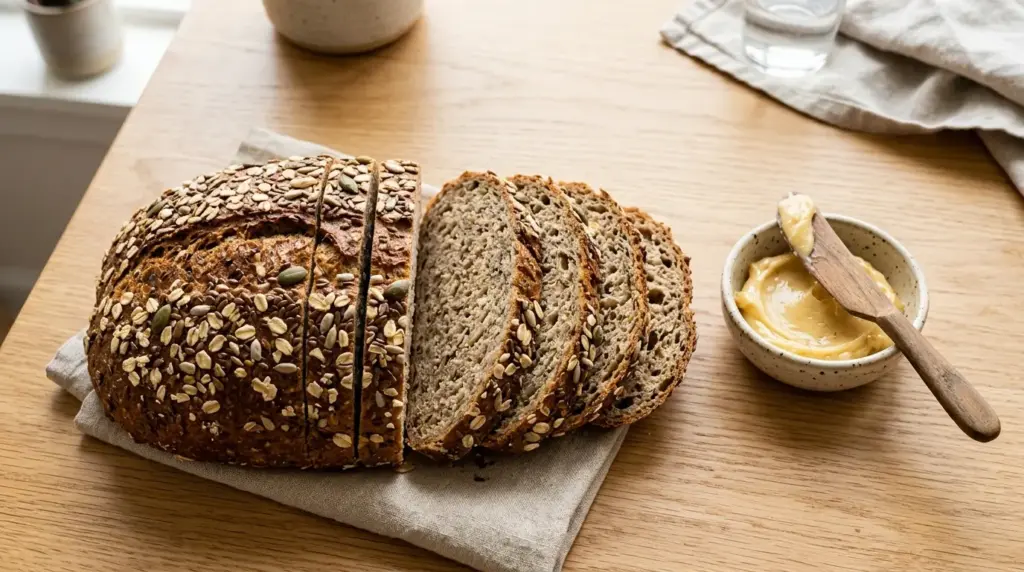
Multigrain bread is a versatile workhorse in the kitchen and truly shines in so many ways.
It makes exceptional toast, deeply satisfying avocado toast with its hearty structure, and unbeatable sandwiches. But it also pairs beautifully alongside warming soups and stews.
Here are some delicious ways to serve it:
- Top a thick slice with Honey Butter and a drizzle of raw honey for a simple, satisfying breakfast
- Use it for Avocado Toast, where the sturdy crumb holds up beautifully to toppings
- Pair a slice alongside a bowl of Chicken Noodle Soup for the ultimate cozy meal
- Layer it with turkey, mustard, and sharp cheddar for a hearty lunchbox sandwich
- Serve it alongside a warming Lentil Soup for a nutritious weeknight dinner
This bread also pairs wonderfully with a hearty bowl of Minestrone Soup for a classic, satisfying comfort meal.
Variations to Try
Once you’re comfortable with the base recipe, there are so many directions you can take this bread. Each variation shifts the flavor and texture in a unique way.
Here are some popular variations to explore:
- Seeded multigrain loaf: Double the seed quantities and add 2 tablespoons of poppy seeds for an extra crunchy, seed-heavy loaf that is fantastic thinly sliced
- Honey oat multigrain: Replace the milk with buttermilk and increase honey to 3 tablespoons for a slightly sweeter, softer loaf
- Dark multigrain: Replace 1/2 cup of bread flour with dark rye flour to create a denser, more robust loaf with a deeper flavor
- Vegan multigrain bread: Use plant-based milk, replace butter with coconut oil, and skip the egg wash in favor of a plant-based milk brush
- Multigrain rolls: Divide the dough into 12 equal portions after shaping and bake in a greased 9×13 inch pan for 22 to 25 minutes to make pull-apart multigrain rolls
- Add-in options: Stir in 1/4 cup (40 g) dried cranberries and a teaspoon of orange zest for a sweet, festive variation
For another deeply wholesome grain loaf, take a look at this unique Seeded Miso Sweet Potato Bread Recipe.
Storage and Reheating
Multigrain bread stores well when handled correctly and maintains its flavor and texture for several days.
Follow these storage guidelines for best results:
- Room temperature: Store the fully cooled loaf in a bread bag or wrapped in a clean kitchen towel at room temperature for up to 3 days. Avoid plastic bags for more than a day, as they trap moisture and can make the crust soggy.
- Refrigerator: Refrigerating bread is generally not recommended, as the fridge accelerates staling. However, if your kitchen is very warm and humid, refrigeration can extend shelf life to 5 to 6 days. Wrap it tightly in plastic wrap before refrigerating.
- Freezer: Multigrain bread freezes beautifully. Slice the loaf before freezing so you can pull out individual slices as needed. Wrap the loaf tightly in plastic wrap, then in a layer of aluminum foil, and freeze for up to 3 months.
- Reheating: To refresh slices, pop them directly in the toaster. To revive a whole or partial loaf, wrap it in foil and warm it in a 300°F (150°C) oven for 10 to 15 minutes until heated through.
Read Also: French Bread Recipe
Nutritional Facts
These values are approximate and based on one slice (approximately 1/12 of the loaf). Exact values will vary depending on the specific grains and seeds used.
| Nutrient | Per Slice (Approx.) |
|---|---|
| Calories | 185 kcal |
| Total Fat | 5 g |
| Saturated Fat | 1.5 g |
| Carbohydrates | 30 g |
| Dietary Fiber | 4 g |
| Sugars | 3 g |
| Protein | 6 g |
| Sodium | 210 mg |
| Iron | 1.8 mg |
| Calcium | 45 mg |
Note: This multigrain bread is notably higher in fiber and protein than standard white sandwich bread, making it a more nutritious everyday choice.
For a comparison to another nourishing loaf, check out this Healthy Banana Bread Recipe if you enjoy wholesome baking.
Health Benefits of Key Ingredients
The beauty of this multigrain bread recipe is that every ingredient brings something nutritionally valuable to the table.
It’s one of those bakes where eating well and eating deliciously aren’t in conflict at all.
Here’s a breakdown of the key ingredients and what they do for you:
- Whole wheat flour provides dietary fiber, B vitamins, and minerals like magnesium and iron. The bran and germ remain intact, which makes it nutritionally superior to refined white flour.
- Rolled oats are rich in beta-glucan, a soluble fiber that has been linked to reduced cholesterol levels and improved heart health. They also add a mild sweetness and help keep the crumb moist.
- Flaxseeds are an outstanding source of omega-3 fatty acids, lignans, and fiber. Ground flaxseeds are especially easy for the body to absorb.
- Sunflower seeds contribute vitamin E, healthy unsaturated fats, magnesium, and selenium, all in a small, crunchy package.
- Sesame seeds add calcium, zinc, and plant-based protein, along with a wonderful nutty aroma when toasted.
- Millet is a gluten-free grain that adds gentle texture and a mild, slightly sweet flavor while contributing magnesium and phosphorus.
- Honey provides natural sweetness with small amounts of antioxidants and antimicrobial compounds.
You might also enjoy learning about the nutritious ingredients in this Einkorn Bread Recipe, which uses an ancient grain with impressive nutritional benefits.
Frequently Asked Questions
1. Can I use instant yeast instead of active dry yeast?
Yes, you can substitute instant yeast at a 1:1 ratio. The key difference is that you can skip the proofing step with instant yeast and add it directly to your dry ingredients.
However, even with instant yeast, mixing it with the warm liquid first will not harm it and ensures even distribution throughout the dough.
2. My dough is very sticky. Is something wrong?
Multigrain doughs are naturally stickier than plain white bread doughs because the grains absorb liquid unevenly. Resist the urge to add large amounts of extra flour.
Instead, lightly flour your hands and work surface and use a bench scraper to help manage the dough. It will become easier to handle as the gluten develops during kneading.
3. Can I make this multigrain bread without a stand mixer?
Absolutely. Kneading by hand works perfectly well for this recipe. Plan on 10 to 12 minutes of active kneading, using the push-fold-rotate method.
Your arms will get a workout, but the result is just as good. Many bakers actually prefer the tactile feedback of hand-kneading because you can feel the dough change as the gluten develops.
4. Why is my multigrain bread dense?
Dense bread is almost always caused by one of three things: under-proofed dough that didn’t rise enough, over-flouring the dough, or dead yeast that failed to activate properly.
Check your yeast is fresh and your liquid is at the correct temperature, allow ample time for both rises, and use the minimum amount of flour needed to achieve a soft, manageable dough.
5. Can I make this recipe in a bread machine?
Yes, this recipe adapts well to a bread machine. Add the wet ingredients to the pan first, then the dry ingredients, making a small well in the center for the yeast (do not let the yeast touch the salt directly).
Use the whole wheat or multigrain setting if your machine has one, or the basic white bread setting as an alternative. Add the seeds and grains at the mix-in beep if your machine has one, or soak and add them with the other ingredients from the start.
For another fascinating grain-forward loaf, check out this Fresh Milled Flour Bread Recipe for a truly from-scratch experience.

Best Multigrain Bread Recipe (Soft & Hearty)

Equipment
- Large mixing bowl
- Stand mixer with dough hook - or you can knead by hand
- Digital kitchen scale - for precise measurements
- Instant-read thermometer - for checking water and bread doneness
- 9×5-inch loaf pan
- Plastic wrap
- Clean kitchen towel
- Bench scraper
- Wire cooling rack
- Pastry brush - for egg wash
- Measuring cups and spoons
Ingredients
- 1 cup warm water - 240ml, around 110°F / 43°C
- 1 cup whole milk - 240ml, warm
- 2 tablespoons honey - 30ml
- 2 1/4 teaspoons active dry yeast - 7g, one standard packet
- 2 tablespoons unsalted butter - 28g, softened
- 1 1/2 teaspoons salt - 9g
- 1 cup old-fashioned rolled oats - 90g
- 1/4 cup flaxseeds - 40g, ground or whole
- 1/4 cup sunflower seeds - 35g, hulled
- 2 tablespoons sesame seeds - 18g
- 2 tablespoons millet - 16g
- 1 cup whole wheat flour - 120g
- 2 to 2 1/2 cups bread flour - 240-300g, plus more for kneading
For the Topping
- 1 egg - lightly beaten, for egg wash
- 2 tablespoons rolled oats - for sprinkling
- 1 tablespoon mixed seeds - for sprinkling
Instructions
- Activate the yeast: Combine warm water and milk in a large bowl. Stir in honey, sprinkle yeast on top, and let sit for 5-10 minutes until foamy.
- Soak the grains: Combine oats, flaxseeds, sunflower seeds, sesame seeds, and millet in a small bowl. Pour in 1/4 cup of hot water, stir, and let sit for 5 minutes. Drain any excess liquid.
- Build the dough: To the foamy yeast mixture, add softened butter, salt, soaked grain mixture, and whole wheat flour. Stir until combined. Gradually add bread flour, one cup at a time, mixing until a soft, slightly tacky dough forms.
- Knead the dough: Using a stand mixer with dough hook, knead on medium-low speed for 8-10 minutes until smooth and elastic. If kneading by hand, knead on a lightly floured surface for 10-12 minutes.
- First rise: Place dough in a lightly greased bowl, turning to coat. Cover with plastic wrap and let rise in a warm place for 1-1.5 hours, or until doubled in size.
- Shape the loaf: Punch down the dough and turn out onto a lightly floured surface. Press into a rough rectangle, then roll tightly into a log. Pinch the seam and ends closed.
- Second rise: Place the shaped loaf seam-side down into a greased 9×5 inch loaf pan. Cover loosely and let rise for 45-60 minutes, until the dough crowns about 1 inch above the pan rim. Preheat oven to 375°F (190°C).
- Apply egg wash and topping: Gently brush the risen loaf with beaten egg and sprinkle with rolled oats and mixed seeds.
- Bake the bread: Place on the center rack and bake for 35-40 minutes until deep golden brown. The internal temperature should reach 190-200°F (88-93°C). Tent with foil if browning too quickly.
- Cool before slicing: Remove from the pan immediately and transfer to a wire rack. Cool for at least 45 minutes to 1 hour before slicing.
Notes
- Measure by weight: For the most accurate results, use a kitchen scale to measure flour and grains. Volume measurements can vary significantly.
- Don’t rush the rise: Allow the dough to fully double in size for the best flavor and texture. In a cooler kitchen, this may take longer than the stated time.
- Check your yeast: If the yeast doesn’t foam after 10 minutes, your liquid may have been too hot or the yeast may be expired. Start over with fresh yeast.
- Soak the grains: Don’t skip this step! Soaking prevents the seeds and oats from absorbing moisture from the dough, which can lead to a dry crumb.
- Resist over-flouring: Multigrain dough is stickier than white bread dough. Use a bench scraper to handle it and avoid adding too much extra flour.
- Cool completely: Cutting into a hot loaf will result in a gummy, compressed crumb. Let it cool fully for the best texture.
- Freezer-friendly: This bread freezes beautifully. Slice before freezing for easy portioning, wrap tightly in plastic wrap and foil, and freeze for up to 3 months.
- Variation – Seeded loaf: Double the seeds and add 2 tablespoons of poppy seeds for an extra crunchy, seed-heavy loaf.
- Variation – Vegan: Use plant-based milk, replace butter with coconut oil, and brush with plant-based milk instead of egg wash.
- Add-ins: For a festive twist, stir in 1/4 cup dried cranberries and 1 teaspoon of orange zest with the grains.
Final Thoughts
Baking a homemade multigrain bread recipe is one of those deeply satisfying kitchen projects that rewards you well beyond the effort it takes.
You get the aroma filling your home, the pride of pulling a beautiful loaf from the oven, and the genuine pleasure of eating something wholesome that you made entirely from scratch.
If you give this recipe a try, I’d love to hear how it went! Drop a comment below and let me know what grain blend you used or how you served it. Feel free to share this recipe with anyone who loves good bread.
Recommended:
- White Bread Recipe
- Italian Bread Recipe
- Ciabatta Recipe
- Beer Bread Recipe
- Irish Soda Bread Recipe
- Brioche Recipe
- Challah Recipe
- Dinner Rolls Recipe
- Sweet Dinner Rolls Recipe
- Sourdough Discard Bread Recipe