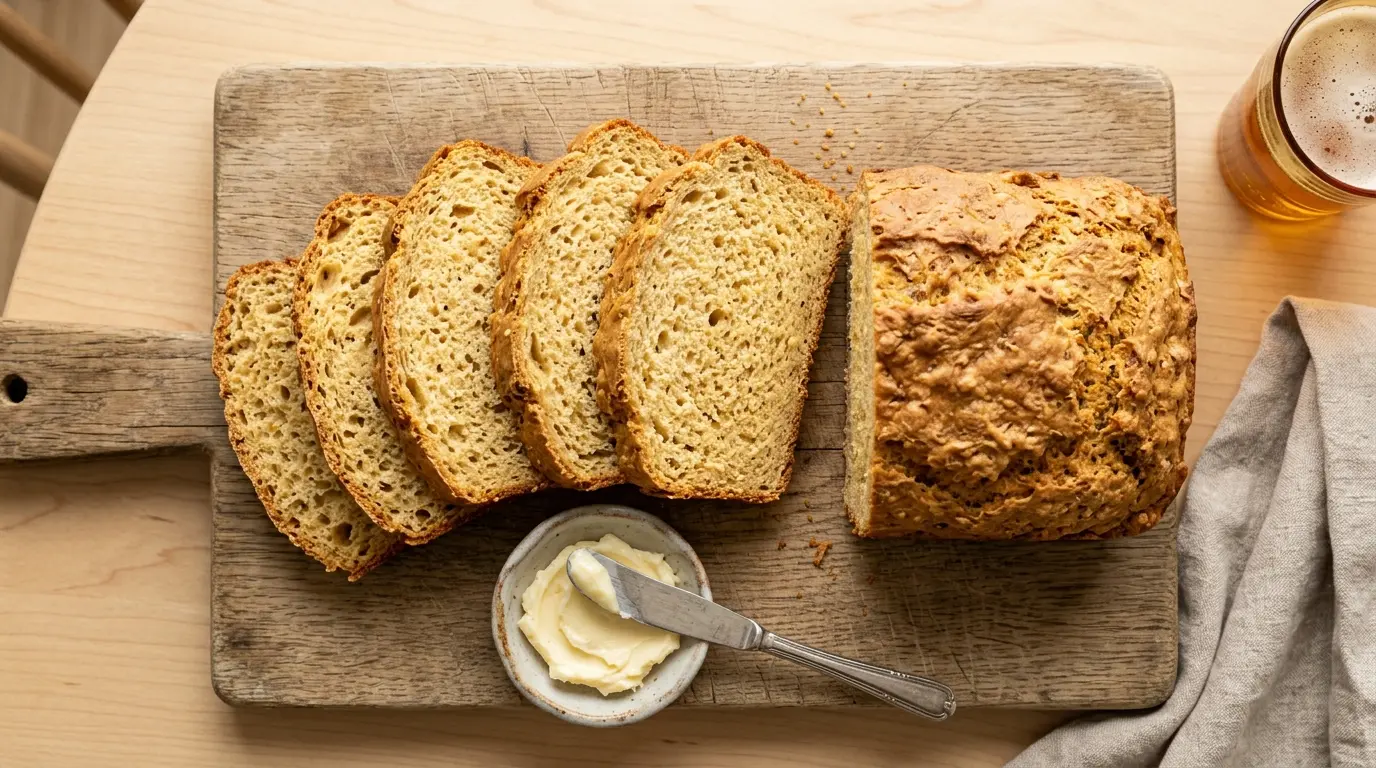
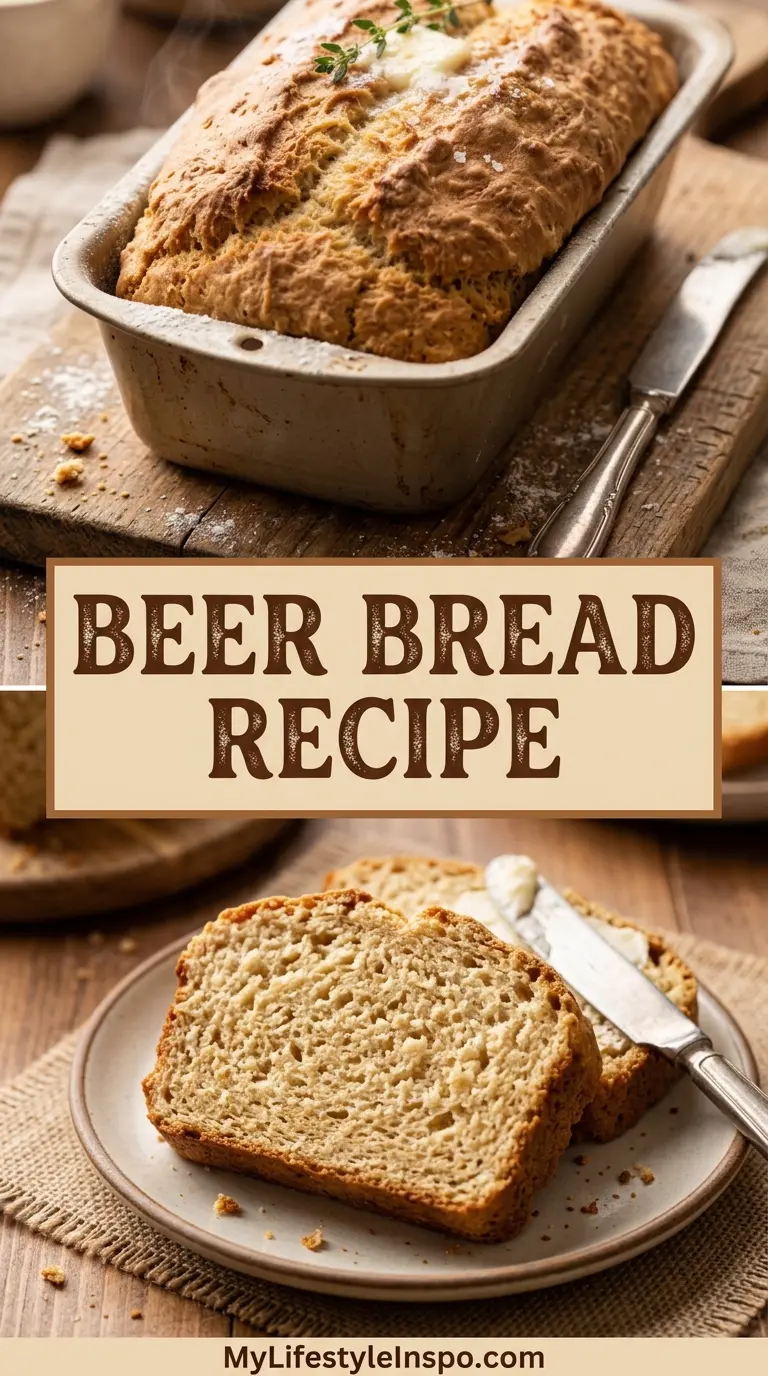
If you’ve never made a beer bread recipe before, you’re about to discover one of the most satisfying kitchen wins out there. This humble quick bread requires no yeast, no kneading, and no proofing. You mix a handful of pantry staples, crack open a cold beer, pour it all into a loaf pan, and 55 minutes later your kitchen smells incredible. The beer does the heavy lifting here, reacting with the baking powder to create a soft, slightly chewy crumb with a golden, buttery crust that is genuinely hard to stop eating.
What makes beer bread so brilliant is that it sits somewhere between a sandwich loaf and a savory cake, dense enough to stand up to butter and jam, but casual enough to tear apart alongside a bowl of stew. The type of beer you choose actually matters quite a bit. A light lager keeps things mild and a little sweet. An amber or pale ale adds malt complexity. A dark stout deepens the flavor with hints of roast and chocolate, making the bread taste almost nutty. Whatever you have on hand will work, but the beer you enjoy drinking is almost always the best choice for this recipe.
This is also a genuinely beginner-friendly bake. If you’ve ever felt intimidated by bread making, this recipe is the perfect starting point. No thermometers, no kneading timers, no worrying about whether your yeast is alive. Just mix, bake, and enjoy.
You might also enjoy: No Knead Bread Recipe
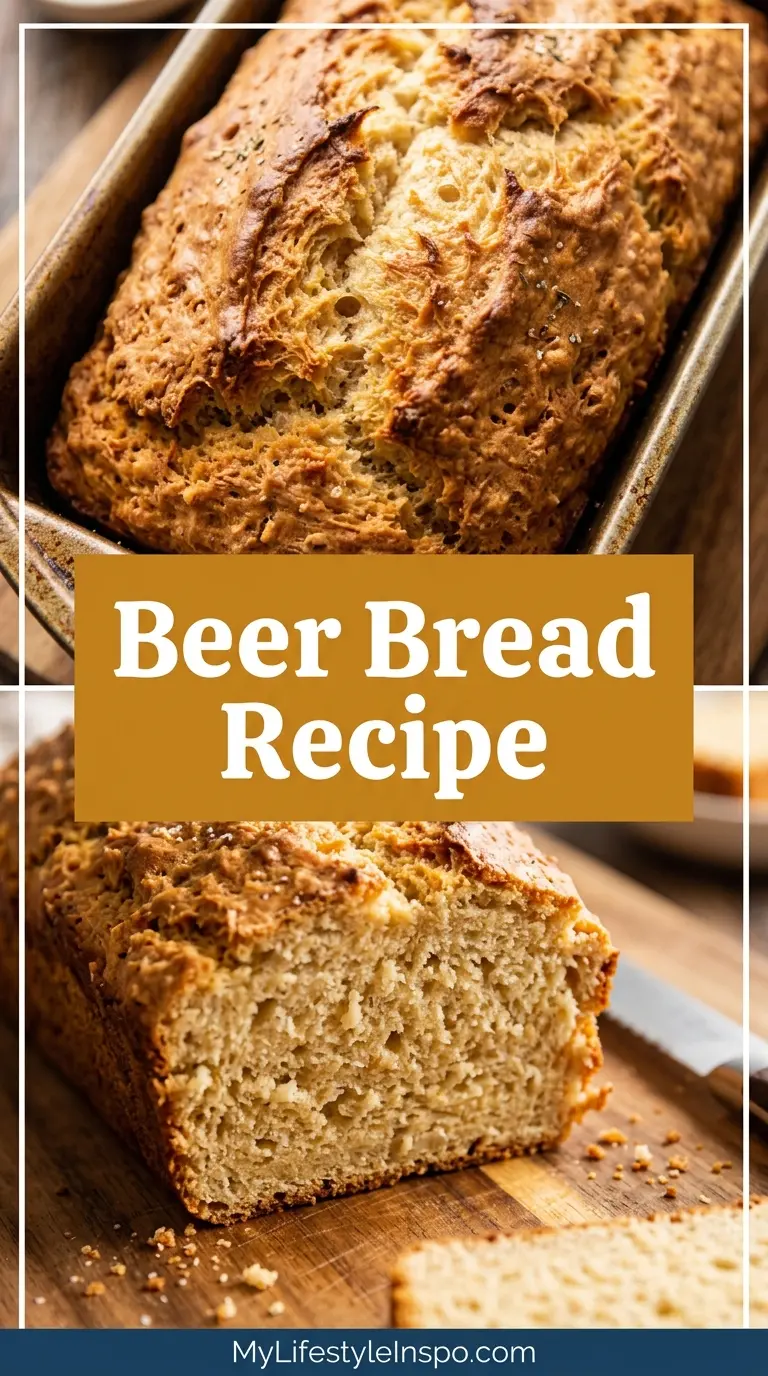
Why You’ll Love This Beer Bread Recipe
This loaf has a way of becoming a regular in your recipe rotation because it is genuinely that easy and that good.
You need only six simple ingredients, most of which are already in your pantry. No yeast, no rise time, and no kneading means this goes from bowl to oven in under 10 minutes of active prep.
The flavor is warm, malty, and slightly savory with a buttery crust that bakes up golden and a little crunchy. It’s incredibly versatile, working just as well with a smear of honey butter as it does dunked into chili or tomato soup.
It scales beautifully too. You can mix a double batch without any extra fuss, and variations are practically endless once you get the base recipe down. This loaf is proof that bread doesn’t need to be complicated to be absolutely delicious.
- Ready in just over an hour from start to finish
- No yeast, no proofing, no kneading required
- Uses pantry staples you likely already have
- The type of beer changes the flavor profile, making it easy to customize
- Perfect for beginners and experienced bakers alike
- Pairs well with soups, stews, charcuterie boards, and dips
- Makes excellent toast the next morning
If you love fuss-free breads, the Irish Soda Bread Recipe is another one worth bookmarking.
Ingredients
Beer bread keeps things wonderfully simple. The all-purpose flour gives the loaf its structure, while the baking powder provides all the lift you need since there’s no yeast involved. The sugar balances the bitter, yeasty notes from the beer without making the bread taste sweet. Melted butter adds richness and is what creates that signature golden crust on top. Choose a beer you actually enjoy drinking, because its flavor does come through in the finished loaf.
- 3 cups (360g) all-purpose flour
- 1 tablespoon baking powder
- 1 teaspoon fine salt
- 3 tablespoons (38g) granulated sugar
- 12 oz (355ml) beer, at room temperature (lager, pale ale, or amber recommended)
- 3 tablespoons (42g) unsalted butter, melted, plus more for greasing the pan
- Optional: 2 tablespoons (28g) additional melted unsalted butter for brushing on top after baking
If you enjoy baking savory breads, the Dutch Oven Bread Recipe is another must-try.
Kitchen Equipment Needed
You really don’t need much to make beer bread. The minimal equipment is part of its charm. A standard loaf pan is the most important piece of the puzzle since the shape and size affects how evenly it bakes.
- 9×5 inch (23×13 cm) loaf pan
- Large mixing bowl
- Whisk
- Rubber spatula or wooden spoon
- Measuring cups and spoons
- Pastry brush (for buttering the top, optional)
- Wire cooling rack
- Oven
Read Also: Rosemary Focaccia Recipe
Recommended Products for This Recipe
These are products I recommend based on quality and performance for making a reliably great beer bread every time.
1. USA Pan Aluminized Steel Loaf Pan (9×5 inch)
USA Pan loaf pans are made from aluminized steel with a corrugated surface that promotes airflow and even baking, giving you a loaf that’s evenly browned all around rather than overdone on one side. The nonstick coating makes releasing the bread effortless, and these pans are incredibly durable. If you bake any kind of quick bread regularly, this pan is worth every penny.
2. King Arthur All-Purpose Flour
The quality of your flour makes a real difference in quick breads. King Arthur all-purpose flour has a consistent protein content that gives beer bread the right amount of structure without making it tough. It measures predictably and produces a reliable crumb every time you bake. This is the flour most professional bakers reach for, and it shows in the results.
3. OXO Good Grips Silicone Pastry Brush
Brushing the top of your beer bread with melted butter at the end of baking is what gives it that irresistible golden, slightly crispy crust. A silicone pastry brush is heat-safe, easy to clean, and won’t leave bristles behind in your food. The OXO version has a comfortable grip and spreads butter evenly without deflating the top of the loaf.
4. Bob’s Red Mill Baking Powder (Aluminum-Free)
Aluminum-free baking powder makes a noticeable difference in quick breads, eliminating any metallic aftertaste that can occasionally come through in baked goods with a lot of leavening. Since baking powder is a primary leavening agent in beer bread, using a high-quality aluminum-free version keeps the flavor clean and lets the malty, buttery notes take center stage.
You might also enjoy: Soft Dinner Rolls Recipe
Step-by-Step Instructions
1. Preheat the Oven and Prepare the Pan
- Set your oven to 350°F (175°C) and let it fully preheat before you mix the batter.
- Grease your 9×5 inch (23×13 cm) loaf pan thoroughly with softened butter or a light coating of cooking spray. Make sure to coat the sides and corners, as the batter tends to rise and touch all edges.
- For extra insurance, line the bottom with a strip of parchment paper, leaving a small overhang on each long side. This makes lifting the finished loaf out of the pan much easier.
- Set the greased pan aside on your counter while you mix the batter.
2. Whisk Together the Dry Ingredients
- Measure 3 cups (360g) of all-purpose flour into a large mixing bowl. For accuracy, spoon the flour into the measuring cup and level it off with a straight edge rather than scooping directly from the bag, which can pack in too much flour and result in a denser loaf.
- Add 1 tablespoon of baking powder to the bowl. This is what makes the bread rise without yeast, so don’t reduce the amount.
- Add 1 teaspoon of fine salt. Salt is essential for flavor. Without it, beer bread tastes flat even with all the other ingredients in place.
- Add 3 tablespoons (38g) of granulated sugar. This amount balances the slightly bitter, yeasty notes from the beer without making the bread taste like dessert.
- Use a whisk to stir all the dry ingredients together for about 20 to 30 seconds until completely combined and evenly distributed. This step replaces sifting and ensures you won’t get pockets of baking powder or salt in the loaf.
3. Melt the Butter
- Place 3 tablespoons (42g) of unsalted butter in a small microwave-safe bowl or in a small saucepan over low heat.
- Melt the butter completely and let it cool for 2 to 3 minutes before adding it to the batter. Hot butter added directly to the beer can cause it to foam aggressively and may slightly cook the flour on contact.
- If you’d like to brush the top of the loaf with butter after baking, melt an additional 2 tablespoons (28g) of butter now and set it aside separately.
4. Add the Beer and Butter to the Dry Ingredients
- Make a small well in the center of the dry ingredients by pushing the flour mixture toward the sides of the bowl.
- Pour the 12 oz (355ml) of room-temperature beer slowly into the well. Room-temperature beer foams less than cold beer, which makes it a little easier to incorporate. If your beer is straight from the fridge, let it sit on the counter for 10 minutes before using.
- Drizzle the 3 tablespoons of cooled melted butter over the beer in the well.
- Using a rubber spatula or wooden spoon, stir the mixture gently from the center outward. The goal is to incorporate everything just until no dry flour streaks remain. The batter will be thick, shaggy, and slightly lumpy, and that’s completely fine. Overmixing activates the gluten in the flour and will result in a tough, dense loaf, so stop stirring as soon as the flour is incorporated.
5. Transfer the Batter to the Loaf Pan
- Scrape the batter from the bowl into your prepared loaf pan using the rubber spatula.
- Spread the batter into an even layer and smooth the top gently. Don’t press down or pack it in. A light pass with the spatula is all you need.
- The batter will be thick enough that it holds its shape in the pan rather than spreading.
6. Bake the Beer Bread
- Place the loaf pan in the center rack of your preheated 350°F (175°C) oven.
- Bake for 50 to 55 minutes. At the 50-minute mark, insert a toothpick or thin skewer into the center of the loaf. If it comes out clean or with just a few moist crumbs (not wet batter), the bread is done.
- The top should be a deep golden brown and the loaf should have risen slightly above the rim of the pan. If the top is browning too quickly before the center is done, tent it loosely with a sheet of aluminum foil after 40 minutes.
- The internal temperature of the finished loaf should read 190 to 200°F (88 to 93°C) on an instant-read thermometer if you want to be precise.
7. Butter the Top and Cool
- As soon as the loaf comes out of the oven, brush the top generously with the reserved melted butter if using. This extra butter gives the crust a gorgeous shine and a rich, slightly salty flavor.
- Let the bread cool in the pan for 10 minutes before running a knife along the short edges and lifting it out by the parchment overhang.
- Transfer the loaf to a wire cooling rack and let it rest for at least 15 to 20 minutes before slicing. Cutting too early can result in a gummy crumb because the interior is still finishing its set from the residual heat.
- Slice with a serrated bread knife for clean cuts, and serve warm.
This buttery, golden loaf also makes a great companion to Pull-Apart Garlic Bread for a crowd-pleasing bread spread at your next dinner.
Tips for Success
Getting beer bread right comes down to a few key habits. These tips address the most common mistakes that can turn an easy recipe into a disappointing one.
- Don’t overmix the batter. This is the single most important rule. Mix only until the flour is incorporated. A lumpy batter is a good batter here.
- Use room-temperature beer. Cold beer creates more foam when mixed, which makes the batter harder to work with. Letting it sit out for 10 minutes makes a noticeable difference.
- Measure flour correctly. Spoon flour into the measuring cup and level it off. Scooping directly compacts the flour and can add up to 20% more than the recipe calls for, resulting in a dry loaf.
- Don’t skip the butter on top. Brushing the hot loaf with melted butter right out of the oven is what creates that irresistible golden crust. It’s optional on paper but highly recommended in practice.
- Let the loaf rest before slicing. Waiting 15 to 20 minutes makes the crumb set properly and gives you cleaner slices with better texture.
- Choose a beer you enjoy drinking. The flavor of the beer absolutely comes through in the finished loaf. Bitter, hoppy beers can make the bread taste slightly bitter, so balance with an extra teaspoon of sugar if needed.
For another fun, hands-on bread project, check out this Monkey Bread Recipe.
Serving Suggestions
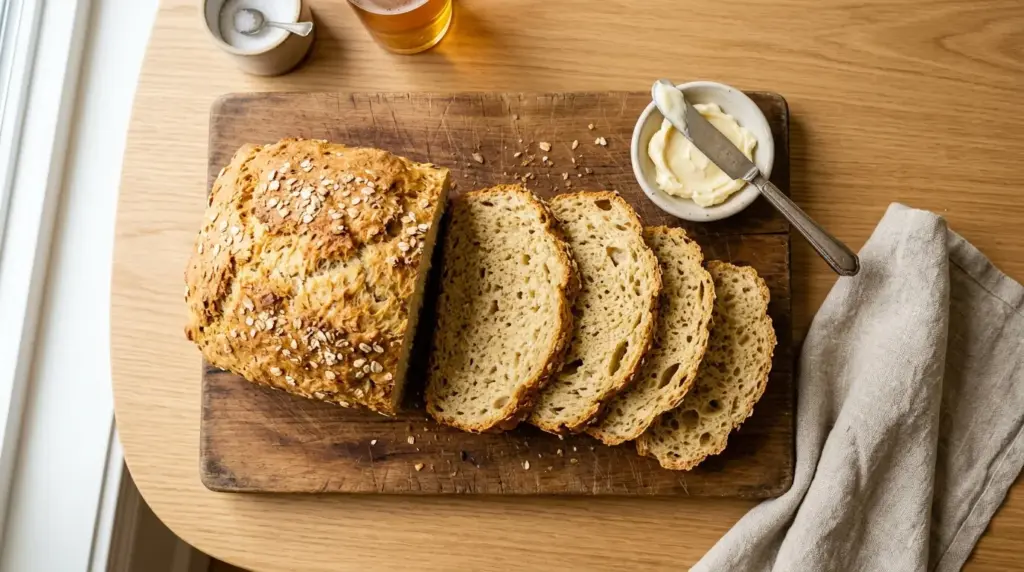
Beer bread is extraordinarily versatile and pairs well with almost everything in the comfort food category.
It is outstanding alongside a rich, hearty soup. The dense crumb soaks up broth beautifully without falling apart, making every bite a little more satisfying. It’s equally good sliced thick and spread with soft salted butter, honey butter, or cream cheese as a standalone snack.
- Serve alongside a big pot of Beer Cheese Soup for a double-beer dinner that is cozy and crowd-pleasing
- Slice and toast it the next morning, then top with butter and jam
- Use thick slices as the base for an open-faced sandwich with roast beef or turkey
- Serve with a Chili for a game-day spread that takes almost no effort to pull together
- Pair with a charcuterie board alongside cured meats, pickles, and sharp cheeses
- Serve warm with honey butter and a drizzle of hot honey for a sweet-savory combination
- Use it as the bread component in a stuffing or savory bread pudding
Variations to Try
Once you’ve nailed the basic recipe, the variations are almost endless. The base batter is a perfect canvas for mix-ins, and different beers create noticeably different results.
- Cheddar Jalapeño Beer Bread: Fold in 1 cup (115g) of shredded sharp cheddar cheese and 1 to 2 diced jalapeños with the dry ingredients before adding the beer. This version pairs especially well with chili and soups.
- Garlic Herb Beer Bread: Add 2 teaspoons of garlic powder and 2 tablespoons of chopped fresh rosemary or thyme to the dry ingredients. Brush the top with garlic butter instead of plain melted butter after baking.
- Honey Beer Bread: Swap the granulated sugar for 3 tablespoons of honey and use a light wheat beer. The flavor is slightly sweeter and floral, making it ideal for pairing with breakfast foods.
- Dark Stout Beer Bread: Use a Guinness or other stout in place of the lager. The bread turns darker in color, with a deeper, slightly roasted flavor that pairs beautifully with beef stew.
- Parmesan and Sun-Dried Tomato: Fold in 1/2 cup of grated parmesan and 1/3 cup of chopped sun-dried tomatoes. Serve with pasta or Italian soups.
- Whole Wheat Beer Bread: Replace 1 cup (120g) of the all-purpose flour with whole wheat flour for a nuttier, slightly denser loaf with more fiber.
For another cornbread-style savory quick bread, you’ll love this Jalapeño Cornbread Recipe.
Storage and Reheating
Beer bread is best enjoyed the same day it’s baked, when the crust is at its crispiest. That said, it keeps well for a couple of days if stored properly.
- Room temperature: Wrap the cooled loaf tightly in plastic wrap or store in an airtight container. It keeps well for up to 2 days at room temperature.
- Refrigerator: Wrap tightly and refrigerate for up to 5 days. The crumb becomes slightly denser when chilled, but toasting it brings it right back to life.
- Freezer: Slice the cooled loaf, separate slices with parchment paper, and store in a zip-lock freezer bag for up to 3 months. Pull out slices as needed and toast directly from frozen.
- Reheating: Wrap individual slices in foil and warm in a 300°F (150°C) oven for 8 to 10 minutes. Alternatively, toast slices in a toaster or toaster oven until warmed through and slightly crispy.
- Avoid microwaving if possible: Microwaving tends to make the bread rubbery rather than restoring the original texture.
Another quick bread that stores and reheats beautifully is this Brioche Recipe.
Nutritional Facts
The following values are approximate and based on one loaf cut into 10 slices, using a standard lager and unsalted butter.
| Nutrient | Per Slice (1/10 of loaf) |
|---|---|
| Calories | 195 kcal |
| Total Fat | 4.5g |
| Saturated Fat | 2.5g |
| Cholesterol | 10mg |
| Sodium | 290mg |
| Total Carbohydrates | 32g |
| Dietary Fiber | 1g |
| Total Sugars | 4g |
| Protein | 4.5g |
Values will vary based on the beer used (light beers reduce calories slightly) and whether additional butter is brushed on top. Using whole wheat flour increases the fiber content meaningfully.
For more mindful baking inspiration, the Healthy Banana Bread Recipe is a great read.
Health Benefits of Key Ingredients
Beer bread may be a simple comfort food, but its key ingredients do bring some nutritional value to the table.
The all-purpose flour provides a source of carbohydrates for energy along with small amounts of B vitamins including thiamine and niacin. If you substitute part of the flour with whole wheat, you’ll significantly boost the fiber content, which supports digestive health and helps you feel fuller longer.
- All-purpose flour: Provides carbohydrates for sustained energy and small amounts of iron and B vitamins. Switching to a whole wheat blend adds dietary fiber and trace minerals.
- Beer: Contains small amounts of B vitamins, including folate and B6, along with silicon, which some studies have linked to bone health. The alcohol largely bakes off, leaving behind the yeasty, malty flavor compounds.
- Butter: Provides fat-soluble vitamins A, D, E, and K2. Moderate amounts of butter contribute to flavor satisfaction and help the body absorb fat-soluble nutrients from other foods.
- Baking powder: Sodium-free versions (aluminum-free baking powder) are available for those watching their sodium intake. It contributes minimally to the overall nutritional profile.
- Sugar: Used in a small amount (3 tablespoons per loaf) primarily for flavor balance. Each slice contains only about 4 grams of sugar from this source.
For a bread with a naturally sweet flavor and extra nutritional value, check out these Sweet Dinner Rolls.
Frequently Asked Questions
1. What is the best beer to use for beer bread?
The best beer is genuinely the one you enjoy drinking. Light lagers like Budweiser or Corona produce a mild, slightly sweet loaf. Amber ales add malty depth and a little more complexity. Dark stouts like Guinness create a richer, darker bread with subtle roasted notes. Avoid very hoppy IPAs if you’re sensitive to bitterness, as those flavors do come through in the finished loaf. If you want a non-alcoholic option, non-alcoholic beer or even ginger ale works as a substitute.
2. Does the alcohol bake out of beer bread?
The vast majority of the alcohol does evaporate during the baking process. At 350°F (175°C) over 50 to 55 minutes, very little alcohol remains in the finished loaf. That said, some trace amounts may stay, so those avoiding alcohol entirely should opt for non-alcoholic beer or sparkling water as a substitute.
3. Why did my beer bread turn out dense or gummy?
The two most common causes are overmixing the batter and underbaking the loaf. Overmixing develops too much gluten, making the bread tough and compact rather than tender. Underbaking leaves the center gummy because the starch hasn’t fully set. Always check with a toothpick and look for an internal temperature of 190 to 200°F (88 to 93°C). Also make sure your baking powder is fresh, as old baking powder won’t provide enough lift.
4. Can I make beer bread with self-rising flour instead of all-purpose flour?
Yes. If you use self-rising flour, omit the baking powder and salt from the recipe since self-rising flour already contains both. Use the same amount of flour (3 cups / 360g) and keep the sugar and butter amounts the same. The result will be slightly lighter in texture than the all-purpose version.
5. Can I add cheese or other mix-ins to beer bread?
Absolutely. Beer bread is an excellent base for mix-ins. Shredded cheddar, gruyère, or parmesan all melt beautifully into the crumb. Diced jalapeños, fresh herbs like rosemary or thyme, roasted garlic, or sun-dried tomatoes are all great additions. Stir mix-ins into the dry ingredients before adding the beer to ensure even distribution throughout the loaf.
Read Also: Air Fryer Garlic Bread Recipe

Beer Bread

Equipment
- 9×5 inch (23×13 cm) loaf pan
- Large mixing bowl
- Whisk
- Rubber spatula or wooden spoon
- Measuring cups and spoons
- Pastry brush - optional, for buttering the top
- Wire cooling rack
- Oven
Ingredients
- 3 cups all-purpose flour - 360g, spooned and leveled
- 1 tablespoon baking powder - aluminum-free recommended
- 1 teaspoon fine salt
- 3 tablespoons granulated sugar - 38g
- 12 oz beer - 355ml, at room temperature (lager, pale ale, or amber recommended)
- 3 tablespoons unsalted butter - 42g, melted, plus more for greasing the pan
- 2 tablespoons unsalted butter - 28g, additional melted for brushing on top after baking (optional)
Instructions
- Preheat your oven to 350°F (175°C) and grease a 9×5 inch loaf pan thoroughly with butter or cooking spray.
- In a large bowl, whisk together the flour, baking powder, salt, and sugar until fully combined and evenly distributed.
- Melt the 3 tablespoons of butter and let it cool for 2-3 minutes before using.
- Make a well in the center of the dry ingredients, pour in the room-temperature beer, drizzle with melted butter, and stir gently with a spatula just until no dry flour streaks remain. The batter will be thick and lumpy.
- Scrape the batter into the prepared loaf pan, spread it into an even layer, and smooth the top without pressing down.
- Bake on the center rack for 50-55 minutes, until a toothpick inserted in the center comes out clean or with just a few moist crumbs.
- Brush the top with the optional melted butter as soon as the bread comes out of the oven. Let cool in the pan for 10 minutes, then transfer to a wire rack to cool for at least 15-20 minutes before slicing.
Notes
- Don’t overmix: Mix only until the flour is incorporated. A lumpy batter is exactly what you want. Overmixing develops gluten and will result in a tough, dense loaf.
- Use room-temperature beer: Cold beer creates more foam when mixed. Let it sit out for 10 minutes before using for easier mixing.
- Measure flour correctly: Spoon flour into the measuring cup and level it off. Scooping directly can add up to 20% more flour, leading to a dry loaf.
- Choose a beer you enjoy drinking: The flavor of the beer definitely comes through. Light lagers are mild and slightly sweet, ambers add malty depth, and stouts create a richer, darker loaf.
- Check for doneness: The internal temperature of the finished loaf should read 190-200°F (88-93°C) on an instant-read thermometer for the most reliable results.
- Let it rest before slicing: Waiting 15-20 minutes allows the crumb to set properly and gives you cleaner slices with better texture.
- Storage: Store wrapped at room temperature for up to 2 days, refrigerate for up to 5 days, or freeze sliced with parchment between layers for up to 3 months.
- Reheating: Warm slices in a 300°F (150°C) oven for 8-10 minutes or toast until warmed through. Avoid microwaving as it can make the bread rubbery.
- Variation ideas: Fold in 1 cup of shredded cheddar and diced jalapeños for a spicy version, or add 2 teaspoons of garlic powder and fresh rosemary for an herby loaf.
- Self-rising flour substitution: If using self-rising flour, omit the baking powder and salt and use 3 cups (360g) of self-rising flour instead.
Final Thoughts
Beer bread is one of those recipes that earns a permanent spot in your rotation once you try it. It’s quick, forgiving, endlessly adaptable, and produces a loaf that genuinely impresses people when you tell them how little effort it took.
Pull it out warm, slice it thick, and serve it with butter melting into every nook and cranny. That’s really all it takes to make any dinner feel a little more special.
If you give this recipe a try, leave a comment below and let me know which beer you used and how it turned out. I’d love to hear your variations too!
Recommended:
- Dutch Oven Sourdough Bread Recipe
- Savory Bread Pudding Recipe
- Cornbread Stuffing Recipe
- Southern Cornbread Recipe
- Sweet Potato Bread Recipe
- Chocolate Chip Bread Recipe
- Blackberry Bread Recipe
- Skillet Cornbread Recipe
- Pineapple Quick Bread Recipe
- Gluten Free Dairy Free Bread Recipe