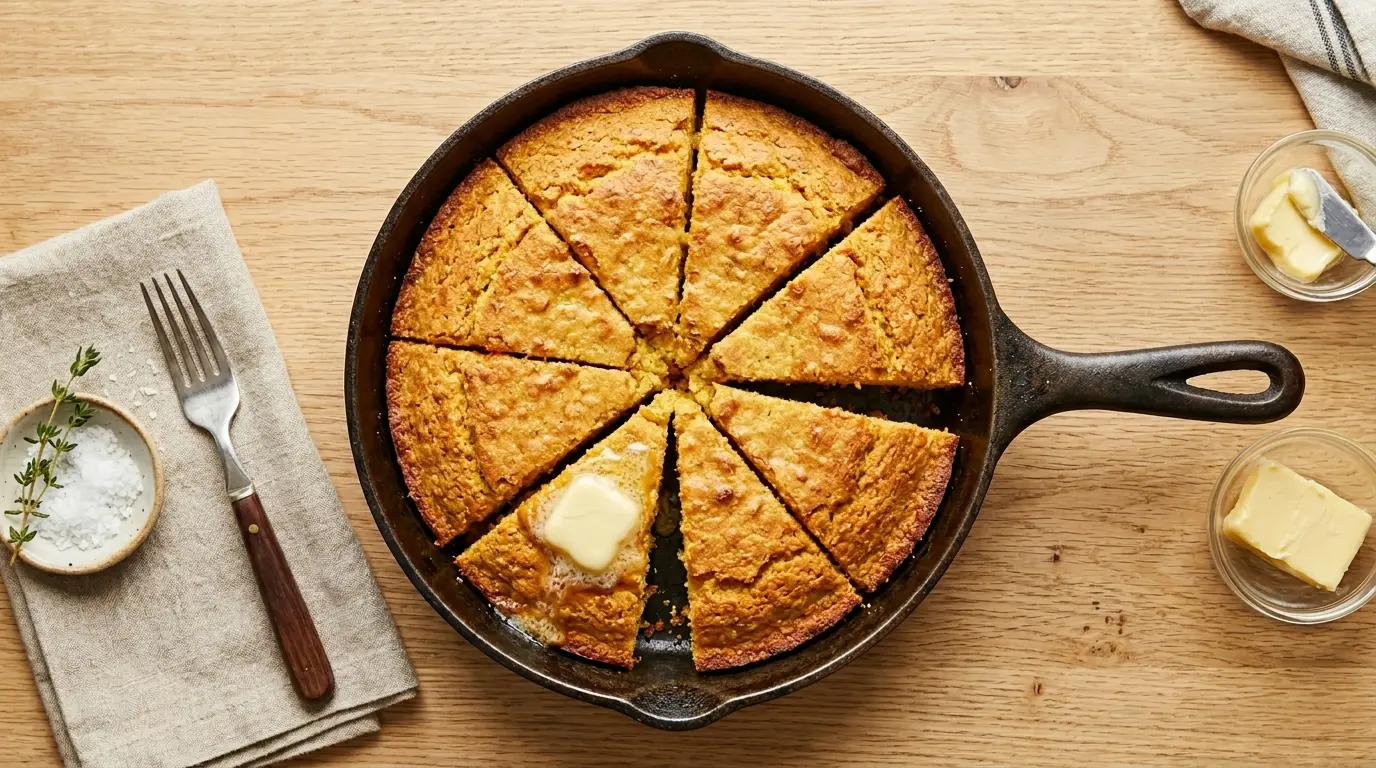
If you’ve been searching for a true Southern cornbread recipe, you’ve come to the right place. This is the real deal: savory, golden, moist in the center, and kissed with an irresistibly crispy crust on the bottom and edges, all thanks to a hot cast iron skillet. No box mix, no shortcuts, and absolutely no sugar in the batter.
Southern cornbread is a staple at tables across the South, and for good reason. The combination of stone-ground cornmeal, tangy buttermilk, and a screaming-hot buttered skillet produces a texture and flavor that simply cannot be replicated any other way.
What makes this recipe stand out is the technique. You preheat your cast iron skillet in the oven with butter already inside, so by the time the batter hits the pan, it sizzles and begins forming that iconic crackling crust immediately.
Once you try this method, you’ll never go back to baking cornbread in a cold pan.
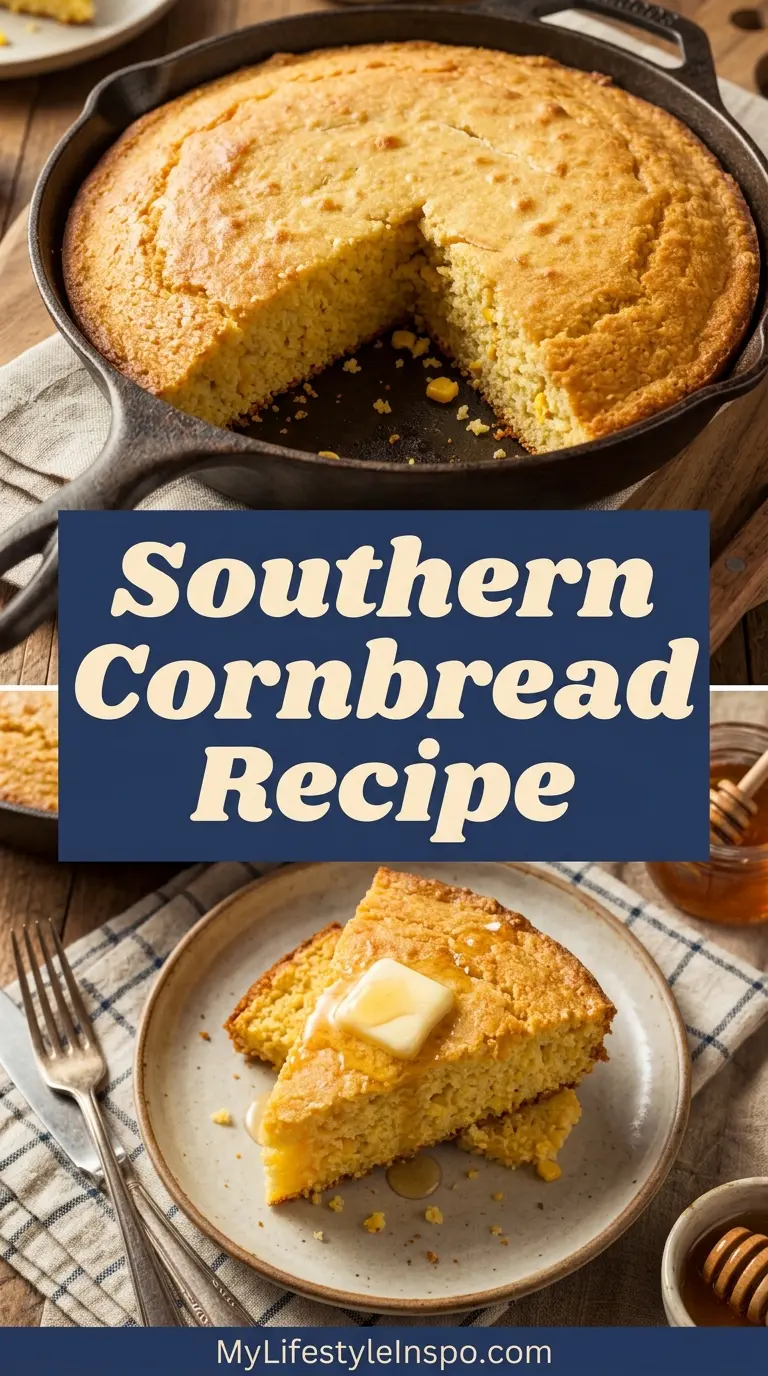
Why You’ll Love This Southern Cornbread Recipe
This southern cornbread recipe is a no-fuss, weeknight-friendly bread that practically makes itself once you know the method.
It uses everyday pantry ingredients, comes together in under 10 minutes of hands-on prep, and bakes in about 20 minutes.
The buttermilk does double duty here, adding a subtle tang while also reacting with the baking soda to give the bread a beautiful lift.
The result is a bread that’s tender and moist on the inside without ever tipping into cake territory.
If you love cooking with cast iron, this recipe will quickly become one of your favorite ways to use it.
- Crispy golden crust from the preheated, buttered skillet
- Tender, moist crumb with that classic savory corn flavor
- Made with simple pantry staples you likely already have
- Ready from start to finish in about 35 minutes
- No mixer required, just two bowls and a whisk
- Pairs perfectly with soups, stews, chili, and Southern mains
- Easily customizable with mix-ins like cheese, jalapeños, or herbs
You might also enjoy: Skillet Cornbread
Ingredients
The ingredient list for this recipe is short and purposeful. Each component plays a specific role, so try not to substitute heavily, especially the buttermilk and the cornmeal.
- 2 cups (240g) yellow stone-ground cornmeal
- 1/2 cup (60g) all-purpose flour
- 1 teaspoon baking powder
- 1/2 teaspoon baking soda
- 1 teaspoon fine kosher salt
- 2 large eggs, lightly beaten
- 1 1/2 cups (355ml) full-fat buttermilk
- 3 tablespoons unsalted butter, for the skillet (plus 1 tablespoon extra for brushing)
- 1 tablespoon neutral oil (such as vegetable or canola oil), optional for extra moisture
Read Also: Sourdough Discard Cornbread Recipe
Kitchen Equipment Needed
You don’t need much equipment for this recipe, but a few key pieces genuinely make a difference in the final result. The cast iron skillet in particular is non-negotiable for that signature crust.
- 10-inch cast iron skillet (a 9-inch also works)
- Large mixing bowl
- Medium mixing bowl
- Whisk
- Rubber spatula or wooden spoon
- Oven mitts (the skillet gets very hot)
- Wire cooling rack
- Measuring cups and spoons
This recipe works in an enameled cast iron baking dish as well, though the crust will be slightly less dramatic than in a traditional seasoned cast iron skillet.
Another favorite: Sweet Cornbread Recipe
Recommended Products for This Recipe
These are products I genuinely recommend based on quality and performance, chosen because they make a real difference in the texture and ease of this recipe.
1. Lodge 10.25-Inch Cast Iron Skillet
A well-seasoned cast iron skillet is the single most important tool for authentic Southern cornbread. The Lodge 10.25-inch skillet heats evenly, retains heat exceptionally well, and creates that perfect crispy bottom crust that makes Southern cornbread so beloved. It’s an investment piece that will outlast every other item in your kitchen.
2. Bob’s Red Mill Stone Ground Yellow Cornmeal
The quality of your cornmeal directly affects the flavor and texture of your cornbread. Bob’s Red Mill stone-ground cornmeal is coarser than typical grocery store cornmeal, which gives the bread a heartier texture and a more pronounced corn flavor. It’s the type of cornmeal that serious Southern bakers reach for.
3. Cultured Buttermilk Powder
If fresh buttermilk isn’t always on hand, a good-quality buttermilk powder is a brilliant pantry staple. You simply mix it with water to create buttermilk on demand, and it produces results nearly identical to fresh. It’s especially useful if you bake cornbread often but don’t always have a carton of buttermilk in the fridge.
4. Oven Mitts with Heat-Resistant Grip
Removing a screaming-hot cast iron skillet from a 425°F oven requires serious hand protection. Heavy-duty silicone oven mitts with a non-slip grip make handling the pan safer and more controlled. Standard oven mitts tend to slip on cast iron handles, so it’s worth upgrading to a pair designed specifically for heavy cookware.
Read Also: Jiffy Cornbread Recipe With Creamed Corn
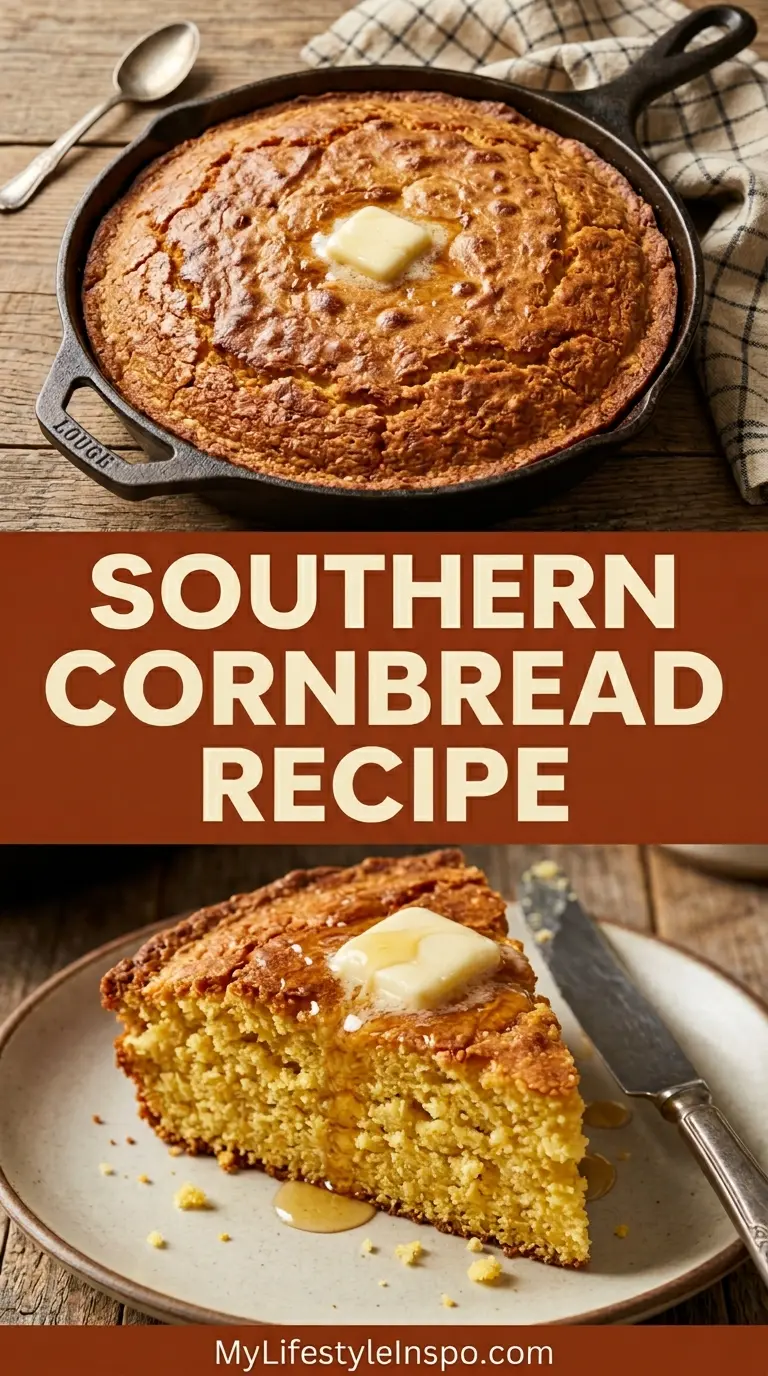
Step-by-Step Instructions
1. Preheat the Oven and Prepare Your Skillet
- Set your oven rack to the middle position and preheat to 425°F (220°C). This high temperature is critical for achieving a properly browned crust and a fully cooked interior.
- Place your 10-inch cast iron skillet inside the oven as it preheats. You want the skillet to be fully hot before the batter goes in, which is the key step that creates the sizzling bottom crust.
- Allow the skillet to heat in the oven for at least 10 minutes before you add any fat or batter.
2. Mix the Dry Ingredients
- In a large mixing bowl, add 2 cups (240g) of stone-ground yellow cornmeal.
- Add 1/2 cup (60g) of all-purpose flour to the cornmeal. The flour lightens the texture slightly, preventing the cornbread from being overly dense or crumbly.
- Add 1 teaspoon of baking powder and 1/2 teaspoon of baking soda. Both leavening agents work together to give the bread lift, with the baking soda specifically reacting to the acidity of the buttermilk.
- Add 1 teaspoon of fine kosher salt.
- Whisk all the dry ingredients together until evenly combined. Set the bowl aside.
3. Mix the Wet Ingredients
- In a medium bowl, crack in 2 large eggs and lightly beat them with a fork or whisk until the yolks and whites are fully combined.
- Pour in 1 1/2 cups (355ml) of full-fat buttermilk. The fat content in full-fat buttermilk contributes significantly to the moist, tender crumb. Low-fat buttermilk can be used in a pinch but may result in a slightly drier texture.
- Add 1 tablespoon of neutral oil if using. This is optional but adds a touch of extra moisture that keeps leftovers from drying out.
- Whisk the wet ingredients together until smooth and evenly combined.
4. Combine Wet and Dry Ingredients
- Pour the wet ingredients into the bowl of dry ingredients.
- Using a rubber spatula or wooden spoon, fold the mixture together with gentle strokes. Stir just until no dry pockets of flour or cornmeal remain.
- Stop mixing as soon as the batter comes together. The batter will look slightly lumpy, and that is perfectly fine. Overmixing develops gluten from the flour, which results in tough, dense cornbread rather than tender.
- Let the batter rest for 5 minutes at room temperature. This brief rest allows the cornmeal to absorb the buttermilk, which improves the final texture significantly.
5. Butter the Hot Skillet
- Using your oven mitts, carefully remove the hot skillet from the oven. Place it on a heat-safe surface on the stovetop.
- Immediately add 3 tablespoons of unsalted butter to the hot skillet. The butter will melt on contact and begin to sizzle and foam.
- Carefully swirl the skillet to coat the entire bottom and about 1 inch up the sides with the melted butter. Work quickly, as the skillet begins to cool the moment it leaves the oven.
- If the butter begins to brown slightly, that is actually ideal. It adds a nutty, deeper flavor to the finished crust.
6. Pour in the Batter and Bake
- As soon as the skillet is coated with butter, pour the batter directly from the bowl into the hot skillet. You should hear an audible sizzle as the batter hits the hot surface. That sizzle is what forms the golden crust.
- Quickly smooth the top of the batter with a spatula if needed, spreading it into an even layer.
- Return the skillet to the oven immediately.
- Bake at 425°F (220°C) for 18 to 22 minutes, until the top is golden brown, the edges are pulling away from the sides of the skillet, and a toothpick inserted into the center comes out clean.
7. Brush with Butter and Rest
- Remove the skillet from the oven using oven mitts and place it on a wire cooling rack.
- Immediately brush the top of the hot cornbread with 1 tablespoon of melted unsalted butter. The hot bread will absorb it quickly, adding richness and a beautiful sheen.
- Allow the cornbread to rest in the skillet for 5 to 10 minutes before slicing. This rest time allows the interior to finish setting up, making it easier to slice cleanly.
- Slice into wedges directly from the skillet and serve warm.
This recipe works wonderfully as a side alongside Southern Fried Chicken for a truly classic Southern spread.
Tips for Success
These tips are the difference between good cornbread and truly great cornbread. Read through them at least once before you start baking.
- Use stone-ground cornmeal. Finely ground cornmeal produces a smoother, more cake-like texture. Stone-ground cornmeal gives you a heartier, more rustic crumb that’s truer to the Southern tradition.
- Don’t skip preheating the skillet. This is the single most important step. A cold pan produces flat, pale-bottomed cornbread. A hot pan produces a crackling golden crust.
- Use full-fat buttermilk. The fat and acidity in full-fat buttermilk are both essential. If you don’t have buttermilk, make a quick substitute by adding 1 tablespoon of white vinegar to 1 1/2 cups of whole milk and letting it sit for 5 minutes before using.
- Don’t overmix the batter. Fold, don’t stir vigorously. Lumps in the batter are completely normal and will cook out.
- Let the batter rest. Five minutes of resting gives the cornmeal time to hydrate and leads to a noticeably more tender finished bread.
- Let the butter brown slightly. A small amount of browning in the butter before adding the batter adds a nutty depth to the crust. Just don’t let it burn.
- Serve it warm. Southern cornbread is best eaten fresh out of the oven. The crust softens as it cools, so enjoy it while it’s still hot and crispy.
For a lighter, sweeter variation of this concept, the Corn Casserole is a wonderfully comforting option to explore next.
Serving Suggestions
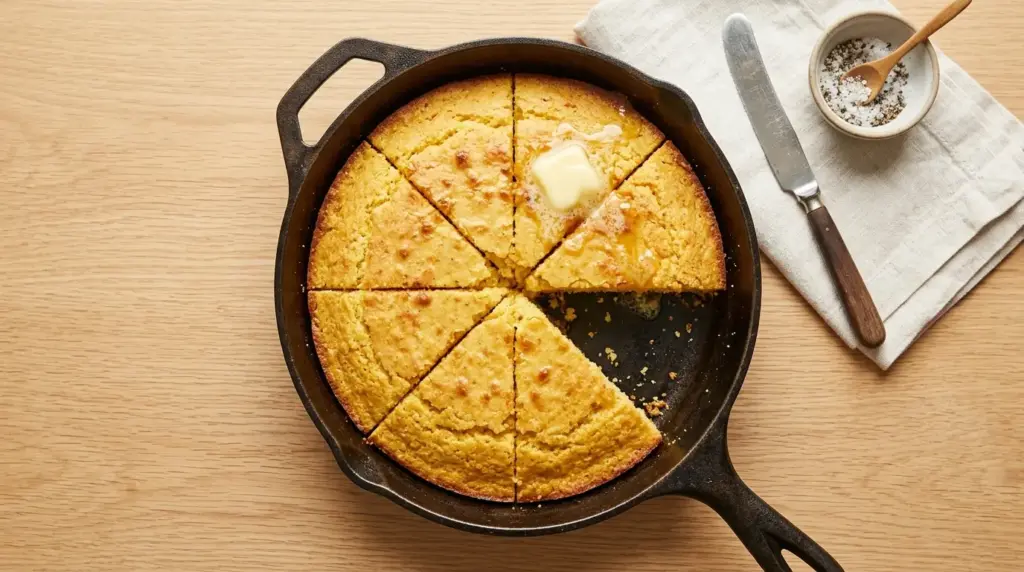
Southern cornbread is one of the most versatile breads at the table. It belongs next to anything saucy, brothy, or boldly flavored.
Slather a warm wedge with honey butter for a simple and utterly satisfying treat.
- Serve alongside a steaming bowl of chili for a classic combination
- Pair it with collard greens for a traditional Southern plate
- Set it beside a bowl of classic red beans and rice for a deeply satisfying meal
- Use leftover cornbread to make a next-day cornbread dressing
- Crumble it into a tall glass of cold buttermilk for a traditional Southern snack
- Serve it with slow cooker pulled pork and BBQ sauce for a crowd-pleasing dinner
Variations to Try
Once you’ve nailed the base recipe, this cornbread is extremely easy to customize. These variations use the same method and the same starting batter.
- Cheddar and Jalapeño Cornbread: Fold in 3/4 cup (85g) of shredded sharp cheddar cheese and 1 to 2 finely diced jalapeños (seeds removed for less heat) into the finished batter before pouring it into the skillet. The cheese melts into the crumb and forms crispy cheese edges.
- Bacon Cornbread: Fold in 4 slices of cooked, crumbled bacon into the batter. A tablespoon of the reserved bacon fat can replace the neutral oil in the recipe for even more flavor.
- Herb Cornbread: Add 2 tablespoons of fresh chopped chives and 1 tablespoon of fresh thyme leaves to the dry ingredients for an aromatic, savory variation.
- Sweet Southern Cornbread: Add 2 tablespoons of granulated sugar to the dry ingredients for a lightly sweet version that bridges the gap between Northern and Southern styles.
- Corn Kernel Cornbread: Fold in 3/4 cup (120g) of drained canned corn or fresh corn cut from the cob for extra corn flavor and a pop of texture.
- Honey Cornbread: Drizzle 2 tablespoons of honey over the batter before baking and add another drizzle over the top immediately after it comes out of the oven.
Read Also: Buttermilk Biscuit Recipe
Storage and Reheating
This cornbread is absolutely best on the day it’s made, but it stores reasonably well and reheats nicely with the right method.
- Room temperature: Wrap cooled cornbread tightly in plastic wrap or store in an airtight container. It will keep at room temperature for up to 2 days.
- Refrigerator: Store tightly wrapped in the refrigerator for up to 5 days. Note that cold storage does dry out the crumb somewhat.
- Freezer: Wrap individual wedges tightly in plastic wrap, then place in a zip-top freezer bag. Freeze for up to 3 months. Thaw at room temperature for an hour before reheating.
- Reheating in the oven: Place wedges directly on the oven rack or on a baking sheet at 350°F (175°C) for 8 to 10 minutes. This is the best method for restoring some of the original crispiness.
- Reheating in a skillet: Warm wedges in a dry cast iron skillet over medium-low heat for 2 to 3 minutes per side. This brings back the crust beautifully.
- Microwave: Wrap a wedge in a damp paper towel and microwave on medium power for 20 to 30 seconds. This is the least preferred method as it steams the cornbread, making the crust soft.
This pairs especially well with crockpot beef stew as a hearty, warming combo you can prep ahead.
Nutritional Facts
The following nutritional information is based on one serving (one wedge), assuming the recipe is cut into 8 equal portions. Values are approximate.
| Nutrient | Per Serving |
|---|---|
| Calories | 210 |
| Total Fat | 8g |
| Saturated Fat | 4g |
| Cholesterol | 65mg |
| Sodium | 340mg |
| Total Carbohydrates | 30g |
| Dietary Fiber | 2g |
| Sugars | 2g |
| Protein | 6g |
These values will shift depending on the specific cornmeal brand, whether you add mix-ins like cheese or bacon, and how much butter you brush on top.
Read Also: Brunswick Stew Recipe
Health Benefits of Key Ingredients
This cornbread is made with simple, wholesome ingredients, and a few of them pack a genuine nutritional punch worth knowing about.
Cornmeal is one of the most nutritionally interesting components of this recipe. It’s a whole grain source of complex carbohydrates, which means it digests more slowly than refined flour and provides longer-lasting energy.
- Cornmeal: Rich in B vitamins, including thiamine and niacin, which support energy metabolism and nervous system function. Stone-ground varieties retain more of the bran and germ, boosting the fiber and nutrient content compared to degerminated cornmeal.
- Buttermilk: Contains calcium and phosphorus for bone health, along with beneficial probiotic cultures that can support gut health. Its acidity also makes baked goods more digestible.
- Eggs: Provide high-quality complete protein, along with choline, which supports brain function and cell structure. Eggs also contribute to the richness and binding in the crumb.
- Butter: While used in moderate amounts here, butter contributes fat-soluble vitamins including vitamins A, D, E, and K2, which support everything from immune function to bone density.
- All-purpose flour: Added in a smaller quantity here, the flour provides a small amount of iron and B vitamins while contributing to a lighter, more cohesive crumb structure.
For another comforting Southern side dish that rounds out this kind of meal, the sausage gravy recipe is a rich pairing worth exploring.
Frequently Asked Questions
1. Can I make Southern cornbread without a cast iron skillet?
You can bake this cornbread in an 8×8-inch (20x20cm) baking dish or a 9-inch round cake pan, but the cast iron skillet gives the best results. The crust won’t be as crispy in a regular baking dish, since standard metal pans don’t hold heat the same way. If using a baking dish, reduce the oven temperature to 400°F (205°C) and add 3 to 5 minutes to the baking time.
2. Why is my cornbread dry and crumbly?
There are a few common causes. The most frequent one is using too little buttermilk, or substituting with low-fat milk without adjusting the recipe. Another culprit is overbaking. Check for doneness at the 18-minute mark. Overmixing the batter can also lead to a drier, tougher crumb, so fold gently and stop as soon as no dry spots remain.
3. Can I make Southern cornbread without eggs?
Eggs provide structure, moisture, and richness, so removing them does change the results. For an egg-free version, you can use a flax egg (1 tablespoon ground flaxseed mixed with 3 tablespoons water, rested for 5 minutes) per egg. The texture will be slightly denser and less rich, but still quite good.
4. What is the difference between Southern cornbread and Northern cornbread?
The main differences come down to sugar and texture. Southern cornbread is traditionally savory with little to no sugar, made primarily from cornmeal with a small amount of flour, and baked in a cast iron skillet for a crispy crust. Northern cornbread tends to be sweeter, uses a higher ratio of flour to cornmeal, and has a cake-like, fluffy texture closer to a quick bread.
5. Can I make this recipe ahead of time?
For serving same-day, you can mix the dry ingredients and wet ingredients separately up to a day ahead, then combine them and bake when needed. Don’t combine the batter and let it sit, as the leavening agents will lose their potency. Fully baked cornbread can be made a day ahead and reheated in the oven, though freshly baked is always best.
For another quick and easy bread that bakes beautifully as an advance prep option, take a look at this homemade biscuit recipe.

Southern Cornbread

Equipment
- 10-inch cast iron skillet - (9-inch also works) – non-negotiable for crispy crust
- Oven mitts - Heat-resistant with non-slip grip
- Large mixing bowl
- Medium mixing bowl
- Whisk
- Rubber spatula or wooden spoon
- Wire cooling rack
- Measuring cups and spoons
- Enameled Cast Iron Baking Dish - (optional) – will produce slightly less dramatic crust
Ingredients
- 2 cups yellow stone-ground cornmeal - 240g
- 1/2 cup all-purpose flour - 60g
- 1 teaspoon baking powder
- 1/2 teaspoon baking soda
- 1 teaspoon fine kosher salt
- 2 large eggs - lightly beaten
- 1 1/2 cups full-fat buttermilk - 355ml
- 3 tablespoons unsalted butter - for the skillet (plus 1 tablespoon extra for brushing)
- 1 tablespoon neutral oil - such as vegetable or canola oil, optional for extra moisture
Instructions
- Preheat oven to 425°F (220°C) with rack in middle position. Place 10-inch cast iron skillet inside oven with 3 tablespoons butter already in it to heat for at least 10 minutes.
- In a large bowl, whisk together cornmeal, flour, baking powder, baking soda, and salt until evenly combined.
- In a medium bowl, lightly beat eggs then whisk in buttermilk and optional neutral oil until smooth.
- Pour wet ingredients into dry and fold with a spatula just until no dry pockets remain. Batter should be slightly lumpy. Let rest 5 minutes.
- Carefully remove hot skillet from oven using mitts. Swirl melted butter to coat bottom and 1 inch up sides. Pour batter directly into skillet and return to oven immediately.
- Bake at 425°F (220°C) for 18-22 minutes until top is golden, edges pull away, and toothpick comes out clean.
- Remove from oven, brush top with 1 tablespoon melted butter, and let rest in skillet 5-10 minutes before slicing and serving warm.
Notes
- Cornmeal matters: Use stone-ground yellow cornmeal for authentic texture and flavor. Finely ground cornmeal will produce a cake-like texture that’s not Southern-style.
- Don’t skip preheating the skillet: The hot pan is the most important step for creating that signature crackling crust.
- Buttermilk substitute: No buttermilk? Add 1 tablespoon white vinegar to 1½ cups whole milk and let sit 5 minutes before using.
- Don’t overmix: Stir just until combined. Lumpy batter is normal and keeps the cornbread tender instead of tough.
- Let the batter rest: The 5-minute rest allows the cornmeal to absorb the buttermilk, resulting in a more tender crumb.
- Check early for doneness: Start testing at 18 minutes to avoid overbaking, which dries out the cornbread.
- Storage: Keeps at room temperature for up to 2 days, refrigerated for 5 days, or frozen for 3 months.
- Reheat for best results: Warm wedges in a 350°F oven for 8-10 minutes or in a dry cast iron skillet over medium-low heat for 2-3 minutes per side.
- Mix-in variations: Fold in ¾ cup shredded cheddar and diced jalapeños, crumbled bacon, or fresh herbs like chives and thyme for easy customization.
- Serve with: Honey butter, chili, collard greens, red beans and rice, or pulled pork for a classic Southern meal.
Final Thoughts
Making a proper Southern cornbread recipe from scratch is one of those skills that pays dividends for life. Once you understand the method, you’ll find yourself baking it alongside everything from weeknight chili to Sunday pot roast.
The crackling crust, the tender buttery crumb, and the deep corn flavor are things no box mix can replicate. This is simple baking at its most satisfying.
Give this recipe a try this week, and don’t forget to bring it to the table warm while that crust is still crackling.
If you make it, drop a comment below and let me know how it turned out. Did you add any mix-ins? Serve it with something delicious? I’d love to hear about it.
Recommended:
- Collard Greens
- Slow Cooker Pulled Pork
- Chicken and Dumplings
- Baked Mac and Cheese
- Chicken Stew
- Creamy Coleslaw
- Crockpot Chicken Wild Rice Soup
- Sweet Potato Casserole
- Sausage Stuffing
- Honey Roasted Carrots