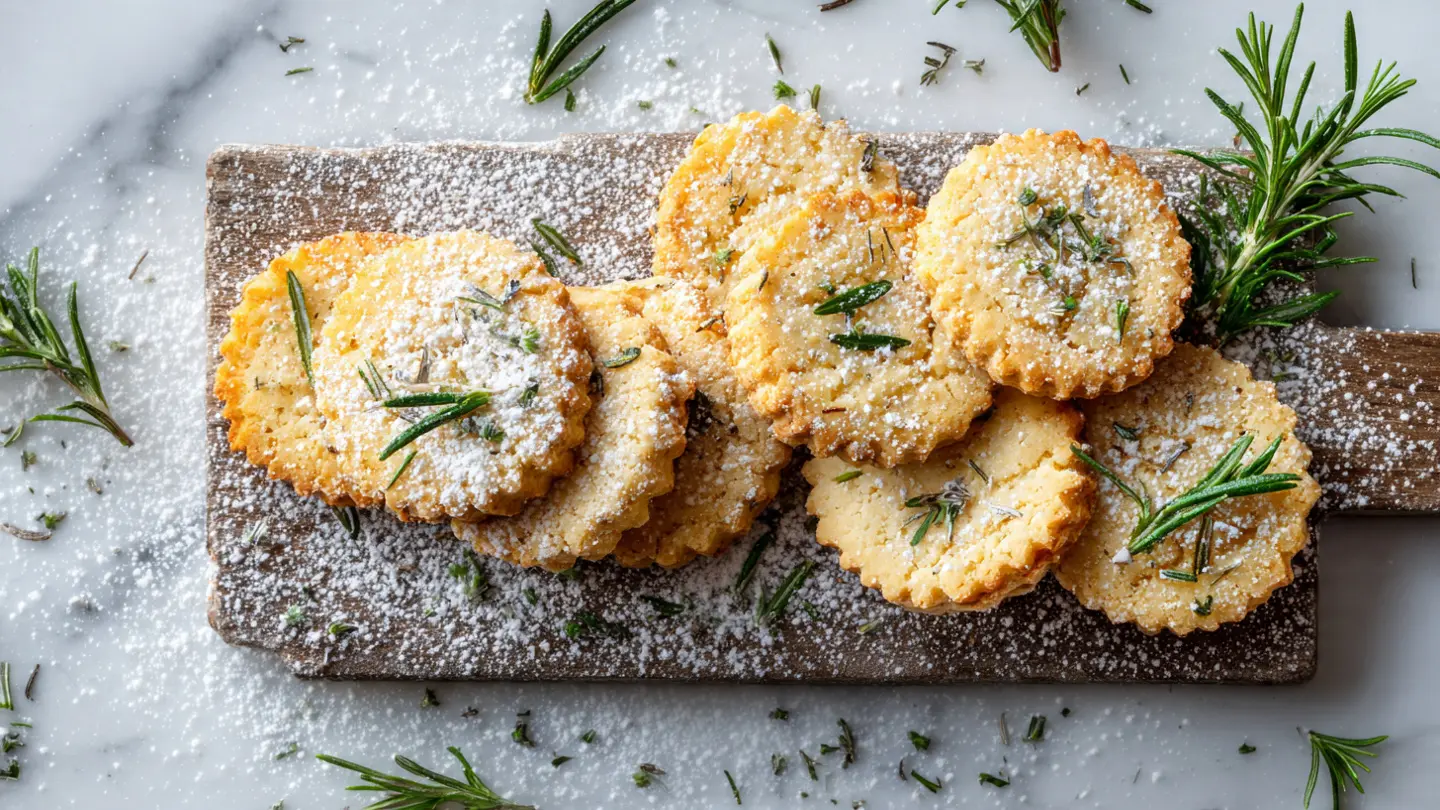
If you have never tried a rosemary shortbread cookies recipe before, you are in for a treat that will completely change the way you think about herb-infused baking. These cookies sit right at the intersection of sweet and savory, with the woodsy, piney aroma of fresh rosemary tucked into a melt-in-your-mouth buttery dough that practically dissolves on your tongue. They look elegant, they smell incredible while baking, and they taste like something you would find at a boutique bakery.
And the best part? They are shockingly simple to make.
Shortbread is one of those timeless recipes that relies on just a handful of ingredients, which is exactly why quality matters so much. When butter, flour, and powdered sugar are the stars of the show, there is nowhere to hide. The rosemary adds something truly special here. It is not overpowering, it does not make the cookie taste like a herb garden. Instead, it provides a fragrant, almost citrusy background note that makes every bite feel sophisticated and a little unexpected.
This recipe uses the classic slice-and-bake method, which means you mix the dough, roll it into a log, chill it, slice it into rounds, and bake. The result is beautifully uniform cookies with crisp edges, a tender center, and those lovely green flecks of rosemary that make them look as good as they taste.
You might also love these Lavender Shortbread Cookies if you enjoy floral and herbaceous baked goods.
Why You’ll Love This Rosemary Shortbread Cookies Recipe
This recipe has earned a permanent spot in my cookie rotation, and once you try it, you will understand why.
Fresh rosemary transforms an ordinary shortbread into something truly memorable, giving the cookies a depth of flavor that dried herbs simply cannot replicate. The powdered sugar is the secret to that signature melt-in-your-mouth texture that makes shortbread so addictive.
These cookies are incredibly simple to prepare, making them a fantastic choice for beginner bakers and experienced home cooks alike. They also hold up beautifully, staying fresh and flavorful for days, which makes them perfect for gifting, holiday cookie swaps, or just keeping a batch on the counter for afternoon snacking.
Here is why this recipe truly stands out:
- Only 5 core ingredients needed, most of which are pantry staples
- No chilling time for the dough in advance if you do the log method correctly
- Slice-and-bake convenience means no rolling pin or cookie cutters required
- Sophisticated flavor that impresses guests without requiring advanced baking skills
- Versatile enough to serve with tea, coffee, wine, or a charcuterie board
- Long shelf life so you can bake ahead without stress
- Freezer-friendly dough that you can keep on hand for whenever a craving strikes
Read Also: Cranberry Shortbread Cookies Recipe
Ingredients
You do not need a long grocery list to make these cookies shine. The key is using the best quality butter you can find, because in shortbread, butter is not just a fat. It is the flavor.
Here is everything you will need:
- 1 cup (225g) unsalted butter, at room temperature
- ½ cup (60g) powdered sugar (confectioners’ sugar), sifted
- 2 cups (250g) all-purpose flour
- 2 tablespoons fresh rosemary, finely chopped (about 3-4 sprigs)
- ¼ teaspoon fine sea salt
- 2 tablespoons granulated sugar, for rolling (optional but recommended for a light sparkle)
- Flaky sea salt, for finishing (optional)
A note on the butter: European-style butter with a higher butterfat content makes a noticeably richer, more tender cookie. Brands like Kerrygold or Plugra are excellent choices if you can find them. Unsalted is preferred so you can control the salt level.
A note on the rosemary: Fresh rosemary is non-negotiable here. Dried rosemary is too coarse and woody, and it will not soften properly during baking. Finely mince the fresh leaves so you get that aromatic flavor distributed evenly throughout the dough without any tough, poky pieces.
For a beautiful finishing touch, try these Himalayan Pink Salt Flakes sprinkled on top before baking.
Another favorite: Chocolate Shortbread Cookies
Kitchen Equipment Needed
You do not need any fancy gadgets to make these cookies. A stand mixer makes the job easier, but a hand mixer works just as well, and even mixing by hand is possible with a little patience.
Here is what to gather before you start:
- Stand mixer or hand mixer
- Large mixing bowl
- Baking sheet (rimmed half-sheet pan)
- Parchment paper
- Plastic wrap or reusable beeswax wrap
- Sharp chef’s knife for slicing the dough log
- Measuring cups and spoons
- Fine mesh sieve or sifter (for the powdered sugar)
- Wire cooling rack
- Rubber spatula or wooden spoon
Read Also: Lemon Shortbread Cookies Recipe
Recommended Products for This Recipe
These are products I genuinely recommend based on quality and performance. They will make a noticeable difference in your cookies.
1. KitchenAid Artisan Series 5-Quart Tilt-Head Stand Mixer
A high-quality stand mixer makes creaming the butter and sugar together a breeze, producing that perfectly fluffy base that gives shortbread its signature tender texture. The paddle attachment works especially well with dense cookie doughs like this one, ensuring thorough and even mixing. It is a kitchen investment that will serve you for decades.
2. Nordic Ware Natural Aluminum Commercial Baker’s Half Sheet
Even heat distribution is critical with shortbread, which can go from perfectly golden to overbaked in just a minute or two. These commercial-grade aluminum sheets conduct heat evenly and consistently, helping your cookies bake up with that ideal pale golden edge every time. They are also extremely durable and warp-resistant.
3. Maldon Sea Salt Flakes
A pinch of flaky sea salt sprinkled on top of each cookie right before baking makes the rosemary flavor pop and adds a satisfying, delicate crunch. Maldon is the gold standard for finishing salt because of its light, pyramid-shaped crystals that dissolve gently on the palate. It is the finishing touch that takes these cookies from good to exceptional.
4. OXO Good Grips Stainless Steel Scraper and Chopper
A bench scraper is indispensable when working with shortbread dough. Use it to cleanly slice the chilled dough log into even rounds, and to tidy the edges of a pan shortbread into neat bars. It is one of those inexpensive tools that makes the process dramatically cleaner and more precise.
5. Ateco Offset Spatula Set
An offset spatula is perfect for transferring delicate shortbread rounds to the baking sheet without breaking them, especially once they are baked and still warm. It also helps you press dough evenly into a pan if you choose the bar-style method. A small set gives you options for different tasks.
For more classic cookie inspiration, try this Cut Out Sugar Cookie Recipe.
Step-by-Step Instructions
1. Prepare Your Workspace and Ingredients
- Measure out all your ingredients before you begin. Baking goes more smoothly when everything is ready.
- Make sure your butter is fully at room temperature. Press a finger into the stick. It should leave an indentation easily without feeling greasy or slick. Cold butter will not cream properly, and melted butter will make the dough greasy.
- Sift the powdered sugar through a fine mesh sieve into a bowl to remove any lumps. Lumps in confectioners’ sugar can create an uneven texture in the final cookie.
- Finely chop the fresh rosemary leaves. Strip the leaves from the woody stems, pile them together on a cutting board, and run a sharp knife through them repeatedly until they are very finely minced, almost paste-like. Aim for pieces no larger than 1mm so they distribute evenly and do not create any unpleasant texture.
- Line your baking sheet with parchment paper and set aside. Tear off a sheet of plastic wrap about 16 inches (40cm) long and lay it flat on your work surface for rolling the dough log.
2. Cream the Butter and Sugar
- Place the room-temperature butter in the bowl of your stand mixer fitted with the paddle attachment, or in a large mixing bowl if using a hand mixer.
- Add the sifted powdered sugar to the butter.
- Beat on medium speed for 5 to 7 minutes, scraping down the sides of the bowl every 2 minutes or so. You are looking for a mixture that is visibly lighter in color, very fluffy, and almost whipped in texture. Do not rush this step. The air you incorporate here is what gives the shortbread its characteristic melt-in-your-mouth quality. Under-creamed butter and sugar will result in a denser, heavier cookie.
3. Add the Rosemary and Salt
- Reduce the mixer speed to low.
- Add the finely chopped fresh rosemary to the creamed butter mixture.
- Add the fine sea salt.
- Mix on low for about 30 seconds, just until the rosemary and salt are evenly incorporated throughout the butter mixture. You should see green flecks distributed throughout.
4. Add the Flour
- With the mixer still on the lowest speed, gradually add the all-purpose flour in two or three additions.
- After the first addition of flour, mix just until mostly combined before adding the next. This prevents a flour cloud from erupting from the bowl.
- Once all the flour has been added, mix only until the dough just comes together and there are no visible dry streaks of flour. The dough will look crumbly at first, then it will start to clump. Do not overmix. Overworking the dough develops gluten, which will make the cookies tough instead of tender.
- If needed, finish mixing the last bits of flour in by hand using a rubber spatula or your hands, gently pressing and folding until uniform.
5. Shape the Dough Into a Log
- Turn the dough out onto the prepared sheet of plastic wrap.
- Using your hands, press and shape the dough into a rough log shape, about 8 to 9 inches (20 to 23cm) long and approximately 1.5 to 2 inches (4 to 5cm) in diameter. The cookies will be sliced to about ¼ inch thick, and the width of the log determines the size of your finished cookies.
- Roll the dough up tightly in the plastic wrap, twisting the ends like a candy wrapper to compact the log. Roll it back and forth on your work surface to smooth it into an even cylinder. Uniform shaping means every cookie will be the same size and bake evenly.
- If using granulated sugar for rolling, unwrap the log, sprinkle the granulated sugar over the outside of the log, and re-roll gently so the sugar adheres. This gives the edges of the baked cookies a beautiful sparkle and a subtle crunch.
6. Chill the Dough
- Place the wrapped dough log in the refrigerator for a minimum of 1 hour, or up to 48 hours. The dough can also be frozen for up to 3 months (see Storage section).
- Chilling is an essential step, not optional. It firms up the butter so the cookies hold their round shape when sliced and baked. Unchilled dough will spread and flatten in the oven, losing that beautiful cookie shape.
- While the dough chills, preheat your oven to 325°F (165°C). Position one rack in the center of the oven. Allow at least 20 minutes for the oven to fully preheat so the temperature is stable and accurate.
7. Slice the Cookies
- Remove the chilled dough log from the refrigerator. Unwrap it from the plastic.
- Using a sharp chef’s knife, slice the log into rounds approximately ¼ inch (6mm) thick. Use a firm, decisive motion rather than a sawing motion, which can misshape the rounds. If a slice cracks, simply press it back together gently.
- Place the sliced cookies on the prepared parchment-lined baking sheet, spacing them about 1 inch (2.5cm) apart. Shortbread spreads minimally, so they do not need much space.
- If using flaky sea salt, sprinkle a small pinch over the top of each cookie now, before baking.
8. Bake the Cookies
- Slide the baking sheet onto the center rack of your preheated 325°F (165°C) oven.
- Bake for 13 to 15 minutes. Watch carefully during the last few minutes. The cookies are done when the edges are just barely starting to turn a pale golden color and the centers look set but not brown. The tops will still look almost underdone and very pale, which is correct. Shortbread should be a very light golden color, not deeply browned. Over-baking makes shortbread hard and dry.
- If your cookies are on the thinner side (closer to 3mm), check at 11 minutes. If they are thicker, they may need up to 16 minutes.
9. Cool Completely
- Remove the baking sheet from the oven and place it on a wire cooling rack.
- Allow the cookies to cool on the baking sheet for 5 minutes. They are very fragile when hot and will crumble if moved too soon.
- After 5 minutes, carefully transfer each cookie to the wire rack using an offset spatula or thin spatula. Let them cool completely, at least another 20 to 25 minutes. The texture continues to set as they cool, and the final snap and crumble you are looking for only develops once fully cooled.
- Resist the urge to taste them straight from the oven. They genuinely taste better once cooled!
Read Also: Scottish Shortbread Cookie Recipe
Tips for Success
Shortbread is a forgiving recipe once you understand a few fundamentals. These tips will help you nail it every single time.
Keep these key points in mind:
- Use room-temperature butter, not cold and not melted. Cold butter will not cream, and melted butter creates greasy dough that spreads too much.
- Cream the butter and sugar for the full 5 to 7 minutes. Set a timer and be patient. This step is where the magic happens.
- Do not overmix after adding the flour. Mix just until the dough comes together. Tough cookies are the result of overworked gluten.
- Always chill the dough before slicing. Even 45 minutes is better than skipping this step entirely.
- Use fresh rosemary, not dried. Dried rosemary stays coarse and will not distribute properly through the dough.
- Mince the rosemary very finely. Larger pieces of rosemary can be unpleasant and poky in a delicate cookie.
- Watch the oven closely in the last few minutes. Shortbread goes from perfectly pale gold to overbaked very quickly.
- Use a sharp knife for slicing. A dull knife compresses and deforms the dough log instead of cutting cleanly.
- Let the cookies cool fully before eating or stacking. Hot shortbread is fragile and crumbly.
This technique also works beautifully in a Shortbread Cookie Recipe base if you want to experiment with other mix-ins and flavors.
Serving Suggestions
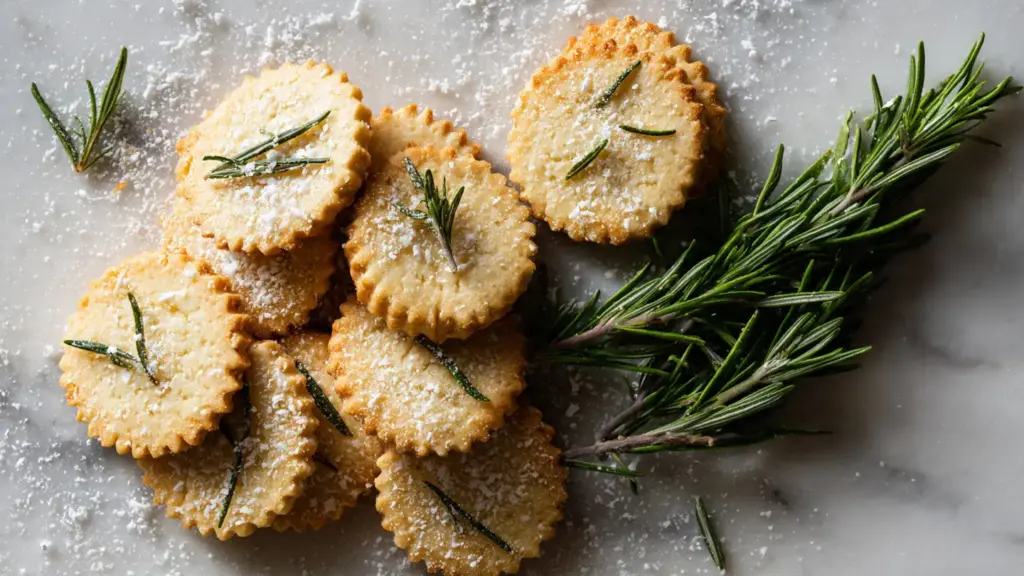
Rosemary shortbread is delightfully versatile. These cookies hold their own as a standalone treat, but they also pair beautifully with drinks and other nibbles.
The slight savory edge of rosemary makes these cookies an unexpected but wonderful companion to both sweet and savory accompaniments.
Here are some of my favorite ways to serve them:
- Alongside a pot of Earl Grey tea or a strong cup of black coffee for afternoon snacking
- As part of a holiday cookie tray paired with Classic Deviled Eggs and other savory bites for a festive spread
- Served with a glass of light white wine, sparkling wine, or a dry rosé at a cocktail gathering
- Crumbled over vanilla ice cream as a sophisticated topping
- Packaged in a cellophane bag tied with ribbon as a homemade gift
- Arranged on a cheese board alongside soft brie, sharp cheddar, fresh grapes, and a drizzle of honey
- Dipped halfway into melted white chocolate and left to set for an elegant finish
Variations to Try
Once you have mastered the classic version, there are so many fun directions to take this recipe. Shortbread dough is a wonderful blank canvas.
Here are some ideas to inspire your next batch:
- Lemon Rosemary: Add 1 tablespoon of fresh lemon zest to the dough along with the rosemary. The bright citrus notes are incredibly complementary to the woodsy herb, and the combination smells absolutely heavenly while baking.
- Rosemary Orange: Swap the lemon for orange zest for a warmer, slightly sweeter citrus note.
- Rosemary and Sea Salt: Double down on the flaky sea salt topping for a more pronounced sweet-savory contrast. This version is exceptional on a cheese board.
- Rosemary Honey: Add 1 tablespoon of good quality honey to the butter while creaming for a subtle floral sweetness that plays beautifully with the rosemary.
- Rosemary White Chocolate Dip: Bake the classic version, then dip the cooled cookies halfway into melted white chocolate and allow to set on parchment paper.
- Rosemary Almond: Add ½ teaspoon of pure almond extract and ¼ cup (30g) of finely ground almonds in place of an equal amount of flour for a nutty, fragrant twist.
For another herb-forward variation, the same slice-and-bake technique works beautifully with Raspberry Shortbread Cookies for a fruity, jewel-toned twist.
Storage and Reheating
Shortbread stores exceptionally well, which makes it one of the best cookies to bake ahead of time for parties, holidays, or gifting.
Follow these simple guidelines to keep your cookies fresh:
- Room temperature: Store fully cooled cookies in an airtight container, layered between sheets of parchment paper, at room temperature for up to 1 week. The texture actually improves after the first day as the flavors meld together.
- Refrigerator: Cookies can also be stored in an airtight container in the refrigerator for up to 2 weeks. Allow them to come to room temperature before serving for the best texture.
- Freezing baked cookies: Arrange cooled cookies in a single layer on a baking sheet and freeze until solid, about 1 hour. Transfer to a freezer-safe zip-lock bag or airtight container, layering with parchment paper. Freeze for up to 3 months. Thaw at room temperature for 30 to 45 minutes before serving.
- Freezing unbaked dough: The wrapped dough log can be frozen for up to 3 months. When ready to bake, transfer from the freezer to the refrigerator the night before to thaw, then slice and bake as directed.
- Reheating: Shortbread does not technically need reheating, but if you want to refresh frozen and thawed cookies, place them on a baking sheet in a 300°F (150°C) oven for 3 to 5 minutes. Let them cool again before serving.
You might also enjoy: Pecan Shortbread Cookies Recipe
Nutritional Facts
Per serving (1 cookie, based on approximately 30 cookies per batch)
| Nutrient | Amount |
|---|---|
| Calories | ~95 kcal |
| Total Fat | 6g |
| Saturated Fat | 3.8g |
| Cholesterol | 16mg |
| Sodium | 35mg |
| Total Carbohydrates | 9g |
| Dietary Fiber | 0.3g |
| Sugars | 3g |
| Protein | 1g |
Nutritional values are estimates and will vary based on specific ingredient brands and exact measurements used.
Read Also: Almond Shortbread Cookies Recipe
Health Benefits of Key Ingredients
While shortbread is certainly an indulgent treat, a few of the key ingredients do offer some genuine nutritional benefits worth noting.
Enjoying these cookies as part of a balanced lifestyle means you can feel good about what goes into them.
Here is a look at some of the highlights:
- Fresh rosemary is rich in antioxidants and anti-inflammatory compounds. It has been studied for potential benefits related to memory, circulation, and digestive health. The active compound rosmarinic acid is a potent natural antioxidant.
- Butter provides fat-soluble vitamins including vitamin A, D, E, and K2. When sourced from grass-fed cows, it also contains beneficial conjugated linoleic acid (CLA) and butyrate, which supports gut health.
- All-purpose flour provides carbohydrates that serve as the body’s primary source of energy. For a higher fiber option, you can substitute up to half the all-purpose flour with whole wheat pastry flour.
- Sea salt contains trace minerals including magnesium, potassium, and calcium that are typically absent from refined table salt.
- Rosemary’s essential oils have shown antimicrobial properties in research settings, which is why rosemary extract is sometimes used as a natural food preservative.
These cookies pair well with a warm cup of tea. Try making this Hot Chocolate Recipe alongside for a cozy treat session.
Frequently Asked Questions
1. Can I use dried rosemary instead of fresh?
It is strongly recommended to stick with fresh rosemary for this recipe. Dried rosemary retains its tough, needle-like texture even after baking, which creates an unpleasant mouthfeel in a delicate shortbread cookie. Fresh rosemary softens during baking and distributes its fragrant essential oils beautifully throughout the dough. If fresh rosemary is truly unavailable, use half the amount of dried and grind it in a spice grinder or mortar and pestle to a very fine powder before adding it to the dough.
2. Why did my shortbread spread and go flat?
Flat shortbread is almost always caused by either butter that was too soft or warm before mixing, or by skipping the chilling step. Butter that has melted or become greasy during the creaming process will cause the cookies to spread excessively in the oven. Make sure your butter is at true room temperature (around 65-68°F / 18-20°C) before you start, and never skip the refrigerator chill. If your kitchen is very warm, chill the sliced cookies on the baking sheet for 10 minutes before putting them in the oven.
3. Can I make the dough ahead of time?
Absolutely, and it is actually encouraged. The dough log can be made up to 48 hours in advance and kept wrapped in the refrigerator until you are ready to slice and bake. You can also freeze the dough log for up to 3 months. Just thaw it overnight in the refrigerator and proceed as directed. Making the dough ahead of time is a great strategy for stress-free holiday baking.
4. My dough is too crumbly and will not come together. What went wrong?
Shortbread dough is naturally drier and more crumbly than other cookie doughs, but it should still come together when pressed. If it is truly too dry, the butter may have been slightly too cold, or the flour was over-measured. Try pressing the dough firmly with the heel of your hand a few times. It should gradually become more cohesive. If it still will not hold together, add ½ to 1 teaspoon of cold water, one drop at a time, and press again. Avoid adding too much liquid as it will change the texture.
5. Can I make this recipe gluten-free?
Yes, rosemary shortbread can be made gluten-free with some adjustments. Use a 1:1 gluten-free all-purpose flour blend that contains xanthan gum, such as Bob’s Red Mill 1-to-1 or King Arthur Measure for Measure. The texture will be slightly more delicate and may crumble a little more than the traditional version, so handle the cookies gently. The flavor will still be excellent. You can also replace 2 tablespoons of the gluten-free flour with rice flour for an even more tender, crumbly shortbread texture similar to classic versions.
Read Also: Cherry Almond Shortbread Cookies Recipe
Final Thoughts
These rosemary shortbread cookies are the kind of recipe that earns you compliments every single time you make them, yet they never stop feeling like a personal secret weapon. The combination of golden, buttery shortbread and fragrant fresh rosemary is understated yet sophisticated, simple yet completely special.
Baking a batch of these fills your kitchen with one of the best smells imaginable. It is almost impossible to describe without sounding dramatic, but a batch of rosemary shortbread baking in the oven is legitimately one of life’s small pleasures.
Go ahead and give this rosemary shortbread cookies recipe a try. Make a double batch and keep one log in the freezer for the next time you need a quick but impressive treat.
If you try this recipe, leave a comment below and let me know how it went! I love hearing what little variations you tried or what you paired them with. And if you share a photo on Instagram or Pinterest, tag me so I can see your beautiful cookies.
Recommended:
- Strawberry Shortbread Cookies
- Date Filled Cookie
- Whipped Shortbread Cookies
- Cranberry Orange Shortbread Cookies
- Cranberry Pistachio Shortbread Cookies
- Christmas Shortbread Cookies
- Best Chocolate Chip Cookies
- Peanut Butter Blossom Cookies
- Easy Sugar Cookie
- Snickerdoodle Cookie