Few cookies in the world are as beloved and timeless as a proper Scottish shortbread cookie recipe. Made from just three to four pantry staples, these thick, buttery, melt-in-your-mouth biscuits have been satisfying sweet tooths for centuries.
What makes them so special? It’s not complexity. It’s purity.
The classic Scottish shortbread relies on high-quality butter as the star of the show. That generous amount of fat is exactly what gives shortbread its signature crumbly, tender texture and that unmistakable richness in every bite.
Unlike American-style cookies packed with eggs, leavening agents, and add-ins, traditional Scottish shortbread strips everything back. Flour, butter, and sugar — that’s it.
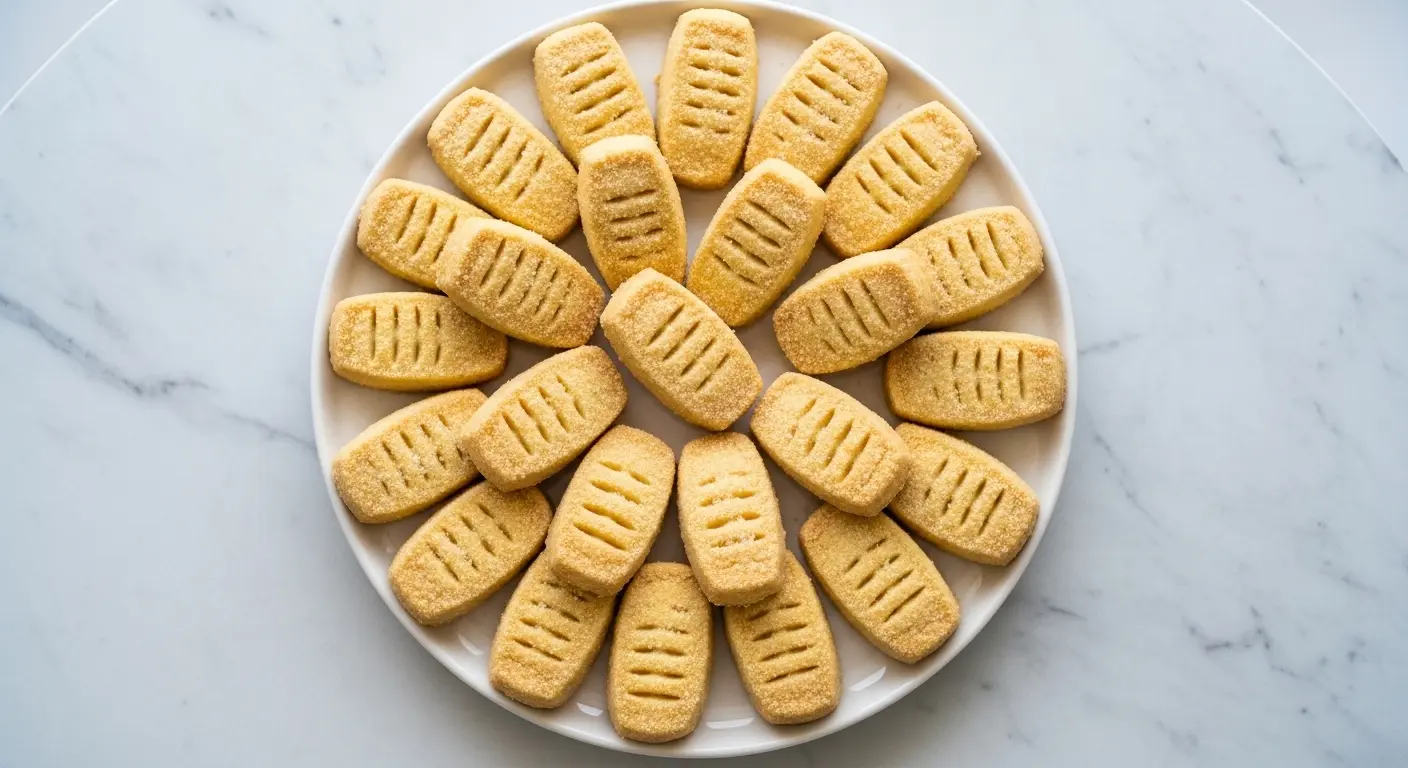
This recipe stays true to those roots. It bakes into thick, golden-edged fingers with a pale, sandy crumb that practically dissolves on your tongue.
You’ll want to make a double batch because these disappear fast.
You might also enjoy: Shortbread Cookie Recipe
Why You’ll Love This Scottish Shortbread Cookie Recipe
This recipe is the definition of low-effort, high-reward baking.
You don’t need a candy thermometer, a water bath, or any fancy technique. If you can soften butter and measure flour, you can make these cookies from scratch.
They bake in about 25 to 30 minutes at a low temperature, which is key to that signature pale, crumbly result.
The cookies keep beautifully for up to two weeks in an airtight container, making them perfect for gifting, holiday tins, or just keeping on the counter for whenever a craving strikes.
They’re also endlessly versatile. Once you master the base recipe, you can dip the finished cookies in dark chocolate, dust them with caster sugar, or add a hint of vanilla to make them your own.
And because the ingredient list is so short, every element matters — which means this is one recipe where buying good-quality butter genuinely makes a noticeable difference in flavor.
- Just 4 simple ingredients
- No eggs, no leavening, no complicated steps
- Ready from start to finish in about 1 hour
- Stays fresh for up to 2 weeks
- Perfect for holiday gifting or everyday snacking
- Naturally pairs with tea, coffee, or hot chocolate
- Freezes beautifully for up to 3 months
Read Also: Whipped Shortbread Cookies Recipe
Ingredients
The secret to an exceptional batch of Scottish shortbread is starting with the best butter you can find. European-style butters like Kerrygold have a higher fat content, which translates to a richer, more flavorful cookie. This is one recipe where that small upgrade is absolutely worth it.
- 1 cup (225g) unsalted butter, softened to room temperature
- ½ cup (60g) powdered sugar (confectioners’ sugar), sifted
- 2 cups (250g) all-purpose flour, spooned and leveled
- ¼ teaspoon fine sea salt
- 1–2 tablespoons granulated or caster sugar, for sprinkling on top (optional but recommended)
For the most authentic result, use granulated caster sugar in the dough itself if you can find it. Its fine grain incorporates more evenly into the butter without making the cookies too sweet or dense.
The recipe serves approximately 24 shortbread fingers or rounds.
This is a lovely companion to a cup of Earl Grey if you’re in the mood for more baked goods: Cranberry Shortbread Cookies Recipe
Kitchen Equipment Needed
You don’t need much to make Scottish shortbread, which is part of its charm. A stand mixer makes the process easier, but this dough can absolutely be made by hand with a wooden spoon or your fingertips — the traditional Scottish way.
- Stand mixer with paddle attachment (or a large mixing bowl and wooden spoon)
- Digital kitchen scale (highly recommended for accuracy)
- Rimmed baking sheet
- Parchment paper or silicone baking mat
- Measuring cups and spoons
- Sifter or fine mesh strainer (for sifting powdered sugar)
- Rolling pin (if cutting into shapes)
- Sharp knife or pastry cutter (for cutting into fingers)
- Fork (for docking/pricking the cookies)
- Wire cooling rack
Read Also: Lemon Shortbread Cookies Recipe
Recommended Products for This Recipe
These are products I genuinely recommend based on quality and the difference they make in the final result — especially for a recipe as simple as this one where each ingredient does a lot of heavy lifting.
1. Kerrygold Pure Irish Butter (Unsalted)
Shortbread is only as good as the butter you use, full stop. Kerrygold is a European-style butter with a higher butterfat content than standard American butter, and you will absolutely taste that difference in the finished cookie. Its natural sweetness and creamy depth come through in every bite.
2. KitchenAid Artisan Stand Mixer
Creaming butter without overworking the dough is the trickiest part of shortbread. A stand mixer with the paddle attachment gives you precise control, especially at low speeds, so you get that perfectly combined dough without turning it tough.
3. Nordic Ware Natural Aluminum Commercial Baker’s Half Sheet
Even, consistent baking is essential for shortbread since you want that pale golden color without browning. This commercial-grade baking sheet distributes heat evenly and won’t warp in the oven, giving you perfectly uniform results every time.
4. OXO Good Grips Digital Kitchen Scale
Baking shortbread by weight rather than volume is one of the simplest ways to improve your results. Even a small difference in flour measurement can shift the texture from crumbly and tender to cakey and dense. This scale is accurate, easy to read, and worth every penny.
5. Shortbread Cookie Mold (Thistle Design)
If you want to lean into the Scottish heritage of this recipe, a traditional thistle-embossed shortbread mold is a beautiful way to do it. These molds create stunning petticoat-tail style rounds that look impressive and make incredible gifts.
For more Scottish-inspired baking ideas, check out: Cherry Almond Shortbread Cookies Recipe
Step-by-Step Instructions
1. Preheat Your Oven and Prepare Your Baking Sheet
- Preheat your oven to 325°F (160°C / 140°C fan-assisted). This lower temperature is intentional and important — it allows the shortbread to bake slowly and evenly, developing that characteristic pale, sandy texture without browning too quickly.
- Line a rimmed baking sheet with parchment paper or a silicone baking mat. Set aside. Do not grease the pan since the butter content in the dough is already very high and the parchment will prevent any sticking.
2. Soften Your Butter Properly
- Remove the butter from the refrigerator at least 45 to 60 minutes before you plan to start baking. Properly softened butter is critical — it should be pliable and hold an indentation when pressed with your finger but should not be greasy, oily, or melted.
- If your butter is still too firm, you can cut it into small cubes and let it sit on the counter for 20 to 30 minutes. Avoid microwaving it as melted or partially melted butter will change the texture of the finished cookies significantly.
3. Cream the Butter and Sugar
- Place the softened butter in the bowl of your stand mixer fitted with the paddle attachment (or in a large mixing bowl if working by hand).
- Add the sifted powdered sugar and the sea salt to the butter.
- Mix on low speed for about 1 minute to combine, then increase to medium speed and beat until the mixture is pale, creamy, and fluffy — about 2 to 3 minutes. Scrape down the sides of the bowl halfway through.
- Do not rush this step. Creaming the butter and sugar together thoroughly is what gives the cookies a light, tender crumb rather than a dense, heavy texture.
- Note: Some purists will tell you NOT to cream the butter for traditional shortbread and to simply mix until just combined. Both methods work. Creaming produces a slightly lighter result while the no-cream method gives a denser, more old-fashioned texture.
4. Add the Flour
- With the mixer on its lowest speed (or stirring gently with a wooden spoon), add all of the flour at once.
- Mix just until the dough barely comes together and there are no visible streaks of flour remaining. The mixture will look dry and crumbly at first — keep mixing and it will form a soft dough within 1 to 2 minutes.
- This is the most important step to get right: do NOT overmix the dough. Overworking the flour develops gluten, which will make your shortbread tough and chewy rather than crumbly and tender. Stop the mixer the moment the dough comes together.
5. Shape the Dough
For shortbread fingers (traditional):
- Turn the dough out onto a very lightly floured surface.
- Gently press or roll the dough into a rectangle about ½ inch (1.25 cm) thick. Try to handle the dough as little as possible.
- Using a sharp knife or pastry cutter, cut the dough into rectangles approximately 2 inches by 1 inch (5 cm by 2.5 cm). These are your classic shortbread “fingers.”
- Carefully transfer the fingers to the prepared baking sheet, spacing them about 1 inch (2.5 cm) apart.
For round cookies:
- Roll the dough out to about ¼ to ½ inch (6mm to 1.25 cm) thickness on a lightly floured surface.
- Use a 2 to 2.5 inch (5 to 6 cm) round cookie cutter or the rim of a glass to cut out rounds.
- Re-roll the scraps gently and cut additional rounds until all the dough is used.
6. Dock the Cookies
- Using a fork, gently prick each shortbread finger or round 3 times in a row across the surface. This process, called “docking,” prevents the cookies from puffing up unevenly during baking and creates the classic decorative pattern you see on traditional Scottish shortbread.
- Press firmly enough to leave visible marks but not so hard that you press all the way through the dough.
7. Chill the Dough (Recommended)
- For the best results, cover the baking sheet loosely with plastic wrap and refrigerate the shaped, docked cookies for 20 to 30 minutes before baking.
- This chilling step is not strictly required, but it helps the cookies hold their shape in the oven and contributes to a better texture. If you’re in a hurry, you can skip it.
8. Add a Sugar Topping
- Just before placing the cookies in the oven, sprinkle a pinch of caster sugar or granulated sugar over the top of each cookie. This gives them a subtle sparkle and a gentle crunch on the surface that contrasts beautifully with the soft, sandy interior.
- This step is entirely optional but highly recommended if you want that classic, bakery-style finish.
9. Bake the Shortbread
- Place the baking sheet on the center rack of your preheated 325°F (160°C) oven.
- Bake for 20 to 25 minutes for thinner rounds, or 25 to 30 minutes for thicker fingers. The shortbread is done when the edges are just barely starting to turn a very light golden color and the tops look set and dry. The center may still look slightly underdone — that is correct.
- Do not let them brown significantly. Shortbread should be very pale. Over-baked shortbread loses its tender, melt-in-the-mouth quality and can become brittle.
10. Cool and Serve
- Remove the baking sheet from the oven and let the shortbread cool on the pan for 10 minutes before transferring to a wire cooling rack. The cookies are fragile when warm, so handle them gently.
- Allow them to cool completely at room temperature before eating. As they cool, they firm up into that classic crumbly shortbread texture.
- Once fully cooled, taste one. If they taste sandy, buttery, and slightly sweet with a clean finish — you’ve nailed it.
Once you’ve baked a batch, you might want to try: Almond Shortbread Cookies Recipe
Tips for Success
Getting Scottish shortbread right is all about respecting the simplicity of the recipe. Small things make a big difference here, especially since you only have four ingredients working for you.
- Use room temperature butter. Cold butter won’t cream properly and can leave lumps in the dough. Butter that is too warm or greasy will cause the cookies to spread and lose their shape in the oven.
- Measure flour correctly. Too much flour is the most common mistake in shortbread baking. Spoon the flour into your measuring cup and level it off, or better yet, use a kitchen scale for perfect results every time. Even a few extra tablespoons of flour can shift the texture from melt-in-the-mouth to cakey and dry.
- Don’t skip the docking step. Pricking the dough with a fork isn’t just decorative — it prevents uneven puffing and helps the cookies bake evenly across the whole surface.
- Use quality butter. Because shortbread contains so few ingredients, the butter’s flavor becomes the dominant taste. A high-fat European-style butter like Kerrygold or Plugrá will produce a noticeably richer, more complex result than standard grocery store butter.
- Don’t overmix. Once the flour is added, mix only until combined. Overworking the dough develops gluten and makes the cookies tough.
- Bake low and slow. The low oven temperature is what gives shortbread its signature sandy, pale texture. Resist the urge to bump up the heat to speed things along.
- Let them cool fully before eating. They may seem a little soft straight from the oven, but they firm up beautifully as they cool.
For even more buttery cookie inspiration, try these: Pecan Shortbread Cookies Recipe
Serving Suggestions
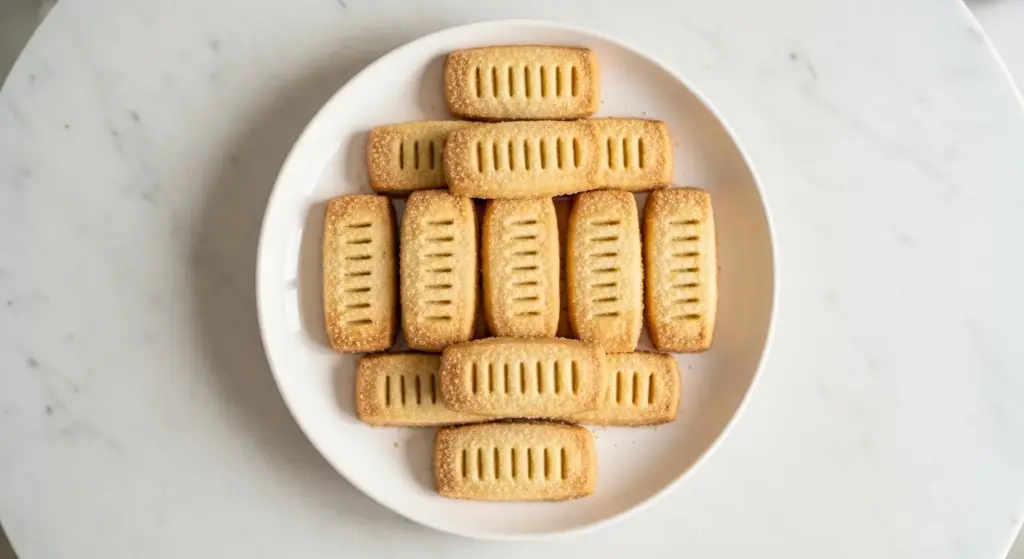
Scottish shortbread is wonderful on its own, but it really shines when paired thoughtfully.
The clean, buttery flavor acts as the perfect canvas for both sweet and slightly bitter accompaniments, which is why it has been served at tea time across the UK for centuries.
- Serve alongside a pot of Earl Grey, English Breakfast, or chamomile tea
- Pair with a Classic Tiramisu for an indulgent dessert spread
- Arrange on a holiday cookie platter with Gingerbread Cookies and Snickerdoodle Cookies
- Serve with lemon curd and clotted cream for a classic British afternoon tea
- Dip the tips in melted dark or milk chocolate and allow to set for an elegant treat
- Crumble over vanilla ice cream or a Classic Cheesecake for a buttery, crunchy topping
- Pair with a warm mug of Hot Chocolate for a cozy winter treat
- Package in a decorative tin lined with parchment paper as a thoughtful homemade gift
Read Also: Christmas Shortbread Cookies Recipe
Variations to Try
Once you master the classic recipe, the base dough becomes a blank canvas for all kinds of creative additions. The key is to keep any add-ins subtle so the signature buttery flavor of the shortbread remains front and center.
- Lemon Shortbread: Add 1 tablespoon of finely grated lemon zest and ½ teaspoon of vanilla extract to the butter and sugar mixture. The citrus lifts the richness beautifully.
- Lavender Shortbread: Stir in 1 to 2 teaspoons of culinary-grade dried lavender buds with the flour for a floral, French-inspired variation.
- Chocolate-Dipped Shortbread: Bake the classic recipe as written, then dip the cooled fingers halfway into melted dark or white chocolate and let them set on parchment paper.
- Brown Butter Shortbread: Swap regular softened butter for browned, then chilled butter. The caramel and nutty notes transform the flavor completely.
- Rosemary Shortbread: Add 1 teaspoon of finely minced fresh rosemary to the dough. This savory-sweet combination is unexpectedly addictive.
- Cranberry Orange Shortbread: Fold in ¼ cup of finely chopped dried cranberries and 1 teaspoon of orange zest for a festive holiday variation.
- Chocolate Shortbread: Substitute 2 tablespoons of flour with 2 tablespoons of high-quality Dutch-process cocoa powder for a rich, chocolate-scented version.
Explore another festive variation here: Cranberry Orange Shortbread Cookies Recipe
Storage and Reheating
One of the best things about Scottish shortbread is how well it keeps. Because it contains no eggs or dairy beyond butter, it has a naturally longer shelf life than most cookies.
- Room temperature: Store in an airtight container or tin at room temperature for up to 2 weeks. Layer the cookies between sheets of parchment paper to prevent sticking and breakage.
- Refrigerator: Not recommended for long-term storage since refrigerating shortbread can cause it to absorb moisture and soften. Bring refrigerated cookies to room temperature before serving.
- Freezer: Scottish shortbread freezes exceptionally well. Place the cooled cookies in a single layer on a baking sheet and freeze until solid (about 1 hour), then transfer to a freezer-safe zip bag or airtight container with parchment between layers. Freeze for up to 3 months.
- Thawing: Remove frozen shortbread from the freezer and let it thaw at room temperature for 30 to 45 minutes. There is no need to reheat the cookies — they come back to their original texture perfectly.
- Reheating: If you prefer a slightly warm shortbread, place the cookies on a baking sheet in a 300°F (150°C) oven for 5 to 7 minutes. This crisps them up slightly without over-baking them.
More sweet treats that store beautifully: Oatmeal Raisin Cookie Recipe
Nutritional Facts
(Per serving, based on 24 shortbread fingers made from the recipe above. Nutrition values are approximate and may vary based on specific ingredients and portion sizes used.)
| Nutrient | Amount Per Cookie |
|---|---|
| Calories | ~138 kcal |
| Total Fat | 9g |
| Saturated Fat | 5.8g |
| Cholesterol | 25mg |
| Sodium | 50mg |
| Total Carbohydrates | 12.5g |
| Dietary Fiber | 0.3g |
| Total Sugars | 3g |
| Protein | 1.4g |
These cookies are a satisfying, calorie-moderate treat when enjoyed in reasonable portions.
For another classic cookie with simple ingredients, try: Best Chocolate Chip Cookies Recipe
Health Benefits of Key Ingredients
While shortbread is certainly a treat rather than a health food, the simple ingredients do bring a few genuine nutritional benefits worth noting.
This recipe avoids artificial preservatives, colorings, and additives entirely — everything in it is a real, whole ingredient.
- Butter: Real butter contains fat-soluble vitamins A, D, E, and K2. It also provides butyrate, a short-chain fatty acid that supports gut health. Using high-quality grass-fed butter like Kerrygold increases the omega-3 and conjugated linoleic acid (CLA) content.
- All-Purpose Flour: Provides carbohydrates for energy and small amounts of iron and B vitamins. Using unbleached flour avoids chemical whitening agents, keeping the ingredient list as clean as possible.
- Powdered Sugar: In moderate amounts, sugar provides a quick energy source. The small quantity used per cookie means each serving carries just 3 grams of sugar.
- Sea Salt: Contributes trace minerals including magnesium, potassium, and calcium. It also enhances the perceived sweetness of the cookie, meaning you need less sugar overall to achieve a satisfying flavor.
Read Also: Peanut Butter Cookie Recipe
Frequently Asked Questions
1. What makes Scottish shortbread different from regular shortbread?
Traditional Scottish shortbread is made with only three to four ingredients — butter, sugar, flour, and optionally salt — with no leavening agents like baking powder or baking soda. Regular shortbread recipes sometimes include these additives, which changes the texture, making cookies crispier and more puffed up. Scottish shortbread has the highest butter-to-flour ratio, which is what gives it that signature thick, crumbly, melt-in-the-mouth texture that sets it apart from other butter cookies.
2. Why did my shortbread turn out too hard or tough?
The most common cause is overmixing the dough after adding the flour. Overworking the dough develops gluten in the flour, resulting in a tough, dense cookie rather than a tender one. Another possible cause is using too much flour. Always measure flour by spooning it into the cup and leveling it off, or use a digital kitchen scale for precise measurements.
3. Can I make Scottish shortbread without a stand mixer?
Absolutely. Traditional Scottish shortbread was made by hand for centuries before electric mixers existed. Simply use a large mixing bowl and a wooden spoon or your fingertips to rub the butter into the flour and sugar mixture. Work the dough with a light touch and stop as soon as it comes together. Some bakers prefer the by-hand method because it’s harder to accidentally overmix the dough.
4. Do I need to chill the dough before baking?
Chilling is not strictly necessary for Scottish shortbread, but it is highly recommended. Refrigerating the shaped cookies for 20 to 30 minutes before baking helps them hold their shape, prevents spreading, and contributes to a slightly crisper edge. If you’re short on time, you can skip the chill step, though the results may be slightly less defined in shape.
5. Can I use salted butter instead of unsalted?
Yes, you can. Many traditional Scottish shortbread recipes are actually made with salted butter, which adds a subtle depth of flavor. If you use salted butter, simply omit the added salt from the recipe. The flavor result will be slightly different but still delicious. The most important thing is to use a high-quality butter with good flavor since that is what carries the whole cookie.
Final Thoughts
A proper Scottish shortbread cookie recipe is one of those rare baking projects that rewards patience and simplicity above everything else.
There’s no complicated technique to learn and no long ingredient list to track down. Just good butter, a little sugar, and flour — and the result is one of the most satisfying, crowd-pleasing cookies you can pull from the oven.
Bake them for a holiday cookie tin, wrap them in parchment and ribbon as gifts, or simply make a batch for yourself to enjoy alongside your morning tea.
However you serve them, these buttery, crumbly fingers of perfection are guaranteed to disappear faster than you expect.
Give this recipe a try and let me know in the comments how yours turned out! Did you add any fun variations? Share this post with a friend who loves a good homemade cookie.
Recommended:
- Lavender Shortbread Cookies Recipe
- Rosemary Shortbread Cookies Recipe
- Raspberry Shortbread Cookies Recipe
- Strawberry Shortbread Cookies Recipe
- Chocolate Shortbread Cookies Recipe
- Cranberry Pistachio Shortbread Cookies Recipe
- Almond Macaroon Cookie Recipe
- No Bake Cookie Recipe
- Cut Out Sugar Cookie Recipe
- Old Fashioned Chocolate Chip Cookie Recipe