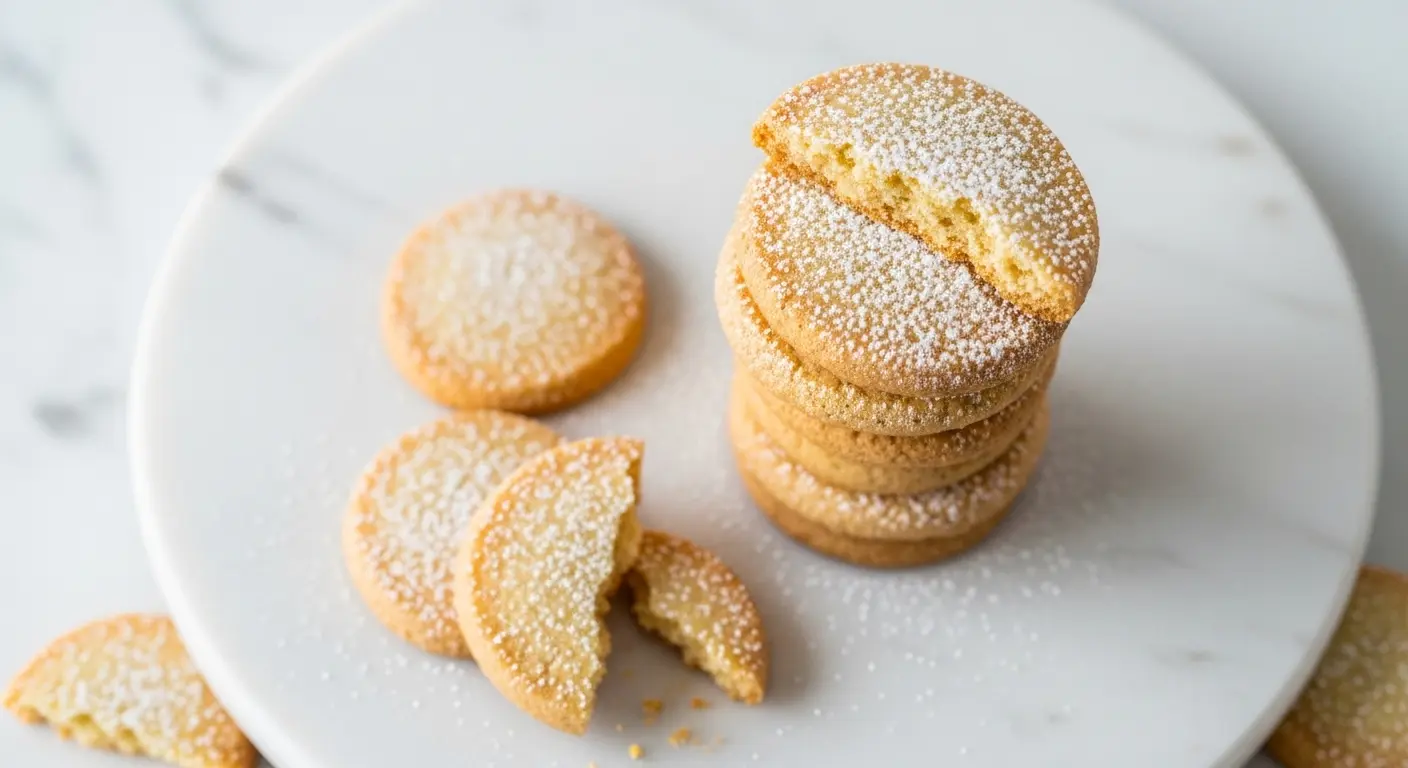
Few cookies have earned their place in the world quite like a classic shortbread cookie recipe. Just three simple ingredients, no eggs, no leavening, and yet the result is one of the most satisfying, melt-in-your-mouth cookies you will ever taste.
The magic lies in the butter. High-fat, quality butter is the backbone of every great shortbread, giving it that signature richness and delicate, crumbly texture that crumbles just right when you bite in.
This is the traditional Scottish-style shortbread most people know and love. It uses the classic 1:2:3 ratio of sugar, butter, and flour, which creates that perfectly balanced flavor and texture every time.
If you love baking cookies from scratch, you will absolutely fall in love with how simple and rewarding this recipe is. And once you have the base down, the variations are endless.
This pairs beautifully with a cup of tea, but truly, shortbread needs no occasion. It is one of those rare cookies that feels just as appropriate at a holiday cookie exchange as it does on a quiet Tuesday afternoon.
If you enjoy cookie baking, you might also love these Whipped Shortbread Cookies for an ultra-light, airy twist on the classic.
Why You’ll Love This Shortbread Cookie Recipe
This shortbread cookie recipe is one of those rare recipes you will turn to again and again. It is endlessly reliable, endlessly delicious, and takes almost no effort to pull together.
It uses pantry staples you likely already have on hand. No specialty ingredients, no obscure equipment, just butter, sugar, and flour doing something truly beautiful together.
The texture is everything you want in a shortbread: delicately crisp on the outside, tender and buttery on the inside, with just a slight crumble that melts on your tongue.
It is also one of the most customizable cookie recipes around. Once you know the base, you can flavor it a dozen different ways without changing a single technique.
Beginners will find this recipe approachable and forgiving. Experienced bakers will appreciate how consistent and reliable the results are every single time.
Here is a quick overview of why you will keep coming back to this recipe:
- Only 3 main ingredients required
- No egg, no baking powder, and no chilling required (though optional chilling helps)
- Ready in about 30 minutes from start to finish
- Perfect crumbly, buttery texture that melts in your mouth
- Keeps well for up to two weeks, making it ideal for gifting
- Easily customizable with extracts, zest, and mix-ins
- Scales up beautifully for large batches
You might also enjoy: Lemon Shortbread Cookies
Ingredients
This shortbread recipe keeps things beautifully simple. The key is using the highest quality butter you can find, since it is the star of the show. Unsalted butter gives you full control over the saltiness, and adding a pinch of salt separately ensures even flavor distribution.
- 1 cup (225g / 2 sticks) unsalted European-style butter, softened to room temperature
- 1/2 cup (60g) powdered sugar (also called confectioners’ sugar or icing sugar), sifted
- 2 cups (240g) all-purpose flour, spooned and leveled
- 1/4 tsp fine sea salt
- 1 tsp pure vanilla extract (optional but recommended)
Read Also: Scottish Shortbread Cookie Recipe
Kitchen Equipment Needed
You do not need much to make this recipe. The key tools are a good mixing bowl, a hand or stand mixer, and a baking sheet lined with parchment. A cookie cutter is optional but great for shaping.
- Stand mixer or hand mixer
- Large mixing bowl
- Sifter or fine mesh strainer (for sifting the powdered sugar)
- Measuring cups and spoons
- Parchment paper or silicone baking mat
- Rimmed baking sheet
- Rolling pin (if making cut-out style cookies)
- Cookie cutters (optional)
- Sharp knife or bench scraper (for bar or finger-style)
- Cooling rack
- Fork or skewer (for decorative pricking)
You might also enjoy: Pecan Shortbread Cookies
Recommended Products for This Recipe
These are a few products that can genuinely take your shortbread baking up a notch, based on quality and performance.
1. Kerrygold Pure Irish Butter (Unsalted)
Kerrygold is a grass-fed, European-style butter with a significantly higher butterfat content than most American butters. That extra fat is exactly what gives shortbread its signature richness and tender crumb. It is the single biggest upgrade you can make to this recipe.
2. Nordic Ware Natural Aluminum Half Sheet Baking Pan
This heavyweight aluminum baking sheet heats evenly without hot spots, which is critical for shortbread. Uneven heat causes some cookies to brown too fast while others stay pale. A quality pan ensures every cookie bakes to the same perfect golden edge.
3. OXO Good Grips 3-Piece Stainless Steel Mixing Bowl Set
Having the right mixing bowl makes creaming butter and sugar so much easier. This set from OXO features non-slip bases and pour spouts, which makes adding and mixing ingredients more controlled and mess-free.
4. Nielsen-Massey Pure Vanilla Extract
Nielsen-Massey is a gold-standard vanilla extract used by professional pastry chefs. It has a clean, rounded vanilla flavor that does not turn artificial or bitter during baking. A small splash makes a noticeable difference in the overall flavor of your shortbread.
5. Ateco Round Cookie Cutter Set
If you want clean, evenly shaped shortbread rounds, a professional-grade cutter makes the job much easier. This Ateco set includes multiple sizes and has sharp edges that press cleanly through chilled dough without dragging or tearing.
The same butter used here works wonderfully when making Cranberry Shortbread Cookies for a festive variation.
Step-by-Step Instructions
1. Prepare Your Oven and Baking Sheet
- Preheat your oven to 325°F (160°C). This lower-than-usual temperature is intentional. Shortbread should bake slowly and gently to develop a pale golden color without browning too quickly.
- Line a large rimmed baking sheet with parchment paper or a silicone baking mat. This prevents sticking and promotes even heat distribution across the bottom of the cookies.
- Set the lined pan aside while you prepare the dough.
2. Soften the Butter Properly
- Remove the butter from the refrigerator 30 to 45 minutes before you start. You want it soft but not greasy or melted. When you press a finger into it, it should indent easily without leaving liquid butter behind.
- If you are short on time, cut the butter into small cubes and let it sit at room temperature for 15 minutes. Avoid microwaving, as even slightly melted butter will change the texture of your cookies.
3. Cream the Butter and Sugar
- Place the softened butter in the bowl of a stand mixer fitted with the paddle attachment, or in a large bowl if using a hand mixer.
- Sift the powdered sugar directly into the bowl with the butter. Using powdered sugar instead of granulated sugar is important: it dissolves more completely into the butter, giving you that smooth, melt-in-your-mouth texture rather than a gritty crunch.
- Beat the butter and sugar together on medium speed for 2 to 3 minutes, until the mixture is pale, light, and fluffy. Scrape down the sides and bottom of the bowl once halfway through.
- Add the vanilla extract (if using) and beat for another 20 seconds to incorporate.
4. Add the Flour and Salt
- In a separate bowl, whisk together the all-purpose flour and the fine sea salt. This ensures the salt is distributed evenly throughout the dough rather than in clumps.
- With the mixer on its lowest speed, add the flour mixture to the butter mixture in two additions. Add half the flour first, mix just until partially combined, then add the second half.
- Mix only until the dough just comes together and no dry flour streaks remain. Do not over-mix. Overworking the dough develops gluten, which will make your cookies tough rather than tender and crumbly.
- The finished dough should be soft, smooth, and slightly tacky. It will hold together when pressed but should not be wet or sticky.
5. Shape the Cookies
For classic finger-style shortbread (traditional method):
- Press the dough evenly into an ungreased 8×8-inch (20x20cm) square baking pan, or shape it into a rough rectangle on your lined baking sheet to about 1/2-inch (1.25cm) thickness.
- Use a bench scraper or the back of a flat spatula to smooth the surface.
- Score the dough into fingers or squares with a sharp knife. Press the lines about halfway through the dough so they are easy to break apart after baking. Traditional shortbread fingers are approximately 1 inch x 3 inches (2.5cm x 7.5cm).
- Prick each piece several times with a fork or wooden skewer, going all the way through to the pan. This classic decoration is functional: it allows steam to escape during baking and prevents the cookies from puffing up unevenly.
For round cut-out style shortbread:
- Turn the dough out onto a lightly floured surface or a sheet of parchment paper.
- Gently roll it to an even thickness of about 1/4 to 1/2 inch (6mm to 1.25cm). Thicker cookies will have a softer, more crumbly center; thinner ones will be crispier throughout.
- Cut into rounds or desired shapes using cookie cutters. Re-roll scraps gently once.
- Transfer the cut cookies to the lined baking sheet, spacing them about 1 inch (2.5cm) apart.
- Prick the tops of each cookie with a fork.
6. Chill the Shaped Dough (Recommended)
- Place the shaped and pricked cookies or dough in the refrigerator for 20 to 30 minutes before baking. This step is optional but highly recommended.
- Chilling firms the butter back up, which helps the cookies hold their shape in the oven and reduces spreading. It also relaxes the gluten that may have formed during mixing, resulting in a more tender cookie.
7. Bake the Shortbread
- Bake the chilled cookies in the preheated 325°F (160°C) oven for 18 to 25 minutes, depending on their thickness and your oven.
- You are looking for the edges to turn a very light golden color, while the tops remain mostly pale. Shortbread should not be deeply golden or brown. If the tops are browning before the cookies feel set, your oven may run hot. Try reducing the temperature by 10 to 15 degrees next time.
- The cookies will feel slightly soft when they first come out of the oven. This is completely normal. They firm up and develop their signature crumbly texture as they cool.
8. Cool and Break Apart
- Remove the baking sheet from the oven and let the cookies rest on the pan for 10 minutes before moving them.
- If you made the slab-style, use a sharp knife to cut along the scored lines while the shortbread is still slightly warm. Cutting while warm is much easier than trying to break apart a fully cooled slab.
- Transfer the individual cookies to a wire cooling rack and allow them to cool completely before eating or storing. Full cooling takes about 30 minutes.
Read Also: Raspberry Shortbread Cookies
Tips for Success
Getting shortbread right is mostly about respecting the butter and not over-working the dough. These tips will help you nail it every time:
- Use room temperature butter. Cold butter will not cream properly and can leave lumps. Melted butter makes the dough greasy and changes the texture.
- Spoon and level your flour. Do not scoop flour directly with the measuring cup. This compacts the flour and leads to dry, crumbly dough. Instead, spoon flour into the cup and level it off with a knife, or use a kitchen scale for precision.
- Do not over-mix after adding the flour. Mix just until the dough comes together. Overworking it activates the gluten in the flour, which turns your delicate cookies tough.
- Chill the dough before baking. Even 20 minutes in the fridge makes a meaningful difference in how well the cookies hold their shape and how tender the texture is.
- Bake low and slow. 325°F (160°C) is the sweet spot. Higher temperatures can cause uneven browning.
- Use a kitchen scale for the flour. Of all the ingredients, flour is the easiest to mis-measure. 240g is the ideal amount; too much leads to dry, crumbly dough, while too little causes spreading.
- Score before baking, cut while warm. For bar-style shortbread, mark the lines before the oven and cut them through while still slightly warm.
Another favorite: Almond Shortbread Cookies
Serving Suggestions
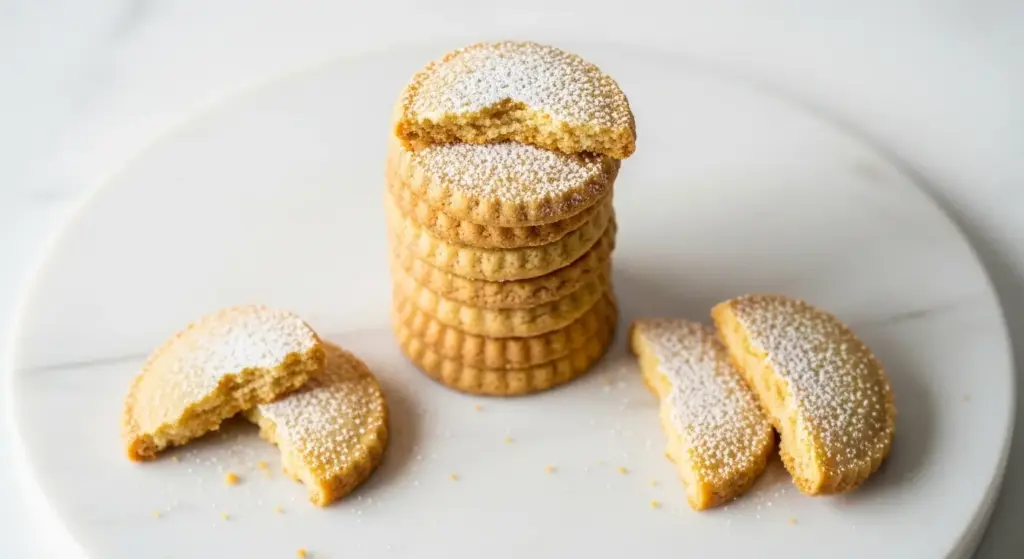
Shortbread is versatile enough to be dressed up or served completely plain. Here is how to make the most of these buttery beauties.
A classic pairing is hot tea, particularly Earl Grey or English breakfast. The mild sweetness and delicate butteriness of shortbread complements the slight tannins in black tea perfectly.
For a fancier presentation, dust the cooled cookies lightly with powdered sugar. You can also dip the ends in melted dark or white chocolate and let them set on parchment for a bakery-style finish.
Shortbread also makes a beautiful base for desserts like strawberry tart or lemon curd cookies. Press it into a tart pan and pre-bake as a shell for a no-fuss, buttery crust.
Serving ideas to inspire you:
- Pair with a pot of loose-leaf tea or an afternoon latte
- Serve alongside Classic Deviled Eggs at holiday gatherings for a sweet-savory contrast
- Package in cellophane bags tied with ribbon as homemade gifts
- Dip halfway in dark chocolate and top with flaky sea salt
- Serve with Vanilla Pudding and fresh berries for an elegant dessert plate
- Crumble over ice cream for an easy shortbread sundae topping
- Arrange on a dessert board with cheeses, fruit, and nuts for a beautiful spread
Read Also: Easy Sugar Cookie Recipe
Variations to Try
The classic shortbread recipe is a wonderful canvas for all kinds of flavors. Here are some easy ways to change it up without changing your technique:
Once you have the base dough ready, you can fold in a few add-ins or swaps before shaping. Keep any add-ins to about 1/2 cup maximum to maintain the dough’s structure.
- Lemon Shortbread: Add the zest of one lemon and 1/2 tsp lemon extract to the butter before creaming for a bright, citrusy cookie
- Chocolate Shortbread: Replace 3 tablespoons of flour with 3 tablespoons of unsweetened Dutch-process cocoa powder for a rich, deep chocolate flavor
- Rosemary Shortbread: Add 1 tablespoon finely chopped fresh rosemary and an extra pinch of flaky sea salt to the dough for a savory-sweet combination
- Lavender Shortbread: Fold in 1 teaspoon dried culinary lavender for an elegant floral note
- Cherry Almond Shortbread: Add 1/4 teaspoon almond extract and 1/3 cup finely chopped dried cherries for a festive, fruity variation
- Cranberry Orange Shortbread: Fold in the zest of one orange and 1/3 cup dried cranberries for a bright, seasonal flavor
- Whipped Shortbread: Beat the butter for an extended 5 minutes before adding flour for an ultra-light, pillowy texture
- Brown Butter Shortbread: Brown the butter on the stovetop, chill it until firm, then use it in place of regular butter for a deep, nutty, almost caramel-like flavor
For a festive version of this recipe, try these Christmas Shortbread Cookies with seasonal shapes and a sprinkle of colored sugar.
Storage and Reheating
One of the great advantages of shortbread is how well it keeps. Stored properly, it will stay fresh and delicious for well over a week.
Make sure the cookies are fully cooled before storing. Storing them while still warm traps moisture, which leads to soft, soggy cookies rather than the crisp texture you want.
- Room temperature: Store in an airtight container at room temperature for up to 2 weeks. Separate layers with parchment paper to prevent sticking.
- Refrigerator: Shortbread can be stored in the fridge for up to 3 weeks, though the texture is best at room temperature. Let chilled cookies sit at room temperature for 10 to 15 minutes before serving.
- Freezer (baked cookies): Place fully cooled cookies in a single layer on a baking sheet and freeze for 1 hour until firm. Transfer to a zip-lock freezer bag and freeze for up to 3 months. Thaw at room temperature for 20 to 30 minutes.
- Freezer (unbaked dough): Shape the dough into a log, wrap tightly in plastic wrap, and freeze for up to 3 months. Slice and bake directly from frozen, adding 3 to 5 extra minutes to the baking time.
- Reheating: Shortbread does not need reheating, but if you want to refresh the crispness, pop cookies in a 300°F (150°C) oven for 4 to 5 minutes.
This technique also works perfectly when making Chocolate Shortbread Cookies, which store just as well.
Nutritional Facts
The following is an approximate nutritional breakdown per shortbread cookie, based on a yield of 24 cookies from this recipe. Values may vary depending on size and any add-ins used.
| Nutrient | Per Cookie (approx.) |
|---|---|
| Calories | 110 kcal |
| Total Fat | 7g |
| Saturated Fat | 4.5g |
| Cholesterol | 20mg |
| Sodium | 25mg |
| Total Carbohydrates | 11g |
| Dietary Fiber | 0.3g |
| Total Sugars | 3g |
| Protein | 1g |
Please note that these are estimates. Exact values depend on the specific brands and measurements used. For precise tracking, use a nutrition calculator with your exact ingredients.
Read Also: Peanut Butter Cookie Recipe
Health Benefits of Key Ingredients
Shortbread is undeniably an indulgent cookie, but a few of its core ingredients carry some meaningful nutritional value worth knowing about.
Butter, long misunderstood as purely harmful, is actually a natural whole food. When sourced from grass-fed cows, it contains fat-soluble vitamins A, D, E, and K2, plus a small amount of conjugated linoleic acid (CLA), a fatty acid associated with various metabolic benefits.
All-purpose flour provides a small but meaningful amount of protein (around 10 to 12g per 100g), as well as B vitamins including niacin, thiamin, and riboflavin, all of which play essential roles in energy metabolism.
Vanilla extract, though used in small amounts, contains antioxidants derived from the vanillin compound. Studies have pointed to vanillin’s potential anti-inflammatory and antioxidant properties.
Here is a look at the key ingredients:
- Butter: Provides fat-soluble vitamins A, D, E, and K2; a good source of healthy saturated fats when consumed in moderation; grass-fed varieties also contain beneficial omega-3 fatty acids
- All-purpose flour: Contributes protein, B-complex vitamins, and iron; whole wheat flour can be substituted for a fiber boost
- Powdered sugar: Adds sweetness in a small amount per serving; the low quantity used keeps sugar content modest
- Vanilla extract: Contains antioxidants from vanillin; known for its calming aromatic properties in aromatherapy
You might also enjoy: No Bake Cookie Recipe
Frequently Asked Questions
1. Why is my shortbread dough crumbly and not coming together?
This is usually caused by too much flour or butter that was too cold. If the dough is crumbly, try pressing it firmly together with your hands. The warmth of your hands can help bring it together. If it still crumbles, add 1 teaspoon of cold water at a time and knead gently until the dough just holds together without being sticky.
2. Can I use salted butter instead of unsalted?
Yes, but reduce or omit the added salt in the recipe. Salted butter varies widely in its sodium content by brand, so using unsalted butter and adding your own salt gives you better control. The flavor difference is subtle, but using unsalted butter is the traditional approach and ensures consistency.
3. Why did my shortbread spread in the oven?
Spreading usually means the butter was too warm, the dough was not chilled before baking, or too little flour was used. Make sure your butter is soft but not melted. Always chill the shaped dough for at least 20 minutes before baking. Also, double-check that your flour is measured correctly by spooning it into the measuring cup rather than scooping.
4. Can I make shortbread without a mixer?
Absolutely. Shortbread was made long before electric mixers existed. You can cream the butter and sugar by hand using a wooden spoon or a silicone spatula. It takes a little more elbow grease, but the result is the same. The dough also comes together easily by hand once the flour is added.
5. How do I know when shortbread is done baking?
Shortbread is done when the edges look set and are just beginning to turn a very light golden color. The tops will still look pale. Unlike chocolate chip cookies, shortbread does not look “done” in the traditional sense. If you wait until it looks golden on top, it will be overbaked. Trust the edges and the time, and remember it firms up considerably as it cools.
Read Also: Gingerbread Cookie Recipe
Final Thoughts
A great shortbread cookie recipe is one of the most rewarding things to have in your baking repertoire. It is simple, elegant, and produces results that always feel a little bit special.
Once you have made this classic version, you will have the foundation to explore so many incredible variations. From Lavender Shortbread Cookies to chocolate-dipped fingers, the possibilities are genuinely delightful.
Give this recipe a try and let it become your go-to. Leave a comment below to share how yours turned out, what variations you tried, or any tips you discovered along the way.
Recommended:
- Whipped Shortbread Cookies
- Rosemary Shortbread Cookies
- Cherry Almond Shortbread Cookies
- Cranberry Pistachio Shortbread Cookies
- Cranberry Orange Shortbread Cookies
- Strawberry Shortbread Cookies
- Best Chocolate Chip Cookies
- Snickerdoodle Cookie Recipe
- Oatmeal Raisin Cookie Recipe
- Cut Out Sugar Cookie Recipe