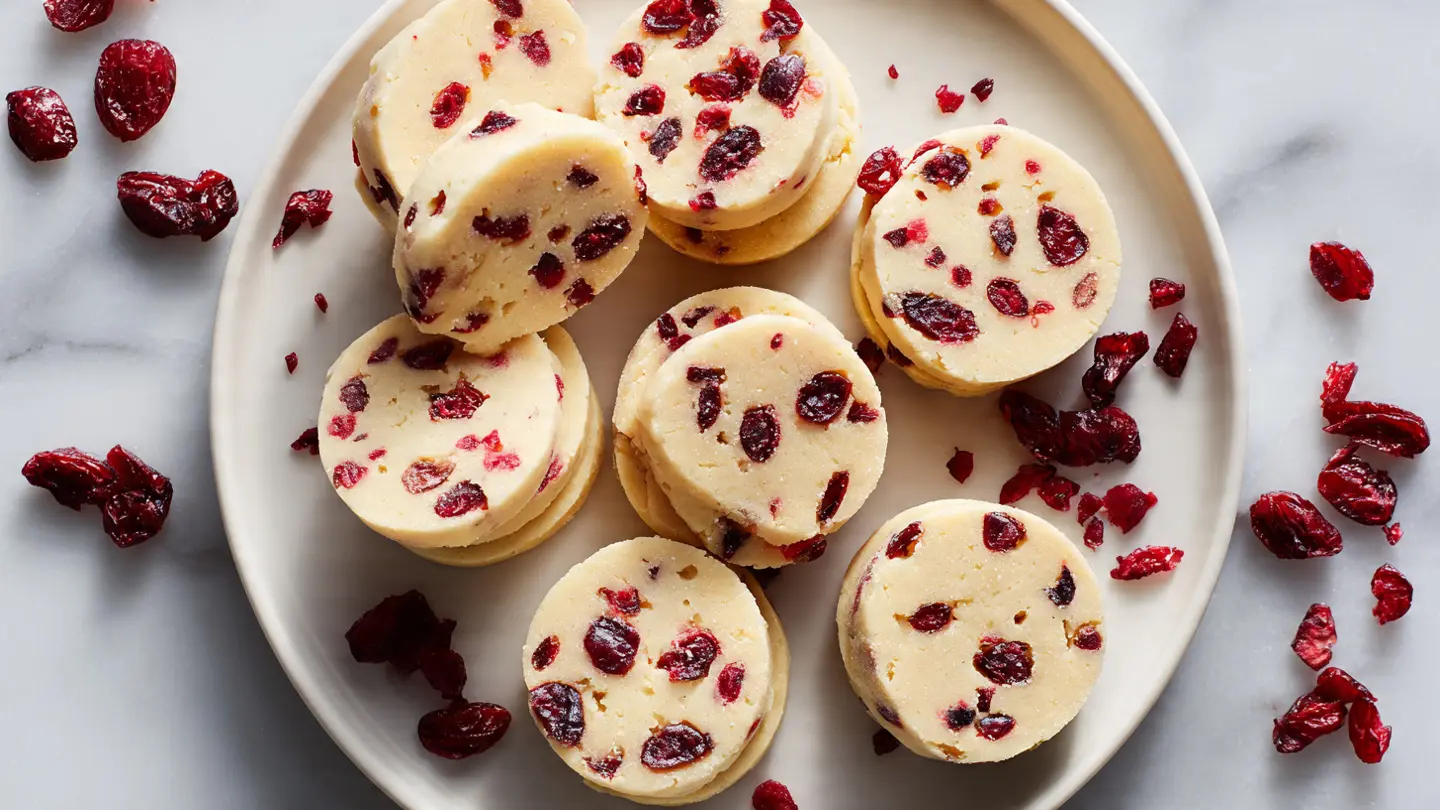
If you’re searching for the perfect holiday cookie to add to your baking lineup, this cranberry shortbread cookies recipe is exactly what you need.
These cookies deliver everything you love about classic shortbread: a rich, buttery base that practically melts on your tongue, with bursts of tart dried cranberries tucked into every single bite.
They come together with just a handful of pantry ingredients, require zero fancy techniques, and look like they came straight from a professional bakery.
The slice-and-bake method makes them especially practical: you mix the dough, roll it into a log, chill it, then slice and bake whenever you’re ready. You can even prep the dough days ahead, which makes holiday baking so much more manageable.
The key to getting that signature melt-in-your-mouth texture? Using real, high-quality unsalted butter and not overbaking. Shortbread should look barely golden at the edges, not tan. Pull them out while they still look a little underdone and let them firm up on the pan. Trust the process!
If you love buttery, crumbly cookies, you’re going to find yourself baking these on repeat all season long.
If you love shortbread as much as we do, you’ll also want to check out this Cranberry Orange Shortbread Cookies Recipe for a citrusy twist on this same classic base.
Why You’ll Love This Cranberry Shortbread Cookies Recipe
These cookies have earned a permanent spot on holiday cookie trays for good reason.
The combination of buttery shortbread and tart dried cranberries is a true classic: simple enough for beginner bakers, but impressive enough to gift or bring to a cookie exchange.
Here’s why this recipe consistently wins over everyone who tries it:
- Only 6 core ingredients — no eggs, no leavening agents, no complicated components
- Make-ahead friendly — the dough log can chill in the refrigerator for up to 3 days before baking
- Freezer-friendly — both the raw dough and baked cookies freeze beautifully for up to 3 months
- Perfectly balanced flavor — the tartness of the cranberries cuts through the richness of the butter in the best way
- No chilling in individual molds — just slice from the log and bake
- Beautiful presentation — the flecks of red cranberry against the pale cookie are naturally festive and eye-catching
- Consistent results — once you’ve made these once, they’re nearly foolproof every time after
Read Also: Cranberry Pistachio Shortbread Cookies Recipe
Ingredients
You only need a handful of quality ingredients for this recipe. Because the list is so short, each one really matters — especially the butter. Use a good European-style butter if you can find it; the higher fat content makes a noticeably richer, more tender cookie.
- 1 cup (225g) unsalted butter, softened to room temperature
- ½ cup (60g) powdered (confectioners’) sugar, sifted
- 1 teaspoon pure vanilla extract
- ¼ teaspoon fine salt
- 2 cups (250g) all-purpose flour, spooned and leveled
- ¾ cup (90g) dried cranberries, roughly chopped
Optional for rolling:
- 3 tablespoons coarse sparkling sugar or granulated sugar (for coating the log before slicing)
You might also enjoy: Whipped Shortbread Cookies Recipe
Kitchen Equipment Needed
You don’t need anything fancy to make these cookies. A hand mixer works perfectly well if you don’t own a stand mixer.
- Stand mixer or hand mixer with paddle attachment
- Large mixing bowl
- Baking sheets (at least 2)
- Parchment paper
- Plastic wrap or wax paper (for chilling the dough log)
- Sharp chef’s knife or bench scraper for slicing
- Wire cooling rack
- Measuring cups and spoons
- Kitchen scale (recommended for accuracy)
Read Also: Raspberry Shortbread Cookies Recipe
Recommended Products for This Recipe
These are a few products I genuinely recommend based on quality and performance. They can make a real difference in your results.
1. KitchenAid Artisan Stand Mixer
A good stand mixer is a worthy investment for any baker who makes cookies regularly. It creams the butter and sugar to the ideal fluffy consistency without overworking the dough, which is critical for tender shortbread. The paddle attachment is perfect for this recipe.
2. Nordic Ware Natural Aluminum Baker’s Half Sheet Pans
These baking sheets are a staple in professional kitchens because they heat evenly and resist warping. Even, consistent heat is what keeps shortbread pale and perfectly baked — not too dark on the bottom. A good pan is one of the most impactful tools you can own for cookie baking.
3. OXO Good Grips Bench Scraper
A bench scraper makes slicing a chilled shortbread log incredibly clean and precise. You get uniform, even rounds every single time, which means consistent baking and a professional-looking result. It’s one of those inexpensive tools that earns its place in every kitchen.
4. European-Style Unsalted Butter (Kerrygold or similar)
The butter is the star of any shortbread recipe. European-style butters like Kerrygold have a higher fat content than standard American butter, which produces a noticeably richer, more tender crumb. It’s one of the easiest upgrades you can make.
5. Wilton Sparkling Sugar
Rolling your cranberry shortbread log in sparkling coarse sugar before slicing gives each cookie a beautiful glittery edge that catches the light. It adds a subtle crunch and a stunning bakery-style finish with zero extra effort.
This recipe also pairs wonderfully with a batch of Chocolate Shortbread Cookies on the same holiday cookie tray for a beautiful contrast.
Step-by-Step Instructions
Step 1: Prepare Your Ingredients and Equipment
- Take the butter out of the refrigerator at least 45 to 60 minutes before baking. It should be soft enough to leave an indent when pressed, but not greasy or melting. Cold butter will not cream properly, and melted butter will make the cookies greasy and flat.
- Measure out your flour using the spoon-and-level method: use a spoon to scoop flour into your measuring cup, then sweep a straight edge across the top to level it. Scooping directly from the bag packs in too much flour and will make your cookies dry.
- Sift the powdered sugar to remove any lumps. This ensures it incorporates smoothly into the butter without any gritty texture in the finished cookie.
- Roughly chop the dried cranberries into smaller pieces, about ¼ inch in size. Smaller pieces distribute more evenly throughout the dough and make cleaner slices. You can do this with a sharp knife or pulse them briefly in a food processor.
- Line two large baking sheets with parchment paper and set aside.
- Tear off two large pieces of plastic wrap for wrapping the dough log later.
Step 2: Cream the Butter and Sugar
- Place the softened butter and sifted powdered sugar into the bowl of your stand mixer fitted with the paddle attachment. If using a hand mixer, use a large bowl.
- Beat on medium speed for 2 to 3 minutes, until the mixture is pale, light, and fluffy. It should look almost whipped. This step is important: adequately creamed butter gives the cookies a tender, delicate crumb.
- Scrape down the sides and bottom of the bowl with a rubber spatula partway through to ensure everything incorporates evenly.
- Add the vanilla extract and fine salt to the butter mixture. Mix on low speed for about 30 seconds until fully combined.
Step 3: Add the Flour
- With the mixer on the lowest speed, gradually add the all-purpose flour in three additions, mixing just until each portion is incorporated before adding the next.
- Mix only until the flour disappears and the dough begins to come together in clumps. Overmixing develops gluten, which will make the cookies tough instead of crumbly and tender.
- The finished dough will look somewhat crumbly, but it should hold together when you press a small amount between your fingers. That’s exactly right for shortbread.
Step 4: Fold in the Cranberries
- Remove the bowl from the mixer. Add the chopped dried cranberries to the dough.
- Use a rubber spatula or your hands to gently fold and press the cranberries into the dough until they are evenly distributed throughout.
- Do this by hand rather than with the mixer, to avoid over-developing the gluten and to keep the cranberry pieces intact.
Step 5: Shape the Dough into a Log
- Turn the dough out onto a lightly floured surface or a large piece of plastic wrap.
- Use your hands to bring the dough together, pressing and kneading gently just until it forms a cohesive mass. If the dough feels too crumbly to hold together, press firmly and continue working it. It will come together.
- Shape the dough into a smooth log approximately 2 inches (5 cm) in diameter and about 8 to 10 inches (20 to 25 cm) long. Aim for an even, consistent thickness throughout so your cookies bake at the same rate.
- Optional sparkling sugar step: Pour 3 tablespoons of coarse sparkling sugar onto the plastic wrap or a plate. Roll the dough log in the sugar, pressing gently so the sugar sticks to the outside. This creates a beautiful glittery edge on each sliced cookie.
- Wrap the log tightly in the plastic wrap, twisting the ends closed like a candy wrapper. Smooth the outside of the log through the plastic to refine the shape.
Step 6: Chill the Dough
- Place the wrapped dough log in the refrigerator and chill for at least 2 hours, or up to 3 days. The dough can also be placed in the freezer for 30 to 45 minutes if you’re short on time.
- Chilling is non-negotiable for this recipe. It firms up the butter, which means the cookies hold their round shape when sliced and baked, rather than spreading into flat rounds. It also allows the flavors to develop and meld together.
- The dough log is ready to slice when it feels very firm when pressed through the plastic.
Step 7: Preheat the Oven and Slice the Cookies
- Preheat your oven to 325°F (163°C). A lower oven temperature is intentional for shortbread: it bakes the cookies slowly and evenly without browning them, preserving that characteristic pale, buttery color.
- Unwrap the chilled dough log and place it on a cutting board.
- Using a sharp knife, slice the log into rounds approximately ⅓ inch (about 8 mm) thick. Use a firm, decisive cutting motion rather than a sawing motion for the cleanest cuts. If any rounds crack at the edges, simply press them back together with your fingertips.
- Place the sliced rounds on the prepared parchment-lined baking sheets, spacing them about 1½ to 2 inches (4 to 5 cm) apart. They don’t spread much, but a little space ensures good airflow.
Step 8: Bake the Cookies
- Bake the cookies in the preheated oven at 325°F (163°C) for 12 to 14 minutes.
- The cookies are done when the edges are just beginning to turn very lightly golden and the tops look set but still slightly soft in the center. They will firm up as they cool. Do not wait for them to brown across the top — overbaked shortbread turns dry and crumbly in an unpleasant way.
- If baking two sheets at once, rotate them halfway through baking (swap the top and bottom sheets and turn them front to back) for the most even results.
Step 9: Cool the Cookies
- Remove the baking sheets from the oven and let the cookies rest on the pan for 5 minutes. They are fragile while hot and will firm up as they cool.
- After 5 minutes, use a thin spatula to carefully transfer the cookies to a wire cooling rack. Let them cool completely before serving or storing, at least 20 to 30 minutes.
- Resist the urge to eat them immediately — the texture and flavor actually improve as they finish cooling and the butter sets up fully.
This is a great base recipe to have in your repertoire alongside the classic Shortbread Cookie Recipe for comparison.
Tips for Success
A few small details make a big difference with shortbread. Keep these in mind before you start:
- Use room-temperature butter. This is the most common shortbread mistake. Butter that is too cold won’t cream smoothly; butter that’s melted makes greasy, dense cookies. Press your finger into the butter — it should leave an indent without slipping.
- Don’t skip chilling the dough. Even if you’re in a hurry, chill the log for at least 2 hours. This prevents spreading and ensures clean slices.
- Measure flour carefully. Too much flour is the most common cause of dry, crumbly shortbread that won’t hold together. Use a kitchen scale for the most accurate results.
- Use a sharp knife for slicing. A dull knife drags through the dough and causes the log to crumble at the edges. A sharp chef’s knife makes clean, even cuts.
- Don’t overbake. Pull the cookies out when the edges are just barely golden. They will look slightly underdone, and that’s the goal. They firm up perfectly as they cool.
- Use only dried cranberries, not fresh or frozen. Fresh and frozen cranberries contain too much moisture, which disrupts the texture of shortbread dough. Dried cranberries give you the right flavor without adding liquid.
- Chop the cranberries smaller. Smaller pieces distribute more evenly throughout the dough and make cleaner slices. Aim for pieces no larger than ¼ inch.
This technique also works well if you enjoy making Pecan Shortbread Cookies.
Serving Suggestions
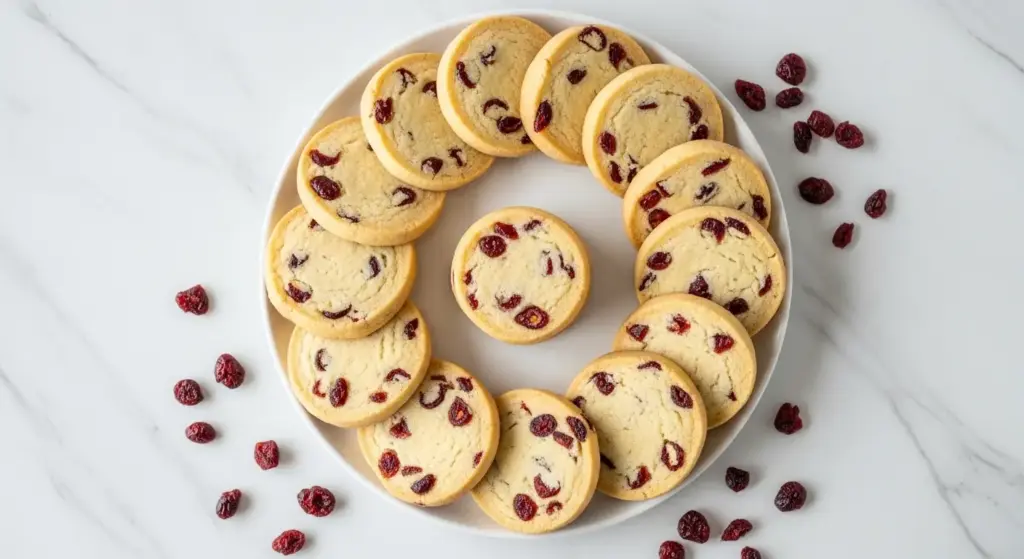
Cranberry shortbread cookies are incredibly versatile and fit naturally into so many festive moments.
A stack of these tied with a ribbon makes one of the most well-received homemade gifts you can bring to a holiday party or cookie exchange. They also plate up beautifully on a dessert tray alongside other holiday cookies.
Here are some favorite ways to serve them:
- Arrange on a holiday cookie platter alongside Gingerbread Cookies and Snickerdoodles for a gorgeous festive spread
- Serve alongside a mug of Hot Chocolate for a cozy winter afternoon
- Package in clear cellophane bags tied with ribbon for a beautiful edible gift
- Add to a holiday charcuterie-style dessert board with cheeses, nuts, and dried fruit
- Serve with coffee or tea at a holiday brunch alongside Christmas Shortbread Cookies
- Crumble over vanilla ice cream as a quick and festive dessert topping
- Stack and wrap in parchment for shipping — these cookies travel exceptionally well
Variations to Try
Once you’ve mastered the base recipe, this dough is incredibly easy to customize. The buttery shortbread base is a blank canvas that works with dozens of add-ins and flavor combinations.
- Cranberry Orange: Add 1 tablespoon of fresh orange zest to the butter mixture. The citrus brightens the tartness of the cranberries and gives the cookies a wonderful holiday aroma. You can see this version fully developed in the Cranberry Orange Shortbread Cookies Recipe.
- Cranberry Pistachio: Replace half the cranberries with roughly chopped pistachios. The red and green combination is strikingly festive. This version is also available as Cranberry Pistachio Shortbread Cookies.
- White Chocolate Drizzle: Once the cookies have cooled completely, drizzle melted white chocolate chips over the top. It adds sweetness that balances the tart cranberry beautifully.
- Almond Cranberry: Replace the vanilla extract with ½ teaspoon almond extract. Almond has a natural affinity for cranberry and makes the cookies feel especially elegant. Find the full version at Cherry Almond Shortbread Cookies Recipe.
- Lemon Cranberry: Add 1 teaspoon of fresh lemon zest and a tiny squeeze of lemon juice in place of vanilla. Bright and slightly tangy. The Lemon Shortbread Cookies Recipe has more ideas for this direction.
- Rolled in sugar: Before slicing, roll the log in coarse sparkling sugar, finely chopped pistachios, or a mix of cinnamon sugar for extra visual appeal and texture.
Read Also: Lavender Shortbread Cookies Recipe
Storage and Reheating
One of the best things about this recipe is how well these cookies keep — making them ideal for baking ahead during the busy holiday season.
- Room temperature: Store baked cookies in an airtight container at room temperature for up to 5 to 7 days. Place a sheet of parchment or wax paper between layers to prevent sticking.
- Refrigerator: The baked cookies can also be stored in an airtight container in the refrigerator for up to 2 weeks, though room temperature storage is ideal for texture.
- Freezer (baked cookies): Arrange cooled cookies in a single layer on a baking sheet and freeze until solid, then transfer to a zip-lock bag or airtight container. Freeze for up to 3 months. Thaw at room temperature for about 30 minutes before serving.
- Freezer (raw dough): Wrap the dough log tightly in plastic wrap and then in a layer of foil. Freeze for up to 3 months. When ready to bake, thaw in the refrigerator overnight until firm but sliceable, then slice and bake as directed.
- Reheating: Shortbread does not typically need to be reheated. If you prefer them slightly warm, place them on a baking sheet in a 300°F (150°C) oven for 3 to 5 minutes.
Read Also: Rosemary Shortbread Cookies Recipe
Nutritional Facts
Based on 1 cookie per serving (recipe makes approximately 24 cookies). Values are estimates.
| Nutrient | Per Serving |
|---|---|
| Calories | ~105 kcal |
| Total Fat | 6g |
| Saturated Fat | 4g |
| Cholesterol | 20mg |
| Sodium | 25mg |
| Total Carbohydrates | 13g |
| Dietary Fiber | 0.4g |
| Sugars | 6g |
| Protein | 1g |
Nutritional values are approximate and will vary based on specific ingredients and portion sizes used.
You might also enjoy: Almond Shortbread Cookies Recipe
Health Benefits of Key Ingredients
While these are certainly a treat, a few of the ingredients in this recipe do offer some genuine nutritional benefits worth knowing about.
The natural simplicity of shortbread — with its short ingredient list and no artificial additives — makes it a more wholesome indulgence compared to heavily processed packaged cookies.
Here’s a closer look at some of the key ingredients:
- Dried cranberries are a source of antioxidants, particularly proanthocyanidins, which have been associated with urinary tract health. They also provide a small amount of dietary fiber and vitamin C, though the drying process concentrates sugars, so moderation is key.
- Butter contains fat-soluble vitamins including vitamin A, D, E, and K2. When used in reasonable amounts as part of a balanced diet, real butter is a wholesome fat source that supports nutrient absorption.
- All-purpose flour provides carbohydrates for quick energy. For a slightly higher fiber version, you could substitute up to ½ cup of the flour with whole wheat pastry flour without significantly changing the texture.
- Vanilla extract contains trace amounts of antioxidants and has been used in traditional wellness practices for its calming properties and pleasant aroma.
- Powdered sugar in the quantities used here keeps each cookie moderate in sugar content — much less than most American cookies — making these a relatively restrained treat.
This recipe pairs beautifully with a homemade Cranberry Sauce Recipe served alongside as a dip for an elegant holiday appetizer board.
Frequently Asked Questions
1. Can I use fresh cranberries instead of dried?
Fresh cranberries contain a significant amount of moisture, which can disrupt the dry, crumbly structure that makes shortbread so special. If you want to use fresh cranberries, roughly chop them and pat them very dry with paper towels before adding them to the dough. The texture may be slightly softer and stickier, and baking time may need a small adjustment.
Dried cranberries are strongly recommended for the most consistent, reliable results every time.
2. Why is my shortbread dough crumbly and not coming together?
Shortbread dough is naturally drier than most cookie doughs, and it can look crumbly right out of the mixer. Don’t panic. Use your hands to press and knead the dough firmly — the warmth of your hands helps the butter bind everything together.
If the dough truly won’t hold together after kneading for a minute or two, add 1 teaspoon of cold water or milk at a time until it comes together. Avoid adding too much liquid, as this changes the texture of the baked cookie.
3. Can I make the dough ahead of time?
Absolutely — this is one of the great advantages of a slice-and-bake cookie. The dough log can be wrapped tightly and stored in the refrigerator for up to 3 days, or frozen for up to 3 months.
When baking from frozen, simply let the log thaw in the refrigerator overnight until it is firm but sliceable, then proceed as normal.
4. Why did my cookies spread and lose their shape?
Spreading is almost always caused by one of two things: butter that was too warm or soft when the dough was mixed, or dough that was not chilled long enough before slicing and baking. Make sure your butter is properly softened (not greasy or shiny), and chill the dough log until it feels very firm throughout — at least 2 hours in the refrigerator.
Baking on parchment-lined pans (rather than greased ones) also helps the cookies hold their shape.
5. Can I substitute the powdered sugar for granulated sugar?
You can, but the texture will be noticeably different. Powdered (confectioners’) sugar dissolves more completely into the butter, giving shortbread its characteristic fine, melt-in-your-mouth crumb. Granulated sugar creates a slightly coarser, crunchier texture.
If you prefer a crunchier shortbread, granulated sugar works well. For the classic delicate texture, stick with powdered sugar as written.
Read Also: Scottish Shortbread Cookie Recipe
Final Thoughts
Cranberry shortbread cookies are one of those recipes that proves the best baking doesn’t have to be complicated.
A short list of quality ingredients, a little patience while the dough chills, and you have a cookie that’s elegant, deeply flavorful, and absolutely perfect for the holiday season.
These are the kind of cookies people ask for again and again, the ones that end up being requested by name at every holiday gathering.
Give this cranberry shortbread cookies recipe a try and see for yourself how quickly they disappear from the plate.
We’d love to hear how yours turned out — drop a comment below, share your photos, or tag us if you post them online!
Recommended:
- Strawberry Shortbread Cookies Recipe
- Cherry Chip Cookie Recipe
- Best Chocolate Chip Cookies Recipe
- Chewy Chocolate Chip Cookies Recipe
- Old Fashioned Chocolate Chip Cookie Recipe
- Peanut Butter Blossom Cookies Recipe
- Oatmeal Raisin Cookie Recipe
- Snickerdoodle Cookie Recipe
- Cut Out Sugar Cookie Recipe
- No Bake Cookie Recipe