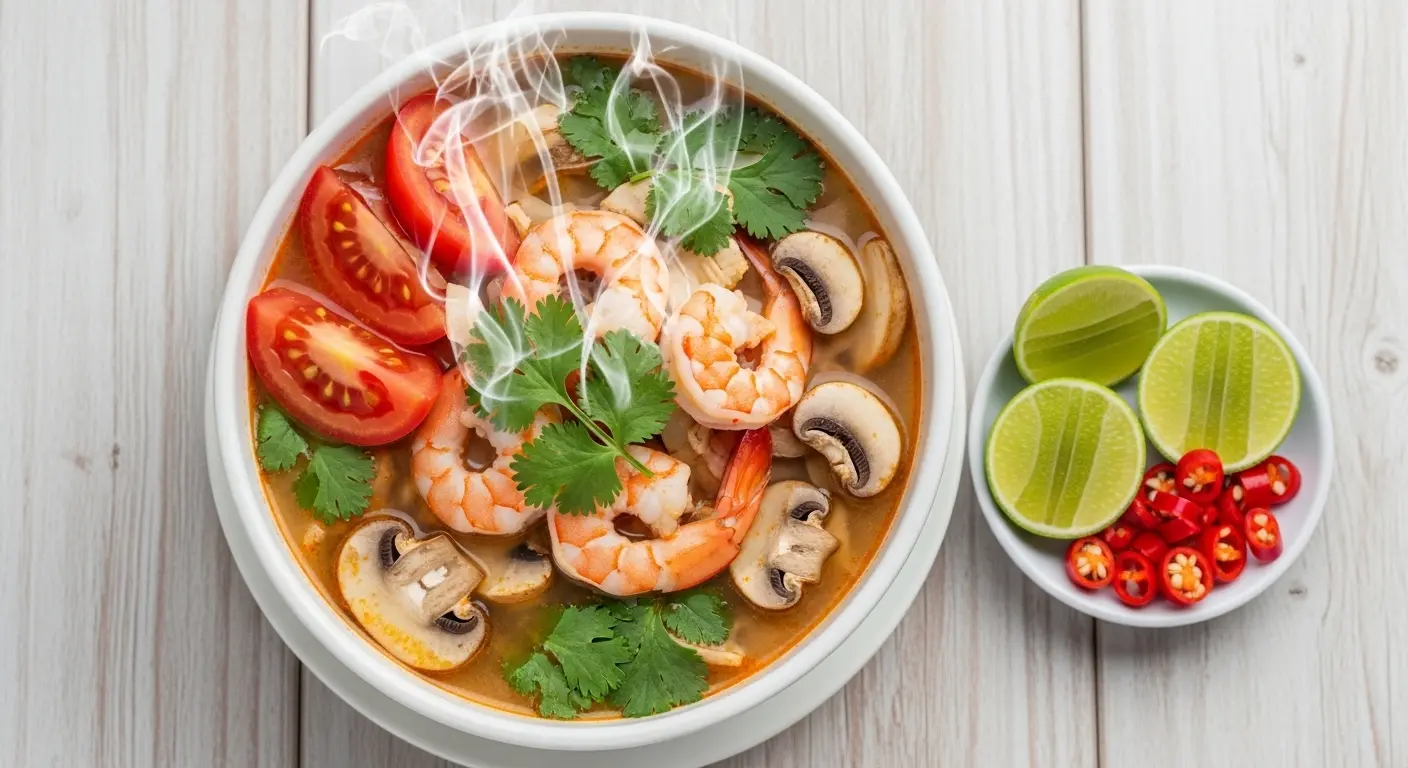
If you’ve ever sat down at a Thai restaurant and wondered how they get that bold, electric flavor into a single bowl of soup, this tom yum soup recipe is about to answer every question. Known in Thailand as Tom Yum Goong (ต้มยำกุ้ง), this iconic hot and sour shrimp soup is built on a trio of powerhouse aromatics: lemongrass, galangal, and makrut lime leaves.
Together, those three ingredients create a broth unlike anything else in the culinary world.
What makes this soup so special is how fast it comes together. You don’t need hours at the stove or an arsenal of unusual equipment. Once you gather your ingredients, you’re looking at a full pot of restaurant-quality soup in under 30 minutes.
The key to nailing the authentic flavor lies in the layering. The shrimp shells build a deeply savory stock base, the aromatics are simmered long enough to fully release their oils, and the lime juice goes in at the very end to keep that sharp citrus punch from going dull or bitter during cooking.
It’s bold, aromatic, a little spicy, and completely irresistible.
You might also enjoy: Thai Fish Soup
Why You’ll Love This Tom Yum Soup Recipe
This soup checks every single box for a weeknight dinner, and then some.
It’s ready in 30 minutes or less, making it genuinely faster than ordering takeout.
The broth has that perfect balance of sour, spicy, salty, and savory that keeps you coming back for another spoonful.
Even beginners can follow this recipe from start to finish without confusion, because the technique is surprisingly simple.
You can customize the heat level by adjusting the number of Thai chilies, so it works for everyone at the table.
Every ingredient in this soup has a purpose, and most of them also carry impressive health benefits that make this a smart choice any night of the week.
- Ready in under 30 minutes from start to finish
- Uses fresh aromatics that deliver bold, authentic Thai flavor
- Naturally gluten-free and dairy-free in the classic clear broth version
- Easy to adjust spice level for different heat preferences
- Light on calories but incredibly filling and satisfying
- Works as a standalone meal or as part of a larger Thai spread
- The broth freezes beautifully for future quick meals
Read Also: Udon Noodle Soup Recipe
Ingredients
The classic version of tom yum uses a handful of specialty aromatics that are available at most Asian grocery stores or online. Fresh is always best for lemongrass, galangal, and makrut lime leaves. Don’t substitute dried lemongrass as the main flavor source; if you can only find dried, use twice the amount and know the flavor won’t be quite the same.
- 1 lb (450g) large shrimp, head-on and shell-on preferred (the heads and shells go into making your shrimp stock)
- 4 cups (950ml) water (for the shrimp stock base)
- 2 stalks fresh lemongrass, bottom half only, smashed and cut into 2-inch pieces
- 1-inch (2.5cm) piece of galangal, thinly sliced (do not substitute with ginger; the flavor is completely different)
- 5 makrut lime leaves, torn in half to release the oils
- 3-5 Thai bird’s eye chilies, smashed (adjust to your heat tolerance)
- 2 shallots, halved
- 1 cup (90g) straw mushrooms or oyster mushrooms, halved (straw mushrooms are traditional but oyster mushrooms are a great substitute)
- 2 medium Roma tomatoes, cut into wedges
- 3 tablespoons fish sauce, plus more to taste
- 2 tablespoons nam prik pao (Thai roasted chili paste), for depth and color
- 1 teaspoon sugar
- 3 tablespoons fresh lime juice (always add at the end to preserve brightness)
- Fresh cilantro, for garnish
- 2 green onions, sliced, for garnish
For the creamy version (Tom Yum Nam Khon): add 3-4 tablespoons of evaporated milk at the very end. Do not use coconut milk for this style as that would technically make it Tom Kha soup instead.
For the shrimp stock: Shrimp heads and shells + pinch of salt + 2 cups (475ml) water
This recipe serves 4.
Read Also: Hot and Sour Soup Recipe
Kitchen Equipment Needed
You don’t need anything fancy to make this soup. A sharp knife and a large pot are really the two most important tools. A heavy-bottomed pot will help you build the shrimp stock without burning anything on the bottom.
- Large heavy-bottomed pot or Dutch oven (at least 4-quart capacity)
- Fine mesh strainer (for straining the shrimp stock)
- Sharp chef’s knife and cutting board
- Ladle for serving
- Citrus juicer or reamer (for the fresh lime juice)
- Measuring cups and spoons
- Mortar and pestle or the back of a heavy knife (for smashing the chilies and lemongrass)
- Large serving bowls
Pho Recipe uses some of the same tools and technique if you’re building out your Asian soup skills.
Recommended Products for This Recipe
These are products I genuinely recommend based on quality and their impact on the final result. Using the right ingredients makes a real difference with this soup.
1. Thai Roasted Chili Paste (Nam Prik Pao)
Nam prik pao is non-negotiable for authentic tom yum soup. It adds a deep, smoky, slightly sweet flavor to the broth that you simply can’t replicate with any other ingredient. Look for a quality brand at your local Asian grocery or order online.
2. Makrut Lime Leaves (Fresh or Frozen)
Fresh makrut lime leaves are one of the three essential aromatics in tom yum, and they’re responsible for that unmistakable citrusy floral note in the broth. Frozen leaves work beautifully if fresh aren’t available near you.
3. Galangal Root (Fresh or Frozen)
Galangal is often confused with ginger, but it tastes completely different. It has a sharp, earthy, almost pine-like quality that is essential to authentic tom yum. Most Asian grocery stores stock it frozen, and frozen works very well.
4. Premium Thai Fish Sauce
Fish sauce is what gives this soup its savory backbone. A quality brand tastes entirely different from a cheap one. Look for one that lists only anchovies and salt in the ingredients, with no added sugar or fillers.
5. Heavy-Bottomed Soup Pot
A good heavy-bottomed pot makes it easier to simmer the shrimp stock without any scorching, and it holds heat evenly so your broth stays at a consistent temperature throughout cooking.
Chicken Pho Recipe is another fantastic aromatic broth soup that uses similar techniques if you want to explore more.
Step-by-Step Instructions
1. Prep All Your Aromatics and Shrimp
- Peel the shrimp, removing the heads and shells but keeping the tails on for presentation if you like. Set the shrimp aside in a bowl in the refrigerator.
- Place all the shrimp heads and shells into a medium pot with 2 cups (475ml) of water and a pinch of salt.
- Smash the lemongrass stalks firmly with the back of your knife or a meat mallet until they are bruised and broken open. Cut them into 2-inch (5cm) pieces. Smashing is critical because it opens the fibers and releases the essential oils into the broth.
- Slice the galangal into thin rounds, about 1/8 inch (3mm) thick.
- Tear each makrut lime leaf in half by hand. Tearing breaks the cell walls and releases far more flavor than leaving them whole.
- Smash the Thai bird’s eye chilies lightly with the back of your knife or in a mortar and pestle. You want them cracked, not completely crushed. This releases heat gradually without making the soup overwhelmingly spicy all at once.
- Halve the shallots and cut the tomatoes into wedges. Halve the mushrooms.
2. Make the Shrimp Stock
- Bring the pot with the shrimp heads, shells, and 2 cups (475ml) of water to a boil over medium-high heat.
- Reduce to a simmer and cook for 5 minutes, pressing down on the shells occasionally with a spoon to extract maximum flavor.
- Strain the shrimp stock through a fine mesh strainer into a large, clean pot. Discard the solids.
- Add the remaining 2 cups (475ml) of fresh water to the strained stock. You now have approximately 4 cups (950ml) of flavorful shrimp broth.
3. Build the Aromatic Broth
- Bring the shrimp stock to a gentle boil over medium heat.
- Add the lemongrass pieces, sliced galangal, torn makrut lime leaves, smashed Thai chilies, and halved shallots all at once.
- Stir briefly to submerge everything in the broth.
- Reduce the heat to a steady simmer and cook for 10-15 minutes. This simmering time is what infuses the broth with the full depth of the aromatics. Don’t rush it.
- After simmering, taste the broth. It should already smell intensely of lemongrass and lime leaf, and taste fragrant. If the flavor seems light, simmer for another 5 minutes.
4. Season the Broth
- Add the nam prik pao (Thai roasted chili paste) and stir to dissolve it into the broth. This paste adds color, a smoky depth, and a savory sweetness that takes the soup from good to exceptional.
- Add the fish sauce and the sugar, stirring to combine.
- Taste the broth at this stage. It should be pleasantly savory and a little salty, with the sourness coming later from the lime juice. Adjust fish sauce if needed.
5. Add the Vegetables
- Add the halved mushrooms and tomato wedges to the simmering broth.
- Cook for 2-3 minutes, just until the mushrooms soften slightly. Tomatoes should hold their shape and not turn to mush; they’re there for brightness and a little sweetness.
- The tomatoes will begin to release their juices into the broth, adding natural sweetness that balances the sour and salty notes.
6. Cook the Shrimp
- Add the peeled shrimp directly to the simmering soup.
- Cook for 2-3 minutes, watching closely. Shrimp are done the moment they curl into a C-shape and turn fully pink and opaque. An O-shape means they are overcooked.
- Turn off the heat as soon as the shrimp are cooked through. Residual heat will keep them warm but stop the cooking process.
7. Add the Lime Juice and Finish
- Add the fresh lime juice directly to the pot after removing it from the heat. This is the most important step for freshness: lime juice added while the soup is still boiling will turn bitter and lose its bright citrusy character.
- Taste the soup one final time and adjust. More fish sauce for saltiness, more lime for sourness, more sugar to balance if needed.
- For the creamy version, stir in 3-4 tablespoons of evaporated milk now and gently stir to combine.
- Ladle into serving bowls and garnish with fresh cilantro and sliced green onions. Add a lime wedge on the side for individual serving adjustment.
The aromatics (lemongrass, galangal, lime leaves) are left in the bowl as traditional garnish, but they are not meant to be eaten. They are too fibrous and tough, and most Thai diners simply push them to the side.
Another classic comfort bowl to try next: Miso Soup Recipe
Tips for Success
Getting the most out of this recipe comes down to a few key habits. The biggest one is patience during the aromatic simmering step; that 10-15 minutes of gentle infusion is where all the character of the broth develops.
- Always add lime juice off the heat. This single habit is what separates a bright, restaurant-quality bowl from a flat, slightly bitter one. Heat destroys the volatile citrus compounds that make lime juice taste fresh.
- Don’t substitute ginger for galangal. They look similar but taste completely different. Galangal has a sharp, earthy, almost medicinal quality that is specific to tom yum. Ginger will make the soup taste like a different dish entirely.
- Smash, don’t just cut, your lemongrass. Cutting alone won’t fully release the essential oils. Smashing until the stalk is bruised and broken is what gets the real flavor into the broth.
- Use fresh shrimp with heads on when possible. The shrimp stock built from the heads and shells is what gives this soup its deep, almost oceanic savoriness. Pre-peeled frozen shrimp will work, but the broth won’t have the same depth.
- Taste as you go, especially at the end. Tom yum is all about balance. A tiny bit more fish sauce, lime juice, or sugar can completely transform the bowl. Trust your palate.
- Don’t overcook the shrimp. Overcooked shrimp turn rubbery and lose their sweetness. Pull the pot off the heat the moment they curl into a C-shape.
- Use quality nam prik pao. Not all brands are equal. Look for one with a deep amber color and a rich, complex smell when you open the jar.
Easy Pad Thai Recipe is another great Thai dish to add to your weeknight rotation.
Serving Suggestions
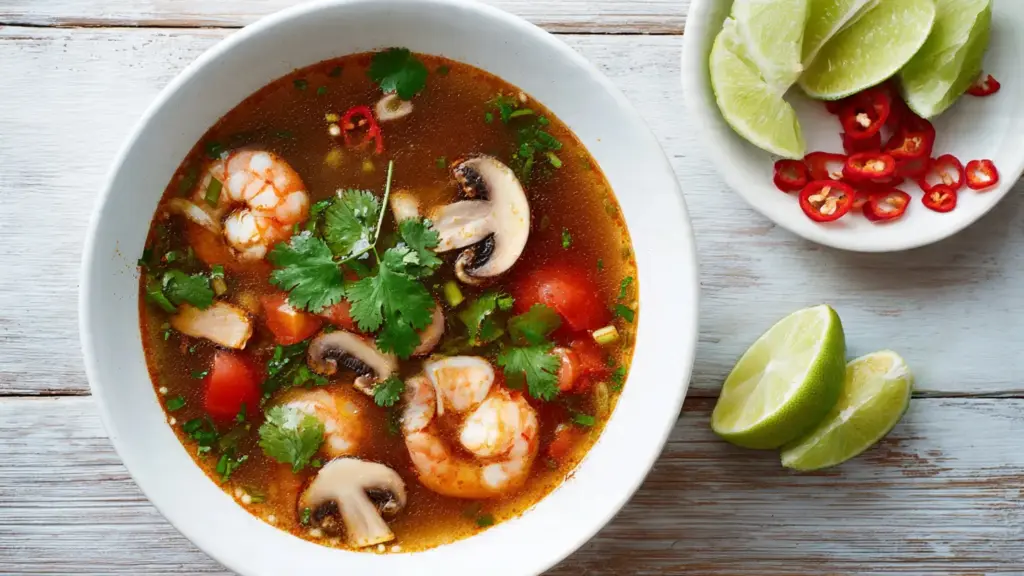
Tom yum is traditionally served with steamed jasmine rice on the side. In Thailand, it’s usually one dish in a multi-course spread rather than a standalone meal, but at home it’s completely satisfying on its own with a bowl of rice.
A few ways to round out the meal beautifully:
- Serve alongside Stir Fry Sauce vegetables and steamed jasmine rice for a full Thai-inspired spread
- Pair with steamed jasmine rice, which soaks up the broth and balances the bold flavors
- Add cooked rice noodles directly to each bowl for a heartier tom yum noodle soup
- Serve with a simple cucumber salad dressed with rice vinegar and sesame for a cooling contrast
- Offer extra lime wedges, fish sauce, sugar, and chili flakes at the table so guests can adjust their bowl to taste
- Top with extra fresh cilantro, sliced Thai chilies, and a drizzle of chili oil for restaurant-style presentation
Variations to Try
The clear shrimp version is the classic starting point, but tom yum has many beloved variations worth exploring once you’ve mastered the base recipe.
- Tom Yum Nam Khon (Creamy Version): Stir in 3-4 tablespoons of evaporated milk at the end of cooking for a rich, milky broth. This is the version you’ll often see served at Bangkok street stalls and is intensely popular.
- Tom Yum Gai (Chicken Tom Yum): Replace the shrimp with thinly sliced chicken breast or thigh. Use unsalted chicken broth instead of shrimp stock and simmer the chicken directly in the seasoned broth until cooked through.
- Tom Yum Talay (Seafood Tom Yum): Use a mix of shrimp, squid rings, and scallops. Add each seafood type based on cooking time, with squid going in first and shrimp last.
- Tom Yum with Fish: Use firm white fish fillets like tilapia or snapper, cut into chunks, in place of shrimp. The fish cooks even faster than shrimp, so watch it closely.
- Vegetarian Tom Yum: Skip the shrimp entirely and use vegetable broth. Replace the fish sauce with soy sauce or tamari and add extra mushrooms and tofu for protein.
- Tom Yum Noodle Soup: Add cooked rice noodles or glass noodles to each bowl before ladling in the hot broth. This is especially popular as a street food version.
For another Asian noodle soup experience, Instant Pot Pho Recipe is a great one to try.
Storage and Reheating
Tom yum soup stores reasonably well, but the shrimp is the ingredient that needs the most attention when it comes to leftovers. Shrimp continue to cook in residual heat, so storing them in the soup means they’ll be a little firmer when reheated.
- Refrigerator: Store leftovers in an airtight container for up to 2 days. The flavors actually deepen overnight as the aromatics continue to steep.
- Freezer: The broth (without the shrimp) freezes very well for up to 3 months. Freeze it in portioned containers and add fresh shrimp when you reheat and serve.
- Reheating on the stovetop: Gently warm the soup over medium-low heat until just steaming. Do not bring it to a full boil or the shrimp will overcook and turn rubbery.
- Reheating in the microwave: Heat in 1-minute intervals on medium power, stirring between each interval.
- Pro tip: Remove the shrimp from the soup before storing and add them back only during the last 30 seconds of reheating. This keeps them at the perfect texture.
- Add fresh lime juice after reheating rather than relying on the juice already in the soup. Lime juice loses its brightness after storage and reheating.
For another satisfying soup that stores beautifully, Chicken Vegetable Soup Recipe is always worth keeping in rotation.
Nutritional Facts
Nutritional values are approximate and based on the clear broth version (Tom Yum Nam Sai) with shrimp, serving 4.
| Nutrient | Per Serving |
|---|---|
| Calories | ~190 kcal |
| Protein | ~28g |
| Carbohydrates | ~12g |
| Fat | ~3g |
| Saturated Fat | ~0.5g |
| Sodium | ~950mg |
| Fiber | ~2g |
| Sugar | ~5g |
| Cholesterol | ~180mg |
Note: Adding evaporated milk for the creamy version will add approximately 30-40 calories and 1-2g of fat per serving. Sodium content will vary depending on the brand of fish sauce used and how much is added to taste.
Another light and flavorful soup worth exploring: Mulligatawny Soup Recipe
Health Benefits of Key Ingredients
Tom yum soup earns genuine respect in the health food world, and it’s not just because it’s low in calories. The herbs that define this soup have been used in traditional Thai medicine for centuries, and modern research backs up many of those traditional claims.
It’s one of the few soups where nearly every ingredient contributes something meaningful beyond flavor.
- Lemongrass contains citral, an antioxidant compound with anti-inflammatory properties, and is traditionally used to aid digestion and reduce bloating
- Galangal has been studied for its antimicrobial and anti-inflammatory properties, and is used traditionally to ease nausea and stomach discomfort
- Makrut lime leaves are rich in antioxidants and have traditionally been used to support oral health and immune function
- Thai chilies (bird’s eye chilies) contain capsaicin, which may boost metabolism, reduce inflammation, and support cardiovascular health
- Shrimp is an excellent source of lean protein, selenium, and iodine, with very little saturated fat
- Mushrooms provide B vitamins, potassium, and immune-supporting beta-glucans
- Tomatoes bring lycopene and vitamin C to the bowl, both powerful antioxidants
- Lime juice adds vitamin C and supports iron absorption from the shrimp and other ingredients
- Fish sauce provides trace minerals and umami depth with minimal calories
You might also enjoy: Bok Choy Recipe for another nutrient-packed Asian dish with major health benefits.
Frequently Asked Questions
1. Can I make tom yum soup without makrut lime leaves?
You can, but the soup will taste noticeably different. Makrut lime leaves provide an irreplaceable floral citrus note that lemongrass alone cannot replicate. If you truly cannot find them, use a combination of regular lime zest and fresh cilantro stems in the broth as a partial substitute. Frozen makrut lime leaves are widely available online and are a much better option than skipping them entirely.
2. What is the difference between Tom Yum Goong and Tom Kha?
Both soups share the same aromatic base of lemongrass, galangal, and makrut lime leaves. The key difference is that Tom Kha is made with coconut milk, giving it a rich, creamy, mildly sweet broth. Tom Yum uses either a clear broth or evaporated milk for creaminess, and it is notably more sour and spicy. If you add coconut milk to tom yum, you are technically making Tom Kha.
3. Is tom yum soup very spicy?
It is meant to have heat, but you control the level entirely by adjusting the number of bird’s eye chilies. One chili gives a mild tingle, two gives a noticeable warmth, and three or more is genuinely spicy. Removing the seeds from the chilies before adding them will also reduce the heat significantly. The soup should have some spice, because that’s part of what makes it “tom yum,” but it doesn’t have to be overwhelmingly hot.
4. Can I use pre-made tom yum paste instead of fresh herbs?
Yes, tom yum paste is a great shortcut when you can’t find fresh galangal or makrut lime leaves. Use 2-3 tablespoons of paste dissolved in your broth and then add whatever fresh herbs you do have access to. The flavor won’t be quite as vibrant as from-scratch, but it will still make a very good bowl of soup. Look for paste at Asian grocery stores or online.
5. Can I make this soup ahead of time?
You can prepare the broth up to a day ahead and store it in the refrigerator. When ready to serve, bring the broth back to a gentle simmer, add the mushrooms and tomatoes, cook the shrimp fresh, and finish with lime juice. Adding lime juice to already-cold broth and reheating it will result in a flatter, less vibrant flavor. Always add lime juice at the very end, just before serving.
Read Also: Congee Recipe
Final Thoughts
This tom yum soup recipe delivers everything that makes Thai food so beloved: bold contrasting flavors, vibrant aromatics, and a deceptively simple technique that anyone can master.
Once you make it from scratch, you’ll understand exactly why this soup has become one of Thailand’s most famous culinary exports.
The most important things to remember are to simmer the aromatics long enough to build the broth, cook the shrimp gently, and always add the lime juice at the very end.
Beyond that, this recipe rewards curiosity. Adjust the chilies, try the creamy version, swap in chicken or mixed seafood, and make it your own.
If you give this recipe a try, drop a comment below and let me know how it turned out. Sharing it with a friend who loves Thai food would also make my day!
Recommended:
- Vegan Pho Recipe
- Chinese Fish Soup Recipe
- Lobster Bisque Recipe
- Caribbean Fish Soup Recipe
- Chicken Rice Soup Recipe
- Seafood Chowder Recipe
- Mediterranean Fish Soup Recipe
- Mexican Fish Soup Recipe
- Hoisin Sauce Recipe
- Peanut Sauce Recipe