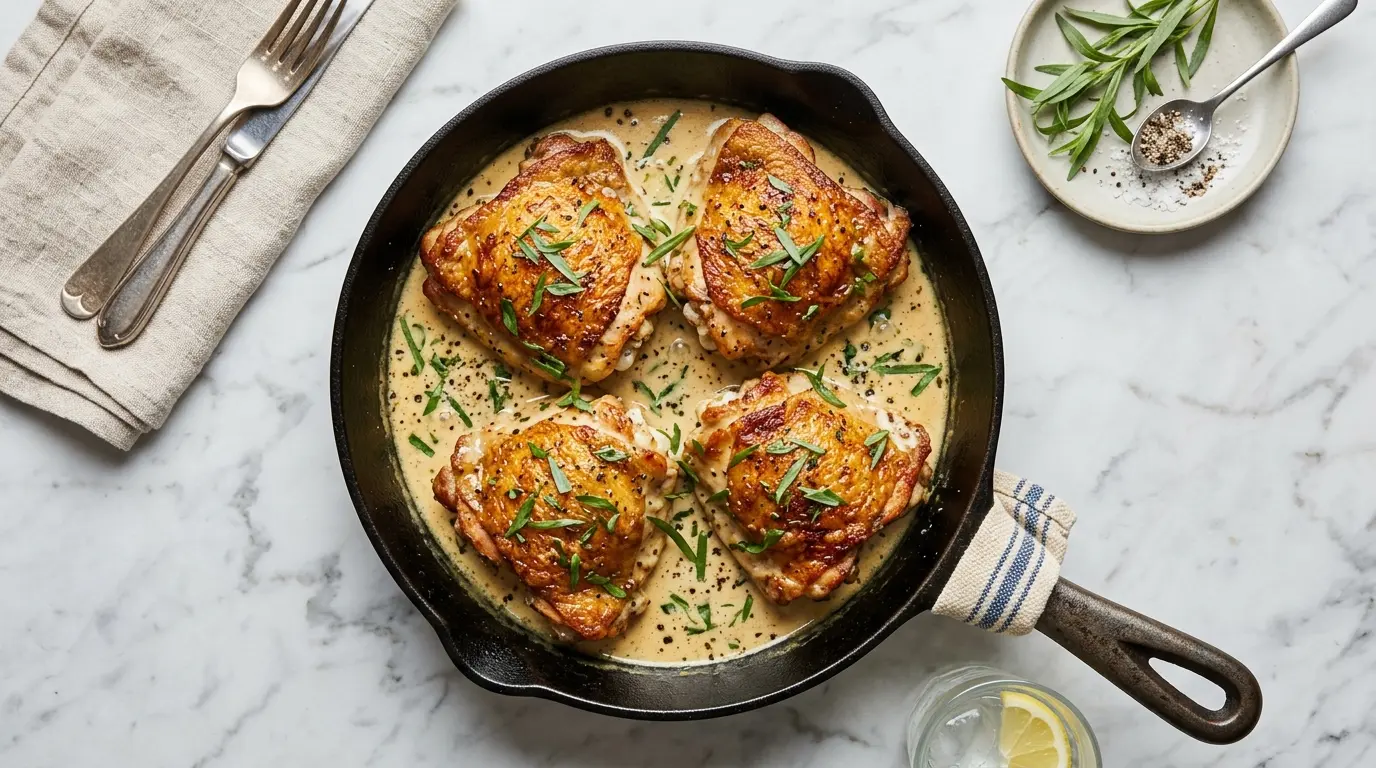
If you have ever wanted to bring French bistro cooking into your own kitchen without spending hours at the stove, this Tarragon Chicken Thighs Recipe is exactly what you need.
It is a classic dish rooted in French culinary tradition, known formally as “Poulet à l’Estragon,” and it delivers incredible flavour with surprisingly little effort.
Bone-in, skin-on chicken thighs are seared until the skin crisps up beautifully, then gently braised in a silky cream sauce built from white wine, chicken broth, shallots, garlic, Dijon mustard, and a generous handful of fresh tarragon.
Tarragon is the star of the show here. It has a delicate anise-like flavour, grassy and slightly peppery, and it pairs with cream and white wine in a way that few other herbs can match.
The result is a dish that feels indulgent and restaurant-worthy but comes together in a single skillet in just over an hour.
If you love well-seasoned chicken thighs in a savoury, herb-forward sauce, you will also want to check out the Creamy Tarragon Chicken Recipe for another take on this French-inspired classic.

Why You’ll Love This Tarragon Chicken Thighs Recipe
This dish checks every box for a satisfying weeknight dinner or a special weekend meal.
The chicken thighs stay incredibly juicy and tender through the braising process, and the skin gets a gorgeous golden sear before it ever hits the sauce.
The cream sauce is rich but balanced, brightened by the sharpness of Dijon mustard and the herbal lift of fresh tarragon.
It is a one-pan recipe, which means fewer dishes and an easier cleanup at the end of the night.
Here is a quick look at everything that makes this recipe worth bookmarking:
- Deep, complex flavour from searing the chicken before braising, which builds a rich fond in the pan that forms the base of the sauce
- Tender, juicy meat because chicken thighs are forgiving cuts that stay moist even with extended cooking
- A sauce worth soaking up with crusty bread, mashed potatoes, or pasta
- Simple, accessible ingredients that you can find at any grocery store
- One pan from start to finish, making cleanup genuinely easy
- Elegant enough for guests but simple enough for a busy weeknight
For another pan-cooked chicken dinner with bold flavour, the Blackened Ranch Pan Fried Chicken Thighs is a fantastic option to add to your weekly rotation.
Ingredients
The key to a great tarragon chicken is using fresh tarragon rather than dried. Dried tarragon loses most of its delicate, anise-forward character and will result in a much flatter sauce. Fresh tarragon is widely available in the herb section of most well-stocked grocery stores.
Here is everything you will need to make this recipe:
- 4 bone-in, skin-on chicken thighs (about 2.5 lbs / 1.1 kg total)
- 1 teaspoon kosher salt, plus more to taste
- ½ teaspoon freshly ground black pepper
- 1 tablespoon olive oil
- 1 tablespoon unsalted butter
- 2 medium shallots, finely minced (about ½ cup / 75 g)
- 3 garlic cloves, finely minced
- 1 tablespoon Dijon mustard
- ½ cup (120 ml) dry white wine (Sauvignon Blanc or Pinot Grigio work well)
- ½ cup (120 ml) chicken broth
- ¾ cup (180 ml) heavy cream
- 3 tablespoons fresh tarragon leaves, roughly chopped, plus extra for garnish
- 1 teaspoon fresh lemon juice
- Flaky sea salt for finishing (optional)
For more chicken thigh inspiration, the Tarragon Chicken Salad Recipe makes great use of leftover chicken from this dish.
Kitchen Equipment Needed
You do not need any specialty equipment for this recipe. A heavy-bottomed, oven-safe skillet is the most important tool here because it distributes heat evenly, giving the chicken a consistent, golden sear without any hot spots that could burn the skin.
Here is what you will need:
- 1 large cast iron skillet or oven-safe skillet (12 inches / 30 cm)
- Paper towels (for patting the chicken dry)
- Sharp chef’s knife and cutting board
- Wooden spoon or silicone spatula
- Measuring cups and spoons
- Instant-read meat thermometer
- Tongs
- Small mixing bowl (for any prep)
Read Also: Italian Chicken Skillet Recipe
Recommended Products for This Recipe
These are products chosen based on quality and performance that will genuinely help you get the best results from this recipe.
1. Lodge Cast Iron Skillet (12-Inch)
A cast iron skillet is the best tool for searing chicken thighs because it retains and distributes heat so evenly. You will get that deep, golden crust that forms the flavour base for the entire sauce. Lodge’s 12-inch pan is pre-seasoned, durable, and works on every heat source including induction.
2. Fresh French Tarragon (Live Plant or Potted Herb)
For the best flavour in this recipe, sourcing fresh French tarragon is important. Russian tarragon, which is sometimes sold in stores, has a much weaker flavour. A live potted French tarragon plant ensures you always have the herb on hand throughout the cooking season.
3. Maille Dijon Originale Mustard
Dijon mustard is a critical flavour component in this cream sauce. Maille is one of the most trusted French brands and produces a Dijon with just the right balance of sharpness and depth. A small spoonful transforms the sauce from simple cream into something genuinely complex and layered.
4. Thermapen ONE Instant-Read Thermometer
Knowing the exact internal temperature of your chicken is the difference between perfectly cooked meat and dry, overcooked thighs. The Thermapen ONE reads in under a second and is accurate to ±0.5°F, making it one of the most reliable kitchen investments you can make.
5. Dry White Wine for Cooking (Pinot Grigio or Sauvignon Blanc)
The white wine in this recipe reduces into the sauce and adds a subtle acidity and complexity that chicken broth alone cannot replicate. Choose a wine you would actually drink, as the flavour concentrates significantly during cooking.
This dish pairs beautifully with the creamy sauce ideas explored in the Chicken Marsala Recipe for another French-inspired pan dinner.

Step-by-Step Instructions
Step 1: Prepare the Chicken Thighs
- Remove the chicken thighs from the refrigerator 20 to 30 minutes before cooking. Bringing them closer to room temperature helps them cook more evenly and results in a better sear.
- Use paper towels to thoroughly pat the skin and underside of each thigh completely dry. Moisture is the enemy of a good sear. Any surface moisture will steam the chicken instead of browning it, so be generous with your paper towels.
- Season both sides of each thigh generously with kosher salt and freshly ground black pepper. Press the seasoning lightly into the skin to help it adhere.
- Set the seasoned chicken aside on a plate while you heat the pan.
Step 2: Sear the Chicken Skin-Side Down
- Place your 12-inch cast iron or oven-safe skillet over medium-high heat. Allow it to preheat for 2 to 3 minutes. A properly preheated pan is essential for getting a good crust.
- Add the olive oil and butter together. The olive oil raises the smoke point of the butter and prevents it from burning too quickly. Swirl them together in the pan.
- Once the butter is melted and the fat begins to shimmer, carefully place the chicken thighs skin-side down into the skillet. Do not move them once they make contact with the pan.
- Cook the chicken skin-side down for 8 to 10 minutes without disturbing it. Resist the urge to peek or move the chicken. The skin will release naturally from the pan when it is ready. If you feel resistance when you try to lift it, it needs more time.
- The skin should be deep golden brown and visibly crisp when you flip it.
Step 3: Sear the Underside and Remove the Chicken
- Carefully flip the chicken thighs using tongs. The underside will not need as long, so cook for just 3 to 4 minutes on the second side.
- Transfer the seared chicken thighs to a clean plate and set aside. They will finish cooking in the sauce later, so they do not need to be fully cooked through at this point.
- Leave all the rendered fat and any browned bits (the fond) in the pan. This fond is packed with flavour and will be the foundation of your sauce.
Step 4: Sauté the Shallots and Garlic
- Reduce the heat to medium. Add the finely minced shallots directly to the rendered fat in the skillet.
- Cook the shallots, stirring frequently with a wooden spoon or spatula, for about 3 minutes until they are soft, translucent, and beginning to turn lightly golden at the edges.
- Add the minced garlic and stir to combine. Cook for just 60 seconds, stirring constantly, until the garlic is fragrant but not browned. Burnt garlic will make the sauce bitter.
- Add the Dijon mustard and stir it into the shallot and garlic mixture. Cook for 30 seconds, stirring well to coat everything in the mustard.
Step 5: Deglaze with White Wine and Build the Sauce Base
- Pour the dry white wine into the skillet. It will sizzle vigorously when it hits the hot pan. Use your wooden spoon to scrape up all the browned bits from the bottom of the pan. These bits dissolve into the wine and add tremendous depth of flavour to the sauce.
- Let the wine reduce at a gentle simmer for 3 to 4 minutes, or until it has reduced by roughly half. You should be able to see the liquid level visibly decrease. The sharp alcohol smell will mellow significantly as it cooks off.
- Pour in the chicken broth and stir to combine. Let the broth come to a simmer.
Step 6: Add the Cream, Tarragon, and Return the Chicken
- Pour in the heavy cream and stir gently to incorporate it into the wine and broth mixture. Allow the sauce to come to a gentle simmer. Do not let it boil aggressively, as high heat can cause cream sauces to break.
- Add 2 tablespoons of the chopped fresh tarragon to the sauce and stir to combine. The tarragon will begin infusing its flavour into the cream immediately.
- Carefully nestle the seared chicken thighs skin-side up back into the skillet, along with any resting juices that collected on the plate. The juices are full of flavour and should not be discarded.
- The sauce should come up around the sides of the chicken but not cover the skin, which should remain above the liquid to stay crisp.
Step 7: Braise Until Cooked Through
- Reduce the heat to medium-low so the sauce maintains a very gentle simmer, with just occasional small bubbles breaking the surface.
- Cover the skillet with a lid or tight-fitting foil and cook for 20 to 25 minutes, or until the chicken reaches an internal temperature of 165°F (74°C) when measured at the thickest part of the thigh, away from the bone.
- If your skillet is oven-safe, you can alternatively transfer it to a 350°F (175°C) oven and braise for 25 minutes for very even heat distribution.
- Check the chicken at the 20-minute mark to avoid overcooking.
Step 8: Finish the Sauce and Serve
- Remove the cooked chicken thighs to a serving plate and tent loosely with foil to rest for 5 minutes.
- Return the skillet to medium heat and stir the sauce. Add the remaining tablespoon of fresh tarragon and the fresh lemon juice. The lemon juice brightens the sauce and cuts through the richness of the cream.
- Taste the sauce and adjust seasoning with salt and pepper as needed.
- Spoon the sauce generously over the chicken thighs and garnish with a few extra whole tarragon leaves for a fresh, beautiful presentation.
- Serve immediately while the sauce is hot and the skin is still crisp.
You might also enjoy: Chicken Cacciatore Recipe
Tips for Success
Getting the most out of this recipe comes down to a few key techniques that make a significant difference in the final dish.
Here are the most important tips to keep in mind:
- Dry the chicken thoroughly. Moisture on the surface of the skin prevents browning. Use a full sheet of paper towels and press firmly on all surfaces.
- Do not rush the sear. Patience on this step is what gives you a golden, crispy skin and a rich fond in the pan. Do not turn the chicken until it releases naturally.
- Use fresh tarragon only. Dried tarragon simply does not have the same bright, herbal character. If you cannot find it, fresh basil or fresh thyme can work as a substitute, but the dish will taste different.
- Keep the sauce at a gentle simmer. Cream sauces can separate if they boil too hard. A low, steady heat keeps the sauce smooth and glossy.
- Let the wine reduce fully. Allowing the wine to cook down before adding the cream prevents the sauce from tasting too sharp or alcoholic.
- Rest the chicken before serving. Even five minutes of resting allows the juices to redistribute through the meat, keeping every bite tender and moist.
- Taste and adjust before plating. The final seasoning pass with salt, pepper, and lemon juice is important. Cream sauces can taste flat without enough salt.
Read Also: Tarragon Chicken Recipe
Serving Suggestions
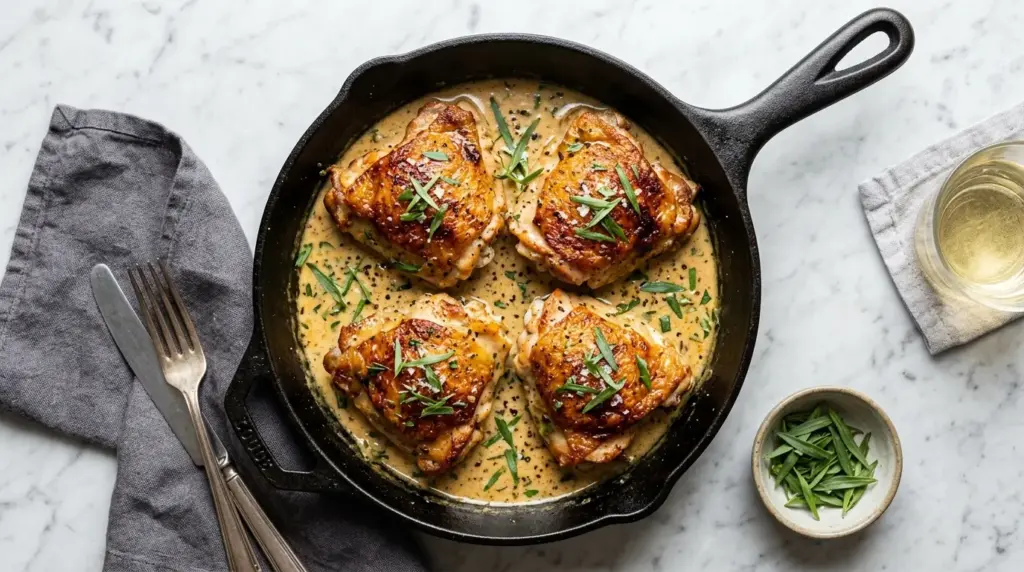
This tarragon chicken thighs recipe pairs beautifully with sides that can absorb and showcase the rich cream sauce.
The sauce is genuinely the highlight of the dish, so you want something on the plate that soaks it up rather than competing with it.
Here are some of the best ways to serve this dish:
- Creamy mashed potatoes are the classic pairing. The sauce pools in the potatoes and the combination is deeply comforting. Try Creamy Mashed Potatoes for a foolproof version.
- Egg noodles or wide pasta such as pappardelle soak up the cream sauce beautifully and add a satisfying bite alongside the chicken.
- Steamed white rice or basmati rice is simple and lets the flavour of the sauce shine without distraction.
- Roasted potatoes add a nice textural contrast with their crisp exterior. Try Roasted Potatoes alongside this dish.
- Crusty French bread is essential if you want to mop up every last drop of the sauce from the pan.
- Steamed or roasted green beans add colour and a gentle crunch that balances the richness of the cream sauce.
- A simple green salad with a light vinaigrette cuts through the richness and freshens the overall meal.
Variations to Try
Once you are comfortable with the classic version of this dish, there are several easy ways to adjust the flavour profile or adapt it to different dietary needs.
Here are some variations worth exploring:
- Lemon Tarragon Chicken: Add the zest of one whole lemon to the sauce along with the lemon juice for a brighter, more citrus-forward version of the dish. This works especially well in spring and summer.
- Mushroom Tarragon Chicken: Sauté 8 ounces (225 g) of sliced cremini mushrooms in the pan after removing the chicken in Step 3. Cook them until golden before adding the shallots. The mushrooms add an earthy depth that pairs beautifully with the tarragon.
- Boneless Skinless Version: Use boneless, skinless chicken thighs for a lighter, lower-fat version. Reduce the braising time to 15 to 18 minutes and check the internal temperature carefully.
- Chicken Breast Version: Boneless chicken breasts can be used, but they dry out quickly. Add them to the finished sauce for the final 10 to 15 minutes only and do not overcook.
- White Wine Substitute: If you prefer not to cook with alcohol, substitute the wine with an equal amount of additional chicken broth plus one teaspoon of white wine vinegar for a bit of acidity.
- Dairy-Free Option: Substitute full-fat coconut cream for the heavy cream. The coconut flavour is subtle in this dish when balanced with the mustard and tarragon, and the sauce will still be rich and smooth.
- Add Pearl Onions: Stir in ½ cup (75 g) of cooked pearl onions along with the cream for a more classic, traditional version of the French original.
For another French-inspired chicken recipe with a rich pan sauce, the Chicken Francese Recipe is a beautiful option.
Storage and Reheating
This dish stores well and actually tastes even better the next day as the flavours continue to develop in the sauce overnight.
Here are the best ways to store and reheat your leftovers:
- Refrigerator: Store leftover chicken thighs and sauce in an airtight container in the refrigerator for up to 3 days.
- Freezer: The cream sauce does not freeze particularly well as it can separate when thawed. If you need to freeze it, do so in an airtight container for up to 1 month and whisk the sauce gently while reheating to bring it back together.
- Stovetop reheating: Place the chicken and sauce in a small skillet over low to medium-low heat. Warm gently, spooning the sauce over the chicken as it heats through. Add a splash of cream or broth if the sauce has thickened too much.
- Microwave reheating: Place in a microwave-safe dish, cover loosely, and heat in 60-second intervals at medium power until warmed through. Avoid full power, which can cause the cream sauce to separate.
- Do not reheat at high heat. Cream sauces are sensitive to aggressive heat and will break into a greasy, separated mess if you rush the process.
Read Also: Chicken Thigh Sheet Pan Dinner
Nutritional Facts
The following nutritional information is an estimate per serving based on 4 servings from this recipe. Values will vary based on the specific size of the chicken thighs and exact ingredient brands used.
| Nutrient | Amount Per Serving |
|---|---|
| Calories | 520 kcal |
| Protein | 38 g |
| Total Fat | 36 g |
| Saturated Fat | 15 g |
| Carbohydrates | 5 g |
| Sugar | 2 g |
| Sodium | 680 mg |
| Cholesterol | 195 mg |
| Fiber | 0 g |
This is a naturally low-carbohydrate dish and fits well into both standard and low-carb eating patterns. Serving it over cauliflower rice instead of traditional rice or potatoes reduces the carbohydrate count of the overall meal significantly.
Another excellent low-carb chicken dinner worth trying is the Chicken Stew Recipe for a hearty, filling meal.
Health Benefits of Key Ingredients
This recipe is more than just comfort food. Several of the key ingredients bring genuine nutritional value to your plate.
Here is a closer look at what makes this dish a nourishing choice:
- Chicken thighs are an excellent source of high-quality protein, providing all nine essential amino acids. They are also rich in iron, zinc, phosphorus, and B vitamins, particularly B12 and niacin, which support energy metabolism and nervous system health.
- Fresh tarragon contains several beneficial compounds including eugenol, which has been studied for its anti-inflammatory properties. It is also a source of antioxidants and has historically been used to support digestion.
- Garlic is one of the most well-researched medicinal foods available. It contains allicin, a compound associated with cardiovascular benefits, immune support, and anti-inflammatory activity.
- Shallots are rich in quercetin, a powerful antioxidant flavonoid associated with reducing inflammation and supporting heart health.
- Dijon mustard contains selenium and omega-3 fatty acids, and is very low in calories while contributing a significant depth of flavour with just a small amount.
- Olive oil provides heart-healthy monounsaturated fats and is associated with reduced inflammation and improved cholesterol profiles when used as part of a balanced diet.
For another protein-rich chicken dinner with bold flavour, the Chicken Shawarma Recipe is a wonderful addition to your weekly meal plan.
Frequently Asked Questions
1. Can I use dried tarragon instead of fresh?
Dried tarragon will technically work in this recipe, but the flavour difference is significant. Fresh tarragon has a bright, grassy, anise-forward character that dried tarragon simply cannot replicate. If you must use dried, start with 1 teaspoon (about one-third the volume of fresh) and taste as you go.
2. What kind of white wine should I use?
A dry white wine with good acidity works best here. Sauvignon Blanc, Pinot Grigio, and unoaked Chardonnay are all excellent choices. Avoid sweet wines, which will make the sauce taste unbalanced, and avoid cooking wines, which tend to be very salty and can throw off the seasoning of the dish.
3. Can I make this recipe with boneless chicken thighs?
Yes, boneless skinless chicken thighs can be used in place of bone-in thighs. The skin will not get as crispy, but the meat will still be tender and flavourful. Reduce the braising time to 15 to 18 minutes and use a thermometer to confirm an internal temperature of 165°F (74°C) before serving.
4. Why did my cream sauce separate?
Cream sauces separate when they are exposed to very high heat or boiled too aggressively. To prevent this, keep the heat at medium-low during the braising phase and never let the sauce reach a rolling boil. If separation occurs, remove the pan from heat and whisk vigorously, then add a small splash of cold cream and whisk again to bring it back together.
5. What can I substitute for the white wine?
If you prefer not to use wine, substitute with an equal amount of additional chicken broth (½ cup / 120 ml) plus 1 teaspoon of white wine vinegar or apple cider vinegar. The vinegar provides the acidity that the wine would otherwise contribute, keeping the sauce balanced and bright.
Read Also: Tarragon Chicken Salad Recipe
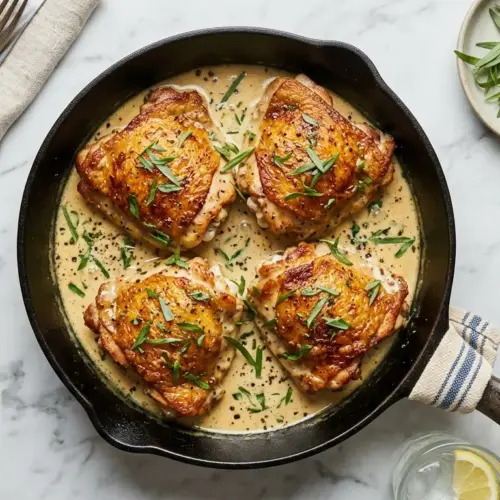
Tarragon Chicken Thighs

Equipment
- Large cast iron skillet or oven-safe skillet - 12 inches / 30 cm
- Paper towels
- Sharp chef's knife
- Cutting board
- Wooden spoon or silicone spatula
- Measuring cups and spoons
- Instant-read meat thermometer
- Tongs
- Small mixing bowl - optional
Ingredients
- 4 bone-in, skin-on chicken thighs - about 2.5 lbs or 1.1 kg total
- 1 teaspoon kosher salt - plus more to taste
- ½ teaspoon freshly ground black pepper
- 1 tablespoon olive oil
- 1 tablespoon unsalted butter
- 2 medium shallots - finely minced, about ½ cup or 75 g
- 3 garlic cloves - finely minced
- 1 tablespoon Dijon mustard
- ½ cup dry white wine - 120 ml, Sauvignon Blanc or Pinot Grigio
- ½ cup chicken broth - 120 ml
- ¾ cup heavy cream - 180 ml
- 3 tablespoons fresh tarragon leaves - roughly chopped, plus extra for garnish
- 1 teaspoon fresh lemon juice
- flaky sea salt - for finishing, optional
Instructions
- Remove chicken thighs from refrigerator 20-30 minutes before cooking. Pat completely dry with paper towels on both sides. Season generously with salt and pepper, pressing seasoning into the skin.
- Heat a 12-inch cast iron skillet over medium-high heat for 2-3 minutes. Add olive oil and butter. Once shimmering, place chicken skin-side down. Cook undisturbed for 8-10 minutes until deep golden brown and crisp. Flip and cook second side 3-4 minutes. Transfer chicken to a plate.
- Reduce heat to medium. Add shallots to the pan and cook 3 minutes until soft and translucent. Add garlic, cook 60 seconds until fragrant. Stir in Dijon mustard and cook 30 seconds more.
- Pour in white wine, scraping up browned bits from pan bottom. Let simmer 3-4 minutes until reduced by half. Add chicken broth and bring to a simmer.
- Pour in heavy cream and stir gently. Add 2 tablespoons chopped tarragon. Nestle chicken back into skillet skin-side up, along with any resting juices. Sauce should come up sides of chicken but not cover skin.
- Reduce heat to medium-low, cover, and simmer gently 20-25 minutes until chicken reaches 165°F (74°C) internally. If using oven, braise at 350°F (175°C) for 25 minutes.
- Transfer chicken to serving plate and tent with foil for 5 minutes. Return skillet to medium heat, stir in remaining 1 tablespoon tarragon and lemon juice. Taste and adjust seasoning with salt and pepper.
- Spoon sauce over chicken, garnish with whole tarragon leaves, and serve immediately while hot with your choice of sides.
Notes
- Fresh tarragon is essential: Dried tarragon loses its delicate anise flavor. If you cannot find fresh tarragon, fresh basil or thyme can work as substitutes, though the dish will taste different.
- Pat chicken completely dry: Moisture prevents browning. Use plenty of paper towels and press firmly on all surfaces before seasoning.
- Don’t rush the sear: The chicken will release naturally from the pan when properly browned. If it sticks, it needs more time.
- Keep sauce at a gentle simmer: Boiling aggressively can cause the cream sauce to separate. Medium-low heat keeps it smooth and glossy.
- Let wine reduce fully: Allowing the wine to cook down before adding cream prevents the sauce from tasting sharp or alcoholic.
- Substitute for white wine: Use an equal amount of additional chicken broth (½ cup / 120 ml) plus 1 teaspoon white wine vinegar or apple cider vinegar for acidity.
- Boneless variation: Use boneless, skinless thighs and reduce braising time to 15-18 minutes. Check internal temperature carefully.
- Storage: Store leftovers in an airtight container in the refrigerator for up to 3 days. The sauce may separate when frozen – if freezing, whisk gently while reheating.
- Reheating: Warm gently in a skillet over low heat with a splash of cream or broth. Avoid high heat which can cause the cream sauce to break.
- Make it dairy-free: Substitute full-fat coconut cream for the heavy cream. The coconut flavor remains subtle when balanced with mustard and tarragon.
Final Thoughts
This Tarragon Chicken Thighs Recipe is the kind of dish that makes an ordinary weeknight feel like a special occasion.
The combination of crispy-skinned chicken, a silky cream sauce, and the distinctive flavour of fresh tarragon is genuinely hard to beat.
It is approachable enough for a beginner cook but impressive enough to serve to guests, and the one-pan format keeps things clean and practical.
Give it a try this week. If you make this recipe, leave a comment below and let us know how it turned out. We would love to hear which side dish you chose to serve alongside it, or any tweaks you made to make it your own.
Recommended:
- Creamy Tarragon Chicken Recipe
- Chicken Marsala Recipe
- Chicken Florentine Recipe
- Lemon Chicken Recipe
- Chicken Scampi Recipe
- Grilled Lemon Pepper Chicken Recipe
- Baked Honey Mustard Chicken Recipe
- One Pot Crispy Chicken and Rice Recipe
- Chicken Piccata Recipe with Pasta
- Skillet Chicken Bulgogi Recipe