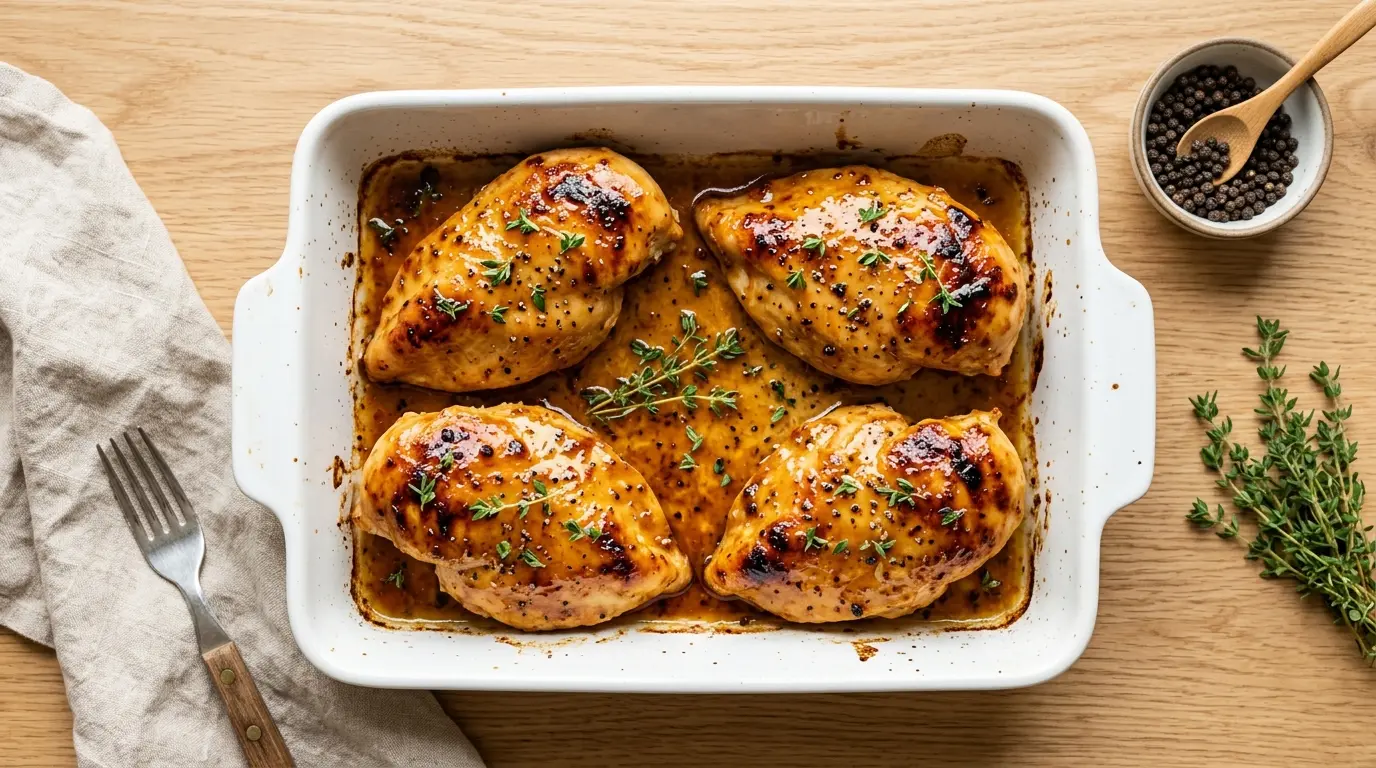
If you’ve been searching for a weeknight dinner that delivers bold flavor without a ton of fuss, this baked honey mustard chicken recipe is exactly what you need. The combination of sweet honey and tangy Dijon mustard creates a sticky, caramelized glaze that coats tender baked chicken breasts to absolute perfection.
What makes this recipe work so well is the balance of ingredients. Honey brings natural sweetness and helps the glaze caramelize in the oven, while Dijon mustard adds that sharp, slightly spicy depth that keeps the dish from tasting one-dimensional. Add a splash of apple cider vinegar for brightness and a little garlic powder for warmth, and you have a sauce that tastes like it came straight from a restaurant kitchen.
This is the kind of recipe that earns a permanent spot in your weekly rotation. It requires minimal prep, uses pantry staples you likely already have, and comes together in under an hour from start to finish.
Whether you’re cooking for the family on a Tuesday night or prepping meals for the week ahead, this dish delivers every single time. Tender, juicy chicken with a golden, glossy glaze? Yes, please.
You might also enjoy: Baked Chicken Breast
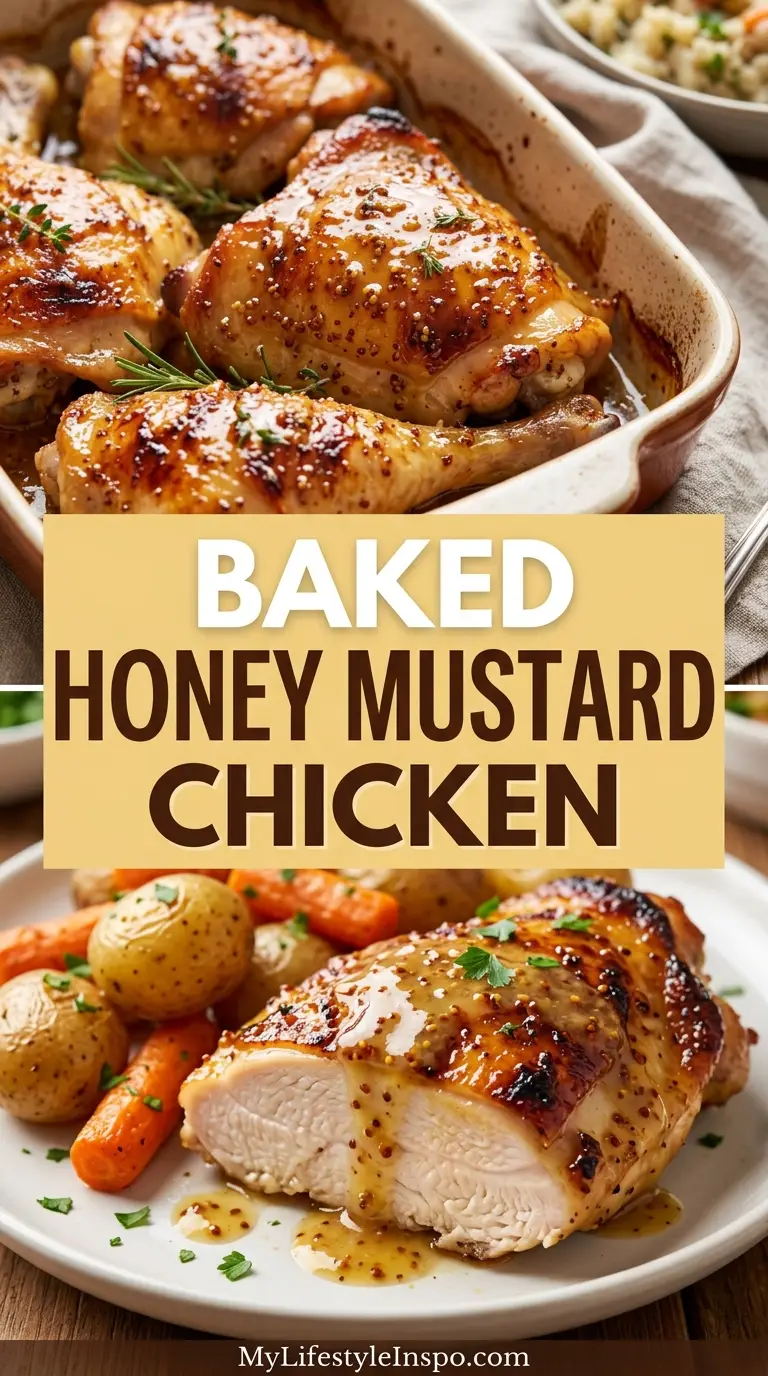
Why You’ll Love This Baked Honey Mustard Chicken Recipe
This recipe hits all the right notes for a satisfying home-cooked dinner without the stress.
The sauce is made entirely from pantry staples, which means no last-minute grocery runs. It’s rich, flavorful, and coats the chicken beautifully during baking.
The dish is endlessly flexible. It pairs well with everything from roasted vegetables to simple white rice, making it easy to customize based on what you have in the fridge.
It’s also a crowd-pleaser across all ages. The honey mellows out the sharpness of the mustard just enough to make it approachable even for picky eaters.
Here’s a quick summary of what makes this recipe stand out:
- Ready in under one hour from prep to table
- Minimal cleanup with just one baking dish required
- Uses pantry staples you likely already have on hand
- Naturally gluten-free with no special substitutions needed
- Great for meal prep since the chicken stores and reheats beautifully
- Kid-friendly flavor that adults will equally enjoy
- Customizable heat level by adjusting the mustard or adding red pepper flakes
This dish is the perfect intersection of easy and impressive. You’ll want to make it on repeat.
For another flavorful baked chicken option, check out this Lemon Chicken that’s just as simple and satisfying.
Ingredients
The magic of this recipe is how a short ingredient list produces such a deeply flavorful dish. Every component plays a specific role in creating that perfect honey mustard glaze.
Here’s what you’ll need:
- 4 boneless, skinless chicken breasts (about 6–8 oz / 170–225 g each)
- 3 tablespoons Dijon mustard (the backbone of the sauce; whole grain mustard also works well)
- 3 tablespoons honey (use pure, raw honey for the best flavor)
- 1 tablespoon apple cider vinegar (adds brightness and balances the sweetness)
- 1 tablespoon olive oil (helps the glaze adhere and promotes browning)
- 2 cloves garlic, minced (about 1 teaspoon minced)
- 1 teaspoon garlic powder
- 1 teaspoon onion powder
- 1/2 teaspoon paprika (sweet or smoked, depending on preference)
- 1/2 teaspoon salt, or to taste
- 1/4 teaspoon black pepper, or to taste
- Fresh parsley or thyme, chopped, for garnish (optional)
Read Also: Honey Butter Recipe
Kitchen Equipment Needed
You don’t need any special tools for this recipe, but having the right equipment on hand will make the process smoother and more enjoyable.
Here’s what to gather before you start:
- 9×13 inch baking dish or a similar oven-safe dish (ceramic or glass works great)
- Meat thermometer (essential for checking doneness accurately)
- Small mixing bowl (for whisking together the honey mustard glaze)
- Whisk or fork (for blending the sauce ingredients smoothly)
- Sharp chef’s knife (for trimming chicken and mincing garlic)
- Cutting board (use a separate one for raw chicken)
- Measuring spoons and cups
- Aluminum foil (for tenting the dish if needed)
- Basting brush (optional, but useful for applying extra glaze during baking)
This also works well in a cast iron skillet if you want a slightly crispier edge on the glaze.
This same approach to easy, oven-baked proteins works beautifully in our Baked Salmon Recipe as well.
Recommended Products for This Recipe
These are products I genuinely recommend based on quality and performance. They make a noticeable difference in how this dish turns out.
1. Raw Wildflower Honey
Raw, unfiltered honey has a more complex flavor than processed varieties, with floral notes that make the glaze taste noticeably more layered. It also tends to caramelize more beautifully in the oven because of its natural sugars. Skip the squeeze bear and reach for the good stuff.
2. Maille Dijon Originale Mustard
Maille is one of the gold-standard Dijon mustards for a reason. It has a sharp, clean tanginess that holds up beautifully against the sweetness of honey and doesn’t get lost during baking. A little goes a long way in terms of flavor depth.
3. Le Creuset Enameled Baking Dish
Even heat distribution is key for getting that perfect glaze without burning the edges. A Le Creuset baking dish retains heat evenly and the enameled surface makes cleanup a breeze, even when the honey caramelizes onto the sides. It’s a piece you’ll use for years.
4. Instant-Read Meat Thermometer
Guessing when chicken is done is the fastest way to end up with either an undercooked safety hazard or a dried-out disappointment. An instant-read thermometer takes the guesswork out entirely. Look for one that reads in 2–3 seconds for the smoothest cooking experience.
5. Silicone Basting Brush
Basting the chicken halfway through baking with the extra glaze in the dish is one small step that makes a big difference in the final result. A silicone brush is heat-safe, easy to clean, and won’t shed bristles into your food.
Another great use for a high-quality baking dish: try this Crack Chicken Recipe that’s baked to perfection just the same way.
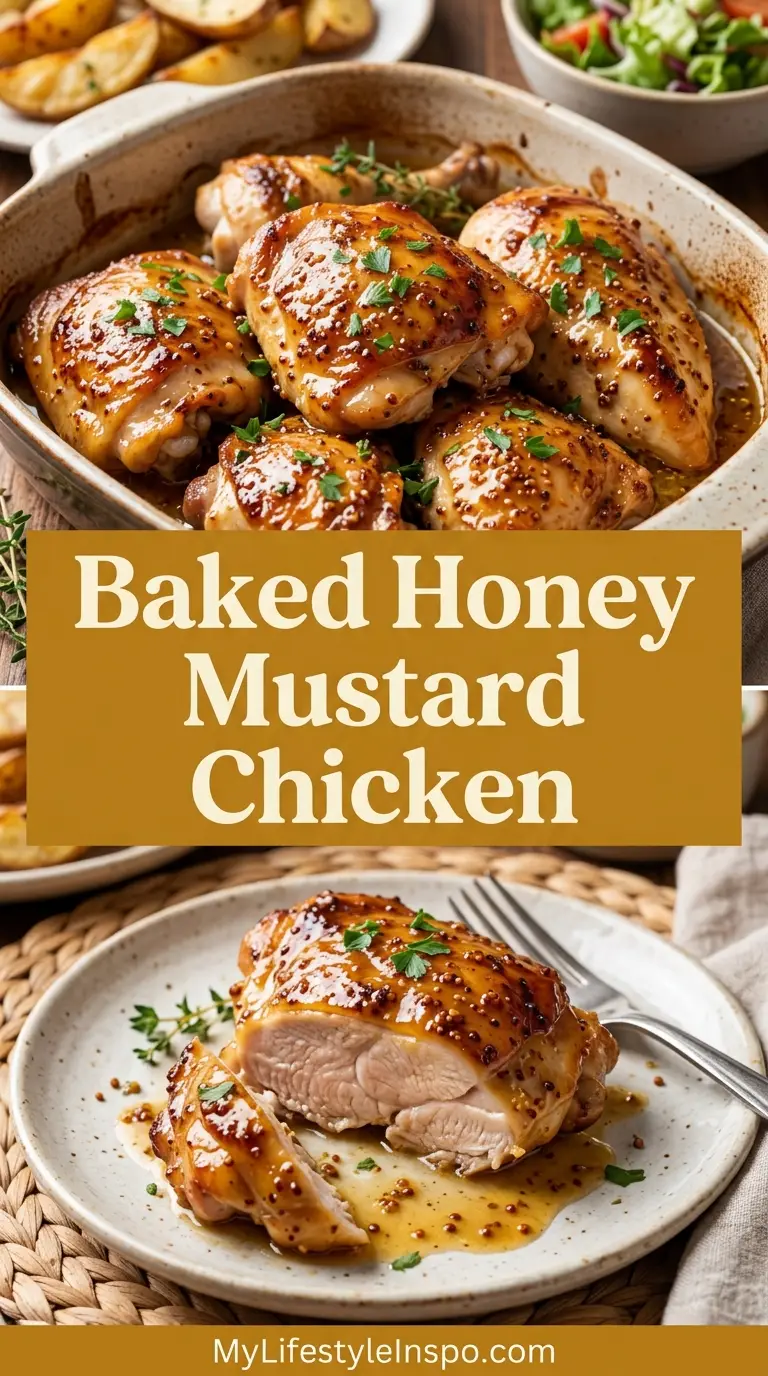
Step-by-Step Instructions
1. Preheat the Oven and Prep the Baking Dish
- Preheat your oven to 400°F (200°C). This high temperature ensures the glaze caramelizes properly and the chicken cooks through without drying out.
- Lightly grease a 9×13 inch (23×33 cm) baking dish with olive oil or a quick spritz of cooking spray.
- Set the dish aside while you prep the chicken and sauce.
2. Prepare the Chicken Breasts
- Place your chicken breasts on a clean cutting board.
- Pat each piece completely dry using paper towels. This step is crucial because moisture on the surface will steam the chicken rather than allowing the glaze to caramelize and adhere properly.
- If your chicken breasts are very thick (more than 1 inch / 2.5 cm at the thickest point), use a sharp knife to butterfly them or pound them slightly to an even thickness. This promotes even cooking so thinner parts don’t dry out before the center is done.
- Check for any large pieces of fat or connective tissue and trim them away for a cleaner finished dish.
- Season both sides of each chicken breast lightly with salt (about 1/4 teaspoon total) and black pepper.
3. Make the Honey Mustard Glaze
- In a small mixing bowl, combine the 3 tablespoons of Dijon mustard and 3 tablespoons of honey. Whisk them together until fully blended and smooth.
- Add 1 tablespoon of apple cider vinegar and stir to combine. The vinegar cuts the richness of the sauce and brightens all the flavors.
- Add 1 tablespoon of olive oil, 2 cloves of minced garlic, 1 teaspoon garlic powder, 1 teaspoon onion powder, 1/2 teaspoon paprika, and a pinch of salt. Whisk everything together until the sauce is completely smooth and uniform.
- Taste the glaze at this point. It should taste tangy, sweet, and slightly savory. Adjust seasoning if needed.
4. Coat the Chicken
- Place the seasoned chicken breasts in the prepared baking dish in a single layer. Make sure the pieces are not touching each other, as crowding the pan can cause steaming rather than roasting.
- Spoon or pour approximately three-quarters of the honey mustard glaze over the chicken breasts.
- Use a silicone brush or the back of a spoon to spread the glaze evenly over the tops and sides of each piece. Make sure every surface is well coated for the most flavorful result.
- Reserve the remaining quarter of the glaze in the bowl for basting midway through cooking.
5. Bake the Chicken
- Transfer the baking dish to the preheated oven, uncovered, and bake for 20 minutes.
- After 20 minutes, remove the dish from the oven and use a basting brush or spoon to coat the chicken with the reserved honey mustard glaze, as well as any pan juices that have collected in the bottom of the dish. This double application of glaze deepens the caramelization and intensifies the flavor.
- Return the dish to the oven and continue baking for another 10 to 15 minutes, or until the internal temperature of the thickest part of the chicken reads 165°F (74°C) on an instant-read meat thermometer.
- Watch the tops during the final few minutes. The honey in the glaze can darken quickly. If you notice the tops browning too fast before the chicken is cooked through, loosely tent the dish with aluminum foil.
6. Rest and Serve
- Once the chicken reaches the correct internal temperature, remove the baking dish from the oven.
- Allow the chicken to rest in the dish for 5 minutes before serving. Resting allows the juices to redistribute throughout the meat, which is the key to getting juicy, moist chicken rather than a dry, tough result.
- Spoon any remaining pan juices over the chicken breasts before serving.
- Garnish with freshly chopped parsley or thyme if desired, and serve immediately.
Read Also: Chicken Marsala Recipe
Tips for Success
Even the simplest recipes benefit from a few pro tips. These make the difference between a good result and a great one.
Keep these in mind when you make this dish:
- Don’t skip the pat-dry step. Surface moisture is the enemy of caramelization. Take 30 extra seconds to dry the chicken thoroughly before coating it with glaze.
- Use room-temperature chicken. Pulling the chicken out of the refrigerator 15 to 20 minutes before cooking helps it cook more evenly, reducing the risk of a cooked exterior with a raw center.
- Check the internal temperature, not the clock. Oven temperatures vary, and chicken breast size varies even more. An instant-read thermometer is the only reliable way to know when your chicken is perfectly cooked.
- Don’t overcrowd the pan. Each piece needs space for heat to circulate. If you’re doubling the recipe, use two baking dishes rather than cramming everything into one.
- Use a quality Dijon mustard. The mustard is the dominant flavor in this recipe, so a cheap, sharp yellow mustard won’t give you the same rounded, complex result. Stick with Dijon.
- Taste and adjust the glaze before it goes on the chicken. It’s much easier to fix the seasoning before baking than after.
- Baste during cooking. That second application of glaze halfway through is what builds up the glossy, lacquered surface on the finished chicken.
For another incredibly flavorful baked chicken dinner that follows similar principles, try this Chipotle Chicken Recipe.
Serving Suggestions
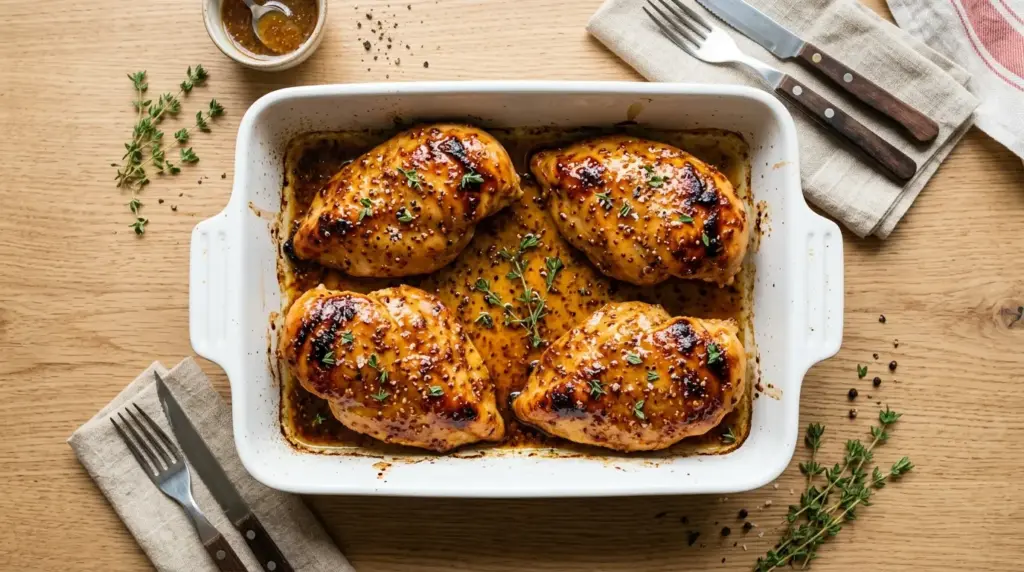
This baked honey mustard chicken is incredibly versatile and pairs well with a wide range of sides to round out the meal.
The sweet, tangy glaze complements earthy vegetables and starchy sides equally well. Here are some of the best ways to serve it:
- Garlic Mashed Potatoes are a classic pairing that lets the sauce do the talking
- Roasted Broccoli adds a slightly bitter contrast that balances the sweetness of the glaze
- Green Beans offer a simple, clean accompaniment that doesn’t compete with the star of the dish
- Cilantro Lime Rice gives the dish a fresh, bright flavor profile
- Corn on the Cob makes this feel like a backyard BBQ meal any night of the week
- Roasted Potatoes are hearty and satisfying alongside the tender chicken
- A simple green salad with a light vinaigrette keeps things fresh and easy
For a complete comfort food spread, the chicken pairs beautifully with Honey Roasted Carrots as a side.
Variations to Try
Once you’ve mastered the base recipe, there are plenty of fun ways to mix things up based on your tastes or what you have on hand.
These variations all use the same core technique but offer a different flavor experience:
- Spicy Honey Mustard Chicken: Add 1/2 to 1 teaspoon of cayenne pepper or red pepper flakes to the glaze for a sweet heat version that’s absolutely addictive.
- Whole Grain Mustard Version: Swap the smooth Dijon for a whole grain mustard to add visible mustard seeds and a slightly more rustic, textured glaze.
- Honey Mustard Chicken Thighs: Bone-in, skin-on chicken thighs work beautifully here. They’re more forgiving than breasts, stay incredibly juicy, and the skin crisps up beautifully under the glaze. Add 10 to 15 extra minutes to the bake time.
- Honey Mustard Chicken Drumsticks: A fun, finger-food-friendly option that’s perfect for feeding a crowd or making for kids.
- Maple Mustard Chicken: Swap half the honey for pure maple syrup for a deeper, more complex sweetness with a slight woodsy note.
- Herb-Crusted Version: Add 1 tablespoon of finely chopped fresh rosemary and thyme to the glaze for an earthy, aromatic twist that pairs especially well with roasted root vegetables.
- Sheet Pan Version: Toss vegetables (such as broccoli, cherry tomatoes, or sweet potato chunks) in olive oil and arrange them around the chicken in the same pan for a complete one-pan dinner.
Read Also: Chicken Tenders Recipe
Storage and Reheating
This recipe is excellent for meal prep and stores beautifully, making it a smart choice when you want to cook once and eat well multiple times throughout the week.
Here’s what you need to know about storing and reheating:
- Refrigerator: Allow the cooked chicken to cool to room temperature, then transfer to an airtight container. Store in the refrigerator for up to 4 days.
- Freezer: Place cooled chicken pieces in a single layer in a freezer-safe container or zip-lock bag, removing as much air as possible. Freeze for up to 3 months. Thaw overnight in the refrigerator before reheating.
- Oven Reheating (Best Method): Preheat your oven to 350°F (175°C). Place the chicken in a covered baking dish with 2 to 3 tablespoons of water or chicken broth to prevent drying out. Heat for 15 to 20 minutes, or until warmed through.
- Microwave Reheating: Place a single piece in a microwave-safe dish, cover loosely with a damp paper towel, and heat in 30-second increments at 70% power until warmed through. This is faster but can cause slight drying if overdone.
- Stovetop Reheating: Warm a skillet over medium-low heat, add a splash of water or broth, place the chicken in the pan, and cover. Heat for about 5 minutes, turning once.
For more easy make-ahead chicken inspiration, try this Chicken Casserole that reheats just as well.
Nutritional Facts
The following nutritional information is estimated per serving based on four equal portions using 6 oz (170 g) boneless, skinless chicken breasts.
| Nutrient | Per Serving (approx.) |
|---|---|
| Calories | 310 kcal |
| Protein | 38 g |
| Total Fat | 9 g |
| Saturated Fat | 1.5 g |
| Carbohydrates | 18 g |
| Sugars | 16 g |
| Fiber | 0.5 g |
| Sodium | 520 mg |
| Cholesterol | 105 mg |
Note: Nutritional values will vary depending on the exact size of the chicken breasts, the specific brands of honey and mustard used, and any additional garnishes or sides. These figures are estimates and should be used as a general guide only.
This is also a naturally gluten-free and dairy-free dish, making it suitable for many common dietary restrictions without any modification.
For another protein-forward dinner option with a similar nutrition profile, check out this Baked Cod Recipe.
Health Benefits of Key Ingredients
Beyond being delicious, many of the key ingredients in this recipe offer real nutritional value.
Here’s a look at what’s working in your favor with every serving:
Chicken Breast is one of the leanest, most protein-dense foods available. A single serving provides roughly 35–40 grams of high-quality protein to support muscle repair, satiety, and immune function. It’s also an excellent source of B vitamins, particularly niacin and B6.
Honey is more than just a sweetener. Raw honey contains antioxidants, trace minerals, and has natural antimicrobial properties. While it is still a sugar and should be used in moderation, it has a lower glycemic impact than refined white sugar and adds genuine flavor complexity.
Dijon Mustard is made from mustard seeds, which contain compounds called glucosinolates that research suggests may have anti-inflammatory and antioxidant properties. Mustard is also very low in calories and adds enormous flavor with minimal impact on macronutrient totals.
Garlic is one of the most well-studied foods in the world when it comes to health benefits. It contains allicin, a sulfur compound associated with immune support, cardiovascular health, and anti-inflammatory effects.
Apple Cider Vinegar is associated with improved digestion, blood sugar management, and a feeling of fullness after meals. It also plays an important flavor role in balancing the sweetness of the honey in this glaze.
Here’s a summary of the key benefits at a glance:
- Chicken breast supports lean muscle mass and provides essential B vitamins
- Honey offers antioxidants and a more complex flavor profile than refined sugar
- Dijon mustard is very low in calories but high in flavor impact
- Garlic supports cardiovascular health and immune function
- Apple cider vinegar supports digestion and glycemic balance
- The dish is naturally gluten-free and dairy-free
Another honey-sweetened recipe with great nutritional credentials worth trying is these Honey Roasted Carrots.
Frequently Asked Questions
1. Can I use chicken thighs instead of chicken breasts?
Absolutely, and many cooks actually prefer thighs for this recipe. Bone-in, skin-on chicken thighs stay juicier during baking and the skin crisps up under the glaze in a way that’s truly spectacular.
If using boneless, skinless thighs, the cook time will be similar to breasts. For bone-in thighs, increase the total bake time to about 40 to 45 minutes and check that the internal temperature reaches 165°F (74°C) at the thickest part, away from the bone.
2. Can I make the honey mustard glaze ahead of time?
Yes, the glaze can be made up to 5 days in advance and stored in an airtight jar or container in the refrigerator. The flavors actually develop and meld even more during that time.
Give it a good stir before using, as the oil can separate slightly. Bring it to room temperature before applying it to the chicken if it has thickened in the fridge.
3. How do I know when the chicken is fully cooked?
The only reliable method is using an instant-read meat thermometer. Insert it into the thickest part of the breast, avoiding bone if applicable, and look for a reading of 165°F (74°C).
Visual cues like clear juices or golden color can be helpful indicators, but they are not as reliable as a thermometer. Investing in a good thermometer is one of the single best upgrades you can make to your cooking toolkit.
4. My glaze is burning before the chicken is done. What should I do?
This is a common issue because of the high sugar content in honey, which can darken quickly at high heat. If the tops of the chicken are getting too dark before the internal temperature is reached, loosely tent the baking dish with aluminum foil.
The foil will slow the browning while allowing the chicken to continue cooking through. Remove the foil during the last 3 to 5 minutes of cooking to allow the glaze to firm up and get slightly sticky again.
5. Can I use yellow mustard instead of Dijon?
You can, but the flavor profile will be quite different. Yellow mustard is sharper, more acidic, and less complex than Dijon. It will still produce a tasty dish, but it will taste more like a classic ballpark condiment than a refined honey mustard glaze.
For the best results, stick with Dijon. Whole grain mustard is a fantastic alternative that adds texture and a slightly earthier flavor.
This same versatility of protein swaps applies when you browse our Chicken Stir Fry Recipe for ideas on what to make when you want something different.
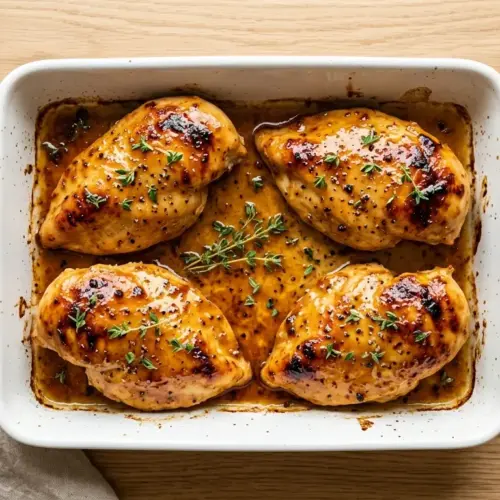
Baked Honey Mustard Chicken

Equipment
- 9×13-inch baking dish - ceramic or glass works great
- Meat thermometer - instant-read
- Small mixing bowl
- Whisk or fork
- Sharp chef's knife
- Cutting board - use separate one for raw chicken
- Measuring spoons
- Measuring cups
- Aluminum foil - for tenting the dish if needed
- Basting brush - optional, silicone works best
- Cast iron skillet - optional, for crispier edge on glaze
Ingredients
- 4 boneless, skinless chicken breasts - about 6-8 oz or 170-225 g each
- 3 tablespoons Dijon mustard - whole grain mustard also works well
- 3 tablespoons honey - use pure, raw honey for best flavor
- 1 tablespoon apple cider vinegar
- 1 tablespoon olive oil
- 2 cloves garlic - about 1 teaspoon, minced
- 1 teaspoon garlic powder
- 1 teaspoon onion powder
- 0.5 teaspoon paprika - sweet or smoked
- 0.5 teaspoon salt - or to taste
- 0.25 teaspoon black pepper - or to taste
- fresh parsley or thyme - chopped, for garnish optional
Instructions
- Preheat oven to 400°F (200°C). Lightly grease a 9×13 inch baking dish with olive oil or cooking spray.
- Pat chicken breasts completely dry with paper towels. Trim any excess fat and season both sides lightly with salt and pepper.
- In a small bowl, whisk together Dijon mustard, honey, apple cider vinegar, olive oil, minced garlic, garlic powder, onion powder, paprika, and a pinch of salt until smooth.
- Place seasoned chicken in prepared dish. Spoon about three-quarters of the glaze over chicken and spread evenly with a brush or spoon. Reserve remaining glaze for basting.
- Bake uncovered for 20 minutes. Remove from oven, baste with reserved glaze and pan juices, then return to oven.
- Continue baking for 10-15 minutes until internal temperature reaches 165°F (74°C) at thickest part. Tent with foil if glaze browns too quickly.
- Rest chicken in dish for 5 minutes. Spoon pan juices over chicken, garnish with fresh herbs if desired, and serve.
Notes
- Don’t skip patting chicken dry: Surface moisture prevents caramelization. Take 30 seconds to dry chicken thoroughly before coating.
- Use room-temperature chicken: Remove from refrigerator 15-20 minutes before cooking for more even cooking.
- Check internal temperature, not the clock: Oven temperatures and chicken breast sizes vary. A meat thermometer is the only reliable way to know when it’s perfectly cooked.
- Don’t overcrowd the pan: Each piece needs space for heat to circulate. If doubling the recipe, use two baking dishes.
- Use quality Dijon mustard: The mustard is the dominant flavor, so a cheap yellow mustard won’t give the same complex result.
- Baste during cooking: That second application of glaze halfway through builds up the glossy, lacquered surface on the finished chicken.
- Storage: Refrigerate in an airtight container for up to 4 days. Freeze for up to 3 months.
- Reheating: Best reheated in a 350°F oven with a splash of broth for 15-20 minutes. Microwave with a damp paper towel for a quicker option.
- Make it spicy: Add 1/2 to 1 teaspoon cayenne pepper or red pepper flakes to the glaze for sweet heat.
- Chicken thigh variation: Bone-in, skin-on thighs work beautifully – add 10-15 minutes to bake time. The skin crisps up under the glaze.
Final Thoughts
This baked honey mustard chicken recipe is the kind of dish that proves weeknight cooking doesn’t have to be boring or complicated. With a short ingredient list, simple preparation, and a glaze that practically makes itself, it’s a recipe you’ll genuinely look forward to making again and again.
The flavors are bold but familiar, the technique is forgiving even for beginners, and the result always looks and tastes impressive. It’s a dinner that earns compliments without requiring hours in the kitchen.
Give this recipe a try this week and let me know how it goes in the comments below. Did you make any tweaks or try a variation? Share your experience and don’t forget to pass this recipe along to anyone else who loves a good, easy chicken dinner.
Recommended:
- Chicken Tikka Masala Recipe
- Chicken Fajita Recipe
- Bourbon Chicken Recipe
- Chicken Broccoli Rice Casserole
- Mango Chutney
- BBQ Sauce
- Baked Beans
- Creamy Mashed Potatoes
- Classic Chicken Parmesan
- Chicken and Dumplings