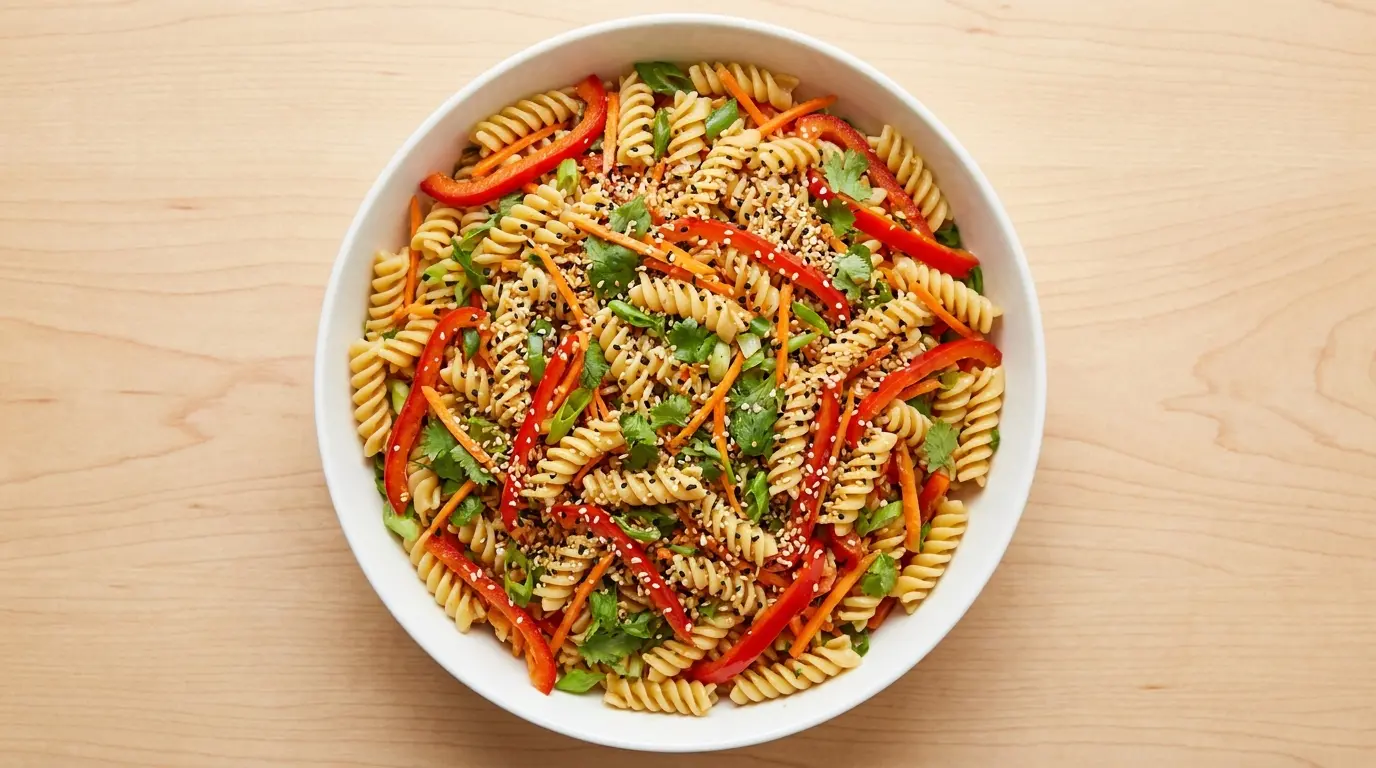
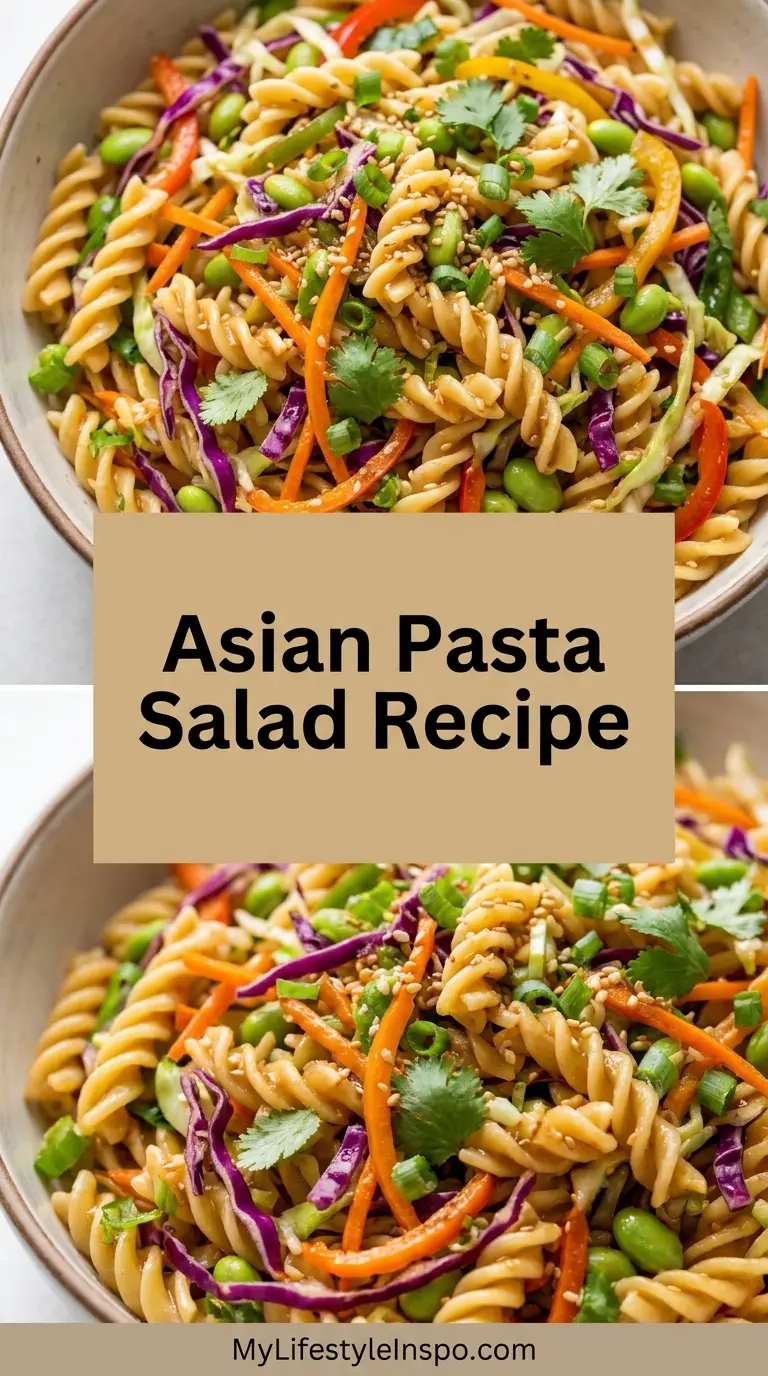
If you are looking for a crowd-pleasing dish that comes together in about 20 minutes, this Asian pasta salad is exactly what you need. It is packed with crunchy, colorful vegetables, tender rotini pasta, and tossed in a sweet and savory soy-sesame vinaigrette that is completely irresistible.
This salad hits every note: sweet from a touch of brown sugar, tangy from rice vinegar, nutty from toasted sesame oil, and just a little spicy if you choose to add sriracha. It is the kind of salad that disappears fast at potlucks, BBQs, and family dinners alike.
What makes it even better is how forgiving and flexible the recipe is. You can customize it with whatever crunchy vegetables you have on hand, and the dressing takes less than five minutes to whisk together.
It is satisfying enough to serve as a light main dish or makes a wonderful side alongside grilled chicken or pork.
Pair this with the Pasta Salad on the blog for even more cold pasta inspiration!
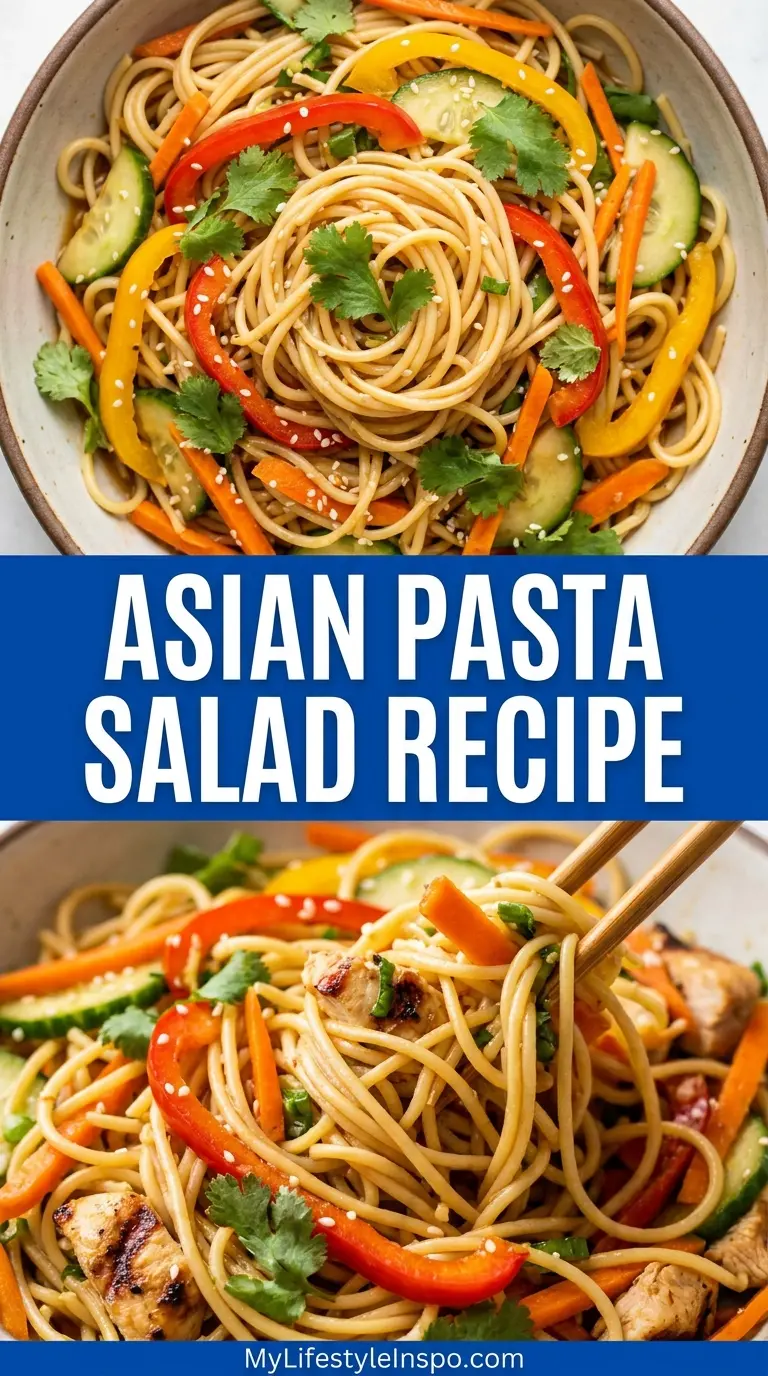
Why You’ll Love This Asian Pasta Salad
This recipe has quickly become a staple in many home kitchens, and for good reason.
It is incredibly quick to make. From start to finish, you are looking at about 20 minutes, making it perfect for busy weeknights or last-minute gatherings.
The dressing is the star of the show. That combination of soy sauce, sesame oil, rice vinegar, and brown sugar creates a complex, layered flavor that tastes like it took far longer to prepare.
The texture is outstanding. Between the tender pasta, crisp bell peppers, shredded carrots, and crunchy sesame seeds on top, every bite is interesting.
It is also a brilliant make-ahead dish. The flavors deepen and meld together beautifully as it sits in the refrigerator, making it ideal for meal prep.
Here is why you will keep coming back to this recipe:
- Ready in about 20 minutes from start to finish
- The soy-sesame dressing is bold, balanced, and totally addictive
- Great for potlucks, BBQs, picnics, and meal prep
- Easily customizable with your favorite proteins or vegetables
- Tastes even better the next day as the flavors continue to develop
- Naturally dairy-free and easily made gluten-free with the right pasta
You might also enjoy: Asian Chicken Salad
Ingredients
For the most flavorful Asian pasta salad, you want a combination of textures and bold, well-balanced dressing ingredients. Here is everything you need:
For the Salad:
- 8 oz (225 g) rotini pasta (or spaghetti, angel hair, or penne)
- 1 cup (90 g) coleslaw mix or shredded green cabbage
- 1 cup (110 g) matchstick carrots
- 1 medium red bell pepper, thinly sliced or julienned
- 4 green onions (scallions), thinly sliced
- 1/4 cup (10 g) fresh cilantro, roughly chopped
- 2 tablespoons (18 g) toasted sesame seeds (for garnish)
For the Soy-Sesame Dressing:
- 1/4 cup (60 ml) soy sauce (low-sodium recommended)
- 1/4 cup (60 ml) olive oil or neutral vegetable oil
- 3 tablespoons (45 g) light brown sugar
- 2 tablespoons (30 ml) rice vinegar
- 1 teaspoon (5 ml) toasted sesame oil
- 3 cloves garlic, minced
- 1 teaspoon (3 g) fresh ginger, grated (or 1/4 teaspoon ground ginger)
- 1-2 teaspoons (5-10 ml) sriracha sauce (optional, for heat)
You can also check out our guide to making a perfect Pasta Salad Dressing for even more tips on getting the balance right.
Kitchen Equipment Needed
You do not need any fancy equipment to make this salad. A few basic kitchen tools are all it takes to bring everything together smoothly.
- Large pot for boiling the pasta
- Colander for draining and rinsing the pasta
- Large mixing bowl for combining the salad
- Small mixing bowl or jar for whisking the dressing
- Whisk for emulsifying the dressing
- Sharp knife and cutting board for prepping vegetables
- Box grater or microplane for grating fresh ginger
- Airtight storage container for storing leftovers
Read Also: Italian Pasta Salad
Recommended Products for This Recipe
These are products chosen for quality and performance that will genuinely make this recipe easier and even more delicious.
1. Kikkoman Low Sodium Soy Sauce
Using a high-quality soy sauce makes a noticeable difference in the depth and balance of this dressing. Kikkoman’s low-sodium version gives you all the rich, savory umami flavor without making the dressing too salty, which is especially important when the dressing is drizzled generously over the whole salad. It is one of those pantry staples that consistently delivers.
2. Kadoya Pure Sesame Oil
The quality of sesame oil varies enormously from brand to brand, and cheap options can taste bitter or flat. Kadoya is widely regarded as one of the best pure sesame oils available, delivering a deep, nutty aroma that transforms the dressing from good to incredible. Just one teaspoon goes a long way, and you will taste the difference immediately.
3. OXO Good Grips Large Salad Spinner
If you are using fresh cabbage or leafy greens in your salad, a salad spinner will help you wash and dry them thoroughly so the dressing clings properly rather than sliding off. The OXO version is sturdy, easy to use, and doubles as a great serving bowl. It is a tool that earns its counter space.
4. Nouri’s Rice Vinegar
Rice vinegar is the backbone of the brightness in this dressing, and a mild, slightly sweet rice vinegar works best here. Nouri’s unseasoned variety lets you control the flavor precisely, unlike seasoned rice vinegar which already has added salt and sugar. It keeps the dressing versatile so you can adjust to your taste.
5. Glass Mason Jar with Lid (Set of 4)
Whisking the dressing in a mason jar and simply shaking to combine is one of the easiest methods for making vinaigrettes. It also means you can store any leftover dressing directly in the same jar in the refrigerator for up to a week. A good set of wide-mouth mason jars is endlessly useful in the kitchen.
Another dish packed with Asian-inspired flavors worth trying is this Chinese Chicken Salad.
Step-by-Step Instructions
Step 1: Cook the Pasta
- Bring a large pot of well-salted water to a rolling boil over high heat. Salting the water generously (it should taste lightly salty) seasons the pasta from the inside out.
- Add the rotini pasta (8 oz / 225 g) and cook according to the package directions, aiming for al dente texture. Al dente means the pasta should be tender but still have a slight firmness when bitten. Avoid overcooking, as mushy pasta absorbs the dressing unevenly.
- Once cooked, drain the pasta immediately through a colander.
- Rinse the drained pasta thoroughly under cold running water until it is completely cool. This step stops the cooking process immediately and prevents the pasta from sticking together. It also ensures your salad stays cold and fresh.
- Transfer the cooled pasta to a large mixing bowl and set aside.
Step 2: Prepare the Vegetables
- Slice 1 medium red bell pepper into thin strips or julienne pieces. The red pepper adds a pop of sweetness, color, and crunch that balances the savory dressing perfectly.
- Thinly slice 4 green onions (scallions), using both the white and light green parts. The green onions add a mild onion flavor without being overpowering.
- Roughly chop 1/4 cup (10 g) of fresh cilantro leaves. If you are not a fan of cilantro, you can substitute with fresh flat-leaf parsley or simply leave it out.
- Measure out 1 cup (90 g) of coleslaw mix or shredded green cabbage and 1 cup (110 g) of matchstick carrots.
- Add all the prepared vegetables (bell pepper, green onions, cilantro, coleslaw mix, and carrots) to the bowl with the cooled pasta.
Step 3: Make the Soy-Sesame Dressing
- In a small mixing bowl or a mason jar with a tight-fitting lid, combine the following: 1/4 cup (60 ml) soy sauce, 1/4 cup (60 ml) olive oil, 3 tablespoons (45 g) light brown sugar, 2 tablespoons (30 ml) rice vinegar, 1 teaspoon (5 ml) toasted sesame oil, 3 cloves of minced garlic, and 1 teaspoon (3 g) of freshly grated ginger.
- If you like a little heat, add 1 to 2 teaspoons (5-10 ml) of sriracha sauce at this point.
- If using a bowl, whisk vigorously until the brown sugar is completely dissolved and the dressing is well combined. If using a mason jar, screw the lid on tightly and shake energetically for about 30 seconds.
- Taste the dressing before adding it to the salad. It should taste bold, savory, slightly sweet, and tangy. Adjust the balance to your preference: a little more brown sugar for sweetness, more rice vinegar for brightness, or more soy sauce for saltiness.
Step 4: Combine the Salad
- Pour the soy-sesame dressing over the pasta and vegetable mixture in the large bowl.
- Using tongs or two large spoons, toss everything together thoroughly so every piece of pasta and every vegetable is evenly coated with the dressing.
- Make sure to reach down to the bottom of the bowl where the dressing tends to pool, and keep tossing until the distribution is even.
- At this stage, taste the salad and adjust the seasoning if needed. A small pinch of black pepper can add a nice finishing note.
Step 5: Chill and Garnish
- Cover the bowl tightly with plastic wrap or transfer the salad to an airtight container.
- Refrigerate the salad for at least 30 minutes before serving. This resting time is important because it allows the pasta to absorb some of the dressing and all the flavors to meld together beautifully.
- If you have time, chilling for 1 to 2 hours produces an even better result.
- Just before serving, give the salad one final toss and sprinkle the 2 tablespoons (18 g) of toasted sesame seeds generously over the top. Adding the sesame seeds at this point rather than earlier keeps them crisp and crunchy.
- Serve cold and enjoy.
Read Also: Mediterranean Pasta Salad
Tips for Success
Small adjustments can take this salad from great to absolutely perfect. Here are the most important things to keep in mind:
- Cook pasta to al dente: Overcooked pasta becomes mushy after sitting in the dressing. Pull it from the water a minute before the package time suggests, and it will continue to soften slightly as it absorbs the dressing.
- Rinse the pasta with cold water: This is a non-negotiable step for cold pasta salads. It stops the cooking, prevents sticking, and brings the temperature down so the dressing does not turn oily.
- Dissolve the sugar fully: Make sure the brown sugar is completely dissolved in the dressing before tossing. Undissolved sugar can create uneven sweetness.
- Do not dress too early: If making this more than a few hours in advance, store the dressing separately and toss just before serving to prevent the vegetables from going limp.
- Toast your sesame seeds: Toasting them in a dry skillet over medium heat for about 2 minutes before adding them deepens their nutty flavor considerably.
- Taste as you go: Dressings are very personal. Adjust the balance of soy sauce, vinegar, and sugar until it suits your palate.
For a lighter, herb-forward pasta salad, also try our Pesto Pasta Salad.
Serving Suggestions
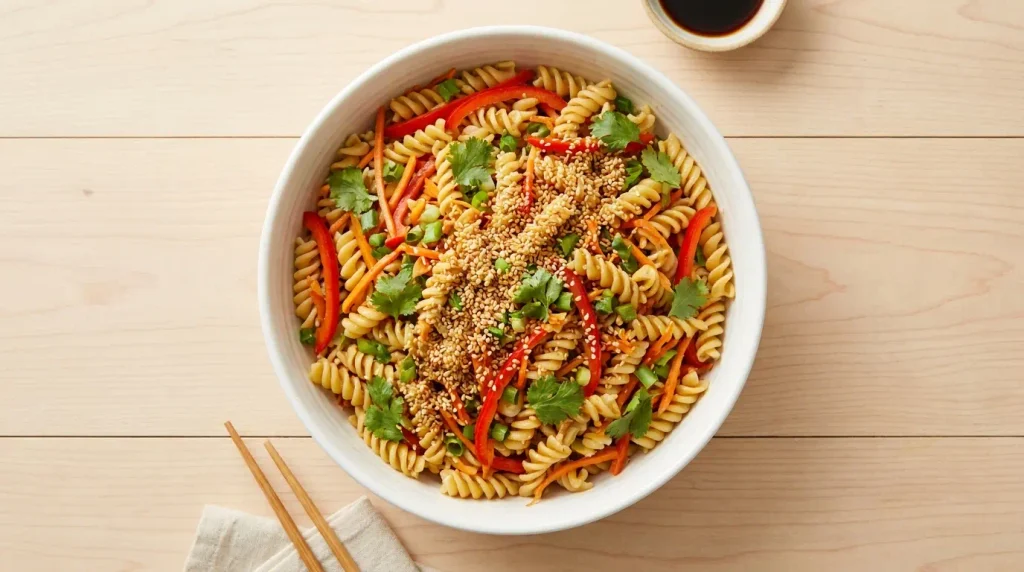
This Asian pasta salad is incredibly versatile and pairs beautifully with a wide range of mains and accompaniments.
It works as a complete lunch on its own, especially if you add a protein like shredded rotisserie chicken or edamame. For summer gatherings, it is an excellent side dish alongside grilled meats. The sweet-savory dressing complements smoky, charred proteins exceptionally well.
Here are some of the best ways to serve it:
- Alongside grilled teriyaki chicken or Chicken Stir Fry for a full Asian-inspired meal
- Served with Chicken Lettuce Wraps for a light, fresh dinner spread
- As part of a potluck spread next to other crowd-pleasers like Broccoli Salad
- Packed into meal prep containers with added edamame for a satisfying weekday lunch
- Served cold on a warm summer evening as a light dinner with crusty bread
- Topped with crispy wonton strips for added crunch just before serving
Variations to Try
Once you have mastered the base recipe, there are so many delicious ways to make it your own. Here are some popular variations:
- Add protein: Toss in 2 cups of shredded rotisserie chicken, cooked shrimp, sliced grilled steak, or baked tofu to make this a complete main dish.
- Try a different pasta: While rotini is ideal for catching the dressing in its spirals, spaghetti, angel hair, bow ties, or even udon noodles all work well here.
- Add extra vegetables: Snap peas, sliced cucumber, edamame, shredded purple cabbage, or baby spinach are all wonderful additions.
- Make it peanutty: Replace part of the oil with peanut butter or add a drizzle of our Peanut Sauce for a richer, nuttier dressing.
- Add crunch: Top with crushed wonton strips, toasted sliced almonds, or chopped roasted peanuts for extra texture.
- Mandarin oranges: Fold in a drained can of mandarin oranges for a sweet, citrusy twist that is especially popular at potlucks.
Read Also: Greek Pasta Salad
Storage and Reheating
This salad is wonderfully easy to store, and the leftovers taste fantastic the next day once the flavors have had more time to develop.
- Refrigerator: Store the Asian pasta salad in an airtight container in the refrigerator for up to 4 days. Give it a good toss before serving as the dressing tends to settle at the bottom.
- If making ahead: Cook the pasta and prepare the vegetables, but store the dressing separately in a jar in the refrigerator. Combine everything and toss within 1 to 2 hours of serving for the freshest result.
- Refresh if needed: If the salad looks a little dry after sitting in the fridge, whisk together a small batch of extra dressing and toss it through before serving.
- Freezing: Freezing is not recommended for this salad. Pasta and raw vegetables do not freeze well and will turn mushy upon thawing.
- Reheating: This salad is designed to be served cold and does not need reheating. Remove it from the refrigerator about 10 minutes before serving if you prefer it at room temperature.
You might also enjoy: Ranch Pasta Salad
Nutritional Facts
The following nutritional information is an estimate per serving based on 8 servings. Actual values will vary depending on specific brands of ingredients used and any additions or substitutions made.
| Nutrient | Per Serving (approx.) |
|---|---|
| Calories | 240 kcal |
| Total Fat | 10 g |
| Saturated Fat | 1.5 g |
| Carbohydrates | 32 g |
| Sugars | 7 g |
| Dietary Fiber | 2 g |
| Protein | 5 g |
| Sodium | 490 mg |
This recipe is naturally dairy-free. To make it gluten-free, substitute with gluten-free pasta and use tamari or gluten-free soy sauce in place of regular soy sauce.
For another satisfying salad that fits beautifully into a balanced diet, take a look at our Caesar Pasta Salad.
Health Benefits of Key Ingredients
This salad is not just delicious; it is packed with genuinely nutritious ingredients that support overall well-being.
The colorful vegetables in this recipe provide a wide range of vitamins, minerals, and antioxidants that benefit your body in multiple ways.
Here is a closer look at some of the standout ingredients:
- Red bell peppers are one of the richest plant sources of Vitamin C, which supports immune function and healthy skin. They also contain beta-carotene, a powerful antioxidant linked to reduced inflammation.
- Carrots are loaded with beta-carotene (converted to Vitamin A in the body), which supports healthy vision, immune function, and skin health.
- Green onions (scallions) are low in calories but rich in Vitamin K, which is essential for bone health and blood clotting, and contain compounds with mild anti-inflammatory properties.
- Cabbage is an excellent source of Vitamin C and Vitamin K, and also contains glucosinolates, compounds associated with potential protective effects against certain diseases.
- Sesame oil provides healthy monounsaturated and polyunsaturated fats. Toasted sesame oil is rich in antioxidants including sesamol and sesamin, which have been studied for their anti-inflammatory properties.
- Garlic is widely recognized for its potential immune-boosting and heart-health-supporting properties, largely attributed to its sulfur-containing compounds.
- Ginger contains gingerol, a bioactive compound with powerful antioxidant and anti-inflammatory effects. It is also commonly used to support digestive health.
- Cilantro provides Vitamins A, C, and K, and contains plant compounds with potential antioxidant and antimicrobial properties.
For another Asian-inspired meal packed with colorful vegetables and nutrients, check out this Egg Roll in a Bowl.
Frequently Asked Questions
1. Can I make Asian pasta salad ahead of time?
Yes, this salad is an excellent make-ahead dish. You can cook the pasta, prepare the vegetables, and whisk together the dressing up to 24 hours in advance. Store the cooked pasta and vegetables together in the refrigerator, and keep the dressing in a separate jar. Toss everything together about 30 minutes to 1 hour before serving to allow the flavors to meld without the vegetables going limp.
2. What type of pasta works best for this recipe?
Rotini is the most popular choice because its spiral shape catches and holds the dressing beautifully in every twist. Spaghetti and angel hair are also commonly used and give the salad a lighter, noodle-like texture. Bow ties (farfalle) and penne also work well. Avoid large tube pasta like rigatoni, as the dressing does not cling to it as effectively.
3. Can I make this salad gluten-free?
Absolutely. Simply substitute the regular pasta with your favorite gluten-free pasta and replace the soy sauce with tamari or certified gluten-free soy sauce. Most other ingredients in this recipe are naturally gluten-free, but always check the label on condiments like sriracha to be sure.
4. How do I keep the pasta from absorbing all the dressing?
Rinsing the cooked pasta thoroughly under cold water before dressing it creates a barrier that slows down absorption. If you are storing the salad for more than a couple of hours, it also helps to reserve a small portion of the dressing to toss through right before serving, which refreshes the salad and brings back the bright, punchy flavor.
5. Can I add protein to make this a main dish?
Yes, this salad transforms into a satisfying main course with the addition of protein. Shredded rotisserie chicken is the easiest option. Grilled or sliced chicken breast, cooked shrimp, pan-seared tofu, cooked and shelled edamame, or even thinly sliced flank steak all pair beautifully with the sesame dressing. Add the protein cold after the salad has been dressed and chilled.
Read Also: Chicken Pasta Salad
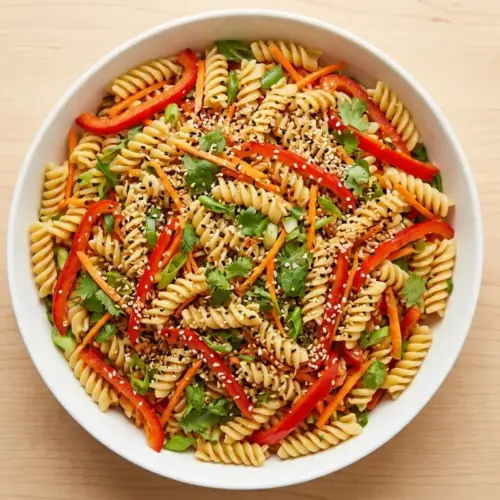
Asian Pasta Salad

Equipment
- Large pot - For boiling the pasta
- Colander - For draining and rinsing the pasta
- Large mixing bowl - For combining the salad
- Small mixing bowl or mason jar - For whisking or shaking the dressing
- Whisk - For emulsifying the dressing
- Sharp knife and cutting board - For prepping vegetables
- Box grater or microplane - For grating fresh ginger
- Airtight storage container - For storing leftovers
Ingredients
For the Salad
- 8 oz rotini pasta - 225 g; or spaghetti, angel hair, or penne
- 1 cup coleslaw mix or shredded green cabbage - 90 g
- 1 cup matchstick carrots - 110 g
- 1 medium red bell pepper - thinly sliced or julienned
- 4 green onions (scallions) - thinly sliced, white and light green parts
- 1/4 cup fresh cilantro - 10 g; roughly chopped; substitute flat-leaf parsley if desired
- 2 tablespoons toasted sesame seeds - 18 g; for garnish
For the Soy-Sesame Dressing
- 1/4 cup soy sauce - 60 ml; low-sodium recommended
- 1/4 cup olive oil or neutral vegetable oil - 60 ml
- 3 tablespoons light brown sugar - 45 g
- 2 tablespoons rice vinegar - 30 ml; unseasoned
- 1 teaspoon toasted sesame oil - 5 ml
- 3 cloves garlic - minced
- 1 teaspoon fresh ginger - 3 g; grated; or 1/4 teaspoon ground ginger
- 1-2 teaspoons sriracha sauce - 5-10 ml; optional, for heat
Instructions
- Bring a large pot of well-salted water to a rolling boil. Add the rotini and cook according to package directions until al dente.
- Drain the pasta immediately and rinse thoroughly under cold running water until completely cool to stop cooking and prevent sticking. Transfer to a large mixing bowl.
- Slice the red bell pepper into thin strips, thinly slice the green onions, and roughly chop the cilantro. Add all prepared vegetables (bell pepper, green onions, cilantro, coleslaw mix, and carrots) to the bowl with the cooled pasta.
- In a small bowl or mason jar, combine soy sauce, olive oil, brown sugar, rice vinegar, toasted sesame oil, minced garlic, grated ginger, and sriracha (if using). Whisk vigorously or shake until the sugar is completely dissolved.
- Pour the dressing over the pasta and vegetable mixture. Toss thoroughly with tongs or two large spoons until everything is evenly coated, reaching to the bottom of the bowl where dressing pools.
- Cover tightly and refrigerate for at least 30 minutes, or up to 2 hours, to let the flavors meld. Just before serving, give the salad a final toss and sprinkle toasted sesame seeds generously over the top. Serve cold.
Notes
- Cook pasta to al dente: Overcooked pasta becomes mushy after sitting in the dressing. Pull it from the water a minute before the package time suggests.
- Rinse the pasta with cold water: This is a non-negotiable step for cold pasta salads — it stops the cooking, prevents sticking, and brings the temperature down so the dressing does not turn oily.
- Dissolve the sugar fully: Make sure the brown sugar is completely dissolved in the dressing before tossing to avoid uneven sweetness.
- Make-ahead tip: If making more than a few hours in advance, store the dressing separately and toss just before serving to prevent the vegetables from going limp.
- Toast your sesame seeds: Toast them in a dry skillet over medium heat for about 2 minutes before adding to deepen their nutty flavor considerably.
- Add protein: Toss in 2 cups of shredded rotisserie chicken, cooked shrimp, sliced grilled steak, or baked tofu to make this a complete main dish.
- Make it gluten-free: Substitute gluten-free pasta and use tamari or gluten-free soy sauce in place of regular soy sauce.
- Storage: Store in an airtight container in the refrigerator for up to 4 days. Give it a good toss before serving as the dressing tends to settle at the bottom.
- Do not freeze: Freezing is not recommended — pasta and raw vegetables do not freeze well and will turn mushy upon thawing.
- Refresh if needed: If the salad looks dry after sitting in the fridge, whisk together a small batch of extra dressing and toss it through before serving.
Final Thoughts
This Asian pasta salad is the kind of recipe that earns a permanent spot in your regular rotation. It is fast, flexible, and packed with bold flavors that feel special without requiring any complicated techniques.
For weeknight dinners, summer potlucks, or weekly meal prep, it delivers every single time.
The sweet, tangy, nutty sesame dressing is the real heart of the recipe, and once you taste how well it coats every spiral of pasta and every crunchy vegetable, you will understand why this dish is so hard to stop eating.
Give this Asian pasta salad a try this week, and do not forget to come back and leave a comment below sharing how it turned out for you. If you made any fun variations or added a protein you loved, we would love to hear about it!
Recommended:
- Southwest Pasta Salad
- Shrimp Pasta Salad
- Orzo Pasta Salad
- BLT Pasta Salad
- Caprese Pasta Salad
- Tuna Pasta Salad
- Dill Pickle Pasta Salad
- Hawaiian Macaroni Salad
- Easy Pad Thai
- Chicken Lo Mein