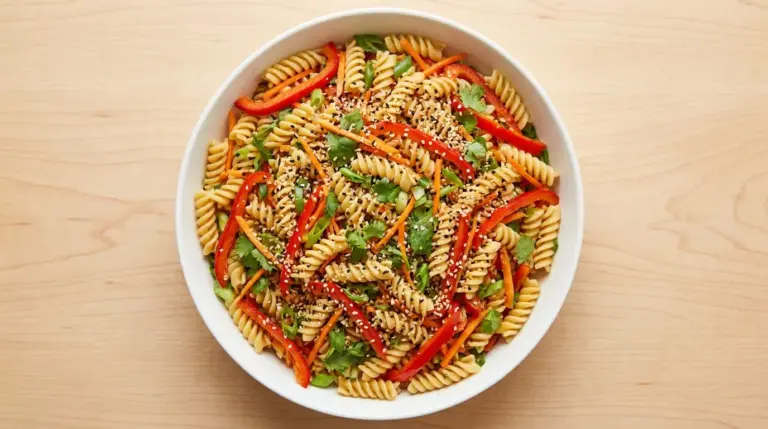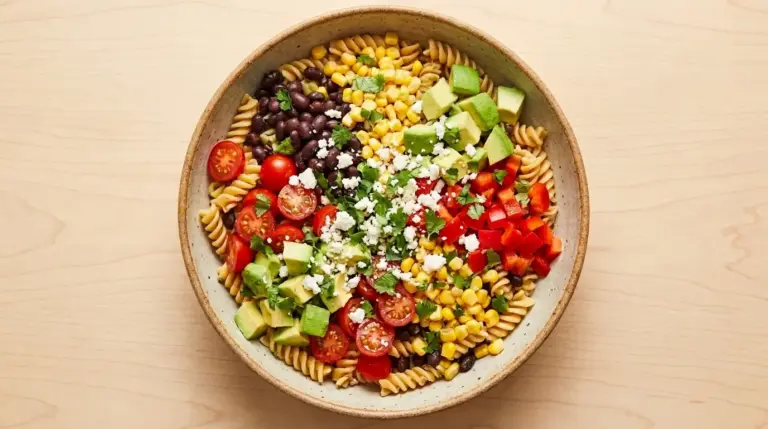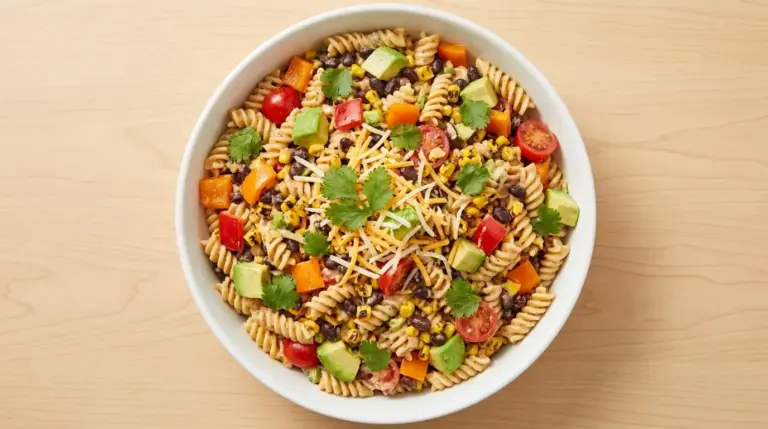

A Greek pasta salad deserves a permanent spot in every home cook’s regular rotation, and once you taste this version, you will understand exactly why it has become a staple at gatherings, potlucks, and weekday lunch preps across the country.
Packed with tender rotini pasta, briny kalamata olives, crumbled feta cheese, juicy cherry tomatoes, crisp cucumber, and a bold red wine vinaigrette, this salad delivers layers of Mediterranean flavor in every single bite.
The secret to making this dish truly exceptional is the dressing. A well-made Greek vinaigrette, built on extra virgin olive oil, red wine vinegar, dried oregano, and a touch of Dijon mustard, ties all the components together in a way that feels cohesive, bright, and balanced.
Best of all, this salad gets even better as it sits. Making it a few hours ahead of time allows the pasta to absorb the dressing and the flavors to deepen, making it one of the most low-effort, high-reward dishes you can add to your repertoire.
If you love pasta salads as much as we do, you will also want to try this crowd-pleasing Italian Pasta Salad Recipe.

Why You’ll Love This Greek Pasta Salad
This recipe delivers bold Mediterranean flavor with barely any effort.
Everything comes together in about 30 minutes, and no special cooking techniques are required whatsoever.
The salad is naturally vegetarian and easy to adapt for gluten-free or vegan diets with a few simple swaps.
It holds up beautifully in the fridge for up to four days, making it one of the smartest meal-prep dishes around.
- Ready in 30 minutes: Cook the pasta, chop the vegetables, shake up the dressing, and toss. That is genuinely all there is to it.
- Make-ahead friendly: The flavors deepen as the salad rests in the fridge overnight, so it almost always tastes better the next day.
- Crowd-pleasing and portable: A fantastic dish to bring to parties, barbecues, and picnics because it needs no reheating and holds well at room temperature for up to two hours.
- Packed with Mediterranean flavors: Feta, kalamata olives, fresh vegetables, and a tangy herb vinaigrette make this anything but a boring side dish.
- Easily customizable: Add grilled chicken, shrimp, or chickpeas to turn it into a complete, protein-rich main course.
- Budget-friendly: The ingredients are simple and affordable, especially when feeding a large group.
You might also enjoy: Pasta Salad Recipe
Ingredients
This recipe uses straightforward, easy-to-find ingredients, though a few quality choices make a real difference in the final flavor. Using a block feta cheese rather than pre-crumbled and sourcing real kalamata olives rather than generic canned black olives will take this salad noticeably further.
- 12 oz (340g) rotini pasta (penne, fusilli, or farfalle also work well)
- 1 cup (160g) cherry tomatoes, halved
- 1 medium cucumber (about 1 cup / 150g), diced into 1/2 inch (1.25 cm) pieces
- 1 medium red bell pepper, diced
- 1/2 cup (80g) red onion, thinly sliced
- 1/2 cup (80g) kalamata olives, halved
- 1/2 cup (60g) crumbled feta cheese (block feta crumbled by hand is strongly recommended)
- 1/4 cup (40g) pepperoncini peppers, sliced (optional but highly recommended)
- 2 tablespoons fresh parsley, roughly chopped
For the Greek Vinaigrette:
- 1/3 cup (80ml) extra virgin olive oil
- 3 tablespoons red wine vinegar
- 1 teaspoon Dijon mustard
- 1 teaspoon dried oregano
- 1/2 teaspoon dried basil
- 1 clove garlic, minced
- 1 teaspoon honey (optional, balances the acidity)
- Salt and black pepper to taste
This salad shares the same bright, Mediterranean spirit as our Mediterranean Chickpea Salad Recipe, and the two pair wonderfully together on the same table.
Kitchen Equipment Needed
You do not need anything specialized for this recipe. A few core kitchen staples will carry you through the entire process without any friction.
- Large pot for boiling pasta
- Colander for draining and rinsing pasta
- Large mixing bowl for combining all the ingredients
- Large serving bowl for presenting at the table
- Chef’s knife and cutting board for vegetable prep
- Glass jar with a tight-fitting lid for mixing the vinaigrette
- Salad spinner (optional but very helpful for drying vegetables after rinsing)
- Measuring cups and spoons
- Tongs or a large wooden spoon for tossing
Read Also: Cucumber Chickpea Feta Salad Recipe
Recommended Products for This Recipe
These are a few specific products that consistently make a meaningful difference in both the flavor and ease of this recipe. Each one has been chosen based on quality and genuine performance in the kitchen.
1. Divina Kalamata Olives
Sourced directly from Kalamata, Greece, these olives have a rich, fruity brininess that ordinary canned black olives simply cannot replicate. They come pre-pitted in a light brine that keeps them plump and juicy all the way through. Swapping standard olives for Divina kalamatas is one of the fastest and easiest ways to dramatically upgrade the depth of flavor in this salad.
2. Authentic Greek Block Feta Cheese
Feta made from sheep’s milk is creamier, tangier, and far more complex than the rubbery pre-crumbled versions that come in shaker containers. Buying it as a block and crumbling it by hand gives you chunkier, more satisfying pieces that hold their shape in the salad rather than dissolving into the dressing. It makes a truly noticeable difference in both texture and taste.
3. Pompeian Robust Extra Virgin Olive Oil
The vinaigrette in this recipe is only as good as the olive oil behind it. Pompeian’s robust variety has a pleasingly peppery finish that stands up beautifully to the acidity of red wine vinegar and the earthiness of dried oregano. Using a genuinely good extra virgin olive oil rather than a generic vegetable oil makes the dressing taste authentically Mediterranean.
4. OXO Good Grips Salad Spinner
Spinning rinsed vegetables dry before adding them to the salad prevents excess water from diluting and watering down your dressing. The OXO version has a simple one-handed pump mechanism, a stable non-slip base, and a pull-tab lock for compact storage. It is one of the most practical everyday tools to have in any kitchen that makes salads on a regular basis.
This salad also pairs beautifully with a bowl of homemade Tzatziki Sauce served on the side for dipping warm pita bread.

Step-by-Step Instructions
1. Cook the Pasta
- Bring a large pot of water to a full rolling boil over high heat. Add 1 to 2 tablespoons of kosher salt to the water before the pasta goes in. Properly salted pasta water is essential because pasta absorbs seasoning as it cooks, and this is the only opportunity you have to flavor it from the inside out.
- Add 12 oz (340g) of rotini pasta and cook according to the package directions until al dente. Al dente means the pasta should still have a slight firmness when bitten through. Overcooked pasta will turn soft and mushy once chilled and tossed with the dressing.
- Drain the pasta immediately through a colander the moment it reaches al dente. Do not let it continue sitting in the hot cooking water.
- Rinse the pasta under cold running water for 1 to 2 minutes, using your hands or a spoon to gently move the pasta around so it cools evenly all the way through. This step stops the cooking process completely and prevents the pasta from clumping together as it cools.
- Shake the colander several times to remove as much excess water as possible, then transfer the cooled pasta to a large mixing bowl and set aside.
2. Prepare the Vegetables
- Halve 1 cup (160g) of cherry tomatoes through the center and add them to the bowl with the pasta.
- Peel and dice 1 medium cucumber into approximately 1/2 inch (1.25 cm) cubes. English cucumbers have thin, tender skin and can be left unpeeled. Standard cucumbers with thicker, waxier skins are best peeled before dicing for a better texture in the salad. Add the cucumber to the bowl.
- Core and dice 1 medium red bell pepper into small, even pieces roughly the same size as the cucumber pieces. Red bell pepper adds natural sweetness and a satisfying crunch that balances the saltiness of the feta and olives. Add to the bowl.
- Thinly slice 1/2 cup (80g) of red onion. If you prefer a milder onion flavor, place the sliced onion in a small bowl, cover it with cold water, and let it soak for 10 minutes before draining and patting dry. This simple step takes the sharp edge off considerably without losing any of the crunch.
- Add the red onion to the bowl with the other vegetables.
3. Add the Olives, Feta, and Pepperoncini
- Halve 1/2 cup (80g) of kalamata olives if they are whole. If you purchased pitted olives, simply slice each one in half with a quick knife cut. Kalamata olives are notably more flavorful and complex than standard canned black olives, so do not skip or substitute them if you can avoid it.
- Crumble 1/2 cup (60g) of feta cheese directly over the top of the salad. If using a block of feta, break it into large, irregular crumbles with your fingers rather than chopping it with a knife. Larger pieces of feta retain their texture better and provide more satisfying bites throughout the salad.
- Add 1/4 cup (40g) of sliced pepperoncini peppers. These mild pickled peppers add a gentle, tangy heat that rounds out the overall flavor profile in a way that is hard to put your finger on but immediately noticeable. Do not skip them.
- Scatter 2 tablespoons of freshly chopped parsley over the top of everything.
4. Make the Greek Vinaigrette
- In a clean glass jar with a tight-fitting lid, combine 1/3 cup (80ml) of extra virgin olive oil, 3 tablespoons of red wine vinegar, 1 teaspoon of Dijon mustard, 1 minced garlic clove, 1 teaspoon of dried oregano, and 1/2 teaspoon of dried basil.
- Add 1 teaspoon of honey at this stage if you prefer a slightly mellower, less sharply acidic dressing. The honey does not make the dressing taste sweet; it simply smooths out the edge of the vinegar and helps the flavors integrate.
- Season generously with salt and freshly ground black pepper.
- Screw the lid on tightly and shake the jar vigorously for 30 seconds until the dressing is well emulsified and the oil and vinegar are fully combined. If you do not have a jar, whisk everything together in a small bowl for about 1 to 2 minutes.
- Taste the dressing before adding it to the salad. It should be tangy, savory, and herb-forward. Adjust with more salt, black pepper, or an extra splash of vinegar as needed.
5. Dress and Toss the Salad
- Pour about three-quarters of the dressing over the pasta and vegetables in the large mixing bowl. Reserve the remaining quarter to stir in just before serving, since the pasta will absorb most of the initial dressing while it chills.
- Using tongs or a large spoon, toss everything together gently but thoroughly. Make sure the dressing reaches every corner of the bowl and coats every piece of pasta, vegetable, and olive.
- Taste the salad and adjust the seasoning with a bit more salt, black pepper, or a small splash of red wine vinegar if you want more brightness.
6. Chill and Serve
- Cover the bowl tightly with plastic wrap or transfer the salad to an airtight storage container.
- Refrigerate the salad for at least 30 minutes before serving. For the best possible flavor, chill for 1 to 2 hours or even overnight.
- Just before bringing the salad to the table, stir in the reserved dressing. This refreshes the salad after the pasta has absorbed most of the initial dressing and restores the right balance of moisture and flavor.
- Taste one final time and add a small extra drizzle of olive oil and a pinch of dried oregano if the salad seems to need it after chilling.
- Garnish with an extra scattering of crumbled feta and a few sprigs of fresh parsley, then serve cold or at room temperature.
Another great Mediterranean dish to serve alongside this salad: Easy Hummus Recipe
Tips for Success
Getting a few specific details right makes all the difference between a decent Greek pasta salad and a genuinely great one.
- Salt the pasta water generously. It should taste noticeably salty, almost like mild seawater. Under-salted pasta is the single most common reason that pasta salads taste flat or one-dimensional.
- Cook pasta al dente, not soft. Slightly firm pasta holds its shape and texture even after sitting in dressing for several hours. Overcooked pasta turns unpleasantly mushy when chilled.
- Cool the pasta completely before tossing. Warm pasta will begin to wilt the vegetables and cause the feta to melt into the dressing rather than staying in distinct, creamy crumbles.
- Soak the red onion if raw onion is too sharp for you. A 10-minute cold water soak makes a dramatic difference and softens the pungency while keeping all the crunch intact.
- Reserve some dressing. Setting aside roughly a quarter of the dressing and stirring it in right before serving ensures the salad tastes bright and generously dressed even after hours in the refrigerator.
- Use block feta crumbled by hand. Pre-crumbled feta tends to be drier and less creamy. Hand-crumbled block feta gives you bigger, more flavorful pieces that hold up in the salad.
- Pat vegetables dry after rinsing. Wet cucumber or bell pepper will dilute the dressing. A quick pat with a paper towel removes enough moisture to make a real difference.
- Make it ahead of time. This salad is almost always more flavorful after a few hours of chilling than it is fresh. If bringing it to an event, making it the night before is always a good idea.
This salad also tastes especially good served alongside warm, freshly made Pita Bread straight from the oven.
Serving Suggestions

Greek pasta salad is one of those endlessly versatile dishes that works equally well as a hearty side or as a satisfying light main course depending on your portion sizes. Start the meal with a platter of Classic Bruschetta and a selection of olives and cheeses for an easy, impressive spread with minimal effort.
- Alongside grilled chicken or lamb: The tangy dressing cuts beautifully through the richness of grilled meats, making it one of the most natural pairings imaginable
- With grilled or baked salmon: A bright, acidic pasta salad is a perfect counterpart to rich, fatty fish
- As part of a mezze platter: Serve alongside hummus, warm pita, stuffed grape leaves, and a bowl of marinated olives for a spread that looks far more impressive than the effort required
- At a potluck or barbecue: One of the most reliable dishes to bring because it feeds a crowd, holds well at room temperature, and always disappears quickly
- Stuffed into a pita pocket or wrap: Scoop a generous serving into a pita or a flour tortilla with some grilled chicken for a satisfying handheld lunch
- Topped with grilled shrimp: A few seasoned grilled shrimp placed on top of individual bowls turns this salad into a restaurant-worthy main course with almost no additional effort
Another great Greek dish to round out the meal: Greek Lentil Soup
Variations to Try
This recipe is a wonderful base that can be adapted in dozens of creative directions without losing that essential Greek character.
Once you have made it a few times and the core technique feels comfortable, experimenting with additions and swaps is genuinely half the fun.
- Add grilled chicken: Season chicken breasts with dried oregano, garlic, lemon zest, and olive oil before grilling, then slice thin and toss into the finished salad for a protein-packed main dish
- Use orzo instead of rotini: Orzo gives the salad a finer, almost grain-like texture that works beautifully if you want something closer in spirit to a tabbouleh-style salad
- Add artichoke hearts: Drain and quarter canned artichoke hearts and fold them in for a meaty, briny addition that complements the kalamata olives wonderfully
- Try sun-dried tomatoes: Replace the fresh cherry tomatoes with oil-packed sun-dried tomatoes for a more intense, chewy, concentrated sweetness
- Make it vegan: Simply omit the feta cheese or replace it with a plant-based feta alternative. The dressing and vegetables already deliver so much bold flavor that the salad holds up remarkably well without cheese
- Make it gluten-free: Substitute brown rice rotini or chickpea pasta for the regular rotini. Both hold up well to chilling and dressing without falling apart
- Add fresh mint or dill: A generous handful of fresh mint leaves or fresh dill stirred in just before serving adds a fragrant, cooling note that reads as distinctly Mediterranean
- Mix in baby spinach or arugula: Fold in a couple of handfuls of greens right before serving for extra nutrition and a pleasantly peppery undertone
For a naturally protein-packed, no-cook salad in a similar spirit, our Chickpea Salad Recipe is a wonderful next recipe to try.
Storage and Reheating
Greek pasta salad is one of the best dishes for making ahead and storing, which is a large part of why it has become such a beloved meal-prep option for busy weekdays.
Keep these guidelines in mind to get the most flavor and freshness out of your leftovers.
- Refrigerator storage: Keep in an airtight container in the refrigerator for up to 4 days. The flavors will continue to develop and the pasta will continue absorbing the dressing throughout.
- Refreshing before serving: Before eating leftovers, add a drizzle of extra virgin olive oil, a small splash of red wine vinegar, and a pinch of dried oregano. Toss well to redistribute everything and bring the salad back to life.
- Serving temperature: The salad can be served straight from the fridge or allowed to rest at room temperature for 10 to 15 minutes before eating. Both options work well, and it really comes down to personal preference.
- Do not freeze: Freezing is not recommended for this salad. The vegetables will turn watery and the pasta will become unpleasantly soft upon thawing.
- Transport tips: If bringing to a picnic or party, store in a cooler or insulated bag. The salad is safe at room temperature for up to 2 hours before it should be refrigerated again.
You might also enjoy: Broccoli Salad Recipe
Nutritional Facts
The estimates below are based on one serving, with the full recipe yielding approximately 8 servings (roughly 1 generous cup each). Nutritional values may vary based on specific ingredient brands, portion sizes, and any additions or substitutions made to the recipe.
| Nutrient | Per Serving (approx.) |
|---|---|
| Calories | 290 kcal |
| Total Fat | 14g |
| Saturated Fat | 3.5g |
| Cholesterol | 10mg |
| Sodium | 480mg |
| Total Carbohydrates | 34g |
| Dietary Fiber | 3g |
| Sugars | 4g |
| Protein | 8g |
Read Also: Quinoa Chickpea Salad Recipe
Health Benefits of Key Ingredients
Greek pasta salad is not just a crowd-pleaser. It is built on a foundation of ingredients that form the backbone of one of the most studied and admired dietary patterns in the world: the Mediterranean diet.
Extra virgin olive oil, the cornerstone of the vinaigrette, is rich in monounsaturated fats and polyphenol antioxidants, including oleocanthal, a compound that has demonstrated anti-inflammatory effects in multiple studies. Feta cheese, while salty, contributes calcium, phosphorus, and beneficial probiotic bacteria, particularly when made from sheep’s milk in the traditional way.
- Kalamata olives: High in oleic acid and polyphenols, both associated with reduced inflammation and improved markers of cardiovascular health
- Cucumbers: Hydrating and very low in calories, with a solid amount of vitamin K and silica, a mineral that supports healthy skin and joint tissue
- Cherry tomatoes: Rich in lycopene, a powerful antioxidant linked to reduced risk of heart disease, as well as vitamin C and potassium
- Red bell peppers: Among the highest sources of vitamin C of any vegetable, providing well over the daily recommended intake in a single serving
- Red onion: Contains quercetin, a flavonoid with documented anti-inflammatory and antihistamine properties, along with prebiotic fiber that supports a healthy gut microbiome
- Fresh parsley: Surprisingly nutrient-dense for an herb, delivering meaningful amounts of vitamin K, folate, and vitamin C in just two tablespoons
For another nourishing, comforting Greek dish that belongs in your regular rotation, this Avgolemono Soup Recipe is a beautiful option.
Frequently Asked Questions
1. Can I make Greek pasta salad the day before serving?
Yes, making it the day before is actually the ideal approach. The pasta absorbs the dressing overnight and the flavors meld together beautifully, making the salad taste more cohesive and developed than it does freshly made.
Just reserve a small amount of dressing to stir in right before serving to brighten it back up and restore the right level of moisture.
2. What is the best pasta shape for Greek pasta salad?
Rotini is the top choice because its spiral shape traps dressing and small pieces of vegetables in its crevices, ensuring a fully flavored bite every time. Penne, farfalle, fusilli, and bow ties are all excellent alternatives.
Avoid long pasta shapes like spaghetti or linguine, as they are difficult to toss evenly and awkward to eat in a cold salad.
3. Can I use a different vinegar instead of red wine vinegar?
Red wine vinegar is traditional and ideal for this recipe because of its sharp, fruity acidity that pairs perfectly with oregano and olive oil. White wine vinegar is a solid substitute with a slightly milder flavor.
Apple cider vinegar also works in a pinch, though it brings a slightly fruitier note. Balsamic vinegar is too sweet and syrupy for this application and is not recommended.
4. Why does my pasta salad taste bland after a night in the fridge?
Cold temperatures mute flavors noticeably, and this is entirely normal. Before serving any chilled pasta salad, always taste it first and adjust the seasoning.
A drizzle of fresh olive oil, a small splash of red wine vinegar, and a pinch more salt and dried oregano will bring it right back to life immediately.
5. Can I add protein to make this a complete meal?
Absolutely. Grilled or rotisserie chicken is the most popular addition and pairs naturally with the Mediterranean flavors throughout. Canned or freshly cooked chickpeas are an excellent vegetarian protein option.
Grilled shrimp, canned tuna, or sliced hard-boiled eggs all work wonderfully and can be added in generous amounts without disrupting the balance of the salad.
For another easy, crowd-pleasing salad perfect for your next gathering: Mexican Street Corn Salad Recipe

Greek Pasta Salad

Equipment
- Large pot - for boiling pasta
- Colander - for draining and rinsing pasta
- Large mixing bowl - for combining all ingredients
- Large serving bowl - for presenting at the table
- Chef’s knife
- Cutting board
- Glass jar with tight-fitting lid - for mixing the vinaigrette
- Salad spinner - optional but very helpful for drying vegetables
- Measuring cups and spoons
- Tongs or large wooden spoon - for tossing
Ingredients
- 12 oz rotini pasta - 340g; penne, fusilli, or farfalle also work well
- 1 cup cherry tomatoes - 160g, halved
- 1 medium cucumber - about 1 cup or 150g, diced into 1/2 inch (1.25 cm) pieces
- 1 medium red bell pepper - diced
- 1/2 cup red onion - 80g, thinly sliced
- 1/2 cup kalamata olives - 80g, halved
- 1/2 cup feta cheese - 60g, crumbled (block feta crumbled by hand is strongly recommended)
- 1/4 cup pepperoncini peppers - 40g, sliced (optional but highly recommended)
- 2 tablespoons fresh parsley - roughly chopped, plus more for garnish
For the Greek Vinaigrette
- 1/3 cup extra virgin olive oil - 80ml, plus extra for drizzling
- 3 tablespoons red wine vinegar
- 1 teaspoon Dijon mustard
- 1 teaspoon dried oregano - plus extra for garnish
- 1/2 teaspoon dried basil
- 1 clove garlic - minced
- 1 teaspoon honey - optional, balances the acidity
- salt and black pepper - to taste
Instructions
- Cook the rotini pasta in a large pot of generously salted boiling water until al dente according to package directions. Drain immediately and rinse under cold water for 1 to 2 minutes to stop the cooking process, then drain well and transfer to a large mixing bowl.
- Halve the cherry tomatoes, dice the cucumber and red bell pepper into 1/2 inch pieces, and thinly slice the red onion. Add all the vegetables to the bowl with the cooled pasta.
- Halve the kalamata olives and add them to the bowl along with the crumbled feta cheese, sliced pepperoncini peppers, and chopped fresh parsley.
- In a glass jar with a tight-fitting lid, combine the extra virgin olive oil, red wine vinegar, Dijon mustard, minced garlic, dried oregano, dried basil, honey (if using), salt, and pepper. Shake vigorously for 30 seconds until well emulsified.
- Pour about three-quarters of the dressing over the pasta and vegetables, reserving the remaining quarter. Toss everything gently but thoroughly until evenly coated.
- Cover the bowl and refrigerate for at least 30 minutes, or up to overnight. Just before serving, stir in the reserved dressing and taste, adjusting seasoning if needed. Garnish with extra feta and parsley before serving.
Notes
- Salt the pasta water generously: It should taste noticeably salty, almost like mild seawater. Under-salted pasta is the single most common reason that pasta salads taste flat.
- Cook pasta al dente: Slightly firm pasta holds its shape and texture even after sitting in dressing for several hours. Overcooked pasta turns unpleasantly mushy when chilled.
- Use block feta crumbled by hand: Pre-crumbled feta tends to be drier and less creamy. Hand-crumbled block feta gives you bigger, more flavorful pieces that hold up in the salad.
- Soak the red onion if raw onion is too sharp: A 10-minute cold water soak makes a dramatic difference and softens the pungency while keeping all the crunch intact.
- Reserve some dressing: Setting aside roughly a quarter of the dressing and stirring it in right before serving ensures the salad tastes bright and generously dressed even after hours in the refrigerator.
- Pat vegetables dry after rinsing: Wet cucumber or bell pepper will dilute the dressing. A quick pat with a paper towel removes enough moisture to make a real difference.
- Make it ahead of time: This salad is almost always more flavorful after a few hours of chilling than it is fresh. If bringing it to an event, making it the night before is always a good idea.
- Storage: Keep in an airtight container in the refrigerator for up to 4 days. Before eating leftovers, add a drizzle of extra virgin olive oil, a small splash of red wine vinegar, and a pinch of dried oregano to refresh the flavors.
- Variations: Add grilled chicken, chickpeas, or shrimp for protein. Use orzo instead of rotini, or add artichoke hearts and sun-dried tomatoes for extra Mediterranean flavor.
Final Thoughts
Greek pasta salad checks every box you could want in a recipe: fast, flavorful, flexible, and genuinely better with time.
The combination of briny olives, creamy feta, crisp vegetables, and that bold herb vinaigrette is one of those flavor profiles that never gets old no matter how many times you return to it.
Give this recipe a try for your next potluck, barbecue, or simply a satisfying weekday lunch, and you will quickly understand why it has remained a perennial favorite for home cooks everywhere.
If you make it, we would love to hear how it turned out. Drop a comment below with your personal touches or share a photo on social media!
Recommended:
- Potato Salad Recipe
- Baklava Recipe
- Greek Easter Bread Recipe
- Classic Hummus Recipe
- Mediterranean Lentil Soup Recipe
- Chicken Shawarma Recipe
- Lemon Chicken Orzo Soup Recipe
- Easy Tuna Salad Recipe
- Curried Chickpea Salad Recipe
- Shakshuka Recipe