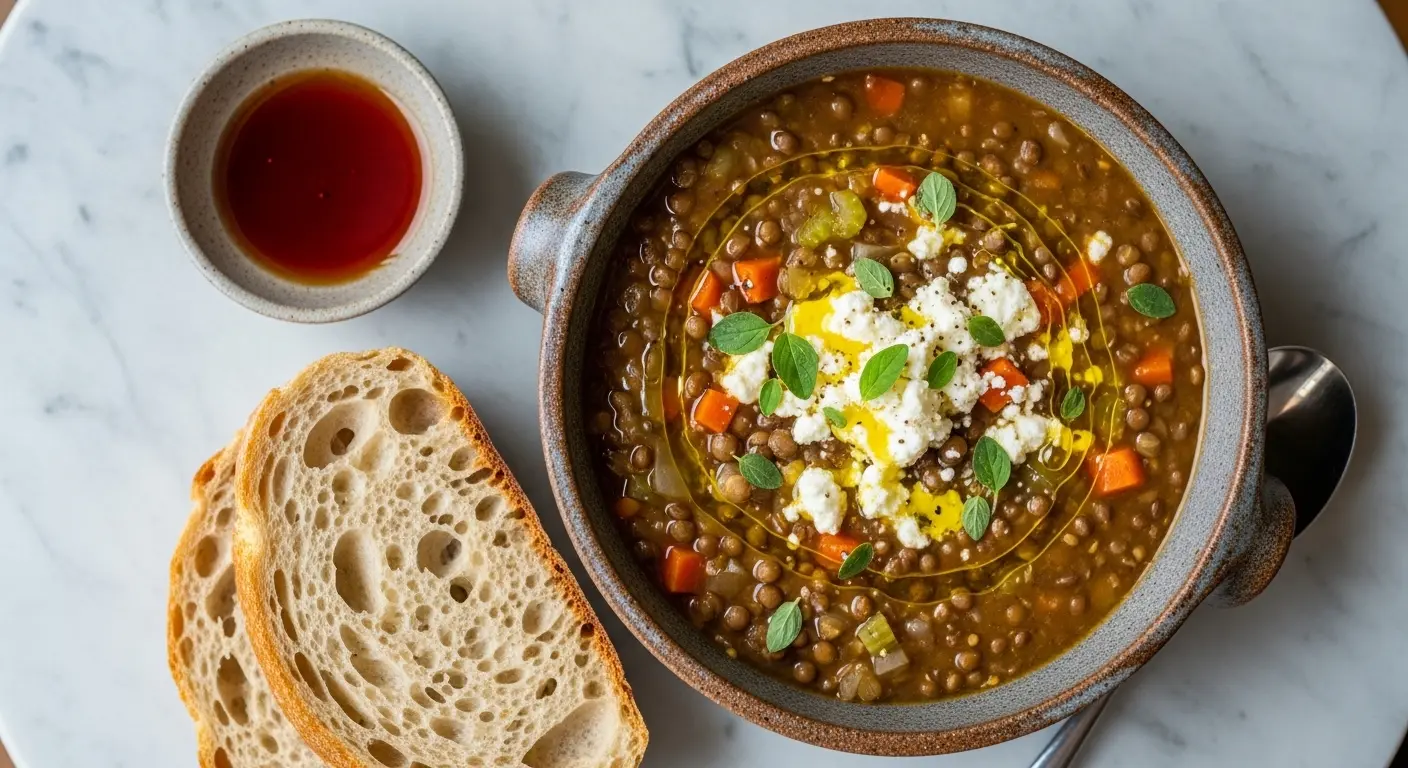
If you have never made a Greek lentil soup recipe before, you are in for one of the most satisfying cooking experiences of your life.
Known in Greece as fakes soupa (pronounced “fah-kehs soo-pah”), this dish has been nourishing families across the Mediterranean for generations.
It is the kind of recipe that requires very little from you in terms of effort, yet gives you back an extraordinary amount in flavor.
Brown lentils are simmered low and slow with onion, carrots, garlic, and a touch of tomato paste until everything becomes thick, creamy, and deeply savory. The real secret? A generous drizzle of red wine vinegar and extra virgin olive oil stirred in at the end. That bright acidic finish is what separates this soup from every other lentil soup you have tried before.
It is vegan, naturally gluten-free, and made almost entirely from pantry staples you probably already have on hand. Whether you need a comforting weeknight dinner or a batch-cook-friendly meal to stock your freezer, this recipe delivers on every count.
You might also enjoy: Mediterranean Lentil Soup

Why You’ll Love This Greek Lentil Soup Recipe
This soup earns a permanent place in your weekly meal rotation for so many reasons.
It is packed with plant-based protein and fiber, which means it will keep you full and satisfied for hours without feeling heavy.
The ingredient list is short, affordable, and mostly pantry-based. You are unlikely to need a special trip to a specialty store.
The cooking method is completely forgiving. Even if you walk away from the pot for a few minutes, this soup is not going to punish you.
Brown lentils are the right choice here because they hold their shape during cooking while still softening into a beautifully thick, stew-like consistency.
The red wine vinegar added at serving time is not optional. That bright splash of acidity transforms the whole bowl, cutting through the earthiness of the lentils and making every bite pop.
It reheats like a dream. In fact, the flavor deepens overnight, making leftovers genuinely something to look forward to.
- Completely vegan and naturally gluten-free with zero substitutions needed
- Ready in under an hour with only about 10-15 minutes of active prep work
- Budget-friendly as brown lentils are among the most affordable protein sources available
- Pantry-friendly since most ingredients are shelf-stable staples
- Freezer-friendly and ideal for batch cooking
- Highly nutritious with lentils offering iron, folate, potassium, and plant-based protein in every bowl
- Deeply flavorful thanks to olive oil, oregano, bay leaves, and that essential red wine vinegar finish
Read Also: Turkish Lentil Soup Recipe
Ingredients
The most iconic version of Greek lentil soup relies on a handful of honest, wholesome ingredients. The quality of your olive oil and the addition of red wine vinegar at the end are what elevate this from simple to spectacular.
- 1 lb (450g) brown or green lentils, picked over for debris and rinsed well
- 3 tablespoons (45ml) extra virgin olive oil, plus more for drizzling at serving
- 1 large yellow onion, diced (about 1.5 cups / 200g)
- 2 medium carrots, peeled and diced (about 1 cup / 130g)
- 2 ribs celery, diced (about ¾ cup / 90g)
- 4 cloves garlic, minced
- 2 tablespoons tomato paste
- 1 can (14 oz / 400g) crushed or diced tomatoes
- 6 cups (1.4 liters) vegetable broth (or water, but broth adds more depth)
- 2 bay leaves
- 1 teaspoon dried oregano
- ½ teaspoon ground cumin (optional but traditional in some regions)
- 1 teaspoon salt, or to taste
- ½ teaspoon freshly ground black pepper
- 2-3 tablespoons red wine vinegar, added at serving (this is non-negotiable)
- Crumbled feta cheese, for serving (optional but highly recommended)
- Crusty bread, for serving
For a more traditional Greek preparation, some cooks prefer to skip the canned tomatoes and use only tomato paste to keep the broth thinner. Both approaches work beautifully depending on your preferred consistency.
This pairs wonderfully with a side of homemade hummus for a full Mediterranean spread.
Kitchen Equipment Needed
Nothing specialized is required here, which is part of what makes this soup so accessible to home cooks at every skill level.
- Large heavy-bottomed pot or Dutch oven (at least 5-6 quarts / 4.7-5.7 liters) – a Dutch oven distributes heat evenly for best results
- Wooden spoon or silicone spatula
- Chef’s knife and cutting board for prepping vegetables
- Measuring cups and spoons
- Fine mesh strainer or colander for rinsing and draining the lentils
- Ladle for serving
- Immersion blender (optional, for partially blending the soup to a creamier consistency without making it fully smooth)
Read Also: Moroccan Lentil Soup Recipe
Recommended Products for This Recipe
These are products I genuinely recommend based on quality and how much of a difference they make in a recipe like this one.
1. Le Creuset Enameled Cast Iron Dutch Oven
A quality Dutch oven transforms simmering soups by distributing heat so evenly that the lentils cook uniformly without scorching the bottom. The enameled interior also means you do not need to worry about tomato acidity affecting the pot surface, and cleanup is simple even after a long simmer.
2. Greek Extra Virgin Olive Oil
A high-quality extra virgin olive oil is not just a cooking fat in this recipe; it is a genuine flavor ingredient. Greek olive oils tend to have a slightly peppery, robust character that complements lentils beautifully, both during cooking and as a finishing drizzle.
3. Authentic Greek Feta Cheese (PDO)
Crumbled feta on top of this soup is one of those finishing touches that takes it from everyday to unforgettable. Look for PDO-certified Greek feta made from sheep’s milk, which has a creamier, more tangy flavor than domestic alternatives.
4. Greek Red Wine Vinegar
The red wine vinegar you add at the end of this recipe is arguably its most important ingredient. A quality Greek red wine vinegar has a more complex, slightly fruity acidity that works exceptionally well with earthy lentils compared to generic supermarket versions.
5. Mueller Austria Immersion Blender
Partially blending about a quarter of the soup before serving gives it that silky, restaurant-quality creaminess without requiring you to transfer anything to a countertop blender. An immersion blender makes this fast, easy, and mess-free.
For another warming, hearty soup option, check out this Carrabba’s Sausage and Lentil Soup recipe.

Step-by-Step Instructions
1. Rinse and Pre-Boil the Lentils
- Place the lentils into a fine mesh strainer and pick through them quickly to remove any small stones or debris that may have slipped through during packaging.
- Rinse the lentils under cold running water, stirring them with your hand until the water runs clear. This removes surface starch and any dusty residue.
- Transfer the rinsed lentils to your large pot and cover with plenty of cold water (at least 2 inches above the lentils).
- Bring to a vigorous boil over high heat, which will take about 5-7 minutes. You will notice some foam rising to the surface. This is a combination of starch and naturally occurring saponins from the lentil skin.
- Once boiling, drain the lentils immediately through your colander and rinse them again under cold water. This step, traditional in many Greek homes, removes any bitterness and makes the finished soup lighter and more digestible.
- Set the par-boiled lentils aside while you prepare the vegetable base.
2. Sauté the Aromatics
- Return your now-empty pot to the stovetop and set the heat to medium.
- Add 3 tablespoons (45ml) of extra virgin olive oil and allow it to heat for about 30 seconds until it shimmers slightly but does not smoke.
- Add the diced onion and the diced celery to the pot. Stir to coat them evenly in the olive oil.
- Cook the onion and celery, stirring occasionally, for about 6-8 minutes. You are looking for them to become translucent and very soft. The onion should look slightly golden at the edges. Avoid rushing this step; slowly softened onions create a much richer base flavor than quickly cooked ones.
- Add the diced carrots to the pot and stir everything together. Cook for another 3-4 minutes until the carrots begin to soften slightly at the edges.
- Add the minced garlic and stir constantly for 1-2 minutes until fragrant. Garlic burns quickly, so keep it moving and do not walk away during this step. The pot should smell absolutely incredible at this point.
3. Add the Tomato Paste and Bloom the Spices
- Push the vegetables slightly to the sides of the pot to create a small open space in the center.
- Add the 2 tablespoons of tomato paste directly to the open space and let it sit against the hot pot surface for about 60 seconds without stirring. This brief dry-cooking of the tomato paste, called “blooming,” deepens and concentrates its flavor and reduces any raw or sharp taste.
- After 60 seconds, stir the tomato paste into the vegetables until everything is evenly coated in the rich red paste.
- Add 1 teaspoon of dried oregano and (if using) ½ teaspoon of ground cumin. Stir these into the vegetable and tomato paste mixture and cook for 30 seconds so the dried herbs can release their oils into the fat.
4. Add the Lentils, Tomatoes, and Broth
- Add the par-boiled and rinsed lentils back into the pot and stir to combine them with the vegetable mixture.
- Pour in the 1 can (14 oz / 400g) of crushed or diced tomatoes and stir everything together.
- Pour in 6 cups (1.4 liters) of vegetable broth. If you prefer a thicker, stew-like result, start with 5 cups (1.2 liters) and add more later as needed.
- Nestle 2 bay leaves into the soup and stir one final time to distribute everything evenly.
- Add 1 teaspoon of salt and ½ teaspoon of black pepper. Remember that you can always add more salt at the end, but you cannot take it away, so start conservatively if you are using a salty broth.
5. Simmer Until the Lentils Are Tender
- Raise the heat to high and bring the soup to a full boil, which will take about 8-10 minutes.
- Once boiling, reduce the heat to low or medium-low to maintain a gentle, steady simmer. Small bubbles should be breaking the surface, but the soup should not be aggressively boiling. A hard boil can cause lentils to break apart unevenly.
- Place the lid on the pot, leaving it slightly ajar by about 1 inch (2.5 cm) to allow steam to escape. This prevents the soup from boiling over while still letting moisture evaporate for a thicker consistency.
- Simmer for 30-40 minutes, stirring every 8-10 minutes to prevent anything from sticking to the bottom of the pot. After about 20 minutes, start tasting a lentil or two. They should be fully tender with no chalky or firm center remaining.
- If the soup looks too thick at any point, add a splash of broth or water and stir. If it looks too thin, simply remove the lid and let it simmer uncovered for the last 10 minutes to thicken up.
- Once the lentils are completely tender, remove and discard the bay leaves.
6. Adjust and Finish the Soup
- Taste the soup and adjust the salt and pepper to your preference.
- If you would like a slightly creamier, thicker texture without making the soup completely smooth, use an immersion blender to briefly pulse about 3-4 times directly in the pot. This will break down some of the lentils and naturally thicken the broth without losing all of that lovely texture.
- Alternatively, you can scoop out about 1 cup (240ml) of soup, blend it in a separate blender or use a potato masher, and then stir it back in.
- Drizzle 2-3 tablespoons (30-45ml) of extra virgin olive oil directly into the pot and stir. This final addition of olive oil creates a silky, glossy finish to the broth.
- Remove from heat. The soup is now ready to serve.
7. Serve and Garnish
- Ladle the hot soup into bowls generously.
- At the table (or in the kitchen for each bowl), drizzle each serving with about 1 teaspoon of red wine vinegar and an additional drizzle of olive oil. This is the defining step of Greek lentil soup, do not skip it.
- Top with crumbled feta cheese if desired. The salty, creamy feta melts slightly into the warm soup and adds an incredible contrast of flavor and texture.
- Serve immediately with crusty bread on the side for dunking.
For another hearty, protein-packed soup to add to your repertoire, try this Red Lentil Soup recipe.
Tips for Success
Small adjustments and a little bit of know-how go a long way in making this soup truly exceptional rather than just good.
- Do the initial boil-and-drain step. This is a traditional Greek technique that removes bitterness and makes the soup easier to digest. Do not skip it; it makes a noticeable difference in the final flavor.
- Sauté the vegetables slowly. Rushing the onion and carrot stage will cost you in flavor. Give them the full 6-8 minutes they need to soften and start to sweeten.
- Bloom the tomato paste. Letting it hit the hot pan before stirring it in reduces its rawness and adds a richer, more concentrated depth of flavor.
- Add the red wine vinegar at serving, not during cooking. Adding it at the end keeps the brightness sharp and fresh rather than cooking it into dullness.
- Adjust liquid as you go. Lentils absorb liquid as the soup sits, both during cooking and after refrigeration. Keep some extra broth or water on hand to loosen the consistency before serving if needed.
- Let it rest before serving. If time allows, letting the soup sit for 15-20 minutes off the heat allows the flavors to settle and deepen significantly.
- Season generously. Lentils are naturally earthy and can absorb a lot of salt. Taste carefully during the final 10 minutes of cooking and do not be shy about seasoning.
You might also enjoy: Lentil Soup Recipe
Serving Suggestions
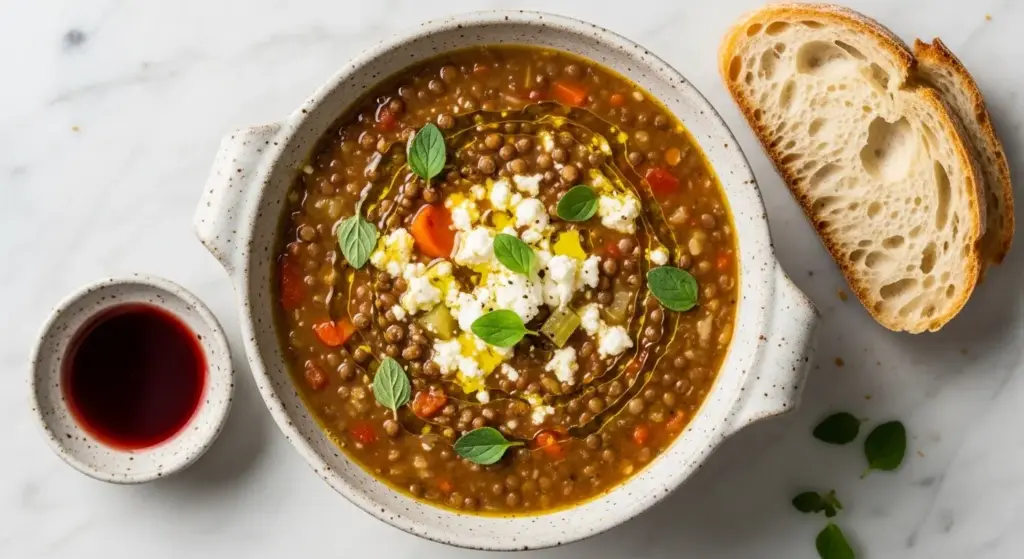
Greek lentil soup is a complete meal on its own, but it truly shines when it is part of a broader Mediterranean spread.
A simple crusty sourdough or rustic white bread is the most traditional pairing, perfect for mopping up the rich, olive oil-glossed broth in the bowl.
For a full Greek-inspired table, pair this soup with some of the following:
- Tzatziki Sauce alongside warm pita bread for dipping alongside the soup
- A simple Greek salad made with tomatoes, cucumber, Kalamata olives, red onion, and feta drizzled with olive oil
- Crusty artisan bread or flatbread for scooping and soaking up every last drop
- Classic Hummus served as a starter with crudites or pita chips
- Cured anchovies or sardines alongside the soup, which is the most traditional Greek accompaniment and adds a beautifully briny contrast
- A glass of dry red wine, which echoes the flavors of the red wine vinegar used in the soup
- A light green salad with lemon vinaigrette for a fresh contrast to the warm soup
For a lighter soup option to alternate with this one, try this Spinach Soup.
Variations to Try
The classic version of this soup is beloved for its simplicity, but there is plenty of room to personalize it once you have made the base recipe a couple of times.
Greek lentil soup is wonderfully adaptable to different ingredients and dietary needs without losing its essential character.
- Green lentil version: Green lentils work just as well as brown and hold their shape slightly more firmly, making the soup a little chunkier and more textured.
- Add potatoes: Dice one or two medium potatoes and add them along with the lentils. They absorb the broth beautifully and make the soup even more filling and hearty.
- Spinach or kale: Stir in 2-3 large handfuls of fresh baby spinach or chopped kale during the last 5 minutes of cooking. This adds color, nutrition, and a lovely slightly bitter note.
- Add a Parmesan rind: If you are not keeping this strictly vegan, dropping a Parmesan rind into the broth during simmering adds an incredible savory depth (remove it before serving).
- Make it smoky: Add ½ teaspoon of smoked paprika along with the oregano to give the soup a subtle smoky warmth.
- Slow cooker version: Sauté the aromatics as instructed, then transfer everything to a slow cooker and cook on low for 6-8 hours or high for 3-4 hours. Finish with vinegar and olive oil as usual.
- Instant Pot version: Use the sauté function for the aromatics, add everything else, and pressure cook on high for 15 minutes with a natural release. Results are excellent.
- Top with crispy fried onions or caramelized shallots for a luxurious textural contrast on each bowl.
Read Also: Vegetable Soup Recipe
Storage and Reheating
This soup is an excellent candidate for meal prepping because the flavors genuinely improve over the next 24-48 hours as everything melds together.
Keep in mind that lentils continue to absorb liquid as the soup cools and sits in the refrigerator, so the texture will become noticeably thicker after storage.
- Refrigerator: Store leftover soup in an airtight container for up to 4-5 days. Allow it to cool completely at room temperature before sealing and refrigerating.
- Freezer: Greek lentil soup freezes exceptionally well. Portion it into freezer-safe containers or zip-lock bags and freeze for up to 3 months. Leave about 1 inch (2.5 cm) of headspace in each container to allow for expansion.
- Thawing: Thaw frozen soup overnight in the refrigerator for best results. You can also thaw it directly on the stovetop over medium-low heat with a splash of water or broth added.
- Reheating on the stovetop: Transfer the soup to a saucepan, add a splash of water or vegetable broth to loosen the consistency, and warm over medium-low heat, stirring occasionally, until heated through.
- Reheating in the microwave: Place individual portions in a microwave-safe bowl, loosely covered, and heat in 90-second intervals, stirring between each one, until hot.
- Finishing touch after reheating: Add a fresh drizzle of extra virgin olive oil and a small splash of red wine vinegar after reheating. This restores the bright, fresh flavor that the soup had when first served.
For another freezer-friendly and comforting soup option, try this Black Bean Soup.
Nutritional Facts
The following values are approximate per serving, based on this recipe making 6 servings, without toppings such as feta or bread.
| Nutrient | Per Serving |
|---|---|
| Calories | ~320 kcal |
| Protein | ~18g |
| Total Carbohydrates | ~44g |
| Dietary Fiber | ~16g |
| Total Fat | ~9g |
| Saturated Fat | ~1.5g |
| Sodium | ~480mg |
| Potassium | ~750mg |
| Iron | ~6mg (approx. 33% DV) |
| Folate | ~180mcg (approx. 45% DV) |
Nutritional values will vary based on specific brands of broth and tomatoes used, and whether olive oil is added as a drizzle at serving. Feta cheese and bread are not included in these figures.
For a comparison soup with a similar nutritional profile, check out this Split Pea Soup recipe.
Health Benefits of Key Ingredients
This is not just a delicious soup; it is genuinely one of the most nutritious meals you can put on your table with minimal effort.
Every major ingredient in this recipe contributes something meaningful to your health and well-being.
- Brown Lentils: Lentils are among the best plant-based sources of protein and fiber available. They support healthy digestion, help stabilize blood sugar levels, and deliver significant amounts of iron, folate, and B vitamins in every serving.
- Extra Virgin Olive Oil: The foundation of the Mediterranean diet, extra virgin olive oil is rich in heart-healthy monounsaturated fats and powerful anti-inflammatory polyphenols. Using a high-quality olive oil here is not just a flavor decision; it is a health one too.
- Garlic: Garlic contains allicin, a sulfur compound with well-documented antimicrobial and immune-supporting properties. It also contributes to cardiovascular health when consumed regularly.
- Carrots: A natural source of beta-carotene, which the body converts to vitamin A, carrots support eye health, immune function, and skin health. They also add a gentle sweetness that balances the earthiness of the lentils.
- Tomatoes: Whether from paste or crushed canned tomatoes, tomatoes contribute lycopene, a potent antioxidant associated with reduced risk of certain chronic diseases. Cooking tomatoes actually increases the bioavailability of lycopene.
- Oregano: Beyond its flavor contribution, dried oregano is a surprisingly rich source of antioxidants and has traditionally been used in Greek folk medicine for its antibacterial properties.
- Red Wine Vinegar: While used in small amounts, red wine vinegar has been shown to support blood sugar regulation, particularly when consumed alongside carbohydrate-rich foods like lentils.
For another nutrient-dense, Mediterranean-inspired bowl of goodness, explore this Minestrone Soup.
Frequently Asked Questions
1. Can I use red lentils instead of brown or green lentils for this Greek lentil soup?
Red lentils will work in a pinch, but they will produce a very different result. Red lentils break down almost completely during cooking, resulting in a thick, smooth, pureed texture rather than the chunky, hearty consistency that defines traditional Greek lentil soup. If you prefer that creamier style, go ahead and use them. However, for the classic fakes soupa experience, stick with green or brown lentils that hold their shape.
2. Do I need to soak the lentils before cooking?
Soaking is optional but beneficial. Soaking lentils for 2-3 hours before cooking shortens the cooking time and makes the final soup easier to digest. However, the pre-boil-and-drain step described in this recipe achieves a similar result in just a few minutes and is the more traditional Greek approach. If you are pressed for time, you can skip both the soak and the pre-boil, though you may need to add an additional 10-15 minutes of simmering time.
3. Why is red wine vinegar added at the end instead of during cooking?
Adding red wine vinegar at the very end (or directly at the table into each bowl) preserves its bright, sharp acidity. When vinegar is cooked for an extended time, much of that sharpness dissipates and the flavor mellows significantly. The whole point of the vinegar in this recipe is to create a lively, fresh contrast to the earthy, rich lentils, so adding it at the end is crucial for achieving the intended flavor balance.
4. Can I make this soup in an Instant Pot or slow cooker?
Yes, absolutely. For the Instant Pot, use the sauté function to cook the aromatics and bloom the tomato paste as described, then add everything else and pressure cook on high for 15 minutes with a 10-minute natural release. For the slow cooker, sauté the aromatics in a skillet first, transfer everything to the slow cooker, and cook on low for 6-8 hours or high for 3-4 hours. Finish with olive oil and red wine vinegar before serving.
5. Is this Greek lentil soup freezer-friendly?
It is one of the best soups to freeze. Portion the cooled soup into freezer-safe containers or heavy-duty zip-lock bags and freeze for up to 3 months. Lentil soups actually freeze better than many other soups because the lentils do not become mushy or waterlogged upon thawing. Thaw overnight in the refrigerator and reheat gently on the stovetop, adding a splash of water or broth to restore the desired consistency.
Read Also: Cabbage Soup Recipe

Greek Lentil Soup (Fakes Soupa)

Equipment
- Large heavy-bottomed pot or Dutch oven - at least 5-6 quarts / 4.7-5.7 liters
- Wooden spoon or silicone spatula
- Chef’s knife
- Cutting board
- Measuring cups and spoons
- Fine-mesh strainer or colander - for rinsing and draining lentils
- Ladle
- Immersion Blender - optional, for partially blending soup
Ingredients
- 1 lb brown or green lentils - 450g, picked over for debris and rinsed well
- 3 tablespoons extra virgin olive oil - 45ml, plus more for drizzling at serving
- 1 large yellow onion - about 1.5 cups or 200g, diced
- 2 medium carrots - about 1 cup or 130g, peeled and diced
- 2 ribs celery - about ¾ cup or 90g, diced
- 4 cloves garlic - minced
- 2 tablespoons tomato paste
- 1 can crushed or diced tomatoes - 14 oz or 400g
- 6 cups vegetable broth - 1.4 liters, or water but broth adds more depth
- 2 bay leaves
- 1 teaspoon dried oregano
- ½ teaspoon ground cumin - optional but traditional in some regions
- 1 teaspoon salt - or to taste
- ½ teaspoon black pepper - freshly ground
- 2-3 tablespoons red wine vinegar - added at serving, non-negotiable
- crumbled feta cheese - optional but highly recommended, for serving
- crusty bread - for serving
Instructions
- Rinse and pre-boil lentils: Pick over lentils for debris, rinse under cold water, then boil in plenty of water for 5-7 minutes. Drain and rinse again to remove bitterness.
- Sauté aromatics: Heat olive oil in the pot over medium heat. Cook onion and celery for 6-8 minutes until soft and translucent. Add carrots and cook 3-4 minutes. Stir in garlic for 1-2 minutes until fragrant.
- Bloom tomato paste and spices: Push vegetables aside, add tomato paste to the center and cook for 60 seconds. Stir in oregano and cumin (if using) and cook 30 seconds more.
- Add lentils, tomatoes, and broth: Return par-boiled lentils to the pot. Add crushed tomatoes, vegetable broth, bay leaves, salt, and pepper. Stir to combine.
- Simmer until tender: Bring to a boil, then reduce to a gentle simmer. Cook for 30-40 minutes with lid slightly ajar, stirring every 8-10 minutes, until lentils are tender.
- Adjust and finish: Remove bay leaves. Taste and adjust seasoning. For creamier texture, pulse with an immersion blender 3-4 times. Stir in 2-3 tablespoons of olive oil.
- Serve and garnish: Ladle into bowls and drizzle each serving with red wine vinegar and extra olive oil. Top with crumbled feta and serve with crusty bread.
Notes
- Don’t skip the initial boil-and-drain step: This traditional Greek technique removes bitterness and improves digestibility.
- Sauté vegetables slowly: Give onions the full 6-8 minutes to soften and sweeten for a richer flavor base.
- Bloom the tomato paste: Letting it hit the hot pan before stirring reduces rawness and adds depth.
- Add vinegar at serving, not during cooking: This keeps the bright acidity fresh and sharp rather than dulling it.
- Adjust liquid as needed: Lentils absorb liquid during cooking and storage; keep extra broth on hand to adjust consistency.
- Let it rest: Allowing the soup to sit for 15-20 minutes off heat deepens the flavor significantly.
- Make it your own: Add potatoes, spinach, or kale for variation, or use smoked paprika for a smoky twist.
- Storage tip: This soup freezes beautifully for up to 3 months. Add a fresh drizzle of olive oil and vinegar when reheating.
- Feta is optional but recommended: The salty, creamy contrast with the tangy broth is a classic Greek combination.
Final Thoughts
Greek lentil soup (fakes soupa) is one of those rare recipes that manages to be humble and extraordinary at the same time.
It asks almost nothing of you in terms of time, skill, or budget, and yet it returns something genuinely special: a bowl of soup that is nourishing, warming, and deeply satisfying on every level.
The combination of earthy lentils, gently caramelized vegetables, and that final drizzle of peppery olive oil and bright red wine vinegar is not just food. It is a tradition that has sustained Greek families for centuries, and for good reason.
If this is your first time making fakes, I hope it becomes a beloved regular in your kitchen just as it has in so many others.
Give this Greek lentil soup recipe a try this week and let me know how it turns out in the comments below. Did you add feta? Try it with bread? I would love to hear how you made it your own. And if you loved it, please share it with someone who needs a little warmth in their bowl today.
Recommended:
- Chicken Tortilla Soup
- Chicken Soup
- Baklava
- Ham and Bean Soup
- Mulligatawny Soup
- Kale Soup
- Roasted Carrot Soup
- Vegetarian Split Pea Soup
- Italian Penicillin Soup
- Corn Soup