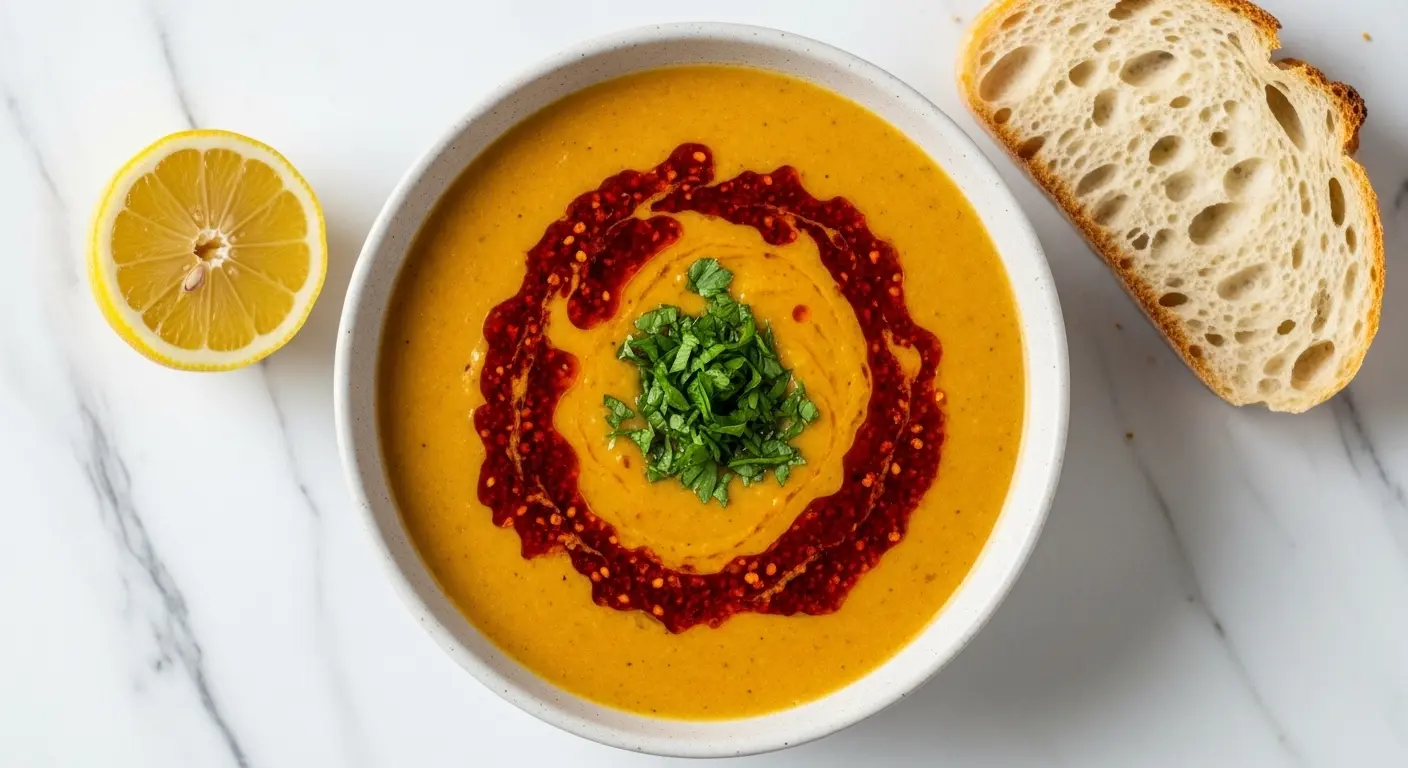
If you have never made a Turkish Lentil Soup Recipe at home before, you are in for a truly wonderful surprise.
Known in Turkey as Mercimek Çorbası, this silky, velvety red lentil soup is one of the most beloved dishes in Turkish cuisine, and for good reason.
It comes together from just a handful of humble pantry ingredients, yet delivers a depth of flavor that feels anything but simple.
The secret is in the technique. Sautéing onion and tomato paste before adding the lentils builds a savory, slightly sweet base that forms the backbone of the entire soup.
Then, once the lentils have cooked down until tender and blended into a smooth, creamy texture, a drizzle of pul biber-infused olive oil is spooned over the top, transforming an already delicious bowl into something truly extraordinary.
This soup is naturally vegan (when made with vegetable broth), gluten-free, and packed with plant-based protein and fiber. It is the kind of meal that warms you from the inside out.
You might also enjoy: Red Lentil Soup Recipe

Why You’ll Love This Turkish Lentil Soup Recipe
This is the kind of soup that earns a permanent spot in your weekly meal rotation.
It comes together in under 45 minutes from start to finish, which makes it perfect for busy weeknights when you want something nourishing without a lot of effort.
The flavor is rich and complex, with warm cumin, a touch of tomato paste, and the signature smoky heat of Aleppo pepper oil on top.
Every ingredient in this recipe has a clear purpose, and the result is a bowl that feels both deeply comforting and surprisingly elegant.
- Quick and easy: Ready in about 40 to 45 minutes with minimal prep work
- Naturally vegan and gluten-free: Made with simple, wholesome plant-based ingredients
- Incredibly creamy without any cream: Red lentils break down and blend into a silky texture all on their own
- Budget-friendly: Lentils are one of the most affordable and nutritious ingredients you can buy
- Meal-prep friendly: This soup keeps beautifully in the fridge for up to 5 days and freezes well for up to 3 months
- Deeply satisfying: High in protein and fiber, it keeps you full and energized for hours
Read Also: Mediterranean Lentil Soup Recipe
Ingredients
This recipe uses a classic combination of red lentils, aromatic vegetables, warm spices, and a finishing drizzle of flavored oil. These are exactly the ingredients you would find in a traditional Turkish home kitchen.
- 1 ½ cups (300g) red lentils, rinsed well under cold water until water runs nearly clear
- 2 tablespoons extra virgin olive oil (for sautéing)
- 1 large yellow onion, diced
- 2 medium carrots, peeled and diced
- 1 medium potato (about 200g / 7 oz), peeled and diced (Russet or Yukon Gold work well)
- 3 garlic cloves, minced
- 2 tablespoons tomato paste
- 1 teaspoon ground cumin
- 1 teaspoon sweet paprika
- ½ teaspoon dried mint (this is a classic Turkish touch that sets it apart from other lentil soups)
- ½ teaspoon ground black pepper
- ¼ teaspoon cayenne pepper (optional, for heat)
- 1 ½ teaspoons salt, or to taste
- 6 cups (1.4 liters) vegetable broth or chicken broth
- 2 tablespoons fresh lemon juice (for finishing)
For the Aleppo Pepper Oil (Optional but Highly Recommended):
- 3 tablespoons extra virgin olive oil
- 1 ½ teaspoons Aleppo pepper flakes (pul biber) (substitute with sweet paprika if unavailable)
For Serving:
- Fresh lemon wedges
- Fresh flat-leaf parsley, chopped
- Crusty bread or warm pita bread
For another wonderful lentil variation, check out this Moroccan Lentil Soup Recipe.
Kitchen Equipment Needed
You do not need any specialized equipment for this recipe, though a few key tools will make the process much smoother.
- Large heavy-bottomed soup pot or Dutch oven (at least 5 to 6 quarts)
- Immersion blender (or a regular stand blender — see notes)
- Cutting board and sharp chef’s knife
- Wooden spoon or silicone spatula for stirring
- Measuring cups and measuring spoons
- Small saucepan (for making the Aleppo pepper oil)
- Ladle for serving
Another great soup to make with similar equipment: Greek Lentil Soup
Recommended Products for This Recipe
These are products that genuinely make a difference in the quality and ease of making this soup. Each one is recommended based on performance and value.
1. Red Lentils (Split Red Lentils)
Red lentils are the star of this recipe, and using a good quality bag makes a noticeable difference in flavor and texture. Split red lentils cook faster than whole lentils and break down beautifully, giving the soup its signature velvety consistency. Sourcing a fresh, high-quality bag ensures the lentils cook evenly and absorb all the spices properly.
2. Aleppo Pepper Flakes (Pul Biber)
Aleppo pepper, also called pul biber, is the signature spice that makes the finishing oil so special in Turkish lentil soup. It has a mild, slightly fruity heat that is completely different from regular chili flakes. Using authentic pul biber will elevate your soup from very good to restaurant-quality.
3. Immersion Blender
An immersion blender is hands-down the most convenient tool for blending this soup. Rather than transferring hot liquid to a stand blender in batches, you can blend directly in the pot in about 60 seconds. A good immersion blender with a comfortable grip and powerful motor makes this step effortless and safe.
4. Heavy-Bottomed Enameled Soup Pot
A heavy-bottomed pot distributes heat evenly, preventing the lentils and vegetables from scorching at the bottom while they simmer. An enameled interior is especially easy to clean after cooking. This type of pot is a long-term kitchen investment that improves practically every soup and stew you make.
Read Also: Lentil Soup Recipe

Step-by-Step Instructions
1. Rinse the Lentils
- Place the red lentils in a fine mesh strainer or sieve over your sink.
- Rinse them under cold running water, using your hand to gently swish them around.
- Continue rinsing until the water that drains off runs nearly clear — this removes excess starch and any debris.
- Set the rinsed lentils aside in the strainer to drain while you prepare the vegetables. This step is important because it prevents the soup from becoming overly starchy or foamy during cooking.
2. Prep the Vegetables
- Peel and dice the yellow onion into roughly ½-inch (1.25 cm) pieces.
- Peel the carrots and cut them into small dice, about ½ inch (1.25 cm) — smaller pieces cook more quickly and evenly.
- Peel the potato and cut it into similar-sized pieces. The potato adds body and a subtle creaminess to the final blended soup.
- Peel and mince the garlic cloves finely. Set all prepped vegetables aside before you heat the pot.
3. Sauté the Aromatics
- Place your large heavy-bottomed pot over medium heat and add 2 tablespoons of olive oil.
- Once the oil is shimmering and hot (about 1 to 2 minutes), add the diced onion.
- Stir the onion occasionally and cook for about 5 to 6 minutes, until it softens and turns translucent. You want the edges of the onion to just begin to turn golden — this caramelization adds sweetness and depth.
- Add the diced carrots to the pot. Stir and cook for another 3 to 4 minutes until the carrots begin to soften slightly.
- Add the diced potato and stir everything together. Cook for another 2 minutes.
- Add the minced garlic and stir constantly for about 30 seconds until fragrant. Be careful not to let the garlic brown, as burnt garlic will make the soup taste bitter.
4. Add the Tomato Paste and Spices
- Push the vegetables to one side of the pot slightly and add the 2 tablespoons of tomato paste directly to the hot surface of the pan.
- Let the tomato paste cook and caramelize for about 1 to 2 minutes, stirring it into the vegetables as it darkens slightly. This step is crucial — cooking the tomato paste in the oil transforms its raw, acidic flavor into something rich, sweet, and savory.
- Add the ground cumin, sweet paprika, dried mint, black pepper, and cayenne pepper (if using) to the pot.
- Stir everything together for about 30 seconds so the spices bloom in the oil and coat all the vegetables evenly. The kitchen should smell incredible at this point.
5. Add the Lentils and Broth
- Add the rinsed, drained red lentils to the pot and stir them into the vegetable and spice mixture.
- Pour in all 6 cups (1.4 liters) of vegetable or chicken broth.
- Add 1 teaspoon of salt and stir to combine everything thoroughly.
- Increase the heat to medium-high and bring the soup to a full boil, stirring occasionally.
- Once boiling, reduce the heat to medium-low and place a lid on the pot, leaving it slightly ajar to allow some steam to escape.
6. Simmer Until Lentils Are Tender
- Allow the soup to simmer for 20 to 25 minutes, stirring every 5 to 7 minutes to make sure nothing is sticking to the bottom of the pot.
- The lentils are ready when they are completely soft and have broken down almost entirely — you should be able to mash one easily between your fingers with no resistance.
- The carrots and potatoes should also be completely tender and easy to pierce with a fork.
- If the soup looks too thick before blending, add an additional ½ to 1 cup of broth or water and stir it in.
7. Blend the Soup
- Remove the pot from the heat and allow it to cool for 3 to 5 minutes before blending. This is a safety step — extremely hot liquid can splatter dangerously.
- If using an immersion blender: insert the blender head fully into the soup and blend in circular motions until completely smooth and velvety, about 60 to 90 seconds. Make sure to move the blender around the entire pot so there are no chunks remaining.
- If using a stand blender: transfer the soup in batches (never filling more than half full), remove the center cap of the blender lid and cover it with a folded kitchen towel to allow steam to vent, and blend until smooth. Return the blended soup to the pot.
8. Adjust Seasoning and Add Lemon Juice
- Return the blended soup to the heat over medium-low heat if it has cooled too much.
- Taste the soup carefully and add the remaining ½ teaspoon of salt (or more to taste), adjusting as needed.
- Stir in the 2 tablespoons of fresh lemon juice. The lemon brightens all the flavors and is considered essential in authentic Turkish lentil soup — do not skip it.
- If the soup is thicker than you prefer after blending, stir in a splash of warm broth or water to loosen it to your desired consistency.
9. Make the Aleppo Pepper Oil
- While the soup is finishing, place a small saucepan over low heat.
- Add the 3 tablespoons of olive oil and let it warm gently for about 1 minute — you want it warm, not smoking hot.
- Add the Aleppo pepper flakes (pul biber) to the warm oil and stir them in immediately.
- Let the pepper flakes infuse into the oil for 30 to 60 seconds, stirring gently. The oil will turn a beautiful deep red color. Remove from heat immediately — you do not want the pepper to burn.
10. Serve
- Ladle the hot soup into bowls generously.
- Drizzle a spoonful of the warm Aleppo pepper oil over each bowl.
- Sprinkle with freshly chopped flat-leaf parsley.
- Serve with lemon wedges on the side for squeezing at the table.
- Accompany with warm, crusty bread or toasted pita for dipping.
This technique of making a bright, flavorful infused oil also works beautifully in a Mulligatawny Soup.
Tips for Success
A few small adjustments can take your soup from good to genuinely outstanding. Keep these points in mind each time you make it.
- Rinse the lentils thoroughly: Do not skip rinsing the red lentils under cold water until the water runs clear. Removing the surface starch prevents the soup from becoming gluey and ensures a clean, smooth finish after blending.
- Cook the tomato paste before adding liquid: Letting the tomato paste fry in the oil for 1 to 2 minutes before adding broth removes any raw, acidic taste and deepens the overall flavor of the soup significantly.
- Bloom the spices in the oil: Adding the dried spices to the hot oil along with the tomato paste (rather than directly into the broth) releases their essential oils and produces a much more aromatic, flavorful result.
- Don’t skip the dried mint: Dried mint is one of the defining flavors of Turkish lentil soup and gives it a subtle, cooling note that balances the warmth of the cumin and paprika. Even a small amount makes a noticeable difference.
- Adjust thickness after blending: Red lentils absorb a lot of liquid as they cook. If your soup is thicker than you like after blending, simply stir in warm broth or water a little at a time until it reaches the consistency you prefer.
- Use fresh lemon juice: Bottled lemon juice works in a pinch, but fresh lemon juice has a brighter, more vibrant flavor that truly lifts the whole soup. It is worth using fresh here.
- Make the Aleppo pepper oil: This finishing step takes only 2 minutes and elevates the soup enormously. If you cannot find Aleppo pepper, sweet paprika is a reasonable substitute.
For more tips on making deeply flavorful soups, you might enjoy this Carrabba’s Sausage and Lentil Soup Recipe.
Serving Suggestions
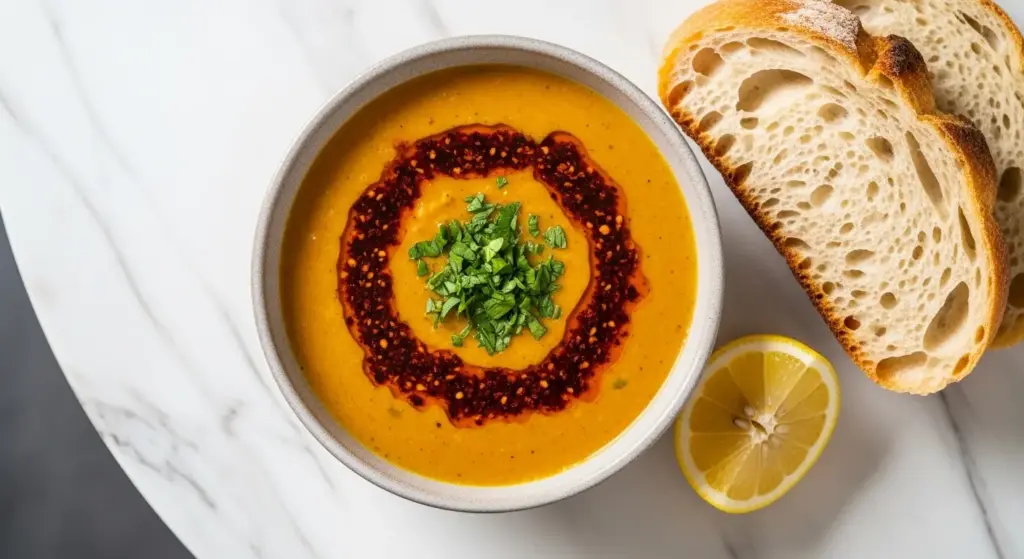
Turkish lentil soup is traditionally served as an appetizer before the main meal in Turkey, but it is hearty enough to serve as a complete meal on its own.
The classic accompaniments are simple and let the soup shine: lemon wedges for squeezing at the table, a drizzle of pul biber oil, and a basket of good bread for dipping. Building a spread around it is a beautiful way to create a fuller Turkish-inspired meal.
- A side of Tzatziki Sauce or Greek yogurt alongside for a cooling contrast
- Warm pita bread, Turkish flatbread, or crusty sourdough for dipping
- A simple cucumber and tomato salad dressed with olive oil and fresh herbs
- Hummus and olives on the side for a mezze-style spread
- Croutons sprinkled on top for added texture
- A green salad with a bright lemon and olive oil dressing
- Pickled vegetables (turşu) on the side, as served in many Turkish restaurants
Variations to Try
Once you have made the classic version, there are plenty of ways to adjust this soup to your taste or to what you have on hand.
- Add a potato: Many traditional Turkish recipes include a peeled, diced potato simmered with the lentils. It adds body and extra creaminess to the blended soup. This recipe already includes it, but you can omit it for a lighter result.
- Spicy version: Increase the cayenne pepper or add a whole dried red chili to the pot while simmering for a bolder, spicier flavor.
- Add spinach or kale: Stir a large handful of fresh spinach or chopped kale into the blended soup and heat through for 2 to 3 minutes for added nutrients and color.
- Ezogelin-style: Add a handful of short-grain rice and a tablespoon of bulgur wheat along with the lentils for a heartier, more substantial version called Ezogelin soup.
- Lemon and herb-forward version: Double the lemon juice and finish with a generous amount of fresh dill and parsley for a brighter, more herbaceous flavor profile.
- Chicken broth base: Use chicken broth instead of vegetable broth for a slightly richer, more savory flavor. This also makes the soup non-vegan but adds a lovely depth.
- Tomato-forward version: Add an extra tablespoon of tomato paste and a peeled, diced tomato along with the vegetables for a deeper color and a more pronounced tomato flavor.
For yet another take on warming lentil soup, try this Chicken Tortilla Soup Recipe.
Storage and Reheating
Turkish lentil soup is an excellent make-ahead meal that keeps very well and actually tastes even better the next day as the flavors continue to develop.
- Refrigerator: Allow the soup to cool completely to room temperature before transferring it to an airtight container. It will keep in the fridge for up to 5 days. Store the Aleppo pepper oil separately in a small jar and re-drizzle when serving.
- Freezer: This soup freezes beautifully. Pour cooled soup into freezer-safe containers or heavy-duty zip-top bags, leaving about 1 inch of space at the top for expansion. Freeze for up to 3 months.
- To reheat from the fridge: Pour the soup into a small saucepan over medium-low heat. Add a splash of warm broth or water and stir well, as the soup will have thickened considerably overnight. Heat until warmed through, about 5 to 7 minutes. Taste and re-season with salt and lemon juice if needed.
- To reheat from frozen: Thaw the soup overnight in the refrigerator and then reheat as above. Alternatively, you can reheat directly from frozen in a pot over low heat, stirring frequently and adding liquid as needed.
You might also enjoy freezing batches of this Spinach Soup Recipe alongside your Turkish lentil soup for a full meal prep rotation.
Nutritional Facts
The following values are approximate per serving, based on 6 servings from this recipe (using vegetable broth and without the optional Aleppo pepper oil):
| Nutrient | Amount Per Serving |
|---|---|
| Calories | 230 kcal |
| Carbohydrates | 36g |
| Protein | 12g |
| Fat | 5g |
| Saturated Fat | 0.7g |
| Fiber | 13g |
| Sugar | 4g |
| Sodium | 580mg |
| Potassium | 680mg |
| Vitamin A | 3,200 IU |
| Vitamin C | 14mg |
| Iron | 4mg |
| Calcium | 45mg |
Nutritional values are estimates and may vary based on specific ingredients and brands used.
Read Also: Vegetarian Split Pea Soup Recipe
Health Benefits of Key Ingredients
This Turkish lentil soup is not just delicious — it is genuinely one of the most nutritious bowls you can make.
Each ingredient contributes something meaningful to the overall nutritional profile, making this soup a smart choice for maintaining a balanced, healthy diet.
- Red lentils are an exceptional source of plant-based protein, providing about 9 grams per cooked half-cup serving. They are also packed with soluble fiber, which supports healthy digestion, helps regulate blood sugar levels, and promotes a sustained feeling of fullness.
- Carrots are rich in beta-carotene, the precursor to vitamin A, which supports eye health, immune function, and skin health. The carotenoids in carrots are fat-soluble, meaning the olive oil in this recipe actually helps your body absorb them more efficiently.
- Garlic contains allicin, a sulfur compound with well-documented anti-inflammatory and immune-boosting properties. It has also been studied for its potential to support cardiovascular health and lower blood pressure.
- Olive oil is a central component of the Mediterranean diet and is rich in heart-healthy monounsaturated fatty acids. It also contains powerful antioxidants, including vitamin E and oleocanthal, which has natural anti-inflammatory effects.
- Cumin has been used for centuries in traditional medicine and is a good source of iron. It also supports healthy digestion and contains compounds with potential antioxidant properties.
- Tomato paste is a concentrated source of lycopene, a powerful antioxidant linked to a reduced risk of certain chronic diseases. Interestingly, cooking tomatoes increases the bioavailability of lycopene significantly.
- Lemon juice provides a bright dose of vitamin C, which enhances the absorption of the non-heme iron found in the lentils — making the combination of lentils and lemon juice especially beneficial from a nutritional standpoint.
This Kale Soup Recipe is another nutrient-packed bowl you might want to explore.
Frequently Asked Questions
1. Can I make Turkish lentil soup without an immersion blender?
Yes, absolutely. If you do not have an immersion blender, allow the soup to cool slightly — about 5 to 10 minutes — before carefully transferring it in batches to a stand blender. Never fill the blender more than halfway with hot liquid, and always remove the center cap from the lid and cover it with a folded kitchen towel to allow steam to escape safely. Blend until smooth, then return the soup to the pot. You can also choose to leave the soup partially unblended if you prefer a more textured, rustic result.
2. What type of lentils are used in Turkish lentil soup?
Traditional Mercimek Çorbası is made exclusively with red lentils (also called split red lentils or kırmızı mercimek). Red lentils are a split variety of lentils that cook quickly and break down into a smooth, creamy texture when blended, which is the hallmark of this soup. Do not substitute green or brown lentils, as they hold their shape better during cooking and will not produce the same silky consistency.
3. Is Turkish lentil soup vegan?
This recipe is fully vegan when made with vegetable broth, which is how it is most commonly prepared in Turkey. All of the other ingredients — red lentils, olive oil, vegetables, spices, tomato paste, and lemon juice — are plant-based. If you use chicken broth instead, the soup would not be vegan, but it would still be gluten-free.
4. Why does my soup taste bland?
The two most common reasons for a bland Turkish lentil soup are under-salting and not enough lemon juice. Both are easy fixes. Taste the soup after blending, add salt a little at a time, then stir in a generous squeeze of fresh lemon juice. The lemon does not make the soup taste sour — it amplifies all the other flavors and gives the soup its characteristic brightness. Also make sure you did not skip the step of cooking the tomato paste and spices in the oil before adding the broth.
5. Can I make Turkish lentil soup in advance?
Yes — and many people find it tastes even better the next day, after the flavors have had more time to meld together. Make the soup completely, allow it to cool to room temperature, and store it in an airtight container in the fridge for up to 5 days. When reheating, add a splash of broth or water to thin it out, as the soup thickens noticeably as it cools. Reheat gently over medium-low heat, taste, and re-season with salt and lemon juice as needed before serving.
For more great soup inspiration, try this Vegetable Soup Recipe.

Turkish Lentil Soup (Mercimek Çorbası)

Equipment
- Large heavy-bottomed soup pot or Dutch oven - 5 to 6 quart capacity
- Immersion Blender - or regular stand blender
- Cutting board and sharp chef’s knife
- Wooden spoon or silicone spatula
- Measuring cups and measuring spoons
- Small saucepan - for making the Aleppo pepper oil
- Ladle - for serving
- Fine-mesh strainer or sieve - for rinsing lentils
Ingredients
- 1 ½ cups red lentils - 300g, rinsed well under cold water until water runs nearly clear
- 2 tablespoons extra virgin olive oil - for sautéing
- 1 large yellow onion - diced
- 2 medium carrots - peeled and diced
- 1 medium potato - about 200g / 7 oz, peeled and diced (Russet or Yukon Gold)
- 3 garlic cloves - minced
- 2 tablespoons tomato paste
- 1 teaspoon ground cumin
- 1 teaspoon sweet paprika
- ½ teaspoon dried mint
- ½ teaspoon ground black pepper
- ¼ teaspoon cayenne pepper - optional, for heat
- 1 ½ teaspoons salt - or to taste
- 6 cups vegetable broth or chicken broth - 1.4 liters
- 2 tablespoons fresh lemon juice - for finishing
For the Aleppo Pepper Oil (Optional but Highly Recommended)
- 3 tablespoons extra virgin olive oil
- 1 ½ teaspoons Aleppo pepper flakes (pul biber) - substitute with sweet paprika if unavailable
For Serving
- Fresh lemon wedges
- Fresh flat-leaf parsley - chopped
- Crusty bread or warm pita bread
Instructions
- Rinse red lentils in a fine mesh strainer under cold water until water runs nearly clear. Set aside to drain.
- Peel and dice the onion, carrots, and potato into ½-inch pieces. Mince the garlic cloves.
- Heat 2 tablespoons olive oil in a large pot over medium heat. Sauté onion for 5-6 minutes until translucent and edges begin to turn golden.
- Add carrots and cook for 3-4 minutes, then add potato and cook for 2 minutes. Add minced garlic and stir for 30 seconds until fragrant.
- Add tomato paste to the hot pan and cook for 1-2 minutes until caramelized. Stir in cumin, paprika, dried mint, black pepper, and cayenne (if using) for 30 seconds until fragrant.
- Add rinsed lentils and 6 cups of broth. Add 1 teaspoon salt, increase heat to medium-high, and bring to a boil. Reduce heat to medium-low and simmer covered for 20-25 minutes until lentils and vegetables are completely tender.
- Remove pot from heat and cool for 3-5 minutes. Blend with an immersion blender until completely smooth and velvety, about 60-90 seconds.
- Return soup to medium-low heat. Taste and add remaining ½ teaspoon salt or more as needed. Stir in 2 tablespoons fresh lemon juice. Add warm broth or water if a thinner consistency is desired.
- In a small saucepan over low heat, warm 3 tablespoons olive oil for 1 minute. Add Aleppo pepper flakes and stir for 30-60 seconds until oil turns deep red. Remove from heat immediately.
- Ladle soup into bowls and drizzle with Aleppo pepper oil. Garnish with fresh parsley and serve with lemon wedges and warm crusty bread.
Notes
- Rinse lentils thoroughly: Rinsing red lentils under cold water until the water runs clear removes excess starch and prevents the soup from becoming gluey.
- Cook the tomato paste properly: Letting the tomato paste fry in the oil for 1-2 minutes before adding liquid removes any raw, acidic taste and deepens the overall flavor.
- Bloom the spices: Adding dried spices to the hot oil along with the tomato paste releases their essential oils and produces a much more aromatic result.
- Don’t skip the dried mint: Dried mint is one of the defining flavors of Turkish lentil soup and balances the warmth of the cumin and paprika.
- Adjust thickness after blending: If your soup is thicker than you like after blending, simply stir in warm broth or water a little at a time until it reaches the desired consistency.
- Use fresh lemon juice: Fresh lemon juice has a brighter, more vibrant flavor that truly lifts the whole soup compared to bottled juice.
- Make the Aleppo pepper oil: This finishing step takes only 2 minutes and elevates the soup enormously. If you cannot find Aleppo pepper, sweet paprika is a reasonable substitute.
- Storage: Store cooled soup in an airtight container in the fridge for up to 5 days. Freeze for up to 3 months. Store the Aleppo pepper oil separately in a small jar.
- Reheating: The soup thickens considerably when cooled. Reheat over medium-low heat and add a splash of broth or water to thin it out. Taste and re-season with salt and lemon juice as needed.
- Make it Ezogelin-style: Add a handful of short-grain rice and a tablespoon of bulgur wheat along with the lentils for a heartier version called Ezogelin soup.
Final Thoughts
If you are looking for a bowl of soup that is honest, nourishing, and deeply satisfying, this Turkish Lentil Soup Recipe is exactly what you need.
It asks for nothing fancy — just good ingredients, a little patience at the stove, and a generous squeeze of lemon at the end.
The result is a silky, golden soup that will make your kitchen smell incredible and have everyone at the table reaching for seconds.
Once you make it, you will understand why this soup has been simmering in Turkish kitchens for centuries.
Give it a try this week, and feel free to leave a comment below — I would love to hear how it turned out for you.
If you made any adjustments or additions, share those too — your variation might inspire someone else to try something new!
Recommended:
- Moroccan Lentil Soup Recipe
- Greek Lentil Soup Recipe
- Mediterranean Lentil Soup Recipe
- Lentil Soup Recipe
- Minestrone Soup Recipe
- Black Bean Soup Recipe
- Cabbage Soup Recipe
- Ham and Bean Soup Recipe
- Split Pea Soup Recipe
- Miso Soup Recipe