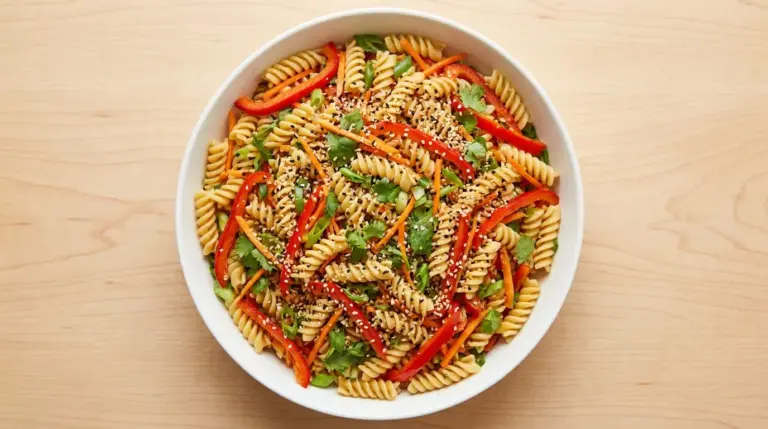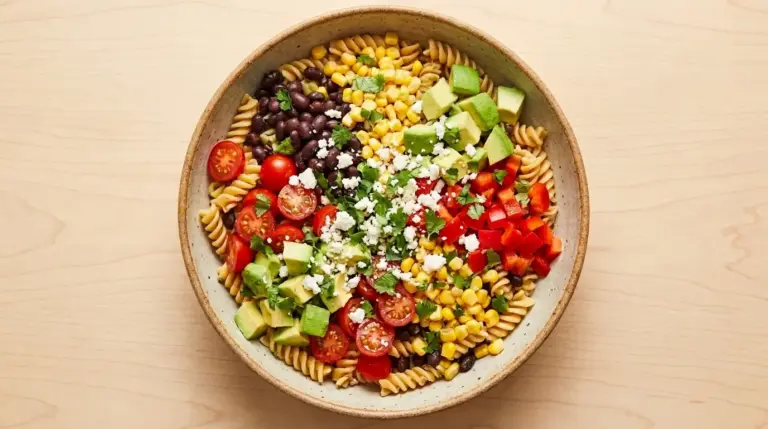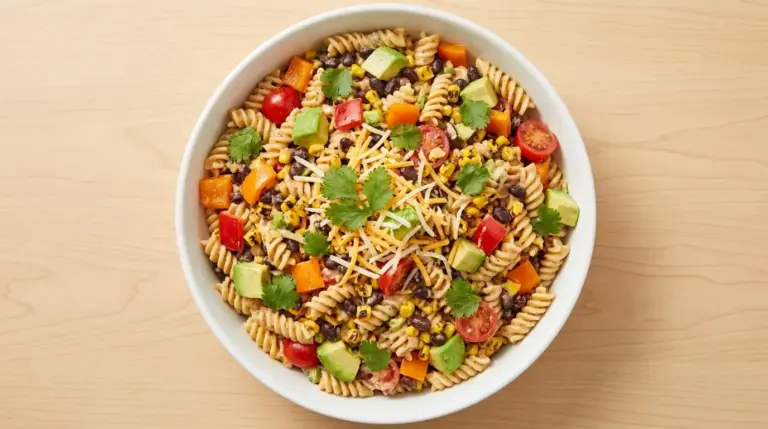

A great pasta salad dressing is the secret that takes a bowl of cold pasta and vegetables from bland to absolutely crave-worthy.
Most pasta salads look pretty on the outside, but taste flat and underwhelming because the dressing is an afterthought.
This recipe changes that entirely. This classic pasta salad dressing uses olive oil, red wine vinegar, Dijon mustard, garlic, and Italian herbs to create a bold, tangy vinaigrette that clings to every piece of pasta and soaks into all the vegetables underneath.
It takes about five minutes to whisk together, keeps well in the fridge, and works beautifully for potlucks, barbecues, meal prep, or any time you need a crowd-pleasing side dish.
Once you make this from scratch, you will never go back to bottled dressing again.
For another crowd-favorite side, check out this classic Pasta Salad Recipe that pairs perfectly with this dressing.

Why You’ll Love This Pasta Salad Dressing
Making your own pasta salad dressing is one of the easiest upgrades you can make in your kitchen.
The ingredients are pantry staples you likely already have on hand, so there is no special trip to the store required.
The flavor is bold, tangy, and just slightly sweet, with a savory herby backbone that balances beautifully against the mild pasta.
Because it is an emulsified vinaigrette, it clings to pasta and vegetables rather than pooling at the bottom of the bowl.
It is endlessly customizable, meaning you can adjust the vinegar, herbs, or garlic to match your personal taste.
You can also make it ahead of time and store it in the fridge for up to two weeks, so it is always ready when you need it.
It works not just on pasta salad, but also as a marinade for chicken, a drizzle over roasted vegetables, or a dip for crusty bread.
- Ready in just 5 minutes
- Uses simple pantry ingredients
- No special equipment needed
- Completely customizable to your taste
- Keeps in the fridge for up to 2 weeks
- Doubles or triples easily for large gatherings
- Works as a marinade and a vegetable drizzle too
If you enjoy bold Italian-inspired flavors, you will also love this Italian Pasta Salad Recipe that uses a dressing very similar to this one.
Ingredients
This dressing is built around pantry staples, and every single ingredient has a purpose. The olive oil gives richness and helps carry the fat-soluble flavors of the herbs. The red wine vinegar delivers the sharp tangy backbone that makes the dressing lively. Dijon mustard acts as an emulsifier, binding the oil and vinegar together so the dressing stays cohesive instead of separating immediately. The garlic brings depth and a mild savory bite, while the Italian seasoning and dried oregano add that unmistakable herby warmth you expect in a great pasta salad.
- ½ cup (120 ml) extra virgin olive oil
- 3 tablespoons (45 ml) red wine vinegar
- 1 tablespoon (15 ml) apple cider vinegar
- 1 teaspoon Dijon mustard
- 1 teaspoon honey
- 2 cloves garlic, minced (or ½ teaspoon garlic powder)
- 1 teaspoon Italian seasoning
- ½ teaspoon dried oregano
- ½ teaspoon onion powder
- ¼ teaspoon red pepper flakes (optional, for a little heat)
- ½ teaspoon fine sea salt, or more to taste
- ¼ teaspoon black pepper, freshly ground
- 2 tablespoons freshly grated Parmesan cheese (optional, but highly recommended)
- 1 tablespoon fresh lemon juice (about half a lemon)
Read Also: Greek Pasta Salad Recipe
Kitchen Equipment Needed
You do not need much to pull this together, which is part of what makes it so appealing. A mason jar is actually the most efficient way to make this dressing because you just add everything, seal the lid, and shake.
- Mason jar with a tight-fitting lid (16 oz / 475 ml), or a mixing bowl
- Whisk (if mixing in a bowl)
- Measuring spoons
- Liquid measuring cup
- Garlic press or microplane grater for the garlic
- Small funnel (optional, helps pour into jar neatly)
- Glass salad dressing bottle for storage (optional but great for pouring)
This recipe works beautifully on the Chicken Pasta Salad Recipe which is one of the most-loved pasta salads on the blog.
Recommended Products for This Recipe
These are products based on quality and performance that make a real difference when putting together the perfect pasta salad dressing.
1. Pompeian Smooth Extra Virgin Olive Oil
A high-quality extra virgin olive oil is the single most important ingredient in this dressing. Pompeian’s smooth EVOO has a mild, buttery flavor that lets the herbs and vinegar shine without any bitter or grassy aftertaste, which can happen with lower-quality oils. It is cold-pressed, non-GMO certified, and consistently one of the best-value premium olive oils on the market.
2. Ball Wide Mouth Mason Jars
Making your dressing directly in a mason jar is a total time-saver. You measure, pour, seal, and shake, which is faster than whisking in a bowl and produces a beautifully emulsified result every single time. Ball wide mouth mason jars are durable, leak-proof, and dishwasher safe, making cleanup effortless.
3. Microplane Premium Classic Zester and Grater
Fresh Parmesan grated directly into the dressing adds a savory, umami-rich depth that pre-grated cheese simply cannot match. A Microplane grater produces ultra-fine shreds that dissolve seamlessly into the dressing rather than sitting in clumps. It works equally well for lemon zest, garlic, and ginger.
4. OXO Good Grips 3-Piece Stainless Steel Measuring Spoon Set
Accurate measurements matter more than people realize when making a dressing, because the ratio of oil to acid is what determines whether it tastes balanced or sharp. OXO’s measuring spoons feature a slim design that fits into spice jars easily, and the long handles keep your hands clean.
5. Bormioli Rocco Swing Top Glass Bottle
If you plan to make this dressing regularly, a swing-top glass bottle makes storing and pouring it a joy. The airtight seal keeps the dressing fresh longer than a mason jar lid, and the narrow spout allows you to drizzle the dressing precisely over your salad without overdoing it.
You might also enjoy: Pesto Pasta Salad Recipe

Step-by-Step Instructions
1. Prepare and Measure All Ingredients
- Gather your mason jar or mixing bowl before you begin. Having everything in one place makes the process faster and prevents measuring mistakes.
- Mince your garlic cloves finely using a knife or press them through a garlic press. You want the garlic as fine as possible so it disperses evenly throughout the dressing rather than creating concentrated bites.
- If you are using fresh Parmesan, grate it now on a microplane or the fine holes of a box grater. Set it aside with the rest of your measured ingredients.
- Measure out the olive oil (½ cup / 120 ml), red wine vinegar (3 tablespoons / 45 ml), and apple cider vinegar (1 tablespoon / 15 ml) into separate measuring cups so you have them ready to add.
- Measure the honey, Dijon mustard, Italian seasoning, dried oregano, onion powder, and red pepper flakes into small prep bowls or directly into the jar.
2. Combine the Acid, Mustard, Honey, and Seasonings First
- Add the red wine vinegar and apple cider vinegar directly into your mason jar or mixing bowl first. Starting with the acidic ingredients allows you to taste and adjust the sharpness before adding the oil.
- Add the Dijon mustard. This is the emulsifier that will keep your dressing smooth and cohesive. Make sure you use real Dijon, not yellow mustard, as the flavor profile is significantly different.
- Add the honey. The honey balances the sharpness of the vinegar and gives the dressing a gentle sweetness that rounds out the overall flavor.
- Add the minced garlic, Italian seasoning, dried oregano, onion powder, red pepper flakes (if using), fine sea salt, black pepper, and fresh lemon juice.
- If using Parmesan, add it now as well.
- Stir briefly with a small spoon or use a fork to loosen everything and ensure the mustard and honey are not stuck to the sides of the jar.
3. Stream in the Olive Oil and Emulsify
- If using a jar: seal the lid tightly. Shake vigorously for 20 to 30 seconds. The dressing should turn slightly opaque and creamy in appearance, which means the oil and vinegar have emulsified properly.
- If using a bowl: slowly stream in the olive oil in a thin, steady drizzle while whisking constantly and rapidly with your other hand. This slow addition is what creates a stable emulsion where the oil and vinegar stay combined rather than separating immediately.
- Continue whisking until the dressing looks smooth, thick, and creamy. It should coat the back of a spoon lightly.
- If the dressing looks too thin and separated, continue whisking. If it still does not come together, add an extra half teaspoon of Dijon mustard and whisk again.
4. Taste and Adjust the Seasoning
- Dip a piece of pasta, a crouton, or a clean spoon into the dressing and taste it carefully.
- If it tastes too sharp or acidic, add a little more honey (½ teaspoon at a time) or a splash more olive oil to mellow the vinegar.
- If it tastes flat, add a pinch more salt or a few more drops of lemon juice to brighten it.
- If it needs more herby depth, add a pinch more Italian seasoning or a tiny bit of dried thyme or basil.
- If it needs more garlicky punch, add a small amount of garlic powder (not more fresh garlic at this stage, as raw garlic can overpower when too concentrated).
- Taste again after each adjustment to make sure you are heading in the right direction.
5. Dress the Pasta Salad or Store the Dressing
- If you are dressing a pasta salad immediately, pour the dressing over the prepared pasta and vegetables while the pasta is still warm. Warm pasta absorbs the dressing better than cold pasta, making the final salad much more flavorful.
- Toss the salad thoroughly to ensure every piece of pasta and vegetable is coated evenly. Use tongs or two large spoons to fold the ingredients together rather than stirring, which can break delicate ingredients.
- Taste the dressed salad and add more dressing if needed. It is always better to underdress and add more than to overdress and end up with a soggy salad.
- If storing the dressing for later use, seal the mason jar tightly and refrigerate immediately.
- Before using refrigerated dressing, let it sit at room temperature for 5 to 10 minutes (the olive oil will solidify slightly in the fridge), then shake or whisk again to re-emulsify before pouring.
Another pasta salad you will want to try is this beautiful Orzo Pasta Salad Recipe that uses a lighter lemon-herb dressing and works wonderfully with this base recipe.
Tips for Success
Getting this dressing exactly right every time comes down to a few consistent habits and small adjustments that make a big difference. Use a good quality olive oil as the base, because the flavor of the oil carries through to the final dressing. A low-quality or rancid oil will make the dressing taste dull and flat no matter how many herbs you add.
- Always emulsify by shaking in a jar or slowly streaming in the oil while whisking, not by just pouring everything together and stirring
- Use real Dijon mustard rather than yellow mustard for the best emulsification and flavor
- Fresh garlic gives the best flavor but will intensify overnight, so use garlic powder if you prefer a milder result
- Let the dressed pasta salad rest in the fridge for at least 30 minutes before serving so the flavors can meld and develop
- Always add the dressing to warm pasta, not cold, for the best absorption
- Reserve a few tablespoons of dressing to add right before serving, since pasta absorbs dressing as it sits
- Taste the dressing on its own and then again after tossing with pasta, as the flavor shifts once it hits the starchy pasta
- Use a fine sea salt rather than table salt for a cleaner, less harsh salinity
If you love tangy dill-forward flavors, the Dill Pickle Pasta Salad Recipe is absolutely worth bookmarking.
Serving Suggestions

This pasta salad dressing shines brightest when it is paired with the right ingredients. A classic pasta salad made with rotini, cherry tomatoes, black olives, pepperoncini, salami, and diced mozzarella is the most traditional and beloved pairing. The slightly spicy, tangy pepperoncini and salty salami complement the herby, bright dressing in a way that makes every bite interesting.
- Toss with Italian Pasta Salad for a potluck crowd-pleaser
- Use as a marinade for grilled chicken breasts before cooking on the barbecue
- Drizzle over roasted vegetables like zucchini, bell peppers, and red onion
- Use as a dipping sauce for warm ciabatta or focaccia bread
- Toss with Broccoli Salad for a hearty and colorful side dish
- Dress a simple green salad with romaine, cucumbers, and cherry tomatoes
- Drizzle lightly over grilled fish, especially salmon or cod, for a bright finishing flavor
Variations to Try
The base recipe here is endlessly adaptable. Once you understand the core ratio of oil to acid and the emulsifying role of the mustard, you can swap in different acids, herbs, and flavor additions to create a completely new dressing. Each variation below gives you a distinct flavor profile while keeping the same simple, quick method.
- Creamy Italian Dressing: Whisk in 2 tablespoons of mayonnaise or sour cream to the base for a rich, creamy version that clings even more heavily to pasta
- Greek Style Dressing: Replace red wine vinegar with lemon juice, swap Italian seasoning for dried thyme and a pinch of dried mint, and add crumbled feta for a Mediterranean-inspired version
- Balsamic Vinaigrette Version: Swap the red wine vinegar for balsamic vinegar and reduce the honey since balsamic has its own natural sweetness
- Herb Garden Dressing: Use fresh herbs (basil, parsley, dill) blended into the dressing for a vibrant green color and fresh herby flavor
- Lemon Herb Variation: Replace all vinegar with fresh lemon juice and add lemon zest for a bright, citrusy version perfect for seafood pasta salads
- Spicy Calabrian Chili Version: Add a tablespoon of Calabrian chili paste in place of the red pepper flakes for deep, smoky heat
- Avocado Herb Dressing: Blend in half a ripe avocado for a thick, creamy dressing with healthy fats and a gorgeous light green color
This Caprese Pasta Salad Recipe uses a simple balsamic-based dressing that is a lovely complement to the variation ideas above.
Storage and Reheating
This dressing stores exceptionally well, making it one of the best make-ahead condiments to keep on hand. Because it is a vinaigrette rather than a cream-based dressing, it stays fresh in the fridge much longer than a mayo or buttermilk-based dressing would.
- Store in an airtight glass jar or sealed container in the refrigerator for up to 2 weeks
- Olive oil will solidify and turn cloudy when refrigerated, which is completely normal and does not affect quality
- Remove the jar from the fridge 5 to 10 minutes before using so the oil can liquify again at room temperature
- Shake or whisk vigorously before each use to re-emulsify, as separation is natural
- Do not freeze this dressing, as the emulsion will break and the texture will become watery and grainy
- If you used fresh garlic, consume within 5 to 7 days to avoid any food safety concerns with raw garlic stored in oil
- Dressed pasta salad (once tossed) is best consumed within 3 to 5 days when stored in a covered container in the refrigerator
For another excellent fridge-friendly pasta dish to pair with this dressing, try the Tuna Pasta Salad Recipe.
Nutritional Facts
The following estimates are based on the entire recipe yield (approximately ¾ cup / 180 ml of dressing), which serves roughly 8 to 10 people when used as a pasta salad dressing. Individual serving size is approximately 1.5 tablespoons (22 ml).
| Nutrient | Per Serving (1.5 tbsp) |
|---|---|
| Calories | 105 kcal |
| Total Fat | 11.5 g |
| Saturated Fat | 1.6 g |
| Unsaturated Fat | 9.5 g |
| Carbohydrates | 1.5 g |
| Sugar | 0.8 g |
| Protein | 0.5 g |
| Sodium | 85 mg |
These values are estimates and will vary based on specific brands and quantities used. The dressing is naturally gluten-free, low in carbohydrates, and contains no artificial additives.
Read Also: Homemade Caesar Salad Dressing Recipe
Health Benefits of Key Ingredients
The ingredients in this pasta salad dressing are not just delicious. They come with a range of documented health benefits that make this a genuinely nourishing condiment rather than an empty-calorie addition to your meal.
Extra virgin olive oil is one of the most studied foods in the world, consistently linked to reduced inflammation, better heart health, and lower risk of chronic disease. It is rich in monounsaturated fats, particularly oleic acid, and contains powerful polyphenol antioxidants that protect cells from oxidative damage.
Red wine vinegar has been shown in research to help regulate blood sugar levels after meals and may support healthy digestion thanks to its acetic acid content.
- Olive oil: Rich in heart-healthy monounsaturated fats and anti-inflammatory polyphenols
- Red wine vinegar: Supports blood sugar regulation and contains antioxidants from fermented red wine
- Garlic: A natural antimicrobial with compounds like allicin that support immune function and cardiovascular health
- Lemon juice: High in vitamin C, supports immune health, and aids in iron absorption from plant foods in the salad
- Dijon mustard: Contains selenium and turmeric-derived compounds that have antioxidant properties
- Dried oregano: One of the most antioxidant-rich herbs available, with documented antibacterial properties
- Honey: Raw honey contains trace enzymes, minerals, and antioxidants, and acts as a natural preservative
For a salad dressing with a similar flavor profile, check out this Original Caesar Salad Dressing Recipe to see how the emulsification technique translates into a different style of dressing.
Frequently Asked Questions
1. Why does my pasta salad dressing separate after sitting in the jar?
This is completely normal and expected behavior for a vinaigrette. Oil and vinegar do not mix naturally because oil is hydrophobic and repels water, which is the primary component of vinegar.
The Dijon mustard in this recipe helps create a temporary emulsion, but with time the two phases will separate again. Simply shake the jar vigorously for about 20 seconds or re-whisk in a bowl before using, and the dressing will come right back together.
2. Can I make this dressing ahead of time?
Absolutely, and in fact making it ahead is encouraged. The flavors deepen and meld beautifully after a few hours in the fridge, with the garlic and herbs infusing into the oil more thoroughly.
The dressing can be made up to two weeks in advance if stored in a sealed glass jar in the refrigerator. Just remember to let it warm up slightly and shake before using.
3. How much dressing do I need for a pasta salad?
A good general rule is about ¾ cup (180 ml) of dressing for every 12 oz (340 g) of uncooked pasta, which gives roughly 6 to 8 servings.
That said, pasta absorbs dressing as it sits, so it is always smart to reserve 2 to 3 tablespoons of dressing to drizzle over the salad just before serving to refresh the flavor and loosen any sticking.
4. Can I substitute the red wine vinegar with something else?
Yes, there are several good substitutes depending on your preference. White wine vinegar is the closest match in flavor and works seamlessly in this recipe.
Apple cider vinegar adds a slightly fruitier, more mellow tang. Balsamic vinegar gives a sweeter, richer flavor. Lemon juice alone produces a citrusy, bright variation that works especially well for seafood pasta salads.
5. Does this dressing work for salad greens, not just pasta?
It works wonderfully on a variety of greens. Sturdy greens like romaine, arugula, and kale hold up especially well to the bold flavors of this vinaigrette without wilting too quickly.
Lighter greens like butter lettuce or spring mix can also work, but you should dress them just before serving rather than in advance. The dressing also pairs well with grain salads like farro, quinoa, and barley.
Read Also: Mediterranean Chickpea Salad Recipe

Classic Pasta Salad Dressing

Equipment
- Mason jar with a tight-fitting lid - 16 oz / 475 ml capacity, or use a mixing bowl
- Whisk - Only if mixing in a bowl
- Measuring spoons
- Liquid measuring cup
- Garlic press or microplane grater
- Small funnel - Optional, helps pour into jar neatly
- Glass salad dressing bottle - Optional, great for storage and pouring
Ingredients
- 0.5 cup extra virgin olive oil - 120ml
- 3 tablespoons red wine vinegar - 45ml
- 1 tablespoon apple cider vinegar - 15ml
- 1 teaspoon Dijon mustard
- 1 teaspoon honey
- 2 cloves garlic - minced; or ½ teaspoon garlic powder
- 1 teaspoon Italian seasoning
- 0.5 teaspoon dried oregano
- 0.5 teaspoon onion powder
- 0.25 teaspoon red pepper flakes - optional
- 0.5 teaspoon fine sea salt - or more to taste
- 0.25 teaspoon black pepper - freshly ground
- 2 tablespoons Parmesan cheese - freshly grated; optional but highly recommended
- 1 tablespoon fresh lemon juice - about half a lemon
Instructions
- Prepare and measure all ingredients. Mince garlic finely and grate Parmesan if using fresh.
- Add vinegars, Dijon mustard, honey, garlic, Italian seasoning, oregano, onion powder, red pepper flakes, salt, pepper, lemon juice, and Parmesan (if using) to the mason jar or mixing bowl. Stir briefly to combine.
- If using a jar: seal tightly and shake vigorously for 20-30 seconds until emulsified and creamy. If using a bowl: slowly stream in olive oil while whisking constantly until smooth and thick.
- Taste and adjust seasoning. Add more honey if too sharp, more salt if flat, or more herbs for depth. Taste again after each adjustment.
- Pour dressing over warm pasta salad and toss to coat evenly, or store in a sealed jar in the refrigerator for up to 2 weeks.
Notes
- Use a good quality extra virgin olive oil as the base, because the flavor of the oil carries through to the final dressing. A low-quality or rancid oil will make the dressing taste dull.
- Always emulsify by shaking in a jar or slowly streaming in the oil while whisking, not by just pouring everything together and stirring.
- Use real Dijon mustard rather than yellow mustard for the best emulsification and flavor.
- Fresh garlic gives the best flavor but will intensify overnight, so use garlic powder if you prefer a milder result.
- Let the dressed pasta salad rest in the fridge for at least 30 minutes before serving so the flavors can meld and develop.
- Always add the dressing to warm pasta, not cold, for the best absorption.
- Reserve a few tablespoons of dressing to add right before serving, since pasta absorbs dressing as it sits.
- Olive oil will solidify and turn cloudy when refrigerated, which is completely normal. Remove the jar from the fridge 5 to 10 minutes before using and shake to re-emulsify.
- This dressing is naturally gluten-free, low in carbohydrates, and contains no artificial additives.
- Dressed pasta salad (once tossed) is best consumed within 3 to 5 days when stored in a covered container in the refrigerator.
Final Thoughts
A homemade pasta salad dressing is genuinely one of the easiest kitchen skills you can develop, and the payoff is enormous.
Once you have this recipe in your regular rotation, you will start seeing it everywhere in your kitchen: tossed into pasta, drizzled over roasted vegetables, rubbed onto chicken before grilling, or spooned over a simple green salad on a busy weeknight.
The five minutes it takes to shake this together in a mason jar will completely change how your pasta salads taste.
Give it a try the next time you are making a pasta salad for a gathering or just for yourself, and watch how quickly people start asking for the recipe.
Leave a comment below and let me know how yours turned out, what variations you tried, or what pasta salad you used it on. Sharing your experience helps other readers too.
Recommended:
- Potato Salad Recipe
- Fruit Salad Recipe
- Mexican Street Corn Salad Recipe
- Chickpea Salad Recipe
- Tortellini Pasta Recipe
- Classic Tuna Salad Recipe
- Vinegar Coleslaw Recipe
- Cucumber Chickpea Feta Salad Recipe
- Vegan Caesar Salad Dressing Recipe
- Quinoa Chickpea Salad Recipe