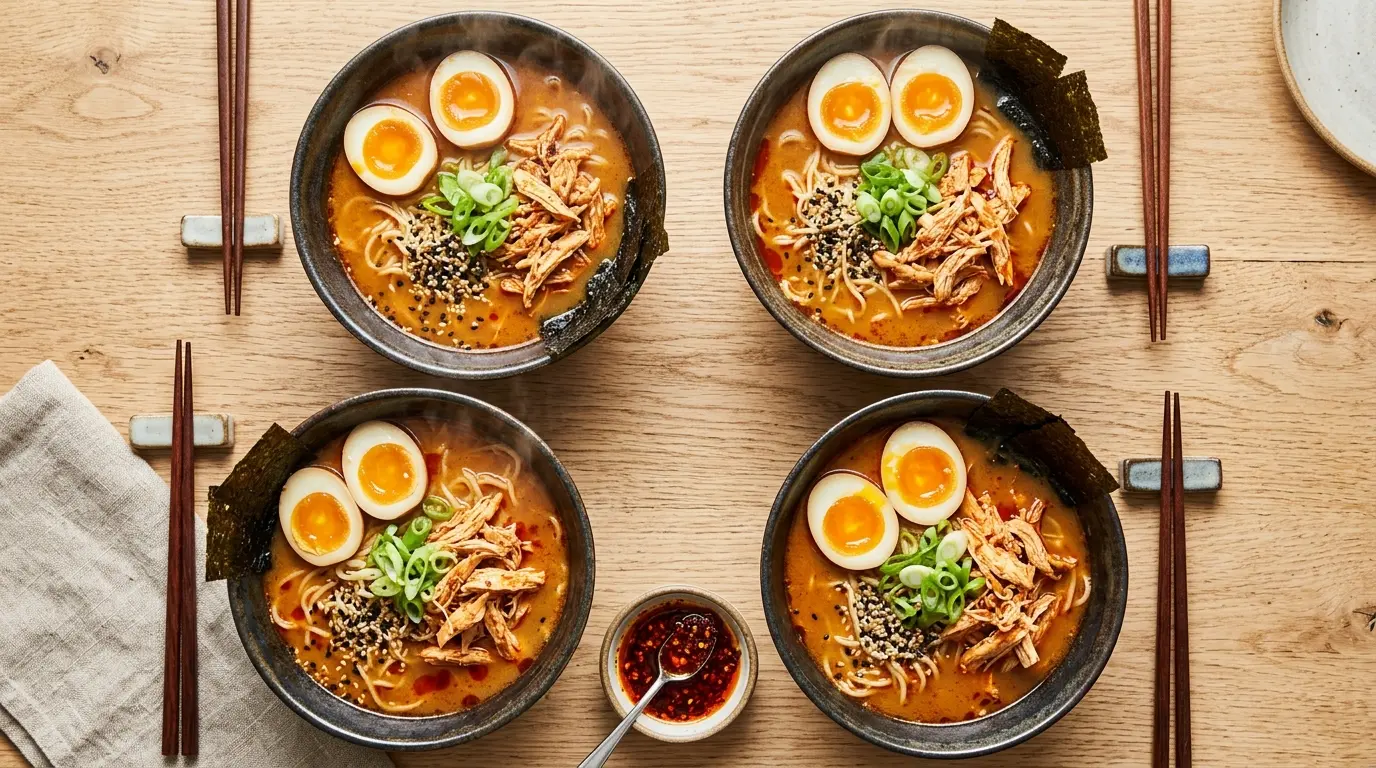
If you’re craving a bowl of rich, fiery noodle soup that warms you from the inside out, this spicy chicken ramen recipe is exactly what you need. Ramen has become one of the most beloved noodle dishes in the world, and for good reason. The combination of a deeply savory broth, springy ramen noodles, tender chicken, and bold heat creates something truly satisfying.
This version draws from the most popular homemade ramen style, built on a chicken-based broth enriched with miso paste, soy sauce, and chili oil. It’s the kind of recipe that looks impressive but is surprisingly manageable on a weeknight.
The key to a great spicy chicken ramen is layering flavors. Starting with aromatics like garlic and ginger, adding a rich tare (seasoning sauce), and finishing with toppings that add texture and freshness makes all the difference between an average bowl and one that’s completely craveable.
You don’t need a fancy ramen shop to enjoy a restaurant-quality bowl at home. With a few pantry staples and about 45 minutes, you can have steaming bowls on the table that the whole family will love.
If you enjoy bold, Asian-inspired soups, you might also like this Udon Noodle Soup for another comforting noodle fix.
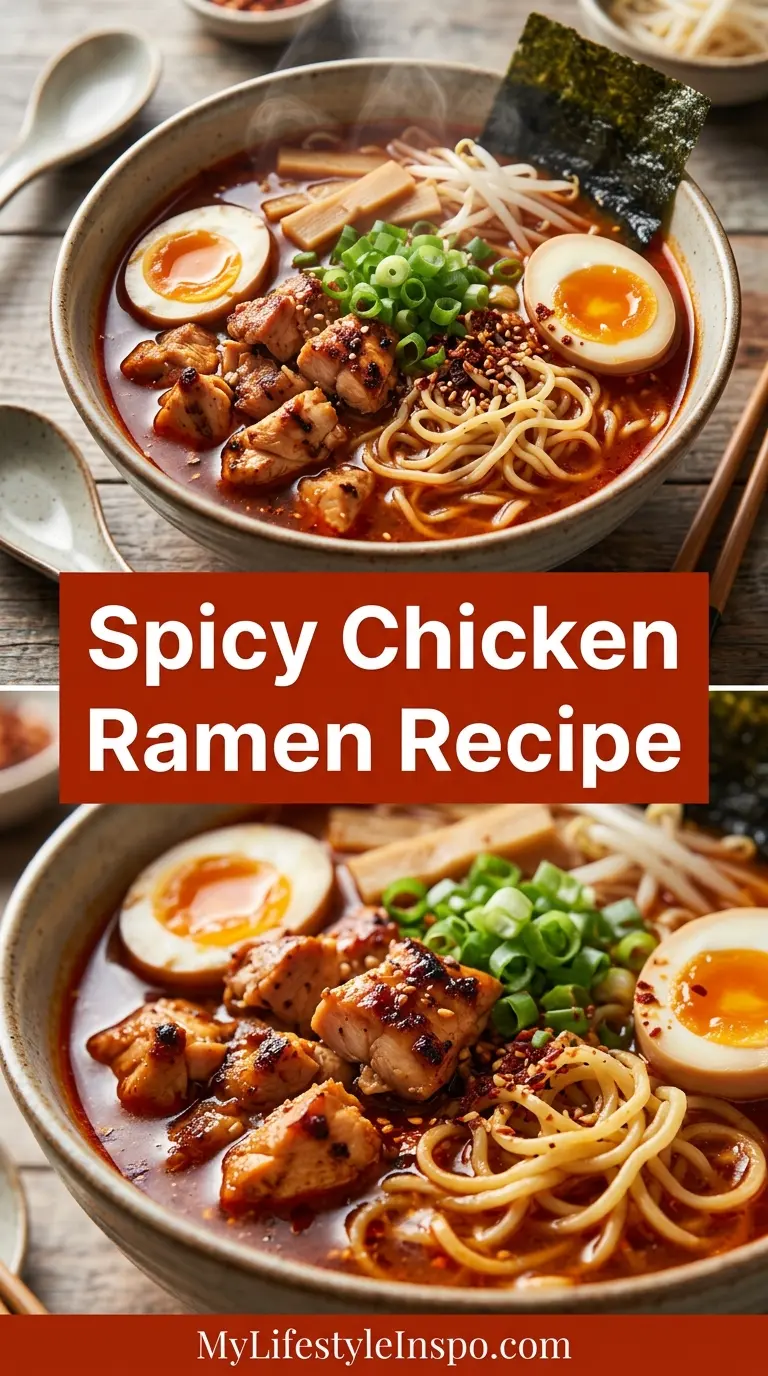
Why You’ll Love This Spicy Chicken Ramen Recipe
This recipe checks every box for a satisfying meal. It’s deeply flavorful, fully customizable, and comes together faster than you might expect for a homemade ramen broth.
The spice level is completely adjustable. Use a little chili oil and a small spoonful of gochujang for a mild warmth, or go bold with extra chili paste and a generous drizzle of chili crisp on top.
The ingredients are also very approachable. Most of what you need is already in a well-stocked pantry, and the fresh ingredients are easy to find at any grocery store.
This recipe produces a broth that tastes like it simmered for hours. The secret is using a combination of chicken broth, miso paste, soy sauce, and sesame oil, which gives you depth in a fraction of the time.
Here’s a quick look at why this recipe works so well:
- Layered heat: Gochujang, chili oil, and fresh garlic work together to build a complex spice that doesn’t just taste hot but actually has flavor.
- Rich, savory broth: Miso and soy sauce add umami depth that makes the broth taste slow-cooked.
- Tender chicken: Poaching the chicken directly in the broth adds another layer of flavor while keeping the meat juicy.
- Classic toppings: Soft-boiled eggs, green onions, and nori make every bite interesting.
- Customizable: Easy to adjust the heat, protein, or toppings based on what you have on hand.
- One pot: The whole thing comes together in a single pot, which means easy cleanup.
For another warming, bold-flavored soup to add to your rotation, try this Tom Yum Soup.
Ingredients
This recipe uses a combination of everyday pantry ingredients and a few specialty items that bring the broth to life. The miso paste and gochujang are the most important flavor-builders here, so don’t skip them.
- 1.5 lbs (680g) boneless, skinless chicken breasts or thighs
- 6 cups (1.4L) chicken broth
- 3 tablespoons white or yellow miso paste
- 2 tablespoons soy sauce
- 2 tablespoons gochujang (Korean chili paste)
- 2 tablespoons chili oil, plus more for serving
- 1 tablespoon toasted sesame oil
- 1 tablespoon sesame seeds (for garnish)
- 6 garlic cloves, minced
- 1-inch piece fresh ginger, grated (about 1 tablespoon)
- 1 tablespoon neutral oil (vegetable or avocado oil)
- 4 portions (about 12 oz/340g total) fresh or dried ramen noodles
- 4 large eggs (for soft-boiled eggs)
- 3 green onions, sliced thin
- 2 cups (60g) fresh baby spinach or bok choy, roughly chopped
- 4 sheets dried nori (seaweed), halved
- 1 cup (90g) bean sprouts (optional)
- Salt to taste
Read Also: Miso Soup Recipe
Kitchen Equipment Needed
You don’t need any specialized equipment to make this recipe. A good pot and a sharp knife are really all that stand between you and a perfect bowl of ramen.
- Large pot or Dutch oven (at least 4-quart capacity)
- Medium saucepan (for cooking eggs)
- Fine-mesh strainer or ladle (for skimming broth)
- Sharp chef’s knife and cutting board
- Box grater or microplane (for grating ginger)
- Tongs (for handling chicken)
- Ladle (for serving)
- Large ramen bowls (for serving)
- Slotted spoon (for the eggs and noodles)
- Small bowl (for mixing the miso tare)
Another favorite for cozy nights: Chicken Pho Recipe
Recommended Products for This Recipe
These are hand-picked products based on quality and how much of a difference they make in this recipe. Each one will help you get the best result possible.
1. Hikari Organic White Miso Paste
White miso paste is the backbone of this broth, and a quality brand makes a real difference. Hikari’s organic miso has a clean, balanced umami flavor that blends seamlessly into the broth without overpowering it. It’s widely available and consistently rated as one of the best miso pastes for home cooking.
2. Bibigo Gochujang Hot Pepper Paste
Gochujang is the key ingredient that gives this ramen its signature spicy, slightly sweet depth. Bibigo’s gochujang has a well-rounded heat that builds gradually and doesn’t taste one-dimensional. It’s the brand most commonly used in Korean households and is a reliable choice for ramen.
3. Fly By Jing Sichuan Chili Crisp
A finishing drizzle of chili crisp takes this ramen from good to genuinely memorable. Fly By Jing’s version has a complex, savory heat from Sichuan peppercorns and fermented black beans that regular chili oil simply can’t match. Use it both in the broth and as a topping.
4. Sun Noodle Fresh Ramen Noodles
Fresh ramen noodles have a chewier, bouncier texture than dried noodles and make a significant difference in the final bowl. Sun Noodle is the brand used by many top ramen restaurants in the U.S. and is increasingly available in specialty grocery stores and online.
5. Staub Cast Iron Dutch Oven
A heavy-bottomed Dutch oven holds heat evenly and maintains a steady simmer, which is exactly what you need for building a rich ramen broth. The Staub cocotte is a beautiful, durable choice that will last for decades and doubles as a serving pot at the table.
You might also enjoy: Asian Ground Beef Noodle Bowls
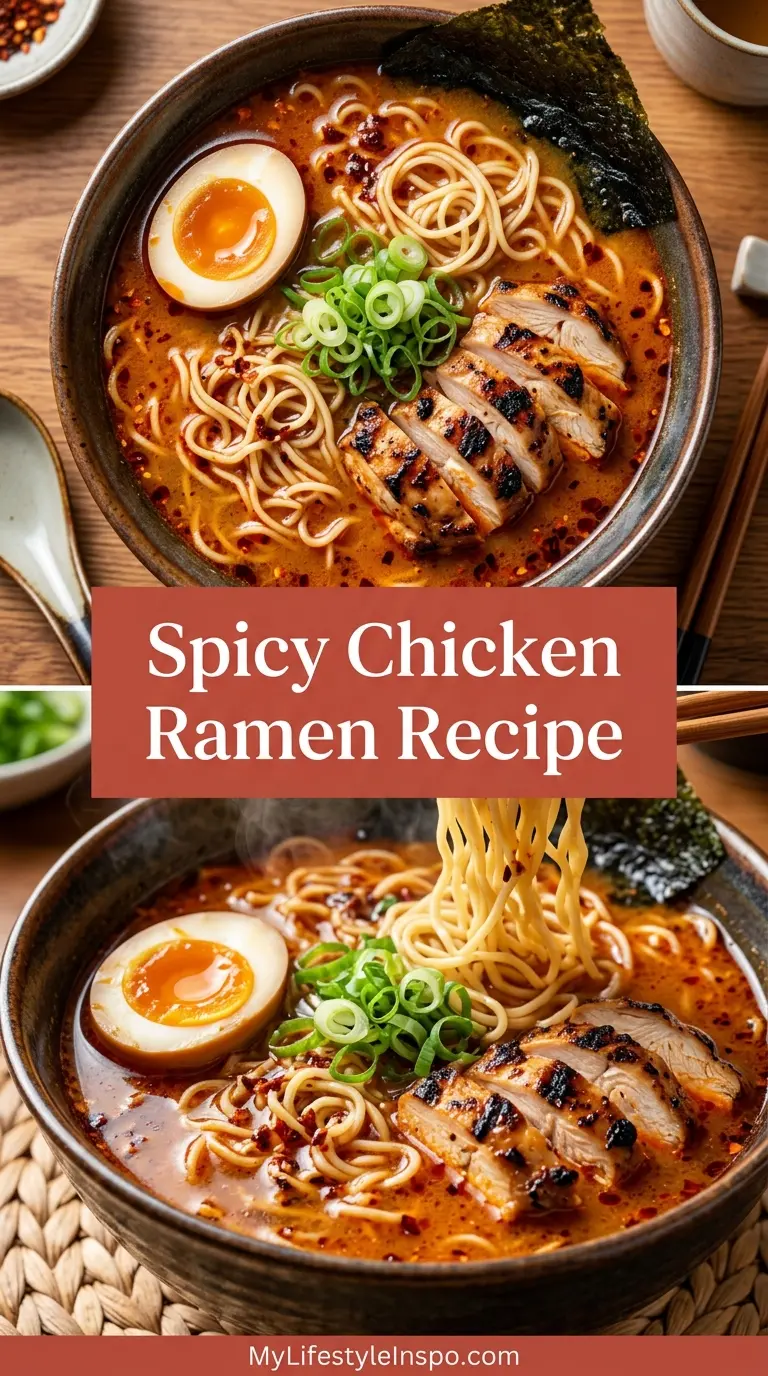
Step-by-Step Instructions
Step 1: Soft-Boil the Eggs
- Bring a medium saucepan of water to a rolling boil over high heat.
- Gently lower the eggs into the boiling water using a slotted spoon.
- Reduce the heat to maintain a gentle boil and cook for exactly 6 minutes and 30 seconds for a jammy, soft-boiled yolk.
- While the eggs cook, prepare a bowl of ice water large enough to hold all the eggs.
- Transfer the cooked eggs immediately to the ice water using a slotted spoon. Let them sit for at least 5 minutes to stop the cooking.
- Peel the eggs carefully and set aside. If not using right away, store unpeeled in the refrigerator for up to 24 hours.
Step 2: Poach the Chicken in the Broth
- Pour the 6 cups (1.4L) of chicken broth into your large pot and place it over medium-high heat.
- Bring the broth to a gentle simmer. Do not boil.
- Add the chicken breasts or thighs directly to the simmering broth.
- Cook uncovered for 15 to 18 minutes, flipping the chicken once halfway through, until it registers 165°F (74°C) at the thickest part.
- Remove the chicken from the broth with tongs and transfer to a cutting board. Keep the broth in the pot, as you’ll use it as the base.
- Let the chicken rest for 5 minutes, then shred it into bite-sized pieces using two forks. Set aside.
Step 3: Build the Spicy Broth
- Place the same pot with the chicken broth back over medium heat.
- In a separate small bowl, whisk together the miso paste, gochujang, and 2 to 3 tablespoons of the warm broth until the miso and gochujang are fully dissolved and lump-free. This prevents lumps in the broth.
- Heat the 1 tablespoon of neutral oil in a small skillet over medium heat.
- Add the minced garlic and grated ginger and sauté for 60 to 90 seconds, stirring constantly, until fragrant but not browned. Browning the garlic will make it bitter.
- Add the garlic and ginger mixture to the pot of chicken broth and stir to combine.
- Pour in the dissolved miso-gochujang mixture and stir well.
- Add the soy sauce, chili oil, and toasted sesame oil. Stir everything together.
- Taste the broth and adjust seasoning with salt or additional soy sauce if needed.
- Keep the broth at a low simmer over medium-low heat while you cook the noodles.
Step 4: Cook the Ramen Noodles
- Bring a large separate pot of water to a full boil over high heat.
- Cook the ramen noodles according to the package instructions. Fresh noodles typically take 1 to 2 minutes; dried noodles usually take 3 to 4 minutes.
- Cook just until al dente because the noodles will continue to soften slightly once added to the hot broth.
- Drain the noodles well in a colander and give them a quick rinse with warm water to remove excess starch. This helps them stay separate and not clump.
- Divide the noodles evenly among your serving bowls.
Step 5: Wilt the Greens
- Add the fresh baby spinach or chopped bok choy directly to the hot simmering broth.
- Stir and let the greens wilt for 30 to 60 seconds. They should turn bright green and just soften without becoming mushy.
- Remove the pot from the heat once the greens are wilted.
Step 6: Assemble the Bowls
- Ladle the hot spicy broth (including the wilted greens) generously over the noodles in each bowl. Use about 1.5 cups (350ml) of broth per serving.
- Add a portion of the shredded chicken to each bowl, arranging it neatly on one side.
- Slice each soft-boiled egg in half lengthwise with a sharp knife and place two halves in each bowl with the yolk facing up.
- Add a small handful of bean sprouts (if using) for crunch.
- Place a halved sheet of nori against the side of each bowl so it’s partially submerged in the broth.
- Scatter sliced green onions and sesame seeds over the top.
- Finish with an extra drizzle of chili oil or chili crisp for more heat and visual appeal.
- Serve immediately while everything is hot.
Read Also: Chicken Pad Thai Recipe
Tips for Success
These simple tips will help you get the most flavor out of every ingredient and avoid the most common ramen mistakes.
- Dissolve miso separately: Always whisk miso paste with a small amount of warm liquid before adding it to the broth. Adding it directly to boiling broth can make it clump and also destroys some of its beneficial compounds.
- Don’t overcook the noodles: Ramen noodles continue to absorb broth after you add them to the bowl. Pull them from the water when they still have a slight chew.
- Let the chicken rest: Resting the poached chicken before shredding keeps it juicy. Shredding it immediately while piping hot can dry it out.
- Use fresh ginger: Pre-ground ginger works in a pinch, but fresh ginger gives the broth a brighter, more aromatic heat that really elevates the flavor.
- Taste and adjust: Every broth and miso paste is different in salt level. Always taste before serving and adjust with soy sauce or a pinch of salt.
- Don’t boil the broth after adding miso: High heat can destroy the flavor compounds in miso. Keep it at a gentle simmer once the miso is added.
- Ice bath is non-negotiable for eggs: Skipping the ice bath causes the yolk to overcook from residual heat. The ice bath stops cooking immediately for that perfect jammy center.
For a slightly different protein approach, try these Asian Turkey Meatballs as a topping variation.
Serving Suggestions
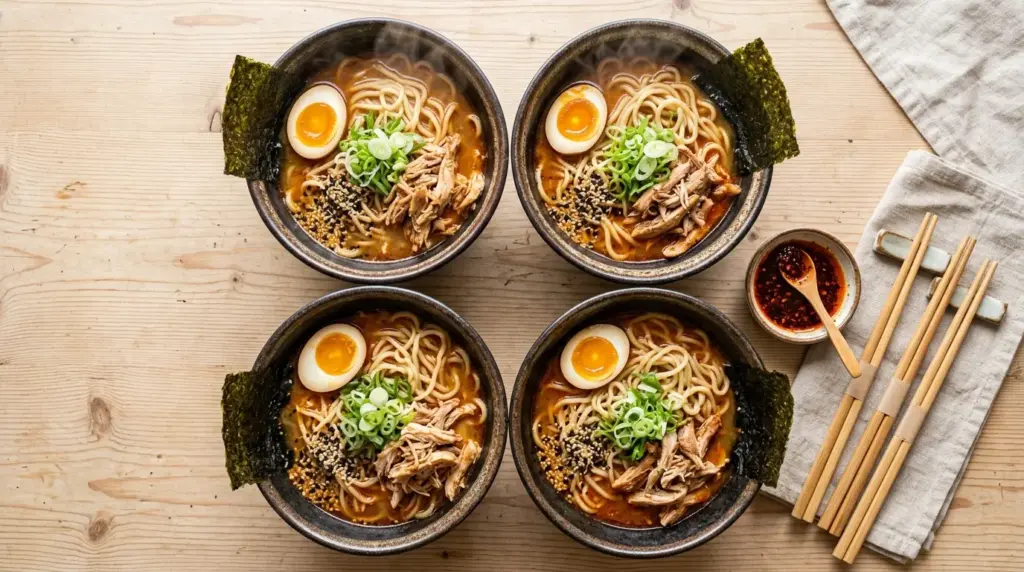
Spicy chicken ramen is a complete meal on its own, but pairing it with a few sides turns it into a full spread perfect for entertaining.
Serve alongside a bowl of Chicken Egg Drop Soup if you want a lighter starter to begin the meal. A plate of Chicken Lettuce Wraps also works beautifully as a fresh, crunchy appetizer before the ramen hits the table.
If you’re looking for a refreshing contrast to the heat, a crisp Asian Chicken Salad on the side balances the richness of the broth perfectly.
Here are some other great pairing ideas:
- Steamed or pan-fried potstickers or gyoza
- Bok Choy stir-fried with garlic as a side vegetable
- A small bowl of pickled cucumber slices to cut through the richness
- Cold sesame noodles as an additional side for bigger appetites
- Edamame with flaky sea salt as a simple, crowd-pleasing starter
Variations to Try
One of the best things about ramen is how easy it is to customize. Once you have the base broth down, you can take it in so many directions.
- Shrimp Ramen: Swap the chicken for large shrimp. Add them raw to the simmering broth in the last 3 to 4 minutes of cooking.
- Vegetarian/Vegan: Use vegetable broth, replace the chicken with extra-firm tofu (pan-fried until golden), and check that your miso paste is vegan-friendly.
- Tonkotsu-Style: Add 2 tablespoons of tahini or peanut butter to the broth for a creamier, richer texture similar to pork-based tonkotsu.
- Coconut Milk Ramen: Stir in 1/2 cup (120ml) of full-fat coconut milk for a Thai-inspired, slightly sweet and creamy version.
- Extra Spicy: Double the gochujang, add a teaspoon of Korean chili flakes (gochugaru), and top with an extra generous drizzle of chili crisp.
- Kimchi Ramen: Stir 1/2 cup of chopped kimchi directly into the broth for a funky, fermented depth. Top with more kimchi as a garnish.
- Mushroom Ramen: Sauté a mix of shiitake, cremini, and enoki mushrooms separately and add them as a topping for an earthy, meaty flavor.
For a completely different spicy soup experience, check out this Kimchi Stew Recipe.
Storage and Reheating
This recipe stores well, but the noodles and broth should be kept separately for the best results.
- Broth: Store the spicy chicken broth in an airtight container in the refrigerator for up to 4 days. It also freezes beautifully for up to 3 months.
- Chicken: Store the shredded chicken separately in an airtight container for up to 3 days in the refrigerator.
- Noodles: Cooked ramen noodles are best eaten fresh. If you have leftovers, toss them lightly with a drop of sesame oil and store in a covered container for up to 2 days.
- Eggs: Store soft-boiled eggs unpeeled in the refrigerator for up to 3 days. Once peeled, consume within 24 hours.
- Reheating broth: Reheat the broth in a saucepan over medium heat until steaming. Do not boil after adding miso, as high heat dulls the flavor.
- Reheating noodles: Briefly dip leftover noodles in boiling water for 30 seconds to warm them before adding to the fresh hot broth.
You might also enjoy: Chicken Lo Mein Recipe
Nutritional Facts
The following is an approximate nutritional breakdown per serving (1 bowl), based on 4 servings from this recipe. Values will vary based on specific brands and ingredient swaps.
| Nutrient | Per Serving |
|---|---|
| Calories | 490 kcal |
| Protein | 42g |
| Total Fat | 16g |
| Saturated Fat | 3g |
| Carbohydrates | 45g |
| Fiber | 3g |
| Sugars | 5g |
| Sodium | 1,380mg |
| Cholesterol | 215mg |
Note: Sodium content is on the higher side due to miso paste, soy sauce, and chicken broth. Use low-sodium versions of these ingredients if you’re monitoring salt intake. The sodium can be reduced by roughly 30% without significantly affecting flavor.
For a lighter, broth-forward comfort meal, try this Chicken Rice Soup.
Health Benefits of Key Ingredients
Beyond being delicious, this spicy chicken ramen contains several ingredients that offer meaningful nutritional value.
Miso paste is a fermented food made from soybeans, and it’s rich in probiotics that support gut health. It also provides B vitamins, manganese, and copper, making it one of the most nutritionally dense condiments in any kitchen.
Ginger is well-known for its anti-inflammatory properties and digestive benefits. It contains gingerol, an active compound that research has linked to reduced inflammation and improved nausea relief.
Here are the standout health benefits from the key ingredients in this recipe:
- Chicken: Excellent source of lean protein, which supports muscle repair and keeps you feeling full longer.
- Miso paste: Contains probiotics and antioxidants, supports digestion and immune health.
- Ginger: Anti-inflammatory, aids digestion, and adds natural heat without additives.
- Garlic: Contains allicin, a compound associated with cardiovascular health and immune support.
- Spinach/Bok Choy: Rich in vitamins A, C, and K, plus folate and iron.
- Sesame seeds: A good source of calcium, healthy fats, and lignans (plant compounds with antioxidant properties).
- Eggs: Provide complete protein and essential fat-soluble vitamins D and B12.
- Chili oil/gochujang: Capsaicin, the compound that creates heat, may support metabolism and has anti-inflammatory properties.
Read Also: Chicken Stir Fry Recipe
Frequently Asked Questions
1. Can I use instant ramen noodles for this recipe?
Yes, you can use instant ramen noodles in a pinch. Just discard the seasoning packet and use the noodles on their own with this homemade broth. The texture won’t be quite as springy as fresh or good-quality dried ramen noodles, but the flavor will still be great.
2. How do I make this recipe less spicy?
Reduce the gochujang to 1 teaspoon and cut the chili oil to 1 teaspoon. You can also skip the chili oil garnish at the end. The miso and soy sauce will still give the broth plenty of depth and umami without the heat.
3. Can I make the broth ahead of time?
Absolutely. The broth actually improves overnight as the flavors meld together. Make it up to 2 days in advance and store it in the refrigerator. Reheat gently over medium heat before serving and add freshly cooked noodles at the last minute.
4. What type of chicken works best?
Boneless, skinless chicken thighs are the most forgiving option because the higher fat content keeps them juicy even if you cook them slightly longer. Chicken breasts work well too but can dry out if overcooked, so watch your timing carefully and use a meat thermometer.
5. Is this recipe gluten-free?
Not as written. Soy sauce, miso paste, and most ramen noodles contain gluten. To make it gluten-free, swap regular soy sauce for tamari or coconut aminos, use a certified gluten-free miso paste, and use rice noodles or certified gluten-free ramen noodles instead of traditional wheat-based ramen.
For another spicy, noodle-forward Asian dish, try this Easy Pad Thai Recipe.
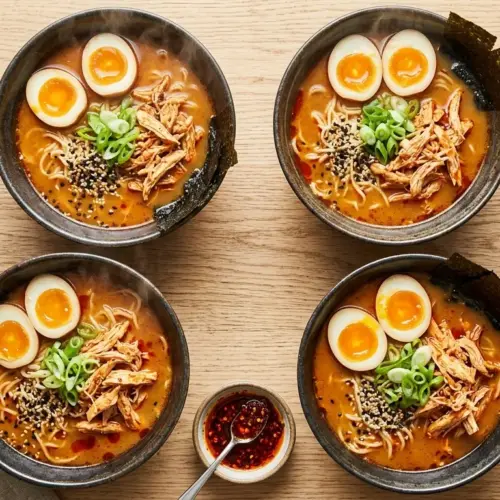
Spicy Chicken Ramen

Equipment
- Large pot or Dutch oven - 4-quart capacity minimum
- Medium saucepan - for cooking eggs
- Fine-mesh strainer or ladle - for skimming broth
- Sharp chef's knife
- Cutting board
- Box grater or microplane - for grating ginger
- Tongs - for handling chicken
- Ladle - for serving
- Large ramen bowls - for serving
- Slotted spoon - for eggs and noodles
- Small bowl - for mixing miso tare
Ingredients
- 1.5 lbs boneless skinless chicken breasts or thighs - 680g
- 6 cups chicken broth - 1.4L
- 3 tablespoons white or yellow miso paste
- 2 tablespoons soy sauce
- 2 tablespoons gochujang - Korean chili paste
- 2 tablespoons chili oil - plus more for serving
- 1 tablespoon toasted sesame oil
- 1 tablespoon sesame seeds - for garnish
- 6 garlic cloves - minced
- 1 inch fresh ginger - grated, about 1 tablespoon
- 1 tablespoon neutral oil - vegetable or avocado oil
- 4 portions fresh or dried ramen noodles - about 12 oz or 340g total
- 4 large eggs - for soft-boiled eggs
- 3 green onions - sliced thin
- 2 cups fresh baby spinach or bok choy - 60g, roughly chopped
- 4 sheets dried nori - halved
- 1 cup bean sprouts - 90g, optional
- salt - to taste
Instructions
- Boil eggs for 6 minutes and 30 seconds, then immediately transfer to an ice bath for 5 minutes. Peel and set aside.
- Simmer chicken in broth for 15-18 minutes until cooked through, then remove and shred. Keep the broth in the pot.
- Whisk miso and gochujang with a few tablespoons of warm broth until smooth. Sauté garlic and ginger in oil for 1 minute, then combine with broth, dissolved paste, soy sauce, chili oil, and sesame oil. Keep at a simmer.
- Cook ramen noodles according to package until al dente. Drain and rinse with warm water, then divide among serving bowls.
- Add spinach or bok choy to the hot broth and stir for 30-60 seconds until just wilted. Remove pot from heat.
- Ladle broth with greens over noodles, then top with shredded chicken, halved eggs, bean sprouts, nori, green onions, sesame seeds, and a drizzle of chili oil. Serve immediately.
Notes
- Always whisk miso paste with a small amount of warm liquid before adding it to the broth to prevent clumping and preserve flavor.
- Cook ramen noodles just until al dente as they will continue to soften in the hot broth. Drain and rinse with warm water to remove excess starch.
- Let poached chicken rest for 5 minutes before shredding to keep it juicy and tender.
- Use fresh ginger for a brighter, more aromatic heat that elevates the broth significantly.
- Do not boil the broth after adding miso; high heat destroys its delicate flavor compounds. Keep it at a gentle simmer.
- The broth can be made up to 2 days ahead and stored in the refrigerator. Reheat gently before serving.
- For a less spicy version, reduce gochujang to 1 teaspoon and chili oil to 1 teaspoon. Skip the final chili oil garnish.
- Store broth and noodles separately for leftovers. Broth keeps up to 4 days in the fridge or 3 months in the freezer.
Final Thoughts
Making spicy chicken ramen at home is one of those recipes that feels like a real achievement the first time you do it. The broth is bold, the noodles are satisfying, and the toppings turn a simple bowl into something special.
Once you try it, you’ll find yourself coming back to this recipe again and again. It’s endlessly adaptable, works for any season, and takes less than an hour from start to finish.
Give this spicy chicken ramen recipe a try this week, and don’t be afraid to make it your own by playing with the toppings and spice level. If you make it, leave a comment below and let me know how it turned out, or share it with someone who needs a good bowl of ramen in their life.
Recommended:
- Udon Noodle Soup Recipe
- Chicken Pho Recipe
- Instant Pot Pho Recipe
- Vegan Pho Recipe
- Chicken Noodle Soup Recipe
- Tom Yum Soup Recipe
- Hot and Sour Soup Recipe
- Gochujang Chicken Sheet Pan Dinner
- Skillet Chicken Bulgogi Recipe
- Pork Chop Stir Fry Recipe