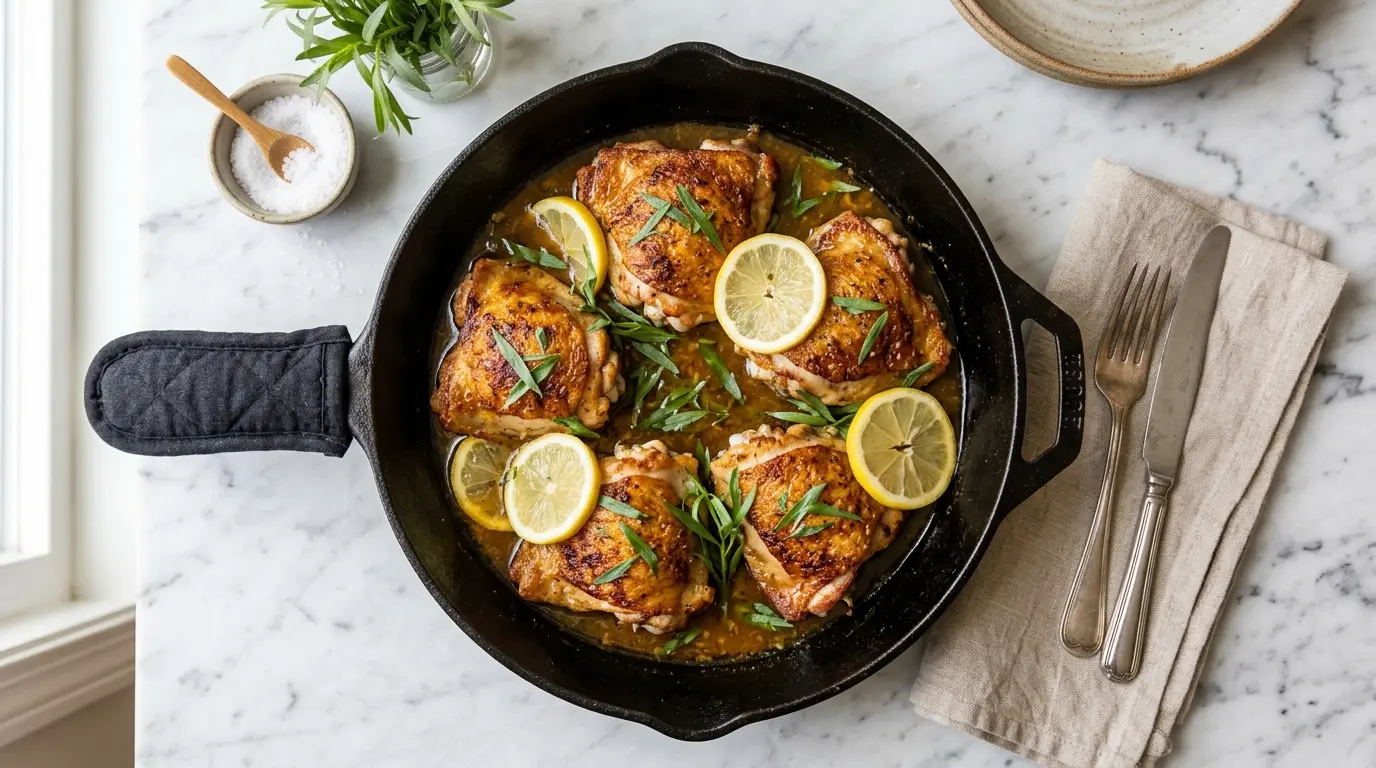
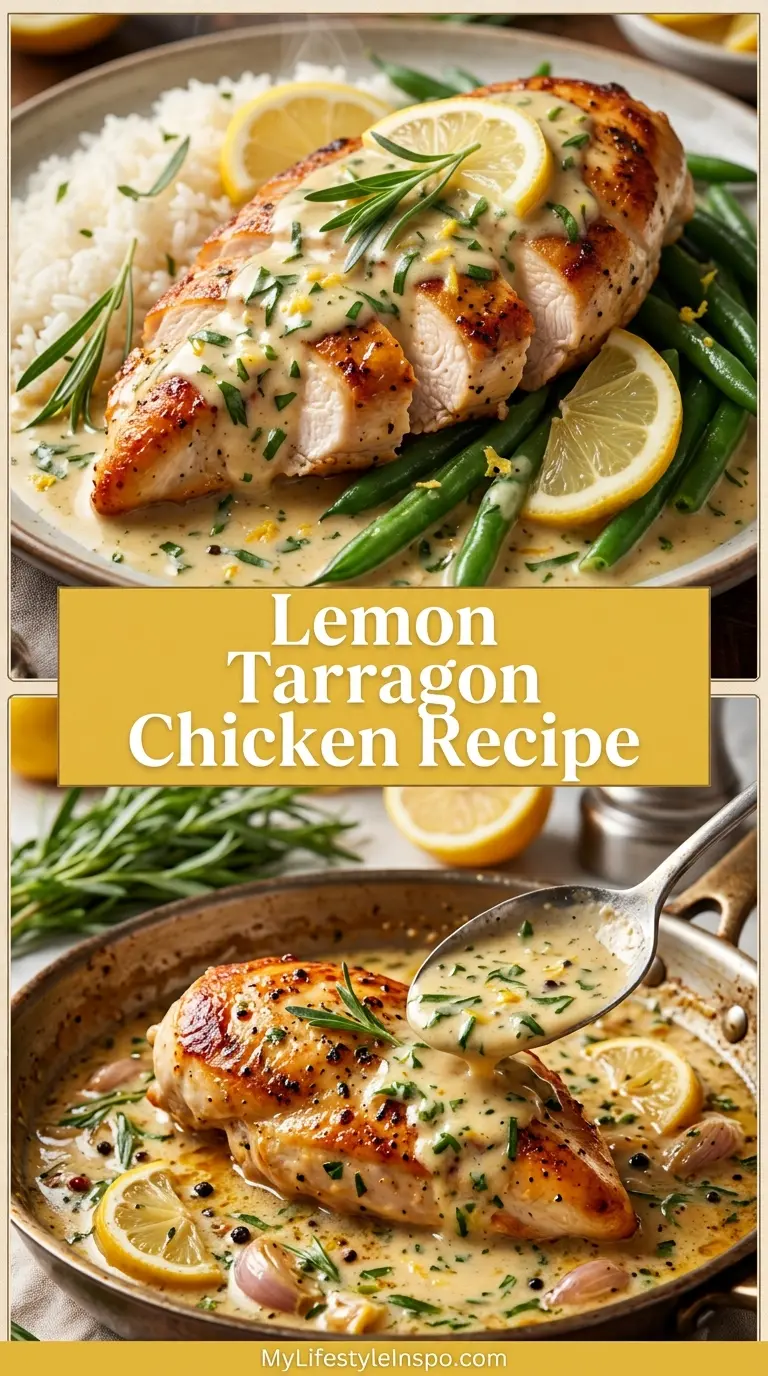
If you’ve never made a lemon tarragon chicken recipe before, get ready to fall in love with one of the most elegant yet effortless French-inspired dishes you’ll ever put on the table.
This is the kind of meal that smells incredible the moment it hits the pan, filling your kitchen with bright citrus and the warm, subtly anise-like aroma of fresh tarragon.
It’s built on a handful of simple ingredients, but the way they work together is really something special. The lemon juice deglazes the pan beautifully, pulling up all those golden brown bits left behind from searing the chicken, while the tarragon infuses the entire sauce with that distinctive herbal depth that’s unmistakably French.
This recipe uses bone-in, skin-on chicken thighs, which stay tender and juicy even if you cook them a minute or two longer than planned. A splash of white wine, a hit of Dijon mustard, and fresh garlic bring everything together into a silky pan sauce that you’ll want to spoon over every bite.
It’s ready in under an hour, uses one pan, and looks absolutely gorgeous on the plate.
For a similar French-inspired dinner that’s equally simple and satisfying, you’ll also love this Creamy Tarragon Chicken.
Why You’ll Love This Lemon Tarragon Chicken Recipe
This dish checks every box most home cooks are looking for.
It’s fast enough for a weeknight but impressive enough to serve to guests on a Saturday night. The entire recipe comes together in one skillet, which means less cleanup and more time enjoying dinner.
The lemon and tarragon combination is a classic for a reason. Tarragon has a gentle, almost licorice-like flavor that softens beautifully with heat, and lemon juice lifts the whole dish without overpowering it.
Chicken thighs are the best cut for this recipe because they stay moist and develop a gorgeous golden crust in the pan. If you’ve been burned by dry chicken breast before, thighs are about to change how you cook chicken forever.
The pan sauce is made right in the skillet with no separate sauce pan, no roux, no fuss. You simply deglaze the pan with white wine, add chicken broth, and let the sauce reduce naturally into something rich and glossy.
Here’s a quick summary of why this recipe is a keeper:
- One pan, easy cleanup from start to finish
- Bold, restaurant-worthy flavor using everyday ingredients
- Ready in about 45 minutes with minimal active cooking time
- Versatile pairing options: goes beautifully with pasta, rice, potatoes, or crusty bread
- Leftovers reheat well and taste even better the next day
- Crowd-pleasing without being fussy or complicated
You might also enjoy: Tarragon Chicken Salad Recipe
Ingredients
You don’t need a long shopping list for this one. Most of these ingredients are pantry staples, with fresh tarragon being the main specialty item worth seeking out. Dried tarragon works in a pinch, but fresh makes a noticeable difference in flavor here.
- 4 bone-in, skin-on chicken thighs (about 2 lbs / 900g total)
- 2 tablespoons olive oil
- 3 cloves garlic, minced
- 1/2 cup (120ml) dry white wine (such as Sauvignon Blanc or Pinot Grigio)
- 1 cup (240ml) low-sodium chicken broth
- 2 tablespoons fresh lemon juice (from about 1 lemon)
- 1 teaspoon lemon zest
- 1 tablespoon Dijon mustard
- 2 tablespoons fresh tarragon leaves, roughly chopped, plus extra for garnish
- 1 tablespoon unsalted butter
- Salt and freshly ground black pepper, to taste
- Lemon slices, for garnish (optional)
Read Also: Tarragon Chicken Recipe
Kitchen Equipment Needed
No specialty equipment required here. A good heavy-bottomed skillet is the most important tool for getting that deep golden sear on the chicken skin.
- Large cast iron skillet or stainless steel skillet (12 inches / 30cm recommended)
- Sharp chef’s knife and cutting board
- Tongs for turning the chicken
- Meat thermometer to check doneness
- Zester or microplane for lemon zest
- Measuring cups and spoons
- Wooden spoon or silicone spatula for deglazing
This pairs well with the simple and delicious Lemon Chicken Sheet Pan Dinner if you’re looking for another quick lemon chicken option.
Recommended Products for This Recipe
These are products selected based on quality and how much they genuinely improve results when making this dish.
1. Lodge 12-Inch Cast Iron Skillet
A heavy cast iron skillet is the single best tool for this recipe. It holds heat evenly and gives the chicken skin that restaurant-quality golden sear that thinner pans simply can’t replicate. Cast iron also transitions seamlessly from stovetop to oven if you ever want to finish the chicken that way. It’s a lifetime kitchen investment.
2. Fresh Tarragon (Living Herb Plant)
If you can find a living tarragon plant rather than a cut bunch, it’s absolutely worth it. Fresh tarragon is dramatically more aromatic than dried, with that distinctive warm anise note that makes this dish so memorable. Having a plant on your windowsill means you always have it on hand for this recipe and others.
3. Instant-Read Meat Thermometer
Knowing exactly when chicken is done at 165°F (74°C) takes all the guesswork out of cooking it. An instant-read thermometer means you never serve undercooked chicken or dry overcooked chicken again. It’s a small tool that makes a big difference in confidence and consistency.
4. Microplane Zester
Lemon zest adds a layer of brightness and fragrance to the sauce that juice alone doesn’t give you. A sharp microplane zester makes getting fine, fluffy zest from citrus incredibly quick and easy, with no bitter white pith. It’s also great for grating Parmesan or garlic.
The same skillet technique works beautifully for this Italian Chicken Skillet Recipe too.
Step-by-Step Instructions
Step 1: Prepare the Chicken
- Remove the chicken thighs from the refrigerator and let them sit at room temperature for about 15 to 20 minutes before cooking. This helps them cook evenly from outside to inside.
- Pat the chicken thighs completely dry using paper towels on all sides, including underneath. Dry skin is the secret to a great golden sear; moisture on the surface causes steaming instead of browning.
- Season both sides generously with salt and freshly ground black pepper. Don’t be shy with the seasoning. Chicken thighs need a confident hand with salt to really shine.
Step 2: Sear the Chicken Skin-Side Down
- Place a 12-inch (30cm) cast iron or stainless steel skillet over medium-high heat. Allow the pan to heat up for at least 1 to 2 minutes before adding any oil. A properly preheated pan prevents sticking.
- Add 2 tablespoons of olive oil and swirl to coat the bottom of the pan. The oil should shimmer and move easily but not smoke.
- Place the chicken thighs skin-side down into the hot pan. Press them gently with tongs to ensure good contact with the pan surface.
- Cook undisturbed for 7 to 8 minutes. Resist the urge to move them. The chicken will naturally release from the pan when the skin is properly seared and golden. If it sticks when you try to lift it, it needs another minute.
- You should see a deep golden-brown color on the skin. Adjust the heat down slightly if the skin is browning too quickly or burning around the edges.
Step 3: Flip and Brown the Other Side
- Using tongs, carefully flip the chicken thighs over to the flesh side.
- Cook for another 5 to 6 minutes until the underside is also golden and the chicken is mostly cooked through.
- Transfer the chicken to a clean plate or cutting board. It does not need to be fully cooked at this stage because it will finish cooking in the sauce later. Set it aside while you build the pan sauce.
Step 4: Sauté the Garlic
- With the pan still over medium heat, carefully pour out all but about 1 tablespoon of the rendered chicken fat. Leave the browned bits (the “fond”) stuck to the bottom of the pan; those are packed with flavor.
- Add the minced garlic to the pan and stir constantly with a wooden spoon for about 30 seconds, just until fragrant. Be careful not to let the garlic burn, as burnt garlic turns bitter quickly.
Step 5: Deglaze with White Wine
- Pour in the 1/2 cup (120ml) of dry white wine. It will bubble and sizzle aggressively when it hits the hot pan. That’s exactly what you want.
- Use the wooden spoon or spatula to scrape up all the browned bits stuck to the bottom of the pan. Those bits dissolve into the wine and form the base of your sauce.
- Let the wine reduce by about half, which takes roughly 2 to 3 minutes over medium heat. The sharp alcohol smell will mellow as it cooks down.
Step 6: Build the Lemon Tarragon Sauce
- Add the 1 cup (240ml) of chicken broth, 2 tablespoons of fresh lemon juice, and 1 teaspoon of lemon zest to the skillet. Stir to combine everything.
- Add 1 tablespoon of Dijon mustard and whisk it in until fully dissolved. The mustard adds body, a gentle tang, and helps the sauce emulsify beautifully.
- Add 1 tablespoon of the chopped fresh tarragon to the sauce now, reserving the rest for finishing. Adding some at the beginning allows the tarragon flavor to fully infuse the sauce as it cooks.
- Stir everything together and taste the sauce. Adjust salt and pepper as needed at this stage.
Step 7: Return Chicken to the Pan and Finish Cooking
- Nestle the seared chicken thighs back into the skillet, skin-side up, so they sit in the sauce without submerging the skin. Keeping the skin above the sauce line helps it stay crispy.
- Reduce the heat to medium-low. The sauce should maintain a gentle simmer, not a rolling boil.
- Cover the skillet loosely with a lid or foil, leaving a small gap for steam to escape. Cook for 15 to 18 minutes, until the chicken reaches an internal temperature of 165°F (74°C) when measured at the thickest part away from the bone.
Step 8: Finish with Butter and Fresh Tarragon
- Remove the pan from the heat. Add 1 tablespoon of unsalted butter to the sauce and swirl or stir gently until it melts in and gives the sauce a silky, glossy finish.
- Scatter the remaining chopped fresh tarragon over the chicken. The fresh herbs added at the end have a brighter, more vibrant flavor than those cooked into the sauce.
- Taste the sauce one final time and adjust seasoning if needed. Add a small extra squeeze of lemon juice if you’d like a brighter, more acidic finish.
Step 9: Plate and Serve
- Transfer the chicken thighs to serving plates or a platter, skin-side up to keep the skin crispy.
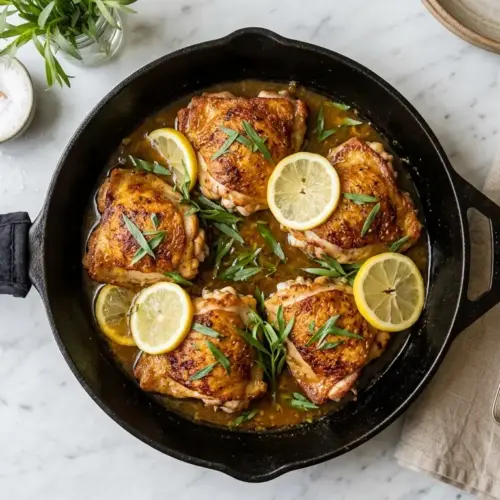
- Spoon the lemon tarragon pan sauce generously over and around each piece of chicken.
- Garnish with a few thin lemon slices and a small sprig of fresh tarragon for presentation.
- Serve immediately with your chosen side dish while everything is hot.
This technique is also great for the Baked Honey Mustard Chicken Recipe if you enjoy mustard-forward chicken dishes.
Tips for Success
A few small adjustments make a big difference in the final result. Keep these in mind as you cook.
- Dry the chicken thoroughly. This is probably the single most important tip. Moisture on the surface of the skin is the enemy of a good sear. The drier the skin before it hits the pan, the better the crust.
- Don’t rush the sear. Leave the chicken alone after you place it skin-side down. Moving it too early tears the skin and prevents the crust from forming properly.
- Use fresh tarragon if you can. Dried tarragon has a fraction of the aroma and flavor impact. If you must use dried, use about 1 teaspoon (dried) in place of 1 tablespoon fresh, and add it to the sauce rather than as a garnish.
- Don’t skip the butter finish. That final tablespoon of butter added off the heat transforms the sauce from thin and sharp to silky and well-rounded. It takes 10 seconds and makes a big difference.
- Rest the chicken briefly. Even just 3 to 5 minutes of resting before serving gives the juices time to redistribute, which means more moisture in every bite.
Here’s a quick tips summary:
- Pat chicken completely dry before searing
- Preheat your pan before adding oil or chicken
- Add half the tarragon during cooking, half fresh at the end for layered flavor
- Use a thermometer and remove chicken at exactly 165°F (74°C)
- Finish the sauce off the heat with cold butter for best texture
Read Also: Grilled Lemon Pepper Chicken Recipe
Serving Suggestions
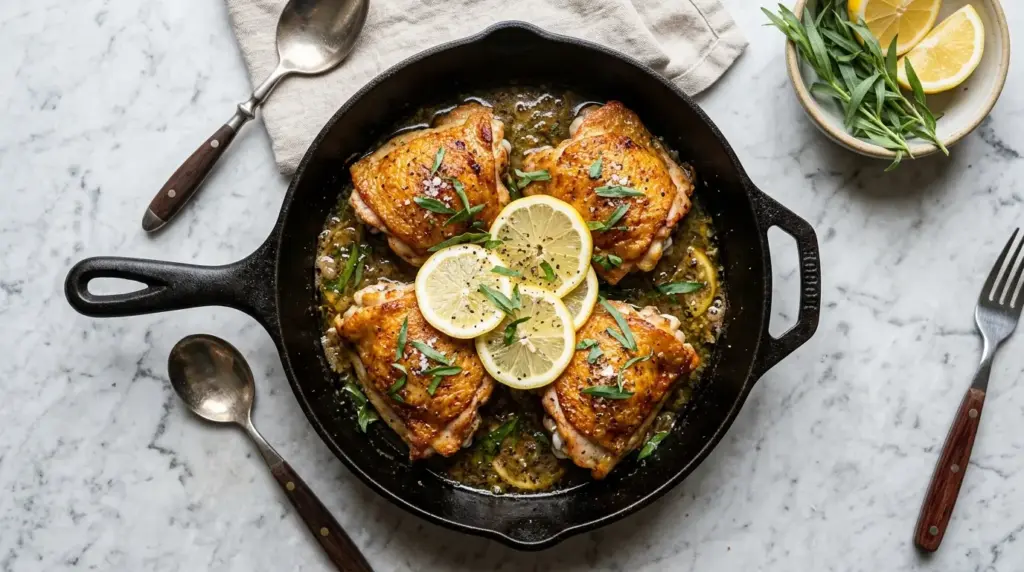
Lemon tarragon chicken is wonderfully versatile and pairs with a wide range of sides. The lemon-forward pan sauce is the key. Choose something that will soak it up beautifully.
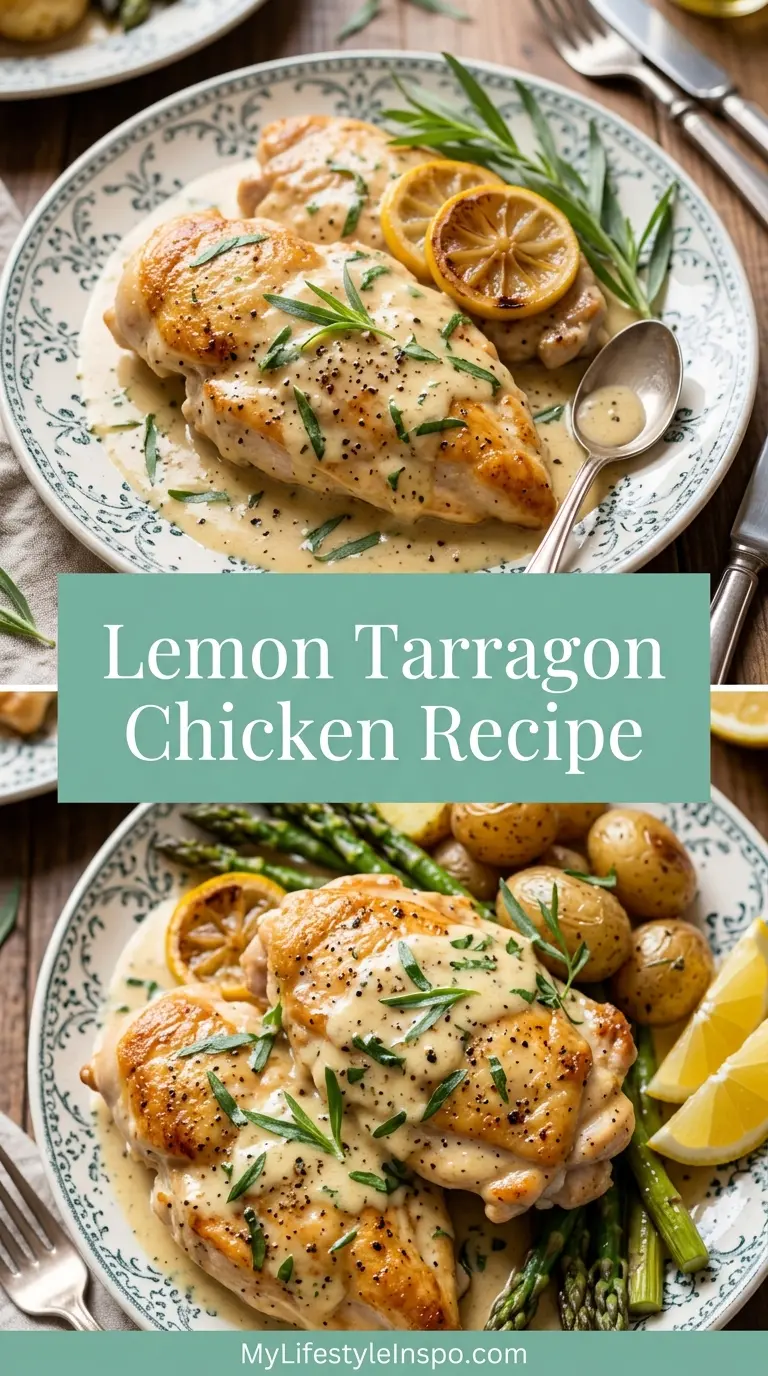
The most classic pairing is buttered egg noodles or a simple pasta like linguine, which soaks up every drop of the sauce. Creamy mashed potatoes are equally wonderful, especially when you spoon a generous amount of sauce right over the top. For a lighter dinner, serve it alongside roasted green vegetables like asparagus or green beans, which echo the bright, fresh notes in the dish.
Here are some great sides to consider:
- Garlic Mashed Potatoes for a rich and comforting pairing
- Roasted Broccoli for a light, crispy vegetable side
- Green Beans simply steamed or sautéed with garlic
- Cilantro Lime Rice for a fresh, bright grain option
- Crusty French bread to mop up the extra pan sauce
- Simple green salad with a light vinaigrette
This chicken also works well sliced over a Caesar salad for a restaurant-style lunch the next day.
The same flavors pair wonderfully with this Lemon Chicken Recipe.
Variations to Try
Once you’ve mastered the base recipe, there are several easy variations worth trying depending on what you have on hand or what you’re in the mood for.
The most popular variation is a creamy version, where you add 1/4 cup (60ml) of heavy cream or creme fraiche to the sauce in the last few minutes of simmering. This gives the sauce a richer, more velvety texture and slightly mutes the sharpness of the lemon for a more indulgent result. Another option is to swap chicken thighs for chicken breasts if you prefer white meat, though you’ll want to reduce the stovetop cooking time slightly and keep a close eye on the internal temperature to avoid drying them out.
Here are a few more ideas to explore:
- Creamy version: Stir in 1/4 cup (60ml) of heavy cream or creme fraiche just before serving
- Bone-in chicken breast: Substitute thighs for breasts; reduce cooking time slightly and monitor temperature carefully
- Herb swap: Add fresh thyme or chervil alongside the tarragon for a more complex herbal note
- Caper addition: Stir in 1 tablespoon of drained capers into the sauce for a briny, tangy twist similar to chicken piccata
- No-wine version: Replace the white wine with an equal amount of additional chicken broth and a splash of white wine vinegar for the acidity
- Sheet pan variation: Transfer everything to a sheet pan after searing and finish in a 400°F (200°C) oven for 20 minutes instead of simmering on the stovetop
Read Also: Chicken Francese Recipe
Storage and Reheating
This dish keeps very well and the flavors actually deepen overnight, making it a fantastic meal-prep option.
Store leftover chicken and sauce together in an airtight container in the refrigerator for up to 3 to 4 days. The sauce may thicken as it chills; that’s completely normal. When reheating, add a splash of chicken broth or water to the sauce to loosen it slightly. You can store it in the freezer for up to 2 months. Thaw overnight in the refrigerator before reheating.
Here’s how to store and reheat properly:
- Refrigerator: Store in an airtight container for up to 3 to 4 days; keep chicken and sauce together so the chicken stays moist
- Freezer: Freeze flat in a zip-lock freezer bag for up to 2 months; thaw in the fridge overnight before reheating
- Stovetop reheating (best method): Place chicken and sauce in a covered skillet over low heat with a splash of broth; warm gently for 8 to 10 minutes until heated through
- Microwave reheating: Transfer to a microwave-safe dish, cover loosely, and heat on medium power in 90-second intervals, stirring the sauce between rounds
- Avoid high heat when reheating to prevent the sauce from breaking and the chicken from drying out
You might also enjoy: Chicken Stew Recipe
Nutritional Facts
These values are estimated per serving based on one chicken thigh with sauce. Exact values will vary based on specific ingredients used.
| Nutrient | Per Serving (1 thigh + sauce) |
|---|---|
| Calories | ~390 kcal |
| Protein | ~32g |
| Total Fat | ~24g |
| Saturated Fat | ~6g |
| Carbohydrates | ~4g |
| Fiber | ~0.5g |
| Sugar | ~1g |
| Sodium | ~520mg |
| Cholesterol | ~145mg |
This is a naturally low-carb, gluten-free dish that’s higher in protein and healthy fats, making it a good fit for a wide range of dietary approaches including keto, paleo, and Mediterranean-style eating.
For another protein-packed chicken dinner, try this Baked Chicken Breast Recipe.
Health Benefits of Key Ingredients
This recipe isn’t just delicious. It’s built on ingredients that offer some genuine nutritional value too.
Chicken thighs are an excellent source of protein, providing around 26 to 30 grams per thigh depending on size. They also contain B vitamins (especially B12 and niacin) that support energy metabolism, as well as zinc and selenium, which support immune function. The slightly higher fat content compared to breast meat means you’re also getting more of the fat-soluble vitamins that come along with it.
Here’s a closer look at the key ingredients and what they offer:
- Chicken thighs: High in protein, B vitamins, zinc, and selenium; the fat content supports absorption of fat-soluble vitamins like A, D, E, and K
- Fresh tarragon: Contains antioxidants and compounds like eugenol that have been studied for anti-inflammatory properties; also a source of manganese and iron
- Lemon juice and zest: Rich in vitamin C, which supports immune function and helps the body absorb non-heme iron; the zest contains beneficial plant compounds like limonene
- Garlic: Well known for its immune-supporting properties, including compounds like allicin that have antimicrobial and anti-inflammatory effects
- Olive oil: A heart-healthy source of monounsaturated fats and polyphenols that support cardiovascular health
- Dijon mustard: Very low in calories and contains glucosinolates, plant compounds from the mustard seed that have been linked to antioxidant activity
Read Also: Chicken and Broccoli Recipe
Frequently Asked Questions
1. Can I use dried tarragon instead of fresh?
Yes, you can use dried tarragon if fresh isn’t available. Use about 1 teaspoon of dried tarragon for every tablespoon of fresh called for in this recipe.
Keep in mind that dried tarragon has a more muted, slightly musty flavor compared to fresh. Add it directly to the sauce during cooking rather than as a garnish.
2. What kind of white wine works best for this recipe?
A dry white wine with good acidity works best here. Sauvignon Blanc, Pinot Grigio, or an unoaked Chardonnay are all excellent choices.
Avoid very sweet wines, as they can make the sauce taste unbalanced. A general rule is to cook with a wine you’d also enjoy drinking.
3. Can I make this recipe with boneless skinless chicken thighs?
Absolutely. Boneless, skinless chicken thighs work well and reduce the overall cooking time. They won’t develop the same crispy skin, but the meat will be just as flavorful and tender.
Reduce the final simmering time to about 10 to 12 minutes and use a thermometer to confirm they’ve reached 165°F (74°C).
4. My sauce is too thin. How can I thicken it?
The easiest fix is to simply let the sauce simmer uncovered for a few extra minutes after removing the chicken. This reduces the liquid and concentrates the flavor at the same time.
If you want a quicker solution, whisk 1 teaspoon of cornstarch with 1 tablespoon of cold water and stir it into the simmering sauce. It will thicken within about a minute.
5. Can I make this dish ahead of time?
Yes, this dish reheats beautifully and is a great option for meal prep. Cook the entire dish, let it cool completely, then store the chicken and sauce together in an airtight container in the refrigerator for up to 4 days.
Reheat gently on the stovetop with a splash of chicken broth to loosen the sauce. The flavor is often even better on day two after everything has had time to meld.
For more make-ahead dinner inspiration, check out this Crockpot Chicken Marsala Recipe.
Lemon Tarragon Chicken

Equipment
- Large cast iron or stainless steel skillet (12-inch / 30cm) - Heavy-bottomed for even heat distribution and a good sear.
- Sharp chef's knife
- Cutting board
- Tongs - For turning the chicken.
- Meat thermometer - To ensure chicken reaches 165°F.
- Zester or microplane - For zesting the lemon.
- Measuring cups and spoons
- Wooden spoon or silicone spatula - For deglazing the pan.
Ingredients
- 4 bone-in, skin-on chicken thighs - about 2 lbs or 900g total
- 2 tablespoons olive oil
- 3 cloves garlic - minced
- 1/2 cup dry white wine - 120ml, such as Sauvignon Blanc or Pinot Grigio
- 1 cup low-sodium chicken broth - 240ml
- 2 tablespoons fresh lemon juice - from about 1 lemon
- 1 teaspoon lemon zest
- 1 tablespoon Dijon mustard
- 2 tablespoons fresh tarragon - roughly chopped, plus extra for garnish
- 1 tablespoon unsalted butter
- salt and freshly ground black pepper - to taste
- lemon slices - for garnish (optional)
Instructions
- Remove chicken from fridge and let sit for 15-20 minutes. Pat completely dry with paper towels and season both sides generously with salt and pepper.
- Heat a large skillet over medium-high heat. Add olive oil and swirl to coat. Place chicken skin-side down and cook undisturbed for 7-8 minutes until deep golden brown.
- Flip the chicken and cook for 5-6 minutes more until the other side is browned. Transfer chicken to a plate and set aside.
- Pour off all but 1 tablespoon of fat from the pan. Add the minced garlic and cook for 30 seconds until fragrant.
- Pour in the white wine and scrape the pan with a wooden spoon to release the browned bits. Let the wine reduce by half, about 2-3 minutes.
- Add the chicken broth, lemon juice, lemon zest, Dijon mustard, and half of the chopped tarragon. Stir to combine and bring to a simmer.
- Nestle the chicken back into the pan skin-side up. Reduce heat to medium-low, cover loosely, and simmer for 15-18 minutes until chicken reaches 165°F (74°C).
- Remove from heat and swirl in the butter until melted. Scatter the remaining fresh tarragon over the top. Season sauce to taste.
- Serve the chicken hot with the sauce spooned over, garnished with lemon slices and fresh tarragon if desired.
Notes
- Get a good sear: Pat the chicken skin completely dry before seasoning. Moisture prevents browning, and a dry surface is the key to a crispy, golden crust.
- Don’t rush the browning: Leave the chicken undisturbed in the pan for a full 7-8 minutes. It will naturally release from the pan when it’s ready to flip.
- Tarragon tip: Fresh tarragon is best for this recipe. If using dried, use 1 teaspoon instead of 1 tablespoon and add it to the sauce during cooking.
- Make it creamy: For a richer sauce, stir in 1/4 cup (60ml) of heavy cream or crème fraîche just before serving.
- No wine? Replace the white wine with an equal amount of chicken broth and add a splash of white wine vinegar for acidity.
- Boneless option: Boneless, skinless chicken thighs work well. Reduce the simmering time to 10-12 minutes, and they won’t have the crispy skin.
- Thin sauce fix: If your sauce is too thin, simmer it uncovered for a few extra minutes to reduce. Alternatively, whisk in a cornstarch slurry (1 teaspoon cornstarch + 1 tablespoon cold water).
- Storage: Store leftovers in an airtight container in the fridge for up to 4 days. The flavors often improve overnight.
- Reheating: Reheat gently on the stovetop with a splash of broth to loosen the sauce. Avoid high heat to prevent the sauce from breaking.
- Make it a meal: Serve with buttered egg noodles, creamy mashed potatoes, or roasted vegetables to soak up every drop of the delicious pan sauce.
Final Thoughts
Lemon tarragon chicken is one of those recipes that feels like a special occasion meal but takes less effort than most weeknight dinners.
The combination of bright lemon, fragrant tarragon, and a silky pan sauce made right in the skillet is just deeply satisfying to cook and to eat.
If you’ve never cooked with fresh tarragon before, this recipe is the perfect introduction. It’s forgiving, flexible, and genuinely delicious whether you’re cooking for yourself or feeding a table full of people.
Give this lemon tarragon chicken recipe a try tonight, and let us know how it turned out in the comments below! We’d love to hear your serving ideas, any tweaks you made, or which variation you tried first.
Recommended:
- Creamy Tarragon Chicken Recipe
- Tarragon Chicken Recipe
- Chicken Marsala Recipe
- Chicken Piccata Recipe with Pasta
- Copycat Ina Garten Chicken Piccata Recipe
- Chicken Scampi Recipe
- Stuffed Chicken Marsala Recipe
- Chicken Cacciatore Recipe
- Lemon Chicken Orzo Soup Recipe
- Chicken Florentine Recipe