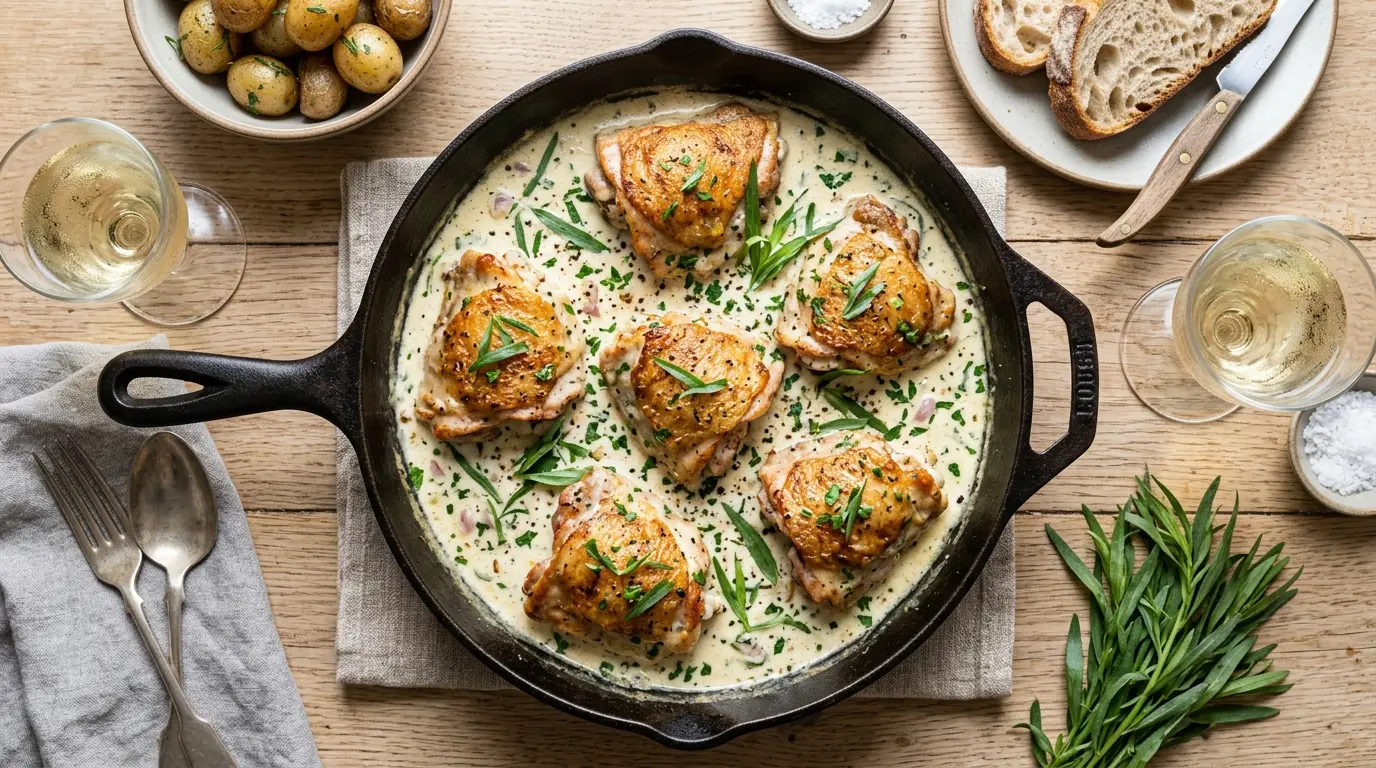
If you have never tried a creamy tarragon chicken recipe, you are in for a genuine treat. This classic French-inspired dish pairs golden, pan-seared chicken with a silky, herb-scented sauce built on white wine, heavy cream, and the bright anise-like perfume of fresh tarragon. It looks restaurant-worthy on the plate, yet the whole thing comes together in a single skillet in about 40 minutes.
Tarragon is the unsung hero of French cooking. Unlike other herbs that fade into the background, it brings a distinctive, slightly sweet flavor that elevates even the simplest cream sauce into something truly memorable.
This recipe follows the most traditional and widely-loved version of the dish, Poulet à l’Estragon, featuring bone-in, skin-on chicken thighs seared until perfectly golden, then finished in a white wine and cream pan sauce. The shallots add a gentle sweetness, the Dijon mustard gives the sauce a subtle backbone, and the lemon zest keeps everything bright and balanced.
For a cozy weeknight dinner or a special occasion with guests, this dish never fails to impress. The sauce alone is worth making twice.
If you love tarragon’s herby punch, you will also enjoy this Tarragon Chicken for a slightly different take on the classic.

Why You’ll Love This Creamy Tarragon Chicken Recipe
This dish sits in a rare sweet spot: it is elegant enough for company but genuinely easy enough for a Tuesday night.
Fresh tarragon does almost all the heavy lifting in terms of flavor. You do not need a long list of spices or complicated techniques to make the sauce taste exceptional.
Bone-in, skin-on chicken thighs are the ideal cut for this recipe. They stay juicy even with the extended cooking time needed to build the sauce, and the rendered chicken fat adds incredible depth to every component.
The cream sauce is forgiving and endlessly adaptable. Add a splash more wine, a squeeze of extra lemon, or a handful of spinach at the end, and the dish shifts gracefully without falling apart.
Here is what makes this recipe a keeper:
- Quick and weeknight-friendly with under 45 minutes of total cook time
- One-pan cleanup means fewer dishes and less fuss
- Classic French bistro flavor that genuinely impresses without technical difficulty
- Fresh tarragon provides a unique, irreplaceable flavor you will not get from dried herbs
- Versatile pairing options work beautifully over mashed potatoes, pasta, or fluffy rice
- Make-ahead friendly as the sauce actually deepens in flavor the next day
You might also enjoy: Chicken Francese
Ingredients
This recipe keeps things simple and focused. Each ingredient plays a distinct role, so try not to swap or skip anything without reading the tips section first.
- 4 bone-in, skin-on chicken thighs (about 2 lbs / 900g total)
- 1 teaspoon kosher salt, divided
- 1/2 teaspoon freshly ground black pepper
- 1 tablespoon olive oil
- 1 tablespoon unsalted butter
- 2 medium shallots, thinly sliced (about 1/2 cup)
- 3 garlic cloves, thinly sliced
- 1/3 cup (80ml) dry white wine (Pinot Grigio or Sauvignon Blanc work well)
- 3/4 cup (180ml) low-sodium chicken stock
- 1 cup (240ml) heavy cream
- 1 tablespoon Dijon mustard
- 1 teaspoon lemon zest (from about half a lemon)
- 1 tablespoon fresh lemon juice
- 3 tablespoons fresh tarragon leaves, roughly chopped, plus extra for garnish
- Optional: fresh flat-leaf parsley for garnish
Read Also: Baked Chicken Breast Recipe
Kitchen Equipment Needed
No specialty tools are required here. A good heavy-bottomed skillet is the most important piece and will make a significant difference in how evenly the chicken browns.
- Large oven-safe skillet or cast iron braiser (at least 12 inches / 30cm)
- Meat thermometer for checking doneness
- Microplane zester for lemon zest
- Sharp chef’s knife and cutting board
- Measuring cups and spoons
- Tongs for handling the chicken
- Wooden spoon or silicone spatula for scraping the pan
- Small bowl for mixing the sauce components before adding
This pairs beautifully with the same skillet setup used in Chicken Marsala.
Recommended Products for This Recipe
These are products I genuinely recommend based on quality and real performance in this specific dish. They make the process easier and the results noticeably better.
1. Lodge Pre-Seasoned Cast Iron Skillet (12-inch)
A cast iron skillet creates the most even, gorgeous sear on chicken skin and holds heat steadily throughout cooking. The dark, seasoned surface makes deglazing effortless, and all those browned bits that come up when you add the wine are pure flavor. It is a lifetime investment you will use for dozens of other recipes.
2. OXO Good Grips Flat Whisk
A flat whisk is perfect for incorporating the cream and Dijon mustard into the pan sauce without splashing. It gets into the corners of the skillet and keeps the sauce silky smooth as it reduces. Much more effective in a wide skillet than a standard balloon whisk.
3. Microplane Classic Zester Grater
Fresh lemon zest is a key brightening agent in this sauce, and a Microplane makes it effortless. It removes only the flavorful yellow outer layer without any bitter white pith underneath. You will also use it constantly for other baking and cooking projects once you own one.
4. Organic Fresh Tarragon (Live Herb Plant)
If fresh tarragon is hard to find in your local grocery store, a small live herb plant is a wonderful investment. Fresh tarragon has a completely different flavor profile from dried, and growing your own means you always have it available from spring through fall. It is also remarkably easy to maintain in a kitchen windowsill pot.
For more creamy chicken inspiration, check out this Chicken Florentine Recipe.

Step-by-Step Instructions
1. Prep the Chicken
- Remove the chicken thighs from the refrigerator at least 20 minutes before cooking. Bringing the chicken closer to room temperature helps it cook more evenly and produce a better sear.
- Use paper towels to pat the chicken thighs completely dry on all sides. This step is essential: excess surface moisture will steam the chicken instead of browning it, and you will lose that golden crust.
- Season the chicken thighs generously on both sides with 3/4 teaspoon kosher salt and the freshly ground black pepper.
- Set the seasoned chicken aside on a plate while you prepare the other ingredients.
2. Prep the Aromatics and Sauce Ingredients
- Peel and thinly slice the 2 shallots into half-moon shapes, about 1/8 inch thick. Thin slices will soften and melt into the sauce more evenly.
- Peel the garlic cloves and slice them thinly crosswise (rather than mincing). Sliced garlic gives a gentler, less sharp flavor that suits this delicate cream sauce better.
- Zest half a lemon using a Microplane to get 1 teaspoon of zest, then cut the lemon in half and squeeze out 1 tablespoon of fresh juice. Set both aside.
- Roughly chop the fresh tarragon leaves and set them in a small bowl. Reserve a few whole leaves for garnish.
- In a small bowl or liquid measuring cup, combine the heavy cream, Dijon mustard, and lemon zest. Whisk briefly to combine. Having this mixture ready before you start cooking makes the sauce stage fast and fluid.
- Measure out the white wine and chicken stock and have them close to the stove.
3. Sear the Chicken
- Place your large oven-safe skillet over medium-high heat. Allow it to heat for about 1 to 2 minutes until it is genuinely hot before adding any fat.
- Add the olive oil and butter to the skillet. Let the butter melt and foam, then subside, which signals that the pan is at the right temperature.
- Place the chicken thighs skin-side down in the pan. Do not crowd them; each piece should have a little space around it. Press them gently flat with a spatula for the first 30 seconds to maximize skin contact.
- Let the chicken sear, undisturbed, for 6 to 8 minutes. Resist the urge to move or check underneath too early. The chicken will naturally release from the pan when the skin is properly browned.
- Flip the chicken thighs and cook on the other side for 3 to 4 more minutes. The internal temperature at this point should be around 150 to 155 degrees F (65 to 68 degrees C). The chicken will finish cooking in the sauce.
- Transfer the seared chicken to a clean plate. Do not wipe out the skillet; all those browned bits stuck to the bottom are flavor gold.
4. Sauté the Aromatics
- Return the skillet to medium heat. If the pan looks excessively greasy, carefully pour off all but about 1.5 to 2 tablespoons of the rendered chicken fat. Leave enough fat to cook the aromatics.
- Add the sliced shallots to the skillet. Cook, stirring occasionally, for 3 to 4 minutes until softened and beginning to turn translucent.
- Add the sliced garlic to the shallots. Stir constantly for about 60 seconds until the garlic is fragrant but not browned. Watch closely as garlic can turn bitter very quickly if it over-colors.
5. Deglaze and Build the Sauce
- Pour the dry white wine into the skillet. It will sizzle immediately. Using a wooden spoon or spatula, scrape up all the browned bits from the bottom of the pan. This process is called deglazing, and those caramelized bits dissolve into the sauce and add huge depth of flavor.
- Increase the heat to medium-high and let the wine simmer for 2 to 3 minutes, stirring, until it has reduced by about half. You will smell the alcohol cooking off and the liquid will look slightly thickened.
- Add the chicken stock to the pan. Stir to combine and let the mixture simmer for another 2 minutes to reduce slightly.
- Reduce the heat to medium-low. Pour in the heavy cream and Dijon mustard mixture you prepared earlier. Stir everything together gently until fully combined.
- Season the sauce with the remaining 1/4 teaspoon salt and stir.
6. Finish the Chicken in the Sauce
- Nestle the seared chicken thighs back into the skillet, skin-side up. Make sure the skin sits above the sauce rather than submerged in it. This keeps the skin from going soggy while the chicken finishes cooking.
- Add the fresh tarragon leaves to the sauce, stirring gently around the chicken pieces.
- Reduce the heat to low and let the chicken simmer gently in the sauce, uncovered, for 10 to 15 minutes. The exact time depends on the size of your chicken thighs. You are looking for an internal temperature of 165 degrees F (74 degrees C) at the thickest part of the thigh.
- As the chicken cooks, the sauce will reduce slightly and thicken to a consistency that coats a spoon beautifully. If it reduces too much, add a splash of chicken stock.
7. Finish and Serve
- Remove the skillet from the heat. Stir in the fresh lemon juice directly into the sauce. Taste the sauce and adjust the salt and pepper if needed. If it tastes flat, a touch more lemon juice usually does the trick.
- Plate the chicken thighs over your chosen base (mashed potatoes, rice, pasta, or with crusty bread), then spoon the cream tarragon sauce generously over the top.
- Garnish with reserved fresh tarragon leaves and freshly chopped flat-leaf parsley if desired.
- Serve immediately while the sauce is glossy and the chicken skin is still crisp.
The sauce-building technique in this recipe works just as well in a Lemon Chicken Recipe if you want to mix up your weekly rotation.
Tips for Success
A few small adjustments separate a good creamy tarragon chicken from a truly great one. These are the details that make the difference.
- Dry the chicken thoroughly. Patting the skin completely dry is the single most impactful step for achieving crispy golden skin. Even a minute of extra drying time makes a visible difference.
- Do not rush the sear. Leave the chicken undisturbed for the full 6 to 8 minutes. Moving it early breaks the developing crust and causes the skin to stick. It will release naturally when ready.
- Use fresh tarragon, not dried. The anise-forward flavor of fresh tarragon is fundamentally different from dried. Dried tarragon has lost most of its volatile oils and will make the sauce taste faintly dusty rather than bright and herbaceous.
- Choose a wine you would drink. The wine flavor concentrates as it reduces. A crisp Pinot Grigio or Sauvignon Blanc works beautifully. Avoid cooking wines sold in bottles, as they contain added salt and preservatives that can throw off the balance of the sauce.
- Keep the heat low when adding cream. Pouring cream into a violently boiling pan can cause it to break or develop a grainy texture. A gentle simmer over medium-low heat keeps the sauce smooth and velvety.
- Rest the chicken before slicing if serving boneless. If you debone the chicken for plating, letting it rest for 3 minutes off the heat keeps the juices inside where they belong.
Read Also: Chicken Stew Recipe
Serving Suggestions
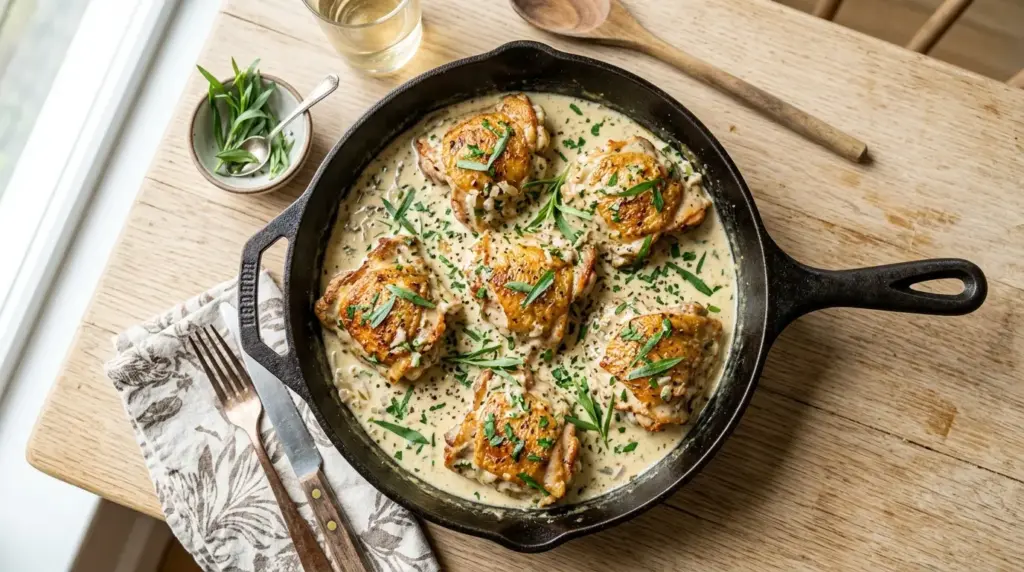
Creamy tarragon chicken is most at home when paired with something that can soak up the gorgeous sauce. Keep accompaniments relatively simple so the tarragon cream remains the star.
A bed of Creamy Mashed Potatoes is the most classic and crowd-pleasing pairing, and the fluffy potato texture holds the sauce perfectly. Here are a few more ideas to round out the meal:
- Buttery egg noodles or tagliatelle for a heartier, French bistro-style plate
- Steamed or roasted asparagus for a clean, green contrast to the rich sauce
- Roasted Broccoli with a squeeze of lemon as a simple side that balances the cream
- Basmati Rice for an easy, fluffy base that absorbs every drop of sauce
- Crusty French baguette for informal dining where you want to mop the plate clean
- Green Beans with almonds as a classic French-inspired accompaniment
Variations to Try
The bones of this recipe are endlessly adaptable. Once you have the basic sauce down, you can take it in several directions depending on what you have in the kitchen.
- Boneless chicken breasts: Pound them to an even 1/2-inch thickness before searing for fast, even cooking. Reduce the final simmering time to 5 to 7 minutes and monitor the internal temperature closely.
- Whole chicken pieces: Use a mix of thighs, drumsticks, and bone-in breasts for a more rustic family-style presentation inspired by the traditional Poulet à l’Estragon.
- Add mushrooms: Sliced cremini or shiitake mushrooms added with the shallots build the sauce with earthy umami depth.
- Swap white wine for vermouth: Dry vermouth gives a slightly deeper, more herbal character that pairs very well with tarragon.
- Make it dairy-free: Replace heavy cream with full-fat coconut cream for a dairy-free version. The flavor shifts slightly but remains rich and saucy.
- Stir in baby spinach: Add a handful of baby spinach to the sauce in the final 2 minutes for a pop of color and extra nutrients, similar to the technique in a Chicken Florentine Pasta.
- Add sundried tomatoes: A tablespoon of chopped sundried tomatoes adds a jammy, tangy element that pairs surprisingly well with tarragon’s anise notes.
Storage and Reheating
Creamy tarragon chicken stores beautifully and arguably tastes even better the next day, when the sauce has had time to meld and deepen. Here is how to keep it fresh.
- Refrigerate cooled leftovers in an airtight container for up to 3 to 4 days. Store the chicken and sauce together; the sauce helps keep the chicken moist.
- Freeze the chicken and sauce together in a freezer-safe container for up to 2 months. Note that cream sauces can sometimes split slightly on thawing; whisk gently while reheating to re-emulsify.
- Reheat on the stovetop over low heat, covered, for about 8 to 10 minutes. Add a splash of chicken stock or cream if the sauce has thickened too much in the fridge.
- Reheat in the microwave at 50% power in 60-second intervals, stirring between each interval, until heated through. Lower power prevents the cream sauce from breaking.
- Avoid boiling when reheating. A hard boil can cause the cream to separate and develop an unpleasant grainy texture. Gentle, low heat is always the right move.
For another make-ahead-friendly chicken dish, try this Slow Cooker Boursin Chicken and Pasta.
Nutritional Facts
The values below are estimates based on one serving (one chicken thigh with sauce), assuming 4 servings total. Actual values will vary based on the exact size of the chicken thighs and any adjustments to the recipe.
| Nutrient | Per Serving |
|---|---|
| Calories | approximately 520 kcal |
| Protein | 32g |
| Total Fat | 38g |
| Saturated Fat | 18g |
| Carbohydrates | 6g |
| Sugars | 2g |
| Sodium | 610mg |
| Potassium | 490mg |
| Fiber | 0.5g |
Note: Nutritional values are estimates only and are provided as a general guide. For precise tracking, use a nutritional calculator with your specific ingredient brands and weights.
You might also enjoy: Italian Chicken Skillet Recipe
Health Benefits of Key Ingredients
Beyond the delicious flavor, this recipe brings some genuinely nutritious components to the table.
Chicken thighs are a rich source of complete protein, providing all essential amino acids needed for muscle maintenance and repair. They also supply B vitamins, particularly niacin and B6, which play key roles in energy metabolism and brain function.
Here are the standout nutritional contributors in this recipe:
- Chicken thighs are higher in zinc and iron than white meat cuts, supporting immune function and oxygen transport
- Fresh tarragon contains manganese, a mineral involved in bone health and antioxidant enzyme production, and has traditionally been used to support digestion
- Garlic provides allicin and sulfur compounds that research has associated with cardiovascular and immune health benefits
- Shallots offer quercetin and other flavonoids, plant compounds with anti-inflammatory properties
- Heavy cream supplies fat-soluble vitamins A, D, and K2, which are best absorbed alongside dietary fat
- Lemon juice contributes vitamin C and helps increase iron absorption from other ingredients in the meal
Read Also: Homemade Alfredo Sauce Recipe
Frequently Asked Questions
1. Can I use dried tarragon instead of fresh?
Fresh tarragon is strongly preferred for this recipe. Dried tarragon loses the bright, volatile aromatic compounds that make this herb so distinctive. If fresh is unavailable, you can use 1 teaspoon of dried tarragon as a substitute, but the flavor will be noticeably milder and less complex. Add it along with the cream rather than at the end, as dried herbs need heat to release their flavor.
2. What white wine works best in this recipe?
A dry, crisp white wine is the goal. Pinot Grigio and Sauvignon Blanc are both excellent choices because they add brightness without overpowering the tarragon. Avoid anything labeled “cooking wine,” which contains added salt and can make the sauce taste harsh. If you prefer to cook without alcohol, substitute with an equal amount of additional chicken stock plus a teaspoon of white wine vinegar for a slight acidic balance.
3. Can I make this recipe with boneless, skinless chicken breasts?
Yes, though the technique changes slightly. Pound the chicken breasts to an even 1/2-inch (1.25cm) thickness before searing to ensure even cooking and prevent the edges from overcooking while the center finishes. Reduce the final simmering time to 5 to 7 minutes and use a meat thermometer to confirm they reach 165 degrees F (74 degrees C) internally. Boneless breasts are less forgiving than thighs, so accurate temperature checking is important.
4. Why did my cream sauce break or turn grainy?
Cream sauces break when exposed to too much direct heat too quickly. This usually happens if the cream is added to a vigorously boiling pan or if the heat is turned up too high after adding it. Always reduce heat to medium-low before adding cream, and never let the sauce reach a full rolling boil. If the sauce does break, remove it from the heat and whisk in a tablespoon of cold butter to help re-emulsify it.
5. Can I prepare this dish ahead of time for a dinner party?
Absolutely. Creamy tarragon chicken actually develops better flavor after sitting overnight, making it ideal for advance prep. Cook the recipe fully, allow it to cool completely, and store in an airtight container in the refrigerator for up to 24 hours. Reheat gently on the stovetop over low heat, adding a splash of cream or chicken stock to loosen the sauce if needed. The one trade-off is that the chicken skin will no longer be crispy, which is a minor compromise for the convenience.
Read Also: Chicken Piccata Recipe with Pasta
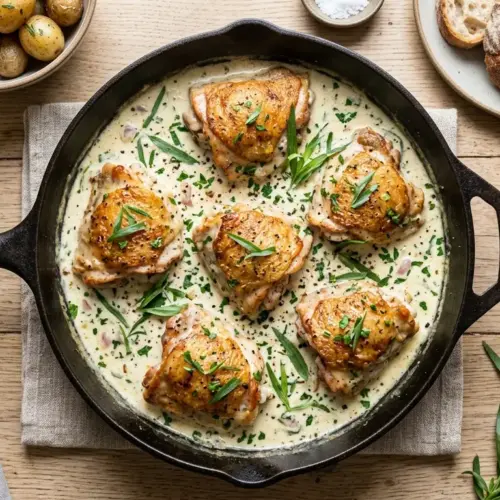
Creamy Tarragon Chicken (Poulet à l’Estragon)

Equipment
- Large oven-safe skillet or cast iron braiser - At least 12 inches / 30cm
- Meat thermometer
- Microplane zester - For lemon zest
- Sharp chef's knife
- Cutting board
- Measuring cups and spoons
- Tongs - For handling the chicken
- Wooden spoon or silicone spatula - For scraping the pan
- Small bowl - For mixing sauce components
Ingredients
- 4 bone-in, skin-on chicken thighs - about 2 lbs or 900g total
- 1 teaspoon kosher salt - divided
- ½ teaspoon freshly ground black pepper
- 1 tablespoon olive oil
- 1 tablespoon unsalted butter
- 2 medium shallots - thinly sliced, about 1/2 cup or 75g
- 3 cloves garlic - thinly sliced
- ⅓ cup dry white wine - 80ml, Pinot Grigio or Sauvignon Blanc
- ¾ cup low-sodium chicken stock - 180ml
- 1 cup heavy cream - 240ml
- 1 tablespoon Dijon mustard
- 1 teaspoon lemon zest - from about half a lemon
- 1 tablespoon fresh lemon juice
- 3 tablespoons fresh tarragon leaves - roughly chopped, plus extra for garnish
- fresh flat-leaf parsley - optional, for garnish
Instructions
- Remove chicken from refrigerator at least 20 minutes before cooking. Pat completely dry on all sides with paper towels. Season generously with 3/4 teaspoon salt and black pepper.
- Slice shallots and garlic thinly. Zest and juice lemon. Roughly chop tarragon. In a small bowl, whisk together heavy cream, Dijon mustard, and lemon zest.
- Heat a large skillet over medium-high heat. Add olive oil and butter. Place chicken skin-side down and sear undisturbed for 6-8 minutes until golden and crisp. Flip and cook 3-4 minutes more. Transfer to a plate.
- Reduce heat to medium. Pour off excess fat, leaving about 1.5-2 tablespoons. Add shallots and cook 3-4 minutes until softened. Add garlic and cook 1 minute until fragrant.
- Pour in white wine and scrape up browned bits from pan. Increase heat to medium-high and simmer 2-3 minutes until reduced by half. Add chicken stock and simmer 2 minutes more.
- Reduce heat to medium-low. Pour in cream mixture and whisk until combined. Season with remaining salt. Nestle chicken back into skillet skin-side up. Add tarragon and simmer uncovered 10-15 minutes until chicken reaches 165°F (74°C) internally.
- Remove from heat and stir in lemon juice. Taste and adjust seasoning. Plate chicken over mashed potatoes, pasta, or rice. Spoon sauce on top and garnish with fresh tarragon and parsley.
Notes
- Dry the chicken thoroughly: Patting the skin completely dry is the single most impactful step for achieving crispy golden skin. Even a minute of extra drying time makes a visible difference.
- Do not rush the sear: Leave the chicken undisturbed for the full 6 to 8 minutes. Moving it early breaks the developing crust and causes the skin to stick. It will release naturally when ready.
- Use fresh tarragon, not dried: The anise-forward flavor of fresh tarragon is fundamentally different from dried. Dried tarragon has lost most of its volatile oils and will make the sauce taste faintly dusty rather than bright and herbaceous.
- Choose a wine you would drink: The wine flavor concentrates as it reduces. A crisp Pinot Grigio or Sauvignon Blanc works beautifully. Avoid cooking wines sold in bottles, as they contain added salt and preservatives.
- Keep the heat low when adding cream: Pouring cream into a violently boiling pan can cause it to break or develop a grainy texture. A gentle simmer over medium-low heat keeps the sauce smooth and velvety.
- Storage: Refrigerate cooled leftovers in an airtight container for up to 3 to 4 days. Store the chicken and sauce together; the sauce helps keep the chicken moist.
- Freezing: Freeze the chicken and sauce together in a freezer-safe container for up to 2 months. Note that cream sauces can sometimes split slightly on thawing; whisk gently while reheating to re-emulsify.
- Reheating: Reheat on the stovetop over low heat, covered, for about 8 to 10 minutes. Add a splash of chicken stock or cream if the sauce has thickened too much. Avoid boiling as it can cause the cream to separate.
- Make ahead: This dish develops better flavor after sitting overnight, making it ideal for advance prep. Cook fully, cool completely, and refrigerate for up to 24 hours. Reheat gently on the stovetop.
Final Thoughts
This creamy tarragon chicken recipe is the kind of dish that quietly becomes a household staple. It looks and tastes like something that required real effort, but the actual technique is approachable for any cook willing to follow the steps carefully.
The combination of fresh tarragon, white wine, and heavy cream is genuinely timeless. Once you taste how well these three things work together, you will understand why French home cooks have been making this dish for generations.
Give this creamy tarragon chicken recipe a try this week, and do not forget to serve it with something excellent for soaking up that sauce.
If you make it, leave a comment below letting me know how it turned out, or share a photo on social media and tag us. Seeing your versions of this recipe is always the best part.
Recommended:
- Tarragon Chicken Salad Recipe
- Chicken Florentine Casserole Recipe
- Grilled Lemon Pepper Chicken Recipe
- Chicken Cacciatore Recipe
- Chicken Cordon Bleu Recipe
- Bechamel Sauce Recipe
- Chicken and Broccoli Recipe
- Creamed Spinach Recipe
- Cilantro Lime Rice Recipe
- Chicken Noodle Soup Recipe