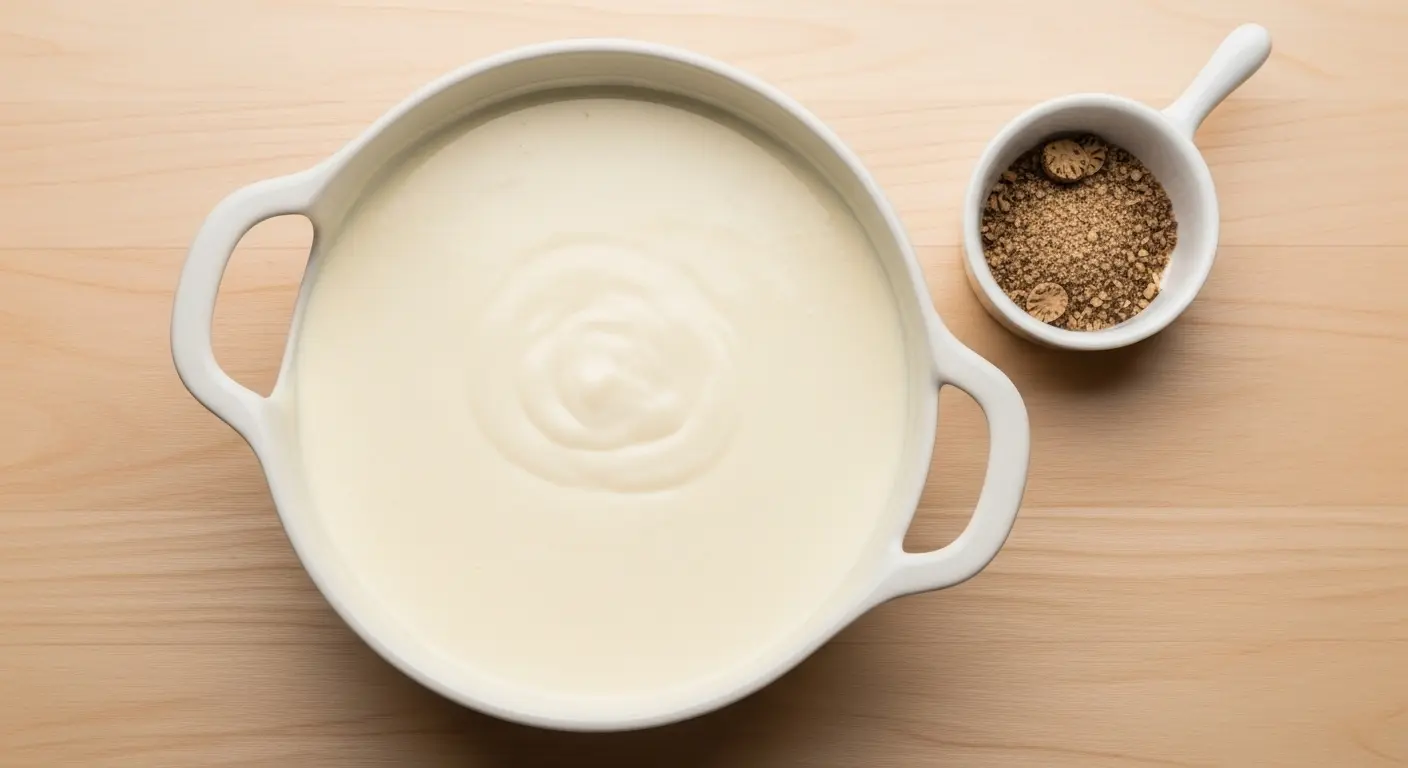
If you’ve ever wanted to master the base of so many beloved dishes, this bechamel sauce recipe is the one to bookmark. Smooth, velvety, and impossibly creamy, bechamel is one of the five classic French mother sauces, and once you know how to make it, a whole world of cooking opens up to you.
This sauce comes together with just three core ingredients: butter, flour, and milk. But the technique behind it is what separates a lumpy, bland white sauce from something truly silky and rich.
It’s a sauce that rewards patience. A properly made bechamel is whisked steadily, built slowly, and seasoned thoughtfully. You’ll taste the difference immediately.
Whether you’re layering it into a classic lasagna, spooning it over vegetables, or building it into a creamy pasta bake, knowing how to make bechamel from scratch will transform your cooking.
This guide walks you through every step, from toasting the roux to getting the perfect pourable consistency. Even if you’ve never made a white sauce before, you’ll have it down by the time you’re done reading.
This recipe pairs beautifully with Baked Ziti for a rich, indulgent dinner that comes together with ease.
Why You’ll Love This Bechamel Sauce Recipe
This is the kind of foundational recipe that will come up again and again in your kitchen.
Once you learn it, you’ll find yourself reaching for it constantly, because bechamel is endlessly versatile.
It’s a quick sauce that takes about 15 minutes from start to finish on the stovetop.
You don’t need any specialty ingredients, just pantry staples you almost certainly already have.
It’s completely customizable, meaning you can season it simply or build in layers of flavor with cheese, nutmeg, mustard, or herbs.
Here’s why home cooks love this recipe:
- Only 3 core ingredients needed (butter, flour, milk)
- Ready in about 15 minutes
- Smooth and lump-free when made correctly
- Works as the base for dozens of other sauces (Mornay, cream sauce, velouté)
- Freezes well for meal prep
- Completely scalable, double or triple the batch easily
Read Also: Cheese Sauce Recipe
Ingredients
To make a classic bechamel sauce, you need just a handful of ingredients. The key is using good-quality milk (whole milk is strongly recommended here) and ensuring your butter and flour are cooked together properly before any liquid is added.
Here’s what you’ll need (makes approximately 2 cups / 480 ml of sauce):
- 2 tablespoons (28 g) unsalted butter
- 2 tablespoons (16 g) all-purpose flour
- 2 cups (480 ml) whole milk, warmed
- 1/4 teaspoon fine sea salt (plus more to taste)
- 1/8 teaspoon freshly ground white pepper (or black pepper)
- A pinch of freshly grated whole nutmeg (optional but traditional)
For a richer sauce:
- An extra 1 tablespoon (14 g) of butter stirred in at the end adds gloss and richness
You might also enjoy: Hollandaise Sauce Recipe
Kitchen Equipment Needed
You don’t need much specialized equipment for bechamel, but a few key tools will make the process smoother and prevent lumps from forming in the sauce.
Here’s what to have ready:
- Heavy-bottomed saucepan (2-quart / 1.9 L capacity works well)
- Balloon whisk (essential for smooth, lump-free sauce)
- Wooden spoon or silicone spatula (for scraping edges)
- Measuring cups and spoons
- Microwave-safe container or small saucepan (for warming the milk)
- Ladle or pouring cup (for adding milk gradually)
- Fine mesh strainer (optional, for straining out any lumps)
- Box grater or microplane (for grating fresh nutmeg)
Read Also: Homemade Alfredo Sauce Recipe
Recommended Products for This Recipe
These are a few products that can genuinely elevate your experience making bechamel sauce, chosen based on quality and how much they simplify the process.
1. All-Clad Stainless Steel Tri-Ply Saucepan
A heavy-bottomed, tri-ply saucepan distributes heat evenly across the base, which is critical when making bechamel. Uneven heat causes the roux to scorch on one side and cook unevenly, leading to off flavors in the final sauce. This style of pan is worth every penny for sauce work.
2. OXO Good Grips 11-Inch Balloon Whisk
A good balloon whisk makes all the difference when building bechamel. The rounded wire design creates maximum contact with the bottom and sides of the pan, breaking up lumps before they form. OXO’s model has a comfortable grip that makes constant whisking much less tiring.
3. Microplane Premium Zester/Grater
Freshly grated nutmeg is one of the most underrated additions to a classic bechamel, and a microplane makes it effortless. Pre-ground nutmeg loses its potency quickly, while freshly grated nutmeg has a warm, aromatic depth that genuinely transforms the sauce.
4. Whole Nutmeg (McCormick or similar)
A small jar of whole nutmeg is an inexpensive kitchen investment that lasts a very long time. Used sparingly in bechamel, it adds a subtle warmth that makes the sauce taste more complex and classically French. You’ll also find yourself using it in pasta, potatoes, and baked goods.
The same technique used in this sauce also shines in dishes like Scalloped Potatoes, where a creamy white sauce is the star of the show.
Step-by-Step Instructions
Step 1: Warm the Milk
- Pour 2 cups (480 ml) of whole milk into a microwave-safe measuring cup or a small saucepan.
- Warm it over medium-low heat (or in the microwave for 60-90 seconds) until it is just warm to the touch, not boiling. This is called “scalding” the milk, and it prevents the roux from seizing up when you add cold milk.
- Do not boil the milk. Overheated milk can develop a skin and affect the sauce’s texture.
- Set the warm milk aside within easy reach of your stovetop.
Step 2: Make the Roux
- Place your heavy-bottomed saucepan over medium heat.
- Add 2 tablespoons (28 g) of unsalted butter to the pan.
- Allow the butter to melt completely, stirring gently with your whisk or spoon.
- Once the butter is melted and just beginning to foam (but not brown), add 2 tablespoons (16 g) of all-purpose flour all at once.
- Using your whisk or wooden spoon, stir the butter and flour together immediately and vigorously. This mixture is called a “roux.”
- Cook the roux over medium heat for 1 to 2 minutes, whisking constantly. You want it to turn a pale, slightly golden straw color and smell slightly nutty. This step is critical because it cooks out the raw flour taste. Do not let it go brown.
Step 3: Begin Adding the Milk
- Remove the saucepan from the heat for just a moment (this helps prevent lumping when the milk first hits the roux).
- Add about 1/4 cup (60 ml) of the warm milk to the roux, whisking quickly and constantly to incorporate it completely.
- Return the pan to medium-low heat.
- Continue adding the warm milk in a slow, steady stream, pouring a little at a time and whisking constantly before each addition.
- Resist the urge to dump all the milk in at once. Adding it gradually and whisking between additions is the key to a lump-free sauce.
Step 4: Cook and Thicken the Sauce
- Once all the milk has been incorporated, increase the heat slightly to medium.
- Continue to cook the sauce, whisking constantly or stirring frequently, for 5 to 8 minutes.
- The sauce will begin to thicken. You’ll know it’s ready when it coats the back of a spoon and a line drawn through it holds its shape.
- If any small lumps form during cooking, whisk vigorously to break them up. You can also pass the sauce through a fine mesh strainer at the end if needed.
Step 5: Season the Sauce
- Once the sauce has thickened to your desired consistency, remove it from the heat.
- Add 1/4 teaspoon fine sea salt and 1/8 teaspoon freshly ground white pepper (or black pepper).
- If using, grate a small pinch of fresh nutmeg directly into the sauce. Start with just a little and taste as you go. Nutmeg is strong and you only need a small amount.
- Stir everything together and taste for seasoning. Adjust salt and pepper to your preference.
- For extra richness and shine, stir in an optional additional tablespoon (14 g) of cold butter at the very end, swirling it in until fully melted.
Step 6: Use Immediately or Store
- Use the bechamel sauce right away while it is warm and pourable.
- If you’re not using it immediately, press a piece of plastic wrap or parchment paper directly onto the surface of the sauce to prevent a skin from forming.
- Reheat gently over low heat, whisking in a splash of warm milk to restore the original consistency if it has thickened too much.
You might also enjoy: Easy Lasagna Recipe
Tips for Success
Getting bechamel right the first time comes down to a few simple but important techniques. Keep these tips in mind and you’ll have a smooth, velvety sauce every single time.
Key tips to follow:
- Warm your milk first. Adding cold milk to a hot roux is one of the most common causes of lumpy bechamel. Warm milk incorporates smoothly.
- Don’t rush the roux. Cook the butter and flour together for at least 60 seconds. Under-cooked roux results in a floury taste in the finished sauce.
- Add the milk slowly. Especially the first few additions. A slow, steady pour with constant whisking is the lump-prevention secret.
- Whisk, don’t stir. A balloon whisk reaches every corner of the pan and breaks up small clumps before they become big ones.
- Keep the heat at medium or lower. High heat can cause the sauce to scorch on the bottom and thicken too fast.
- Strain if needed. If lumps happen despite your best efforts, pour the sauce through a fine mesh strainer. No one will ever know.
- Adjust the consistency. For a thicker sauce (like for lasagna), reduce slightly longer. For a thinner, more pourable sauce (like over vegetables), add an extra splash of warm milk.
Read Also: Vodka Sauce Recipe
Serving Suggestions
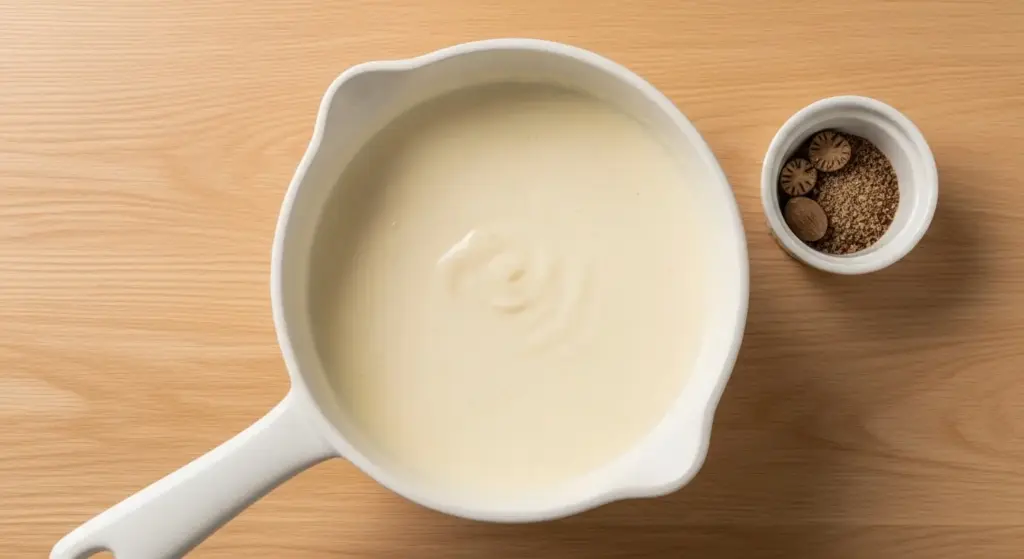
Bechamel is one of the most useful sauces in your repertoire because it works beautifully in so many different dishes.
It is the foundation of many classic comfort foods, from baked pasta to creamy gratins. Here are some of the best ways to use it.
Ways to serve and use bechamel sauce:
- Layered into Lasagna with Ricotta for a traditional Italian-style bake
- Poured over roasted cauliflower or broccoli and baked until golden for a simple gratin
- Used as the base for a classic macaroni and cheese sauce (just add cheese for a Mornay sauce)
- Spooned over baked chicken breast before broiling for a creamy, golden topping
- Used as the white layer in a classic moussaka or pastitsio
- Stirred into Stuffed Shells for extra creaminess
- Drizzled over steamed or roasted asparagus as an elegant side dish
- Used as a dipping sauce base for savory crepes
- Thinned slightly and used as a creamy soup base
Read Also: Turkey Tetrazzini Recipe
Variations to Try
Classic bechamel is just the beginning. Once you’ve mastered the base, it’s easy to customize it into different sauces for different applications.
Here are some popular and useful variations:
- Mornay Sauce: Whisk in 1/2 to 1 cup (50-100 g) of grated Gruyere or sharp cheddar off the heat to create a cheese sauce. Perfect for mac and cheese or gratins.
- Cheddar White Sauce: Use sharp cheddar in place of Gruyere for a more American-style cheese sauce.
- Dijon Bechamel: Add 1 to 2 teaspoons of Dijon mustard to the finished sauce for a tangy, slightly sharp flavor that pairs beautifully with chicken or ham.
- Herb-Infused Bechamel: Steep fresh thyme, bay leaf, or parsley stems in the milk before straining and using it to make the sauce. This adds a delicate herbal note.
- Roasted Garlic Bechamel: Stir in 2 to 3 cloves of roasted, mashed garlic for a rich, savory version that is incredible over pasta or roasted vegetables.
- Light Bechamel: Substitute half the whole milk with low-fat milk to reduce calories while maintaining a mostly creamy texture.
- Dairy-Free Bechamel: Use vegan butter and oat milk or unsweetened almond milk for a plant-based version that still gets creamy and thick.
This sauce also serves as the creamy white layer in Baked Chicken with Alfredo Sauce for a rich and satisfying dinner.
Storage and Reheating
Bechamel sauce stores well and reheats easily, making it a great candidate for meal prep.
Keep these simple storage tips in mind so it stays smooth and fresh.
How to store and reheat:
- Refrigerator: Store cooled bechamel in an airtight container for up to 3 to 4 days. Press plastic wrap directly onto the surface before sealing the container to prevent a skin from forming.
- Freezer: Bechamel can be frozen for up to 3 months. Let it cool completely first, then transfer to a freezer-safe container. Leave a little space at the top as it expands slightly when frozen.
- Reheating on the stovetop: Pour the sauce into a saucepan over low heat. Add a small splash of warm milk and whisk constantly as it heats. This restores the creamy texture and prevents scorching.
- Reheating in the microwave: Transfer to a microwave-safe bowl. Heat in 30-second increments, whisking in between, until warmed through.
- After freezing: Thaw overnight in the refrigerator before reheating. Whisk vigorously with a little warm milk to re-emulsify the sauce if it looks slightly separated.
The same method works perfectly when preparing the sauce ahead for dishes like Green Bean Casserole.
Nutritional Facts
The following values are approximate per 1/4 cup (60 ml) serving of classic bechamel sauce made with whole milk (yields approximately 8 servings).
| Nutrient | Amount Per Serving |
|---|---|
| Calories | 75 kcal |
| Total Fat | 5 g |
| Saturated Fat | 3 g |
| Cholesterol | 14 mg |
| Sodium | 95 mg |
| Total Carbohydrates | 5 g |
| Dietary Fiber | 0 g |
| Sugars | 3 g |
| Protein | 2 g |
| Calcium | 70 mg |
Note: Nutritional values are estimates and will vary based on specific brands and exact measurements used.
Read Also: Tomato Sauce Recipe
Health Benefits of Key Ingredients
While bechamel is a rich, indulgent sauce meant to be enjoyed in moderation, its core ingredients do offer some genuine nutritional value.
Used thoughtfully, this is a sauce that can absolutely fit into a balanced diet.
Key ingredient benefits:
- Whole Milk: A good source of calcium, phosphorus, and vitamin D, which are important for bone health. Whole milk also provides protein and B vitamins, including B12 and riboflavin.
- Butter: Contains fat-soluble vitamins A, D, E, and K2. In moderate amounts, butter from quality sources adds both flavor and nutritional value to the sauce.
- All-Purpose Flour: Acts as the thickening agent and provides a small amount of carbohydrates for energy. You can substitute whole wheat flour for a slight fiber boost, though the texture will be slightly denser.
- Nutmeg: Used in tiny amounts, nutmeg contains small amounts of manganese and has been studied for its antioxidant properties. It also has a long history in traditional medicine as a digestive aid.
- White Pepper: Like black pepper, white pepper contains piperine, a compound studied for its potential anti-inflammatory effects. It adds heat and depth to the sauce without the visible specks of black pepper.
You might also enjoy: Creamy Mac and Cheese Recipe
Frequently Asked Questions
1. Why does my bechamel sauce have lumps?
Lumps are almost always caused by one of two things: adding cold milk to the roux too quickly, or not whisking vigorously enough during the process. To fix a lumpy sauce, whisk it hard and fast off the heat, or pass it through a fine mesh strainer. To prevent lumps next time, warm your milk before adding it, pour it in slowly, and keep whisking without stopping.
2. Can I make bechamel sauce without butter?
Yes, you can substitute the butter with a neutral oil (like sunflower or light olive oil) or a vegan butter alternative. The sauce will still thicken properly because the roux still forms, but the flavor and richness will be slightly different. Vegan butter alternatives tend to work the closest to the original in terms of taste.
3. How do I make my bechamel thicker or thinner?
The ratio of flour to milk controls thickness. For a thicker sauce, use slightly more flour or cook the sauce a little longer to reduce it. For a thinner sauce, simply add more warm milk a tablespoon at a time, whisking until you reach the consistency you want. As a general rule, the 2 tablespoons flour to 2 cups milk ratio produces a medium-bodied sauce ideal for most applications.
4. Can I make bechamel ahead of time?
Absolutely. Make the sauce up to 3 to 4 days in advance and store it in the refrigerator with plastic wrap pressed directly onto its surface. When you’re ready to use it, reheat it gently over low heat, adding a splash of warm milk and whisking to bring it back to a pourable, smooth consistency.
5. What is the difference between bechamel and Alfredo sauce?
Both are creamy white pasta sauces, but they are made quite differently. Bechamel is a French mother sauce made from a butter-flour roux cooked with milk. Alfredo is an Italian sauce traditionally made by tossing cooked pasta with butter and Parmesan cheese, with no roux involved. When cream is added to bechamel and Parmesan is stirred in, the result (a Mornay sauce) is closer to a cream-based Alfredo, but the techniques remain distinct.
Read Also: Marinara Sauce Recipe
Final Thoughts
Bechamel sauce is one of those timeless kitchen skills that pays dividends every single time you use it.
Once you’ve made it a few times, the whole process becomes second nature: a proper roux, a steady pour, patient whisking, and just the right seasoning.
It’s a sauce that connects home cooks to centuries of culinary tradition, and yet it takes only 15 minutes and three ingredients to pull off.
Try this bechamel sauce recipe the next time you’re making lasagna, pasta bake, or even just a simple creamy vegetable gratin. You’ll be amazed at how much of a difference a homemade white sauce makes.
If you make this recipe, leave a comment below and let me know how it turned out. I’d love to hear about the dish you used it in!
Recommended:
- Spaghetti Sauce Recipe
- Creole Sauce Recipe
- Sunshine Sauce Recipe
- Comeback Sauce Recipe
- Enchilada Sauce Recipe
- BBQ Sauce Recipe
- Teriyaki Sauce Recipe
- Stir Fry Sauce Recipe
- Caramel Sauce Recipe
- Peanut Sauce Recipe