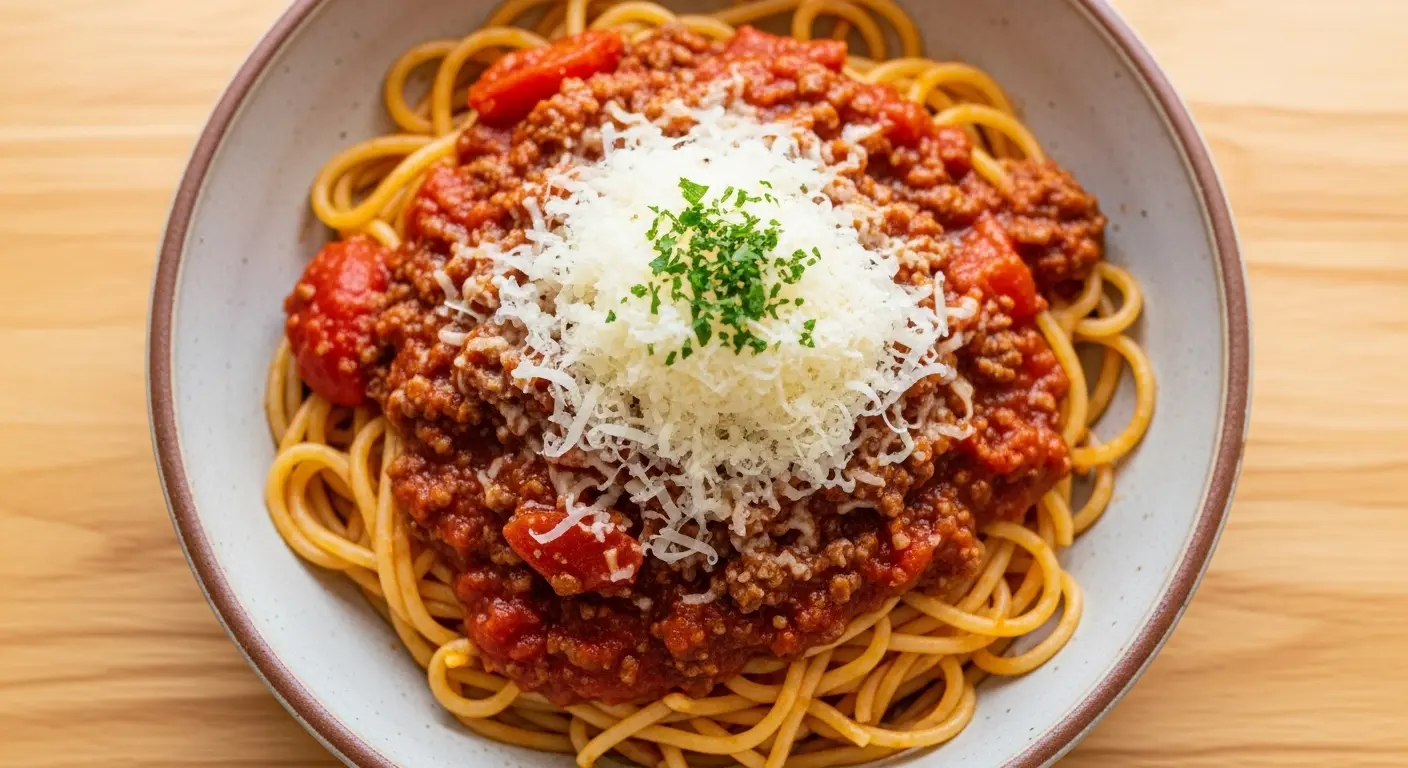
A truly great spaghetti sauce recipe is one of those things that can completely transform dinner. Not the kind that comes from a jar with a list of ingredients you can’t pronounce, but a real, slow-simmered, deeply flavorful sauce that makes your whole kitchen smell incredible.
This recipe is the classic version most people grew up loving: ground beef, crushed tomatoes, onion, garlic, Italian herbs, and a slow simmer that builds layer upon layer of rich flavor.
It is the foundation of so many beloved meals, from weeknight pasta to Sunday lasagna.
Once you make this from scratch, going back to store-bought becomes very difficult.
The secret is in the simmer. A longer cook time, even just 30 to 45 minutes, lets the tomatoes break down, the sugars in the onion caramelize, and the herbs bloom into something that is genuinely restaurant-worthy.
Why You’ll Love This Spaghetti Sauce Recipe
This spaghetti sauce recipe checks every box for a dependable, crowd-pleasing dinner sauce.
It uses simple pantry staples, takes less than an hour on the stovetop, and tastes far better than anything you can buy pre-made.
The ground beef makes it hearty and satisfying, so it doubles beautifully as a meal-in-one when ladled over pasta.
It also makes a generous batch, which means you will have plenty left over for the freezer.
This sauce is incredibly versatile. Use it for classic spaghetti, baked ziti, stuffed shells, lasagna, or even as a dipping sauce for garlic bread.
It also reheats beautifully, meaning the leftovers are just as good the next day, sometimes even better as the flavors have more time to develop.
Here is a quick summary of why this recipe is worth making:
- Made with accessible, everyday ingredients
- Deep, rich flavor from a slow simmer
- Ready in under an hour
- Works for dozens of Italian-inspired dishes
- Freezer-friendly and meal-prep approved
- Easy enough for beginners, satisfying enough for seasoned cooks
You might also enjoy: Baked Spaghetti Recipe with Ground Beef
Ingredients
This recipe keeps things classic and unfussy. The combination of crushed tomatoes and tomato paste is key, as crushed tomatoes give body while tomato paste adds concentrated depth and color. A small pinch of sugar balances the natural acidity of the canned tomatoes without making the sauce taste sweet.
- 1 lb (450g) lean ground beef
- 1 medium yellow onion, finely diced
- 5 cloves garlic, minced
- 2 tablespoons extra virgin olive oil
- 1 can (28 oz / 794g) crushed tomatoes
- 1 can (15 oz / 425g) tomato sauce
- 1 can (6 oz / 170g) tomato paste
- 1/2 cup (120ml) beef broth or water
- 1 teaspoon granulated sugar
- 1 teaspoon dried Italian seasoning
- 1 teaspoon dried oregano
- 1/2 teaspoon dried basil
- 1/2 teaspoon garlic powder
- 1/4 teaspoon crushed red pepper flakes (optional, for a mild kick)
- 1 teaspoon Worcestershire sauce
- Salt and black pepper to taste
- 2 tablespoons fresh basil, chopped (for finishing, optional)
- 2 tablespoons fresh flat-leaf parsley, chopped (for garnish)
Read Also: Marinara Sauce Recipe
Kitchen Equipment Needed
Having the right tools on hand makes the process smooth and stress-free. A heavy-bottomed pot or Dutch oven is especially important here, as it distributes heat evenly and prevents the sauce from scorching during the simmer.
- Large Dutch oven or heavy-bottomed pot (at least 5 quarts)
- Wooden spoon or silicone spatula
- Sharp chef’s knife and cutting board
- Can opener
- Measuring cups and spoons
- Ladle for serving
- Fine mesh strainer (optional, for a smoother sauce)
- Immersion blender (optional, if you prefer a smoother texture)
This sauce pairs wonderfully over pasta for a satisfying dinner that works any night of the week, or use it in a hearty easy lasagna for a weekend crowd-pleaser.
Recommended Products for This Recipe
These are products that genuinely make a difference when cooking this sauce at home, selected based on quality and how well they perform in this specific recipe.
1. San Marzano Canned Tomatoes
San Marzano tomatoes are sweeter, less acidic, and have a thicker flesh than regular canned tomatoes, which translates directly into a richer, more complex sauce. Many Italian cooks and professional chefs consider them the gold standard for any tomato-based pasta sauce. Using them in place of standard crushed tomatoes takes the flavor from good to exceptional.
2. Le Creuset Enameled Cast Iron Dutch Oven
A quality Dutch oven like Le Creuset distributes heat evenly, which prevents hot spots that can scorch the sauce during a long simmer. The enameled interior is non-reactive, meaning it will not affect the flavor of acidic tomato sauce, and cleanup is effortless even after a long cook. This is the kind of pot that lasts for decades.
3. Breville Control Grip Immersion Blender
If you prefer a smooth, velvety sauce without any visible onion or tomato chunks, an immersion blender lets you achieve that texture directly in the pot with zero mess. The Breville model is known for its ergonomic grip and powerful motor that handles chunky tomato sauce with ease. No need to transfer hot liquid to a countertop blender.
4. Premium Italian Extra Virgin Olive Oil
A good quality Italian extra virgin olive oil used to sauté the onion and garlic at the start of the recipe contributes a subtle fruity, peppery depth you simply cannot get from a neutral oil. It is one of those small upgrades that makes a noticeable difference in the final flavor of the sauce.
5. Microplane Premium Zester Grater
While not required for this recipe, a Microplane is incredibly useful if you want to add a final finish of freshly grated Parmesan over the plated dish. It produces ultra-fine, fluffy shreds that melt into the hot pasta beautifully rather than sitting on top in clumps. Highly recommended for a polished presentation.
This sauce also works beautifully as the base for baked ziti, so consider doubling the batch while you are at it.
Step-by-Step Instructions
1. Prep Your Aromatics
- Finely dice the yellow onion into small, even pieces, roughly 1/4 inch. Smaller pieces melt into the sauce during the simmer, so you will not end up with large onion chunks.
- Peel and mince the garlic cloves. You can use a garlic press if you prefer, but hand-mincing gives you slightly more control over the texture.
- Measure out all your dried spices, the Italian seasoning, oregano, basil, garlic powder, red pepper flakes, sugar, salt, and pepper, and set them aside in a small bowl or prep dish so they are ready to go.
- Open your cans of crushed tomatoes, tomato sauce, and tomato paste and set them near the stove.
2. Brown the Ground Beef
- Heat your Dutch oven or large pot over medium-high heat. Once it is hot, add the ground beef. Do not add any oil yet, as the beef will release its own fat.
- Use a wooden spoon or spatula to break the beef into small crumbles as it cooks. You want even, small pieces rather than large chunks so the beef distributes throughout the sauce.
- Cook for 5 to 7 minutes, stirring occasionally, until the beef is fully browned with no pink remaining.
- Carefully drain the excess grease from the pot. Tilt the pot to one side and spoon off the fat, or transfer the beef briefly to a colander. Leaving too much fat can make the sauce greasy and dull.
- Return the pot to the heat.
3. Sauté the Onion and Garlic
- Reduce the heat to medium. Add the olive oil to the pot with the browned beef.
- Add the diced onion to the pot and stir to combine it with the beef. Cook for 4 to 5 minutes, stirring occasionally, until the onion turns soft and translucent. You should start to smell a sweet, mellow aroma as the onion softens.
- Add the minced garlic and stir constantly for about 60 seconds. Garlic burns very quickly, so keep it moving. You want it golden and fragrant, not dark brown or bitter.
4. Add the Tomato Products
- Add the tomato paste directly to the pot and stir it into the beef and onion mixture. Cook for 1 to 2 minutes, stirring continuously. This step is called “blooming” the paste, and it drives off some of the raw, metallic flavor while deepening the color and richness of the sauce.
- Pour in the crushed tomatoes. Stir well to combine everything.
- Add the tomato sauce. Stir again.
- Add the beef broth (or water). The liquid helps loosen the sauce to the right consistency, and broth adds an extra layer of savory flavor.
5. Season the Sauce
- Add the dried Italian seasoning, dried oregano, dried basil, garlic powder, and crushed red pepper flakes (if using). Stir thoroughly to distribute the spices evenly throughout the sauce.
- Add the Worcestershire sauce. This is a small but impactful ingredient; it adds a subtle umami depth that enriches the beefy flavor without making the sauce taste like anything other than a classic spaghetti sauce.
- Add the granulated sugar. Give everything a good stir.
- Season with salt and black pepper to taste. Start with 1/2 teaspoon of salt and a few grinds of pepper, then adjust at the end.
6. Simmer the Sauce
- Increase the heat to bring the sauce to a gentle boil. You should see large, slow bubbles breaking the surface.
- Once it reaches a boil, reduce the heat to low and cover the pot partially, leaving the lid slightly ajar to allow steam to escape. This prevents the sauce from becoming too watery.
- Let the sauce simmer for at least 30 minutes. For an even deeper, more developed flavor, simmer for 45 minutes to 1 hour, stirring every 10 to 15 minutes to prevent sticking on the bottom.
- The sauce is ready when it has thickened noticeably and the color has deepened to a rich, brick red.
7. Finish and Taste
- Turn off the heat. If using fresh basil, stir it in now so the heat of the sauce gently wilts it without cooking out all its bright flavor.
- Taste the sauce and adjust the seasoning. If it still tastes acidic, add another pinch of sugar. If it needs more depth, add a small pinch more salt. If the flavor seems flat, a splash more Worcestershire sauce will help.
- Serve immediately over cooked pasta, garnished with freshly chopped parsley and Parmesan cheese if desired.
Read Also: Stuffed Shells Recipe
Tips for Success
A few small techniques make a big difference in the final quality of this sauce. The most important tip is to not rush the simmer, as the longer the sauce cooks at low heat, the more its flavor develops and deepens.
- Do not skip browning the tomato paste. Cooking it for a minute or two before adding the liquids caramelizes some of its natural sugars and removes the raw, tinny flavor.
- Use good quality canned tomatoes. San Marzano tomatoes are the most recommended variety by professional cooks. They are sweeter, less acidic, and have a denser, meatier texture that makes a noticeably richer sauce.
- Deglaze if needed. If anything sticks to the bottom when adding your liquid, use the broth to scrape those browned bits up. They contain concentrated flavor.
- Season in layers. Add a little salt with the onions, taste before the simmer, and taste again at the end. This prevents over- or under-seasoning.
- Stir regularly during the simmer. Tomato sauce can catch on the bottom of the pot, especially as it thickens. A quick stir every 10 to 15 minutes keeps it even.
- Add a Parmesan rind. If you have one in the freezer, drop it into the sauce while it simmers. It melts into the sauce and adds a remarkable, savory, nutty richness that is hard to describe but impossible to miss.
- Taste before you add sugar. Canned tomato brands vary significantly in acidity. Always taste first, then add sugar only if the sauce tastes sharp or acidic.
For another great pasta night option, try this baked chicken spaghetti that uses a similar base sauce with a totally different result.
Serving Suggestions
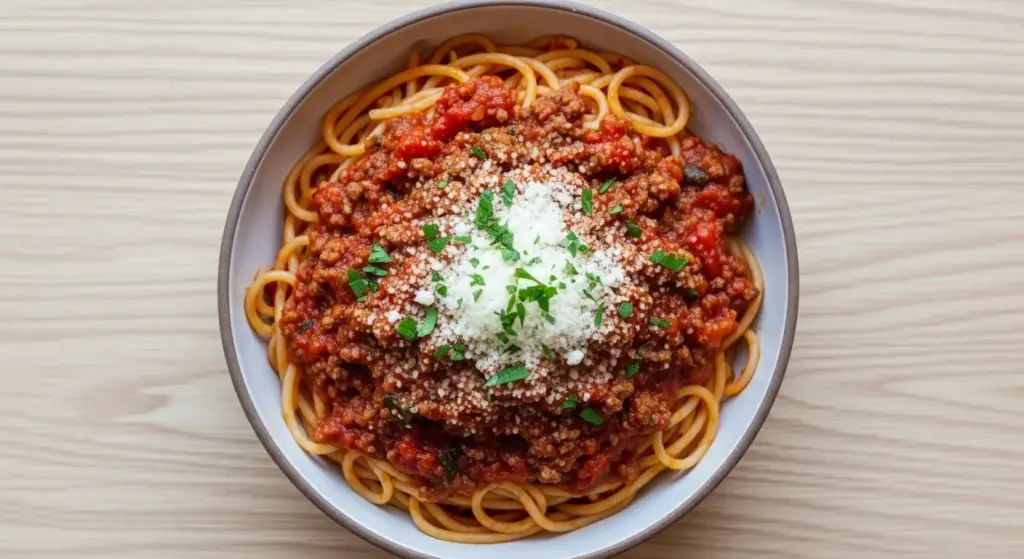
This hearty spaghetti sauce is built to go the distance at the dinner table, and the serving possibilities are almost endless.
A simple classic is always the best starting point: a big bowl of al dente spaghetti topped generously with this sauce, a shower of freshly grated Parmesan, and a grind of black pepper.
From there, you can branch out to a full Italian-American dinner spread with a few easy additions:
- Serve over spaghetti, linguine, rigatoni, or penne
- Pair with Cheesy Garlic Bread for the full restaurant experience
- Use as a topping for Classic Chicken Parmesan
- Spoon over Italian Meatballs for a classic sub or dinner plate
- Layer into a crowd-pleasing Lasagna with Ricotta
- Serve alongside a crisp Broccoli Salad to balance the richness of the sauce
- Use as a pizza sauce base for a quick homemade pizza night
Variations to Try
The base recipe here is a solid, traditional spaghetti sauce, but it is also incredibly easy to customize. Once you have the core technique down, these variations let you adapt it to different tastes and occasions.
- Meat Sauce with Italian Sausage: Replace half the ground beef with sweet or hot Italian sausage. Remove the sausage from its casing and crumble it into the pot. The fennel and spice in the sausage adds incredible depth.
- Vegetarian Spaghetti Sauce: Skip the ground beef entirely. Add 1 cup of finely diced mushrooms and 1 diced zucchini along with the onion. Mushrooms bring an umami richness that makes the sauce feel hearty even without meat.
- Spicy Arrabbiata-Style: Double or triple the crushed red pepper flakes and add 1 additional minced garlic clove. This gives the sauce a sharp, fiery heat that is classic in Southern Italian cooking.
- Vodka Sauce Twist: Stir in 1/4 cup of heavy cream and a splash of vodka during the last 10 minutes of simmering for a creamy, blush-style sauce. If you love that style, check out this vodka sauce recipe for a dedicated version.
- Slow Cooker Version: Brown the beef on the stovetop, then transfer everything to your slow cooker. Cook on low for 6 to 8 hours or high for 3 to 4 hours. The result is an incredibly tender, deeply flavored sauce.
- Fresh Tomato Version: Substitute the canned crushed tomatoes with about 3 pounds (1.4kg) of ripe Roma tomatoes that have been blanched, peeled, and crushed by hand. The flavor is brighter and more garden-fresh.
Read Also: Pizza Sauce Recipe
Storage and Reheating
This sauce stores beautifully, which makes it an ideal candidate for batch cooking and meal prep. Make a large pot on Sunday and you have the foundation for several easy dinners throughout the week.
- Refrigerator: Allow the sauce to cool completely before transferring to airtight containers. It will keep in the fridge for up to 5 days.
- Freezer: Portion the sauce into freezer-safe containers or zip-top bags, leaving a little room for expansion. Lay bags flat to freeze, then stand them upright to save space. The sauce keeps well for up to 3 months in the freezer.
- Thawing: Transfer frozen sauce to the refrigerator the night before you plan to use it. It will thaw slowly and safely overnight.
- Reheating on the stovetop: Warm the sauce in a saucepan over medium-low heat, stirring occasionally. Add a splash of water or broth if it has thickened too much during storage.
- Reheating in the microwave: Transfer a serving to a microwave-safe bowl and cover loosely. Heat in 60-second intervals, stirring between each, until heated through.
- Reheating tip: Do not boil the sauce during reheating, as high heat can dull the flavors and cause the sauce to lose its glossy, bright appearance. Warm it gently over low to medium heat.
This sauce also makes a fantastic base for lasagna soup, so if you have leftovers, that is an excellent way to use them.
Nutritional Facts
The following values are based on one serving of sauce (approximately 1/2 cup, or 1/6th of the total recipe), calculated without pasta or additional toppings.
| Nutrient | Amount Per Serving |
|---|---|
| Calories | ~290 kcal |
| Total Fat | 15g |
| Saturated Fat | 5g |
| Cholesterol | 55mg |
| Sodium | 780mg |
| Total Carbohydrates | 18g |
| Dietary Fiber | 4g |
| Sugars | 9g |
| Protein | 20g |
| Vitamin A | 900 IU |
| Vitamin C | 18mg |
| Iron | 4mg |
| Calcium | 60mg |
Nutritional values are approximate and will vary depending on the specific brands and quantities used.
For a lighter pasta option, this tomato sauce recipe is a great lean, meatless alternative that uses similar pantry staples.
Health Benefits of Key Ingredients
This sauce is not just delicious; several of its core ingredients contribute meaningful nutritional value to every bowl you serve.
Tomatoes are the star of the show here, and they bring more than just flavor. They are an outstanding source of lycopene, a powerful antioxidant that has been studied for its potential role in reducing the risk of certain chronic diseases. The lycopene in cooked tomatoes is actually more bioavailable than in raw tomatoes, meaning this slow-simmered sauce delivers more of it than a fresh tomato salad.
Here is a look at the health highlights of the key ingredients:
- Crushed tomatoes and tomato paste: Rich in lycopene, vitamins C and K, and potassium. Lycopene is better absorbed when tomatoes are cooked with a fat like olive oil.
- Olive oil: A source of heart-healthy monounsaturated fats and oleocanthal, a natural anti-inflammatory compound found in extra virgin varieties.
- Garlic: Contains allicin, a sulfur compound with proven antimicrobial and immune-supportive properties. It also contributes to cardiovascular health.
- Ground beef (lean): Provides complete protein, iron, zinc, and B vitamins including B12, which supports nerve function and energy metabolism.
- Onions: High in quercetin, an anti-inflammatory flavonoid, and prebiotic fiber that supports gut health.
- Dried oregano: Contains antioxidants like carvacrol and thymol with demonstrated antimicrobial properties. Even small amounts used in cooking add nutritional value.
For another nutrient-dense Italian-inspired option, the pasta fagioli recipe is packed with plant protein from white beans and is a wonderful weeknight alternative.
Frequently Asked Questions
1. Can I make this spaghetti sauce without meat?
Yes, and it will still be a rich, flavorful sauce. Simply omit the ground beef and use a splash more olive oil to sauté your onion and garlic. To keep the sauce feeling hearty, consider adding finely diced mushrooms, which bring a deeply savory, umami-rich quality that echoes the meatiness of a bolognese. You can also add diced eggplant or zucchini for extra body and texture.
2. How long should I simmer the sauce for the best flavor?
A minimum of 30 minutes of simmering is recommended, though 45 to 60 minutes will give you noticeably more depth and complexity. The longer the simmer, the more the individual ingredients meld together into something cohesive and rich. If you have time, a 90-minute simmer on very low heat produces an extraordinary result that is worth every minute.
3. Why does my sauce taste too acidic?
Acidity in canned tomatoes varies significantly by brand. If your sauce tastes sharp or bright in a way that is not pleasant, stir in a small amount of granulated sugar, starting with 1/2 teaspoon, and taste again. Alternatively, a small knob of unsalted butter stirred in at the end can round out acidity without making the sauce sweet. Longer simmering also reduces perceived acidity naturally.
4. Can this sauce be made ahead of time?
Absolutely, and it is actually one of those sauces that tastes even better the day after it is made. The flavors continue to develop as it sits, making it a perfect make-ahead recipe for dinner parties or busy weeknights. Store it in the refrigerator in an airtight container and reheat it gently on the stovetop over medium-low heat before serving.
5. Can I use this sauce for dishes other than spaghetti?
This sauce is wonderfully versatile. It works beautifully layered into lasagna, baked ziti, stuffed shells, and manicotti. It is also an excellent topping for chicken or eggplant Parmesan. Thin it slightly with a little more broth and use it as a base for shakshuka or a quick pizza sauce. It even works as a robust dipping sauce for garlic bread or mozzarella sticks.
Read Also: Homemade Alfredo Sauce Recipe
Final Thoughts
Making homemade spaghetti sauce from scratch is one of the most rewarding things you can do in the kitchen. It is simple, deeply satisfying, and produces a result that no jar will ever fully replicate.
Whether you are making a weeknight pasta dinner or preparing a big batch for the freezer, this recipe delivers every single time.
Try it once and you will understand why so many people have a version of this sauce that they call their own.
If you give this recipe a go, leave a comment below and let me know how it turned out. Feel free to share it with a friend who could use a new go-to pasta sauce in their life.
Recommended:
- Tomato Sauce Recipe
- Easy Meatballs Recipe
- Baked Ziti Recipe
- Lasagna Recipe with Cottage Cheese
- San Giorgio Lasagna Recipe
- Classic Chicken Parmesan Recipe
- Zuppa Toscana Recipe
- Italian Wedding Soup Recipe
- Easy Garlic Bread Recipe
- Baked Chicken Spaghetti Recipe