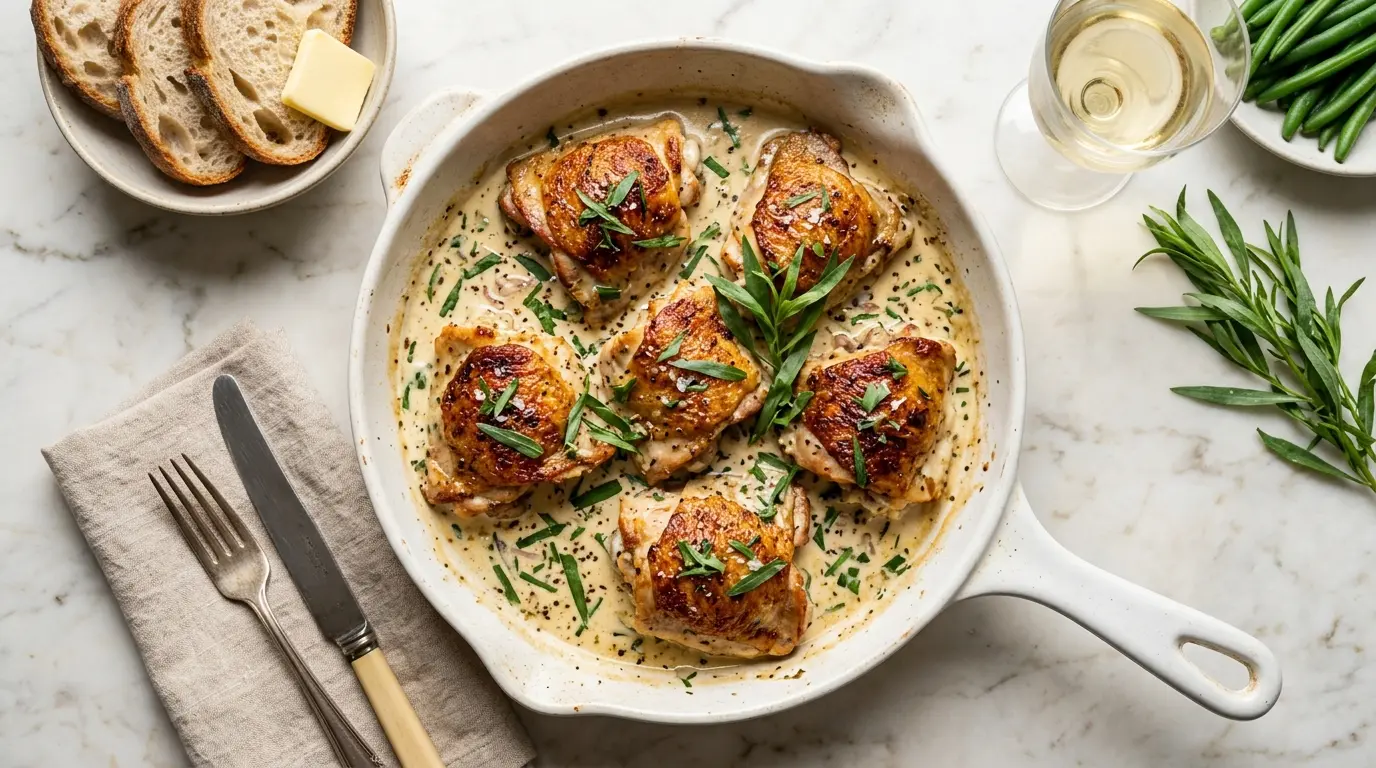
If you have been searching for a tarragon chicken recipe that feels like a true French bistro meal without any fuss, you have landed in exactly the right place.
This dish, known in France as Poulet à l’Estragon, is one of the most beloved classics in French home cooking. A few pantry staples, one skillet, and about 40 minutes are all you need to get a silky, herb-scented cream sauce wrapped around perfectly golden chicken.
Fresh tarragon is the real star here. Its distinctive anise-like flavor, grassy and slightly peppery, does something remarkable when it hits a warm cream sauce infused with dry white wine and shallots. The herb lifts the entire dish, keeping it from feeling heavy even though the sauce is rich and satisfying.
This is the kind of recipe that looks impressive enough for a dinner party but is genuinely easy enough for a Tuesday night. Serve it over buttery mashed potatoes or a bowl of egg noodles, and do not forget a crusty baguette to mop up every last drop of that sauce.

Why You’ll Love This Tarragon Chicken Recipe
This recipe has earned a permanent spot in home kitchens for good reason.
The flavor profile is unlike anything you get from a standard cream sauce. Fresh tarragon gives the dish a complexity that makes it taste like you spent hours in the kitchen, even when you did not.
It is a genuine one-pan meal. From searing the chicken to finishing the sauce, everything happens in a single skillet, which means minimal cleanup.
The sauce itself is versatile in the best way. It coats chicken beautifully but also works wonderfully poured over pasta, rice, or roasted vegetables on the side.
Here is what makes this recipe a regular weeknight win:
- Ready in about 40 minutes from start to finish
- One skillet means easy cleanup with maximum flavor from the fond at the bottom of the pan
- Pantry-friendly ingredients that you likely have on hand most of the time
- Elegant enough for guests but simple enough for a weeknight dinner
- Endlessly adaptable to what you have in your fridge, from chicken breasts to thighs
If you enjoy French-inspired chicken dishes, you will also love this Chicken Francese, which features a bright lemon-butter sauce that is just as weeknight-friendly.
Ingredients
Keeping the ingredient list short and purposeful is key to this recipe. Each component serves a real purpose in building the sauce, and nothing is wasted.
Fresh tarragon is non-negotiable here. Dried tarragon simply does not have the same aromatic punch, and the sauce will taste flat in comparison. Look for it in the fresh herb section of most well-stocked grocery stores.
- 4 bone-in, skin-on chicken thighs (about 2 lbs / 900g total), or boneless skinless thighs if preferred
- Salt and black pepper, to taste
- 1 tablespoon (15ml) olive oil
- 1 tablespoon (14g) unsalted butter
- 2 medium shallots, finely minced (about 1/3 cup / 50g)
- 3 cloves garlic, minced
- 1/3 cup (80ml) dry white wine (such as Pinot Grigio or Sauvignon Blanc)
- 1 cup (240ml) low-sodium chicken broth
- 1 teaspoon Dijon mustard
- 3/4 cup (180ml) heavy cream
- 3 tablespoons fresh tarragon leaves, roughly chopped (divided), plus extra for garnish
- 1 teaspoon lemon zest (from about half a lemon)
- 1 teaspoon fresh lemon juice
Read Also: Chicken Marsala Recipe
Kitchen Equipment Needed
Having the right pan makes a significant difference in this recipe. A heavy-bottomed, oven-safe skillet is ideal because it retains even heat and allows you to sear the chicken properly without scorching the fond, which forms the flavor base of the sauce.
- 12-inch heavy-bottomed skillet or cast iron pan (oven-safe recommended)
- Instant-read meat thermometer
- Sharp chef’s knife and cutting board
- Wooden spoon or silicone spatula for deglazing
- Measuring cups and spoons
- Microplane or fine grater for lemon zest
- Tongs for handling the chicken
Another favorite: Chicken Skillet Recipe
Recommended Products for This Recipe
These are hand-picked products that genuinely improve the outcome of this dish, based on quality and performance in the kitchen.
1. Le Creuset Enameled Cast Iron Skillet
A cast iron skillet like the Le Creuset distributes heat with exceptional evenness, which means you get a perfect golden-brown sear on the chicken every single time. The enameled interior also makes deglazing incredibly easy and cleanup a breeze. It is the kind of investment piece that pays off with every recipe you make.
2. Fresh Tarragon (or Tarragon Herb Plant)
Fresh French tarragon is what separates a truly outstanding tarragon chicken from a mediocre one. If you cannot find it locally, a living herb plant from Amazon is a brilliant option that keeps delivering all season long. The flavor difference compared to dried tarragon is night and day.
3. High-Quality Dry White Wine for Cooking
The wine you use in the sauce matters enormously. A dry Pinot Grigio or Sauvignon Blanc that you would happily drink will produce a sauce with far more depth and brightness than a cheap cooking wine. Since you only need 1/3 cup, you will have plenty left to enjoy alongside the meal.
4. Microplane Zester for Lemon Zest
Lemon zest in the sauce is a small touch that makes a big difference, adding freshness that cuts through the richness of the cream. A Microplane zester gets the zest without any of the bitter white pith underneath, which is an important distinction.
5. Instant-Read Digital Meat Thermometer
Knowing exactly when your chicken hits 165°F (74°C) removes all guesswork from the cooking process and ensures perfectly juicy results every time. A good instant-read thermometer is one of the most useful tools you can own for any chicken recipe.
This pairs beautifully with a silky Garlic Mashed Potatoes Recipe, which is our top recommendation for serving alongside this dish.

Step-by-Step Instructions
Step 1: Prepare and Season the Chicken
- Pat the chicken thighs completely dry on both sides using paper towels. Removing excess moisture is essential for achieving a crispy, golden-brown skin rather than steaming the chicken.
- Season generously on all sides with salt and black pepper. Do not be shy with the seasoning at this stage, as it forms the flavor base of the entire dish.
- Set the seasoned chicken aside on a plate while you heat the pan. This short rest also allows the seasoning to penetrate slightly into the surface.
Step 2: Sear the Chicken
- Place your skillet over medium-high heat. Add the olive oil and butter together and allow the butter to melt fully and begin to foam.
- Once the fat is hot and shimmering (but not smoking), add the chicken thighs skin-side down. Do not move them once they are in the pan.
- Sear without touching for 6 to 8 minutes until the skin is deeply golden and releases naturally from the pan. Forcing the chicken to release before it is ready will tear the skin.
- Flip the chicken and sear the second side for another 4 to 5 minutes until browned.
- Transfer the chicken to a clean plate and set aside. The chicken will finish cooking in the sauce, so it does not need to be fully cooked through at this stage. It should reach an internal temperature of 165°F (74°C) by the end of the recipe.
Step 3: Sauté the Aromatics
- Reduce the heat to medium. You should have a good amount of golden fat and fond (the brown bits) left in the pan. Do not wipe it out. This is pure flavor.
- Add the minced shallots to the same pan and cook for 2 to 3 minutes, stirring often, until softened and translucent.
- Add the minced garlic and cook for another 30 seconds until fragrant, stirring continuously to prevent burning.
Step 4: Deglaze with White Wine
- Pour the dry white wine into the pan. It will sizzle and steam vigorously. Use your wooden spoon to scrape up all of the browned bits from the bottom of the pan. This is the deglazing step and it adds enormous depth to the sauce.
- Allow the wine to simmer for 2 to 3 minutes until it reduces by roughly half. The sharp alcohol smell will mellow out into a rich, rounded aroma.
Step 5: Build the Sauce
- Pour in the chicken broth and stir in the Dijon mustard, whisking briefly to combine it smoothly into the liquid.
- Add half of the chopped fresh tarragon (about 1.5 tablespoons) and stir to distribute it through the broth. Reserving half of the tarragon for later ensures you get both a cooked, deeper tarragon flavor and a fresh, bright finish at the end.
- Bring the liquid to a gentle simmer.
Step 6: Return the Chicken and Simmer
- Nestle the seared chicken thighs back into the pan, skin-side up. The liquid should come about halfway up the sides of the chicken but should not fully submerge it. Keeping the skin above the liquid line helps it stay crispy.
- Cover the pan with a lid and reduce the heat to medium-low.
- Simmer for 18 to 22 minutes, or until the chicken reaches an internal temperature of 165°F (74°C) when measured at the thickest point, away from the bone.
Step 7: Finish the Cream Sauce
- Remove the chicken from the pan again and set it aside on a plate, covered loosely with foil to keep warm.
- Increase the heat to medium and pour in the heavy cream, stirring to combine with the braising liquid.
- Allow the sauce to simmer gently for 4 to 5 minutes, stirring occasionally, until it thickens enough to coat the back of a spoon.
- Stir in the remaining chopped fresh tarragon, the lemon zest, and the fresh lemon juice. Taste and adjust seasoning with salt and pepper as needed.
Step 8: Plate and Serve
- Return the chicken thighs to the pan, nestling them into the finished cream sauce skin-side up.
- Spoon the sauce generously over the chicken.
- Garnish with a few whole fresh tarragon leaves for a beautiful finish.
- Serve immediately over mashed potatoes, egg noodles, or steamed rice, with extra sauce spooned tableside.
You might also enjoy: Chicken Florentine Recipe
Tips for Success
Getting this recipe right the first time comes down to a few key techniques. These are the details that experienced French cooks swear by.
Follow these tips for the best results every time:
- Dry the chicken thoroughly. Moisture is the enemy of a good sear. Even a small amount of surface moisture will cause the chicken to steam rather than brown. Use two sheets of paper towel and press firmly on all sides.
- Do not crowd the pan. If you are making a larger batch, sear the chicken in two separate batches rather than cramming everything in at once. Overcrowding drops the pan temperature and prevents proper browning.
- Use a wine you would drink. Cheap “cooking wine” often contains added salt and preservatives that affect the sauce. A decent bottle of Pinot Grigio or Sauvignon Blanc for under $12 makes a noticeable difference.
- Reserve some tarragon for the end. Adding half the tarragon while the sauce simmers and the other half at the very end gives you layers of flavor, a deeper cooked note and a fresh, vibrant finish.
- Do not let the cream boil aggressively. A gentle simmer thickens cream beautifully. A rolling boil can cause it to separate and turn grainy.
- Adjust lemon to your taste. Start with the amount listed in the recipe and taste the sauce before serving. Some batches of cream are naturally richer, and a bit more lemon zest or juice can brighten things up perfectly.
Read Also: Lemon Chicken Recipe
Serving Suggestions
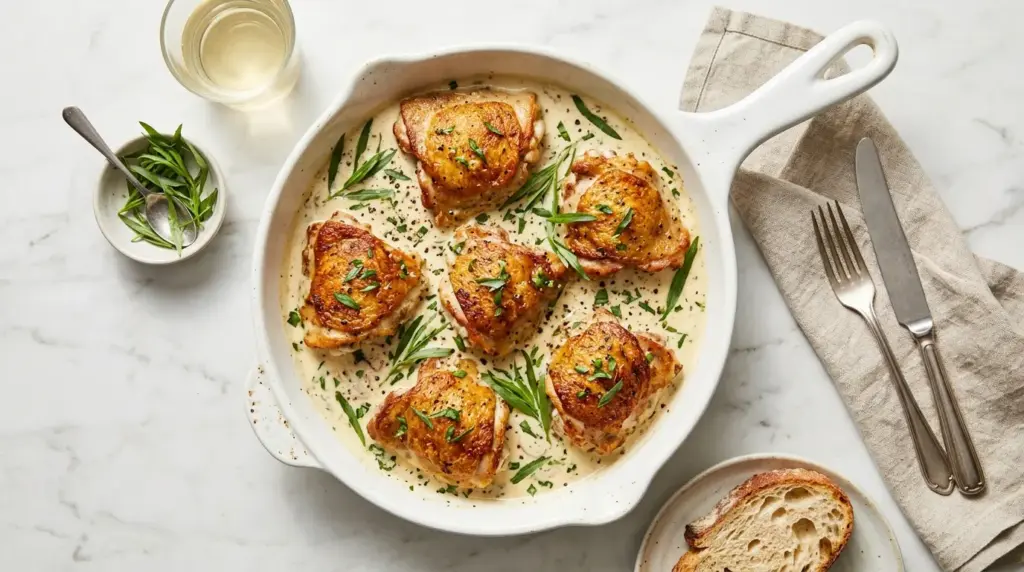
Tarragon chicken is one of those dishes where the sauce is just as important as the chicken itself, so you really want something on the plate that can soak it all up.
Here are some of the best ways to serve it:
- Creamy mashed potatoes are the classic pairing. The sauce pools in the potatoes and every bite becomes even more indulgent.
- Buttered egg noodles or tagliatelle pasta catch the sauce beautifully and make this feel like a complete restaurant-style plate.
- Steamed or roasted green beans add a pop of color and a fresh, crunchy contrast to the rich sauce. Try these Green Beans as a quick and simple side.
- Fluffy basmati rice is a lighter option that still soaks up the sauce wonderfully. Pair it with our Basmati Rice for a foolproof preparation.
- A crusty French baguette at the table is non-negotiable if you want the full bistro experience. Use it for the last few streaks of sauce in the bowl.
- Roasted broccoli adds a slightly charred, earthy note that plays well against the sweetness of the cream and tarragon.
Variations to Try
The classic recipe is wonderful on its own, but a few small changes can completely shift the character of the dish. These variations all stay true to the spirit of the original while opening up new possibilities.
Try these takes on the base recipe:
- Chicken breasts instead of thighs. Boneless, skinless chicken breasts work here, but they need less cooking time. Sear them for 4 to 5 minutes per side, then add them back to the sauce for just 5 to 8 minutes to finish cooking, checking the temperature carefully to avoid dryness.
- Add mushrooms. Sauté 2 cups (180g) of sliced cremini or button mushrooms along with the shallots in Step 3. They add an earthy depth that complements the tarragon beautifully.
- Stir in spinach. Add 2 large handfuls of fresh baby spinach to the sauce in the last 2 minutes of cooking. It wilts down quickly and adds color and nutrition.
- Make it dairy-free. Replace the heavy cream with full-fat coconut cream for a version that skips the dairy without losing the richness of the sauce. The coconut flavor is surprisingly subtle once combined with the wine and tarragon.
- Add a splash of cognac. Some traditional French versions include a small pour of cognac after the shallots soften and before the wine goes in. Flambe it briefly for drama, or simply let it simmer down with the other liquids.
- Try it in a slow cooker. Sear the chicken first for maximum flavor, then transfer everything to a slow cooker and cook on low for 5 to 6 hours. Stir in the cream and remaining tarragon in the final 20 minutes.
If you love creamy one-pan chicken dishes, you will want to try this Crockpot Chicken Marsala Recipe next.
Storage and Reheating
Tarragon chicken stores and reheats beautifully, which makes it perfect for meal prepping or enjoying leftovers the next day. In fact, many cooks find the flavor even more developed after a night in the fridge.
Here is how to store and reheat it properly:
- Refrigerator storage: Allow the chicken and sauce to cool completely before transferring to an airtight container. Store in the fridge for up to 3 to 4 days.
- Freezer storage: The sauce can separate slightly after freezing due to the cream. If you plan to freeze it, the texture of the sauce may change once thawed. Store in a freezer-safe container for up to 2 months.
- Reheating on the stovetop: Place the chicken and sauce in a skillet over low heat. Add a small splash of chicken broth or cream to loosen the sauce if it has thickened too much in the fridge. Cover and heat gently for 8 to 10 minutes, turning the chicken halfway through.
- Reheating in the microwave: Place in a microwave-safe dish, cover loosely with a microwave-safe lid or damp paper towel, and heat at 70% power in 90-second intervals until warmed through. This lower power setting prevents the cream sauce from overheating and breaking.
- Do not reheat at high heat. High temperatures cause cream sauces to separate into greasy pools. Low and slow is always the correct approach here.
Read Also: Italian Chicken Skillet Recipe
Nutritional Facts
The following information is estimated per serving (one chicken thigh plus sauce), based on bone-in skin-on thighs. Values will vary with specific brands and portion sizes.
| Nutrient | Per Serving (approx.) |
|---|---|
| Calories | 510 kcal |
| Total Fat | 38g |
| Saturated Fat | 16g |
| Cholesterol | 195mg |
| Sodium | 430mg |
| Total Carbohydrates | 5g |
| Dietary Fiber | 0g |
| Sugars | 2g |
| Protein | 34g |
This nutritional information is an estimate and should not be considered a substitute for professional dietary advice. Adjustments such as using boneless skinless thighs or substituting half-and-half for heavy cream will reduce the fat and calorie content meaningfully.
Another favorite: Baked Chicken Breast Recipe
Health Benefits of Key Ingredients
This recipe is more than just a satisfying dinner. Several of its core ingredients bring genuine nutritional value to the table.
Here is what some of the key players contribute to your health:
- Chicken thighs are an excellent source of complete protein, providing all nine essential amino acids your body needs for muscle repair, immune function, and hormone production. They also supply zinc, B vitamins (especially B6 and B12), and selenium.
- Fresh tarragon is rich in phytonutrients and has a long history in traditional medicine. It contains compounds like estragole and eugenol that have shown antioxidant and anti-inflammatory properties in research settings. It is also a surprisingly good source of manganese.
- Garlic is one of the most well-researched functional foods in the world. It contains allicin, a sulfur compound released when garlic is crushed, which is associated with cardiovascular support, immune defense, and antimicrobial properties.
- Shallots are a member of the allium family alongside onions and garlic, and they provide quercetin and other flavonoids that act as antioxidants in the body.
- Lemon zest and juice add vitamin C to the dish along with limonene, a compound found in citrus peel that is associated with antioxidant activity.
- Olive oil contributes heart-healthy monounsaturated fats, particularly oleic acid, which is associated with reduced inflammation when consumed as part of a balanced diet.
This dish pairs wonderfully with our Roasted Broccoli Recipe for an extra boost of fiber and vitamins alongside your plate.
Frequently Asked Questions
1. Can I use dried tarragon instead of fresh?
You can use dried tarragon as a substitute, but the flavor will be noticeably different. Fresh tarragon has a bright, slightly sweet anise quality that dried tarragon partially loses during the drying process. If using dried, start with 1 teaspoon (about one-third of the fresh amount) and taste the sauce as it develops, adding more carefully. Add the dried tarragon at the same stage as you would the fresh, during the sauce-building step.
2. What is the best white wine for this recipe?
A dry, unoaked white wine works best here. Pinot Grigio and Sauvignon Blanc are the most reliable choices because their clean, crisp character blends into the sauce without overpowering it. Avoid sweet wines, oaked Chardonnay, and anything labeled “cooking wine” with added salt, as these will skew the flavor balance of the finished sauce significantly.
3. Can I make this recipe ahead of time for a dinner party?
Yes, and it actually improves overnight. Cook the recipe fully, allow it to cool, and refrigerate it in an airtight container for up to 24 hours. Reheat it gently on the stovetop over low heat just before serving, adding a small splash of cream or broth to restore the sauce consistency. Stir in a few fresh tarragon leaves just before plating to freshen up the flavor.
4. My sauce turned out too thin. How do I fix it?
Remove the chicken from the pan and increase the heat to medium-high, allowing the sauce to simmer uncovered for 3 to 5 minutes until it reduces to your desired consistency. Alternatively, you can whisk 1 teaspoon of cornstarch with 1 tablespoon of cold water and stir this slurry into the simmering sauce. It will thicken within about 60 seconds of being added.
5. Can I use chicken breasts instead of thighs?
Yes, though the technique changes slightly. Chicken breasts cook faster and dry out much more easily than thighs. Sear them for 4 to 5 minutes per side, then return them to the finished sauce for only 5 to 8 minutes off direct high heat to warm through and reach 165°F (74°C). Do not simmer breasts in the sauce for the full 20-plus minutes the recipe specifies for thighs.
Read Also: Chicken Cacciatore Recipe

Tarragon Chicken (Poulet à l’Estragon)

Equipment
- 12-inch heavy-bottomed skillet or cast iron pan - oven-safe recommended
- Instant-read meat thermometer
- Sharp chef's knife
- Cutting board
- Wooden spoon or silicone spatula - for deglazing
- Measuring cups and spoons
- Microplane or fine grater - for lemon zest
- Tongs - for handling the chicken
Ingredients
- 4 bone-in, skin-on chicken thighs - about 2 lbs or 900g total; boneless skinless thighs may be substituted
- Salt and black pepper - to taste
- 1 tablespoon olive oil - 15ml
- 1 tablespoon unsalted butter - 14g
- 2 medium shallots - finely minced, about 1/3 cup or 50g
- 3 cloves garlic - minced
- 1/3 cup dry white wine - 80ml, such as Pinot Grigio or Sauvignon Blanc
- 1 cup low-sodium chicken broth - 240ml
- 1 teaspoon Dijon mustard
- 3/4 cup heavy cream - 180ml
- 3 tablespoons fresh tarragon leaves - roughly chopped, divided; plus extra for garnish
- 1 teaspoon lemon zest - from about half a lemon
- 1 teaspoon fresh lemon juice
For Serving (Optional)
- buttery mashed potatoes - recommended
- buttered egg noodles or tagliatelle
- crusty French baguette - for mopping up the sauce
- steamed or roasted green beans
- fluffy basmati rice
Instructions
- Pat the chicken thighs dry with paper towels and season generously with salt and pepper on all sides.
- Heat olive oil and butter in a heavy-bottomed skillet over medium-high heat until shimmering. Place the chicken skin-side down and sear for 6-8 minutes until golden and crisp. Flip and sear the other side for 4-5 minutes. Transfer to a plate.
- Reduce heat to medium. Add shallots to the pan and cook for 2-3 minutes until softened. Add garlic and cook for 30 seconds until fragrant, stirring constantly.
- Pour in the white wine and scrape the browned bits from the bottom of the pan. Simmer for 2-3 minutes until reduced by half.
- Add chicken broth, Dijon mustard, and half the fresh tarragon. Stir to combine and bring to a gentle simmer.
- Return the chicken to the pan skin-side up. Cover and simmer over medium-low heat for 18-22 minutes until the internal temperature reaches 165°F (74°C).
- Remove the chicken and set aside. Increase heat to medium and add heavy cream, simmering for 4-5 minutes until the sauce thickens. Stir in remaining tarragon, lemon zest, and lemon juice. Season to taste.
- Return chicken to the pan and spoon sauce over the top. Garnish with fresh tarragon leaves and serve immediately with mashed potatoes, noodles, or rice.
Notes
- Fresh tarragon is essential: Dried tarragon won’t provide the same bright, anise-like flavor. Use fresh for the best results.
- Dry the chicken thoroughly: Patting the chicken completely dry before searing is crucial for achieving crispy, golden skin. Moisture will cause it to steam instead.
- Use a wine you’d drink: Avoid cooking wines with added salt. A dry Pinot Grigio or Sauvignon Blanc will give you the best depth of flavor.
- Don’t crowd the pan: If making a larger batch, sear the chicken in two batches. Overcrowding lowers the pan temperature and prevents proper browning.
- Reserve tarragon for the end: Adding half the tarragon during cooking and the rest at the end creates layers of flavor—a deep, cooked note and a fresh, vibrant finish.
- Gentle simmer for the cream: Avoid boiling the cream sauce vigorously to prevent it from separating or turning grainy. A gentle simmer is perfect.
- Adjust the lemon to taste: Start with the recommended amount and taste. A bit more zest or juice can brighten the sauce if needed.
- Make it ahead: This dish tastes even better the next day. Reheat gently on the stovetop with a splash of cream or broth.
- Substitutions: Chicken breasts can be used but require less simmering time to avoid drying out. You can also add mushrooms or spinach for variation.
- Storage: Store leftovers in an airtight container in the refrigerator for up to 4 days. Reheat gently over low heat.
Final Thoughts
This tarragon chicken recipe is the kind of dish that earns a permanent place in your regular rotation. It is elegant without being fussy, deeply flavorful without requiring a long ingredient list, and satisfying in a way that genuinely comforting food should be.
Once you taste that first bite of golden chicken wrapped in that silky, herb-scented cream sauce, you will understand exactly why this French bistro classic has endured for generations.
Give it a try this week and let us know how it goes in the comments below. We would love to hear how you served it and any tweaks you made your own.
Recommended:
- Chicken Florentine Pasta Recipe
- Chicken Marsala Recipe Without Cream
- Stuffed Chicken Marsala Recipe
- Chicken Scampi Recipe
- Blackened Ranch Pan Fried Chicken Thighs Recipe
- Creamy Mashed Potatoes Recipe
- Lemon Chicken Orzo Soup Recipe
- Baked Honey Mustard Chicken Recipe
- Chicken Stew Recipe
- Roasted Potatoes Recipe