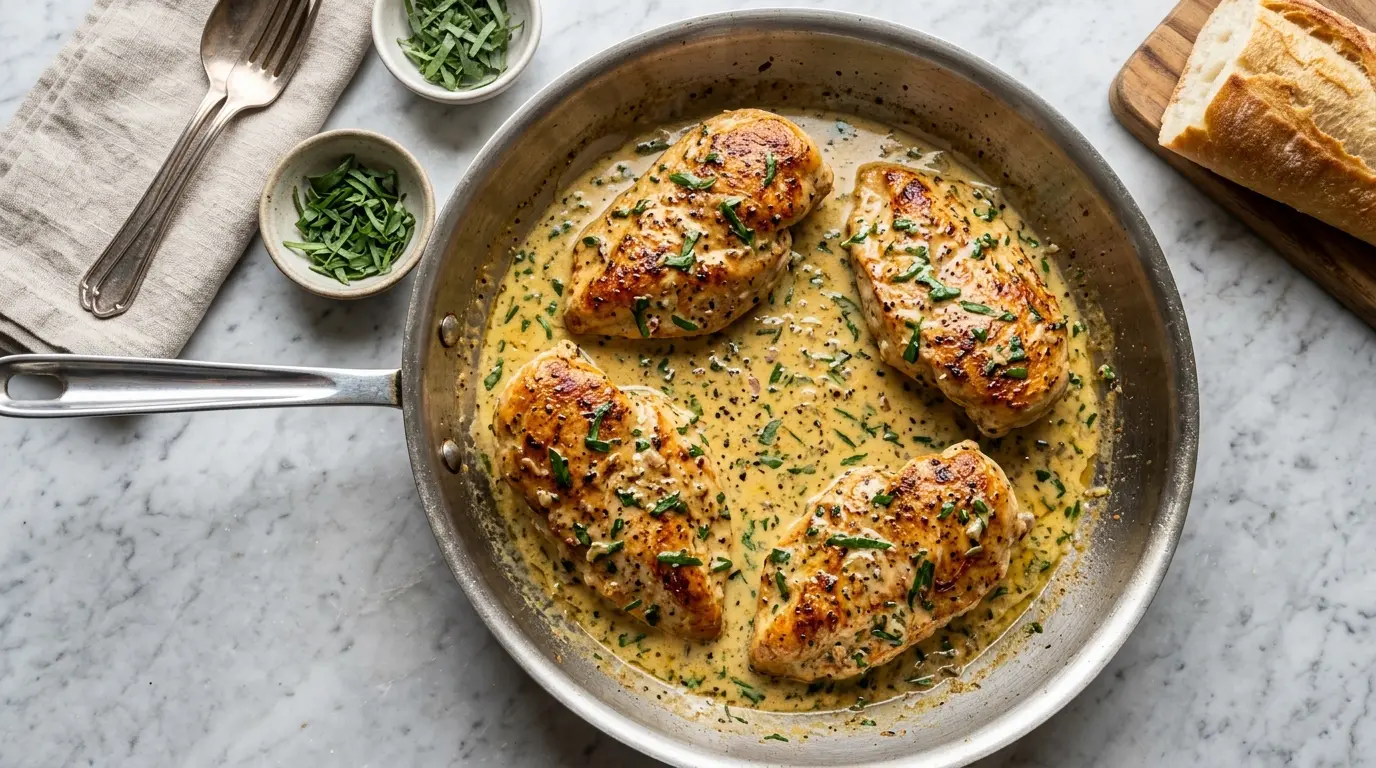
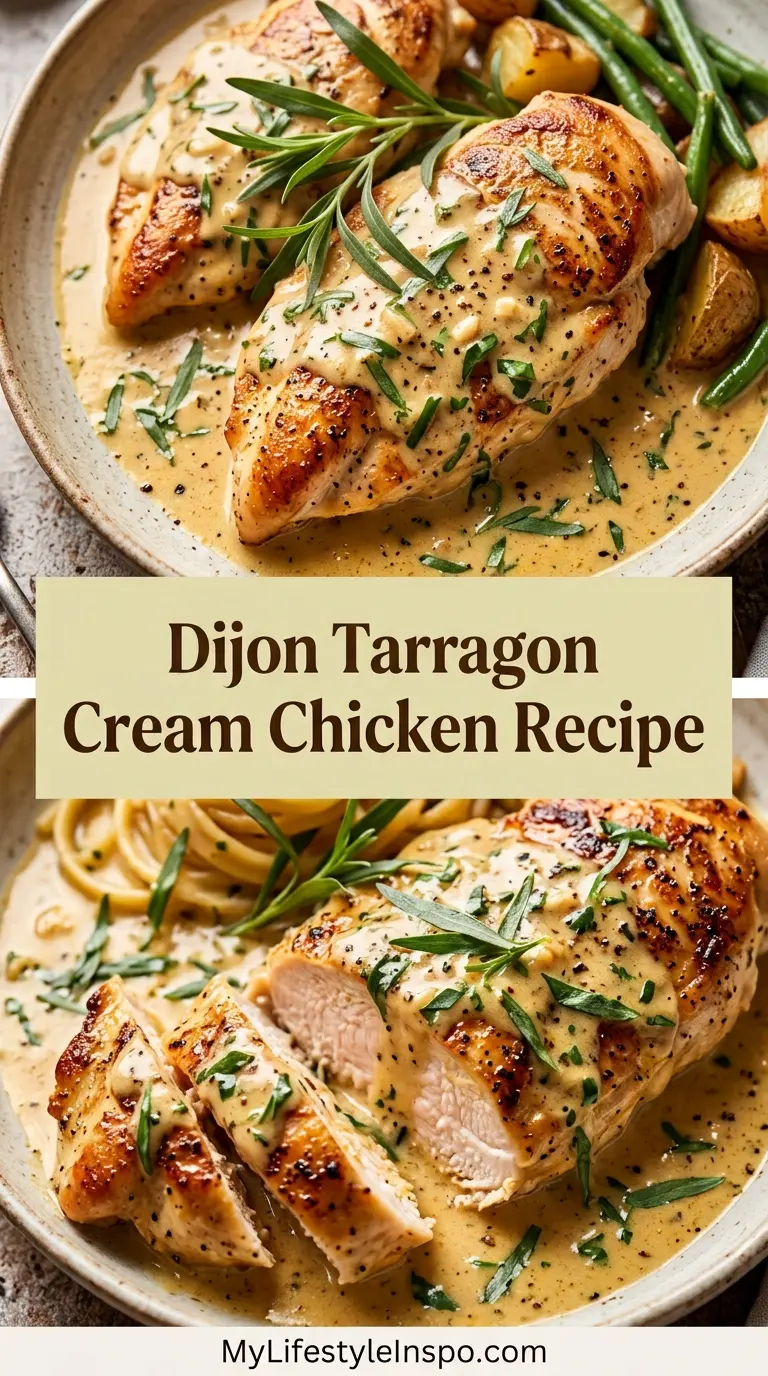
If you have never made a Dijon Tarragon Cream Chicken Recipe before, get ready to fall completely in love with it.
This dish is a French-inspired classic that comes together in one skillet in about 30 minutes. Tender, golden-brown chicken breasts are smothered in a velvety cream sauce built with Dijon mustard, fresh tarragon, shallots, garlic, and a splash of dry white wine.
The result is something that feels genuinely restaurant-worthy, yet requires no special skills or hard-to-find ingredients.
What makes this recipe so beloved is the way each component plays a role. The Dijon mustard adds a gentle, tangy depth without overpowering the dish. Fresh tarragon brings a subtle anise-like warmth that is unmistakably French. And the heavy cream rounds everything out into a silky, luscious sauce that clings beautifully to every bite of chicken.
This is the kind of dinner that earns compliments from everyone at the table, every single time.
For another beautiful tarragon chicken variation, check out this Creamy Tarragon Chicken Recipe that pairs wonderfully alongside this version.
Why You’ll Love This Dijon Tarragon Cream Chicken Recipe
This dish checks every box: it is fast enough for a Tuesday night and elegant enough for a dinner party.
The one-skillet approach means less cleanup, and the sauce practically makes itself from the pan drippings left behind by the browned chicken.
It is also incredibly versatile. You can serve it over pasta, mashed potatoes, rice, or with a crusty baguette to soak up every last drop of that dreamy sauce.
The ingredients are simple pantry staples with one special touch: fresh tarragon. It is worth seeking out, because dried tarragon simply cannot replicate the fresh herb’s bright, fragrant depth.
- Comes together in about 30 minutes
- Uses just one skillet for minimal cleanup
- Impressive enough for guests, easy enough for weeknights
- The Dijon-tarragon cream sauce is genuinely addictive
- Works with chicken breasts or thighs
- Easily adaptable to different serving styles
Also worth trying is the classic Tarragon Chicken Recipe if you enjoy the flavors in this dish.
Ingredients
For this recipe, you want bone-in or boneless, skinless chicken breasts. Boneless gives you the fastest cook time, while bone-in yields the deepest flavor. Either way, pat the chicken very dry before seasoning to help it brown rather than steam in the skillet.
- 4 boneless, skinless chicken breasts (about 6 oz / 170g each), patted dry
- Salt and freshly ground black pepper, to taste
- 2 tablespoons (30ml) olive oil
- 1 tablespoon (14g) unsalted butter
- 2 large shallots, finely minced
- 3 cloves garlic, finely minced
- ½ cup (120ml) dry white wine (such as Sauvignon Blanc or Pinot Grigio)
- 1 cup (240ml) heavy cream
- ½ cup (120ml) low-sodium chicken stock
- 2 tablespoons Dijon mustard (use a good-quality brand for the best flavor)
- 2 tablespoons fresh tarragon leaves, roughly chopped (or 2 teaspoons dried tarragon)
- 1 teaspoon lemon zest
- 1 tablespoon fresh lemon juice
The lemon zest and juice are small additions that make a big difference. They brighten the cream sauce and keep it from feeling too heavy, which is the trick to getting that balance just right.
Read Also: Tarragon Chicken Salad Recipe
Kitchen Equipment Needed
Having the right tools makes this recipe smooth and straightforward. The most important piece is a large, heavy-bottomed skillet that holds heat well and allows the chicken to get a proper golden sear.
- Large (12-inch / 30cm) stainless steel or cast iron skillet
- Sharp chef’s knife for mincing shallots and garlic
- Cutting board
- Tongs for flipping chicken
- Wooden spoon or silicone spatula for stirring the sauce
- Measuring cups and spoons
- Microplane or zester for lemon zest
- Instant-read meat thermometer (to check internal temperature)
- Plate or tray for resting chicken
An instant-read thermometer takes all the guesswork out of knowing when your chicken is fully cooked. The target is 165°F (74°C) at the thickest part.
Another skillet dinner you might enjoy is this Italian Chicken Skillet Recipe.
Recommended Products for This Recipe
These are products chosen for quality, performance, and how much they genuinely improve the experience of making this dish.
1. Lodge Cast Iron Skillet
Cast iron holds heat evenly and gives chicken that gorgeous, deep golden sear that is essential for flavor development. A well-seasoned cast iron skillet also builds incredible fond on the bottom of the pan, and that fond is what makes the cream sauce so rich.
2. Maille Dijon Originale Mustard
The quality of your Dijon mustard directly affects the flavor of the sauce. Maille is the gold standard in French Dijon mustard, known for its sharp, tangy, and complex flavor that cheap grocery-store mustards simply cannot match.
3. OXO Instant Read Thermometer
Overcooked chicken is dry and disappointing. An accurate instant-read thermometer takes the guesswork out of it completely, ensuring your chicken is perfectly juicy every time you make this recipe.
4. Microplane Premium Classic Zester
Fresh lemon zest brightens this cream sauce significantly. A Microplane makes zesting effortless and precise, giving you fragrant zest without any bitter white pith.
This Baked Honey Mustard Chicken Recipe uses a similar mustard-forward flavor profile if you are looking to explore more options.
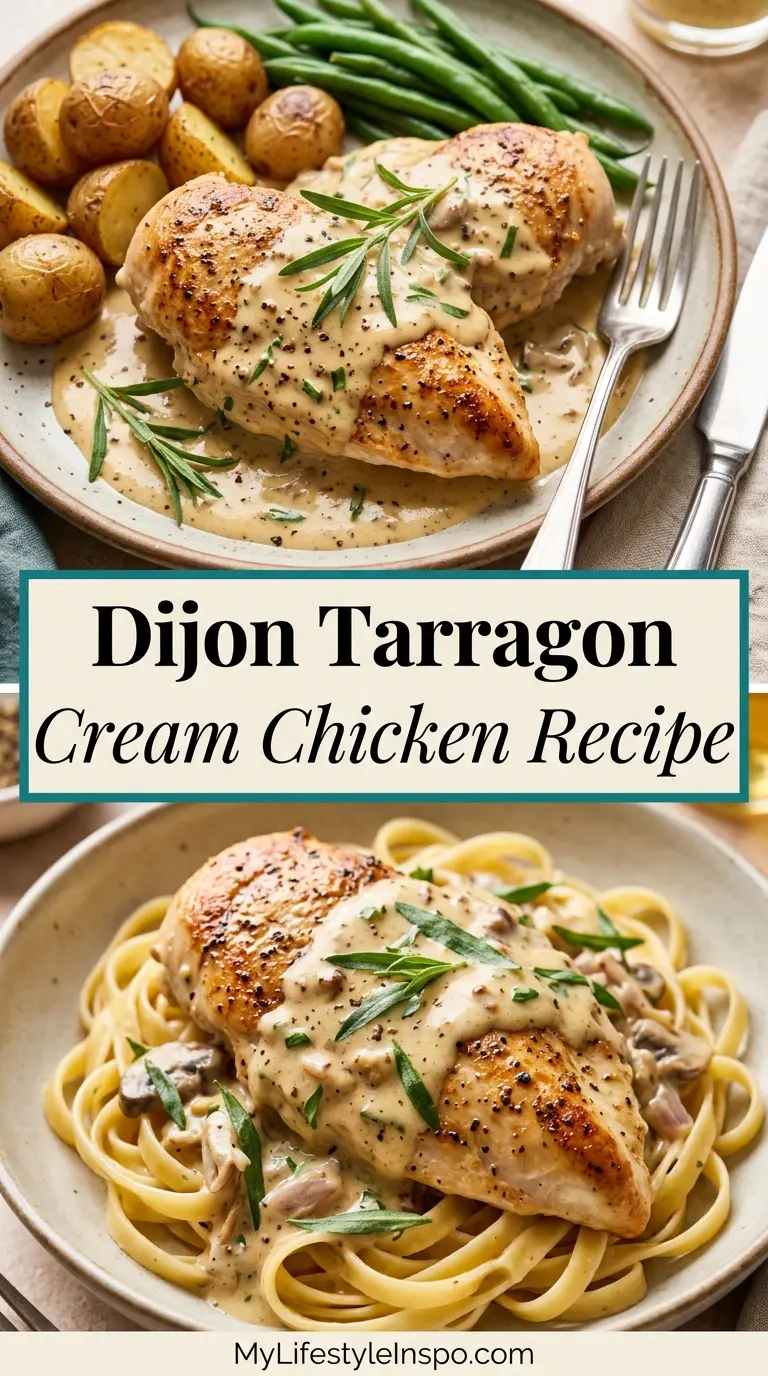
Step-by-Step Instructions
Step 1: Prepare and Season the Chicken
- Remove the chicken breasts from the refrigerator about 15 minutes before cooking to take the chill off. Cold chicken dropped into a hot pan will drop the temperature and cause uneven cooking.
- Pat each chicken breast very thoroughly dry with paper towels. Moisture on the surface creates steam and prevents browning. This step is one of the most important ones for getting that golden crust.
- Season generously on both sides with salt and freshly ground black pepper. Since Dijon mustard in the sauce carries salt, season a little more moderately than you might otherwise.
- Set the seasoned chicken aside on a clean plate while you heat the pan.
Step 2: Sear the Chicken
- Place your large skillet over medium-high heat and add the 2 tablespoons (30ml) of olive oil.
- Let the oil heat until it shimmers. You should see movement across the surface of the oil when it is ready.
- Carefully lay the chicken breasts in the pan, presentation side (smooth side) down first. Do not move them once placed. Resist the urge to peek or poke for at least 4 to 5 minutes.
- Let the chicken sear undisturbed until it releases naturally from the pan and is deep golden brown on the first side, about 5 to 6 minutes.
- Flip using tongs and sear the second side for another 4 to 5 minutes. The internal temperature should be approaching 165°F (74°C).
- Transfer the cooked chicken to a clean plate and tent loosely with foil to keep warm. It will continue cooking slightly from residual heat.
Step 3: Sauté the Aromatics
- With the chicken resting, reduce the heat under the skillet to medium.
- Add the 1 tablespoon (14g) of butter to the same skillet. Do not wipe the pan. Those browned bits on the bottom, called fond, are packed with flavor and will be incorporated into the sauce.
- Once the butter has melted and is beginning to foam, add the minced shallots.
- Cook the shallots, stirring frequently with a wooden spoon, for about 3 to 4 minutes until they are softened and translucent. Do not let them brown.
- Add the minced garlic and stir continuously for 30 to 45 seconds until fragrant. Garlic burns quickly, so keep it moving.
Step 4: Deglaze with White Wine
- Pour the ½ cup (120ml) of dry white wine into the pan. It will sizzle vigorously.
- Use your wooden spoon to scrape up all the browned bits from the bottom of the pan. This step is called deglazing, and it is where much of the sauce’s depth comes from.
- Let the wine simmer and reduce for about 3 to 4 minutes, until it has reduced by roughly half and the sharp alcohol smell has cooked off.
Step 5: Build the Cream Sauce
- Pour in the 1 cup (240ml) of heavy cream and the ½ cup (120ml) of chicken stock.
- Stir in the 2 tablespoons of Dijon mustard, mixing thoroughly to make sure it dissolves evenly into the cream. No clumps of mustard should remain.
- Add the lemon zest and the fresh lemon juice.
- Bring the sauce to a gentle simmer over medium heat, stirring occasionally. Let it simmer and reduce for about 4 to 5 minutes, until it thickens slightly and coats the back of a spoon.
- Taste the sauce at this point and adjust salt, pepper, or lemon to your preference.
Step 6: Add Tarragon and Return Chicken
- Stir in the 2 tablespoons of fresh chopped tarragon (or 2 teaspoons dried). Adding the tarragon at this stage, rather than at the very beginning, preserves its delicate flavor and prevents it from becoming bitter.
- Return the seared chicken breasts to the skillet, nestling them into the sauce.
- Spoon the sauce generously over the top of each chicken breast.
- Let the chicken warm through in the sauce for 2 to 3 minutes over low heat.
- Serve immediately with your favorite sides, spooning additional sauce over the top.
You might also enjoy: Lemon Chicken Recipe
Tips for Success
These practical tips come from understanding where this recipe is most commonly mishandled, and knowing how to avoid each pitfall before you even begin.
- Dry the chicken thoroughly. Patting it dry is the single most impactful step for achieving a golden sear. Wet chicken steams instead of browning.
- Do not crowd the pan. If your skillet is smaller than 12 inches, cook the chicken in two batches. Crowding causes the temperature to drop and the chicken to steam.
- Use a quality Dijon mustard. Cheap mustard makes a watery, sharp sauce. A French Dijon like Maille or Grey Poupon produces a smoother, richer result.
- Do not skip the deglazing step. The fond on the bottom of the pan is the foundation of the sauce’s flavor. Scraping it up when you add the wine is essential.
- Add tarragon at the end. Fresh herbs lose their brightness quickly when cooked for too long. Adding tarragon in the final minutes keeps the flavor vibrant.
- Use fresh tarragon when possible. Dried works in a pinch, but fresh tarragon has a fragrant, slightly anise-like quality that dried cannot fully replicate.
Another creamy chicken dinner worth bookmarking is this Chicken Marsala Recipe.
Serving Suggestions
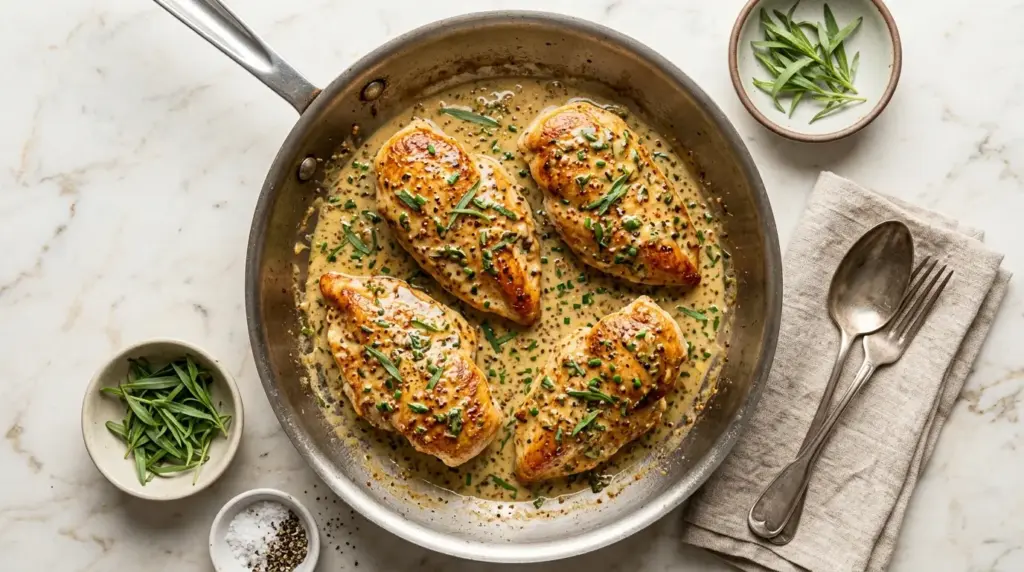
This dish pairs beautifully with sides that can soak up the Dijon tarragon cream sauce, because you will want every drop.
The richness of the sauce calls for something simple alongside it, whether starchy, light, or fresh. Here is what works best.
- Serve over Creamy Mashed Potatoes for a classic, comforting pairing
- Pair with Garlic Mashed Potatoes for a bolder, more savory base
- Serve over wide egg noodles, fettuccine, or linguine to catch the cream sauce
- Accompany with Roasted Broccoli for a simple, nutritious green side
- Add steamed Green Beans on the side for freshness and color
- Serve alongside Roasted Potatoes for a heartier plate
- Pair with a simple green salad and a crusty French baguette for a lighter, bistro-style meal
Variations to Try
Once you have the base recipe down, it is incredibly easy to riff on. The flavor profile is forgiving and versatile, which makes it ideal for adapting based on what you have on hand.
- Chicken thighs: Substitute boneless, skinless chicken thighs for the breasts. They are more forgiving to cook, stay juicier, and have a richer flavor.
- Whole grain mustard: Swap half or all of the Dijon mustard for whole grain mustard for a more rustic, slightly milder sauce with beautiful texture.
- No wine: If you prefer not to cook with wine, substitute an equal amount of low-sodium chicken stock with a small splash of white wine vinegar for acidity.
- Lighter sauce: Replace heavy cream with half-and-half or crème fraîche for a slightly less rich but still delicious result.
- Add mushrooms: Sauté 8 oz (225g) of sliced cremini mushrooms with the shallots for an earthy, heartier sauce.
- Make it dairy-free: Use full-fat coconut cream in place of heavy cream. The flavor will be subtly different but still delicious.
Read Also: Chicken Francese Recipe
Storage and Reheating
This dish stores very well, which makes it excellent for meal prep. The flavors actually deepen overnight, making leftovers genuinely worth looking forward to.
- Refrigerator: Store the chicken and sauce together in an airtight container for up to 3 days.
- Freezer: The cream sauce can separate slightly when frozen, but it is still safe. Freeze for up to 1 month, and whisk well when reheating to bring it back together.
- Reheating on the stovetop: Place the chicken and sauce in a skillet over low heat. Add a splash of chicken stock or cream to loosen the sauce, and stir gently as it warms. Heat until the internal temperature reaches 165°F (74°C).
- Reheating in the microwave: Place in a microwave-safe dish, cover loosely, and heat in 60-second intervals at 70% power, stirring between rounds.
- Avoid overheating: High heat can cause the cream sauce to break or become grainy. Low and slow is always the safer approach.
Another comforting chicken dish perfect for leftovers is this Chicken Stew Recipe.
Nutritional Facts
Estimates based on one serving (1 chicken breast with sauce), recipe makes 4 servings.
| Nutrient | Amount Per Serving |
|---|---|
| Calories | ~480 kcal |
| Protein | 42g |
| Total Fat | 28g |
| Saturated Fat | 14g |
| Carbohydrates | 7g |
| Fiber | 0.5g |
| Sugar | 2g |
| Sodium | 520mg |
| Cholesterol | 175mg |
Note: Nutritional values will vary based on exact ingredients used, especially the fat content of the cream and the size of the chicken breasts.
You might also love this Grilled Lemon Pepper Chicken Recipe for a lighter chicken option.
Health Benefits of Key Ingredients
This recipe is not just delicious. Several of its core ingredients bring genuine nutritional value to the plate.
The combination of lean protein from chicken, healthy fats from olive oil, and bioactive compounds from garlic and tarragon makes this a more nourishing meal than it might initially appear.
- Chicken breast is one of the leanest, highest-protein animal proteins available, supporting muscle repair and keeping you feeling full longer.
- Tarragon is an underappreciated herb rich in antioxidants, and has traditionally been used to support digestion and reduce inflammation.
- Dijon mustard contains glucosinolates and antioxidants, and has antimicrobial properties, all while adding bold flavor with very few calories.
- Garlic is widely recognized for its immune-boosting, anti-inflammatory, and cardiovascular-supporting properties.
- Shallots are a good source of quercetin, a powerful flavonoid antioxidant that helps protect cells from oxidative stress.
- Olive oil provides monounsaturated fats that are associated with heart health and reduced inflammation.
- Lemon juice and zest add vitamin C and antioxidants, and also help the body absorb iron from other foods in the meal.
Read Also: Baked Chicken Breast Recipe
Frequently Asked Questions
1. Can I use dried tarragon instead of fresh?
Yes, you can use dried tarragon if fresh is not available. Use about one-third the amount called for, so 2 teaspoons dried in place of 2 tablespoons fresh. Dried tarragon has a more concentrated, slightly more medicinal flavor, so adding it gradually and tasting as you go is a good approach. Fresh tarragon is always preferred for its bright, aromatic quality, but the recipe still works well with dried.
2. What white wine works best in this recipe?
A dry white wine is best. Sauvignon Blanc, Pinot Grigio, or an unoaked Chardonnay all work beautifully. Avoid sweet whites or heavily oaked wines, as they can throw off the balance of the sauce. A rule of thumb is to use a wine you would be happy drinking. You do not need an expensive bottle, just one that is decent quality.
3. Can I make this recipe without alcohol?
Absolutely. Simply replace the white wine with an equal amount of low-sodium chicken stock. You can add a teaspoon of white wine vinegar or a small squeeze of lemon juice to replicate some of the acidity the wine provides. The sauce will still be delicious, just slightly less complex in the background notes.
4. How do I know when the chicken is fully cooked?
The safest and most reliable method is to use an instant-read thermometer. Insert it into the thickest part of the chicken breast (without touching bone). The target internal temperature is 165°F (74°C). If you do not have a thermometer, cut into the thickest part and check that the juices run clear with no pink meat visible near the center.
5. Can I make this recipe ahead of time?
Yes, this recipe holds up very well. You can make the full dish ahead of time and refrigerate it for up to 3 days. When reheating, do so gently over low heat with a splash of cream or chicken stock to revive the sauce. The flavors often taste even more developed the next day, making this a reliable option for meal prep or entertaining preparation.
Another elegant make-ahead chicken dish is this Chicken Cordon Bleu Sauce Recipe.
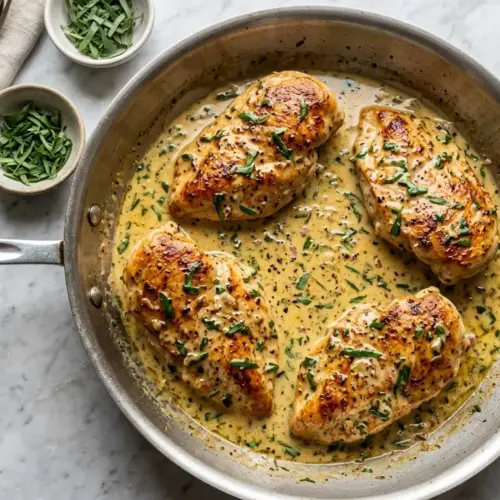
Dijon Tarragon Cream Chicken

Equipment
- Large skillet - 12-inch / 30cm stainless steel or cast iron
- Sharp chef's knife
- Cutting board
- Tongs
- Wooden spoon or silicone spatula
- Measuring cups and spoons
- Microplane or zester - for lemon zest
- Instant-read meat thermometer - optional but recommended
- Plate or Tray - for resting chicken
Ingredients
- 4 boneless, skinless chicken breasts - about 6 oz / 170g each, patted dry
- salt and freshly ground black pepper - to taste
- 2 tablespoons olive oil - 30ml
- 1 tablespoon unsalted butter - 14g
- 2 large shallots - finely minced
- 3 cloves garlic - finely minced
- ½ cup dry white wine - 120ml, such as Sauvignon Blanc or Pinot Grigio
- 1 cup heavy cream - 240ml
- ½ cup low-sodium chicken stock - 120ml
- 2 tablespoons Dijon mustard - use a good-quality brand
- 2 tablespoons fresh tarragon leaves - roughly chopped, or 2 teaspoons dried tarragon
- 1 teaspoon lemon zest
- 1 tablespoon fresh lemon juice
Instructions
- Remove chicken from fridge 15 minutes before cooking. Pat each breast thoroughly dry with paper towels and season generously on both sides with salt and pepper.
- Heat olive oil in a large skillet over medium-high heat until shimmering. Add chicken presentation side down and cook undisturbed for 5-6 minutes until deep golden brown. Flip and cook another 4-5 minutes until internal temperature reaches 165°F (74°C). Transfer to a plate and tent with foil.
- Reduce heat to medium and add butter to the same skillet. Once melted, add shallots and cook 3-4 minutes until softened. Add garlic and cook 30-45 seconds until fragrant, stirring constantly.
- Pour in white wine, scraping up browned bits from the bottom with a wooden spoon. Simmer 3-4 minutes until reduced by half and the alcohol smell has cooked off.
- Add heavy cream, chicken stock, Dijon mustard, lemon zest, and lemon juice. Stir until smooth and bring to a gentle simmer. Cook 4-5 minutes until sauce thickens slightly and coats the back of a spoon. Season to taste.
- Stir in fresh tarragon. Return chicken to the skillet, nestling it into the sauce. Spoon sauce over the top and warm through for 2-3 minutes over low heat. Serve immediately with additional sauce spooned over.
Notes
- Pat the chicken thoroughly dry before seasoning. This is the single most important step for achieving a golden, crispy sear.
- Use a good-quality Dijon mustard like Maille or Grey Poupon for the best flavor and smoothest sauce.
- Add fresh tarragon at the end of cooking to preserve its delicate anise-like flavor and prevent bitterness.
- Substitute boneless, skinless chicken thighs for breasts for an even juicier, more forgiving result.
- To make this dairy-free, substitute full-fat coconut cream for the heavy cream and use olive oil instead of butter.
- Store leftovers in an airtight container in the refrigerator for up to 3 days. Reheat gently over low heat with a splash of cream or stock.
- The sauce can be frozen for up to 1 month. Whisk well when reheating to bring it back together.
- Serve over mashed potatoes, egg noodles, rice, or with crusty bread to soak up every drop of the sauce.
- For a lighter version, substitute half-and-half or crème fraîche for the heavy cream.
- Add 8 oz (225g) of sliced cremini mushrooms with the shallots for an earthy, heartier variation.
Final Thoughts
This Dijon Tarragon Cream Chicken Recipe is the kind of dish that quietly becomes a staple in your kitchen rotation.
It is simple enough to make on a busy weeknight but impressive enough to serve when you want to make someone feel genuinely taken care of. The combination of tangy Dijon, fragrant tarragon, and velvety cream is timeless for a reason.
Give it a try this week, and do not be surprised when your family or guests ask for it again the following weekend. If you make it, leave a comment below and share how it turned out. You can also tag your photos on social media. Cooking is always better when it is shared.
Recommended:
- Chicken Broccoli Rice Casserole Recipe
- Chicken Marsala Recipe Without Cream
- Stuffed Chicken Marsala Recipe
- Chicken Cacciatore Recipe
- Copycat CPK Chicken Piccata Recipe
- Chicken Florentine Recipe
- Chicken Cordon Bleu Recipe
- Crack Chicken Recipe
- Hollandaise Sauce Recipe
- Chicken Noodle Soup Recipe