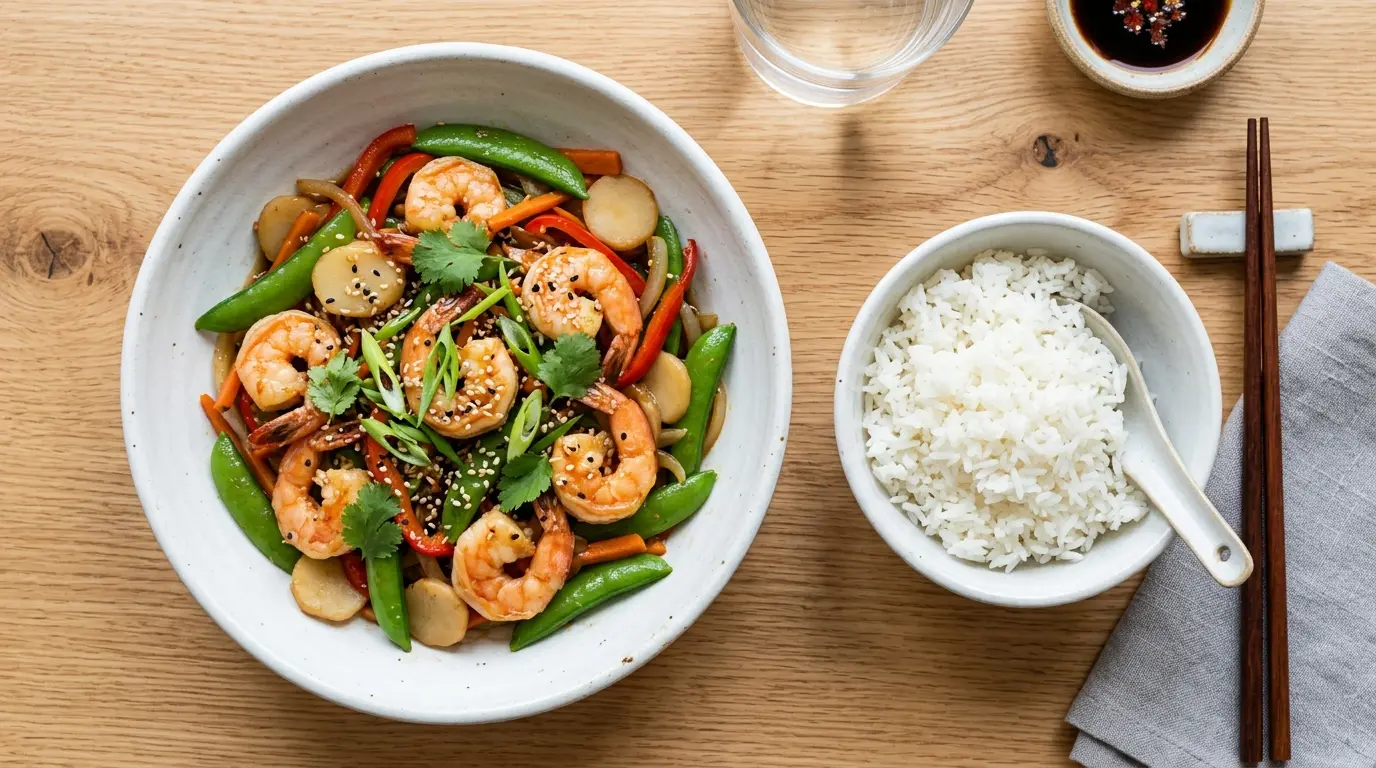
If you’re looking for a weeknight dinner that comes together fast without sacrificing flavor, this shrimp and sugar snap peas recipe is exactly what you need. The combination of plump, juicy shrimp and crisp, sweet snap peas makes for a dish that’s as satisfying to eat as it is beautiful on the plate.
The magic here is in the technique. High heat, a quick marinade, and the right sauce balance create that irresistible glossy, restaurant-quality stir-fry you’d expect from your favorite takeout spot, but made fresh at home in under 30 minutes.
Sugar snap peas bring a natural sweetness and satisfying crunch that holds up beautifully even when tossed in a hot wok or skillet. And shrimp, with their quick cook time of just 2 to 3 minutes per side, are practically made for stir-fry cooking.
This recipe follows the classic Chinese-American stir-fry approach: a savory-sweet sauce built on soy, garlic, and ginger, finished with a touch of sesame oil. It’s the version you’ll find in most beloved home kitchens and Chinese-American restaurants, and for good reason. It works every single time.
For a heartier meal, this pairs beautifully with a bowl of Chicken Fried Rice on the side.

Why You’ll Love This Shrimp and Sugar Snap Peas Recipe
This dish is one of those rare recipes that checks every box: fast, flavorful, healthy, and genuinely satisfying.
Even if you’ve never made a stir-fry before, the steps here are simple and beginner-friendly. The ingredient list is short, the cook time is lightning fast, and the results feel like something you’d order at a restaurant.
Here’s why this recipe earns a permanent spot in your dinner rotation:
- Ready in under 30 minutes from start to finish, making it ideal for busy weeknights
- One pan or wok means less cleanup and more time enjoying your meal
- Packed with protein and vegetables, so it’s both filling and nutritious
- Incredibly versatile, working equally well over white rice, brown rice, noodles, or cauliflower rice
- Customizable heat level from mild to spicy depending on your preferences
- Fresh, vibrant ingredients that taste far better than any frozen stir-fry option
- The sauce doubles as a marinade, saving time and deepening the flavor throughout the dish
Ingredients
You don’t need a pantry full of specialty items for this recipe. Most of these ingredients are likely already in your kitchen, with a few easy-to-find additions from the Asian foods aisle.
Here’s everything you’ll need:
- 1 lb (450g) large shrimp, peeled and deveined (fresh or thawed frozen)
- 2 cups (200g) sugar snap peas, strings removed
- 3 cloves garlic, minced
- 1 teaspoon fresh ginger, grated
- 3 tablespoons soy sauce (low-sodium preferred)
- 1 tablespoon oyster sauce
- 1 teaspoon sesame oil
- 1 tablespoon cornstarch
- 2 tablespoons neutral oil (vegetable or avocado oil), divided
- 1 teaspoon rice vinegar
- 1 teaspoon honey or sugar
- 1/4 teaspoon red pepper flakes (optional, for heat)
- 2 green onions, thinly sliced (for garnish)
- 1 teaspoon sesame seeds (for garnish)
- Salt and white pepper to taste
You might also enjoy trying this Chicken Stir Fry Recipe if you’d like to explore more quick skillet meals.
Kitchen Equipment Needed
A well-equipped kitchen makes stir-frying easier and faster. Having the right tools on hand means better sear on your shrimp and a proper toss without losing anything over the side.
Here’s what you’ll need:
- Carbon steel wok or large 12-inch skillet (cast iron or stainless steel work well too)
- Sharp chef’s knife for prepping garlic, ginger, and green onions
- Cutting board
- Mixing bowls (2 medium, for marinade and sauce)
- Measuring spoons and measuring cups
- Microplane or box grater for grating fresh ginger
- Silicone spatula or wok spatula
- Paper towels (for patting shrimp dry)
- Small whisk or fork for mixing the sauce
Read Also: Easy Shrimp Scampi Recipe
Recommended Products for This Recipe
These are products I genuinely recommend based on quality and how well they perform for this specific recipe. They make the cooking process smoother and the final dish even better.
1. Joyce Chen Carbon Steel Wok
A proper carbon steel wok distributes heat quickly and evenly, which is absolutely essential for a successful stir-fry. The high sides keep ingredients contained while you toss, and the more you use it, the better its natural non-stick surface becomes. It’s a kitchen tool worth every penny.
2. Lee Kum Kee Premium Oyster Sauce
Oyster sauce is one of those ingredients that adds incredible depth and umami to a stir-fry sauce. The Lee Kum Kee brand is a trusted favorite in professional and home kitchens alike, with a rich, slightly sweet flavor that perfectly complements both shrimp and vegetables. A little goes a long way.
3. Kadoya Pure Sesame Oil
Sesame oil is the finishing touch that takes this dish from good to outstanding. Kadoya’s pure sesame oil has a deep, nutty aroma that you’ll recognize instantly. Always add it at the end of cooking to preserve its flavor, not during high-heat cooking.
4. Microplane Premium Zester/Grater
Fresh ginger is a key flavor in this recipe, and a microplane grater makes quick work of it. Unlike chopping, grating releases more of the ginger’s essential oils, which means more flavor in every bite. It also works beautifully for garlic and citrus zest.
You might also enjoy: Classic Shrimp Scampi Recipe

Step-by-Step Instructions
Step 1: Prepare the Shrimp
- Pat the shrimp completely dry with paper towels. This is a critical step; moisture on the surface of the shrimp will cause them to steam instead of sear, and you’ll lose that beautiful golden color and texture.
- If using frozen shrimp, thaw them overnight in the refrigerator or run them under cold water for 10 to 15 minutes in a colander before patting dry.
- Season the dried shrimp lightly with salt and white pepper on both sides.
- Place the shrimp in a bowl and add 1 tablespoon of soy sauce and 1 teaspoon of cornstarch. Toss to coat evenly.
- Let the shrimp marinate for 10 minutes at room temperature while you prepare the other ingredients. This brief marinade helps the shrimp absorb flavor and gives them a slight coating that caramelizes beautifully in the hot pan.
Step 2: Make the Stir-Fry Sauce
- In a small bowl, combine the remaining 2 tablespoons of soy sauce, 1 tablespoon of oyster sauce, 1 teaspoon of sesame oil, 1 teaspoon of rice vinegar, and 1 teaspoon of honey.
- Whisk everything together until fully combined.
- Taste the sauce and adjust as needed. If you want it saltier, add a splash more soy sauce. For more sweetness, add a touch more honey. For brightness, add a few more drops of rice vinegar.
- Set the sauce aside. Having it ready before you start cooking is essential because stir-frying moves fast, and you won’t have time to mix it once the heat is on.
Step 3: Prepare the Vegetables and Aromatics
- Rinse the sugar snap peas under cold water and pat them dry.
- Pull the string from each pea pod by snapping the stem end and pulling it down the flat seam. This step is optional but removes any fibrous texture that some people find unpleasant.
- Mince the 3 garlic cloves as finely as possible. You want them to melt into the sauce rather than remain chunky.
- Grate the fresh ginger using your microplane or the fine side of a box grater. You need about 1 teaspoon, which is roughly a 1-inch piece of ginger.
- Slice the green onions on a diagonal and separate the white and green parts. The white parts go in with the aromatics; the green parts are saved for garnish.
- Arrange all your prepared ingredients near the stove within easy reach. Stir-frying requires constant attention, so having everything prepped and ready before you turn on the heat is the key to success.
Step 4: Sear the Shrimp
- Heat your wok or large skillet over high heat until it begins to smoke lightly. This usually takes 2 to 3 minutes on a gas stove and slightly longer on electric.
- Add 1 tablespoon of neutral oil and swirl it around the pan to coat the surface evenly.
- Add the marinated shrimp in a single layer. Do not crowd them; if your pan is smaller, cook in two batches. Crowded shrimp will steam instead of sear.
- Cook the shrimp without moving them for 1 to 1.5 minutes on the first side, until they develop a light golden color and begin to curl.
- Flip each shrimp and cook for another 30 to 60 seconds on the second side. They should be opaque and pink throughout but not fully cooked yet, as they’ll finish cooking with the vegetables.
- Remove the shrimp from the pan and transfer to a clean plate. Set aside.
Step 5: Stir-Fry the Vegetables and Aromatics
- With the pan still on high heat, add the remaining 1 tablespoon of oil.
- Add the white parts of the green onion first and stir for about 20 seconds.
- Add the minced garlic and grated ginger at the same time. Stir constantly for 30 seconds until fragrant. Watch carefully here; garlic burns quickly on high heat, and burnt garlic will make the entire dish taste bitter.
- Add the sugar snap peas to the pan in a single layer. Toss and stir-fry for 2 to 3 minutes. You want them to stay bright green and retain some crunch. They should be just barely tender, not soft.
- If you’re using red pepper flakes, add them now along with the snap peas.
Step 6: Combine Everything and Finish the Dish
- Return the partially cooked shrimp to the pan with the snap peas.
- Pour the prepared stir-fry sauce over everything all at once.
- Toss quickly and stir-fry for another 1 to 2 minutes over high heat, until the shrimp are fully cooked through, the sauce has thickened slightly from the cornstarch in the shrimp marinade, and everything is coated in a glossy, savory glaze.
- Taste and adjust the seasoning one final time. Add a pinch more salt, a drop more sesame oil, or a splash more soy sauce if needed.
- Remove from heat immediately to prevent overcooking the shrimp.
- Transfer to a serving plate and garnish with the sliced green onion tops and sesame seeds.
Read Also: Shrimp and Grits Recipe
Tips for Success
Nailing this dish comes down to a few key techniques that make the difference between a good stir-fry and a truly great one.
Keep these tips in mind every time you make it:
- Dry your shrimp thoroughly before marinating. Even a little excess moisture creates steam in the pan, which prevents the gorgeous sear you’re after.
- Use high heat throughout. A properly heated wok or skillet is the secret to stir-fry success. The high temperature ensures quick cooking, proper caramelization, and that elusive “wok hei” smoky flavor.
- Don’t walk away from the pan. Stir-frying requires constant attention. Garlic can go from perfectly golden to burned in seconds on high heat.
- Prep everything before you start cooking. The actual cooking happens so fast that there’s no time to chop or measure anything once the wok is hot.
- Cook shrimp in a single layer. If your pan can’t fit all the shrimp without overlapping, cook them in two batches. Overcrowding drops the temperature and leads to steamed rather than seared shrimp.
- Don’t overcook the shrimp. They should be opaque and pink, but still plump and juicy. Overcooked shrimp turn rubbery quickly.
- Add sesame oil off the heat. Sesame oil has a low smoke point, and its flavor compounds evaporate at high heat. Drizzle it in at the very end for maximum fragrance and flavor.
Another quick weeknight favorite: Chicken Teriyaki Recipe
Serving Suggestions
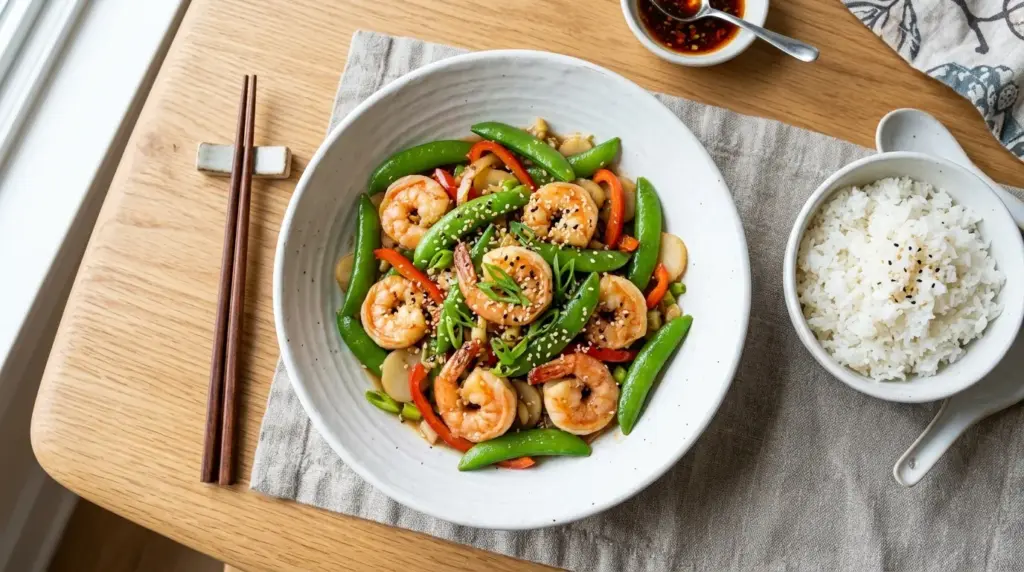
This stir-fry is deeply satisfying on its own, but it really shines when served as part of a larger spread.
Here are some of the best ways to serve it:
- Steamed jasmine or white rice is the classic pairing and the most popular choice for soaking up the savory sauce
- Brown rice adds a nuttier flavor and more fiber for a more nutritious meal
- Cilantro Lime Rice brings a fresh, bright contrast that works wonderfully with the soy-ginger flavors
- Lo mein or udon noodles make this a heartier noodle bowl-style dish
- Cauliflower rice keeps things low-carb without sacrificing satisfaction
- Lettuce wraps using butter lettuce cups for a fun, fresh alternative to rice
- Alongside Bok Choy for a complete Asian-inspired vegetable spread
Variations to Try
Once you’ve made this recipe as written and have the technique down, it’s incredibly easy to riff on and customize.
Here are some delicious variations to explore:
- Spicy version: Add 1 tablespoon of chili garlic sauce or sambal oelek to the stir-fry sauce for a fiery kick
- Coconut-ginger version: Replace the oyster sauce with 2 tablespoons of coconut aminos and add a squeeze of lime juice for a slightly sweeter, coconut-friendly variation
- Lemon garlic version: Swap the sesame oil for olive oil and add lemon zest and juice instead of rice vinegar for a Mediterranean-leaning twist
- Add more vegetables: Sliced bell peppers, broccoli florets, baby corn, or sliced mushrooms all work beautifully alongside or in place of some of the snap peas
- Make it a noodle dish: Toss the finished stir-fry with cooked rice noodles or egg noodles for a complete noodle bowl
- Swap the protein: This same sauce and technique works perfectly with scallops, chicken breast, or tofu if you want to change things up
- Add a crunch topping: Scatter crushed roasted peanuts or crispy fried shallots over the top just before serving for added texture
You might also love this Spicy Shrimp Tortilla Soup with Zucchini Noodles for another shrimp-forward weeknight option.
Storage and Reheating
This dish is at its absolute best fresh from the wok, but leftovers store well and make a fantastic next-day lunch.
Follow these simple storage and reheating guidelines:
- Refrigerator: Store leftovers in an airtight container in the refrigerator for up to 2 days. The shrimp will remain safe to eat but may firm up slightly over time.
- Freezing: Not recommended. Shrimp texture changes significantly after freezing and thawing a second time, becoming rubbery and less pleasant.
- Reheating on the stovetop: The best method is a quick reheat in a skillet or wok over medium-high heat with a splash of water or broth to loosen the sauce. Toss for 1 to 2 minutes until heated through.
- Reheating in the microwave: Place in a microwave-safe bowl and cover loosely. Heat in 30-second intervals, stirring between each, until just warmed through. Be careful not to overheat or the shrimp will become tough.
- Meal prep tip: You can prep the sauce and vegetables up to 2 days in advance and store them separately in the refrigerator. The shrimp should always be cooked fresh for best results.
Read Also: Air Fryer Bacon Wrapped Shrimp Recipe
Nutritional Facts
The following estimates are based on one serving of this recipe, assuming 4 servings total, served without rice or noodles.
| Nutrient | Amount per Serving |
|---|---|
| Calories | ~220 kcal |
| Protein | ~28g |
| Carbohydrates | ~10g |
| Fat | ~7g |
| Saturated Fat | ~1g |
| Fiber | ~2g |
| Sugar | ~4g |
| Sodium | ~720mg |
| Cholesterol | ~185mg |
Nutritional values are estimates and may vary based on specific brands and ingredient amounts used.
Another light and healthy option to explore: Chicken Lo Mein Recipe
Health Benefits of Key Ingredients
This is one of those happy recipes where “delicious” and “good for you” overlap almost entirely.
Here’s a closer look at why the key ingredients in this dish are genuinely nutritious:
- Shrimp are one of the leanest, highest-protein seafoods available. A 3-ounce serving delivers around 20 grams of protein with fewer than 85 calories. They’re also rich in selenium, iodine, and vitamin B12.
- Sugar snap peas are an excellent source of vitamin C, vitamin K, and folate. They contain a good amount of fiber for digestive health and antioxidants that support immune function. Their low calorie count (about 40 calories per cup) makes them an ideal stir-fry vegetable.
- Garlic has well-documented anti-inflammatory and immune-supporting properties. Allicin, the compound responsible for garlic’s pungent aroma, is associated with cardiovascular benefits and antimicrobial effects.
- Fresh ginger is a powerful anti-inflammatory ingredient that also aids digestion and has been studied for its role in reducing nausea and muscle soreness.
- Sesame oil contains healthy unsaturated fats, including oleic acid and linoleic acid, and is rich in antioxidants like sesamol and sesaminol.
- Soy sauce (low-sodium) adds depth of flavor for relatively few calories. Opting for the low-sodium version keeps the dish heart-friendlier without sacrificing taste.
Read Also: Green Beans Recipe
Frequently Asked Questions
1. Can I use frozen shrimp for this recipe?
Absolutely. Frozen shrimp work beautifully in this dish, and they’re often just as fresh-tasting as “fresh” shrimp at the seafood counter since they’re flash-frozen shortly after catch. The key is to thaw them properly: place them in a colander under cold running water for 10 to 15 minutes, then pat them completely dry before marinating. Never thaw shrimp in hot water, as it begins to cook the outer layers unevenly.
2. Do I need a wok, or will a regular skillet work?
A wok is ideal because its shape allows for high, even heat distribution and gives you room to toss everything vigorously without spilling. However, a large 12-inch stainless steel or cast iron skillet works very well as an alternative. The most important factor is using high heat and not overcrowding the pan, regardless of which vessel you choose.
3. How do I keep the sugar snap peas from getting soggy?
The two biggest culprits of soggy snap peas are low heat and overcooking. Make sure your wok or skillet is properly preheated and ripping hot before adding the vegetables. Stir-fry the snap peas for no more than 2 to 3 minutes total; they should still have a satisfying snap when you bite into them. If anything, err on the side of undercooking them since they’ll continue to cook slightly from residual heat.
4. Can I make this recipe gluten-free?
Yes, with a couple of simple swaps. Replace the regular soy sauce with tamari (which is naturally gluten-free) or coconut aminos for a slightly sweeter flavor. Also check the label on your oyster sauce; most contain wheat, but gluten-free oyster sauce alternatives are widely available at specialty grocery stores and online. Everything else in the recipe is naturally gluten-free.
5. What size shrimp should I use?
Large to extra-large shrimp work best for this recipe. Look for sizes labeled 21/25 or 26/30 per pound at the grocery store or fish counter. These sizes hold up beautifully in the high heat of the wok, develop a nice sear on the outside, and remain juicy in the center. Smaller shrimp tend to overcook very quickly and can get lost among the vegetables.
Read Also: Seafood Chowder Recipe

Shrimp and Sugar Snap Peas Stir-Fry

Equipment
- Carbon steel wok or large 12-inch skillet - Cast iron or stainless steel work well too
- Sharp chef's knife
- Cutting board
- Mixing bowls - 2 medium, for marinade and sauce
- Measuring spoons
- Measuring cups
- Microplane or box grater - For grating fresh ginger
- Silicone spatula or wok spatula
- Paper towels - For patting shrimp dry
- Small whisk or fork - For mixing the sauce
Ingredients
- 1 lb large shrimp - 450g, peeled and deveined, fresh or thawed frozen
- 2 cups sugar snap peas - 200g, strings removed
- 3 cloves garlic - minced
- 1 teaspoon fresh ginger - grated, about a 1-inch piece
- 3 tablespoons soy sauce - low-sodium preferred, divided
- 1 tablespoon oyster sauce
- 1 teaspoon sesame oil
- 1 tablespoon cornstarch - divided
- 2 tablespoons neutral oil - vegetable or avocado oil, divided
- 1 teaspoon rice vinegar
- 1 teaspoon honey - or sugar
- 1/4 teaspoon red pepper flakes - optional, for heat
- 2 green onions - thinly sliced, divided
- 1 teaspoon sesame seeds - for garnish
- salt - to taste
- white pepper - to taste
For Serving
- steamed jasmine rice - or brown rice, for serving
- cauliflower rice - for low-carb option
- lo mein noodles - or udon noodles, for noodle bowl version
Instructions
- Pat shrimp completely dry with paper towels. Season lightly with salt and white pepper, then toss with 1 tablespoon soy sauce and 1 teaspoon cornstarch. Marinate at room temperature for 10 minutes.
- Whisk together remaining 2 tablespoons soy sauce, oyster sauce, sesame oil, rice vinegar, and honey in a small bowl. Set aside.
- Rinse snap peas and pull strings from each pod. Mince garlic, grate ginger, and slice green onions, separating white and green parts.
- Heat wok or skillet over high heat until lightly smoking. Add 1 tablespoon oil and swirl to coat. Add shrimp in a single layer and cook without moving for 1 to 1.5 minutes until golden. Flip and cook 30 to 60 seconds more. Remove shrimp to a plate.
- Add remaining 1 tablespoon oil to pan. Add white parts of green onion and stir 20 seconds. Add garlic and ginger and stir 30 seconds until fragrant. Add snap peas and red pepper flakes if using, and stir-fry 2 to 3 minutes until bright green and tender-crisp.
- Return shrimp to pan, pour sauce over everything, and toss quickly. Stir-fry 1 to 2 minutes until shrimp are cooked through and sauce has thickened. Remove from heat immediately.
- Transfer to a serving plate and garnish with green onion tops and sesame seeds. Serve hot with rice or noodles.
Notes
- Don’t skip drying the shrimp: Excess moisture creates steam instead of sear. Pat them thoroughly dry with paper towels before marinating for the best golden crust.
- High heat is essential: A properly heated wok or skillet ensures quick cooking and that signature stir-fry smoky flavor. Don’t lower the temperature once you start.
- Prep everything before cooking: Stir-frying moves fast—have all ingredients measured, chopped, and within reach before turning on the heat.
- Avoid overcrowding: Cook shrimp in a single layer. If your pan is small, work in batches. Overcrowding drops the pan temperature and causes steaming.
- Add sesame oil at the end: Sesame oil has a low smoke point. Drizzle it in off the heat to preserve its nutty aroma and flavor.
- Don’t overcook the shrimp: Shrimp should be opaque and pink but still plump. Overcooking makes them rubbery—they finish cooking quickly with the vegetables.
- Customize the heat: Adjust red pepper flakes to your preference, or add chili garlic sauce or sambal oelek for a spicier kick.
- Make it gluten-free: Use tamari or coconut aminos instead of soy sauce, and check that your oyster sauce is gluten-free (or use a gluten-free alternative).
- Storage tip: Store leftovers in an airtight container in the refrigerator for up to 2 days. Reheat quickly in a skillet with a splash of water or broth to loosen the sauce.
- Meal prep: The sauce and vegetables can be prepped up to 2 days in advance. Cook shrimp fresh for the best texture and flavor.
Final Thoughts
This shrimp and sugar snap peas recipe is proof that a truly satisfying dinner doesn’t have to take a long time or require complicated technique. With just a handful of pantry-friendly ingredients and a very hot pan, you can have something vibrant, flavorful, and genuinely impressive on the table in under 30 minutes.
The balance of savory, slightly sweet, and bright in the sauce is what makes this dish so craveable. Once you make it the first time, you’ll understand why it’s become a staple in so many home kitchens.
Give it a try this week, and don’t be surprised when it becomes your new go-to weeknight dinner. If you make it, I’d love to hear how it turned out in the comments below. Feel free to share any tweaks or variations you tried!
Recommended:
- Chicken Pad Thai Recipe
- Salmon Skillet Recipe
- Stir Fry Sauce Recipe
- Hoisin Sauce Recipe
- Peanut Sauce Recipe
- Baked Salmon Recipe
- Chicken Lettuce Wraps Recipe
- Air Fryer Salmon Recipe
- Bang Bang Sauce Recipe
- Asian Ground Beef Noodle Bowls