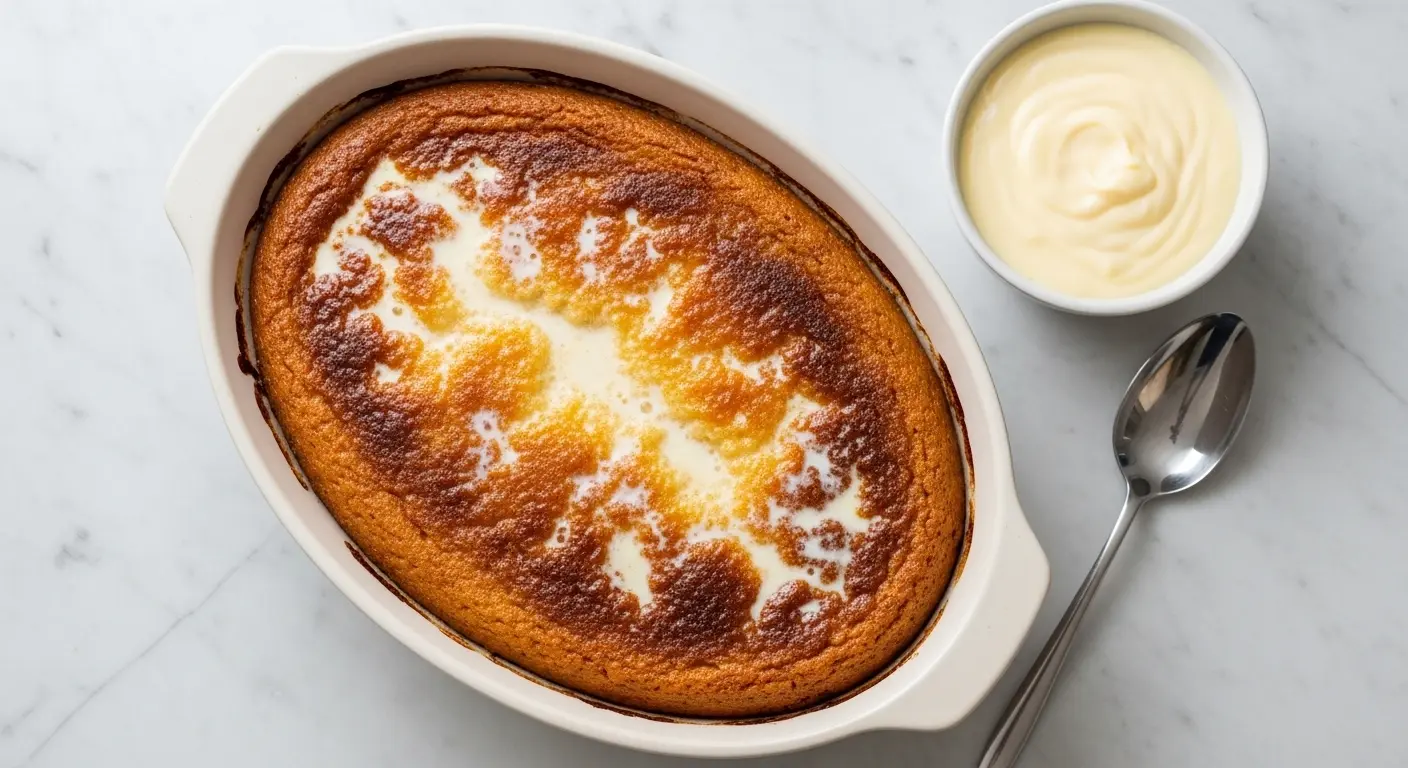
If you’ve never heard of a malva pudding recipe before, you’re about to discover your new favorite dessert. This iconic South African baked pudding is spongy, deeply caramelized, and soaked in a warm, buttery cream sauce the moment it leaves the oven.
It’s the kind of dessert that’s completely simple to make — no fancy equipment, no exotic techniques — but the results taste like something you’d get at a fine Cape Town restaurant.
Every bite delivers that perfect balance of sticky sweetness, tender crumb, and rich, velvety sauce. The secret weapon? Apricot jam and a splash of vinegar baked right into the batter, which reacts with baking soda to create a gorgeous caramelized crust and that signature deep amber color.
Once you try it, you’ll understand why this pudding has been a staple in South African homes for decades — and why it reportedly was one of Nelson Mandela’s favorite desserts.
For another cozy baked pudding with deep, rich flavor, try this Sticky Toffee Pudding too!
Why You’ll Love This Malva Pudding Recipe
This dessert punches so far above its weight for how simple it is to make.
You only need one bowl, a saucepan, and pantry staples most people already have on hand. No stand mixer required, no complicated folding methods, no tempering chocolate.
The combination of apricot jam and white vinegar in the batter is what truly sets this pudding apart from every other baked dessert you’ve tried.
The jam adds a fruity, lightly tangy depth while the vinegar activates the baking soda to create a soft, airy sponge with those beautiful caramelized edges.
Pouring the warm cream sauce over the pudding straight out of the oven is the most satisfying step — you’ll watch it absorb completely, making the whole pudding moist and rich all the way through.
It’s naturally impressive for guests, yet equally comforting on a quiet weeknight when you just need something warm and indulgent.
- Ready in under an hour from start to finish
- Uses simple, everyday pantry ingredients
- Delivers an intensely moist, caramelized texture unlike anything you’ve baked before
- The sauce soaks in completely, so every bite is equally rich
- Scales easily to feed a crowd
- Pairs beautifully with custard, cream, or ice cream for an unforgettable dessert
You might also enjoy: Bread Pudding
Ingredients
You’ll need two components for this recipe: the pudding batter and the cream sauce that gets poured over immediately after baking. Both are simple to pull together and the apricot jam is the star ingredient you really don’t want to skip.
For the Pudding Batter:
- 1 cup (125g) all-purpose flour
- 1 teaspoon baking soda
- 1/4 teaspoon salt
- 2 tablespoons (30g) unsalted butter, softened
- 1 cup (200g) granulated sugar
- 1 large egg
- 2 tablespoons (40g) smooth apricot jam (also called apricot preserves)
- 1 teaspoon white vinegar
- 1 cup (240ml) whole milk
For the Cream Sauce:
- 1 cup (240ml) heavy cream
- 1/2 cup (115g) unsalted butter
- 1/2 cup (100g) granulated sugar
- 1/4 cup (60ml) hot water
- 1 teaspoon pure vanilla extract
This recipe pairs beautifully with the Caramel Sauce on the site if you want to drizzle something extra over the top when serving.
Kitchen Equipment Needed
You won’t need anything fancy to make this pudding — just the basics most home bakers already own. The one non-negotiable is a properly greased baking dish so the pudding releases cleanly and the sauce absorbs evenly.
- 9×13 inch (23x33cm) baking dish (or a similar-sized oven-safe dish)
- Large mixing bowl
- Medium saucepan
- Electric hand mixer or stand mixer (a hand whisk also works)
- Sifter or fine mesh strainer
- Measuring cups and spoons
- Rubber spatula or wooden spoon
- Oven thermometer (recommended for accurate baking)
- Pastry brush (for greasing the dish)
- Wire cooling rack
Read Also: Brownie Pudding Recipe
Recommended Products for This Recipe
These are a few products that can genuinely elevate your malva pudding experience, chosen for their quality and how much they improve the final result.
1. Le Creuset Enameled Cast Iron Baking Dish
A heavy, well-made baking dish distributes heat evenly from all sides, which is critical for getting that signature deep caramelized crust on a malva pudding without burning the edges. The non-stick enamel surface also allows the pudding to release cleanly when serving. It’s a long-term investment that will serve you well for years of baking.
2. Bonne Maman Apricot Preserves
The apricot jam you choose matters more than you might expect — a high-quality, smooth preserve without chunky fruit pieces gives the batter a more even flavor and texture. Bonne Maman is widely available and produces a beautifully balanced, lightly tart jam that works perfectly in this recipe. One jar gives you enough for multiple batches.
3. OXO Good Grips Silicone Basting Brush
A good silicone pastry brush makes greasing your baking dish quick and thorough, ensuring an even coat of butter in every corner and along the sides. This step prevents the pudding from sticking and helps create that beautiful golden crust. Silicone bristles are also much easier to clean than traditional pastry brushes.
4. Nielsen-Massey Pure Vanilla Extract
A quality vanilla extract adds a warm, floral depth to the cream sauce that really rounds out the overall flavor of the pudding. Nielsen-Massey is made from real Madagascar vanilla beans and the difference in quality compared to imitation vanilla is noticeable, especially in a simple recipe like this where every ingredient matters.
This recipe has a similar sauce-soaked richness to a Tres Leches Cake — another incredible dessert worth bookmarking!
Step-by-Step Instructions
1. Preheat the Oven and Prepare the Baking Dish
- Set your oven to 350°F (180°C). If you have a convection/fan oven, reduce the temperature slightly to 325°F (165°C), as fan ovens run hotter and can cause the pudding to brown too fast before cooking through.
- Generously grease your baking dish with softened butter, making sure to cover the bottom and all four sides completely.
- Set the prepared dish aside while you make the batter.
2. Sift the Dry Ingredients
- Sift the all-purpose flour, baking soda, and salt together into a medium mixing bowl.
- Sifting is important here because it aerates the flour and removes any lumps, which ensures a lighter, more even crumb in the finished pudding.
- Set the dry ingredients aside.
3. Cream the Butter, Sugar, and Apricot Jam
- In a large mixing bowl, add the softened butter and granulated sugar.
- Using an electric hand mixer or stand mixer on medium speed, beat the butter and sugar together for about 2 minutes until the mixture is lighter in color and slightly fluffy.
- Add the apricot jam to the butter-sugar mixture and continue beating until everything is well combined and smooth. The jam should be fully incorporated with no visible streaks.
4. Add the Egg
- Crack the egg into a small bowl and lightly beat it with a fork.
- Add the beaten egg to the butter, sugar, and jam mixture.
- Beat with the hand mixer for about 1 minute until the mixture is smooth, pale, and slightly increased in volume. A well-beaten egg at this stage helps to aerate the batter and gives the pudding its light, spongy texture.
5. Add the Vinegar
- Add the teaspoon of white vinegar directly to the egg-butter-jam mixture.
- Mix briefly until combined. Don’t worry about the vinegar — you won’t taste it in the finished pudding. It works with the baking soda to create carbon dioxide bubbles that make the pudding rise and create those soft air pockets inside.
6. Alternate Adding the Flour and Milk
- With the mixer on low speed, add roughly one-third of the sifted flour mixture to the bowl and mix just until incorporated.
- Add half of the milk and mix until just combined.
- Add another third of the flour, mix, then add the remaining milk, mix, and finish with the last third of the flour.
- Mix after each addition only until the ingredient disappears into the batter — do not overmix. Overmixing develops too much gluten and results in a tough, dense pudding instead of a soft, spongy one.
- The finished batter should be smooth and pourable, similar in consistency to a thick pancake batter.
7. Pour the Batter Into the Baking Dish
- Pour the batter into the prepared greased baking dish.
- Use a rubber spatula to scrape every last bit of batter from the bowl and spread the batter into an even layer.
- Gently tap the dish on the counter once or twice to release any large air bubbles.
8. Bake the Pudding
- Place the baking dish in the center rack of the preheated oven.
- Bake for 30 to 35 minutes, or until the top is deep golden brown, the edges are caramelized, and a toothpick inserted into the center comes out clean or with just a few moist crumbs.
- Do not open the oven door for the first 25 minutes, as the sudden change in temperature can cause the pudding to sink in the center.
- Keep a close eye during the final 5 to 10 minutes — the sugar content in this pudding means it can go from perfectly golden to over-browned quite quickly.
9. Make the Cream Sauce While the Pudding Bakes
- About 10 minutes before the pudding is due to come out of the oven, start making the sauce so it’s hot and ready immediately.
- Combine the heavy cream, butter, sugar, and hot water in a medium saucepan over medium heat.
- Stir continuously as the butter melts and the sugar dissolves — this takes about 3 to 4 minutes.
- Once the butter has melted and the sugar has fully dissolved, remove the pan from the heat.
- Stir in the vanilla extract and keep the sauce warm over very low heat or with the lid on while the pudding finishes baking. Do not let the sauce boil.
10. Pour the Sauce Over the Pudding Immediately
- As soon as the pudding comes out of the oven, poke it all over with a skewer or the tip of a sharp knife to create small holes. These holes help the sauce penetrate deeply into the pudding rather than just pooling on top.
- Pour the warm cream sauce slowly and evenly over the entire surface of the hot pudding.
- The pudding will absorb the sauce rapidly — this is exactly what you want. Pour it all over gradually, giving each pour a few seconds to absorb before adding more.
- You may hear a satisfying sizzle as the sauce hits the hot pudding — this is a good sign!
11. Rest and Serve
- Allow the pudding to stand and rest for at least 15 to 20 minutes after adding the sauce. This resting time is crucial — it gives the sauce time to soak all the way through to the bottom of the pudding, making every bite equally moist and rich.
- Serve the pudding warm, directly from the baking dish, with a generous scoop of vanilla ice cream, a drizzle of warm custard, or a dollop of whipped cream.
Read Also: Banana Pudding Recipe
Tips for Success
Small details make a big difference when baking malva pudding. Here are the most important ones to keep in mind before you start.
- Use fresh baking soda. Old baking soda that has lost its potency is the most common reason malva pudding comes out pale and dense instead of dark and spongy. Test your baking soda by dropping a pinch in a bit of vinegar — if it bubbles vigorously, it’s still active.
- Don’t overmix the batter. Overworking the batter develops gluten and results in a tough, chewy pudding. Mix only until each ingredient is just combined.
- Bring butter to room temperature. Cold butter won’t cream properly with the sugar, and you’ll end up with a lumpy batter. Let it soften on the counter for at least 30 minutes before starting.
- Pour the sauce on immediately. Don’t let the pudding cool first. The heat of the freshly baked pudding is what draws the sauce down through the sponge. If the pudding cools first, the sauce will mostly sit on top.
- Don’t skip the resting time. Even though the pudding looks ready after the sauce is poured, give it at least 15 to 20 minutes to absorb completely before serving.
- Use a light-colored baking dish if possible. Dark metal pans absorb more heat and can cause the bottoms and edges to over-brown before the center is cooked through.
Another warm and comforting baked dessert worth trying is this Jamaican Bread Pudding.
Serving Suggestions
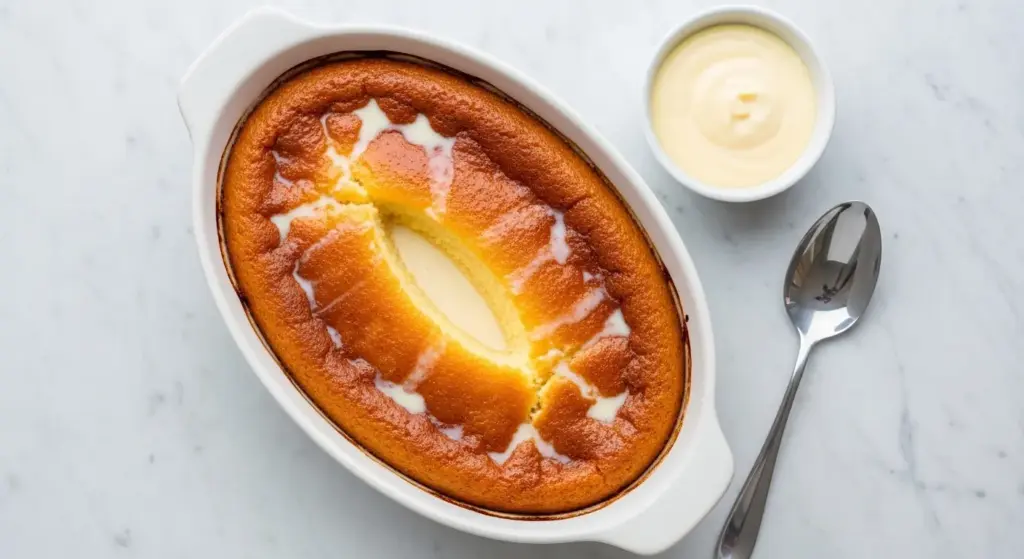
Malva pudding is traditionally served warm, and what you pair it with is what takes it from a great dessert to a truly unforgettable one.
Vanilla custard is the most classic and beloved accompaniment — the warm, silky custard poured over or alongside the pudding creates a richness that perfectly complements the caramelized, sticky sponge. It’s the most traditional way to serve it.
- Vanilla ice cream: A cold scoop on a warm pudding creates the most satisfying contrast in temperatures and makes the sauce even more indulgent as the ice cream melts into it
- Whipped cream: A lighter option that doesn’t compete with the pudding’s intense sweetness
- Caramel Sauce: A drizzle of extra caramel sauce over the top for those who love deep, toffee-forward flavors
- Fresh berries: A handful of raspberries or strawberries alongside cuts through the richness with a burst of bright acidity
- Warm custard: The true South African classic, poured liberally over each serving
Variations to Try
The classic malva pudding recipe is already perfection, but there are a few well-known tweaks worth trying once you’ve mastered the original.
- Orange Malva Pudding: Replace the milk in the batter with freshly squeezed orange juice and add a tablespoon of orange zest. This adds a bright citrus note that balances the richness of the sauce beautifully.
- Cape Brandy Pudding: A closely related South African classic. Substitute the plain cream sauce with a sauce made with butter, sugar, cream, and a generous splash of good South African brandy for a more festive, warming flavor.
- Chocolate Malva Pudding: Add 2 tablespoons of cocoa powder to the flour when sifting and reduce the apricot jam to 1 tablespoon. The result is a deeply rich chocolate version that works beautifully with the cream sauce.
- Individual Malva Puddings: Divide the batter into a greased muffin tin and reduce the baking time to 18 to 22 minutes. Individual portions are perfect for dinner parties and bake more quickly and evenly.
- Amarula Cream Sauce: Replace the heavy cream with Amarula cream liqueur in the sauce for a truly South African flavor twist. It adds a creamy, caramel-fruit depth that’s completely unique.
You might also enjoy: Rice Pudding
Storage and Reheating
Malva pudding stores beautifully and, some would argue, tastes even better the next day once the sauce has soaked in fully overnight.
- Refrigerator: Cover the pudding tightly with plastic wrap or transfer to an airtight container and refrigerate for up to 4 days.
- Freezer: Malva pudding freezes very well. Allow it to cool completely, wrap tightly in aluminum foil, and freeze for up to 3 months.
- Reheating in the oven: Cover the pudding with foil and warm at 300°F (150°C) for 15 to 20 minutes until heated through.
- Reheating individual portions: Microwave a single serving on medium power for 60 to 90 seconds until warm.
- Adding extra sauce after reheating: If the pudding has dried out a little in storage, make a small batch of the cream sauce and pour it over just before serving to bring back that signature moist, soaked texture.
- Freezing tip: Freeze the pudding and sauce separately if possible. Defrost both in the refrigerator overnight and reheat before combining.
Read Also: Figgy Pudding Recipe
Nutritional Facts
The following nutritional information is an estimate per serving, based on 8 servings from a standard batch of malva pudding with the full cream sauce included.
| Nutrient | Per Serving |
|---|---|
| Calories | ~480 kcal |
| Total Fat | 26g |
| Saturated Fat | 16g |
| Cholesterol | 95mg |
| Sodium | 230mg |
| Total Carbohydrates | 58g |
| Dietary Fiber | 0.5g |
| Total Sugars | 42g |
| Protein | 5g |
| Vitamin A | 20% DV |
| Calcium | 8% DV |
| Iron | 6% DV |
Note: Nutritional values are estimates and will vary based on exact ingredients and portion sizes used.
Another classic indulgent dessert worth checking out is this Spotted Dick Recipe for another British-style steamed pudding experience.
Health Benefits of Key Ingredients
Malva pudding is absolutely a treat dessert and not a health food — but a couple of its key ingredients do offer some genuine nutritional value worth knowing about.
Eggs are a nutritional standout in this recipe. They provide complete protein with all nine essential amino acids, along with vitamins D, B12, and choline, which supports brain health and cognitive function.
- Eggs: Rich in protein, healthy fats, vitamin D, B12, and choline, which supports brain health and liver function
- Apricot jam (made from apricots): Apricots are a natural source of vitamins A and C, potassium, and beta-carotene, which supports eye health and immune function
- Butter: Contains fat-soluble vitamins A, D, E, and K2, and provides concentrated energy
- Whole milk: A good source of calcium, phosphorus, and vitamin D, all of which support bone health
- Flour: Provides carbohydrates for quick energy as well as small amounts of iron and B vitamins
Read Also: Chocolate Pudding Recipe
Frequently Asked Questions
1. What is malva pudding made of?
Malva pudding is made from a simple batter of flour, sugar, eggs, butter, apricot jam, white vinegar, baking soda, and milk. The pudding is baked until deeply golden and then soaked immediately in a warm sauce made from heavy cream, butter, sugar, water, and vanilla extract. The combination of the caramelized sponge and the rich, buttery sauce is what makes it so distinctive.
2. Why is apricot jam used in malva pudding?
Apricot jam serves two important functions in malva pudding. First, it adds a subtle fruity depth and slight tang to the batter that you can’t quite put your finger on but would absolutely notice if it were missing. Second, the sugar in the jam contributes to the beautiful caramelization and deep amber color of the finished pudding. No other jam quite replicates this result.
3. Why does my malva pudding turn out pale?
Pale malva pudding is almost always caused by old or inactive baking soda. The baking soda reacts with the vinegar and the acidity of the apricot jam to trigger the Maillard reaction, which is what creates that deep caramelized color. If your baking soda is past its best, this reaction is weaker and the pudding stays light. Always use fresh baking soda and test it before baking.
4. Can I make malva pudding ahead of time?
You can bake the pudding and make the sauce up to a day in advance, but store them separately. Keep the cooled pudding wrapped tightly and refrigerate. When ready to serve, warm the pudding in a 300°F (150°C) oven for 15 minutes, heat the sauce gently on the stovetop, and then pour the sauce over the warm pudding. Allow 10 to 15 minutes for the sauce to soak in before serving.
5. What do you serve with malva pudding?
The most traditional serving in South Africa is warm homemade custard poured generously over the pudding. Other popular options include vanilla ice cream, whipped cream, or thick clotted cream. The key is to serve it warm — malva pudding loses much of its magic once it cools to room temperature, so make sure your sauce and your accompaniments are both warm or cold enough to create that satisfying temperature contrast.
This warm, indulgent dessert has a lovely similarity in texture and richness to this Easy Crème Brûlée — worth saving for your next dinner party!
Final Thoughts
Malva pudding is one of those rare desserts that manages to be both deeply humble and completely extraordinary at the same time.
The ingredients are simple, the method is straightforward, and the result is something genuinely special — a warm, caramelized, sauce-soaked sponge that feels like a big, comforting hug in dessert form.
If you’ve never had it before, this recipe is your introduction to one of South Africa’s most beloved culinary treasures, and if you grew up eating it, this version will take you straight back home.
Make it for your next dinner party, bring it to a potluck, or just treat yourself on a cold evening with a bowl of warm custard on the side — you honestly cannot go wrong.
Give this malva pudding recipe a try and let me know how it goes in the comments below! I’d love to hear if you added your own twist or what you served it with.
Recommended:
- Bread Pudding Recipe
- Dirt Pudding Recipe
- Vanilla Pudding Recipe
- Corn Pudding Recipe
- Yorkshire Pudding Recipe
- Chia Seed Pudding Recipe
- Pudding Cake Recipe with Cake Mix
- Tres Leches Cake Recipe
- Moist Chocolate Cake Recipe
- Peach Cobbler Recipe