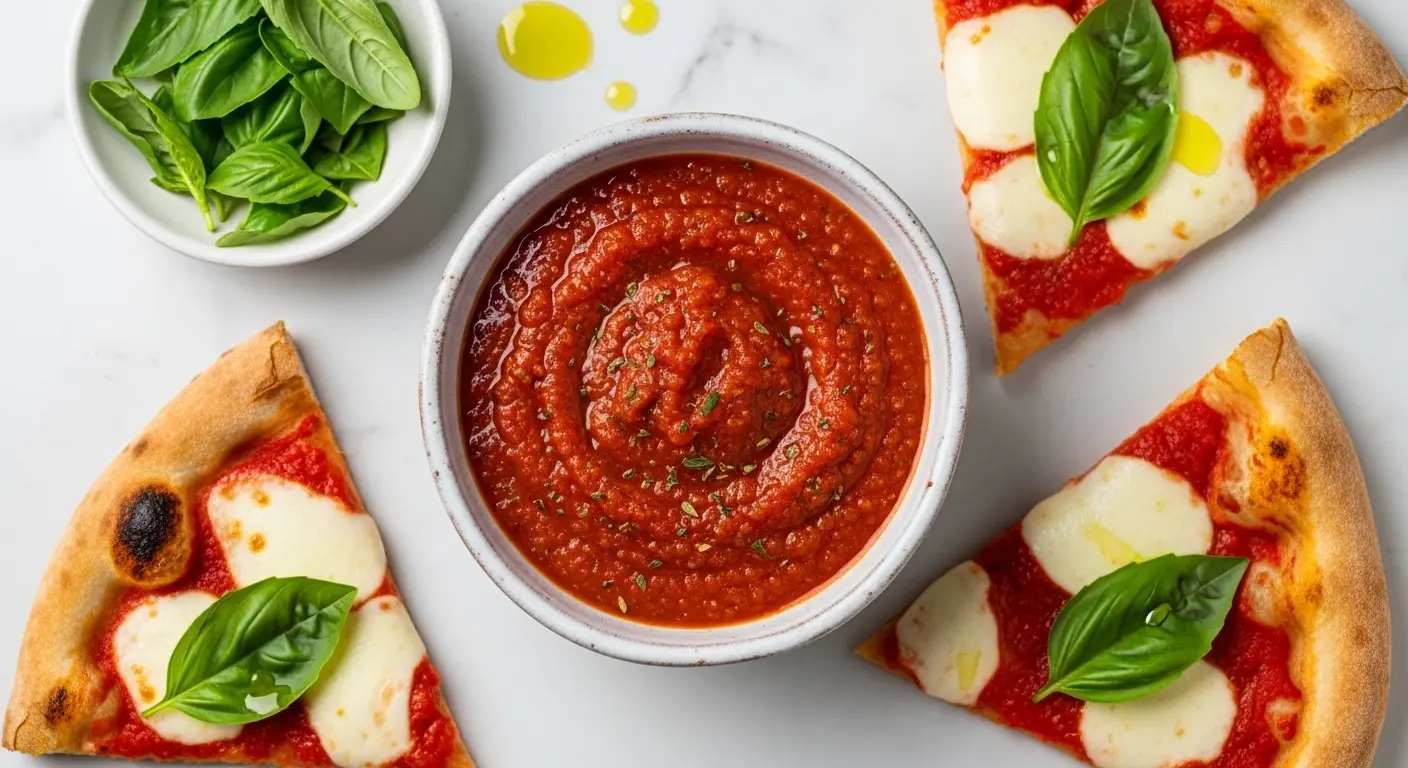
If you have ever tasted a truly great pizza, you already know that the pizza sauce recipe is what makes or breaks the whole thing. It is the foundation of every slice, and the difference between a bland, forgettable pie and one that keeps everyone reaching for another piece almost always comes down to the sauce.
The good news is that a perfect pizza sauce is one of the simplest things you can make at home.
With just a handful of pantry staples and about ten minutes of your time, you get a sauce that is rich, bright, and deeply flavorful. No cooking required, no fancy techniques, and it is ready to go the moment you are.
What makes this version stand out is the balance. Crushed San Marzano tomatoes bring a naturally sweet, low-acid base, while garlic, dried oregano, and a pinch of red pepper flakes add depth without overwhelming the tomato flavor. A splash of olive oil rounds it all out into a sauce that tastes like it came from a proper Italian kitchen.
This recipe makes enough sauce for two large pizzas or three medium ones, and it freezes beautifully. Once you try it, you will have a hard time going back to anything from a jar.
If you love making your own pizza components from scratch, you will want to pair this sauce with a great Easy Pizza Dough for a fully homemade pie from the ground up.
Why You’ll Love This Pizza Sauce Recipe
This sauce is genuinely hard to mess up, which is one of the biggest reasons home cooks love it.
There is no stovetop involved, no simmering, and no waiting. You blend everything together and your sauce is done.
The no-cook method is actually traditional for authentic Neapolitan-style pizza sauce. Cooking the tomatoes beforehand can make the flavor taste flat and jammy once the pizza goes in the oven, while raw sauce intensifies beautifully during baking.
Because the recipe is so simple, the quality of your tomatoes matters more here than in almost any other dish. San Marzano tomatoes, which are grown in the volcanic soil near Naples, have a sweeter, more complex flavor than standard canned tomatoes and a lower water content that keeps your crust from getting soggy.
You can also adjust the seasoning entirely to your taste. Want it spicier? Add more red pepper flakes. Prefer a more herby sauce? Double the dried oregano.
Here is a quick summary of what makes this recipe a keeper:
- Ready in under 10 minutes with zero cooking required
- Uses simple pantry ingredients you likely already have
- Tastes far fresher and brighter than any jarred sauce
- Freezes well for up to 3 months, so you can always have it on hand
- Completely customizable to your personal flavor preferences
- Makes enough for two large pizzas in a single batch
You might also enjoy: Marinara Sauce
Ingredients
This recipe keeps things simple and focused on quality. Every ingredient pulls its weight, so do not skip any of them.
- 1 can (28 oz / 800g) whole San Marzano tomatoes, drained
- 3 cloves garlic, minced or pressed
- 2 tablespoons (30ml) extra virgin olive oil
- 1 teaspoon (5ml) dried oregano
- 1 teaspoon (5ml) fine kosher salt
- 1/2 teaspoon (2.5ml) granulated sugar
- 1/4 teaspoon (1.25ml) crushed red pepper flakes
- 1/4 teaspoon (1.25ml) freshly ground black pepper
- 6 to 8 fresh basil leaves (or 1/2 teaspoon dried basil)
A note on San Marzano tomatoes: Look for cans labeled “D.O.P. San Marzano” to ensure authenticity. These are certified to be grown in the San Marzano region of Italy and have a noticeably different, superior flavor compared to regular canned tomatoes.
A note on olive oil: Use a good-quality extra virgin olive oil for this recipe. Since the sauce is uncooked, the flavor of the oil comes through clearly, and a fruity, well-rounded olive oil makes a real difference.
The same base tomato technique is at the heart of a great Tomato Sauce, if you ever want to branch out into other uses.
Kitchen Equipment Needed
You do not need much to pull this together, which is part of what makes it so approachable for any level of cook.
- Immersion blender or standard blender or food processor
- Medium mixing bowl
- Fine mesh strainer (optional, for a smoother sauce)
- Measuring spoons
- Can opener
- Rubber spatula or wooden spoon
- Airtight containers or jars for storage
Read Also: No Yeast Pizza Dough Recipe
Recommended Products for This Recipe
These are products I genuinely recommend based on the difference they make in both the process and the final flavor of your pizza sauce.
1. San Marzano Whole Peeled Tomatoes (D.O.P. Certified)
Certified San Marzano tomatoes are the single most important ingredient upgrade you can make for this recipe. Their lower acidity and natural sweetness create a sauce that is noticeably more flavorful and balanced than what you get from standard canned tomatoes. Look for the D.O.P. seal on the label to confirm authenticity.
2. KitchenAid Immersion Blender
An immersion blender is the easiest way to blend pizza sauce directly in the bowl, with minimal mess and maximum control over texture. This one is powerful, easy to clean, and lets you pulse to a chunky sauce or blend fully smooth depending on your preference.
3. Vitamix 5200 Blender
For the smoothest, most velvety sauce possible, a high-powered blender like the Vitamix produces results that are hard to match with anything else. It also doubles as a workhorse for soups, smoothies, and more. If you cook regularly, it is a worthwhile long-term investment.
4. Weck Tulip Jar Set
These beautiful glass jars are ideal for storing pizza sauce in the fridge or freezer. They seal tightly, stack well, and are far more practical (and prettier) than plastic containers for homemade sauces.
This sauce also works wonderfully in Baked Ziti, where its bright tomato flavor holds up beautifully alongside pasta and cheese.
Step-by-Step Instructions
Step 1: Drain and Prep the Tomatoes
- Open the can of San Marzano tomatoes and pour the contents into a fine mesh strainer set over a bowl.
- Let the tomatoes drain for 3 to 5 minutes to remove excess liquid. This step is important for preventing a watery sauce that makes your pizza crust soggy.
- Reserve the drained tomato liquid in case you want to thin the sauce slightly at the end.
- Use your hands or a spoon to gently crush the whole tomatoes into rough pieces. This gives you better texture control when blending.
Step 2: Add the Seasoning Ingredients
- Transfer the drained, crushed tomatoes into a medium mixing bowl or directly into your blender or food processor jar.
- Add the 3 cloves of minced or pressed garlic directly to the tomatoes. Fresh garlic gives a sharper, more aromatic flavor than garlic powder, so this is one ingredient worth using fresh.
- Add the 2 tablespoons (30ml) of extra virgin olive oil.
- Add 1 teaspoon (5ml) of dried oregano, rubbing it between your fingers first to wake up the dried herb’s essential oils.
- Add 1 teaspoon (5ml) of fine kosher salt.
- Add 1/2 teaspoon (2.5ml) of granulated sugar. This small amount balances the acidity of the tomatoes without making the sauce taste sweet.
- Add 1/4 teaspoon (1.25ml) of crushed red pepper flakes and 1/4 teaspoon (1.25ml) of freshly ground black pepper.
- Add the fresh basil leaves, tearing them roughly before adding to release more flavor.
Step 3: Blend to Your Desired Texture
- If using an immersion blender, insert it into the bowl and pulse 8 to 10 times for a chunky, rustic sauce. For a smoother sauce, blend for 20 to 30 seconds until you reach your preferred consistency.
- If using a countertop blender or food processor, add all the ingredients and pulse 5 to 6 times for chunky texture, or blend on low for 15 to 20 seconds for a smoother result.
- Avoid over-blending. Pizza sauce should have some body to it. If you blend it completely smooth and airy, it can become too thin and will spread unevenly on the dough.
- Check the texture. If the sauce seems too thick, stir in one to two tablespoons of the reserved tomato liquid to loosen it slightly.
Step 4: Taste and Adjust the Seasoning
- Taste the sauce and adjust to your preference. If it tastes too acidic, add a pinch more sugar or a tiny drizzle of olive oil. If it tastes flat, add a small pinch more salt or a little more oregano.
- If you prefer more heat, add extra red pepper flakes a pinch at a time until you reach your desired spice level.
- Once seasoned to your liking, let the sauce rest for at least 5 minutes before using. This short rest allows the garlic and herbs to meld with the tomato base and softens the raw garlic edge slightly.
Step 5: Spread and Use on Your Pizza
- When your pizza dough is stretched or rolled out to size, spoon 3 to 4 tablespoons (45 to 60ml) of sauce onto the center of the dough.
- Using the back of a large spoon, spread the sauce in a circular motion outward, leaving about a 1-inch (2.5cm) border around the edge for the crust.
- Avoid spreading too thick a layer of sauce. A thin, even coat of sauce is what gives pizza that perfect crust-to-topping ratio. Too much sauce creates a soggy center.
- Top with your choice of cheese and toppings, then bake according to your pizza dough recipe’s instructions.
Read Also: Air Fryer French Bread Pizza Recipe
Tips for Success
A few extra pointers go a long way toward making this pizza sauce as good as it can possibly be.
- Do not skip the draining step. Excess tomato liquid is the main reason homemade pizza sauce turns watery. Even a few minutes of draining in a strainer makes a significant difference in texture.
- Use the best canned tomatoes you can find. San Marzano tomatoes labeled D.O.P. are worth the slightly higher price because the flavor difference is genuinely noticeable. If you cannot find them, look for whole peeled Italian tomatoes as the next best option.
- Fresh garlic is better than garlic powder. Garlic powder works in a pinch, but fresh garlic gives the sauce a more complex, aromatic flavor that holds up well after baking.
- Less is more when spreading. A thin layer of sauce under the cheese is traditional and gives you a better bake. Thick sauce pools in the center and steams rather than bakes.
- Let the sauce rest before using. Even five minutes allows the flavors to come together and softens the sharp edge of the raw garlic.
- Do not pre-salt the sauce if making ahead. If storing for later use, hold back half the salt and add it fresh before using. Salted tomato sauce can draw out extra moisture over time.
The same flavor-building principles apply to a great Spaghetti Sauce if you want to adapt this base for pasta night.
Serving Suggestions
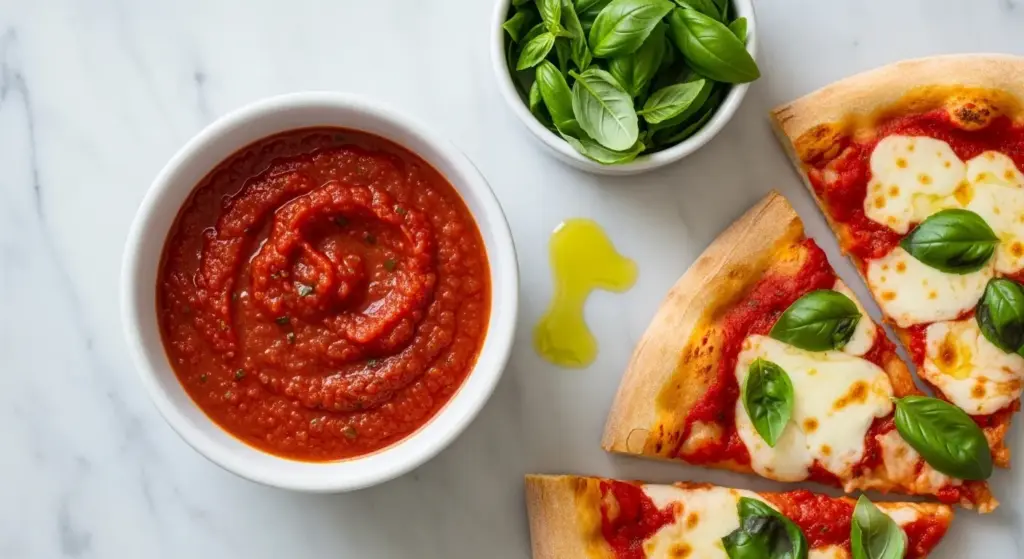
This pizza sauce is endlessly versatile, and it shines just as brightly off the pizza as it does on one.
Use it generously on homemade pizzas, flatbreads, and calzones, but also consider it as a dipping sauce, a pasta sauce, or a base for other Italian-inspired dishes. The flavor is bright and bold enough to carry almost anything it is paired with.
Here are some of the best ways to serve and use this sauce:
- Spread it on homemade pizza dough with fresh mozzarella and basil for a classic Margherita
- Use it as a dipping sauce for Cheesy Garlic Bread
- Spoon it over Classic Chicken Parmesan for an extra-saucy, flavor-packed dinner
- Use it as the base sauce for Stuffed Shells
- Serve as a dipping sauce alongside Classic Bruschetta for a party spread
- Stir a few spoonfuls into hot pasta for a quick five-minute weeknight meal
- Use it as the sauce in Easy Lasagna for a more vibrant tomato flavor than store-bought jarred sauce
Variations to Try
The base recipe is a classic, but there is plenty of room to play once you have it down.
Small adjustments can take this sauce in very different directions while keeping it just as quick and easy to make.
- Roasted garlic version: Instead of raw garlic, use 4 to 5 cloves of roasted garlic for a sweeter, mellower flavor.
- Spicy arrabbiata style: Double the red pepper flakes and omit the sugar for a fiery, bold sauce.
- Fresh tomato pizza sauce: In peak summer, substitute 1 pound (450g) of very ripe Roma or plum tomatoes, peeled and seeded, for the canned tomatoes.
- Herb-loaded version: Add a tablespoon of fresh thyme leaves and a teaspoon of dried rosemary alongside the oregano for a more aromatic, complex sauce.
- Vodka pizza sauce: Stir in 2 tablespoons of heavy cream and a splash of vodka for a richer, more indulgent flavor. This variation is similar to the Vodka Sauce used in pasta dishes.
- White pizza sauce (bianca): Swap the tomato base entirely for a béchamel or ricotta blend with garlic and herbs for a creamy, rich pizza base.
- Pesto base: Use a thin layer of Basil Pesto in place of tomato sauce for a vibrant, herby pizza with a completely different flavor profile.
Storage and Reheating
One of the best things about this pizza sauce is how well it stores, which makes it perfect for batch cooking.
If you make a double or triple batch on the weekend, you will have pizza nights covered for weeks without any extra effort.
- Refrigerator: Store in an airtight glass jar or container for up to 5 days. The flavor actually improves after the first day as the garlic mellows and the herbs have more time to infuse.
- Freezer: Freeze in airtight containers or zip-top freezer bags for up to 3 months. Portion the sauce into pizza-sized amounts (about 1/2 cup / 120ml per pizza) before freezing so you can thaw only what you need.
- Thawing: Transfer frozen sauce to the refrigerator the night before you plan to use it. It will thaw fully overnight.
- Reheating: This sauce does not need to be reheated before using. Spread it directly onto pizza dough at room temperature or cold. If using for pasta, warm it gently in a saucepan over medium-low heat, stirring occasionally, until heated through.
- Do not microwave to reheat for pizza use. Microwaving can make the sauce slightly watery. For pasta, the stovetop is always the better option.
Read Also: Easy Pizza Dough Recipe
Nutritional Facts
The following nutritional information is based on one serving of approximately 3 tablespoons (45ml) of sauce, which is enough for one personal pizza. This recipe makes approximately 8 servings.
| Nutrient | Per Serving (approx. 3 tbsp) |
|---|---|
| Calories | 45 kcal |
| Total Fat | 3.5g |
| Saturated Fat | 0.5g |
| Sodium | 290mg |
| Total Carbohydrates | 4g |
| Dietary Fiber | 1g |
| Total Sugars | 2g |
| Protein | 1g |
| Vitamin C | 8% DV |
| Iron | 4% DV |
Nutritional values are estimates and may vary depending on specific brands and ingredient quantities used.
For another sauce-based dish that is similarly light and nutritious, take a look at the Easy Tomato Soup recipe.
Health Benefits of Key Ingredients
This pizza sauce is not just delicious. The core ingredients bring a meaningful set of nutritional benefits to every slice.
The base of San Marzano tomatoes makes this sauce rich in lycopene, a powerful antioxidant that has been extensively studied for its potential role in reducing oxidative stress and supporting heart health. Cooking tomatoes (which happens when the pizza bakes) actually increases the bioavailability of lycopene, making your body able to absorb even more of it from a cooked slice than from raw tomatoes.
Here is a closer look at what the key ingredients contribute:
- Tomatoes are an excellent source of lycopene, vitamin C, potassium, and folate. They are naturally low in calories and have a high water content, making them a nutrient-dense base.
- Garlic contains allicin, a sulfur compound that has antimicrobial and anti-inflammatory properties. Regular garlic consumption has been linked to cardiovascular support and immune function.
- Extra virgin olive oil is a cornerstone of the Mediterranean diet and provides heart-healthy monounsaturated fats as well as powerful polyphenol antioxidants. Even the small amount in this recipe adds meaningful nutritional value.
- Dried oregano is surprisingly high in antioxidants relative to its volume and contains compounds with known antimicrobial properties. It is also a good source of vitamin K.
- Fresh basil contributes vitamin K, vitamin A, and anti-inflammatory flavonoids. Beyond nutrition, it adds a brightness to the sauce that makes the whole dish feel more vibrant.
Another recipe that celebrates the nutritional power of tomatoes is this Creamy Tomato Soup, a comforting option that uses a very similar ingredient base.
Frequently Asked Questions
1. Do I need to cook pizza sauce before putting it on pizza?
No, and in fact you should not for most traditional pizza preparations. The no-cook method is the authentic approach for Neapolitan-style pizza sauce.
The heat of the oven during baking cooks the sauce perfectly while the pizza is in the oven, concentrating the flavors without over-cooking them. Pre-cooking the sauce can result in a more muted, jammy tomato flavor by the time the pizza is done.
2. Can I use fresh tomatoes instead of canned?
Yes, but the results will vary depending on the season and tomato variety you use. During peak summer, ripe Roma or plum tomatoes can produce a wonderful fresh sauce.
Peel and seed approximately 1 pound (450g) of tomatoes, then proceed with the same recipe. During other seasons, high-quality canned San Marzano tomatoes will almost always produce a better-tasting sauce than out-of-season fresh tomatoes.
3. How much sauce should I put on a pizza?
A good rule of thumb is 3 to 4 tablespoons (45 to 60ml) for a 12-inch (30cm) pizza. This gives you a thin, even layer that covers the dough without pooling.
More sauce is not better. Too much sauce creates steam during baking, which makes the crust soggy and prevents the cheese from browning and melting properly. When in doubt, use less than you think you need.
4. Can I make this sauce in advance?
Absolutely. This sauce is actually better when made a day ahead. The flavors have time to meld together, the garlic mellows, and the herbs infuse more deeply into the tomato base.
Make it up to 5 days ahead and store it in an airtight jar in the refrigerator, or freeze it in portioned amounts for up to 3 months.
5. What is the difference between pizza sauce and marinara sauce?
They are closely related but not identical. Pizza sauce is typically uncooked, uses fewer herbs, and is spread cold onto raw dough before baking.
Marinara sauce is cooked on the stovetop, often has a softer, more stewed texture, and is generally used as a pasta sauce or a dipping sauce. Both use similar base ingredients, but the texture and preparation method create noticeably different end results for their respective uses.
Read Also: Creole Sauce Recipe
Final Thoughts
A great pizza sauce recipe is one of those kitchen fundamentals that pays dividends every single time you use it. Once you taste a sauce made with quality tomatoes, fresh garlic, and a good olive oil, the jar on the store shelf will never look quite the same way again.
This recipe takes less time than a trip to the grocery store, uses ingredients you likely already have, and delivers a flavor that is genuinely hard to beat. Give it a try the next time pizza night rolls around, and you will see exactly what a difference a homemade sauce makes.
If you try this recipe, leave a comment below and let me know how it turned out! Share your favorite pizza topping combinations too. I would love to hear what you are putting on your homemade pies.
Recommended:
- Tomato Sauce Recipe
- Spaghetti Sauce Recipe
- Vodka Sauce Recipe
- Basil Pesto Recipe
- Easy Pesto Recipe
- Easy Lasagna Recipe
- Lasagna Recipe With Ricotta
- Italian Meatballs Recipe
- Easy Garlic Bread Recipe
- Classic Chicken Parmesan Recipe