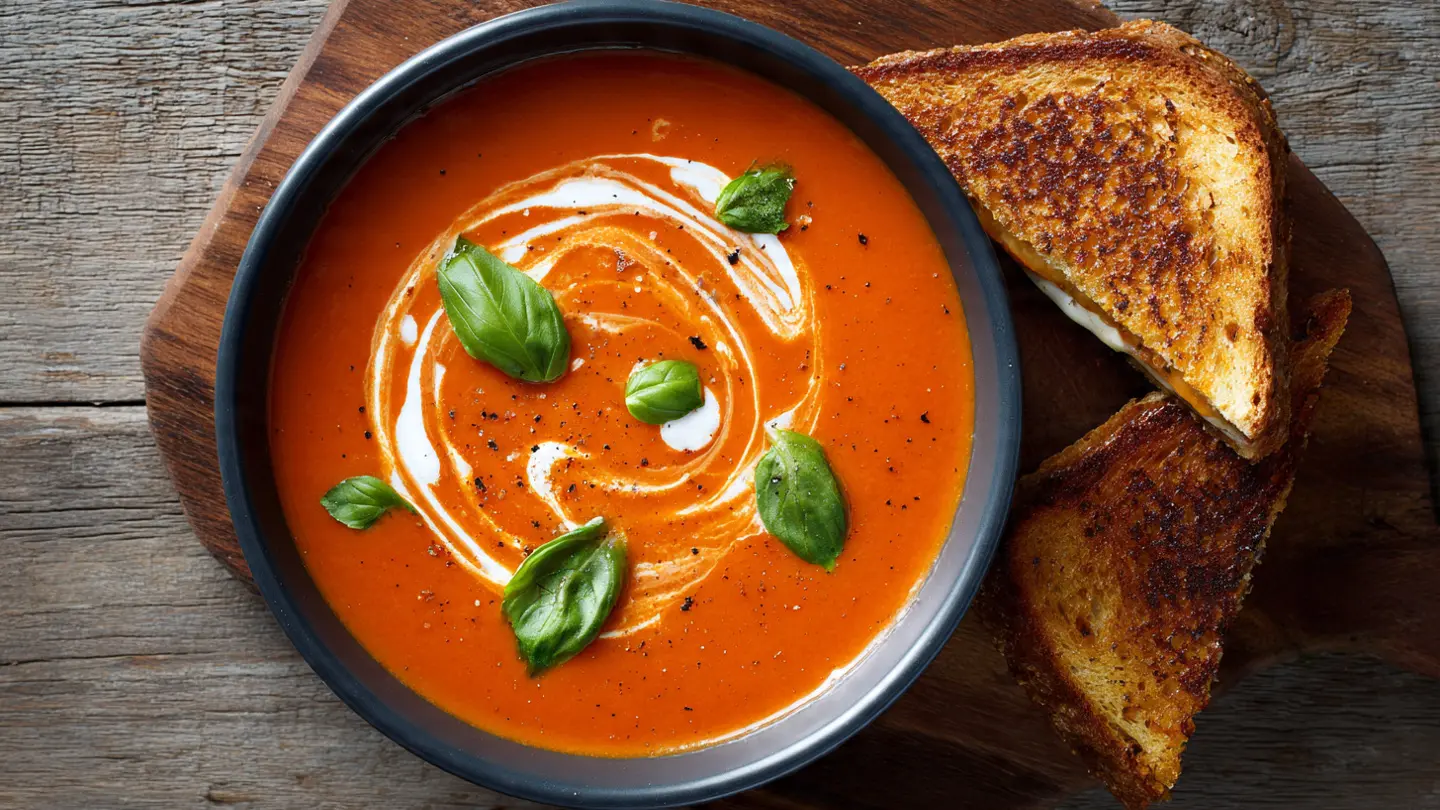
Nothing warms the soul quite like a bowl of homemade easy tomato soup recipe on a chilly afternoon. This classic comfort food brings back memories of childhood lunches paired with crispy grilled cheese sandwiches, but this version is far better than anything from a can.
The beauty of this recipe lies in its simplicity. You don’t need fresh tomatoes or complicated techniques to create a rich, velvety soup that tastes like you’ve been simmering it all day. With just a handful of pantry staples and about 30 minutes, you can have a pot of incredibly flavorful tomato soup ready to serve.
What makes this recipe special is how the butter creates a luxurious, creamy texture without needing heavy cream. The onions and garlic build a savory foundation, while a touch of sugar balances the natural acidity of the tomatoes. Fresh basil adds brightness and a restaurant-quality finish that elevates the entire dish.
I’ve perfected this recipe through years of making it for my family, and it never fails to impress. The smooth, silky texture combined with deep tomato flavor makes it hard to believe something so delicious can be this easy to prepare.
Why You’ll Love This Easy Tomato Soup Recipe
This tomato soup stands out because it delivers maximum flavor with minimal effort. You’ll appreciate how forgiving the recipe is, making it perfect for both beginner cooks and experienced chefs looking for a reliable weeknight dinner option.
The ingredient list is refreshingly short, yet each component plays an important role in building layers of flavor. Canned San Marzano tomatoes provide consistent quality year-round, so you’re never dependent on seasonal produce to make outstanding soup.
- Quick preparation: Ready in just 30 minutes from start to finish
- Pantry-friendly: Uses shelf-stable ingredients you likely already have on hand
- Budget-conscious: Costs a fraction of restaurant soup while tasting even better
- Naturally creamy: Achieves rich texture from butter instead of heavy cream
- Versatile: Serves as a light meal, hearty appetizer, or comforting lunch
- Freezer-friendly: Makes excellent leftovers that reheat beautifully
- Kid-approved: Smooth texture and mild flavor appeal to even picky eaters
This recipe also scales perfectly for meal prep. Double or triple the batch and freeze portions for busy weeknights when you want homemade comfort food without the cooking time.
Another favorite of mine is this creamy tomato soup recipe, which takes a slightly different approach with added dairy.
Ingredients
This tomato soup comes together with simple ingredients that work harmoniously to create complex flavor. Each element has been carefully chosen to enhance the natural sweetness and acidity of the tomatoes while building a satisfying, full-bodied soup.
- 3 tablespoons (42g) unsalted butter: Creates richness and helps develop the base flavors
- 1 large yellow onion, finely diced (about 2 cups / 300g): Adds sweet, savory depth
- 4 cloves garlic, minced (about 1 tablespoon / 12g): Provides aromatic complexity
- 2 (28-ounce / 794g) cans crushed tomatoes: The star ingredient, preferably San Marzano variety
- 3 cups (720ml) low-sodium chicken broth or vegetable broth: Adds body and savory notes
- 1/4 cup (10g) fresh basil leaves, roughly chopped: Contributes fresh, herbaceous flavor
- 1 tablespoon (12g) granulated sugar: Balances the tomatoes’ acidity
- 1 teaspoon (6g) salt: Enhances all flavors (adjust to taste)
- 1/2 teaspoon (1g) black pepper: Adds subtle warmth
- 1 teaspoon (5ml) balsamic vinegar: Deepens flavor and adds complexity
- 1/2 cup (120ml) heavy cream (optional): For extra richness
The quality of your tomatoes makes a significant difference in the final result. San Marzano tomatoes have lower acidity and sweeter flavor compared to standard varieties, which means you’ll need less sugar to balance the soup. If using regular crushed tomatoes, taste and adjust the sugar accordingly.
Kitchen Equipment Needed
Having the right tools makes preparing this soup even easier and ensures the best texture. You don’t need specialized equipment, just some basic kitchen essentials that help you achieve restaurant-quality results at home.
- Large Dutch oven or soup pot (at least 5-quart capacity): For even heat distribution
- Wooden spoon or silicone spatula: For stirring and sautéing
- Sharp chef’s knife: For dicing onions and chopping basil
- Cutting board: Preferably separate boards for produce and herbs
- Immersion blender or regular blender: For creating smooth, creamy texture
- Measuring cups and spoons: For accurate ingredient portions
- Ladle: For serving the finished soup
- Can opener: For opening tomato cans
An immersion blender is my preferred tool because it allows you to blend the soup right in the pot, saving time and reducing cleanup. If using a regular blender, work in batches and never fill it more than halfway when blending hot liquids to prevent dangerous steam buildup.
Recommended Products for This Recipe
These carefully selected products will help you achieve the best possible results with your tomato soup. I’ve tested numerous brands and equipment options, and these recommendations consistently deliver superior flavor and texture.
1. San Marzano DOP Certified Tomatoes
Authentic San Marzano tomatoes grown in the volcanic soil near Mount Vesuvius have a naturally sweet flavor and low acidity that transforms this soup. Look for the DOP certification seal to ensure you’re getting genuine San Marzanos. The difference in taste is immediately noticeable compared to standard canned tomatoes.
2. KitchenAid Immersion Blender
This powerful immersion blender creates perfectly smooth soup without transferring hot liquid to a countertop blender. The variable speed control lets you achieve your preferred texture, from slightly chunky to completely silky. The S-blade design prevents splattering, keeping your stovetop clean.
3. Le Creuset Enameled Dutch Oven
This heavy-duty Dutch oven distributes heat evenly and prevents hot spots that can burn your aromatics. The enameled interior won’t react with acidic tomatoes, and the weight of the pot helps maintain steady, gentle simmering. It’s an investment piece that will serve you for decades.
4. Better Than Bouillon Chicken Base
This concentrated chicken base delivers deeper, more complex flavor than standard boxed broth. You can control the sodium level by adjusting the concentration, and one jar makes multiple batches of soup. The roasted chicken flavor adds savory depth that complements the tomatoes beautifully.
For another delicious option, try this canning tomato soup recipe to preserve summer’s harvest.
Step-by-Step Instructions
Follow these detailed instructions to create perfectly smooth, flavorful tomato soup. Each step builds on the previous one to develop deep, layered flavors that make this soup taste like it simmered for hours.
1. Prepare Your Ingredients
- Dice the onion into small, uniform pieces about 1/4-inch (6mm) in size so they cook evenly and blend smoothly
- Mince the garlic finely, or crush it with the flat side of your knife for easier blending
- Measure out all your ingredients and have them ready near the stove for efficient cooking
- Chop the basil leaves roughly, keeping some larger pieces for garnish if desired
Proper preparation ensures smooth cooking and prevents burning aromatics while searching for ingredients.
2. Sauté the Aromatics
- Set your Dutch oven or large pot over medium heat and add the butter
- Once the butter melts completely and begins to foam slightly, add the diced onions
- Stir frequently with a wooden spoon, cooking for 8-10 minutes until the onions become soft and translucent
- The onions should not brown; reduce heat to medium-low if you notice any browning
- Add the minced garlic and cook for 1-2 minutes more, stirring constantly to prevent burning
- You’ll know the garlic is ready when it becomes fragrant and slightly softened
This foundational step creates the flavor base for your entire soup. The butter carries the aromatic compounds from the onions and garlic throughout the dish.
3. Add the Tomatoes and Broth
- Pour both cans of crushed tomatoes directly into the pot, including all the juice
- Add the chicken broth or vegetable broth, stirring to combine with the aromatics
- Stir in the chopped basil leaves, reserving a few for garnish
- Add the sugar, salt, and black pepper, stirring until everything is well incorporated
- Increase the heat to medium-high and bring the mixture to a gentle boil
The sugar is crucial here because it balances the natural acidity in tomatoes, creating a more rounded, pleasant flavor profile.
4. Simmer the Soup
- Once the soup reaches a boil, reduce the heat to low
- Partially cover the pot with a lid, leaving a small gap for steam to escape
- Let the soup simmer gently for 20-25 minutes, stirring occasionally
- The soup should bubble very gently; adjust heat as needed to maintain this gentle simmer
- This simmering time allows the flavors to meld and develop depth
During this time, the tomatoes break down further, the broth reduces slightly, and all the ingredients become harmonious.
5. Blend to Desired Consistency
- Remove the pot from heat and let it cool for 2-3 minutes to reduce splattering
- If using an immersion blender, insert it into the soup and blend until completely smooth
- Move the blender around the pot in circular motions to catch all chunks
- If using a regular blender, work in batches, filling the blender jar only halfway
- Place a kitchen towel over the blender lid and hold it down firmly while blending
- Blend each batch on low speed first, then gradually increase to high for 30-45 seconds
- Return the blended soup to the pot
Blending hot liquids requires caution because steam pressure can cause the lid to pop off unexpectedly.
6. Finish and Adjust Seasoning
- Stir in the balsamic vinegar, which adds a subtle complexity and enhances the tomato flavor
- If using heavy cream, add it now and stir until fully incorporated
- Taste the soup and adjust seasoning with additional salt, pepper, or sugar as needed
- If the soup seems too thick, thin it with additional broth or water
- If it’s too thin, simmer uncovered for 5-10 minutes to reduce and concentrate flavors
- Reheat gently over low heat if the soup has cooled too much during blending
The balsamic vinegar is your secret weapon. Just one teaspoon brightens all the flavors without making the soup taste like vinegar.
You might also enjoy this tomato egg drop soup recipe for a different take on tomato-based soups.
Tips for Success
These professional tips will help you achieve perfect results every single time you make this soup. Small details make a big difference in the final flavor and texture.
- Choose quality tomatoes: San Marzano or other high-quality canned tomatoes produce noticeably better flavor than generic brands
- Don’t rush the onions: Properly sautéed onions add sweetness and depth; rushing this step results in harsh, sharp flavors
- Control the heat: Gentle simmering extracts flavor without making the soup taste overcooked or bitter
- Taste as you go: Adjust sugar, salt, and acid levels to your preference before serving
- Blend safely: Always let hot soup cool slightly before blending, and never overfill your blender
- Add acid at the end: The balsamic vinegar brightens flavors most effectively when stirred in after cooking
- Use unsalted butter: This gives you better control over the soup’s final saltiness
If your soup tastes too acidic, add an extra teaspoon of sugar. If it tastes flat, add a pinch more salt or an extra splash of balsamic vinegar.
Serving Suggestions

This versatile soup shines in many serving scenarios, from casual lunches to elegant dinner party starters. The classic pairing is obvious, but don’t limit yourself to just one option.
- Classic grilled cheese sandwich: Use sharp cheddar, Gruyère, or a blend of both for the ultimate comfort meal
- Crusty artisan bread: Perfect for dipping and soaking up every last drop
- Fresh garden salad: Add brightness and crunch with mixed greens, cucumber, and a light vinaigrette
- Homemade croutons: Toss cubed bread with olive oil, garlic, and herbs, then bake until golden
- Toasted baguette slices: Brush with olive oil and toast until crisp for an elegant presentation
- Simple side of pasta: Serve the soup as a first course before baked ziti or another Italian main dish
For garnishing, consider swirling in extra heavy cream, drizzling with high-quality olive oil, or topping with freshly grated Parmesan cheese. Fresh basil leaves, torn rather than chopped, add beautiful color and aromatic freshness. A crack of fresh black pepper just before serving enhances both appearance and flavor.
Variations to Try
Once you’ve mastered the basic recipe, these variations offer exciting ways to customize the soup to your taste preferences. Each modification creates a distinctly different flavor profile while maintaining the comforting essence of classic tomato soup.
- Roasted red pepper tomato soup: Add 1 cup (240g) of roasted red peppers before blending for smoky sweetness
- Creamy tomato basil: Double the basil and add 1 cup (240ml) heavy cream for ultra-rich texture
- Spicy tomato soup: Include 1/4 teaspoon red pepper flakes and a pinch of cayenne for gentle heat
- Italian-style: Add 1 teaspoon dried oregano, 1/2 teaspoon dried thyme, and finish with Parmesan
- Vegan version: Replace butter with olive oil and use vegetable broth, omitting the cream entirely
- Chunky style: Reserve 1 cup of tomatoes before blending and stir them in at the end
- Fire-roasted: Use fire-roasted crushed tomatoes instead of regular for smoky depth
You can also create a heartier meal by adding cooked pasta, tortellini, or even white beans directly to the soup. These additions transform the soup from a light first course into a substantial main dish.
Storage and Reheating
Proper storage keeps this soup fresh and delicious for multiple meals throughout the week. The flavors actually deepen and improve after a day or two in the refrigerator as the ingredients continue to meld.
- Refrigerator storage: Cool the soup completely, then transfer to an airtight container and refrigerate for up to 5 days
- Freezer storage: Freeze in portion-sized containers for up to 3 months; leave 1 inch (2.5cm) headspace for expansion
- Reheating from refrigerated: Warm gently in a pot over medium-low heat, stirring occasionally, for about 10 minutes
- Reheating from frozen: Thaw overnight in the refrigerator, then reheat as directed above
- Microwave reheating: Heat in 1-minute intervals, stirring between each, until steaming hot throughout
If the soup seems too thick after refrigeration, thin it with a bit of broth or water when reheating. The tomatoes absorb liquid as the soup sits, so this is completely normal and easy to fix.
If you enjoy making soups ahead of time, check out this loaded potato soup recipe for another freezer-friendly option.
Nutritional Facts
This nutritional information is calculated per serving based on 6 servings total from this recipe. Values are approximate and may vary based on specific brands and quantities used.
Per Serving (approximately 1.5 cups / 360ml):
- Calories: 165
- Total Fat: 8g
- Saturated Fat: 5g
- Cholesterol: 20mg
- Sodium: 680mg
- Total Carbohydrates: 18g
- Dietary Fiber: 4g
- Total Sugars: 11g
- Protein: 4g
- Vitamin A: 25% DV
- Vitamin C: 40% DV
- Calcium: 8% DV
- Iron: 10% DV
Note: These values do not include optional heavy cream. Adding 1/2 cup heavy cream increases the calories by approximately 70 per serving and adds 7g of fat.
Health Benefits of Key Ingredients
Beyond tasting delicious, this tomato soup delivers impressive nutritional value from simple, wholesome ingredients. Each component contributes specific health benefits that make this comfort food surprisingly good for you.
Tomatoes are rich in lycopene, a powerful antioxidant that gives them their red color and may help reduce the risk of certain cancers and heart disease. Cooking tomatoes actually increases the bioavailability of lycopene, making tomato soup an excellent way to maximize this benefit. The vitamin C content supports immune function and helps your body absorb iron from plant sources.
- Tomatoes: High in lycopene, vitamins A and C, and potassium for heart health and immune support
- Garlic: Contains allicin, which has antibacterial and anti-inflammatory properties
- Onions: Provide quercetin, an antioxidant that may help reduce inflammation
- Basil: Rich in vitamin K and antioxidants, with potential anti-inflammatory effects
- Olive oil alternative: When substituted for butter, provides heart-healthy monounsaturated fats
Using low-sodium broth allows you to control salt intake, and the soup’s high fiber content from tomatoes helps promote digestive health and satiety.
Frequently Asked Questions
1. Can I use fresh tomatoes instead of canned?
Yes, you can substitute fresh tomatoes, but you’ll need about 4 pounds (1.8kg) of ripe tomatoes. Core and roughly chop them, then simmer for 30-40 minutes until completely softened before blending. Fresh tomatoes have higher water content, so the soup may need longer simmering to reach the right consistency. Keep in mind that canned tomatoes often produce more reliable, consistent results, especially outside peak tomato season.
2. How do I make this soup thicker?
The easiest method is to simmer the soup uncovered for an additional 10-15 minutes to evaporate excess liquid. Alternatively, you can add a cornstarch slurry by mixing 1 tablespoon (8g) cornstarch with 2 tablespoons (30ml) cold water, then stirring it into the simmering soup. For a more traditional approach, make a roux by cooking 2 tablespoons each of butter and flour together before adding the tomatoes and broth.
3. Can I make this soup dairy-free?
Absolutely! Replace the butter with an equal amount of olive oil or vegan butter substitute. Skip the heavy cream entirely, or use full-fat coconut milk for a creamy texture with subtle coconut flavor. The soup will still be delicious and satisfying without any dairy products.
4. Why is my tomato soup bitter?
Bitterness usually comes from overcooking the garlic, using low-quality tomatoes, or not adding enough sugar to balance the acidity. Make sure you only cook the garlic for 1-2 minutes after adding it, and don’t let it brown. Add sugar gradually, tasting as you go, until the bitterness disappears and the flavors taste balanced.
5. Can I add other vegetables to this soup?
Yes, carrots and celery make excellent additions. Dice 1 cup (130g) carrots and 1 cup (100g) celery and sauté them with the onions. They’ll add natural sweetness and extra nutrition. Bell peppers also work beautifully for a slightly different flavor profile.
For a hearty twist, consider this porcupine meatballs tomato soup recipe that incorporates meatballs.
Final Thoughts
This easy tomato soup recipe proves that simple ingredients, when treated with care, create extraordinary results. The comforting warmth of homemade soup cannot be replicated by anything from a can, and once you experience how easy it is to make from scratch, you’ll never go back to store-bought versions.
The beauty of this recipe lies in its versatility and reliability. It works perfectly for quick weeknight dinners, elegant dinner party starters, or meal prep for busy weeks ahead. I encourage you to make this soup your own by experimenting with the variations and finding your perfect balance of flavors.
Give this recipe a try and discover how satisfying homemade tomato soup can be! I’d love to hear how it turns out for you and any creative variations you try. Share your thoughts in the comments below or tag your soup photos on social media so we can celebrate your cooking success together.
Recommended:
- Spinach Soup Recipe
- Carrot Soup Recipe
- Broccoli Soup Recipe
- Mushroom Soup Recipe
- Cauliflower Soup Recipe
- Lentil Soup Recipe
- Split Pea Soup Recipe
- Chicken Rice Soup Recipe
- Tomato Pie Recipe
- Tomato Sauce Recipe