Fresh garden tomatoes at their peak deserve to be enjoyed all year long. This canning tomato soup recipe transforms your summer harvest into shelf-stable jars of comfort that will warm your kitchen throughout the cold months.
Making your own canned tomato soup is simpler than you might think. The process preserves the bright, fresh flavor of ripe tomatoes while creating a versatile base you can customize when you’re ready to serve it.
Unlike store-bought versions packed with preservatives and sodium, homemade canned tomato soup lets you control every ingredient. You’ll know exactly what goes into each jar, from the variety of tomatoes to the herbs and seasonings.
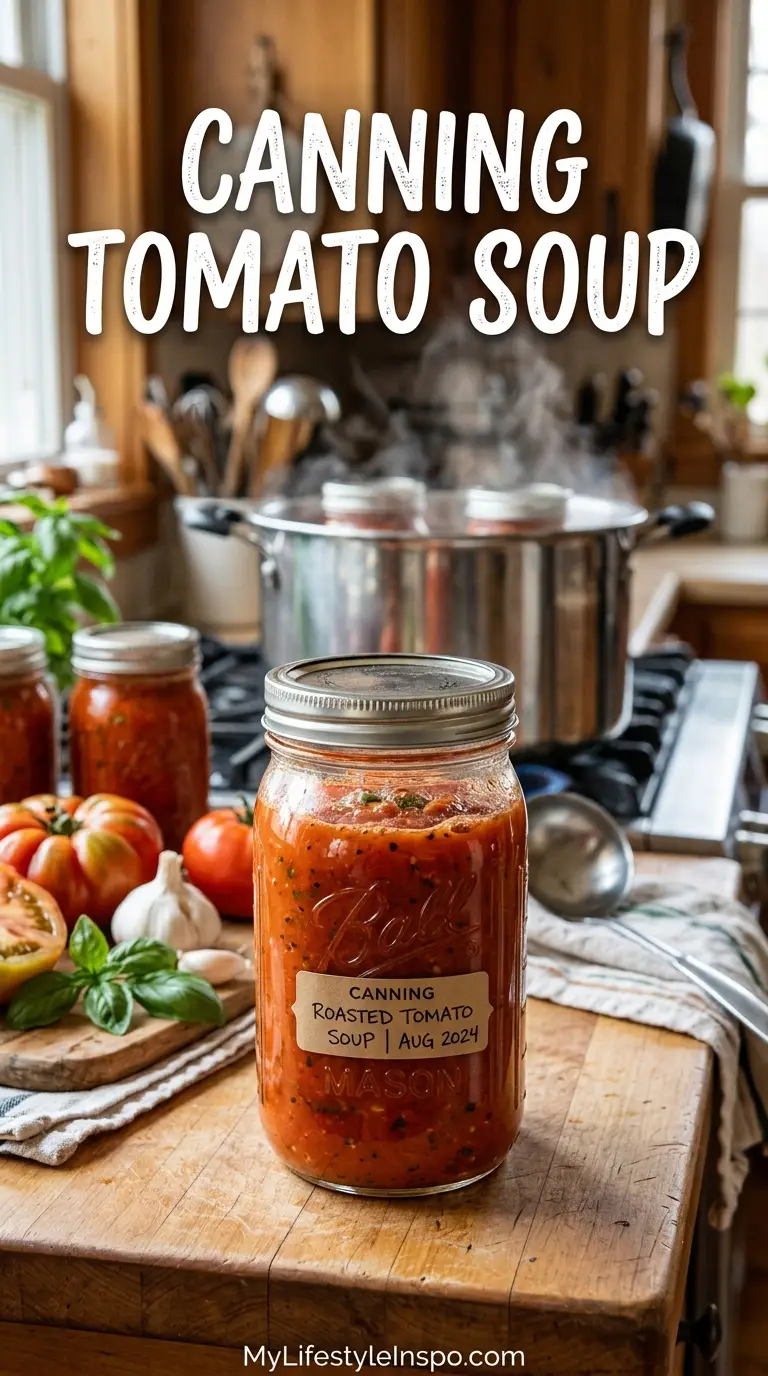
Why You’ll Love This Canning Tomato Soup Recipe
This recipe solves the problem of what to do with an abundant tomato harvest while giving you a pantry staple that rivals any premium brand.
The canning process itself is straightforward and doesn’t require fancy equipment beyond basic canning supplies. You’ll appreciate having ready-made soup that just needs reheating for quick lunches or easy dinners.
Here’s what makes this recipe a winner:
- Uses fresh tomatoes at their peak flavor and nutritional value
- Creates a concentrated base that takes up less storage space than regular soup
- Provides complete control over ingredients and sodium content
- Eliminates the need for dairy products that don’t can safely
- Offers flexibility to adjust creaminess and seasonings when serving
- Produces approximately 6-8 quarts from a standard tomato harvest
- Saves money compared to buying premium canned soup
This pairs beautifully with classic bruschetta for a complete Italian-inspired meal.
Ingredients
This recipe creates a flavorful tomato soup base that you’ll customize when ready to serve. The ingredient list focuses on what can be safely preserved, leaving dairy additions for later.
- 12 pounds (5.4 kg) fresh tomatoes, any variety
- 2 medium yellow onions, quartered
- 4 stalks celery, roughly chopped
- 6 cloves garlic, peeled
- 1/4 cup (10 g) fresh basil leaves
- 2 tablespoons (30 ml) sugar
- 1 tablespoon (18 g) salt
- 1 teaspoon (2 g) black pepper
- 2 tablespoons (30 ml) bottled lemon juice per quart jar OR 1/2 teaspoon citric acid per quart jar
For Serving Later:
- Milk, cream, or broth to thin the soup
- Additional seasonings to taste
- Butter or olive oil for richness
Kitchen Equipment Needed
Having the right tools makes canning safer and more efficient. Most of these items are standard kitchen equipment, with just a few canning-specific pieces.
- Pressure canner or water bath canner
- Large stockpot (8-quart minimum)
- Blender or immersion blender
- Food mill or fine-mesh strainer (optional)
- Quart-sized canning jars (6-8 jars)
- New canning lids and bands
- Jar lifter
- Canning funnel
- Bubble remover tool or plastic chopstick
- Large bowl
- Ladle
- Clean kitchen towels
Recommended Products for This Recipe
These carefully selected products will elevate your canning experience and ensure the best results for your homemade tomato soup.
1. All American Pressure Canner
This heavy-duty pressure canner features a metal-to-metal seal that eliminates the need for gasket replacement and provides precise pressure control. The durable construction ensures even heat distribution and safe processing for all your low-acid canning projects. This is an investment that will serve you for decades.
2. Vitamix High-Performance Blender
A powerful blender makes quick work of pureeing tomatoes and vegetables to the perfect consistency. The variable speed control lets you achieve exactly the texture you want, from chunky to silky smooth. The self-cleaning feature is a bonus when you’re processing large batches.
3. Ball Canning Discovery Kit
This complete starter kit includes a jar lifter, funnel, bubble remover, lid lifter, and tongs designed specifically for safe canning. The tools are color-coded and dishwasher safe, making cleanup simple. Perfect if you’re new to canning or need to replace worn-out tools.
4. OXO Good Grips Food Mill
This food mill removes seeds and skins while pureeing tomatoes in one step, saving significant time. The three interchangeable discs let you control the texture of your soup base. The non-slip handle and stabilizing legs make processing large batches comfortable and efficient.
You might also enjoy: Tomato Sauce Recipe
Step-by-Step Instructions
Follow these detailed instructions to create perfectly canned tomato soup that will stay fresh on your shelf for up to 18 months.
1. Prepare Your Workspace and Equipment
- Wash all canning jars in hot, soapy water and rinse thoroughly
- Place jars in a low oven (170°F/77°C) or run through a dishwasher cycle to keep warm
- Fill your pressure canner or water bath canner with the appropriate amount of water according to manufacturer instructions
- Set new lids in a small bowl of hot (not boiling) water to soften the sealing compound
- Lay out all equipment within easy reach for efficient workflow
- Clear plenty of counter space for filling jars and processing
2. Prepare the Tomatoes
- Bring a large pot of water to a rolling boil
- Fill a large bowl with ice water
- Wash tomatoes thoroughly under cool running water
- Use a sharp knife to cut a small X in the bottom of each tomato
- Working in batches, lower tomatoes into boiling water for 45-60 seconds until skins begin to split
- Immediately transfer tomatoes to ice water using a slotted spoon
- Once cool enough to handle, peel away the loosened skins
- Cut tomatoes in half and remove the core
- For a thicker soup, squeeze out excess seeds and juice over a bowl
- Roughly chop the peeled tomatoes into chunks
3. Blend the Vegetables
- Add quartered onions, chopped celery, peeled garlic, and fresh basil to your blender
- Blend on high speed until vegetables are finely minced but not completely pureed
- You want small pieces that will cook down but still provide texture
- Transfer the blended vegetable mixture to your large stockpot
- Add the chopped tomatoes to the blender in batches
- Blend each batch until smooth or leave slightly chunky based on your preference
- Pour each blended batch into the stockpot with the vegetables
4. Cook the Soup Base
- Place the stockpot over medium heat
- Stir in sugar, salt, and black pepper
- Bring the mixture to a gentle simmer, stirring frequently to prevent sticking
- Reduce heat to low and continue simmering for 20-30 minutes
- The mixture should reduce by about one-quarter, becoming slightly thicker
- Stir occasionally and scrape the bottom to prevent scorching
- Taste and adjust seasonings if desired, keeping in mind flavors will concentrate during canning
- For a silkier texture, use an immersion blender or run the cooked mixture through a food mill
5. Prepare Jars for Filling
- Remove warm jars from the oven or dishwasher one at a time
- Place a canning funnel in the first jar
- Add 2 tablespoons bottled lemon juice OR 1/2 teaspoon citric acid to each quart jar
- The acid is essential for safe canning and must not be omitted
- If using pint jars, add 1 tablespoon lemon juice OR 1/4 teaspoon citric acid per jar
- Keep remaining jars warm until ready to fill
6. Fill and Process the Jars
- Ladle hot soup into each prepared jar, leaving 1 inch of headspace at the top
- Run the bubble remover tool or a plastic chopstick around the inside edge of the jar to release trapped air bubbles
- Wipe the jar rim thoroughly with a clean, damp cloth to ensure a proper seal
- Center a lid on the jar and screw on a band until fingertip tight (snug but not overly tight)
- Place the filled jar on the rack in your canner
- Repeat with remaining jars
For Pressure Canning:
- Secure the canner lid and heat on high until steam escapes
- Vent steam for 10 minutes, then place the weight on the vent
- Bring pressure to 10 pounds for weighted gauge or 11 pounds for dial gauge
- Process quart jars for 25 minutes at the correct pressure
- Turn off heat and let pressure return to zero naturally
- Wait 5 additional minutes before removing the lid
- Let jars cool in the canner for 10 minutes before removing
For Water Bath Canning:
- Ensure water covers jars by at least 1 inch
- Bring water to a rolling boil
- Process quart jars for 40 minutes
- Start timing when water returns to a full boil
- Adjust processing time for altitude if needed
7. Cool and Store
- Use the jar lifter to carefully remove jars from the canner
- Place jars on a towel-covered counter with space between each jar
- Do not tighten bands or disturb jars during cooling
- Allow jars to cool undisturbed for 12-24 hours
- Check seals by pressing the center of each lid (it should not flex)
- Remove bands, wipe jars clean, and label with contents and date
- Store sealed jars in a cool, dark place for up to 18 months
- Refrigerate any jars that didn’t seal and use within one week
Read Also: Carrabbas Sausage and Lentil Soup Recipe
Tips for Success
Getting the details right makes the difference between good canned soup and exceptional canned soup. These proven tips will help you achieve perfect results every time.
- Choose ripe tomatoes: Use tomatoes at peak ripeness for the best flavor. Slightly overripe is fine, but avoid green or underripe tomatoes.
- Mix tomato varieties: Combine paste tomatoes like Roma with juicier varieties for better texture and balanced flavor.
- Don’t skip the acid: Lemon juice or citric acid is required for safe canning. Bottled lemon juice has consistent acidity, unlike fresh lemons.
- Maintain headspace: The 1-inch headspace allows for expansion during processing and ensures proper sealing.
- Check your altitude: If you live above 1,000 feet, adjust processing time or pressure according to USDA guidelines.
- Use bottled lemon juice: Fresh lemon juice has variable acidity and isn’t approved for canning safety.
- Avoid flour or cream: These ingredients cannot be safely canned, even with pressure canning. Add them when serving.
- Process promptly: Fill and process jars while the soup is hot to prevent bacterial growth.
- Test seals properly: A sealed lid will not flex when pressed and may have a slight indentation.
- Date your jars: Use the oldest jars first and rotate your stock regularly.
Another favorite: Lasagna Soup Recipe
Serving Suggestions
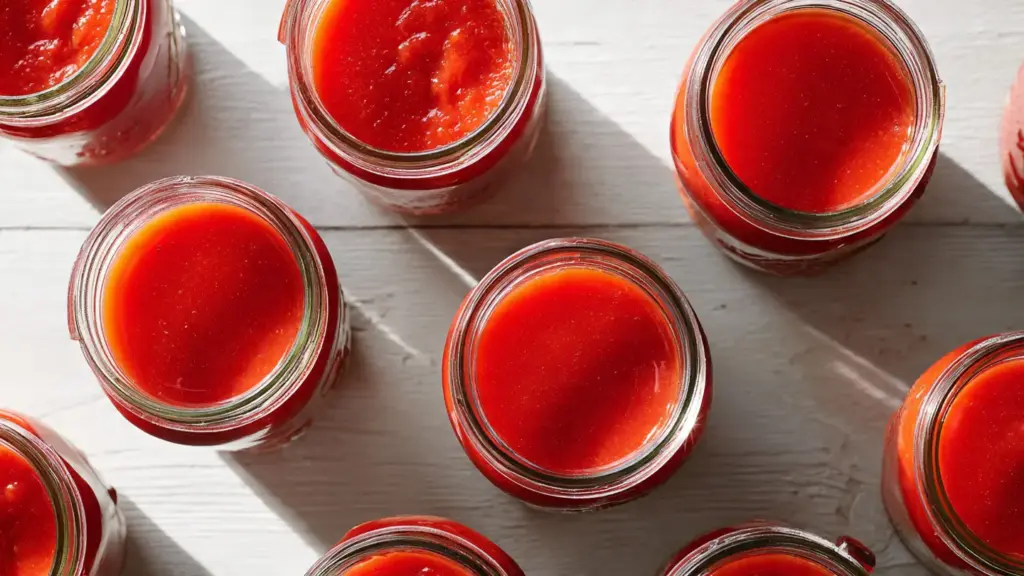
Transform your canned tomato soup base into a complete meal with these delicious serving ideas.
When ready to serve, open a jar and pour the concentrated soup into a pot. For each quart of soup base, add 1-2 cups of liquid depending on how thick you like your soup. Milk or cream creates classic creamy tomato soup, while chicken or vegetable broth makes a lighter version. Heat gently while stirring.
- Serve with classic grilled cheese sandwiches for the ultimate comfort food pairing
- Top with crispy homemade croutons and fresh basil
- Stir in cooked pasta or rice for a heartier meal
- Add roasted vegetables for extra nutrition and flavor
- Swirl in heavy cream and garnish with pesto
- Pair with classic deviled eggs for a light lunch
- Serve alongside baked ziti for an Italian feast
- Create tomato bisque by blending with cream and butter
Variations to Try
Customize your canning tomato soup recipe with these flavor variations that maintain canning safety while adding exciting taste profiles.
- Roasted Tomato Soup: Roast tomatoes at 375°F for 45 minutes before peeling. The caramelization adds deep, sweet flavor.
- Tomato Basil: Double the basil and add it at the end of cooking for fresher herb flavor.
- Spiced Tomato: Add 1/4 teaspoon ground cloves and 1/2 teaspoon allspice for warmth.
- Italian Style: Include 2 teaspoons dried oregano and 1 teaspoon dried thyme.
- Fire-Roasted: Use fire-roasted canned tomatoes for half the fresh tomatoes to add smoky depth.
- Garden Vegetable: Add 1 chopped red bell pepper and 2 carrots to the vegetable blend.
- Herbed: Mix in fresh parsley, thyme, and oregano along with the basil.
- Slightly Sweet: Increase sugar to 3 tablespoons for a sweeter, Campbell’s-style soup.
For a lighter option, try: Healthy Broccoli Soup Recipe
Storage and Reheating
Proper storage ensures your canned tomato soup stays safe and delicious for months.
Store sealed jars in a cool, dark location away from direct sunlight and heat sources. A basement, pantry, or dedicated canning shelf works perfectly. The ideal storage temperature is between 50-70°F (10-21°C).
- Shelf life: Properly canned tomato soup lasts 12-18 months when stored correctly
- Check before using: Inspect each jar before opening. Discard if the lid is bulging, the seal has broken, or there’s visible mold
- Opened jars: Transfer to a covered container and refrigerate for up to 5 days
- Reheating: Pour soup into a pot and add milk, cream, or broth to desired consistency. Heat over medium-low until steaming
- Microwave option: Heat in a microwave-safe bowl in 1-minute intervals, stirring between
- Freezing: Not recommended as it changes the texture, but soup remains safe to eat if frozen in sealed jars
- Thawing: If frozen, thaw in the refrigerator overnight before reheating
Nutritional Facts
Per 1 cup serving (soup base before thinning):
- Calories: 45
- Total Fat: 0.3g
- Saturated Fat: 0g
- Cholesterol: 0mg
- Sodium: 295mg
- Total Carbohydrates: 10g
- Dietary Fiber: 2.5g
- Sugars: 7g
- Protein: 2g
- Vitamin A: 18% DV
- Vitamin C: 28% DV
- Calcium: 2% DV
- Iron: 4% DV
Nutritional values are approximate and will vary based on specific ingredients used. Adding milk, cream, or butter when serving will increase calories and fat content.
Read Also: Mediterranean Fish Soup Recipe
Health Benefits of Key Ingredients
The simple ingredients in this canning tomato soup recipe deliver impressive nutritional benefits that support overall health.
Tomatoes provide lycopene, a powerful antioxidant that becomes more bioavailable when cooked. Research suggests lycopene supports heart health and may reduce certain cancer risks. The vitamin C in tomatoes boosts immune function while vitamin K supports bone health.
- Tomatoes: Rich in lycopene, vitamins A and C, potassium, and folate. Support heart health and provide antioxidant protection.
- Onions: Contain quercetin, a flavonoid with anti-inflammatory properties. Support immune function and heart health.
- Garlic: Offers allicin, which has antimicrobial properties. May help lower blood pressure and cholesterol levels.
- Celery: Provides antioxidants and anti-inflammatory compounds. Contains vitamin K and potassium for bone and heart health.
- Basil: Rich in vitamin K and contains eugenol, which has anti-inflammatory effects. Supports digestive health.
Frequently Asked Questions
1. Can I use a water bath canner instead of a pressure canner?
Yes, you can use a water bath canner for this tomato soup recipe as long as you add the required amount of lemon juice or citric acid to each jar. The acid brings the pH level low enough for safe water bath processing. Process quart jars for 40 minutes in a boiling water bath, ensuring water covers jars by at least 1 inch.
2. Why can’t I add cream or milk before canning?
Dairy products are low-acid ingredients that cannot be safely preserved through home canning, even with a pressure canner. They can harbor dangerous bacteria that produce toxins.
Add cream, milk, or butter when you’re ready to serve the soup for both safety and better flavor.
3. What’s the difference between bottled lemon juice and fresh lemon juice for canning?
Bottled lemon juice has a standardized acidity level of 5%, making it reliable for canning safety. Fresh lemon juice varies in acidity depending on the variety, ripeness, and growing conditions.
For safe home canning, always use bottled lemon juice to ensure consistent acid levels.
4. Can I reduce the salt in this recipe?
Yes, salt is added for flavor rather than preservation in this recipe. You can reduce or eliminate it entirely without affecting safety.
Keep in mind that some salt helps balance the acidity and sweetness, so adjust other seasonings accordingly if you reduce the salt significantly.
5. How do I know if my canned soup has gone bad?
Check for these warning signs before opening: bulging lids, broken seals, visible mold, or an off smell when you open the jar. If you see any of these signs, discard the jar immediately without tasting.
When properly processed and stored, sealed jars should show no signs of spoilage for 12-18 months.
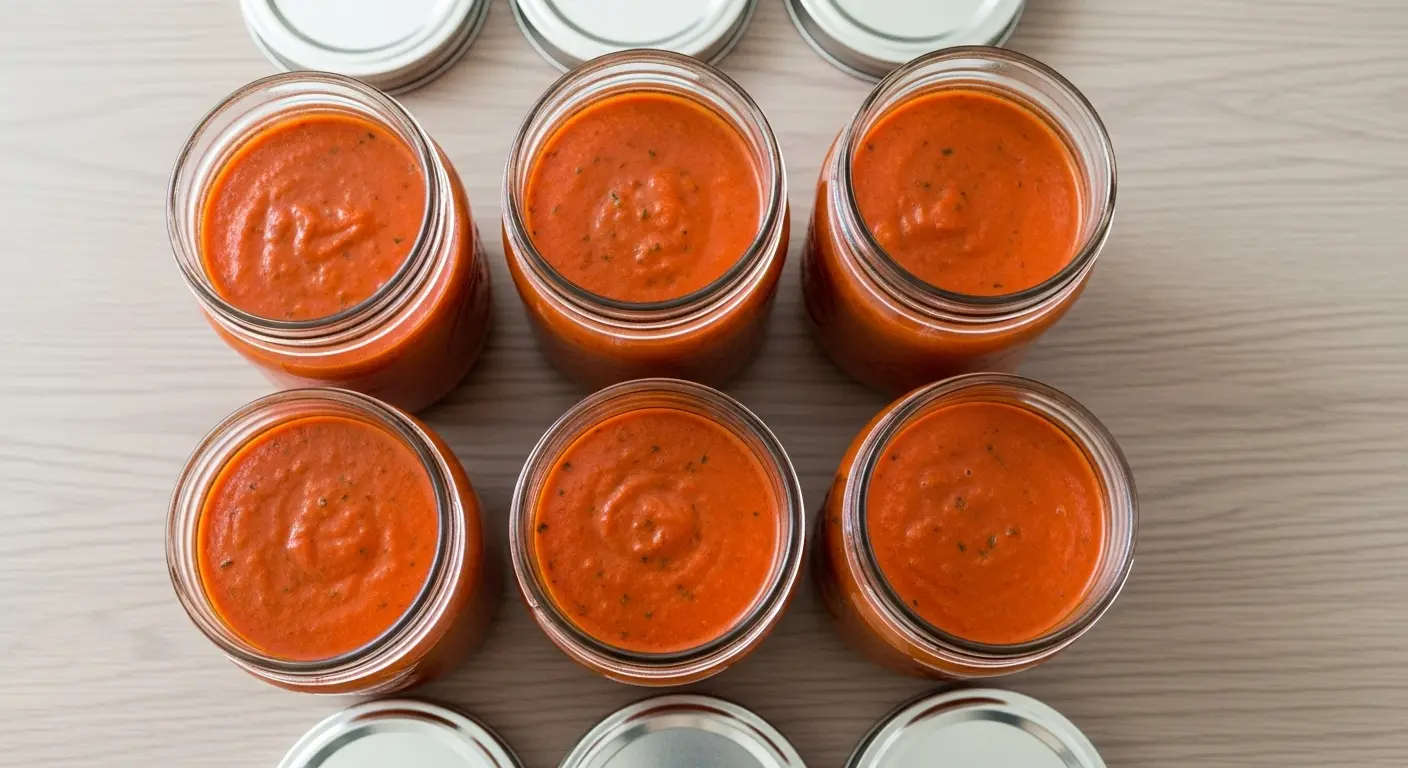
Canning Tomato Soup

Equipment
- Pressure canner or water bath canner
- Large stockpot - 8-quart minimum
- Blender or immersion blender
- Food mill or fine-mesh strainer - (optional)
- Quart-sized canning jars - 6–8 jars
- New canning lids and bands
- Jar lifter
- Canning funnel
- Bubble remover tool or plastic chopstick
- Large bowl
- Ladle
- Clean kitchen towels
Ingredients
- 12 lbs fresh tomatoes - 5.4 kg, any variety; slightly overripe is fine
- 2 medium yellow onions - quartered
- 4 stalks celery - roughly chopped
- 6 cloves garlic - peeled
- 1/4 cup fresh basil leaves - about 10g
- 2 tbsp sugar - 30ml; increase to 3 tbsp for sweeter Campbell’s-style soup
- 1 tbsp salt - 18g; can be reduced to taste
- 1 tsp black pepper - 2g
- 2 tbsp bottled lemon juice - per quart jar; OR substitute 1/2 tsp citric acid per quart jar — do not omit
For Serving (add when ready to eat)
- 1-2 cups milk, cream, or broth - per quart of soup base; to thin to desired consistency
- additional seasonings - to taste
- butter or olive oil - optional, for richness
Instructions
- Wash canning jars in hot soapy water and keep warm in a low oven (170°F/77°C) or dishwasher. Fill your canner with water per manufacturer instructions and set new lids in hot (not boiling) water to soften the sealing compound.
- Score an X in the bottom of each tomato, blanch in boiling water for 45–60 seconds until skins split, then transfer immediately to an ice bath. Once cool, peel, halve, core, and roughly chop the tomatoes — squeezing out excess seeds for a thicker soup.
- Blend onions, celery, garlic, and basil until finely minced, then transfer to your large stockpot. Blend chopped tomatoes in batches until smooth (or slightly chunky), adding each batch to the pot.
- Stir in sugar, salt, and pepper, then bring to a gentle simmer over medium heat. Cook on low for 20–30 minutes, stirring occasionally, until the mixture reduces by about one-quarter. Use an immersion blender or food mill for a silkier texture if desired.
- Remove warm jars one at a time and add 2 tbsp bottled lemon juice (or 1/2 tsp citric acid) to each quart jar using a canning funnel. This step is essential for safe canning and must not be skipped.
- Ladle hot soup into each jar leaving 1 inch of headspace, then run a bubble remover tool around the inside edge to release air. Wipe the rims clean, center a lid on each jar, and screw on a band until fingertip-tight.
- Secure the canner lid, heat on high until steam vents for 10 minutes, then add the weight and bring to 10 lbs pressure (weighted gauge) or 11 lbs (dial gauge). Process quart jars for 25 minutes, then turn off heat and allow pressure to return to zero naturally before opening.
- Ensure jars are covered by at least 1 inch of water, bring to a rolling boil, and process quart jars for 40 minutes (start timing once water returns to a full boil). Adjust processing time for altitude above 1,000 ft per USDA guidelines.
- Lift jars onto a towel-covered counter and leave undisturbed for 12–24 hours. Check seals by pressing the center of each lid — it should not flex. Label with contents and date, then store in a cool, dark place for up to 18 months.
Notes
- Use bottled lemon juice: Fresh lemon juice has variable acidity and is not approved for safe home canning — always use bottled.
- Don’t skip the acid: Lemon juice or citric acid is required for safe processing in a water bath canner and must be added to every jar.
- Choose ripe tomatoes: Use tomatoes at peak ripeness; slightly overripe is fine, but avoid green or underripe tomatoes for best flavor.
- Mix tomato varieties: Combining paste tomatoes (like Roma) with juicier varieties produces better texture and more balanced flavor.
- No dairy before canning: Never add cream, milk, or butter prior to canning — they cannot be safely preserved. Add them only when reheating to serve.
- Altitude adjustments: If you live above 1,000 feet, adjust processing time or pressure according to USDA guidelines.
- Seal check: A properly sealed lid will not flex when pressed and may have a slight concave indentation. Refrigerate any unsealed jars and use within one week.
- Storage: Store sealed jars in a cool, dark location (50–70°F/10–21°C) for up to 18 months. Discard any jar with a bulging lid, broken seal, or off smell.
- Serving tip: Add 1–2 cups of milk, cream, or broth per quart of soup base when reheating. Swirl in butter or pesto for extra richness.
- Flavor variations: Try roasting tomatoes at 375°F for 45 minutes before processing for a deeper, sweeter flavor, or add dried oregano and thyme for an Italian-style base.
Final Thoughts
Canning tomato soup is a rewarding way to preserve your garden harvest and fill your pantry with homemade goodness. The concentrated soup base stores efficiently and gives you the flexibility to customize each serving to your taste.
This recipe balances safety with flavor, creating a shelf-stable product you can enjoy throughout the year. Once you taste the difference between homemade and store-bought canned soup, you’ll never go back.
Try this recipe during your next tomato harvest and discover how satisfying it is to line your shelves with jars of homemade soup. Share your results in the comments below, and let us know your favorite way to serve it.
Recommended:
- Chicken Vegetable Soup Recipe
- Roasted Carrot Soup Recipe
- Cream of Mushroom Soup Recipe
- Broccoli Soup Recipe
- Hamburger Soup Recipe
- Celery Soup Recipe
- Corn Soup Recipe
- Cuban Chicken Soup Recipe
- Beef Bone Broth Soup Recipe
- Borscht Recipe