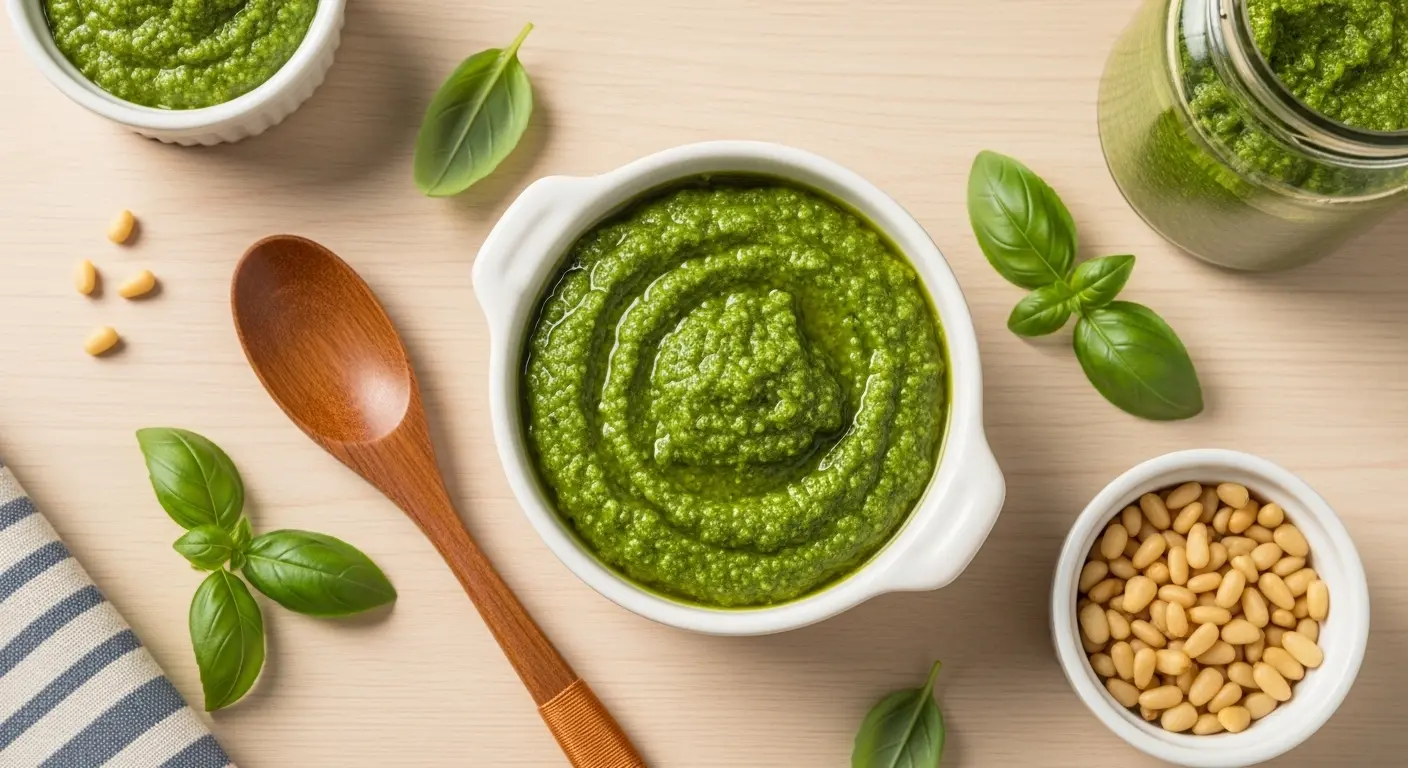
If you have ever wanted to make a sauce that instantly elevates any meal, a classic basil pesto recipe is exactly where you should start. This bright, herbaceous, and incredibly versatile sauce comes together in just minutes using a handful of fresh, high-quality ingredients.
Unlike store-bought versions that can taste flat and overly processed, homemade pesto is in a league of its own. The freshness of real basil, the richness of good olive oil, and the salty depth of aged Parmesan create a flavor combination that no jar on the shelf can replicate.
What makes this recipe stand out is how simple it truly is. There is no cooking involved, no complicated techniques, and no long list of ingredients to track down. Just a food processor, five to seven pantry-friendly staples, and about ten minutes of your time.
This pesto works beautifully as a pasta sauce, a spread for crusty bread, a topping for grilled proteins, or even stirred into soups. Once you master this recipe, you will find yourself reaching for it again and again all season long.
If you are a fan of homemade sauces, you might also love our Easy Pesto Recipe for another quick and flavorful option to keep in your rotation.
Why You’ll Love This Basil Pesto Recipe
This is the kind of sauce that makes you feel like a serious home cook, even if you made it in under fifteen minutes. The flavor is clean, bold, and unmistakably fresh, and it pairs with just about anything coming out of your kitchen.
One of the best things about homemade pesto is how forgiving it is. A little more or less garlic, a different type of nut, a squeeze of extra lemon, and it still tastes incredible. You really cannot go wrong once you nail the basic ratio.
It is also a fantastic make-ahead option. You can whip up a big batch on a Sunday afternoon and have flavorful, ready-to-use pesto stashed in your fridge or freezer for the entire week ahead.
- It comes together in about 10 minutes with no cooking required
- Uses only a handful of fresh, easy-to-find ingredients
- Tastes infinitely better than anything you can buy in a jar
- Incredibly versatile as a sauce, spread, dip, or topping
- Freezes beautifully for long-term storage
- Naturally gluten-free and vegetarian
This sauce also pairs wonderfully alongside a warm bowl of Minestrone Soup for a full Italian-inspired meal.
Ingredients
Fresh basil is the star of this recipe, so choosing the right kind matters more than you might think. Look for sweet basil, also called Genovese basil or Italian large-leaf basil. It has a mild, slightly peppery flavor that blends beautifully without overpowering the other ingredients. Avoid Thai basil or lemon basil for this classic version, as their flavor profiles are too distinct.
- 2 cups (about 3 oz / 85 g) packed fresh sweet basil leaves
- 1/3 cup (50 g) pine nuts
- 3 large cloves garlic, peeled
- 1 cup (100 g) freshly grated Parmigiano-Reggiano cheese
- 1/2 cup (120 ml) extra virgin olive oil, plus more for storing
- 2 tablespoons fresh lemon juice (about 1 small lemon)
- 1/4 teaspoon sea salt, or to taste
- Pinch of freshly cracked black pepper (optional)
Read Also: Vodka Sauce Recipe
Kitchen Equipment Needed
You do not need a lot of fancy gear to pull this off. A food processor is by far the most efficient tool for the job, and it gets the pesto smooth and creamy in seconds. If you do not have one, a high-powered blender will also work, though you may need to scrape down the sides a bit more often.
- Food processor (11-cup or larger recommended)
- Spatula or silicone scraper for scraping down the sides
- Microplane grater or fine box grater for the Parmesan
- Citrus juicer or reamer for squeezing the lemon
- Small dry non-stick skillet (optional, for toasting the pine nuts)
- Measuring cups and spoons
- Airtight glass jar or container for storage
You might also enjoy trying out our Marinara Sauce Recipe using the same food processor for another homemade Italian sauce.
Recommended Products for This Recipe
Making great pesto starts with great ingredients and the right tools. The products below are ones that genuinely make a difference in the final result, based on quality, flavor, and ease of use.
1. Pine Nuts (Raw, Shelled)
Pine nuts are the traditional nut used in classic Pesto alla Genovese, and for good reason. Their buttery, subtly sweet flavor blends seamlessly into the sauce without competing with the basil. Look for raw, shelled pine nuts and toast them lightly before using for even more depth.
2. Parmigiano-Reggiano (Wedge, Not Pre-Grated)
A wedge of real Parmigiano-Reggiano is a must for this recipe. Pre-grated cheese often contains anti-caking agents that affect how it blends, and the flavor is noticeably less complex. Grating it fresh with a microplane right before blending makes all the difference.
3. High-Quality Extra Virgin Olive Oil
Since olive oil makes up a significant portion of pesto, its flavor will come straight through in the final sauce. Choose a smooth, fruity extra virgin olive oil with a mild finish. Avoid anything too peppery or bitter, as it can overpower the delicate basil.
4. 11-Cup Food Processor
A reliable food processor with a wide bowl makes blending pesto fast and even. The 11-cup size is the sweet spot for this recipe, giving the blades enough room to process the basil without it clinging to the sides. A tight-fitting lid is also a must to keep things contained during pulsing.
This technique of blending in a food processor also works wonderfully in our Spaghetti Sauce Recipe.
Step-by-Step Instructions
Making basil pesto at home is genuinely one of the most satisfying things you can do in the kitchen. Each step below is designed to help you get the best possible result, even if this is your very first time making a sauce from scratch.
1. Prep and Dry the Basil
- Fill a large bowl with cold water and gently submerge the basil leaves, swishing them around to release any dirt or grit.
- Lift the basil out of the water carefully, leaving any debris behind at the bottom of the bowl.
- Place the leaves in a colander or salad spinner and shake off or spin away as much excess water as possible.
- Pat the basil dry with clean kitchen towels or paper towels. This step is important because wet basil will water down your pesto and can cause it to turn a dull, brownish color.
- Remove any thick stems from the basil leaves. You want only the tender leaves for the smoothest, most vibrant pesto.
- Set the dried basil aside and measure out 2 packed cups (about 3 oz / 85 g).
2. Toast the Pine Nuts (Optional but Recommended)
- Place the pine nuts in a single layer in a dry skillet over medium-low heat. Do not add any oil.
- Stir or shake the nuts frequently, every 30 seconds or so, to prevent burning. Pine nuts go from golden to burnt very quickly.
- After about 2 to 3 minutes, the nuts should be lightly golden and fragrant. Remove the skillet from heat immediately.
- Transfer the nuts to a clean bowl or plate right away to stop the cooking process. Leaving them in the hot skillet will cause them to continue toasting and potentially burn.
- Let the nuts cool completely before adding them to the food processor. Hot nuts can cause the pesto to turn brown and will also affect the texture of the sauce.
3. Grate the Parmesan
- Using a microplane grater or the fine side of a box grater, grate the Parmigiano-Reggiano into a loose, fluffy pile.
- Measure out 1 cup (100 g) of freshly grated cheese. Freshly grated cheese blends much more smoothly than the pre-shredded kind from a bag.
- Set the grated cheese aside until you are ready to add it to the food processor.
4. Peel and Prep the Garlic
- Peel 3 large cloves of garlic by placing them on a cutting board and gently pressing down on each one with the flat side of a chef’s knife. The skin should crack and slip off easily.
- Remove any dry papery bits from the garlic cloves.
- There is no need to mince or chop the garlic. The food processor will break it down completely during blending.
5. Measure the Olive Oil and Lemon Juice
- Pour 1/2 cup (120 ml) of extra virgin olive oil into a small measuring cup or bowl.
- Squeeze the lemon and measure out 2 tablespoons of fresh lemon juice. Strain out any seeds.
- Having both liquids measured and ready before you start blending will make the process smoother and faster. The lemon juice serves two purposes: it brightens the overall flavor and also helps keep the pesto from turning brown.
6. Blend the Dry Ingredients
- Add the toasted (and cooled) pine nuts, peeled garlic cloves, grated Parmesan cheese, sea salt, and black pepper (if using) into the bowl of your food processor fitted with the S-blade.
- Pulse the mixture in short bursts, about 5 to 7 pulses, until the nuts and garlic are finely chopped and broken down into small pieces.
- Scrape down the sides of the bowl with a spatula to make sure everything is being evenly processed.
7. Add the Basil and Blend
- Add the dried basil leaves to the food processor on top of the nut and cheese mixture.
- Pulse again in short bursts, about 8 to 10 pulses, until the basil is finely chopped and starting to come together with the other ingredients.
- Scrape down the sides of the bowl again to catch any pieces that are clinging to the edges.
8. Stream In the Olive Oil and Lemon Juice
- With the food processor running on low speed, slowly drizzle in the olive oil in a thin, steady stream through the feed tube. Adding it gradually allows the oil to emulsify into the mixture and creates a smoother, creamier texture.
- Once all of the oil is added, pour in the 2 tablespoons of lemon juice.
- Continue processing for another 10 to 15 seconds, stopping to scrape down the sides as needed, until the pesto reaches a smooth, vibrant green consistency.
- The final texture should be creamy but still have a tiny bit of body. If it looks too thick, add another tablespoon of olive oil and pulse again.
9. Taste and Adjust the Seasoning
- Carefully remove the blade and scoop out a small spoonful of pesto to taste.
- If it needs more brightness, add another teaspoon of lemon juice and pulse briefly.
- If it tastes a little flat, add a small pinch of sea salt and blend again.
- Add more black pepper if you like a little heat at the finish.
- Once you are happy with the seasoning, the pesto is ready to use or store.
This drizzle-and-blend technique also works great when making our Homemade Alfredo Sauce.
Tips for Success
Getting pesto right is mostly about respecting the ingredients. The recipe is simple, but a few small habits will take your pesto from good to genuinely great every single time.
- Dry your basil thoroughly. Wet basil is the number one reason homemade pesto turns out dull and watery. Take a few extra seconds to pat the leaves completely dry before blending.
- Chill your olive oil before blending. Placing the olive oil in the fridge for 15 to 20 minutes before you start can help keep the pesto a brighter green color. The cooler the oil, the less oxidation occurs during processing.
- Do not over-blend. Over-processing heats up the basil and turns the pesto brown. Use short pulses and stop as soon as the texture is smooth. The entire blending process should take no more than 30 seconds total.
- Use freshly grated Parmesan only. Pre-grated cheese contains starches and anti-caking agents that prevent it from blending smoothly. Always grate your own for the best texture and flavor.
- Toast the pine nuts. This is an optional step, but it adds a noticeably richer, nuttier depth to the finished pesto. Just keep a close eye on them, as they burn fast.
- Season at the end. Taste the pesto after blending and adjust the salt, pepper, and lemon juice to your preference. The Parmesan already adds a good amount of saltiness, so go light at first.
Read Also: Tomato Sauce Recipe
Serving Suggestions
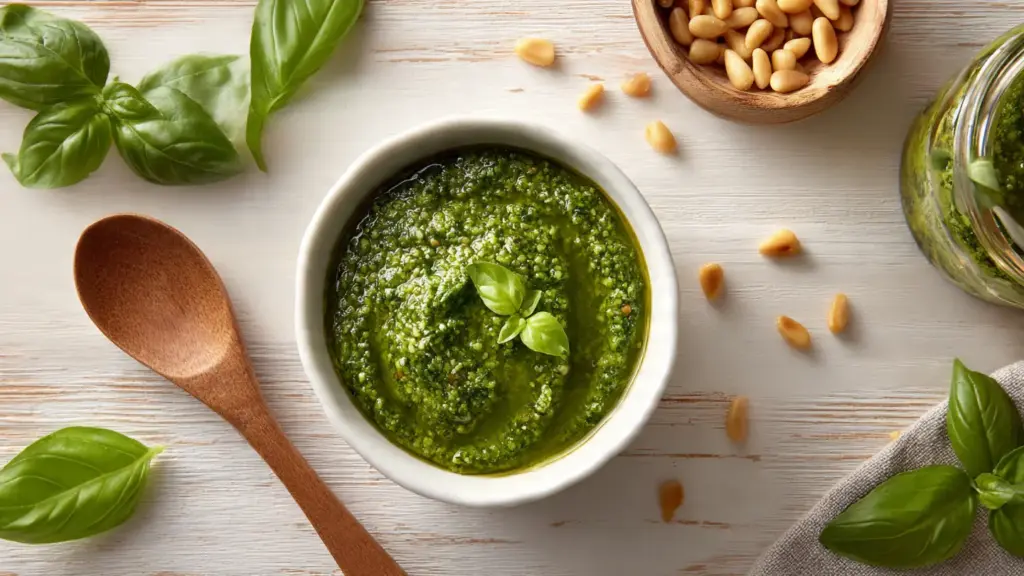
Basil pesto is one of those rare sauces that works beautifully in both hot and cold dishes, making it incredibly versatile in the kitchen. Toss it into freshly cooked pasta for a quick weeknight dinner, or spread it on warm crusty bread for an effortless appetizer that looks far more impressive than the effort it took.
- Stir it into hot pasta right after draining, along with a splash of the starchy cooking water, for a silky, coating sauce
- Spread it on toasted Sourdough Focaccia or crusty bread as an appetizer or snack
- Use it as a marinade or finishing sauce for grilled or baked chicken, salmon, or shrimp
- Dollop it on top of Roasted Broccoli or other roasted vegetables for an instant flavor boost
- Swirl it into soups like minestrone or chicken broth right before serving
- Mix it into a simple vinaigrette and drizzle over salads
- Use it as a pizza sauce base instead of traditional tomato sauce
- Stir a spoonful into scrambled eggs or omelets for a fresh, herby twist
Variations to Try
Once you have mastered the classic version, there are so many fun and creative directions you can take with pesto. The beauty of this sauce is that it is really just a formula: greens plus nuts plus cheese plus oil plus garlic, and each swap opens up a whole new flavor world.
- Walnut Pesto: Swap the pine nuts for an equal amount of raw walnuts for a deeper, earthier, slightly bitter flavor. Walnuts are also much more budget-friendly and easier to find.
- Kale Pesto: Replace half or all of the basil with tightly packed kale leaves (stems removed) for a heartier, more robust pesto that works beautifully in fall and winter dishes.
- Arugula Pesto: Use arugula in place of basil for a peppery, slightly spicy version that pairs wonderfully with pasta and grilled meats.
- Sun-Dried Tomato Pesto: Add 1/4 cup of drained, chopped sun-dried tomatoes to the blender along with the basil for a rich, tangy twist.
- Nut-Free Pesto: Substitute the pine nuts with an equal amount of raw pumpkin seeds (pepitas) or hemp seeds for a completely nut-free version that still has great texture and flavor.
- Pecorino Pesto: Replace half of the Parmesan with an equal amount of freshly grated Pecorino Romano for a sharper, saltier, more traditional Italian flavor.
You might also find inspiration in our Baked Ziti Recipe, which can be made even more flavorful with a layer of pesto mixed right in.
Storage and Reheating
Pesto does not keep as long as some other homemade sauces, so proper storage is key to keeping it fresh and vibrant for as long as possible. The main enemy of pesto is air, which causes oxidation and turns the sauce from a gorgeous bright green to a dull, unappealing brown.
- Refrigerator: Transfer the pesto to an airtight glass jar or container, pressing it down firmly to remove any air pockets. Pour a thin layer of olive oil over the top surface to create a seal that blocks air. Store in the fridge for up to 5 to 7 days.
- Freezer: Spoon the pesto into an ice cube tray, cover with plastic wrap, and freeze until solid. Pop the cubes out and store them in a freezer-safe bag or container for up to 3 months. Thaw only what you need when you are ready to use it.
- Reheating: Pesto should never be reheated directly on high heat, as the basil will turn brown and lose its vibrant color. Instead, stir it into hot pasta off the heat, or let it come to room temperature and use it as a room-temp sauce on warm dishes.
Read Also: Pizza Sauce Recipe
Nutritional Facts
The nutritional information below is based on one serving of this basil pesto recipe, calculated as approximately 2 tablespoons (about 30 g). Keep in mind that exact values may vary slightly depending on the specific brands and ingredients you use.
| Nutrient | Amount per Serving (2 tbsp) |
|---|---|
| Calories | 160 kcal |
| Total Fat | 14 g |
| Saturated Fat | 3 g |
| Monounsaturated Fat | 8 g |
| Polyunsaturated Fat | 2 g |
| Cholesterol | 8 mg |
| Sodium | 130 mg |
| Total Carbohydrates | 3 g |
| Dietary Fiber | 0.5 g |
| Sugars | 0.5 g |
| Protein | 4 g |
| Vitamin A | 400 IU |
| Vitamin C | 5 mg |
| Calcium | 110 mg |
| Iron | 0.5 mg |
This recipe makes approximately 1 cup (240 ml) of pesto, which serves about 8 people as a sauce or condiment. Tossing it with 12 ounces (340 g) of cooked pasta will give you roughly 4 generous servings.
This pesto also makes an excellent finishing drizzle for dishes like our Creamy Tuscan White Bean Skillet.
Health Benefits of Key Ingredients
Beyond being delicious, the ingredients in this basil pesto are packed with nutrients that do great things for your body. Each component brings something meaningful to the table, and together they make this sauce one of the more nutrient-dense condiments you can whip up at home.
- Fresh Basil: Basil is rich in vitamin K, which plays a crucial role in blood clotting and bone health. It also contains antioxidants like eugenol and rosmarinic acid, which have been linked to anti-inflammatory effects in the body.
- Pine Nuts: These small but mighty nuts are an excellent source of healthy monounsaturated fats, which support heart health. They also provide magnesium, zinc, and vitamin E, all of which contribute to overall cellular function and immune support.
- Extra Virgin Olive Oil: One of the most well-studied fats in the world, extra virgin olive oil is loaded with oleic acid, a heart-healthy monounsaturated fat. It also contains powerful polyphenols, which are antioxidants that help protect cells from oxidative damage.
- Parmesan Cheese: Parmigiano-Reggiano is a solid source of calcium and protein, both of which are important for bone strength and muscle maintenance. It also contains a meaningful amount of vitamin B12, which supports healthy nerve function.
- Garlic: Garlic has been used in traditional medicine for centuries, and modern research backs up many of its reported benefits. It contains allicin, a compound with well-documented antimicrobial and cardiovascular-protective properties.
- Lemon Juice: Fresh lemon juice adds a burst of vitamin C, which is essential for immune function and skin health. It also helps brighten the flavor of the pesto and acts as a natural preservative to slow oxidation.
A dollop of pesto also adds a nutritious punch to simple dishes like Roasted Potatoes.
Frequently Asked Questions
1. Can I make basil pesto without pine nuts?
Absolutely. Pine nuts are traditional, but they are also one of the most expensive nuts out there. Walnuts, almonds, cashews, and even sunflower seeds or pumpkin seeds all work as direct substitutes in a 1:1 ratio. The flavor will shift slightly depending on what you use, but the pesto will still taste great.
2. Why does my pesto turn brown?
Browning is caused by oxidation, which happens when the basil is exposed to air or heat. To prevent it, make sure your basil is completely dry before blending, chill your olive oil beforehand, and avoid over-processing. Once the pesto is done, store it with a thin layer of olive oil on top or press plastic wrap directly onto the surface to block air.
3. Can I use a blender instead of a food processor?
Yes, a high-powered blender will work, but it may require a bit more effort. You might need to scrape down the sides more frequently, and the texture could end up slightly smoother than with a food processor. Some people also find it helps to add the olive oil first to the blender to get things moving before adding the solids.
4. How long does homemade pesto last?
Stored properly in the refrigerator with a layer of olive oil on top, homemade pesto will keep for about 5 to 7 days. For longer storage, freeze it in ice cube trays or small containers for up to 3 months. Just thaw the amount you need and use it right away.
5. Should I add salt to pesto?
It depends on your taste and the Parmesan you are using. Parmigiano-Reggiano is naturally quite salty, so the pesto may already have enough seasoning without any added salt. Always taste the pesto after blending and add salt only if it needs it, starting with just a small pinch and going from there.
For another versatile homemade condiment, check out our Easy Hummus Recipe.
Final Thoughts
Making your own basil pesto at home is one of those simple kitchen wins that pays off every single time. It takes just a handful of fresh ingredients and about ten minutes of your day, and the result is a bright, flavorful sauce that makes everything it touches taste better.
We truly hope you give this recipe a try and make it your own. Once you taste the difference between homemade and store-bought, there is no going back.
If you loved making this pesto, please share it with a friend or leave a comment below letting us know how it turned out. We would love to hear your experience!
Recommended:
- Chicken Bruschetta Recipe
- Classic Bruschetta Recipe
- Stuffed Shells Recipe
- Baked Chicken Spaghetti Recipe
- Easy Ratatouille Recipe
- Italian Meatballs Recipe
- Lemon Chicken Recipe
- Summer Tortellini Skillet Recipe
- Zuppa Toscana Recipe
- Baked Salmon Recipe