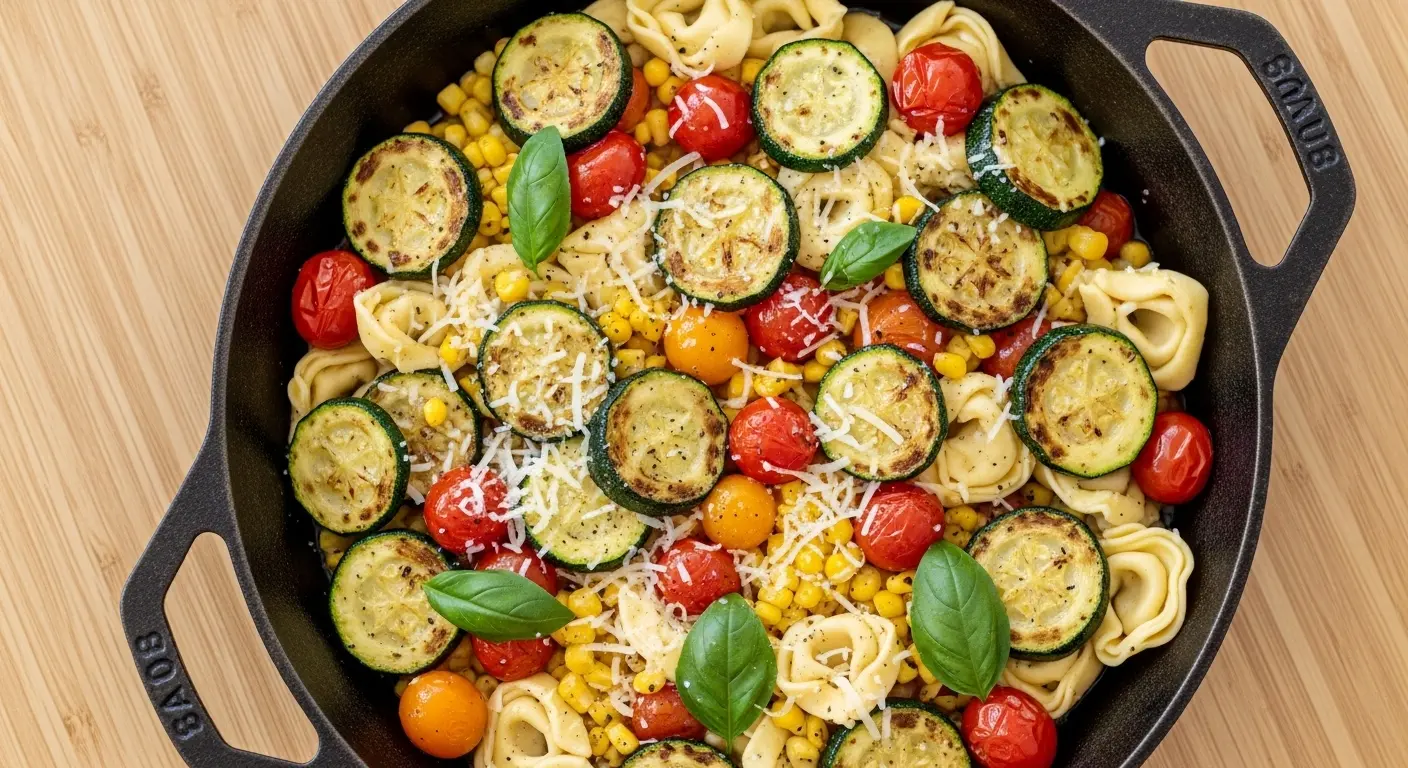
If you’ve been searching for a dinner that feels special without requiring hours in the kitchen, this summer tortellini skillet recipe is exactly what you need. It comes together in about 20 minutes, uses just one pan, and packs in the brightest flavors of the season — sweet corn, tender zucchini, juicy cherry tomatoes, fresh basil, and plump cheese-filled tortellini all tossed in a light, garlicky olive oil sauce.
The beauty of this dish is in how it lets seasonal produce shine. Zucchini gets a quick sear so it develops golden edges rather than turning mushy. Cherry tomatoes soften just enough to burst and create little pockets of sauce. Fresh corn adds a natural sweetness that balances the savory Parmesan beautifully.
It’s colorful, satisfying, and endlessly flexible — the kind of recipe that earns a permanent spot in your summer dinner rotation.
You might also enjoy: Creamy Tuscan White Bean Skillet
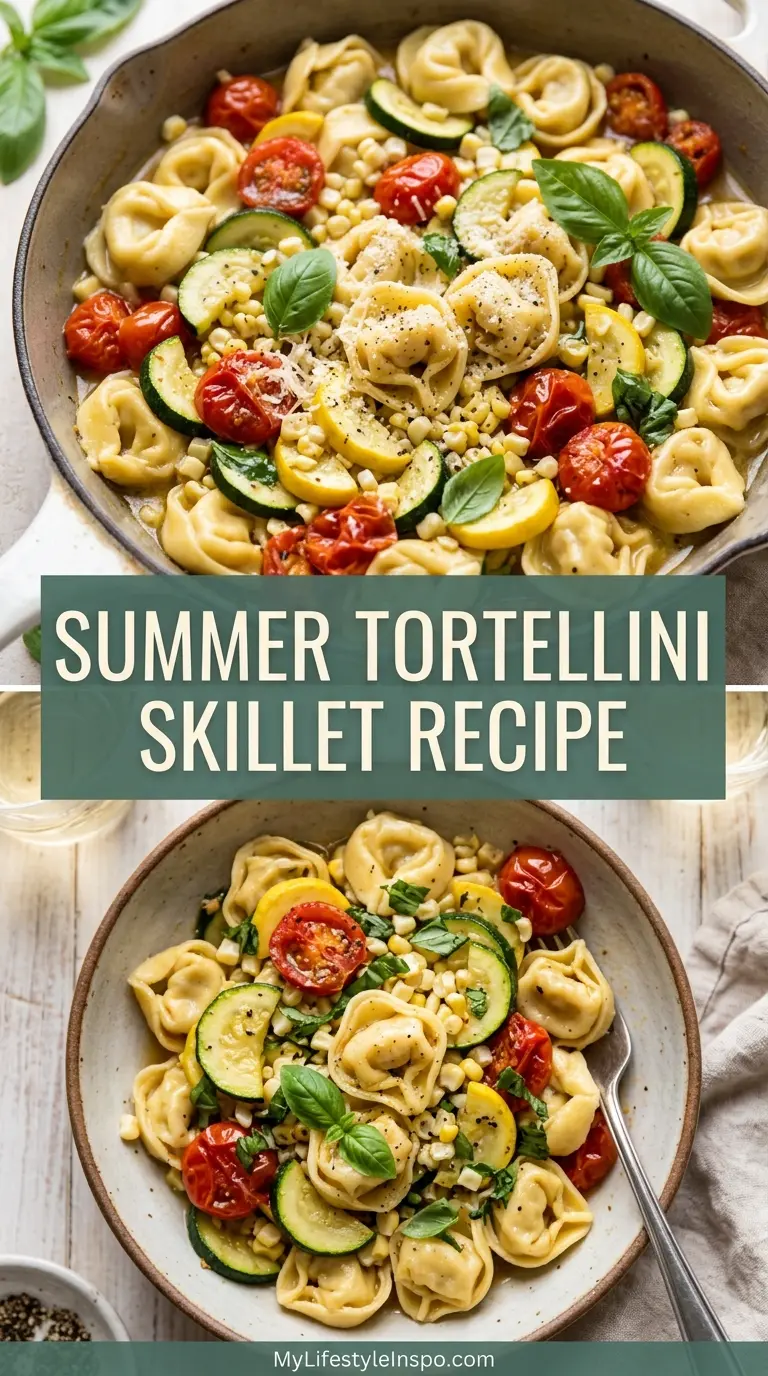
Why You’ll Love This Summer Tortellini Skillet Recipe
This dish is proof that a stunning dinner doesn’t have to be complicated.
Everything cooks in one skillet, which means minimal cleanup — a major win on a warm summer evening when you’d rather be outside than scrubbing pots.
The combination of fresh summer vegetables with cheese-stuffed tortellini makes this meal feel indulgent, but it’s actually packed with nutrients and comes together faster than takeout.
It’s also endlessly adaptable. Swap in whatever vegetables look best at your farmers market, add a protein like sausage or shrimp, or keep it fully vegetarian — it works every way.
Here’s a quick list of what makes this recipe so lovable:
- Ready in about 20 minutes from start to finish
- Uses one pan for easy cleanup
- Loaded with fresh, seasonal summer vegetables
- Vegetarian-friendly with easy protein add-ins
- Kid-approved and crowd-pleasing
- Naturally light without feeling like diet food
- Works with refrigerated, frozen, or dried tortellini
- Perfect for meal prepping (reheats beautifully)
Read Also: Chicken Skillet Recipe
Ingredients
The ingredient list for this summer tortellini skillet is short and refreshingly simple. The key is using the freshest vegetables you can find — summer produce is at peak sweetness and flavor, so even a little olive oil and garlic turns into something remarkable. Cheese tortellini is the backbone of this dish; the creamy filling pairs perfectly with the light, bright vegetables.
- 20 oz (567g) refrigerated or frozen cheese tortellini
- 2 tablespoons extra-virgin olive oil, divided
- 2 medium zucchini (about 1 lb / 450g), sliced into half-moons
- 1 cup (150g) fresh or frozen corn kernels (from about 2 ears of corn)
- 1 ½ cups (225g) cherry tomatoes, halved
- 4 cloves garlic, minced
- ½ teaspoon crushed red pepper flakes (optional)
- ½ teaspoon kosher salt, plus more to taste
- ¼ teaspoon black pepper
- ¼ cup (15g) fresh basil leaves, torn or chiffonade
- ½ cup (50g) freshly grated Parmesan cheese, plus more for serving
- 1 tablespoon fresh lemon juice
- ¼ cup (60ml) reserved pasta water (from cooking the tortellini)
Read Also: Taco Skillet Recipe
Kitchen Equipment Needed
You don’t need much equipment for this recipe, which is part of what makes it so approachable. A large, deep skillet is the most important tool — it needs to be big enough to toss all the vegetables and tortellini together without things spilling over the sides. A cast iron or stainless steel skillet works beautifully here because both hold heat evenly and give the zucchini that satisfying golden sear.
- Large deep skillet or sauté pan (12-inch / 30cm recommended)
- Cast iron skillet (optional, but excellent for searing vegetables)
- Large pot for boiling tortellini
- Colander or strainer
- Sharp knife and cutting board
- Wooden spoon or silicone spatula
- Microplane or box grater for Parmesan
- Measuring spoons and cups
- Liquid measuring cup
Salmon Skillet Recipe is another one-pan favorite worth bookmarking for busy weeknights.
Recommended Products for This Recipe
These products were selected based on quality, performance, and how significantly they improve the final dish. Whether you’re upgrading your skillet or stocking up on a premium pantry staple, these recommendations make a noticeable difference.
1. Lodge 12-Inch Cast Iron Skillet
Cast iron is the gold standard for searing vegetables because it holds heat exceptionally well, giving your zucchini those gorgeous golden edges that add depth and texture to the dish. Lodge is one of the most trusted brands available, and this skillet will last you a lifetime with proper care. It also goes seamlessly from stovetop to oven if you want to finish the tortellini with melted cheese under the broiler.
2. Rana Cheese Tortellini (Family Size)
The quality of your tortellini makes a big difference in the final dish. Rana’s refrigerated cheese tortellini is widely regarded as one of the best store-bought options — the pasta is tender, the filling is creamy and rich, and it cooks in just 3 to 4 minutes. It’s the one ingredient worth splurging on.
3. Microplane Premium Classic Zester and Grater
Freshly grated Parmesan is a completely different product from the pre-shredded kind — it melts more smoothly and has a much more complex flavor. A Microplane grater makes it effortless to grate both the Parmesan and zest the lemon quickly, and it’s a kitchen tool that earns its counter space every single week.
4. California Olive Ranch Extra Virgin Olive Oil
A good olive oil is the foundation of this dish’s flavor. California Olive Ranch produces a consistently high-quality extra-virgin olive oil with a bright, peppery finish that works beautifully both for sautéing and as a finishing drizzle. The flavor makes a real difference when your sauce is simple and relies on just a few key ingredients.
This recipe uses techniques similar to those in the Stuffed Pepper Skillet Recipe — simple sautéing and building flavor in one pan.
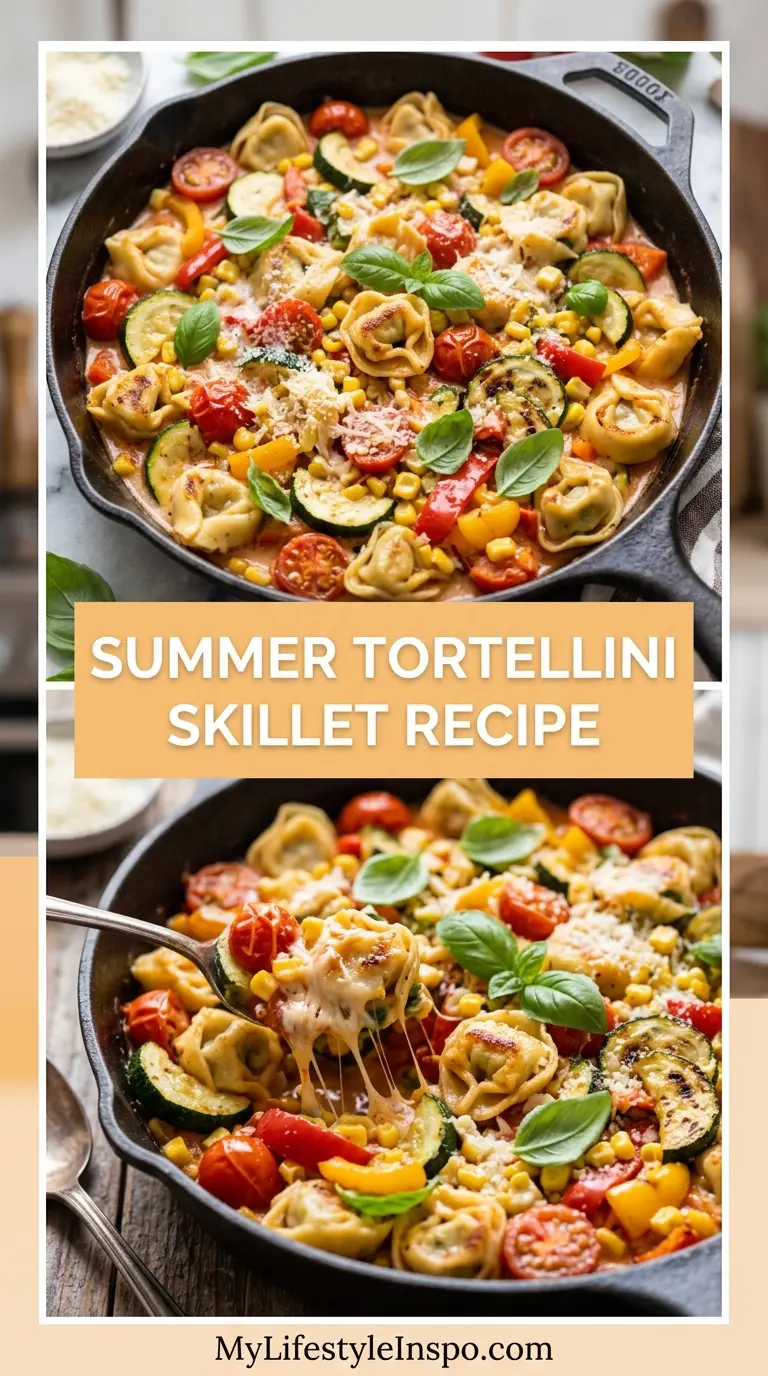
Step-by-Step Instructions
1. Cook the Tortellini
- Bring a large pot of salted water to a boil over high heat. Use about 1 tablespoon of salt per gallon of water — well-salted pasta water is important for seasoning the tortellini from the inside out.
- Add the cheese tortellini and cook according to the package directions, usually 3 to 5 minutes for refrigerated tortellini or 7 to 9 minutes for frozen.
- Before draining, use a ladle or measuring cup to scoop out about ¼ cup (60ml) of the starchy pasta water. Set it aside — you’ll use it later to loosen the sauce.
- Drain the tortellini in a colander and toss it lightly with a tiny drizzle of olive oil to prevent sticking. Set aside.
2. Sear the Zucchini
- Place your large skillet (12-inch / 30cm) over medium-high heat and add 1 tablespoon of the olive oil.
- Allow the oil to heat until it shimmers — this usually takes about 1 minute. Getting the pan hot before adding the zucchini is the key to golden edges rather than steaming.
- Add the sliced zucchini in a single layer. Do not stir it right away — let it sit undisturbed for 2 to 3 minutes so it develops a golden-brown color on one side.
- Flip the zucchini pieces and cook for another 1 to 2 minutes on the second side until lightly golden.
- Season with a pinch of salt and pepper, then transfer the seared zucchini to a plate and set aside. This keeps it from overcooking while you work on the rest of the dish.
3. Sauté the Garlic and Tomatoes
- Reduce the heat to medium and add the remaining 1 tablespoon of olive oil to the same skillet.
- Add the minced garlic and crushed red pepper flakes (if using) and stir constantly for about 30 to 45 seconds, just until the garlic becomes fragrant. Be careful not to let it brown or burn — burnt garlic turns bitter and will affect the flavor of the entire dish.
- Add the halved cherry tomatoes to the skillet and season with salt and pepper.
- Cook the tomatoes, stirring occasionally, for 3 to 4 minutes until they begin to soften and some of them start to burst and release their juices. You can gently press a few with the back of your spoon to help them along. This creates a light, flavorful sauce base.
4. Add the Corn
- Add the fresh or frozen corn kernels directly to the skillet with the tomatoes and garlic.
- Stir everything together and cook for 1 to 2 minutes until the corn is heated through. If you’re using fresh corn cut right off the cob, it only needs a quick toss in the hot pan — it’s sweet and tender already. Frozen corn may need an extra minute.
5. Combine Everything
- Return the seared zucchini to the skillet.
- Add the cooked, drained tortellini to the pan.
- Pour in the reserved pasta water, starting with 2 tablespoons and adding more as needed. The starchy water helps everything emulsify into a light, glossy sauce that coats the tortellini beautifully.
- Toss everything gently using a wooden spoon or silicone spatula, being careful not to tear the tortellini. You want all the vegetables and pasta evenly coated with the pan juices and olive oil.
6. Finish and Season
- Remove the skillet from the heat.
- Drizzle the fresh lemon juice over the top — this brightens all the flavors and balances the richness of the cheese filling and Parmesan.
- Add the grated Parmesan and toss gently to combine. The cheese will melt slightly from the residual heat of the pasta and vegetables.
- Scatter the torn fresh basil leaves over the top.
- Taste the dish and adjust seasoning with additional salt, pepper, or lemon juice as needed. Tortellini and Parmesan both contain salt, so taste before adding more.
7. Serve
- Serve the summer tortellini skillet immediately, directly from the pan for a casual, family-style presentation.
- Pass extra grated Parmesan and crushed red pepper flakes at the table so everyone can customize their bowl.
- Leftovers can be stored in an airtight container in the refrigerator for up to 3 days.
The same technique of building flavor in one skillet works brilliantly in the Mexican Beef and Rice Skillet Recipe — both dishes are weeknight wins.
Tips for Success
A handful of small techniques make a big difference in the final result of this summer tortellini skillet. The most important is getting your pan hot enough before adding the zucchini — a properly preheated skillet produces golden, caramelized edges rather than soft, watery slices. The lemon juice at the end is equally critical; it’s a small addition that elevates the entire dish and ties all the flavors together.
- Don’t skip searing the zucchini. A proper sear gives it texture and a lightly caramelized flavor that plain sautéing won’t achieve. Work in batches if your skillet isn’t large enough to hold it all in a single layer.
- Reserve pasta water before draining. The starchy water is what helps the sauce cling to the tortellini instead of pooling at the bottom of the pan. Don’t substitute regular tap water.
- Use freshly grated Parmesan. Pre-shredded cheese contains anti-caking agents that prevent it from melting smoothly. A block of Parmesan and a microplane grater take seconds and make a noticeable difference.
- Cook garlic over medium heat. Garlic burns quickly over high heat, and burnt garlic is bitter. Medium heat gives you fragrant, golden garlic without any bitterness.
- Taste everything before serving. Tortellini, Parmesan, and pasta water are all salty, so don’t add salt automatically at the end without tasting first.
- Add the basil off the heat. Fresh basil wilts and loses its color almost instantly in a hot pan. Adding it after removing the skillet from heat keeps it bright green and aromatic.
- Don’t overcook the tortellini. Follow the package directions closely. Overcooked tortellini turns mushy and falls apart when tossed in the skillet.
Another great one-pan recipe for your weeknight dinner arsenal is the Enchilada Skillet Recipe.
Serving Suggestions
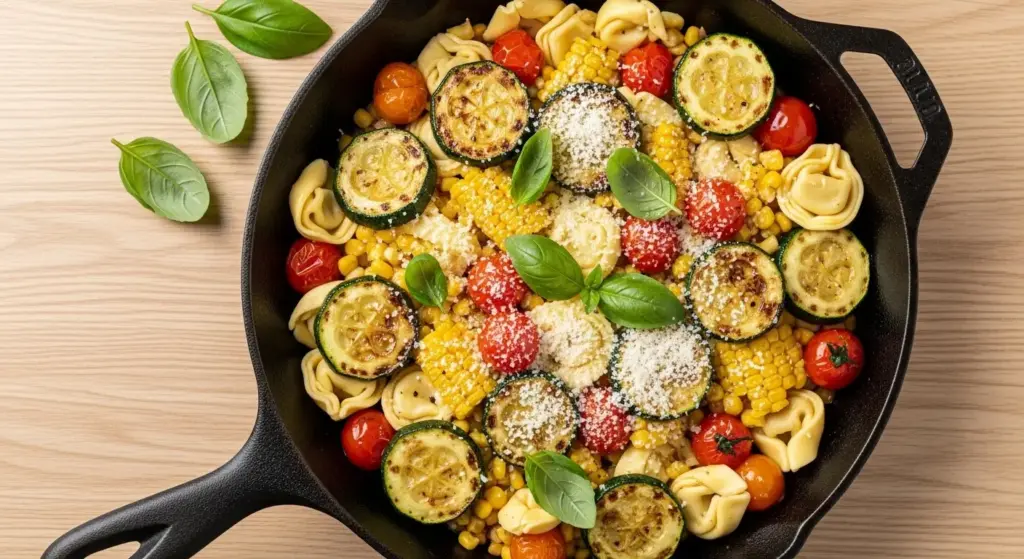
This summer tortellini skillet is a complete meal on its own, but it pairs beautifully with simple sides that complement its light, bright flavors without overwhelming them. A crisp green salad, some crusty bread for soaking up the pan sauce, or a chilled glass of white wine on the side make the experience feel genuinely restaurant-worthy.
Here are some of the best things to serve alongside this dish:
- Garlic bread or cheesy garlic bread for mopping up the pan juices
- A simple broccoli salad for a refreshing, crunchy contrast
- Roasted broccoli with Parmesan for a quick, easy side
- A light fruit salad for a summery, refreshing finish
- Sliced classic bruschetta as a starter before serving the skillet
- A glass of chilled Pinot Grigio or Sauvignon Blanc — both are wonderful with this dish’s herby, lemony notes
Mexican Street Corn also makes a fantastic summer side that pairs beautifully with the corn and herb flavors in this skillet.
Variations to Try
One of the best things about this summer tortellini skillet is how easily it adapts to what you have on hand or what’s looking great at the market. The base technique — sear, sauté, toss — works with a huge range of vegetables, proteins, and sauces. The recipe below stays true to the summer produce-forward original, but these variations are all excellent.
Here are some fun ways to change it up:
- Add Italian sausage: Brown 1/2 lb (225g) of sliced or crumbled Italian sausage in the skillet before cooking the vegetables for a heartier, meaty version. The rendered fat adds incredible flavor.
- Add shrimp: Toss in 1/2 lb (225g) of peeled, deveined shrimp during the last 2 minutes of cooking for a light seafood version. They cook in just 2 to 3 minutes.
- Make it creamy: Stir in 2 to 3 tablespoons of heavy cream or crème fraîche with the pasta water for a richer, more indulgent sauce.
- Use spinach tortellini: Swap the plain cheese tortellini for spinach and cheese tortellini to add even more color and a slightly earthy flavor.
- Add sun-dried tomatoes: A couple tablespoons of oil-packed sun-dried tomatoes add an intensely savory, umami-rich depth.
- Try different vegetables: Yellow squash, bell peppers, asparagus, or green beans all work beautifully in place of or alongside the zucchini.
- Make it vegan: Use a plant-based tortellini or stuffed pasta and substitute nutritional yeast for the Parmesan.
- Add white beans: A can of drained cannellini beans adds protein and makes the dish even more filling without changing the flavor profile.
Read Also: Cabbage Roll Skillet Recipe
Storage and Reheating
This summer tortellini skillet stores well for up to 3 days in the refrigerator, making it an excellent option for meal prepping weekday lunches. The pasta will absorb some of the sauce as it sits, which actually concentrates the flavors — many people think leftovers taste even better the next day. Freezing is not recommended because the tortellini tends to become mushy when thawed.
Here’s how to store and reheat properly:
- Refrigerator storage: Transfer leftovers to an airtight container and refrigerate for up to 3 days.
- Reheating on the stovetop: Add leftovers to a skillet with 1 to 2 tablespoons of water or chicken broth over medium-low heat. Stir gently until warmed through, about 3 to 5 minutes. This method keeps the tortellini from becoming rubbery.
- Reheating in the microwave: Place in a microwave-safe bowl and add a splash of water. Cover loosely and microwave in 60-second intervals, stirring in between, until heated through.
- Do not freeze: Cooked tortellini becomes overly soft and mushy when frozen and thawed, so this dish is best enjoyed fresh or within a few days.
- Refresh before serving: Whether reheated on the stove or microwave, add a squeeze of fresh lemon juice and a handful of fresh basil to bring back the bright, fresh flavors.
Another easy make-ahead dinner idea worth trying is the Chicken Casserole Recipe.
Nutritional Facts
The following nutrition information is an estimate per serving, based on 4 servings. Exact values will vary depending on the specific tortellini brand used, the amount of olive oil, and the quantity of Parmesan added.
| Nutrient | Per Serving (approx.) |
|---|---|
| Calories | ~480 kcal |
| Total Carbohydrates | 58g |
| Protein | 20g |
| Total Fat | 18g |
| Saturated Fat | 6g |
| Fiber | 5g |
| Sugar | 7g |
| Sodium | 680mg |
| Calcium | 280mg |
| Iron | 3mg |
Note: Nutrition values are estimates. Using a lower-fat cheese tortellini or reducing the Parmesan will lower the calorie and fat content.
This dish is a well-balanced meal with a good ratio of carbohydrates, protein, and fat, making it a satisfying and nourishing choice. The vegetables add fiber, vitamins, and antioxidants that round out the nutritional profile nicely.
For another hearty, nourishing meal, explore the Lasagna Soup Recipe.
Health Benefits of Key Ingredients
This summer tortellini skillet isn’t just delicious — it’s genuinely packed with ingredients that do good things for your body. The combination of fresh summer vegetables, olive oil, garlic, and Parmesan brings a surprising range of vitamins, antioxidants, and healthy fats to the table.
Here’s a closer look at what each key ingredient contributes:
- Zucchini: Low in calories and rich in vitamins A and C, potassium, and folate. It also provides antioxidants like lutein and zeaxanthin, which support eye health.
- Cherry tomatoes: Packed with lycopene, a powerful antioxidant linked to reduced inflammation and improved heart health. They’re also a good source of vitamins C and K.
- Fresh corn: A natural source of fiber, B vitamins, and folate. Corn also contains lutein and zeaxanthin along with antioxidants like ferulic acid.
- Garlic: One of the most researched functional foods available. Garlic contains allicin, a compound with antimicrobial and anti-inflammatory properties, and has been linked to supporting immune and cardiovascular health.
- Olive oil: The cornerstone of the Mediterranean diet, olive oil is rich in monounsaturated fats and polyphenols, both of which support heart health and reduce oxidative stress.
- Fresh basil: Contains essential oils with anti-inflammatory properties. Basil is also a source of vitamin K, important for bone health and blood clotting.
- Parmesan cheese: A good source of calcium and protein. Aged Parmesan is also lower in lactose than most cheeses, making it more tolerable for those with mild lactose sensitivity.
Read Also: Spinach Soup Recipe
Frequently Asked Questions
1. Can I use dried tortellini instead of refrigerated or frozen?
Yes, dried tortellini works in this recipe, though the cooking time will be longer — typically 10 to 12 minutes. Cook it according to the package directions, reserve your pasta water before draining, and then proceed with the recipe as written.
2. What can I use instead of zucchini?
Yellow summer squash is the most natural swap and works perfectly. Asparagus, sliced bell peppers, or green beans are also excellent alternatives. Any vegetable that can be quickly sautéed in a hot skillet will work well here.
3. Can I make this dish ahead of time?
The dish is best served fresh, but you can prep the vegetables (slice the zucchini and halve the tomatoes) and measure out all the ingredients up to 24 hours in advance. Store prepped vegetables in an airtight container in the fridge. When you’re ready to cook, the whole dish comes together in about 20 minutes.
4. How do I keep the tortellini from falling apart in the skillet?
The key is handling the tortellini gently once it’s in the skillet. Use a silicone spatula or wooden spoon and fold rather than stir aggressively. Also make sure you don’t overcook the tortellini during boiling — it should be al dente, not fully soft, since it will continue to warm through in the skillet.
5. Can I add protein to this recipe?
Absolutely. Italian sausage (browned and crumbled), grilled or sautéed chicken, shrimp, or even canned white beans are all excellent additions. For sausage or chicken, cook the protein in the skillet before the zucchini, then set it aside while you build the rest of the dish and add it back in at the end along with the tortellini.
Read Also: Chicken Tortilla Soup Recipe
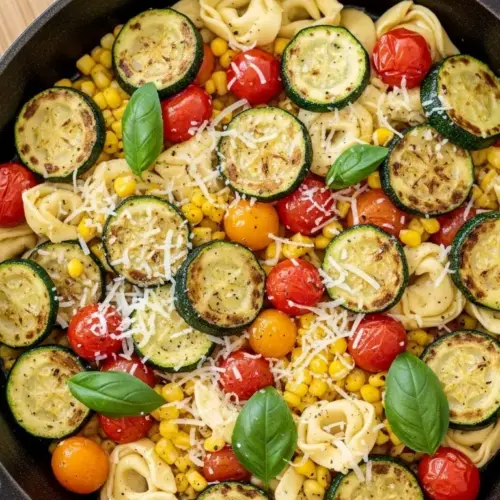
Summer Tortellini Skillet

Equipment
- Large Deep Skillet or Sauté Pan - 12-inch / 30cm recommended
- Large pot - for boiling tortellini
- Colander or strainer
- Sharp knife
- Cutting board
- Wooden spoon or silicone spatula
- Microplane or box grater - for Parmesan
- Measuring spoons and cups
- Liquid measuring cup
- Cast iron skillet - optional, excellent for searing vegetables
Ingredients
- 20 oz cheese tortellini - 567g, refrigerated or frozen
- 2 tablespoons extra-virgin olive oil - divided
- 2 medium zucchini - about 1 lb or 450g, sliced into half-moons
- 1 cup fresh or frozen corn kernels - 150g, from about 2 ears of corn
- 1 ½ cups cherry tomatoes - 225g, halved
- 4 cloves garlic - minced
- ½ teaspoon crushed red pepper flakes - optional
- ½ teaspoon kosher salt - plus more to taste
- ¼ teaspoon black pepper
- ¼ cup fresh basil leaves - 15g, torn or chiffonade
- ½ cup freshly grated Parmesan cheese - 50g, plus more for serving
- 1 tablespoon fresh lemon juice
- ¼ cup reserved pasta water - 60ml, from cooking the tortellini
Instructions
- Cook tortellini in salted boiling water according to package directions. Reserve ¼ cup (60ml) pasta water before draining. Toss drained tortellini with a drizzle of olive oil to prevent sticking and set aside.
- Heat 1 tablespoon olive oil in a large skillet over medium-high heat until shimmering. Add zucchini in a single layer and cook undisturbed for 2-3 minutes per side until golden and caramelized. Season with salt and pepper, then transfer to a plate and set aside.
- Reduce heat to medium and add remaining 1 tablespoon olive oil. Add garlic and red pepper flakes, stirring constantly for 30-45 seconds until fragrant. Add halved cherry tomatoes and season with salt and pepper. Cook for 3-4 minutes, stirring occasionally, until tomatoes soften and begin to burst.
- Add corn kernels to the skillet and cook for 1-2 minutes until heated through. Return the seared zucchini to the pan along with the cooked tortellini. Pour in reserved pasta water and toss gently to combine and coat everything evenly.
- Remove skillet from heat. Drizzle with fresh lemon juice, add grated Parmesan, and toss gently to combine. Scatter torn fresh basil over the top. Taste and adjust seasoning with additional salt, pepper, or lemon juice as needed. Serve immediately with extra Parmesan on the side.
Notes
- Don’t skip searing the zucchini: A proper sear gives it texture and a lightly caramelized flavor. Work in batches if your skillet isn’t large enough.
- Reserve pasta water before draining: The starchy water helps the sauce cling to the tortellini instead of pooling at the bottom of the pan. Don’t substitute regular tap water.
- Use freshly grated Parmesan: Pre-shredded cheese contains anti-caking agents that prevent smooth melting. A block of Parmesan and a microplane grater make a noticeable difference.
- Cook garlic over medium heat: Garlic burns quickly over high heat and becomes bitter. Medium heat gives you fragrant, golden garlic without any bitterness.
- Taste before adding salt: Tortellini, Parmesan, and pasta water are all salty, so taste first before adding more salt.
- Add basil off the heat: Fresh basil wilts and loses color almost instantly in a hot pan. Adding it after removing from heat keeps it bright green and aromatic.
- Don’t overcook the tortellini: Follow package directions closely. Overcooked tortellini turns mushy and falls apart when tossed in the skillet.
- Storage: Store leftovers in an airtight container in the refrigerator for up to 3 days. Freezing is not recommended as tortellini becomes mushy when thawed.
- Reheating: Reheat on the stovetop with 1-2 tablespoons of water or broth over medium-low heat for 3-5 minutes, or microwave with a splash of water in 60-second intervals.
- Variations: Add Italian sausage, shrimp, or white beans for extra protein. Swap zucchini for yellow squash, bell peppers, or asparagus. Make it creamy with 2-3 tablespoons of heavy cream stirred in at the end.
Final Thoughts
This summer tortellini skillet recipe is one of those rare weeknight dinners that feels effortless to make but genuinely exciting to eat.
The combination of golden seared zucchini, burst cherry tomatoes, sweet corn, and cheesy tortellini finished with lemon and fresh basil is just the right amount of indulgent and fresh at the same time.
It’s the kind of dish that reminds you summer cooking doesn’t have to be complicated to be truly satisfying.
Give this recipe a try the next night you need something quick but crave something that actually tastes like you put in real effort — and let me know in the comments how it turned out!
Did you add a protein, try a different vegetable, or make any fun swaps? Share your version below — I’d love to hear about it.
Recommended:
- Turkey Skillet Recipe
- Cowboy Skillet Recipe
- Egg Skillet Recipe
- Mexican Skillet Recipe
- Loaded Breakfast Skillet Recipe
- Breakfast Skillet Recipe
- Cheeseburger Skillet Recipe
- Baked Ziti Recipe
- Stuffed Shells Recipe
- Minestrone Soup Recipe