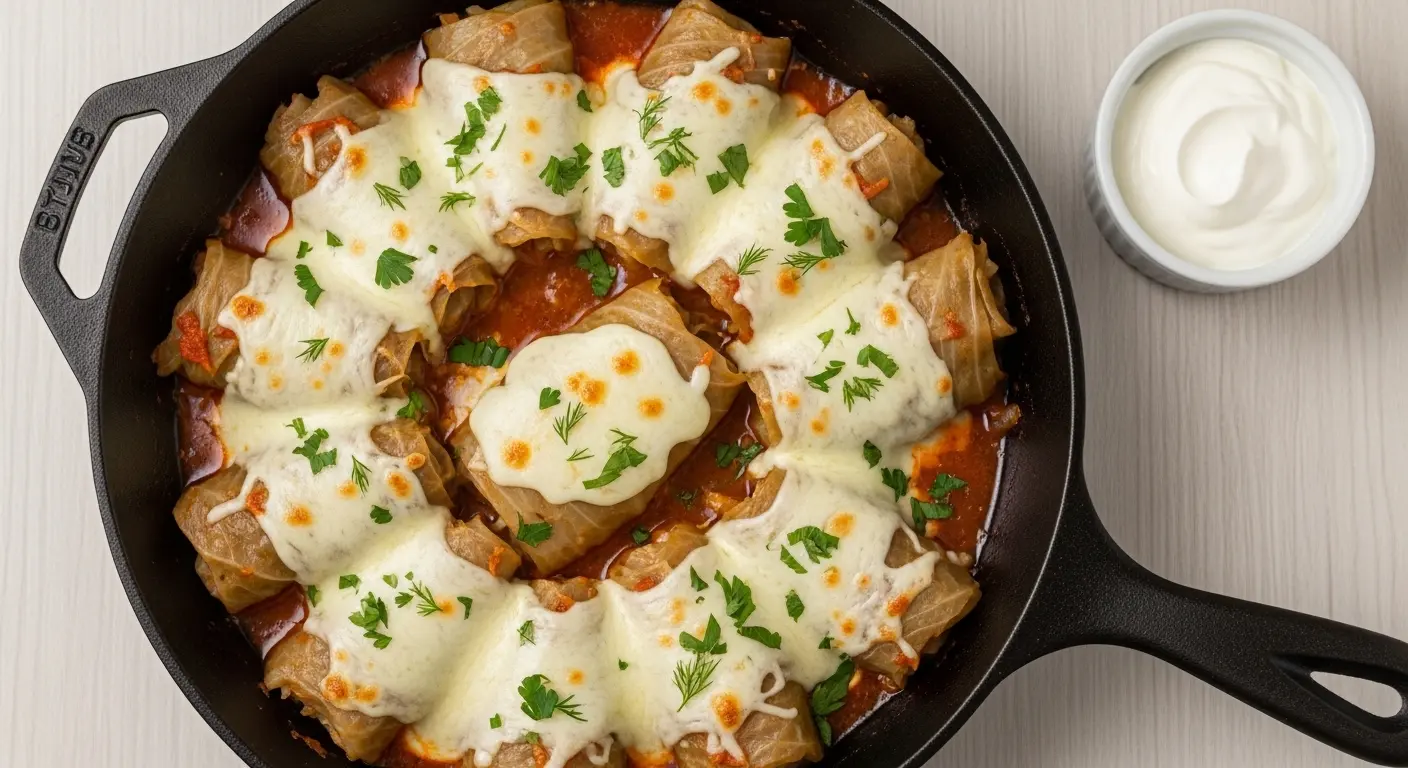
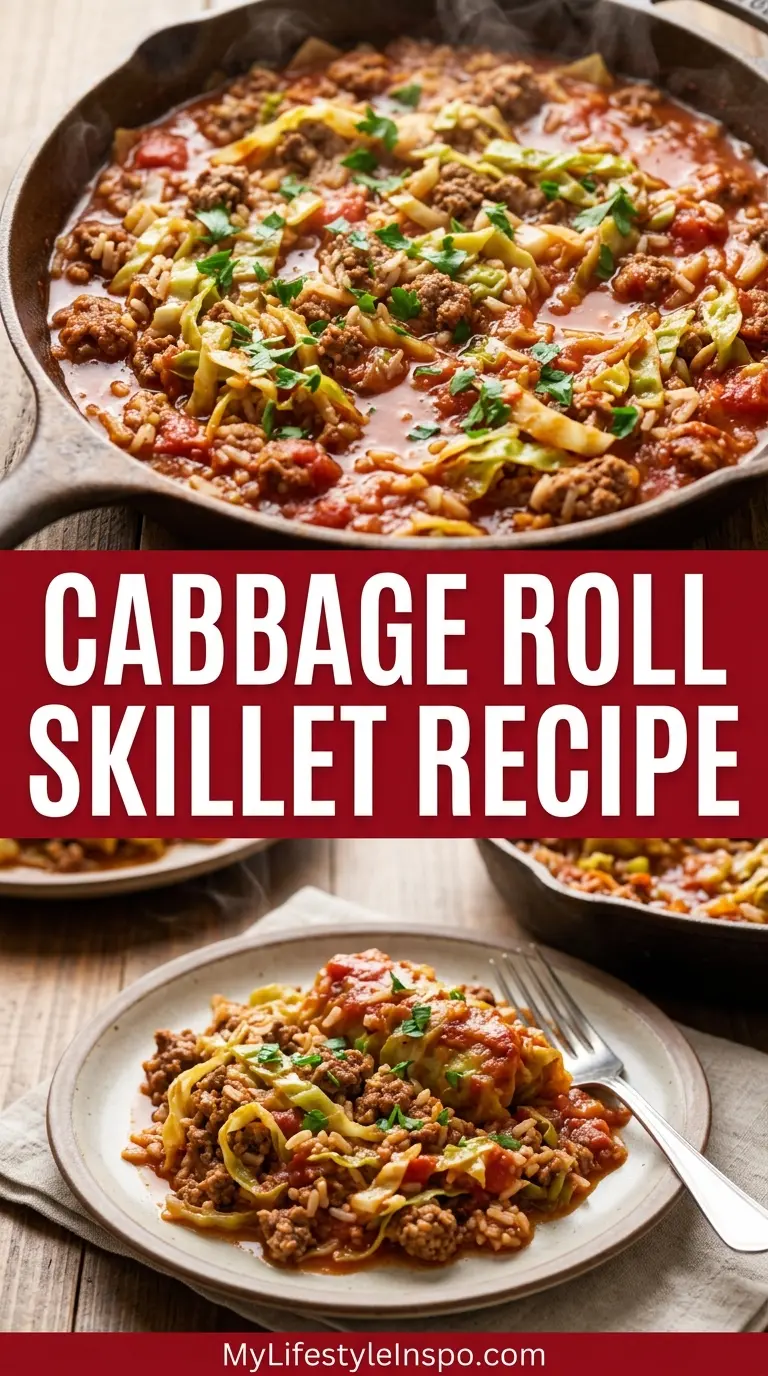
If you’ve ever craved the cozy, hearty flavor of classic stuffed cabbage rolls but dreaded the time it takes to boil, stuff, and roll each leaf, this cabbage roll skillet recipe is about to become your new weeknight hero. All the beloved flavors of traditional cabbage rolls — seasoned ground beef, tender green cabbage, rich tomato sauce, and fluffy white rice — come together in a single pan in about 40 minutes.
This dish skips the tedious rolling and baking, delivering every bit of that comforting, old-fashioned taste with a fraction of the work.
The secret to why this skillet version works so beautifully is in how the ingredients build flavor together. Browning the beef first develops deep, savory notes. Smoked paprika and a hint of cinnamon replicate the warmth of the traditional dish. Apple cider vinegar adds a subtle tang that balances the sweetness of the tomato sauce.
Every bite hits that classic cabbage roll flavor profile — and you only have one pan to wash at the end.
This recipe feeds four generously and is just as satisfying reheated the next day, making it a fantastic meal prep option. If you enjoy hearty one-pan dinners like this, you’ll also love this Stuffed Pepper Skillet for another deconstructed classic done right.
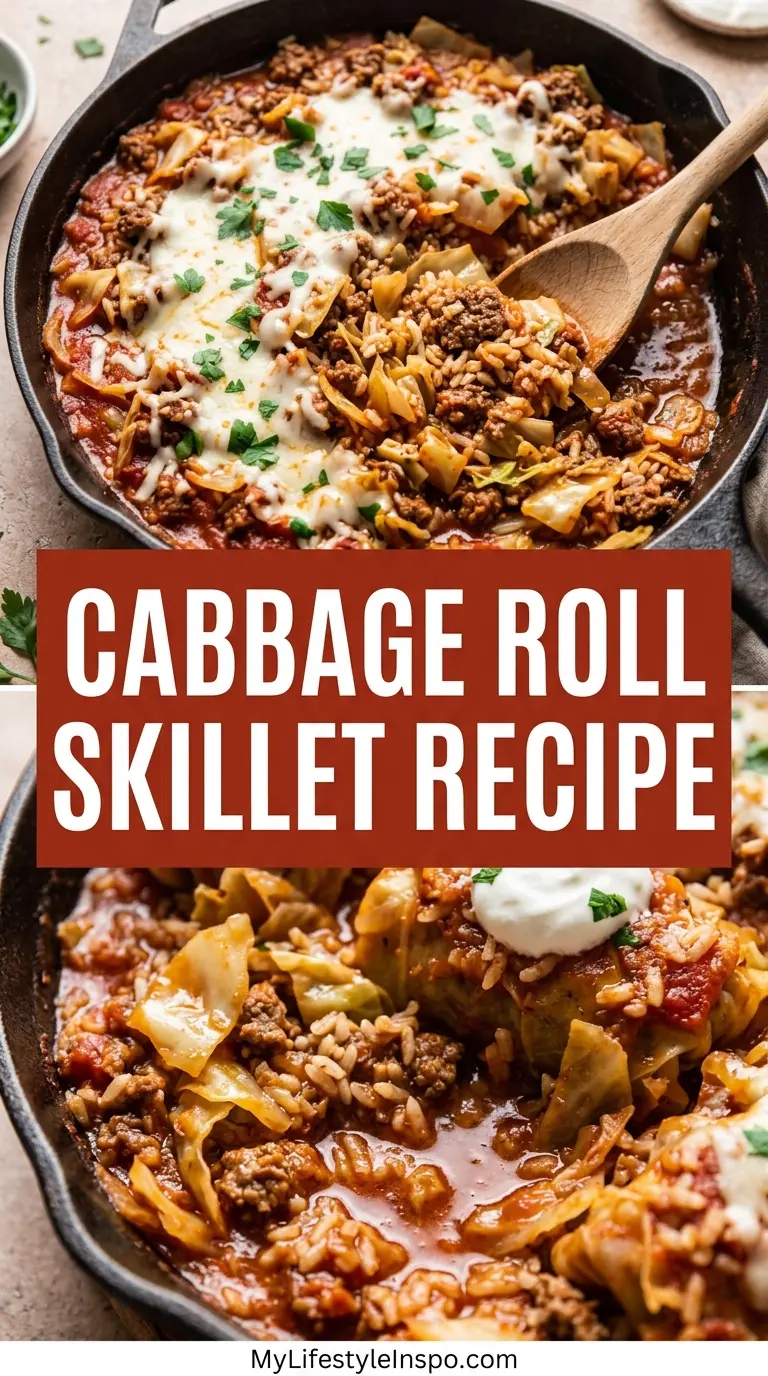
Why You’ll Love This Cabbage Roll Skillet Recipe
This dish earns a permanent spot in the weeknight dinner rotation for good reason.
It delivers the full flavor experience of traditional stuffed cabbage rolls without the 2-hour commitment. Everything simmers together in one pan, so the cabbage absorbs the savory beef-and-tomato broth as it cooks — creating incredibly tender, flavorful bites.
It’s deeply satisfying and budget-friendly. Ground beef, cabbage, canned tomatoes, and rice are all affordable, pantry-staple ingredients that stretch easily to feed a hungry family.
The recipe is endlessly flexible. You can swap the protein, add extra vegetables, adjust the seasonings, or top it with cheese for an even more indulgent finish.
Here’s a quick summary of why this recipe stands out:
- One pan, easy cleanup — no multiple pots or pans required
- Ready in about 40 minutes — weeknight friendly from start to finish
- Family-approved flavors — even picky eaters tend to love this one
- Great for meal prep — tastes even better the next day after the flavors meld
- Customizable — easy to adapt for different dietary preferences or what you have on hand
- Budget-friendly — feeds four for well under $15
You might also enjoy: Taco Skillet Recipe
Ingredients
This recipe uses simple, easy-to-find ingredients that work together to replicate the classic cabbage roll flavor profile without any complicated steps.
The smoked paprika and cinnamon are the key seasoning duo here — smoked paprika adds warmth and depth, while a pinch of cinnamon gives that authentic, slightly sweet undertone that traditional cabbage rolls are known for. Don’t skip either one.
Here’s everything you’ll need:
- 1 lb (450g) lean ground beef (80/20 or 90/10 work well)
- 1 small yellow onion, finely diced
- 4 garlic cloves, minced
- 1 small green bell pepper, diced
- 2 tbsp extra-virgin olive oil
- 1/2 cup (100g) uncooked long-grain white rice
- 1 can (14.5 oz / 411g) diced tomatoes, undrained
- 1 can (8 oz / 227g) tomato sauce
- 1 cup (240ml) beef broth
- 1.5 tsp Worcestershire sauce
- 1 tbsp soy sauce
- 2 tbsp apple cider vinegar
- 1/2 tsp granulated sugar
- 1 tsp smoked paprika
- Large pinch of ground cinnamon (about 1/8 tsp)
- Salt and black pepper, to taste
- 5–6 cups (about 450g) coarsely chopped or shredded green cabbage (roughly half a small head)
- 1–2 tbsp fresh dill or flat-leaf parsley, chopped (plus more for garnish)
- 1 cup (113g) shredded mozzarella or cheddar cheese (optional, for topping)
- Sour cream, for serving (optional)
This recipe pairs beautifully with warm, buttered bread — check out this Cheesy Garlic Bread Recipe for an easy side that complements the tomato-beef flavors perfectly.
Kitchen Equipment Needed
You don’t need anything fancy to make this dish — just a few reliable kitchen basics that you likely already have.
The most important piece of equipment here is a large, deep skillet with a tight-fitting lid. The lid traps steam, which helps the rice cook evenly and softens the cabbage beautifully without drying anything out.
- Large skillet with lid (12-inch / 30cm minimum; cast iron or stainless steel recommended)
- Chef’s knife
- Cutting board
- Wooden spoon or silicone spatula
- Can opener
- Measuring cups and measuring spoons
- Colander or paper towels (for draining excess fat if needed)
- Ladle or large serving spoon
Recommended Products for This Recipe
These are products selected based on quality and performance that will genuinely make this recipe easier and more enjoyable to cook.
1. Lodge Cast Iron Skillet with Lid
A cast iron skillet retains heat exceptionally well, which means your ground beef gets a better sear and the cabbage cooks more evenly. Lodge is a trusted, affordable brand that lasts a lifetime with minimal care.
2. Better Than Bouillon Beef Base
This concentrated beef base adds an incredible depth of umami to the broth, far beyond what standard beef broth from a carton can provide. Just a small spoonful stirred into water elevates the entire sauce.
3. Smoked Paprika (Quality Brand)
Not all paprika is created equal. A high-quality smoked paprika has a richer, more complex flavor that makes a real difference in this dish. Look for Spanish or Hungarian varieties for the best results.
4. Apple Cider Vinegar (Raw, Unfiltered)
The apple cider vinegar in this recipe cuts through the richness of the beef and balances the sweetness of the tomato. Using a raw, unfiltered version gives the dish a slightly more complex, tangy flavor.
Read Also: Mexican Beef and Rice Skillet Recipe
Step-by-Step Instructions
Step 1: Prep Your Vegetables
- Remove any wilted or damaged outer leaves from your cabbage head.
- Cut the cabbage into quarters and carefully cut out the tough core from each quarter.
- Chop the cabbage into roughly 1 to 1.5 inch (2.5 to 3.8cm) pieces, or shred it into thin ribbons — both work well, but bite-sized chunks are easier to eat.
- Dice the yellow onion and green bell pepper into small, even pieces — about 1/4 inch (6mm) is ideal so they soften quickly and evenly.
- Mince the garlic cloves finely. A garlic press works great here too.
- Chop the fresh dill or parsley and set aside for later.
- Open both cans of tomatoes and have all your measured ingredients ready to go — this recipe moves quickly once the beef hits the pan.
Step 2: Brown the Ground Beef
- Heat a large 12-inch (30cm) skillet over medium-high heat.
- Add the olive oil and swirl to coat the bottom of the pan.
- Add the ground beef, breaking it up immediately into smaller crumbles with your wooden spoon or spatula.
- Season with a pinch of salt and black pepper right away — seasoning the beef as it cooks builds better flavor than adding all the salt at the end.
- Cook the beef for about 5 to 7 minutes, stirring and breaking it up regularly, until it is fully browned and no pink remains.
- If there is more than 2 tablespoons of fat in the pan, carefully tilt the skillet and spoon or drain off the excess. A little fat is fine — it adds richness — but too much will make the final dish greasy.
Step 3: Sauté the Aromatics
- Reduce the heat to medium.
- Add the diced onion and green bell pepper to the skillet with the browned beef.
- Stir everything together and cook for 3 to 4 minutes, until the onion turns translucent and begins to soften.
- Add the minced garlic and stir continuously for about 60 seconds, until fragrant. Garlic can burn quickly, so keep it moving and don’t walk away.
Step 4: Add the Seasonings and Rice
- Sprinkle the smoked paprika and the pinch of ground cinnamon directly over the beef and vegetable mixture.
- Stir well for about 30 seconds to toast the spices in the residual fat — this brief toasting step deepens the flavor significantly.
- Add the uncooked long-grain white rice to the skillet and stir it in so every grain is lightly coated in the beef drippings and spices.
- Cook for another 60 to 90 seconds, stirring constantly, to lightly toast the rice. This step helps the rice stay slightly firm and separate once it’s cooked through.
Step 5: Add the Liquids and Tomatoes
- Pour in the diced tomatoes (with all the liquid from the can) and the tomato sauce.
- Add the beef broth, Worcestershire sauce, soy sauce, apple cider vinegar, and granulated sugar.
- Stir everything together thoroughly, scraping up any browned bits from the bottom of the pan — those browned bits are packed with flavor.
- Taste the liquid and adjust salt and pepper as needed before adding the cabbage.
Step 6: Add the Cabbage and Simmer
- Add the chopped cabbage to the skillet. It will look like a very large volume at first — this is completely normal. Cabbage shrinks significantly as it cooks.
- Stir to combine the cabbage with the beef and tomato mixture as best you can. It may be piled high — use tongs or a large spoon to gently fold everything together.
- Bring the mixture to a boil over medium-high heat.
- Once boiling, reduce the heat to low, place the lid tightly on the skillet, and let it simmer for 20 to 25 minutes.
- Stir the mixture every 7 to 8 minutes to prevent the rice from sticking to the bottom and to help the cabbage cook evenly.
- The dish is ready when the rice is fully cooked and tender, the cabbage is soft but not mushy, and most of the liquid has been absorbed.
Step 7: Finish and Serve
- Remove the lid and taste the dish one final time, adjusting salt, pepper, or a splash more vinegar if desired.
- If using cheese, scatter the shredded mozzarella or cheddar evenly over the top of the skillet.
- Place the lid back on and let sit for 2 to 3 minutes off the heat, until the cheese has melted completely.
- Sprinkle the fresh dill or parsley over the top just before serving.
- Serve directly from the skillet with a dollop of sour cream on each portion, if desired.
For another hearty one-pan dinner with equally comforting flavors, this Cheeseburger Skillet Recipe is a family crowd-pleaser that comes together just as quickly.
Tips for Success
A few extra tips can take this recipe from good to genuinely great.
Following these will help you nail the timing and texture every single time, especially the first time you make it:
- Don’t skip the rice-toasting step. Cooking the uncooked rice briefly in the pan before adding liquids helps it absorb flavors more effectively and prevents a mushy texture.
- Cut the cabbage uniformly. Inconsistently sized pieces cook unevenly — aim for pieces that are roughly the same size so everything finishes at the same time.
- Use a tight-fitting lid. Steam is what cooks the rice and softens the cabbage. A loose lid lets too much moisture escape and can result in undercooked rice.
- Check the rice at 20 minutes. Every stove is slightly different. If the rice is still firm but most liquid is absorbed, add a splash of broth and cover for another 5 minutes.
- Don’t over-drain the fat. A small amount of fat left after browning the beef adds richness and flavor to the sauce. Only drain if it’s excessive.
- Let it rest before serving. Give the finished dish 3 to 5 minutes off the heat with the lid on. This helps the rice absorb any remaining liquid and makes serving much cleaner.
- Taste as you go. The salt content of canned tomatoes, beef broth, and soy sauce varies by brand. Taste at each stage and adjust accordingly.
Read Also: Cowboy Skillet Recipe
Serving Suggestions
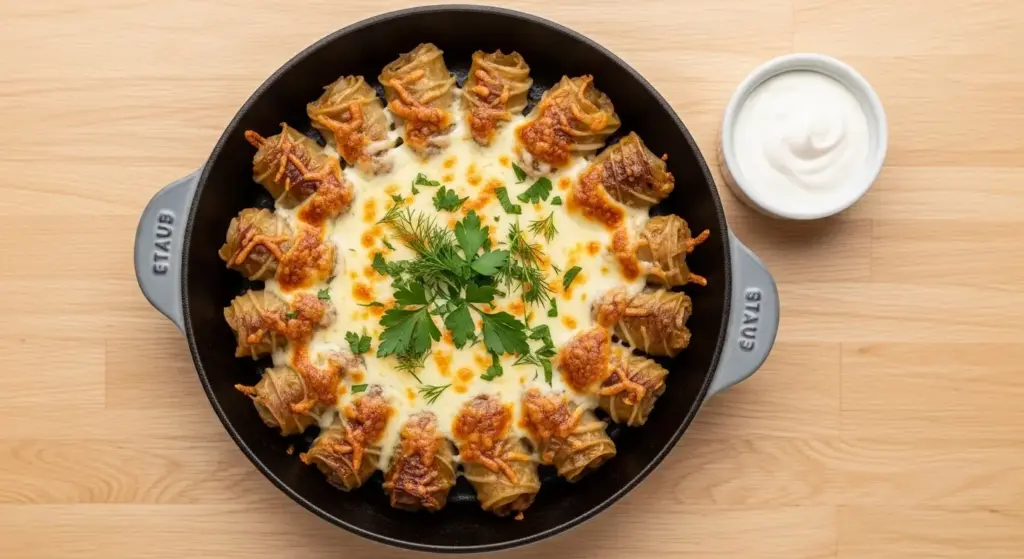
This cabbage roll skillet is satisfying enough to be a complete meal on its own, but it also pairs beautifully with a few simple sides that round out the dinner table.
The dish has a savory, slightly tangy tomato base, so sides that offer something creamy, starchy, or fresh work best as complements:
- Sour cream — a classic pairing with cabbage-based dishes; the cool creaminess cuts through the richness of the beef
- Skillet Cornbread — the slightly sweet, crumbly texture is a perfect contrast to the savory skillet
- A simple green salad — a lightly dressed salad with vinaigrette adds brightness and freshness alongside the hearty main
- Garlic Mashed Potatoes — for an extra-comforting, filling dinner, serve a small scoop alongside each portion
- Crusty bread or dinner rolls — perfect for soaking up the rich tomato-beef sauce
- Steamed white or brown rice — if you omit the rice from the skillet itself, serving it alongside turns this into a lower-carb main with a starchy side
- Roasted broccoli — a simple, nutritious side that roasts in the oven while the skillet simmers
Variations to Try
This cabbage roll skillet recipe is delicious as written, but it’s also incredibly adaptable to what you have on hand or what your family prefers.
Here are some popular variations worth exploring once you’ve tried the original:
- Swap the protein: Ground turkey, ground chicken, or even Italian sausage (casings removed) all work well in place of ground beef. Turkey gives a lighter result, while sausage adds bolder, spiced flavor.
- Add heat: Stir in 1/4 to 1/2 teaspoon of red pepper flakes or a dash of hot sauce along with the spices for a spicier version.
- Make it cheesy: Top with shredded mozzarella, cheddar, or even Gruyère and let it melt for a more indulgent, casserole-like finish.
- Low-carb version: Skip the rice entirely and reduce the beef broth by 1/4 cup. The dish is still hearty and satisfying — or serve over cauliflower rice instead.
- Add more vegetables: Diced zucchini, shredded carrots, or sliced mushrooms can all be stirred in along with the cabbage for extra nutrition and bulk.
- Use brown rice: Substitute long-grain brown rice, but increase the simmering time to 35 to 40 minutes and add an extra 1/4 cup (60ml) of broth.
- Slow cooker adaptation: Brown the beef first on the stovetop, then transfer everything to a slow cooker and cook on low for 4 to 5 hours.
You might also enjoy: Egg Roll in a Bowl Recipe
Storage and Reheating
This recipe stores and reheats exceptionally well, making it a great candidate for meal prep or next-day lunches.
Here’s how to store and reheat it properly so the texture and flavor stay at their best:
- Refrigerator: Allow the skillet to cool to room temperature, then transfer leftovers to an airtight container. Store in the refrigerator for up to 4 days.
- Freezer: Portion the cooled dish into freezer-safe containers or zip-lock bags. Freeze for up to 2 months. Note that the cabbage will be a little softer after thawing, which is still perfectly enjoyable.
- Thawing: Transfer frozen portions to the refrigerator the night before to thaw overnight before reheating.
- Stovetop reheating: Add the leftovers to a skillet over medium-low heat with a splash of beef broth or water (2 to 3 tablespoons) to loosen the sauce and prevent sticking. Stir gently until heated through, about 5 minutes.
- Microwave reheating: Place a single portion in a microwave-safe bowl, add a small splash of water or broth, and cover loosely with a microwave-safe lid or plate. Heat on medium power in 90-second intervals, stirring between each, until hot throughout.
Read Also: Fried Cabbage Recipe
Nutritional Facts
The following nutritional estimates are per serving based on 4 servings, using lean ground beef (90/10) and without the optional cheese or sour cream topping. Values are approximate and will vary based on specific ingredients and portion sizes.
| Nutrient | Per Serving (Approx.) |
|---|---|
| Calories | ~385 kcal |
| Protein | ~28g |
| Total Fat | ~14g |
| Saturated Fat | ~4.5g |
| Carbohydrates | ~34g |
| Dietary Fiber | ~4g |
| Sugars | ~8g |
| Sodium | ~720mg |
| Iron | ~3.5mg |
| Vitamin C | ~45mg |
This dish is a solid source of protein and dietary fiber, making it quite filling despite being relatively modest in calories. Adding cheese will increase the calorie, fat, and sodium counts by approximately 100 to 120 calories per serving.
This dish is naturally gluten-free as long as your soy sauce and Worcestershire sauce are certified gluten-free. Tamari is a great gluten-free substitute for soy sauce.
For another nutritious, veggie-forward recipe, check out this Sauteed Cabbage Recipe for a simple side dish that makes excellent use of the same star ingredient.
Health Benefits of Key Ingredients
Beyond its great taste, this cabbage roll skillet delivers a solid range of nutrients from its whole-food ingredients.
Here’s a closer look at what makes this dish genuinely nourishing:
- Green cabbage is exceptionally rich in Vitamin C, Vitamin K, and fiber. It supports immune function, bone health, and digestive wellness. Cabbage also contains compounds called glucosinolates, which have been studied for their potential protective effects.
- Ground beef provides complete protein — containing all essential amino acids — along with significant amounts of iron, zinc, and B vitamins including B12, which supports nerve function and energy production.
- Garlic is one of nature’s most well-studied functional foods. It contains allicin, a compound with demonstrated antimicrobial and anti-inflammatory properties, and supports cardiovascular health.
- Canned diced tomatoes and tomato sauce are excellent sources of lycopene, a powerful antioxidant that may support heart health and reduce oxidative stress. Interestingly, cooking tomatoes actually increases lycopene bioavailability.
- Apple cider vinegar contributes acetic acid, which has been linked to blood sugar regulation and improved digestion. It also adds brightness to the dish without adding fat or sodium.
- Olive oil is a cornerstone of the Mediterranean diet, providing heart-healthy monounsaturated fats and antioxidant polyphenols.
Read Also: Cabbage Soup Recipe
Frequently Asked Questions
1. Do I have to pre-cook the rice before adding it to the skillet?
No, and that’s part of what makes this recipe so convenient. The uncooked white rice goes directly into the skillet and cooks in the beef broth, tomato sauce, and juices from the cabbage and tomatoes. It absorbs all those flavors as it cooks, which makes the finished dish taste so much richer than if you added pre-cooked rice. Just make sure to keep the lid on during simmering so the steam does its job.
2. Can I use red cabbage instead of green cabbage?
Technically yes, but green cabbage is strongly preferred for this recipe. Red cabbage tends to have a slightly firmer texture that doesn’t soften as readily, and it will turn the dish a purple-grey color as it cooks. Green cabbage has a more neutral flavor and a tender texture once simmered, which is much closer to the traditional stuffed cabbage roll experience.
3. Why is my dish too watery or too dry?
If it’s too watery, remove the lid and simmer on medium-low heat for an additional 5 to 10 minutes to allow the excess liquid to reduce. If it’s too dry or the rice is sticking, add a few tablespoons of beef broth or water, stir gently, replace the lid, and cook for another 5 minutes. The moisture content can vary slightly depending on how much liquid your canned tomatoes release and how much moisture your cabbage holds.
4. Can I make this ahead of time for a dinner party?
Absolutely. This dish reheats so well that making it a day ahead actually improves the flavor since everything has time to meld together overnight in the refrigerator. Reheat it gently in the skillet over medium-low heat with a splash of broth, taste and adjust seasoning, and add fresh cheese or herbs just before serving so they look and taste their best.
5. What can I use instead of Worcestershire sauce?
If you don’t have Worcestershire sauce on hand, you can substitute with an equal amount of soy sauce for a similar umami depth. Another option is a combination of fish sauce and a small amount of balsamic vinegar to replicate the tangy, complex flavor. In a pinch, simply omitting it won’t ruin the dish — the other seasonings provide plenty of flavor.
For another comforting, beef-forward skillet dinner, this Mexican Skillet Recipe is a bold, flavorful option the whole family will love.
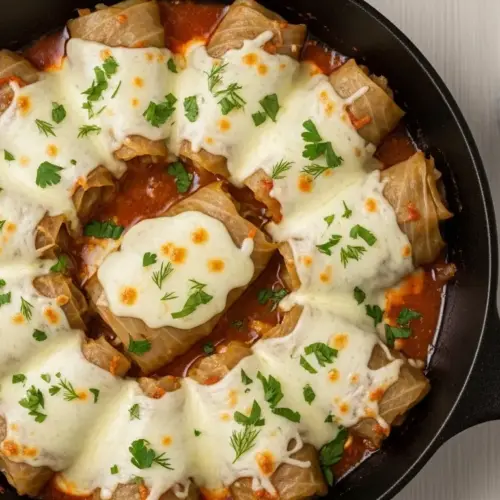
Cabbage Roll Skillet

Equipment
- Large 12-inch (30cm) Skillet with Lid - Cast iron or stainless steel recommended
- Chef’s knife
- Cutting board
- Wooden spoon or silicone spatula
- Can opener
- Measuring cups and spoons
- Colander or paper towels - Optional, for draining excess fat
- Ladle or large serving spoon
Ingredients
- 1 lb lean ground beef - 450g, 80/20 or 90/10 blend
- 1 small yellow onion - about 1 cup or 150g, finely diced
- 4 cloves garlic - minced
- 1 small green bell pepper - about 1/2 cup, diced
- 2 tbsp extra-virgin olive oil
- 1/2 cup uncooked long-grain white rice - 100g
- 1 can diced tomatoes - 14.5 oz / 411g, undrained
- 1 can tomato sauce - 8 oz / 227g
- 1 cup beef broth - 240ml
- 1.5 tsp Worcestershire sauce
- 1 tbsp soy sauce - or tamari for gluten-free
- 2 tbsp apple cider vinegar
- 1/2 tsp granulated sugar
- 1 tsp smoked paprika
- 1/8 tsp ground cinnamon - large pinch
- salt and black pepper - to taste
- 5-6 cups green cabbage - about 450g, coarsely chopped or shredded (roughly half a small head)
- 1-2 tbsp fresh dill or flat-leaf parsley - chopped, plus more for garnish
Optional Toppings
- 1 cup shredded mozzarella or cheddar cheese - 113g, optional, for topping
- sour cream - optional, for serving
Instructions
- Prep your vegetables: Chop cabbage into 1-inch pieces, dice onion and bell pepper, mince garlic, and chop fresh herbs.
- Heat olive oil in a large 12-inch skillet over medium-high heat. Add ground beef, season with salt and pepper, and cook until browned, breaking into crumbles, about 5-7 minutes. Drain excess fat if needed.
- Reduce heat to medium. Add onion and bell pepper and cook until softened, 3-4 minutes. Add garlic and cook for 1 minute until fragrant.
- Stir in smoked paprika and cinnamon, cook for 30 seconds until toasted. Add uncooked rice and cook for 60-90 seconds, stirring constantly, until lightly toasted.
- Add diced tomatoes, tomato sauce, beef broth, Worcestershire sauce, soy sauce, apple cider vinegar, and sugar. Stir well, scraping up browned bits from the pan.
- Add chopped cabbage to the skillet (it will pile high — this is normal). Stir to combine. Bring to a boil, then reduce heat to low, cover with a tight-fitting lid, and simmer for 20-25 minutes, stirring every 7-8 minutes, until rice is tender and liquid is absorbed.
- Once cooked, taste and adjust seasoning. If using cheese, scatter over the top, cover, and let sit for 2-3 minutes to melt. Garnish with fresh herbs and serve with sour cream if desired.
Notes
- Don’t skip the rice-toasting step: Cooking the uncooked rice briefly in the pan before adding liquids helps it absorb flavors more effectively and prevents a mushy texture.
- Cut the cabbage uniformly: Inconsistently sized pieces cook unevenly — aim for pieces that are roughly the same size so everything finishes at the same time.
- Use a tight-fitting lid: Steam is what cooks the rice and softens the cabbage. A loose lid lets too much moisture escape and can result in undercooked rice.
- Check the rice at 20 minutes: Every stove is slightly different. If the rice is still firm but most liquid is absorbed, add a splash of broth and cover for another 5 minutes.
- Don’t over-drain the fat: A small amount of fat left after browning the beef adds richness and flavor to the sauce. Only drain if it’s excessive.
- Let it rest before serving: Give the finished dish 3 to 5 minutes off the heat with the lid on. This helps the rice absorb any remaining liquid and makes serving much cleaner.
- Storage and reheating: Store leftovers in an airtight container in the refrigerator for up to 4 days. Reheat on the stovetop with a splash of broth to loosen the sauce, or microwave in 90-second intervals.
- Freezing: This dish freezes well for up to 2 months. Thaw overnight in the refrigerator before reheating.
- Customize it: Swap ground beef for ground turkey or Italian sausage, add 1/4-1/2 teaspoon red pepper flakes for heat, or skip the rice for a low-carb version served over cauliflower rice.
- Make ahead: This dish tastes even better the next day after the flavors meld, making it an excellent meal prep option for dinner parties.
Final Thoughts
This cabbage roll skillet recipe proves that comfort food doesn’t have to mean hours in the kitchen.
With familiar, wholesome ingredients and just one pan, you get all the cozy, deeply savory satisfaction of traditional stuffed cabbage rolls — without the rolling, the baking, or the mountain of dishes at the end.
It’s the kind of recipe that earns a permanent spot in your regular rotation. One that feels like home cooking at its most honest and satisfying.
Give this cabbage roll skillet a try this week and see just how easy weeknight cooking can be. If you make it, share how it turned out in the comments below — and feel free to share it with a friend who could use a new family dinner idea!
Recommended:
- Stuffed Pepper Soup
- Turkey Skillet
- Chicken Skillet
- Enchilada Skillet
- Cowboy Casserole
- Hamburger Soup
- Borscht
- Creamy Tuscan White Bean Skillet
- Beef Stroganoff
- Summer Tortellini Skillet