

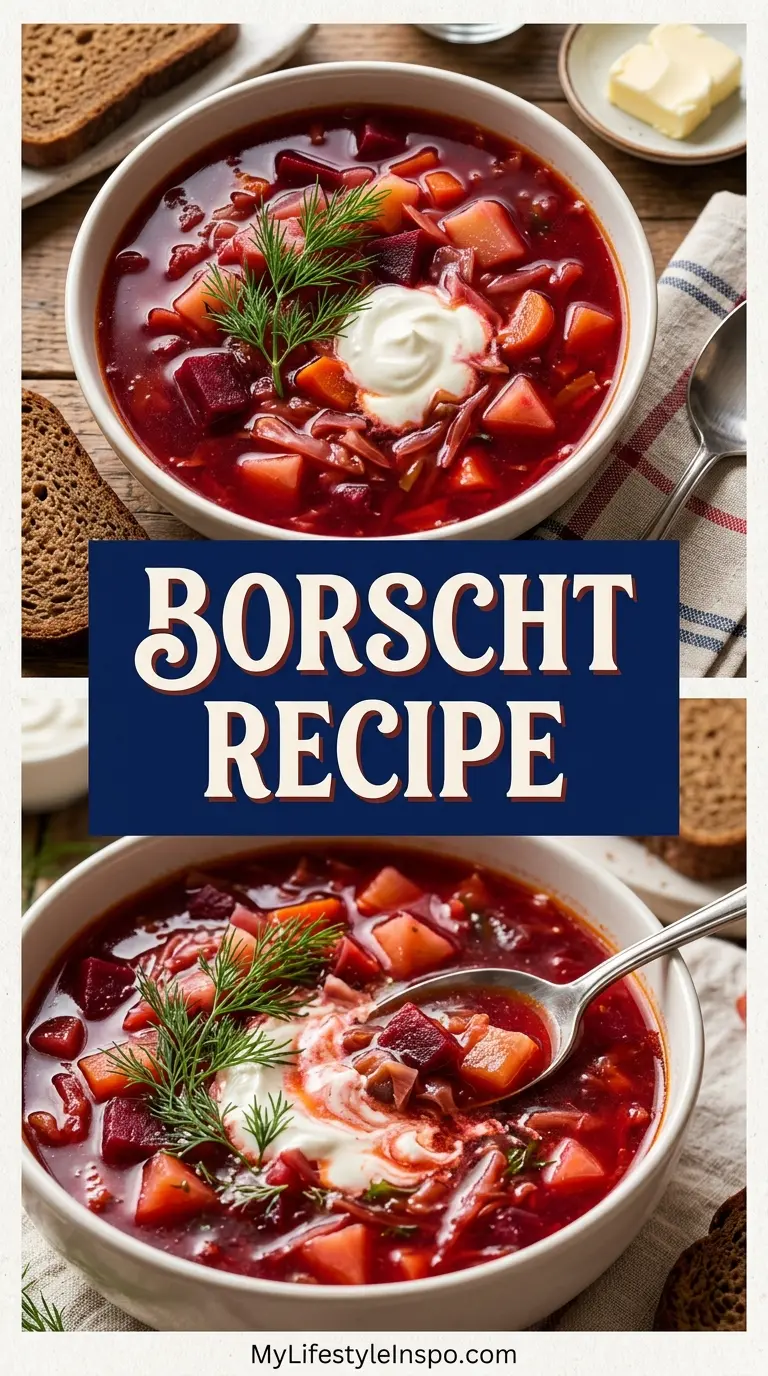
If you’ve never tried a proper borscht recipe, you are in for a seriously wonderful surprise. This iconic Eastern European beet soup is one of those dishes that looks almost impossibly vibrant in the bowl, with a deep ruby-red color that feels almost too pretty to eat. Don’t let that fool you into thinking it’s precious or fussy, though. Borscht is hearty, nourishing, satisfying peasant food at its very best.
What makes this version special is the balance of flavors. The beets bring a natural earthiness and sweetness, the cabbage adds a gentle bitterness, and a splash of white vinegar at the end pulls everything together with just enough tang to make each spoonful genuinely exciting.
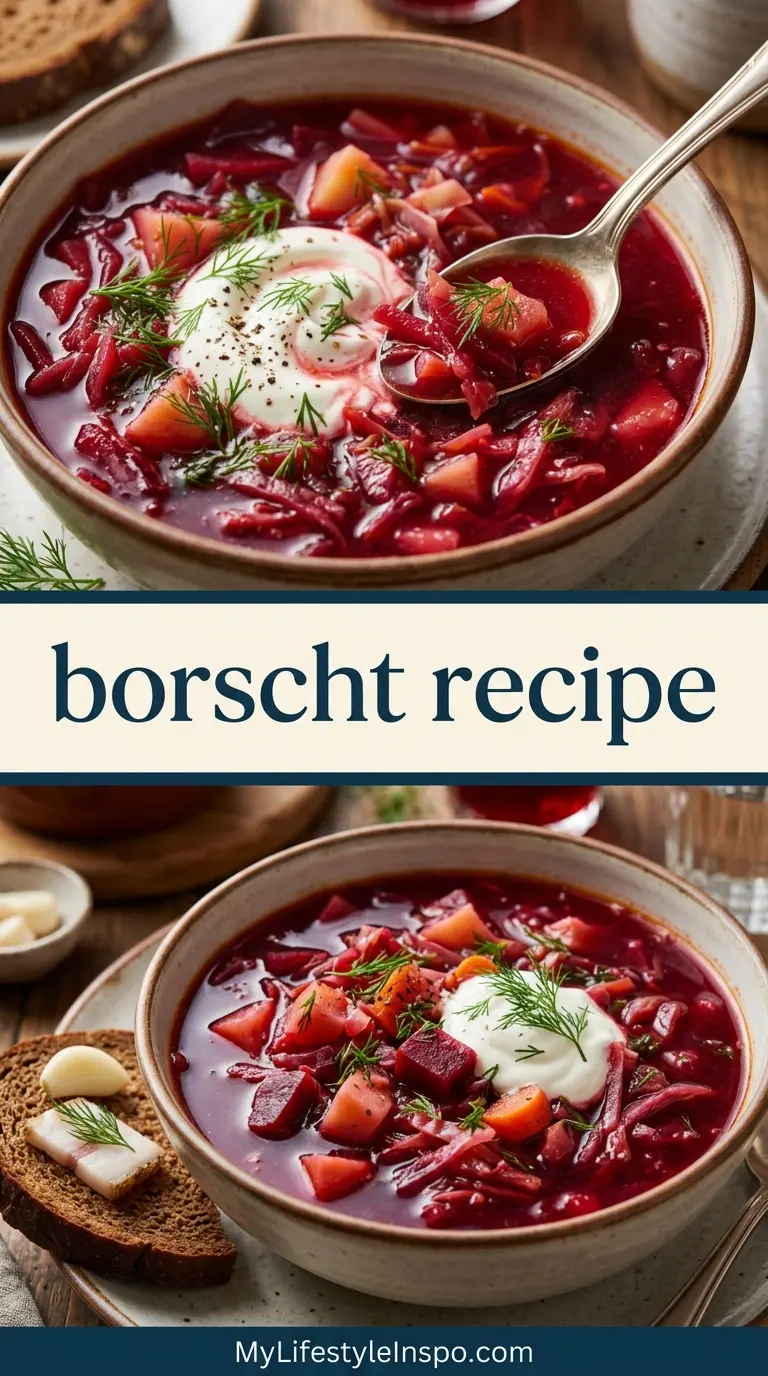
This is a beef borscht, simmered low and slow with tender chunks of meat and a rich broth as its foundation. It’s the version most people picture when they think of this dish, and for good reason. Topped with a generous dollop of sour cream and a shower of fresh dill, it is the kind of soup that warms you from the inside out.
You might be surprised to learn that borscht was actually recognized by UNESCO as part of Ukraine’s intangible cultural heritage in 2022. That’s how important this soup is to Eastern European culture. Every family has their own version, and this one is rooted in the most traditional, widely-loved approach. Make it once, and it will earn a permanent spot in your recipe rotation.
This pairs beautifully with a bowl of Cabbage Soup if you’re in the mood for more hearty vegetable-based comfort food.
Why You’ll Love This Borscht Recipe
This soup is the definition of a one-pot wonder that does all the heavy lifting for you.
The flavor gets even better the next day, making it ideal for meal prep and leftovers. Many borscht lovers will tell you the second-day bowl is even better than the first.
It’s packed with vegetables, so you’re genuinely nourishing yourself while enjoying what feels like pure comfort food.
The ingredient list is simple and affordable. Beets, cabbage, potatoes, carrots, and a cut of beef are all budget-friendly staples that transform into something remarkable.
It’s surprisingly flexible. You can make it vegetarian by swapping the beef broth for vegetable broth and skipping the meat, and it still tastes wonderful.
The color alone is reason to make it. That deep, jewel-toned red will make your table look like something out of a food magazine.
- Makes a large pot that feeds a family or a week of lunches
- Freezes beautifully for future meals
- Gluten-free and naturally dairy-free if you skip the sour cream garnish
- A crowd-pleaser that sparks genuine conversation at the dinner table
- Rich in iron, fiber, vitamin C, and potassium
Read Also: Hamburger Soup Recipe
Ingredients
The magic of borscht comes from a handful of simple, unassuming vegetables that transform completely when cooked together. Using fresh beets (not canned) is non-negotiable for the best flavor and that vivid color. The vinegar is added at the very end, which is a key trick for preserving the beets’ brilliant hue and adding that signature tang.
- 1.5 lbs (680g) beef chuck or beef short ribs, bone-in if possible
- 8 cups (2 liters) beef broth or water
- 3 medium beets (about 1 lb / 450g), peeled, half grated and half julienned
- 3 cups (210g) green cabbage, thinly shredded
- 2 medium potatoes (about 12 oz / 340g), peeled and cut into 1-inch cubes
- 2 medium carrots, peeled and grated
- 1 medium yellow onion, finely diced
- 3 cloves garlic, minced
- 1 can (14 oz / 400g) diced tomatoes, or 2 tablespoons tomato paste
- 2 tablespoons sunflower oil or vegetable oil
- 2 tablespoons white vinegar or apple cider vinegar
- 2 bay leaves
- 1 teaspoon sugar
- 1 teaspoon salt, plus more to taste
- 1/2 teaspoon black pepper
- Fresh dill, chopped, for serving
- Sour cream, for serving
You might also enjoy: Sauerkraut Soup Recipe
Kitchen Equipment Needed
You don’t need any special gadgets for borscht, but a heavy-bottomed pot is important here. Thin pots can cause the vegetables to scorch at the bottom during the longer simmer, so if you have a Dutch oven or a thick-walled stockpot, now is the time to use it. A box grater will make quick work of the beets and carrots.
- Large Dutch oven or heavy stockpot (6-quart / 5.7-liter capacity)
- Box grater for the beets and carrots
- Chef’s knife and cutting board
- Large skillet or saute pan
- Ladle for serving
- Measuring cups and spoons
- Vegetable peeler
Read Also: Beef and Barley Soup Recipe
Recommended Products for This Recipe
These are products I genuinely recommend based on quality and how much they improve the final result of this recipe.
1. Le Creuset Enameled Cast Iron Dutch Oven
A heavy, even-heating pot is the single most important piece of equipment for a great borscht. The Le Creuset distributes heat so evenly that your broth simmers gently without any hot spots, which means perfectly tender vegetables every time. The light-colored interior also makes it easy to monitor the color of your broth as it develops.
2. OXO Good Grips Box Grater
Grating beets can be a messy task, and a sharp, stable grater makes the job so much more manageable. The OXO Good Grips has a non-slip base and a comfortable handle, which you’ll appreciate when you’re grating through a pound of raw beets. The fine and coarse options give you flexibility depending on the texture you want.
3. Organic Apple Cider Vinegar
The vinegar you add at the end of this recipe is more than just a splash of acid. It’s what fixes the color of the beets and gives the soup its signature tangy brightness. A good-quality organic apple cider vinegar adds complexity that plain white vinegar can’t quite match.
4. Fresh Dill (Potted or Packaged)
Fresh dill is not optional in an authentic borscht. The aromatic, slightly anise-like flavor of fresh dill is what ties the whole bowl together. If your local store carries it potted, that’s even better since it stays fresh much longer than cut bunches.
5. Full-Fat Sour Cream
A generous spoonful of good sour cream stirred into a hot bowl of borscht is non-negotiable for the full experience. Full-fat sour cream melts into the soup in a way that low-fat versions simply do not, creating a creamy, tangy swirl that balances the earthiness of the beets perfectly.
For another hearty Eastern European-inspired bowl, check out this Hungarian Mushroom Soup Recipe.
Step-by-Step Instructions
Step 1: Prepare the Beef Broth
- Place the beef chuck or short ribs into your large Dutch oven or stockpot.
- Pour in 8 cups (2 liters) of beef broth. If you prefer to make your own broth, cover the beef with water and bring it to a boil first, skimming off any gray foam that rises to the surface for about 5-10 minutes. This step creates a cleaner, clearer broth.
- Add 2 bay leaves to the pot.
- Bring the broth to a boil over medium-high heat, then reduce the heat to low, cover partially, and let the beef simmer for 45-60 minutes until the meat is tender and beginning to pull away from the bone.
- Once the beef is cooked, remove it from the pot and set it aside on a cutting board. Remove and discard the bay leaves.
- When the beef is cool enough to handle, shred or chop it into bite-sized pieces, discarding any bones or excess fat. Set the shredded beef aside. The broth should remain in the pot and is ready for the vegetables.
Step 2: Prepare All the Vegetables
- While the beef is simmering, prepare all of your vegetables so they’re ready to go when the broth is done.
- Peel the 3 medium beets. Grate half of them (about 1.5 beets) on the coarse side of your box grater, and julienne or cut the remaining half into thin matchstick strips. Using two textures of beet ensures you get both a rich color from the grated beets and some visible beet pieces in the finished soup.
- Peel and cube the 2 medium potatoes into approximately 1-inch (2.5cm) chunks. Place them in a bowl of cold water to prevent browning while you prep the other vegetables.
- Peel and grate the 2 medium carrots on the coarse side of the grater.
- Finely dice the 1 medium yellow onion.
- Mince the 3 garlic cloves.
- Thinly shred 3 cups (210g) of green cabbage.
- Have your can of diced tomatoes (or 2 tablespoons of tomato paste) measured and ready.
Step 3: Saute the Aromatics
- Heat 2 tablespoons of sunflower oil or vegetable oil in a large skillet over medium heat.
- Add the finely diced onion and cook, stirring occasionally, for about 5 minutes until it becomes soft and translucent but not browned.
- Add the grated carrots to the skillet and stir to combine with the onion. Cook for another 3-4 minutes, stirring occasionally.
- Add the minced garlic and stir it in, cooking for just 1 minute until fragrant. Watch carefully so the garlic doesn’t burn.
- Add the diced tomatoes (or tomato paste if using) to the skillet. Stir everything together and cook for 2-3 minutes, allowing the tomatoes to cook down slightly and the mixture to meld together. This aromatic vegetable base, called a “zazharka” in Ukrainian cooking, builds a deep layer of flavor that is the backbone of the soup. Remove the skillet from heat and set aside.
Step 4: Cook the Cabbage and Potatoes
- Bring the beef broth back up to a gentle boil over medium heat.
- Drain the potatoes from their cold water bath and add them to the pot along with the shredded cabbage.
- Stir to combine, then cover the pot and reduce the heat to a medium-low simmer.
- Cook for 15-20 minutes until the potatoes are just becoming tender when pierced with a fork. They should not be fully soft yet, since they’ll continue cooking once the other ingredients are added.
Step 5: Add the Beets and Aromatic Mixture
- Add the prepared beets (both the grated and the julienned portions) directly into the pot with the simmering broth, cabbage, and potatoes.
- Add the sauteed aromatic vegetable mixture (onion, carrot, garlic, and tomato) from the skillet into the pot as well. Stir everything together gently.
- Return the shredded beef to the pot.
- Stir in 1 teaspoon of sugar and season with 1 teaspoon of salt and 1/2 teaspoon of black pepper.
- Simmer uncovered over medium-low heat for another 15-20 minutes, stirring occasionally, until all the vegetables are fully tender and the broth has turned a deep, gorgeous red.
Step 6: Season and Finish
- Taste the soup and adjust salt as needed.
- Add 2 tablespoons of white vinegar or apple cider vinegar to the pot and stir in. This step does two crucial things: it brightens the flavor of the entire soup and fixes the vibrant red color of the beets so it stays brilliant rather than fading to a muddy purple.
- Taste again and add a little more vinegar if you prefer a tangier flavor, or a pinch more sugar if you find it too sharp.
- Let the soup simmer for just 2-3 more minutes after adding the vinegar, then remove the pot from the heat.
Step 7: Serve
- Ladle the borscht into deep bowls.
- Add a generous dollop of full-fat sour cream on top of each serving.
- Sprinkle freshly chopped dill over each bowl.
- Serve immediately with slices of rye bread or sourdough on the side for dipping. Enjoy!
Another comforting soup you might love alongside this one is this Chicken Rice Soup Recipe.
Tips for Success
A few small techniques make the difference between a good borscht and a truly great one. The most critical tip is to add the vinegar at the very end of cooking and never before, since acid added too early can toughen the vegetables and dull the color of the beets. Keep this step for the finish line.
- Use fresh beets, not canned. Canned beets have a much milder flavor and will not give you that vivid, jewel-like color. Fresh beets are worth the extra peeling effort.
- Grate and cut your beets two ways. Using half grated and half julienned creates both a deeply colored broth and visible beet pieces in the bowl.
- Don’t rush the beef. Giving the meat a full 45-60 minute simmer before adding vegetables ensures the broth develops deep flavor and the beef becomes tender enough to shred easily.
- Let it rest. Borscht genuinely tastes better after sitting in the refrigerator overnight. The flavors meld and deepen significantly, so make a big batch and plan for leftovers.
- Wear an apron when working with beets. Beet juice stains fabric almost immediately. Gloves for your hands are also a good idea.
- Balance the sweet and sour at the end. Taste before adding vinegar and sugar, then adjust in small amounts. The ideal borscht should taste balanced, not heavily sweet or aggressively sour.
- Skim the foam. If making your broth from scratch with beef bones, skim the gray foam from the surface during the first 10 minutes of boiling. This gives you a clear, beautiful broth.
You might also enjoy: Beef Stroganoff Recipe
Serving Suggestions
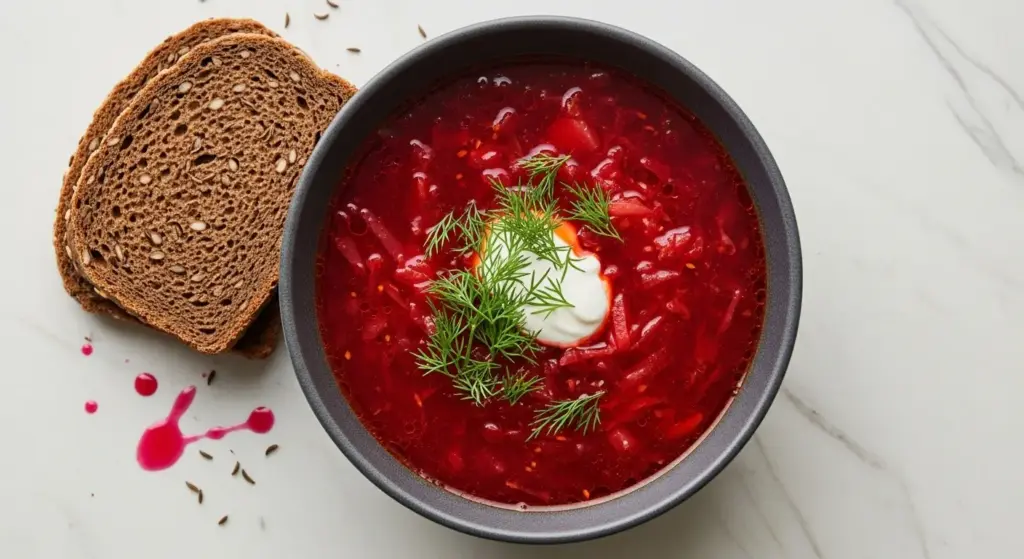
Borscht is traditionally served hot, but a cold version on a warm summer day is equally delicious. The classic and non-negotiable accompaniment is a generous spoonful of full-fat sour cream. Some families in Ukraine also serve it with a side of crusty rye bread and fresh garlic for rubbing on the bread.
- A thick slice of Rye Bread or Sourdough Bread for dipping and soaking up the broth
- Fresh garlic cloves on the side, sliced or left whole for nibbling between spoonfuls
- Garlic Naan Bread as a soft, pillowy alternative to rye bread
- Classic Deviled Eggs as a starter before the soup
- A light Broccoli Salad on the side for a fresh contrast to the rich soup
- A glass of cold kefir or buttermilk as a traditional accompaniment
- Dinner Rolls fresh from the oven for a cozy, complete meal
Variations to Try
Once you’ve made the classic version, there are plenty of ways to put your own spin on this beloved soup. The vegetarian version is particularly popular and genuinely just as satisfying as the beef version when made with good-quality vegetable broth.
- Vegetarian Borscht: Skip the beef and use vegetable broth instead of beef broth. Add a can of white beans or kidney beans to boost the protein and make the soup feel more substantial.
- Chicken Borscht: Use bone-in chicken thighs instead of beef for a lighter, faster version. The chicken cooks in about 30 minutes, making this a quicker weeknight option.
- Cold Borscht (Chlodnik): This Polish variation is served chilled and typically made with beet kvass, sour cream, cucumber, hard-boiled eggs, and fresh dill. It’s a refreshing summer dish that is completely different from the hot version.
- Pork Borscht: Many Ukrainian families use pork ribs or pork shoulder instead of beef for a slightly richer, fattier broth. This is considered by some to be the most traditional meat choice.
- Green Borscht (Sorrel Soup): A Ukrainian spring and summer variation made with sorrel leaves instead of beets, giving it a completely different, bright green color and a more citrusy, sour flavor profile.
- Instant Pot Borscht: You can make this soup in a pressure cooker in about 35 minutes total, making it a viable weeknight option without sacrificing too much flavor.
Read Also: Chicken Vegetable Soup Recipe
Storage and Reheating
Borscht is one of the most fridge-friendly soups you can make. It stores exceptionally well and is widely considered to taste better on the second and third day, which makes it a perfect candidate for batch cooking at the start of the week.
- Refrigerator: Store cooled borscht in an airtight container in the refrigerator for up to 5 days. Note that the sour cream should always be added fresh at serving time, not stored in the soup.
- Freezer: Borscht freezes well for up to 3 months. Store it in individual-serving containers or in a large freezer-safe bag. Be aware that potatoes can become slightly grainy in texture after freezing and thawing, though this does not affect the flavor.
- Reheating on the stovetop: Transfer the desired amount to a small saucepan and warm over medium-low heat, stirring occasionally, until heated through. Add a splash of water or broth if the soup has thickened too much in the refrigerator.
- Reheating in the microwave: Place a serving in a microwave-safe bowl and heat in 1-minute intervals, stirring between each, until hot throughout.
- Do not boil when reheating. Vigorous boiling when reheating can cause the color to fade and the vegetables to break down. A gentle warm is all you need.
This Chicken Stew Recipe is another great make-ahead soup that stores beautifully all week long.
Nutritional Facts
The following nutritional estimates are based on a single serving (approximately 1.5 cups / 350ml) of beef borscht, not including the sour cream garnish. Values will vary based on exact ingredients and portion size.
| Nutrient | Per Serving |
|---|---|
| Calories | 280 kcal |
| Total Fat | 10g |
| Saturated Fat | 3g |
| Cholesterol | 55mg |
| Sodium | 820mg |
| Total Carbohydrates | 24g |
| Dietary Fiber | 5g |
| Total Sugars | 8g |
| Protein | 22g |
| Vitamin C | 35% DV |
| Iron | 20% DV |
| Potassium | 18% DV |
| Vitamin A | 45% DV |
Percent Daily Values are based on a 2,000-calorie diet.
Read Also: Vegetable Soup Recipe
Health Benefits of Key Ingredients
Borscht isn’t just delicious. It’s also genuinely good for you, which makes it a rare kind of comfort food that you can feel truly great about eating.
The beets are the nutritional star of this soup. They are rich in dietary nitrates, which research has linked to improved blood flow and cardiovascular health. Beets are also one of the best plant-based sources of folate, which is important for cell repair and energy production.
- Beets: High in folate, manganese, potassium, and dietary nitrates. Known to support heart health, lower blood pressure, and improve endurance and circulation.
- Cabbage: An excellent source of vitamin K, vitamin C, and fiber. Cabbage also contains antioxidants and glucosinolates, compounds that have been studied for their role in supporting the body’s natural defense mechanisms.
- Carrots: Loaded with beta-carotene, which the body converts to vitamin A. Important for eye health, immune function, and skin health.
- Garlic: Contains allicin, a potent sulfur compound with antimicrobial and anti-inflammatory properties. Regularly consuming garlic has been associated with a healthier immune system and improved cholesterol levels.
- Potatoes: A good source of potassium, vitamin C, and vitamin B6. Potatoes often get an unfair reputation, but they’re a whole food that provides real nutrition and staying power.
- Beef: Provides high-quality complete protein, as well as iron, zinc, and B vitamins including B12, which are essential for energy and red blood cell production.
- Tomatoes: Contain lycopene, a powerful antioxidant, as well as vitamin C and potassium.
For another nutrient-dense soup, try this Moroccan Lentil Soup Recipe.
Frequently Asked Questions
1. What does borscht taste like?
Borscht has a flavor that is earthy, slightly sweet, and mildly tangy all at once. The beets provide a natural sweetness and a distinctive earthy depth, while the cabbage adds a gentle bitterness. The vinegar at the end creates a bright, tangy finish that keeps the soup from feeling heavy. The overall experience is warm, comforting, and deeply savory with the beef broth and meat pulling everything together.
2. Is borscht Ukrainian or Russian?
Borscht originated in Ukraine and is considered a cornerstone of Ukrainian culinary culture. In 2022, UNESCO officially recognized borscht as part of Ukraine’s intangible cultural heritage. While versions of the soup exist across Eastern Europe and Russia, the beet-based red borscht that most people know is deeply rooted in Ukrainian tradition.
3. Can I make borscht without beets?
The short answer is yes, but it won’t technically be borscht anymore. Green borscht, made with sorrel leaves, is a real Ukrainian variation that skips the beets entirely and has its own distinct flavor and bright green color. However, if you simply substitute the beets with another vegetable, you’ll end up with a very different soup that lacks the signature flavor and color that define this dish.
4. Why did my borscht turn brown instead of staying red?
This usually happens for one of two reasons. The first is that the vinegar was either omitted or not added at the end of cooking. The acid in the vinegar is what fixes the vibrant red pigment in beets and prevents it from oxidizing to a brownish-purple. The second reason is overcooking. Extended boiling can also cause the color to fade. Always add your vinegar at the very end of cooking, just before serving, and avoid aggressive boiling when reheating.
5. Can I make borscht ahead of time?
Borscht is one of the best soups to make in advance. The flavors genuinely improve after resting in the refrigerator for 12 to 24 hours, as all the elements have time to meld together into a more cohesive, developed flavor. Make a big batch on Sunday and enjoy it throughout the week. Just remember to always add fresh sour cream and dill at serving time rather than storing it in the soup.
Read Also: Minestrone Soup Recipe

Classic Beef Borscht

Equipment
- Large Dutch Oven or heavy stockpot - 6-quart (5.7-liter) capacity
- Box grater
- Chef’s knife
- Cutting board
- Large skillet or sauté pan
- Ladle
- Measuring cups and spoons
- Vegetable peeler
Ingredients
- 1.5 lbs beef chuck or beef short ribs - 680g, bone-in if possible
- 8 cups beef broth - 2 liters; or water
- 2 bay leaves
- 3 medium beets - about 1 lb or 450g, peeled, half grated and half julienned
- 3 cups green cabbage - 210g, thinly shredded
- 2 medium potatoes - about 12 oz or 340g, peeled and cut into 1-inch cubes
- 2 medium carrots - peeled and grated
- 1 medium yellow onion - finely diced
- 3 cloves garlic - minced
- 14 oz diced tomatoes - 1 can, 400g; or 2 tablespoons tomato paste
- 2 tablespoons sunflower oil - or vegetable oil
- 2 tablespoons white vinegar - or apple cider vinegar
- 1 teaspoon sugar
- 1 teaspoon salt - plus more to taste
- 0.5 teaspoon black pepper
For Serving
- fresh dill - chopped, for serving
- sour cream - full-fat, for serving
- rye bread - or sourdough, for serving
Instructions
- Place the beef, beef broth, and bay leaves into a large Dutch oven. Bring to a boil, then reduce heat to low, cover partially, and simmer for 45-60 minutes until the meat is tender.
- Remove the beef from the pot and set aside to cool. Discard the bay leaves. Once cool, shred or chop the beef into bite-sized pieces, discarding any bones or excess fat.
- While the beef simmers, prepare all the vegetables. Peel and grate half of the beets and julienne the remaining half. Grate the carrots. Dice the onion, mince the garlic, and shred the cabbage.
- Heat oil in a large skillet over medium heat. Cook the onion for 5 minutes until translucent. Add the grated carrots and cook for 3-4 minutes. Add the garlic and cook for 1 minute until fragrant.
- Add the diced tomatoes (or tomato paste) to the skillet and cook for 2-3 minutes, stirring to combine. Remove from heat and set aside.
- Bring the beef broth back to a gentle boil. Add the potatoes and shredded cabbage, cover, and simmer over medium-low heat for 15-20 minutes until the potatoes are just becoming tender.
- Add the prepared beets, the sauteed aromatic mixture, and the shredded beef to the pot. Stir in the sugar, salt, and pepper. Simmer uncovered for 15-20 minutes until all vegetables are tender.
- Taste the soup and adjust salt as needed. Stir in the vinegar. This brightens the flavor and fixes the vibrant red color. Simmer for 2-3 more minutes, then remove from heat.
- Ladle the borscht into deep bowls. Top each serving with a generous dollop of sour cream and a sprinkle of fresh dill. Serve immediately with slices of rye bread or sourdough on the side.
Notes
- Vinegar timing is crucial: Always add the vinegar at the very end of cooking to preserve the beets’ vibrant red color and prevent the vegetables from becoming tough.
- Use fresh beets: Canned beets have a milder flavor and won’t give you the same deep color. Fresh beets are essential for the best taste.
- Grate and julienne the beets: Using half grated and half julienned creates a richly colored broth while still giving you visible beet pieces in the final soup.
- Don’t rush the beef: A full 45-60 minute simmer before adding vegetables develops deep flavor and ensures the beef is tender enough to shred.
- Make it ahead: Borscht tastes even better the next day as the flavors meld. Make a big batch and plan for leftovers.
- Freezing: This soup freezes well for up to 3 months. Store in individual containers, but note that potatoes may become slightly grainy after thawing.
- Vegetarian variation: Skip the beef, use vegetable broth, and add a can of white beans or kidney beans for protein.
- Balance the sweet and sour: Taste the soup before adding vinegar and sugar. The ideal borscht should be balanced, not overly sweet or aggressively sour.
- Garnish fresh: Always add sour cream and fresh dill at serving time rather than storing them in the soup.
- Wear an apron: Beet juice stains fabric almost immediately. Gloves for your hands are also a good idea when working with fresh beets.
Final Thoughts
If this borscht recipe has taught us anything, it’s that the most extraordinary food often comes from the most humble ingredients. A handful of beets, some cabbage, a piece of beef, and a splash of vinegar at the end are all it takes to create something genuinely beautiful.
Give this recipe a try the next time you want something warming, colorful, and deeply satisfying. It’s the kind of pot that fills your kitchen with the most incredible aroma and fills your bowl with something that feels like a real, home-cooked meal.
If you make this borscht, we’d love to hear how it turned out for you! Drop a comment below with your thoughts, any tweaks you made, or share a photo of your vibrant red bowl. Your feedback truly makes a difference.
Recommended:
- Cabbage Roll Skillet Recipe
- Beef Bourguignon Recipe
- Lentil Soup Recipe
- Chicken Tortilla Soup Recipe
- Stuffed Pepper Soup Recipe
- Red Lentil Soup Recipe
- Prime Rib Soup Recipe
- Kale Soup Recipe
- Irish Stew Recipe
- Crockpot Beef Stew Recipe