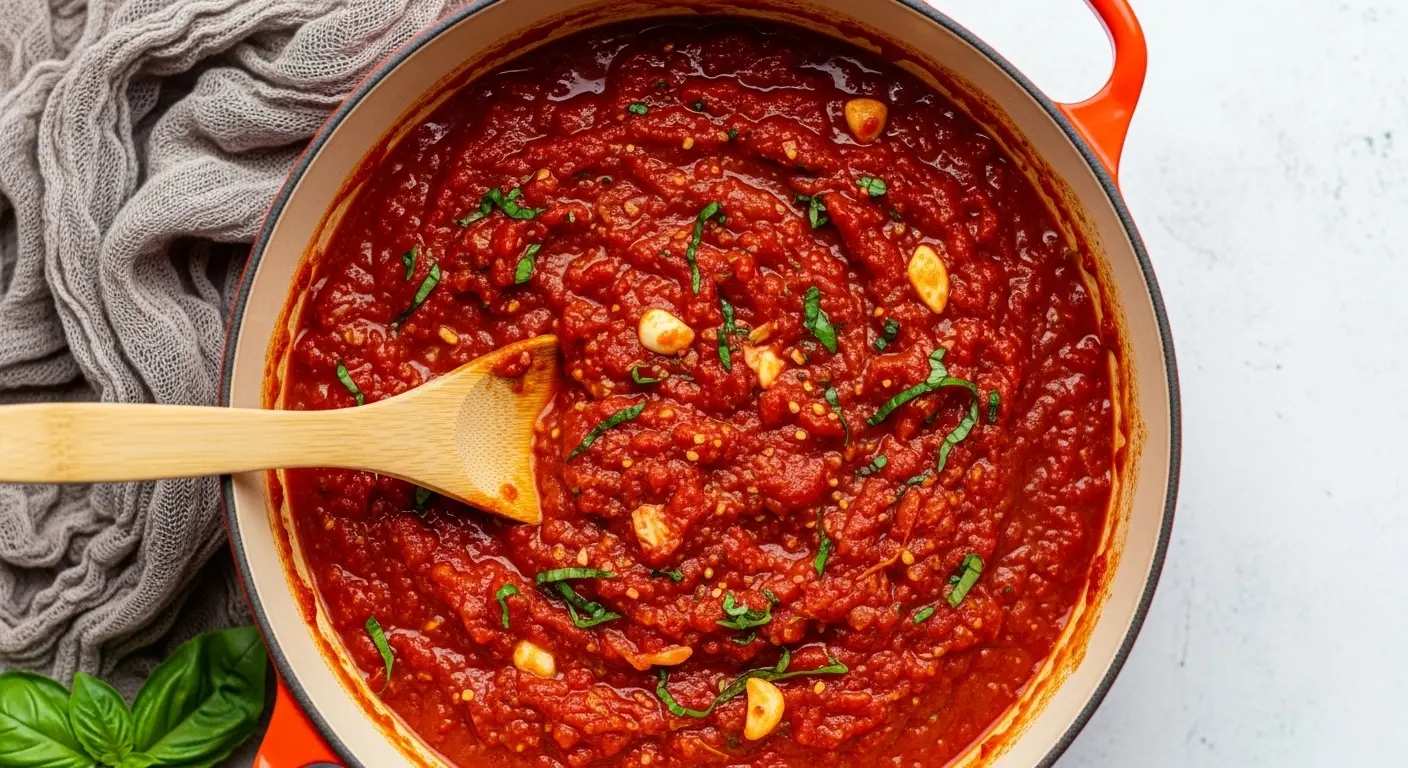
My grandmother used to say that a good spaghetti sauce recipe is like a warm hug in a pot, and she wasn’t wrong. The smell of garlic sizzling in olive oil, tomatoes bubbling away on the stove, and fresh basil releasing its aroma can transform any ordinary Tuesday into something special.
I’ve spent years perfecting this recipe, testing different tomato varieties and adjusting the seasoning until I found the perfect balance. This isn’t one of those complicated sauces that requires you to stand over the stove for hours, though it tastes like it does.
What makes this recipe special is how it brings everyone together. My kids now request it for birthday dinners, and my husband claims it’s better than any restaurant version he’s tried.
The secret is in the simplicity and quality of ingredients. You don’t need fancy equipment or hard-to-find items, just good tomatoes, fresh herbs, and a little patience.
Why You’ll Love This Spaghetti Sauce Recipe
This sauce is incredibly versatile and works with any pasta shape you have on hand. It’s also budget-friendly since most ingredients are pantry staples you probably already own.
The flavors develop beautifully as it simmers, creating layers of richness that make every bite satisfying. Unlike store-bought versions loaded with sugar and preservatives, you control exactly what goes into your sauce.
Here’s what makes this recipe a winner:
- Rich, authentic flavor that tastes like it came straight from an Italian kitchen
- Freezer-friendly so you can make a big batch and save time on busy weeknights
- Naturally customizable to suit your family’s taste preferences
- Kid-approved with a balanced flavor that’s not too acidic or overpowering
- Restaurant-quality results without the hefty price tag
I learned the technique for building flavor in this sauce while perfecting my classic stuffed bell peppers recipe, and it makes all the difference.
Ingredients
The beauty of this sauce lies in using simple, quality ingredients that let the tomatoes shine. Fresh herbs make a noticeable difference, but dried herbs work well too when fresh aren’t available.
- 2 tablespoons olive oil
- 1 medium yellow onion, finely diced
- 6 cloves garlic, minced
- 2 (28-ounce) cans crushed tomatoes
- 1 (6-ounce) can tomato paste
- 1 cup water or vegetable broth
- 2 tablespoons fresh basil, chopped (or 2 teaspoons dried)
- 1 tablespoon fresh oregano, chopped (or 1 teaspoon dried)
- 2 teaspoons sugar (to balance acidity)
- 1 teaspoon salt
- ½ teaspoon black pepper
- ¼ teaspoon red pepper flakes (optional)
- 2 bay leaves
- ¼ cup fresh parsley, chopped
- Parmesan cheese for serving
Kitchen Equipment Needed
Having the right tools makes cooking this sauce much easier and more enjoyable. You don’t need anything fancy, but a few quality pieces will serve you well for years.
- Large heavy-bottomed pot or Dutch oven (at least 5-quart capacity)
- Wooden spoon
- Sharp knife
- Cutting board
- Measuring cups and spoons
- Can opener
- Immersion blender (optional, for smoother sauce)
Recommended Products for This Recipe
After making this sauce countless times, I’ve found a few products that genuinely make the process better and the results more delicious.
1. Le Creuset Enameled Cast Iron Dutch Oven
This pot distributes heat evenly, preventing hot spots that can burn your sauce. The heavy lid traps moisture perfectly, and the enamel coating makes cleanup surprisingly easy even after simmering tomato sauce for an hour.
2. San Marzano Whole Peeled Tomatoes
These Italian tomatoes have a naturally sweet flavor and lower acidity than regular canned tomatoes. They’re worth the extra dollar or two because they create a smoother, more balanced sauce that doesn’t need as much sugar to balance the acidity.
3. Microplane Premium Zester
While this recipe doesn’t call for zested ingredients, having one on hand lets you add fresh lemon zest or extra Parmesan to your finished sauce. It’s a small investment that adds huge flavor potential to any dish.
4. OXO Good Grips Wooden Spoon Set
These spoons are perfectly balanced and won’t scratch your cookware. The longer handle keeps your hands safely away from splattering sauce, and they’re sturdy enough to stir thick mixtures without bending.
Step-by-Step Instructions
Follow these detailed steps to create a sauce that tastes like it’s been simmering in an Italian grandmother’s kitchen all day.
1. Prepare Your Ingredients
- Dice the onion into small, uniform pieces about ¼-inch in size so they cook evenly
- Mince the garlic cloves finely, but not into a paste, to release maximum flavor without burning
- Chop fresh herbs if using them, keeping them separate from dried herbs
- Open all cans and have your measuring cups ready before you start cooking
- Set out all ingredients in the order you’ll use them for smooth cooking
2. Sauté the Aromatics
- Heat the olive oil in your large pot over medium heat until it shimmers but doesn’t smoke
- Add the diced onion and cook for 5-7 minutes, stirring occasionally, until softened and translucent
- Reduce heat to medium-low and add the minced garlic, stirring constantly for 30-60 seconds until fragrant
- Watch the garlic carefully during this step as burnt garlic will make your sauce bitter
- The onions should be soft but not browned, creating a sweet base for your sauce
3. Add Tomato Paste and Build Flavor
- Stir in the tomato paste and cook for 2-3 minutes, stirring frequently to prevent sticking
- The paste will darken slightly and develop a deeper, richer color as it caramelizes
- This step is crucial for removing the raw, metallic taste from canned tomato paste
- Scrape the bottom of the pot with your wooden spoon to incorporate any browned bits
- The paste should coat the onions and garlic evenly before moving to the next step
4. Add Tomatoes and Liquid
- Pour in the crushed tomatoes, using your spoon to scrape every bit from the cans
- Add the water or broth, swishing it around in the empty tomato cans to get all remaining tomato goodness
- Stir everything together thoroughly, making sure the tomato paste is fully incorporated
- Bring the mixture to a gentle simmer over medium-high heat, stirring occasionally
- Once simmering, reduce heat to low so the sauce barely bubbles
5. Season and Simmer
- Add the dried oregano (if using), bay leaves, sugar, salt, pepper, and red pepper flakes
- Stir well to distribute all seasonings evenly throughout the sauce
- Partially cover the pot, leaving a small gap for steam to escape and the sauce to thicken
- Let the sauce simmer gently for 45-60 minutes, stirring every 10-15 minutes
- The sauce should reduce slightly and develop a rich, deep red color
- If the sauce gets too thick, add water or broth a few tablespoons at a time
6. Add Fresh Herbs and Finish
- Remove the bay leaves and discard them before adding fresh herbs
- Stir in fresh basil and parsley (or add dried basil now if you haven’t already)
- Taste the sauce and adjust seasoning with more salt, pepper, or sugar as needed
- If you prefer a smoother sauce, use an immersion blender to blend to your desired consistency
- Let the sauce rest for 5 minutes off the heat before serving for flavors to meld
Another favorite: Southern baked spaghetti recipe
Tips for Success
Making perfect spaghetti sauce is easier when you know a few insider tricks. These tips will help you avoid common mistakes and create sauce that’s consistently delicious.
- Use quality canned tomatoes since they’re the star of the show and cheap ones taste metallic
- Don’t skip the sugar as it balances the natural acidity in tomatoes without making the sauce sweet
- Simmer low and slow to develop deep flavors and prevent the sauce from burning
- Stir regularly especially toward the end of cooking when the sauce thickens and can stick to the bottom
- Add pasta water when tossing with noodles to help the sauce cling better and create a silky texture
- Let it rest for a few minutes before serving so the flavors can settle and meld together
- Brown the tomato paste properly to eliminate any tinny, raw taste from the can
Serving Suggestions
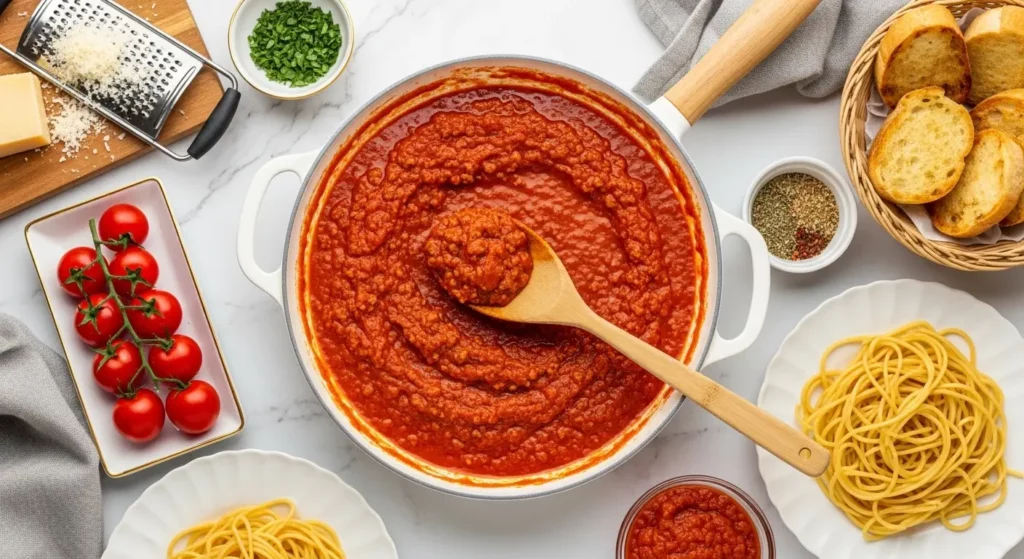
This versatile sauce pairs beautifully with so many dishes beyond just plain spaghetti. The rich tomato flavor complements both simple and elaborate meals.
Here are my favorite ways to serve it:
- Toss with your favorite pasta shape and top with fresh Parmesan cheese and basil
- Use as a base for italian meatballs or meatball subs
- Spread on pizza dough for homemade pizza night
- Layer in lasagna for rich, authentic flavor
- Serve over chicken parmesan or eggplant parmesan
- Use as a dipping sauce for cheesy garlic bread
- Spoon over baked ziti or stuffed shells
Variations to Try
Once you’ve mastered the basic recipe, experimenting with variations keeps things interesting. These tweaks add new dimensions of flavor while maintaining the classic sauce foundation.
- Meat sauce: Brown 1 pound ground beef, Italian sausage, or a combination before adding onions
- Vodka sauce: Stir in ½ cup vodka after adding tomatoes and ¼ cup heavy cream at the end
- Arrabbiata: Double the red pepper flakes and add ½ teaspoon cayenne for serious heat
- Puttanesca: Add ½ cup chopped olives, 2 tablespoons capers, and 4 anchovies with the garlic
- Roasted garlic: Replace raw garlic with 6-8 roasted garlic cloves for sweeter, mellower flavor
- Garden vegetable: Sauté diced bell peppers, zucchini, and mushrooms with the onions
- Creamy tomato: Stir in ½ cup heavy cream or mascarpone at the very end for richness
Read Also: Fazolis Baked Spaghetti Recipe
Storage and Reheating
Proper storage keeps your sauce fresh and flavorful for future meals. This sauce actually tastes better the next day after the flavors have had time to develop.
- Refrigerator: Store in an airtight container for up to 5 days in the fridge
- Freezer: Freeze in portion-sized containers or freezer bags for up to 3 months
- Reheating: Warm gently on the stovetop over medium-low heat, stirring occasionally
- Microwave: Heat in 1-minute intervals, stirring between each, until warmed through
- Add moisture: If sauce seems thick after storing, stir in a splash of water or broth when reheating
- Label containers: Write the date and contents on freezer containers for easy identification
You might also enjoy: Million dollar baked spaghetti recipe
Nutritional Facts
Per serving (approximately ¾ cup sauce):
- Calories: 95
- Total Fat: 4g
- Saturated Fat: 0.5g
- Cholesterol: 0mg
- Sodium: 520mg
- Total Carbohydrates: 14g
- Dietary Fiber: 3g
- Sugars: 9g
- Protein: 3g
- Vitamin A: 15% DV
- Vitamin C: 25% DV
- Calcium: 6% DV
- Iron: 10% DV
Nutritional information is approximate and will vary based on specific ingredients used.
Health Benefits of Key Ingredients
This sauce isn’t just delicious, it’s packed with nutrients that support your overall health. Tomatoes and herbs provide powerful antioxidants while keeping the sauce naturally low in fat.
The ingredients in this sauce offer impressive health benefits:
- Tomatoes are rich in lycopene, an antioxidant that supports heart health and may reduce cancer risk
- Garlic contains allicin, which has anti-inflammatory properties and may boost immune function
- Olive oil provides healthy monounsaturated fats that support cardiovascular health
- Basil offers vitamin K, manganese, and anti-bacterial properties
- Oregano is packed with antioxidants and has natural antimicrobial compounds
- Onions contain quercetin, which may help reduce inflammation and support gut health
This pairs beautifully with my homemade baked spaghetti recipe for a complete meal.
Frequently Asked Questions
1. Can I use fresh tomatoes instead of canned?
Yes, but you’ll need about 6 pounds of ripe tomatoes to equal two 28-ounce cans. Blanch them in boiling water for 30 seconds, then peel and crush them before using.
2. Why does my sauce taste bitter?
Bitterness usually comes from burnt garlic, over-reduced sauce, or tomato seeds. Make sure to cook garlic gently and simmer the sauce low and slow.
3. How can I make my sauce thicker?
Continue simmering uncovered to evaporate excess moisture, or stir in an additional tablespoon or two of tomato paste. Avoid adding flour as it can make the texture gummy.
4. Can I make this sauce in a slow cooker?
Absolutely! Sauté the onions and garlic first, then transfer everything to your slow cooker. Cook on low for 6-8 hours or high for 3-4 hours for deep, developed flavors.
5. Why do you add sugar to tomato sauce?
Sugar balances the natural acidity in tomatoes without making the sauce taste sweet. Start with the recommended amount and adjust based on your tomatoes’ acidity level.
Read Also: Twice Baked Spaghetti Recipe
Final Thoughts
This spaghetti sauce recipe has become more than just a meal in my home. It’s a tradition, a comfort, and a way to show love through food.
The beauty of this recipe is how it adapts to your needs and preferences while always delivering incredible flavor. Once you make it from scratch, you’ll understand why jarred sauce just doesn’t compare.
I hope this sauce brings as much joy to your table as it has to mine. Give it a try this week and let me know how it turns out in the comments below!
Recommended:
- Baked Spaghetti Recipe With Ground Beef
- Baked Spaghetti Recipe With Alfredo Sauce
- Vegetarian Baked Spaghetti Recipe
- Baked Spaghetti Recipe With Cottage Cheese
- Baked Spaghetti Recipe With Ricotta Cheese
- Baked Spaghetti Recipe With Cream Cheese
- Easy Baked Spaghetti Recipe
- Classic Shrimp Scampi Recipe
- Easy Shrimp Scampi Recipe
- Easy Meatballs Recipe