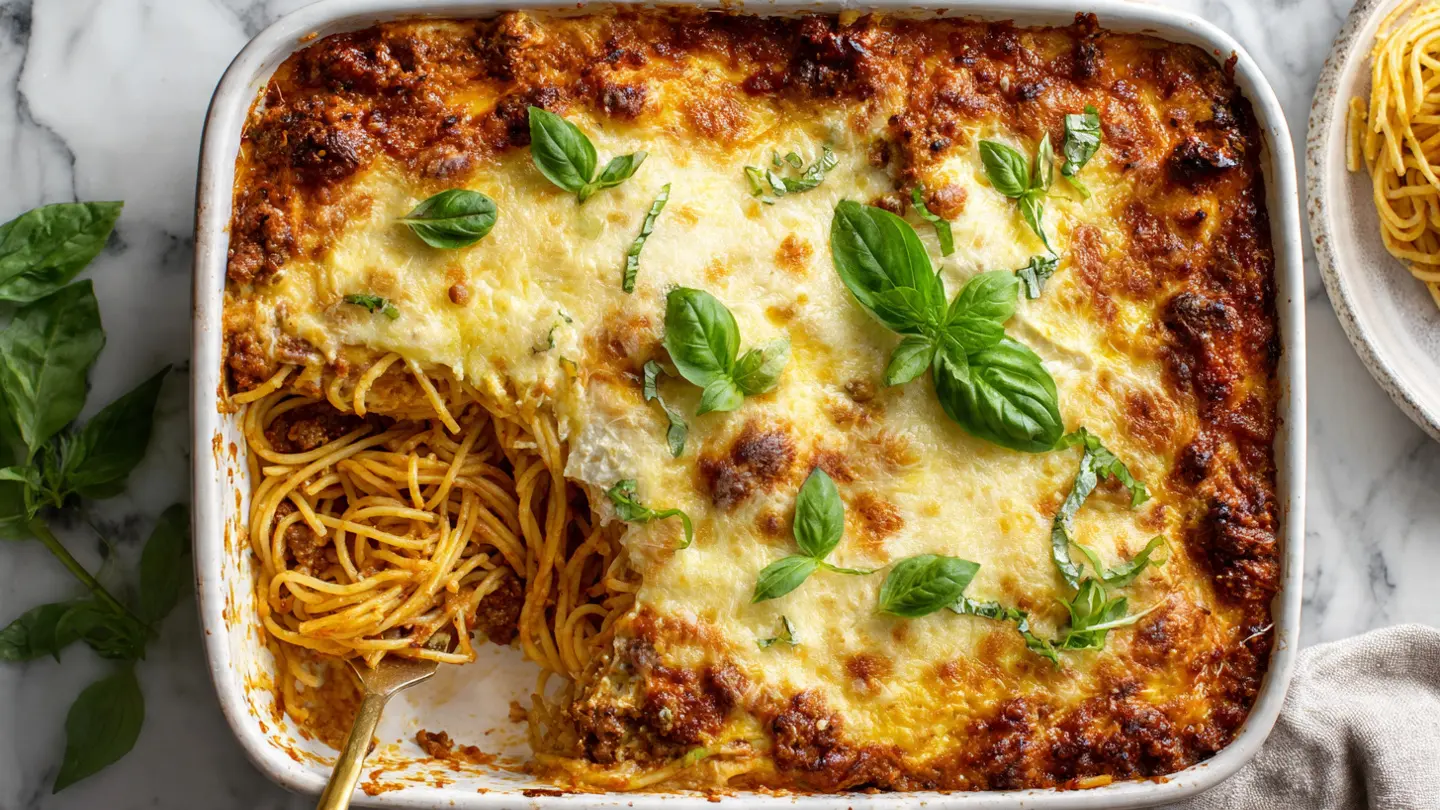
If you’ve been searching for a dinner that feels like a warm hug in casserole form, this baked spaghetti recipe with cottage cheese is exactly what you need.
It takes everything you love about classic spaghetti and transforms it into a bubbling, cheesy baked casserole that slices cleanly, feeds a crowd, and tastes even better the next day.
The secret to what makes this version so creamy is the cottage cheese. It melts between the layers just like ricotta does in lasagna, creating that silky, lush texture that holds the whole casserole together.
Add in a savory meat sauce, a base of egg-tossed noodles, and a golden layer of melted mozzarella on top, and you’ve got a dish that earns a permanent spot in your weekly dinner rotation.
You might also enjoy: Million Dollar Baked Spaghetti
Why You’ll Love This Baked Spaghetti Recipe with Cottage Cheese
This recipe hits every mark of a perfect comfort food dinner.
It’s hearty enough to satisfy everyone at the table, easy enough for a weeknight, and impressive enough to bring to a potluck.
The cottage cheese layer is what truly sets this apart from a basic pasta bake. It adds creaminess and a mild tanginess that balances the richness of the meat sauce beautifully.
Unlike ricotta, cottage cheese has a higher moisture content, which keeps the casserole from drying out during the long bake time.
The egg-coated noodles at the base act as a crust of sorts, giving the dish structure and making it easy to slice and serve.
- Crowd-pleasing: Feeds 8-10 people and is always the first dish scraped clean at gatherings
- Make-ahead friendly: Assemble it the night before and bake it fresh when you need it
- Freezer-safe: This casserole freezes beautifully for up to 3 months
- Better as leftovers: The flavors deepen overnight, making it ideal for meal prep
- Customizable: Swap the protein, add vegetables, or use your favorite jarred sauce without any issues
- Approachable: No fancy techniques needed — just layer, cover, and bake
Read Also: Easy Baked Spaghetti Recipe
Ingredients
Here’s what you’ll need to make this rich and satisfying casserole. Using full-fat cottage cheese (4% milkfat) is strongly recommended since it produces the creamiest results; low-fat versions can be watery and dilute the layers.
- 1 lb (450g) spaghetti noodles
- 1 lb (450g) lean ground beef
- 1 medium yellow onion, finely diced
- 3 cloves garlic, minced
- 1 (24 oz / 680g) jar marinara or pasta sauce
- 1 tsp Italian seasoning
- 1/2 tsp salt
- 1/4 tsp black pepper
- 2 large eggs
- 2 tbsp (30g) unsalted butter, melted
- 1/2 cup (50g) freshly grated Parmesan cheese, divided
- 2 cups (450g) full-fat small curd cottage cheese
- 1/2 cup (120g) sour cream
- 2 cups (225g) shredded mozzarella cheese, divided
- Fresh basil or parsley for garnish (optional)
The combination of cottage cheese and sour cream is a particularly smart pairing. The sour cream adds a subtle tang that brightens the richness of the cottage cheese and creates a slightly looser, creamier consistency for spreading across the layers.
The same cheese blend works beautifully in baked ziti if you’d like to try it with a different pasta shape.
Kitchen Equipment Needed
Having the right tools makes assembling this casserole much easier, especially when working with hot pasta and layering components precisely.
- Large pot (for boiling pasta)
- Large skillet or sauté pan (for the meat sauce)
- 9×13-inch baking dish (a deep dish is ideal to hold all the layers)
- Aluminum foil
- Large mixing bowl
- Small mixing bowl
- Colander or strainer
- Wooden spoon or silicone spatula
- Box grater or food processor (for grating Parmesan)
- Tongs (for tossing noodles with the egg mixture)
- Knife and cutting board
A deep 9×13-inch dish is important here because this casserole builds up with multiple layers. A shallow dish will cause the cheese and sauce to overflow in the oven.
Read Also: Stuffed Shells Recipe
Recommended Products for This Recipe
These are some top-recommended products based on quality and performance that will help you get the best results from this casserole.
1. Le Creuset Enameled Cast Iron Baking Dish
An enameled cast iron baking dish distributes heat with remarkable evenness, which helps this spaghetti casserole bake uniformly without burnt edges or cold spots in the center. The natural heat retention also keeps your servings warm at the table for longer. It’s a long-lasting investment that truly improves every baked casserole you make.
2. Rao’s Homemade Marinara Sauce
Rao’s is widely considered the gold-standard jarred marinara because it uses simple, high-quality ingredients with no added sugar or artificial flavors. Using a great sauce is one of the fastest ways to elevate a casserole like this without any extra effort. It makes a noticeably richer, more complex meat sauce than most budget jar options.
3. OXO Good Grips Stainless Steel Colander
A sturdy, wide-base colander makes draining a full pound of hot spaghetti fast and safe without the noodles slipping through. This one features fine perforations that catch even small pasta shapes perfectly. It’s a kitchen workhorse you’ll reach for every single time you cook pasta.
4. Lodge 12-Inch Cast Iron Skillet
A wide cast iron skillet gives the ground beef plenty of surface area to brown properly rather than steam. Proper browning builds a deeper, more savory flavor base for the meat sauce that really comes through in the final casserole. Cast iron also holds heat beautifully for slow simmering the sauce.
5. KitchenAid Box Grater
Pre-shredded bagged mozzarella is coated with anti-caking starches that prevent it from melting into a smooth, gooey layer. Grating a block of whole-milk mozzarella fresh produces that stretchy, glossy melt that makes a baked pasta dish truly crave-worthy. A sturdy box grater makes the job quick and easy.
This pairs wonderfully with lasagna with cottage cheese as another go-to cheesy pasta bake for the same occasion.
Step-by-Step Instructions
Step 1: Preheat the Oven and Prepare the Baking Dish
- Preheat your oven to 350°F (175°C).
- Lightly grease the inside of a 9×13-inch baking dish with cooking spray or a thin coating of butter.
- Place the greased dish on a rimmed baking sheet. This catches any bubbling sauce that might spill over during baking, saving you from a messy oven cleanup.
- Set the dish aside while you prepare the other components.
Step 2: Cook the Spaghetti
- Bring a large pot of water to a rolling boil over high heat.
- Add a generous amount of salt to the water — about 1 to 2 tablespoons. Well-salted water is the single best way to ensure your pasta has flavor from the inside out, not just from the sauce.
- Add the 1 lb (450g) spaghetti noodles and cook according to package directions until just al dente — usually about 1-2 minutes less than the package’s recommended cooking time.
- Al dente means the noodles should still have a very slight bite to them because they will continue to cook in the oven and absorb moisture from the sauce. Overcooked noodles at this stage will result in a mushy casserole.
- Drain the spaghetti in a colander and return the noodles to the still-warm (but empty) large pot. Do not rinse the pasta — the starch on the noodles helps the egg mixture stick.
Step 3: Make the Egg and Butter Coating for the Noodles
- In a small bowl, whisk together the 2 large eggs until the yolks and whites are fully combined.
- Add the melted 2 tbsp (30g) butter and 1/4 cup (25g) of the grated Parmesan to the small bowl and whisk everything together until combined.
- Pour the egg, butter, and Parmesan mixture over the drained spaghetti in the pot.
- Using tongs, toss the noodles quickly and thoroughly so the egg mixture coats every strand before it has time to scramble from the heat of the pasta.
- This egg coating is a critical step — it creates a cohesive pasta base that binds together during baking, making the casserole sliceable and preventing the noodles from falling apart when served.
Step 4: Make the Meat Sauce
- In a large skillet over medium-high heat, add a small drizzle of olive oil if using very lean ground beef.
- Add the finely diced medium yellow onion and cook, stirring occasionally, for about 3-4 minutes until softened and translucent.
- Add the 1 lb (450g) lean ground beef to the skillet. Break the meat apart with a wooden spoon or spatula as it cooks. Cook for 6-8 minutes until no pink remains throughout.
- Add the 3 cloves of minced garlic to the skillet and stir for about 1 minute until fragrant. Garlic burns quickly, so keep it moving in the pan.
- Drain any excess grease from the skillet by tilting it carefully and blotting with paper towels, or transfer the meat to a colander briefly.
- Return the skillet to medium heat and stir in the entire 24 oz (680g) jar of marinara sauce.
- Add the 1 tsp Italian seasoning, 1/2 tsp salt, and 1/4 tsp black pepper to the sauce. Stir to combine.
- Let the sauce simmer on low for 5 minutes, stirring occasionally, to allow the flavors to meld together. Set aside off heat.
Step 5: Prepare the Cottage Cheese Mixture
- In a medium mixing bowl, combine the 2 cups (450g) full-fat small curd cottage cheese with the 1/2 cup (120g) sour cream.
- Stir until the mixture is evenly combined. The sour cream loosens the cottage cheese slightly, making it easier to spread across the pasta layers without tearing them.
- If you prefer no visible curds, you can blend this mixture in a food processor for about 30 seconds until smooth. This is completely optional — the curds disappear during baking regardless.
- Set the cottage cheese mixture aside.
Step 6: Assemble the First Layer
- Spread approximately 1/2 cup of the meat sauce evenly across the bottom of the prepared baking dish. This bottom sauce layer prevents the pasta from sticking to the dish and adds moisture to the bottom of the casserole.
- Using tongs, transfer exactly half of the egg-coated spaghetti noodles on top of the sauce. Spread and press them into a flat, even layer that reaches all the way to the edges of the dish.
- Spoon the entire cottage cheese and sour cream mixture over the noodles. Use the back of a spoon or a spatula to spread it into an even layer covering all of the pasta.
- Sprinkle 1/2 cup (about 55g) of the shredded mozzarella evenly over the cottage cheese layer.
- Ladle approximately half of the remaining meat sauce over the mozzarella layer and spread it evenly.
Step 7: Assemble the Second Layer
- Place the remaining half of the egg-coated spaghetti noodles on top of the meat sauce. Press them down gently into another even layer.
- Spoon the remaining meat sauce evenly over the top layer of noodles, making sure to spread it all the way to the edges so every bite has sauce.
- Sprinkle the remaining 1.5 cups (about 170g) of shredded mozzarella cheese evenly across the top.
- Sprinkle the remaining 1/4 cup (25g) of grated Parmesan over the mozzarella.
- The Parmesan on top adds a savory, slightly salty crust as it bakes — it is worth using freshly grated rather than pre-grated from a canister for the best flavor.
Step 8: Bake the Casserole
- Cover the baking dish tightly with aluminum foil. Make sure the foil is sealed well at the edges to trap steam, which helps the casserole heat through evenly without drying out.
- Place the covered dish (on its baking sheet) in the preheated 350°F (175°C) oven.
- Bake covered for 35-40 minutes until the casserole is heated through and you can see the sauce bubbling at the edges.
- Remove the foil carefully — steam will escape, so lift it away from you to avoid burns.
- Return the uncovered dish to the oven and bake for an additional 15-20 minutes until the mozzarella on top is fully melted, bubbly, and golden brown in spots.
Step 9: Rest and Serve
- Remove the casserole from the oven and let it rest on the counter for at least 10-15 minutes before cutting. This resting time is essential — it allows the layers to firm up and set, making the casserole much easier to slice cleanly.
- If you skip the resting step, the layers will slide apart when you cut into the casserole.
- Cut into squares or portions using a sharp knife or metal spatula.
- Garnish with fresh chopped basil or flat-leaf parsley if desired, and serve immediately.
You might also enjoy the baked chicken spaghetti recipe for a delicious poultry variation using the same casserole method.
Tips for Success
A few targeted techniques will take this casserole from good to genuinely outstanding. Small details like pasta doneness and resting time make a significant difference in the final texture and presentation.
- Undercook the pasta: Pull the spaghetti out of the boiling water 1-2 minutes before the package says it’s done. It will finish cooking in the oven and absorb moisture from the sauce. Fully cooked noodles will turn mushy.
- Use 4% cottage cheese: Full-fat cottage cheese has the best texture for baking. Low-fat versions release more water and can make the casserole watery. If you only have low-fat, drain it in a fine mesh strainer for 15-20 minutes before using.
- Grate your own mozzarella: Block mozzarella melts into a beautifully smooth, stretchy layer. Pre-shredded bags contain cellulose coating that prevents proper melting and creates a grainy texture.
- Don’t skip the egg coating: Tossing the noodles with eggs and butter gives the base structure. Without it, the pasta layer will just be loose noodles rather than a cohesive, sliceable base.
- Seal the foil well: A tightly sealed foil cover during the first phase of baking creates a steamy environment that heats the casserole all the way through without drying out the top.
- Rest before cutting: 10-15 minutes of resting allows the layers to set. Cutting too soon means the layers slide and the portions look messy on the plate.
- Make it ahead: You can fully assemble this casserole up to 24 hours in advance, cover it tightly with foil, and refrigerate. Add 10-15 extra minutes to the covered baking time when cooking straight from the fridge.
Another favorite: Southern Baked Spaghetti Recipe
Serving Suggestions
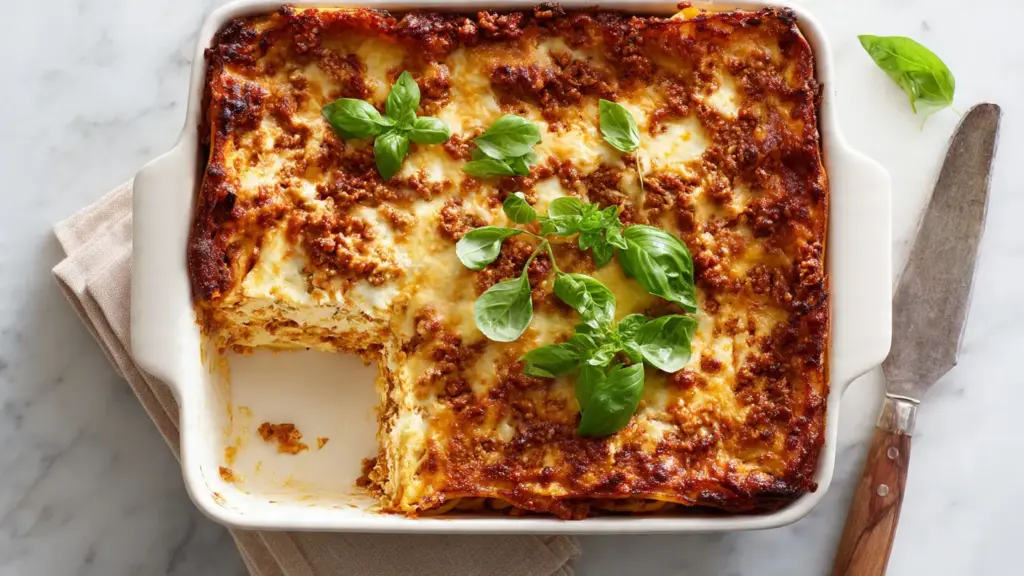
This baked spaghetti casserole is rich, hearty, and filling on its own, but a few well-chosen sides can round it out into a complete and satisfying meal.
Lighter accompaniments work best here since the casserole itself is already substantial.
- Cheesy Garlic Bread is the classic pairing and is practically mandatory alongside a pasta casserole — perfect for scooping up every last bit of sauce
- Broccoli Salad adds a crunchy, fresh contrast to the rich, creamy casserole
- A simple green salad with red wine vinaigrette cuts through the richness beautifully
- Roasted Broccoli makes a quick and nutritious vegetable side that complements the Italian flavors
- Garlic Mashed Potatoes for extra comfort food vibes, especially on a cold night
- Steamed or roasted asparagus with lemon and olive oil adds brightness and elegance to the plate
- A chilled Caesar salad provides a cool, creamy counterpoint to the warm casserole
Read Also: Easy Garlic Bread Recipe
Variations to Try
Once you’ve made the classic version, this recipe is a perfect canvas for creative variations. The structure remains the same — it’s just about swapping the protein or adjusting the sauce to suit your mood or what you have on hand.
- Ground turkey version: Replace the ground beef with ground turkey for a lighter, leaner casserole with almost identical flavor when seasoned well
- Italian sausage version: Swap the ground beef for mild or hot Italian sausage for a spicier, more robustly flavored meat sauce
- Vegetarian: Skip the meat entirely and bulk up the sauce with diced mushrooms, zucchini, bell peppers, and spinach for a satisfying meatless version — check out the vegetarian baked spaghetti recipe
- Alfredo version: Replace the marinara-based meat sauce with a creamy Alfredo sauce and chicken for a completely different, white-sauce casserole — try the baked spaghetti with Alfredo sauce
- Ricotta swap: Use ricotta cheese in place of cottage cheese for a slightly denser, creamier layer — explore the baked spaghetti with ricotta cheese for that version
- Cream cheese version: Add 4 oz (115g) of softened cream cheese to the cottage cheese mixture for an even richer, tangier cheese layer — see the baked spaghetti with cream cheese
- Spicy version: Add 1/2 tsp red pepper flakes to the meat sauce and use hot Italian sausage for a version with real heat
- Extra cheesy: Layer in sliced provolone between the pasta and cottage cheese layer for even more melted cheese in every bite
For a Fazoli’s-inspired version with a slightly different approach to the sauce and layering, the Fazoli’s baked spaghetti recipe is worth checking out.
Storage and Reheating
This casserole stores wonderfully and is one of those dishes that genuinely tastes better the next day after the flavors have had time to meld together overnight.
- Refrigerator: Store leftover baked spaghetti covered tightly in the baking dish, or transfer individual portions to airtight containers. It keeps well for up to 4 days in the refrigerator.
- Freezer: For longer storage, cut the cooled casserole into individual portions, wrap each tightly in plastic wrap, and then in aluminum foil, or use freezer-safe airtight containers. Freeze for up to 3 months. Thaw overnight in the refrigerator before reheating.
- Reheat in the microwave: Place a portion on a microwave-safe plate, cover loosely with a damp paper towel to prevent drying out, and heat on medium power for 2-3 minutes, stirring or checking halfway through.
- Reheat in the oven: For the best texture, reheat larger portions covered with foil in a 325°F (165°C) oven for 20-25 minutes until heated through. Remove the foil for the last 5 minutes to re-crisp the cheese topping.
- Reheat from frozen: Bake straight from frozen, still covered in foil, at 350°F (175°C) for 60-75 minutes until hot all the way through, then uncover for a final 15 minutes.
You might also enjoy: Tuna Noodle Casserole
Nutritional Facts
The following is an approximate nutritional breakdown per serving based on 10 servings from a standard 9×13-inch dish. Exact values will vary based on specific brands used and portion sizes.
| Nutrient | Amount Per Serving |
|---|---|
| Calories | ~420 kcal |
| Total Fat | 18g |
| Saturated Fat | 9g |
| Cholesterol | 105mg |
| Sodium | 720mg |
| Total Carbohydrates | 36g |
| Dietary Fiber | 2g |
| Total Sugars | 5g |
| Protein | 29g |
| Calcium | 280mg |
| Iron | 3mg |
This casserole is a strong source of protein per serving, largely due to the combination of lean ground beef, cottage cheese, and eggs. The cottage cheese alone contributes approximately 10-12g of protein per 1/2 cup serving, making this a more nutritionally complete dish than standard pasta bakes.
Read Also: Classic Lasagna with Ricotta Recipe
Health Benefits of Key Ingredients
The ingredients in this casserole do more than just taste great — several of them offer genuine nutritional benefits worth highlighting.
This is the kind of comfort food that doesn’t have to come with nutritional guilt, especially when you understand what each key ingredient brings to the table.
- Cottage cheese is one of the highest-protein dairy foods available, with roughly 25g of protein per cup. It’s also rich in calcium, phosphorus, and selenium, and is lower in fat than most cheeses used in pasta bakes.
- Lean ground beef (90/10 or leaner) is an excellent source of complete protein, iron, zinc, and B vitamins including B12, which is critical for nerve function and energy metabolism.
- Eggs contribute high-quality protein with all essential amino acids, plus choline (important for brain health), vitamin D, and antioxidants like lutein and zeaxanthin that support eye health.
- Garlic contains allicin, a sulfur compound with well-documented anti-inflammatory and immune-supporting properties. Using fresh garlic rather than pre-minced preserves far more of these active compounds.
- Marinara/tomato sauce is a surprising source of lycopene, a powerful antioxidant that has been linked to reduced risk of cardiovascular disease. Lycopene from cooked tomatoes is actually more bioavailable than from raw tomatoes.
- Parmesan cheese delivers a concentrated source of calcium and protein in a relatively small amount, and its strong flavor means you need less of it to get a big impact.
- Spaghetti/pasta provides complex carbohydrates that fuel sustained energy. Choosing a whole wheat or high-protein pasta can increase the fiber and protein content of the dish significantly.
For another creative way to enjoy cottage cheese’s protein benefits, the cottage cheese protein pancakes recipe is a great breakfast option.
Frequently Asked Questions
1. Can I use ricotta instead of cottage cheese?
Yes, ricotta is the closest substitute for cottage cheese in this recipe and works very well. The texture of the cheese layer will be slightly denser and less moist than with cottage cheese, but the flavor is similar and delicious. Use the same amount — 2 cups (450g) — in the recipe. For the creamiest ricotta layer, mix it with the sour cream as directed.
2. Do I have to use sour cream in the cottage cheese mixture?
The sour cream is optional but highly recommended. It loosens the cottage cheese, making it much easier to spread across the pasta layer without pulling the noodles apart. It also adds a subtle tang that brightens the overall flavor of the casserole. If you don’t have sour cream, you can substitute plain Greek yogurt or simply use the cottage cheese on its own.
3. Can I make this recipe without eggs?
Yes, you can skip the eggs in the noodle coating if preferred. The casserole will still taste wonderful, but the pasta base will be looser and the casserole will not hold its shape quite as cleanly when cut. For a tighter structure without eggs, you can add an extra tablespoon of melted butter and an additional sprinkle of Parmesan to the noodles before layering.
4. How do I prevent the casserole from being watery?
A watery casserole is almost always caused by one of three things: overcooked pasta that has absorbed too much water, low-fat cottage cheese that releases excess liquid, or a very thin jarred sauce. To prevent it, always cook pasta to al dente only, use 4% full-fat cottage cheese (or drain low-fat cottage cheese first), and choose a thicker, higher-quality marinara sauce. Letting the meat sauce simmer for 5-10 minutes before assembling also helps reduce excess moisture.
5. Can this recipe be assembled ahead of time and baked later?
Absolutely. This is one of the best features of baked spaghetti casseroles. Assemble the entire dish up to 24 hours in advance, cover tightly with foil, and refrigerate. When ready to bake, go straight from the fridge to the oven but add 10-15 extra minutes to the covered baking phase to ensure it heats all the way through before uncovering. You can also freeze the fully assembled (unbaked) casserole for up to 2 months, thaw overnight in the refrigerator, and bake as directed.
Read Also: Homemade Baked Spaghetti Recipe
Final Thoughts
This baked spaghetti recipe with cottage cheese is the kind of dish that becomes a family tradition.
It’s approachable enough for a Tuesday night and impressive enough to bring to a holiday gathering or potluck.
The cottage cheese might raise eyebrows at first, but once people taste how it melts into those layers and creates that creamy, lasagna-like texture, they’ll stop asking questions and start asking for seconds.
The make-ahead potential makes it a genuine lifesaver for busy weeks, and the fact that it freezes so beautifully means you can always have a homemade dinner ready to go.
Give this recipe a try and let me know how it goes in the comments below. Did you stick with the classic version or try one of the variations? I’d love to hear what worked for your family!
Recommended:
- Baked Spaghetti Recipe with Ground Beef
- Twice Baked Spaghetti
- Easy Lasagna Recipe
- San Giorgio Lasagna Recipe
- Chicken Casserole Recipe
- Spaghetti Sauce Recipe
- Italian Meatballs Recipe
- Marinara Sauce Recipe
- Squash Casserole Recipe
- Cottage Cheese Chips Recipe