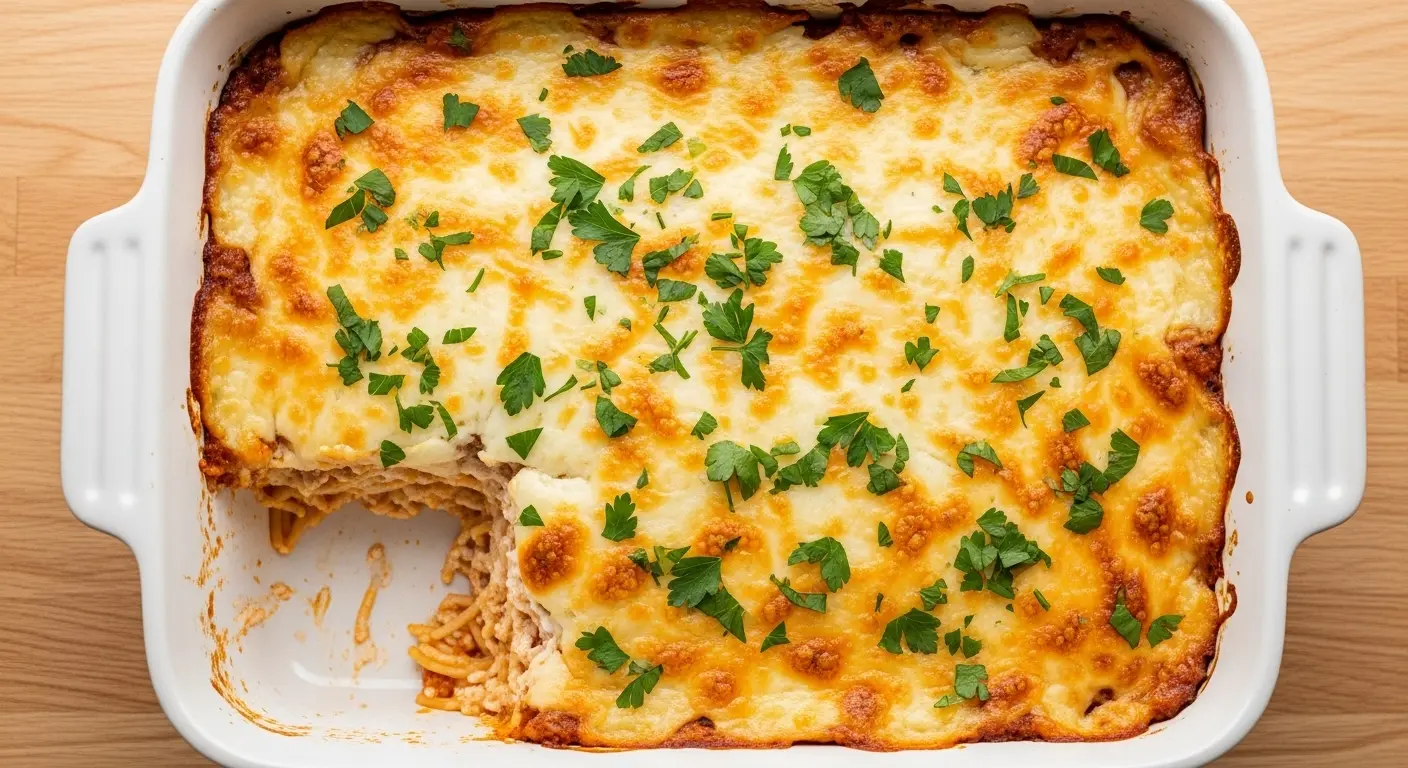
If you’re looking for a cozy, crowd-pleasing dinner that feels like a cross between spaghetti night and a proper casserole, this baked spaghetti recipe with cream cheese is going to become your new obsession.
The cream cheese is the secret that takes a simple pasta bake to the next level. It melts into the noodles and creates a rich, silky layer underneath the marinara and melted mozzarella that nobody expects but everyone absolutely loves.
This dish is often called “Million Dollar Spaghetti” for a reason. The combination of al dente spaghetti, a savory seasoned meat sauce, a creamy cream cheese and sour cream layer, and bubbling mozzarella on top is genuinely irresistible.
It’s the kind of recipe that looks impressive on the table but comes together with basic pantry staples and about 20 minutes of active prep time. Weeknight dinner, potluck contribution, meal prep for the week — this one checks every box.
You might also enjoy the easy baked spaghetti recipe if you want the classic version without the cream cheese layer.
Why You’ll Love This Baked Spaghetti Recipe with Cream Cheese
This recipe has a unique layered construction that sets it apart from regular spaghetti bakes.
The cream cheese and sour cream blend into a middle layer that stays creamy and rich through the entire baking process, making every bite incredibly satisfying.
It’s a true make-ahead winner. You can assemble the whole casserole the night before, cover it with foil, and refrigerate it until you’re ready to bake.
Feeding a crowd is effortless because a single 9×13-inch dish comfortably serves 8 generous portions, and it scales up easily.
The leftovers are arguably even better than the first serving. The flavors meld beautifully overnight, making it perfect for lunch the next day.
It’s infinitely customizable. Swap ground beef for Italian sausage, turkey, or go completely vegetarian with sautéed mushrooms and spinach.
- Comfort food at its best, perfect for cold nights and busy weekdays
- Simple layering method that even first-time casserole makers can nail
- Uses affordable, widely available ingredients
- Freezer-friendly and ideal for batch cooking
- Big flavors that rival any restaurant pasta bake
Read Also: Million Dollar Baked Spaghetti Recipe
Ingredients
This recipe uses a classic trio of pasta, meat sauce, and a creamy cheese layer that are the hallmarks of the most popular baked spaghetti with cream cheese versions found across food blogs and cookbooks alike.
- 16 oz (450g) dried spaghetti
- 1 lb (450g) lean ground beef (80/20 or leaner works well)
- 1 jar (24 oz / 680g) marinara sauce (your favorite brand)
- 8 oz (225g) full-fat cream cheese, softened to room temperature
- 1 cup (240g) sour cream
- 1 teaspoon Italian seasoning
- 3 cloves garlic, minced (or 1 teaspoon garlic powder)
- 2 cups (200g) shredded mozzarella cheese, freshly grated from a block
- ½ cup (50g) freshly grated Parmesan cheese
- 1 tablespoon olive oil
- Salt and black pepper, to taste
- Fresh parsley, chopped, for garnish (optional)
This pairs wonderfully with a homemade baked spaghetti recipe with ground beef for inspiration on seasoning your meat sauce just right.
Kitchen Equipment Needed
Having the right tools on hand makes the assembly process much smoother, especially when you’re layering the components of this casserole.
- Large pot (for boiling pasta)
- 9×13-inch baking dish
- Large skillet or sauté pan
- Colander or strainer
- Mixing bowls (medium and large)
- Wooden spoon or silicone spatula
- Box grater or cheese grater
- Aluminum foil
- Measuring cups and spoons
- Sharp knife and cutting board
Read Also: Baked Spaghetti Recipe with Alfredo Sauce
Recommended Products for This Recipe
These are products I genuinely recommend based on quality and performance for making the best baked spaghetti with cream cheese possible.
1. Philadelphia Full-Fat Cream Cheese Blocks
Full-fat block cream cheese is essential for this recipe — the spreadable kind in tubs has a different water content that can make the creamy layer too loose. Philadelphia block cream cheese melts smoothly and blends perfectly with sour cream to create that signature velvety middle layer. Buying it in the 2-pack ensures you always have extra on hand.
2. Cuisinart 9×13 Baking Dish with Lid
A high-quality ceramic baking dish with a lid makes this recipe even easier to store, transport to potlucks, and reheat. The even heat distribution means your casserole bakes consistently without hot spots, and the nonstick interior makes cleanup effortless even with baked-on cheese.
3. Rao’s Homemade Marinara Sauce
The quality of your marinara sauce has a significant impact on the final flavor of this baked spaghetti. Rao’s Homemade is widely considered the best jarred marinara sauce available — it uses whole peeled tomatoes, olive oil, and no added sugar, producing a rich, restaurant-quality flavor that elevates the whole dish.
4. Microplane Box Grater
Freshly grating your mozzarella from a block is one of the best things you can do for this recipe. Pre-shredded mozzarella contains cellulose anti-caking agents that prevent it from melting as smoothly. A quality box grater makes quick work of grating cheese and is an essential tool for any serious home cook.
5. De Cecco Spaghetti No. 12
Pasta quality matters more than most people realize. De Cecco uses bronze-die extrusion to create a slightly rough surface texture that holds onto sauce far better than smooth, mass-produced pasta. Their spaghetti maintains a satisfying al dente bite even after baking, and it doesn’t turn mushy.
The same cream cheese technique used here works beautifully in an alfredo sauce recipe with cream cheese if you want to explore more cream cheese pasta ideas.
Step-by-Step Instructions
Step 1: Preheat the Oven and Prepare the Baking Dish
- Preheat your oven to 350°F (175°C) and allow it to come to full temperature before you begin assembling.
- Spray the inside of a 9×13-inch baking dish thoroughly with nonstick cooking spray, making sure to coat the sides and corners where cheese tends to stick.
- Set the prepared dish aside on your counter where it’s easy to access during assembly.
Step 2: Cook the Spaghetti
- Bring a large pot of water to a rolling boil over high heat. Use at least 4 quarts (3.8 liters) of water so the pasta has plenty of room to move.
- Season the water generously with salt — it should taste pleasantly salty, like light seawater. This is your only opportunity to season the pasta itself.
- Add all 16 oz (450g) of dried spaghetti and cook according to the package directions for al dente, which is typically 1 minute less than the total cooking time listed.
- Drain the pasta through a colander and return it to the pot. Do not rinse the pasta — the starch on the surface helps the cheese layer adhere to the noodles.
Step 3: Brown the Ground Beef
- While the pasta cooks, heat 1 tablespoon of olive oil in a large skillet over medium-high heat.
- Add the 1 lb (450g) of ground beef to the skillet and break it apart using a wooden spoon or spatula as it cooks.
- Season the beef with a pinch of salt and black pepper while it cooks.
- Continue cooking, stirring occasionally, until the beef is fully browned with no pink remaining, about 6 to 8 minutes.
- Tilt the skillet and carefully drain off any excess fat, leaving only a light coating of fat in the pan for flavor.
- Stir in the minced garlic and cook for 30 seconds until fragrant, then pour in the entire jar of marinara sauce and stir to combine.
- Reduce the heat to low and let the meat sauce simmer for 3 to 5 minutes so the flavors meld together. Taste and adjust seasoning if needed.
Step 4: Make the Cream Cheese Layer
- In a medium bowl, add the 8 oz (225g) of softened full-fat cream cheese. It’s critical that the cream cheese is fully softened to room temperature — cold cream cheese will be lumpy and won’t mix smoothly.
- Add the 1 cup (240g) of sour cream, 1 teaspoon of Italian seasoning, and the minced garlic to the cream cheese.
- Using a fork or a spatula, mash and mix everything together vigorously until the mixture is completely smooth, creamy, and homogeneous with no visible lumps.
- Taste the cream cheese mixture and add a small pinch of salt if desired.
Step 5: Assemble the First Layer
- Spread a thin layer of the meat sauce (approximately ½ cup / 120ml) across the bottom of the prepared baking dish. This bottom sauce layer prevents the pasta from sticking and ensures every bite has flavor all the way through.
- Place half of the cooked spaghetti (about 8 oz) on top of the bottom sauce layer, using tongs or a pasta fork to distribute it evenly.
- Use the back of a spoon or a spatula to gently press the pasta down into an even layer.
Step 6: Add the Cream Cheese Layer
- Spoon the entire cream cheese and sour cream mixture over the pasta in the baking dish.
- Use a spatula to spread it as evenly as possible across the pasta, working from the center outward to the edges.
- Don’t worry if it doesn’t look perfectly smooth — it will melt and spread as it bakes.
Step 7: Add the Remaining Pasta and Sauce
- Layer the remaining half of the cooked spaghetti evenly over the cream cheese mixture.
- Pour and spoon the remaining meat sauce evenly over the top layer of pasta, making sure to cover the pasta all the way to the edges of the dish.
- Use the back of a spoon to gently spread the sauce to ensure full, even coverage.
Step 8: Add the Cheese Topping
- Sprinkle the 2 cups (200g) of freshly grated mozzarella evenly over the top of the meat sauce.
- Follow with the ½ cup (50g) of freshly grated Parmesan, which will add a golden, salty crust as it bakes.
- Make sure the cheese covers the pasta all the way to the edges to prevent the edges from drying out.
Step 9: Bake the Casserole
- Cover the baking dish tightly with aluminum foil. Covering the dish for the first part of baking traps steam, which helps the casserole heat through evenly without the top cheese burning.
- Place the covered dish in the preheated 350°F (175°C) oven and bake for 25 minutes.
- After 25 minutes, carefully remove the foil. The casserole should be hot and bubbling around the edges.
- Return the uncovered dish to the oven and bake for an additional 10 to 15 minutes, until the mozzarella is fully melted, golden in spots, and lightly browned on top.
Step 10: Rest and Serve
- Remove the baked spaghetti from the oven and allow it to rest on the counter for at least 5 to 10 minutes before slicing and serving.
- This resting time is important — it allows the casserole to set and firm up slightly, making it much easier to cut into neat, clean portions.
- Garnish with freshly chopped parsley if desired, and serve directly from the baking dish.
For even more pasta bake inspiration, check out this baked spaghetti recipe with ricotta cheese for a slightly different creamy layer.
Tips for Success
Small details can make a significant difference in the final outcome of this casserole, especially when it comes to texture and richness.
- Soften the cream cheese completely. This is non-negotiable. Set it out on the counter at least 30 to 60 minutes before you start cooking. If you forget, microwave it in 15-second bursts, checking between each, until it’s soft but not melted.
- Cook pasta al dente. Since the spaghetti continues to cook inside the oven, starting with al dente pasta ensures it doesn’t become soft or mushy in the finished casserole.
- Use block mozzarella, freshly grated. Pre-shredded bags of mozzarella contain starches and anti-caking agents that prevent smooth, stretchy melting. Grating your own from a block produces a much better result.
- Don’t skip the bottom sauce layer. Spreading a thin layer of meat sauce on the bottom of the dish before adding pasta prevents the noodles from sticking and adds flavor to the bottom of each serving.
- Cover during the first bake phase. Baking covered first locks in moisture and ensures the casserole heats through evenly, while the uncovered finish gives you that beautiful golden cheese top.
- Let it rest before slicing. Patience here is key. Cutting too soon results in a loose, messy serving. A 5 to 10 minute rest lets the layers set properly.
This same al dente approach is equally important when making a baked spaghetti recipe with cottage cheese — the technique transfers perfectly.
Serving Suggestions
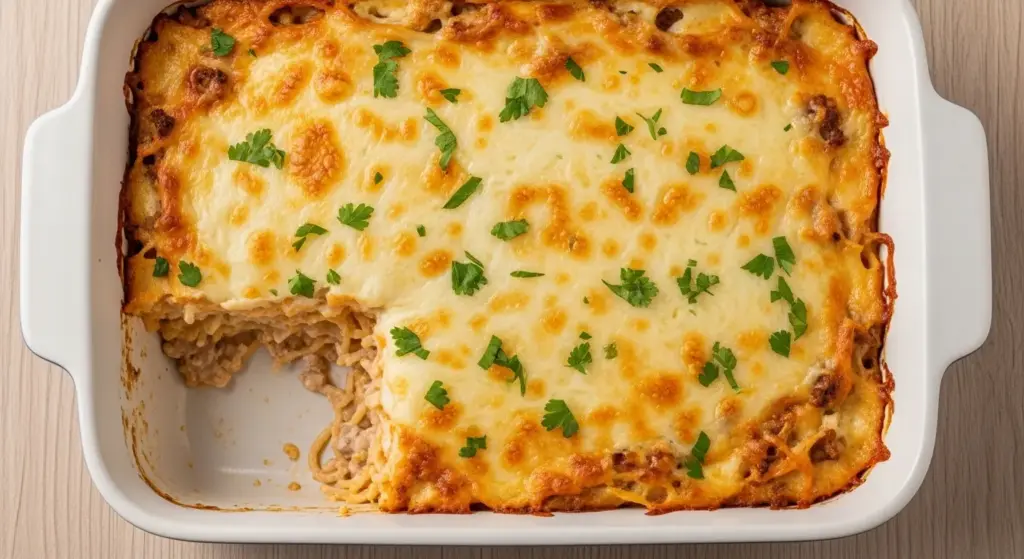
This baked spaghetti with cream cheese is hearty and rich on its own, making it a perfect standalone main course with simple, fresh sides that balance out the creaminess of the casserole.
Garlic bread is practically required — the crusty, buttery bread is ideal for scooping up any extra sauce from your plate. A simple green salad with a light vinaigrette cuts through the richness beautifully. Roasted broccoli or steamed green beans add a pop of color and freshness to the plate.
- Cheesy Garlic Bread — the ultimate pairing for any pasta bake
- Broccoli Salad — a fresh, crunchy contrast to the rich casserole
- Classic Deviled Eggs — great for a spread when serving a crowd
- Creamy Coleslaw — cool and tangy alongside the warm casserole
- Italian Meatballs — add them on top or serve alongside for a meat-lover’s feast
Another favorite: Classic Chicken Parmesan
Variations to Try
One of the best things about this recipe is how easily it adapts to different tastes, dietary needs, and what you have on hand in the refrigerator.
- Chicken version. Swap the ground beef for 2 cups of shredded rotisserie chicken for a lighter, quicker-prep version. This variation pairs especially well with a basil marinara or roasted tomato sauce.
- Italian sausage. Replace all or half of the ground beef with mild or hot Italian sausage for a more intensely seasoned, boldly flavored casserole.
- Vegetarian option. Omit the meat entirely and sauté a mix of mushrooms, zucchini, and spinach instead. Add them to the sauce as you would the browned beef.
- Spicy kick. Add ½ teaspoon of crushed red pepper flakes to the meat sauce, or use a spicy arrabbiata sauce in place of the marinara.
- Different pasta shapes. Rigatoni, penne, or ziti work beautifully in place of spaghetti if that’s what you have on hand. The layering method stays the same.
- Ricotta swap. Replace the sour cream in the cream cheese layer with an equal amount of whole milk ricotta for a slightly thicker, milder creamy layer.
You might also enjoy the southern baked spaghetti recipe for a regional twist on this classic comfort dish.
Storage and Reheating
This casserole stores exceptionally well and actually improves in flavor after a night in the refrigerator, making it a superb meal prep option.
- Refrigerator: Allow leftovers to cool completely before transferring to an airtight container or covering the baking dish tightly with plastic wrap or foil. Store in the refrigerator for up to 4 days.
- Freezer: For longer storage, freeze fully baked and cooled portions in airtight freezer-safe containers for up to 2 months. Alternatively, freeze the unbaked assembled casserole (covered in plastic wrap, then foil) for up to 2 months.
- Thawing: Thaw frozen baked spaghetti in the refrigerator for at least 24 hours before reheating.
- Reheating individual portions: Microwave individual servings with a splash of water (about 1 tablespoon) to restore moisture and prevent drying. Cover loosely and heat in 90-second intervals, stirring between each.
- Reheating the whole casserole: Cover the dish with foil and bake at 350°F (175°C) for 25 to 35 minutes, until heated through, removing the foil for the last 5 minutes to re-crisp the top.
For another excellent make-ahead pasta dish, the twice baked spaghetti recipe is worth bookmarking.
Nutritional Facts
Per serving (based on 8 servings per recipe — estimates only and will vary based on specific brands used)
| Nutrient | Amount Per Serving |
|---|---|
| Calories | ~530 kcal |
| Total Fat | 26g |
| Saturated Fat | 13g |
| Cholesterol | 85mg |
| Sodium | 870mg |
| Total Carbohydrates | 45g |
| Dietary Fiber | 3g |
| Sugars | 7g |
| Protein | 27g |
| Calcium | 350mg |
| Iron | 3mg |
These values are approximate. Exact nutritional content depends on the specific brands of pasta sauce, cream cheese, and ground beef you use.
This casserole is a hearty, protein-rich main dish that pairs well with lighter vegetable-based sides to round out the meal. For a lighter pasta bake option, the vegetarian baked spaghetti recipe reduces overall calories and fat significantly.
Health Benefits of Key Ingredients
Despite being indulgent comfort food, this recipe contains several ingredients that offer genuine nutritional value.
The cream cheese and sour cream provide a meaningful source of calcium and fat-soluble vitamins A, D, and K2, which are important for bone health and immune function. Full-fat dairy also promotes satiety, helping you feel fuller for longer after eating.
Lean ground beef is one of the most bioavailable sources of complete protein, zinc, and heme iron — the form of iron your body absorbs most efficiently. A single serving of this casserole provides roughly 27 grams of protein, which supports muscle maintenance and recovery.
- Spaghetti (pasta): A good source of complex carbohydrates that provide sustained energy. Whole wheat spaghetti increases fiber content significantly.
- Tomato-based marinara sauce: Rich in lycopene, a powerful antioxidant linked to reduced risk of certain cancers and heart disease. Lycopene is more bioavailable in cooked tomato products than in raw tomatoes.
- Garlic: Contains allicin and other sulfur compounds with antibacterial, antiviral, and anti-inflammatory properties. Regular garlic consumption is associated with cardiovascular health benefits.
- Parmesan cheese: One of the most nutrient-dense cheeses available — it’s high in calcium, phosphorus, and protein relative to its calorie content, and aged Parmesan is naturally low in lactose.
- Mozzarella: A source of calcium and phosphorus that supports bone density, plus riboflavin (vitamin B2) which supports energy metabolism.
- Olive oil: Rich in heart-healthy monounsaturated fats and polyphenol antioxidants associated with reduced inflammation.
You might also enjoy: Baked Ziti Recipe
Frequently Asked Questions
1. Can I make this baked spaghetti with cream cheese ahead of time?
Yes, and it’s actually one of the best features of this recipe. Assemble the casserole completely through the cheese topping stage, then cover tightly with plastic wrap and foil and refrigerate for up to 24 hours. When you’re ready to bake, remove it from the refrigerator 20 to 30 minutes before placing it in the oven to take the chill off, then bake as directed — you may need to add 10 to 15 minutes to the covered bake time since you’re starting from cold.
2. Do I have to use sour cream in addition to cream cheese?
The combination of cream cheese and sour cream is standard across most popular versions of this recipe. The cream cheese provides richness and structure while the sour cream contributes a subtle tang that prevents the layer from tasting too heavy. If you don’t have sour cream, whole milk ricotta or Greek yogurt are good substitutes, though the flavor will be slightly different.
3. Why did my cream cheese layer turn out lumpy?
Lumpy cream cheese almost always means the cream cheese wasn’t soft enough before mixing. Cold cream cheese doesn’t blend smoothly with sour cream, leaving visible lumps in the layer. If you’re pressed for time, microwave the unwrapped block of cream cheese in 15-second intervals until very soft and pliable but not melted, then mix immediately.
4. Can I freeze this before baking it?
Absolutely. Assemble the casserole through the cheese topping step, then cover tightly with a layer of plastic wrap followed by a layer of aluminum foil. Freeze for up to 2 months. When ready to use, transfer to the refrigerator and allow to thaw for 24 to 48 hours, then bake as directed. Add approximately 15 to 20 minutes to the total baking time to account for the chilled center.
5. What’s the difference between this and “Million Dollar Spaghetti”?
The names are often used interchangeably and the recipes are very similar. Million Dollar Spaghetti typically includes ricotta cheese in the cream layer in addition to cream cheese, and may include cottage cheese as well. This baked spaghetti with cream cheese version uses a simpler two-ingredient cream layer of cream cheese and sour cream, which is silkier and slightly tangier. Both are delicious — the choice really comes down to personal preference.
This also pairs nicely with the homemade baked spaghetti recipe if you want to see a from-scratch sauce version.
Final Thoughts
This baked spaghetti recipe with cream cheese is truly one of those recipes that earns a permanent spot in the regular dinner rotation.
It’s the kind of dish that looks like you spent hours in the kitchen, but it’s genuinely straightforward and forgiving — even for beginner cooks.
The cream cheese layer is the detail that makes it unforgettable. That silky, tangy middle layer between the pasta and the meat sauce is what keeps people going back for seconds and thirds.
Whether you’re feeding your family on a Tuesday night or bringing something to a potluck, this casserole always delivers.
Give it a try this week — and when you do, leave a comment below to let me know how it turned out! Did you make any substitutions? Add any extra veggies? Share your version — I love hearing how readers make these recipes their own.
Recommended:
- Fazoli’s Baked Spaghetti Recipe
- Baked Chicken Spaghetti Recipe
- Easy Lasagna Recipe
- Lasagna Recipe with Ricotta
- Stuffed Shells Recipe
- Spaghetti Sauce Recipe
- Classic Baked Mac and Cheese Recipe
- Lasagna Soup Recipe
- Easy Garlic Bread Recipe
- Chicken Casserole Recipe