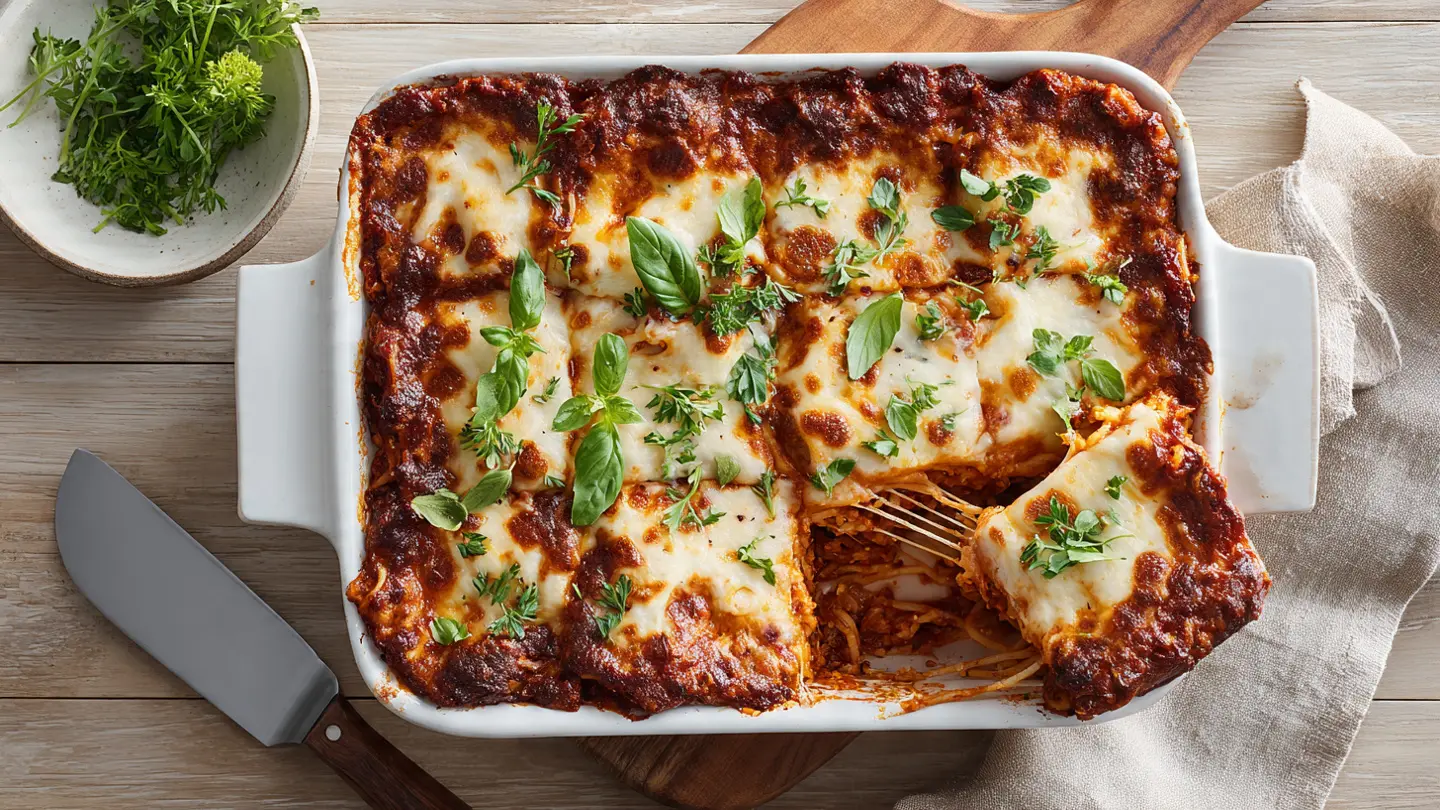
If you’ve been searching for a crowd-pleasing meatless dinner, this vegetarian baked spaghetti recipe is about to become your new go-to weeknight staple.
It hits every note you want from a comfort food classic: a rich, garlicky tomato sauce layered over tender spaghetti, sautéed mushrooms and bell peppers adding depth and texture, and a bubbly golden blanket of mozzarella that stretches with every forkful.
The secret to what makes this so satisfying without any meat is in the sautéed vegetables. Mushrooms, in particular, bring a savory umami quality that tricks your brain into thinking something heartier is going on. Pair that with a good-quality marinara and a layer of ricotta cheese in the middle, and you’ve got a pasta bake that earns seconds.
This is the kind of dish that looks and tastes like you spent all afternoon in the kitchen but actually comes together in well under an hour.
If you love easy pasta bakes, you’ll also adore this Million Dollar Baked Spaghetti for an extra-indulgent spin.
Why You’ll Love This Vegetarian Baked Spaghetti Recipe
This dish is the rare kind of meal that satisfies even the most committed meat-eaters at the table.
The combination of sautéed mushrooms, bell pepper, and onion creates a veggie base that’s packed with umami-rich flavor, making the dish feel just as filling and hearty as a meat-based version.
You get the best of both worlds: the comfort of classic baked pasta and the ease of a one-casserole dinner that feeds a crowd.
It’s also incredibly forgiving. Use whatever vegetables you have on hand, swap the ricotta for cottage cheese, or throw in an extra handful of spinach without a second thought.
Perfect for meal prep, too. It reheats beautifully and tastes even better the next day as the flavors meld together overnight.
Here’s a quick summary of why this recipe works so well:
- Two kinds of cheese. Ricotta adds creamy richness in the middle layer, while shredded mozzarella gets golden and bubbly on top.
- Deeply savory vegetables. Mushrooms, bell pepper, onion, and garlic give the filling real depth without any meat.
- Great marinara makes a big difference. The tomato sauce is the backbone of the whole dish, so use one you love.
- Easy to scale. This recipe serves 6–8 comfortably, and it doubles well if you’re feeding a big group.
- Freezer-friendly. Assemble it ahead and freeze before baking for a ready-to-go weeknight meal.
You might also enjoy: Baked Spaghetti Recipe with Ricotta Cheese
Ingredients
Here’s what you’ll need to bring this vegetarian baked spaghetti together. The ingredient list is simple and mostly pantry staples, which makes this a fantastic weeknight option.
Keep in mind that the quality of your marinara sauce matters more than you might expect. Since it’s one of the main flavor components, choosing a sauce with good depth and seasoning will elevate the whole dish.
- 12 oz (340 g) spaghetti
- 2 tablespoons olive oil
- 1 medium yellow onion, diced
- 4 garlic cloves, minced
- 8 oz (225 g) cremini or baby bella mushrooms, sliced
- 1 medium green bell pepper, diced
- 1 medium red bell pepper, diced
- 1 teaspoon dried Italian seasoning
- 1 teaspoon dried basil
- 1/2 teaspoon dried oregano
- 1/2 teaspoon red pepper flakes (optional, for heat)
- Salt and black pepper, to taste
- 24 oz (680 g) jar of marinara sauce
- 1 cup (240 ml) crushed tomatoes
- 15 oz (425 g) whole-milk ricotta cheese
- 1 large egg
- 1/4 cup (25 g) fresh Parmesan cheese, grated, plus more for serving
- 2 cups (225 g) shredded mozzarella cheese, divided
- 2 tablespoons fresh parsley, chopped (for garnish)
- Fresh basil leaves, for garnish (optional)
Read Also: Easy Baked Spaghetti Recipe
Kitchen Equipment Needed
You don’t need any special tools to pull this off. A large pot, a skillet, a casserole dish, and a few mixing bowls are all it takes.
Using a 9×13 inch baking dish is the ideal size for this recipe and gives every serving that perfect ratio of sauce, noodles, and cheese.
- Large pot (for boiling pasta)
- Large skillet or sauté pan
- 9×13 inch baking dish
- Colander (for draining pasta)
- Large mixing bowl
- Medium mixing bowl
- Wooden spoon or silicone spatula
- Sharp knife and cutting board
- Measuring cups and spoons
- Cheese grater
- Aluminum foil
This pairs beautifully with Baked Ziti for an Italian feast spread if you’re cooking for a large gathering.
Recommended Products for This Recipe
These are products recommended based on quality and performance that will genuinely help you make this vegetarian baked spaghetti even better.
1. Le Creuset Enameled Cast Iron Rectangular Baking Dish
This heirloom-quality baking dish distributes heat with remarkable evenness, which means your baked spaghetti edges won’t overcook while the center stays underdone. The smooth enamel surface prevents sticking and makes cleanup a breeze, even with layers of baked-on cheese. It’s a one-time investment that will serve you for decades.
2. Rao’s Homemade Marinara Sauce
Rao’s is consistently cited by food professionals as one of the best jarred marinara sauces available, and it’s easy to see why. It’s made with San Marzano-style tomatoes, olive oil, and simple aromatics with no added sugar, which gives your baked spaghetti a genuinely restaurant-quality tomato flavor. A good marinara is the backbone of this entire dish.
3. Microplane Premium Classic Zester and Grater
Freshly grated Parmesan melts far more smoothly and tastes noticeably better than the pre-grated kind. This Microplane grater makes quick work of hard cheeses and doubles as a garlic or lemon zest tool for other recipes. It’s a small upgrade that makes a real difference in the final flavor of your dish.
4. OXO Good Grips Silicone Spoon Spatula
When you’re folding ricotta into pasta or scraping every last bit of sauce from the pan, a good silicone spatula is invaluable. This OXO spatula is heat-resistant up to 600°F, comfortable to grip, and flexible enough to reach the corners of your baking dish without scratching.
Read Also: Homemade Baked Spaghetti Recipe
Step-by-Step Instructions
1. Preheat the Oven and Prep Your Baking Dish
- Preheat your oven to 375°F (190°C). This temperature is ideal for getting the cheese bubbly and golden without drying out the pasta underneath.
- Lightly grease your 9×13 inch baking dish with a thin layer of olive oil or cooking spray, coating the bottom and sides to prevent sticking.
- Set the baking dish aside while you work on the other components.
2. Cook the Spaghetti to Al Dente
- Bring a large pot of water to a rolling boil. Add a generous pinch of salt (the water should taste lightly like the sea). This step seasons the pasta from the inside out.
- Add the 12 oz (340 g) of spaghetti and cook it for 2 minutes less than the package directions indicate. You want the pasta firmly al dente, not fully cooked, because it will continue cooking in the oven.
- Reserve 1/2 cup (120 ml) of the pasta cooking water before draining. This starchy water can be used to loosen the sauce if needed.
- Drain the spaghetti through a colander and toss it with a drizzle of olive oil to prevent sticking. Set aside.
3. Sauté the Vegetables
- Heat 2 tablespoons of olive oil in a large skillet over medium-high heat.
- Add the diced yellow onion and cook for 3–4 minutes, stirring occasionally, until the onion becomes soft and translucent. This builds the savory base of the filling.
- Add the 4 minced garlic cloves and stir for 30 seconds until fragrant. Be careful not to let the garlic burn, which can turn it bitter.
- Add the sliced 8 oz (225 g) cremini mushrooms and spread them out in a single layer. Let them cook undisturbed for 2–3 minutes before stirring. This allows them to get golden and release their moisture properly.
- Continue cooking the mushrooms for another 5–7 minutes, stirring occasionally, until they’ve fully cooked down and most of their liquid has evaporated. This step is crucial because watery mushrooms will make your final dish soggy.
- Add the diced green and red bell peppers and stir everything together. Cook for another 3–4 minutes until the peppers are slightly softened but still have a little bite.
- Season the vegetable mixture with 1 teaspoon Italian seasoning, 1 teaspoon dried basil, 1/2 teaspoon dried oregano, 1/2 teaspoon red pepper flakes (if using), salt, and black pepper to taste. Stir to coat the vegetables evenly.
4. Make the Tomato Sauce
- Pour the 24 oz (680 g) marinara sauce and 1 cup (240 ml) crushed tomatoes directly into the skillet with the sautéed vegetables. Stir everything together to combine.
- Let the sauce simmer over medium heat for 5 minutes, stirring occasionally, to allow the flavors to meld and the sauce to thicken slightly. Taste and adjust seasoning as needed.
- If the sauce seems too thick, stir in a splash of the reserved pasta cooking water to loosen it. If it seems too thin, let it simmer for a couple more minutes.
- Remove from heat and set aside.
5. Prepare the Ricotta Layer
- In a medium mixing bowl, combine the 15 oz (425 g) whole-milk ricotta cheese, 1 large egg, and 1/4 cup (25 g) grated Parmesan cheese.
- Mix together until smooth and fully combined. The egg helps the ricotta set up as it bakes so the filling holds its shape when sliced.
- Season with a pinch of salt and black pepper, and stir again to incorporate. Set aside.
6. Combine the Pasta and Sauce
- In your large mixing bowl, add the drained spaghetti. Pour about two-thirds of the vegetable marinara sauce over the pasta and toss everything together with tongs or a spatula until the noodles are fully coated.
- Make sure the sauce is worked into every strand of pasta. Every bite should have flavor, not just the top.
7. Layer and Assemble the Casserole
- Transfer half of the sauced spaghetti mixture into your prepared 9×13 baking dish and spread it into an even layer.
- Spoon the ricotta mixture over the top of the first pasta layer and gently spread it to cover as evenly as possible. It doesn’t need to be perfectly smooth — a rustic spread works beautifully.
- Sprinkle 1/2 cup (55 g) of the shredded mozzarella over the ricotta layer.
- Add the remaining spaghetti and sauce on top, spreading it evenly to cover the cheese layer.
- Spoon the remaining vegetable marinara sauce over the top of the pasta and spread it out.
- Sprinkle the remaining 1.5 cups (170 g) of shredded mozzarella evenly over the entire surface. This top layer of cheese is what creates that gorgeous, bubbly golden crust.
8. Bake to Perfection
- Cover the baking dish tightly with aluminum foil. Baking it covered first traps steam, which keeps the pasta moist and ensures the center heats through completely.
- Bake covered at 375°F (190°C) for 20 minutes.
- Remove the foil and continue baking for an additional 15–20 minutes, or until the cheese on top is melted, bubbling, and just beginning to turn golden brown at the edges.
- For extra golden cheese, switch the oven to broil for 2–3 minutes at the very end. Watch it carefully, as the cheese can go from golden to burned very quickly under the broiler.
9. Rest, Garnish, and Serve
- Remove the baked spaghetti from the oven and let it rest for 10 minutes before slicing. This resting time allows everything to set up so you can cut clean squares instead of a runny, soupy mess.
- Garnish with 2 tablespoons of fresh chopped parsley and fresh basil leaves if desired.
- Slice into squares with a sharp knife or spatula and serve directly from the baking dish.
This recipe also makes an excellent companion to a Baked Spaghetti Recipe with Cottage Cheese if you want to compare two delicious layering approaches side by side.
Tips for Success
A few targeted tips will take this from a good baked spaghetti to a truly great one.
The most common mistake with baked pasta dishes is overcooking the noodles before they even go in the oven. Since the pasta continues to cook in the oven surrounded by hot sauce, starting from an al dente base is non-negotiable for the best texture.
- Undercook the pasta. Always boil the spaghetti 2 full minutes less than the package time. It will finish cooking in the oven and reach the perfect tender-but-not-mushy texture.
- Don’t skip draining the mushrooms. Letting the mushrooms fully release and cook off their liquid prevents a watery, diluted sauce in the final dish. This step takes patience but is absolutely worth it.
- Use whole-milk ricotta. Part-skim ricotta can turn grainy and watery when baked. Whole-milk ricotta stays creamy and rich after baking.
- Season every layer. Taste and season the vegetable mixture, the ricotta, and the pasta as you go. A dish like this tastes flat if only the sauce is seasoned.
- Grate your own cheese. Pre-shredded mozzarella contains anti-caking agents that prevent it from melting as smoothly. When possible, shred a block of low-moisture mozzarella yourself for better melt.
- Cover with foil for the first bake. This crucial step keeps the pasta from drying out before the cheese has a chance to get bubbly.
- Let it rest. That 10-minute rest after pulling it from the oven is essential for slicing. Rush it and you’ll have a saucy scramble instead of clean portions.
Read Also: Twice Baked Spaghetti Recipe
Serving Suggestions
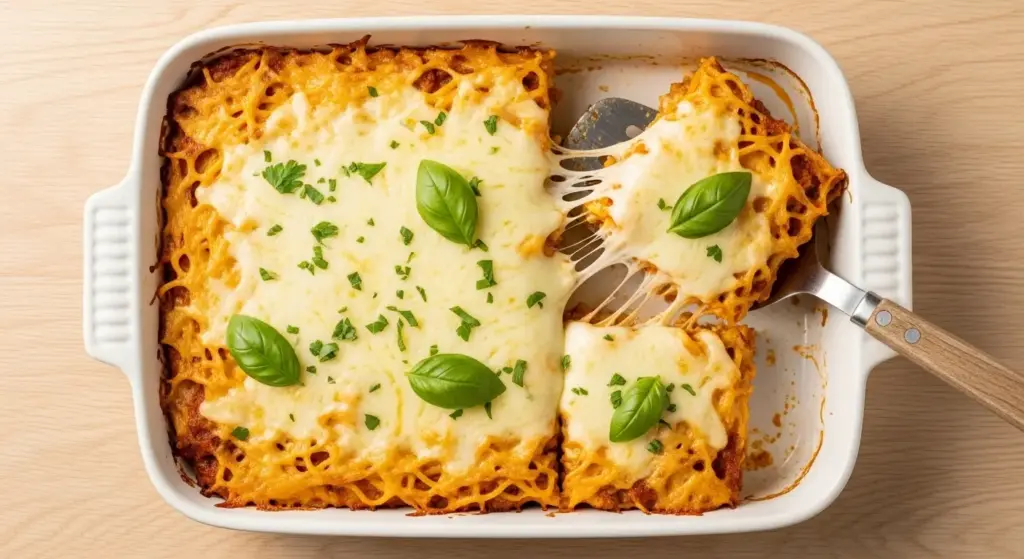
Vegetarian baked spaghetti is a complete and hearty meal on its own, but a few simple accompaniments really round out the dinner spread.
A crisp green salad and some good bread alongside this dish is the classic pairing, and for good reason — the freshness and crunch contrast perfectly with the rich, cheesy pasta.
Here are some great options to serve alongside:
- Cheesy Garlic Bread for soaking up every last bit of tomato sauce
- Broccoli Salad for a crunchy, refreshing contrast
- Classic Bruschetta as a light, flavor-packed starter
- Classic Deviled Eggs for an easy crowd-pleasing appetizer
- A simple arugula salad with lemon vinaigrette to cut through the richness of the cheese
- Roasted vegetables like zucchini, asparagus, or cherry tomatoes for a colorful side
Read Also: Southern Baked Spaghetti Recipe
Variations to Try
One of the best things about this recipe is how easily it adapts to different tastes, dietary needs, and what’s in your fridge.
The core technique — sautéed vegetables layered with pasta, sauce, and cheese, then baked — works beautifully with almost any combination of ingredients you throw at it.
- Add spinach or kale. Wilt 2–3 cups of fresh baby spinach or finely chopped kale into the vegetable mixture during the last minute of sautéing for added nutrition.
- Swap in zucchini. Diced zucchini is a fantastic addition or replacement for the bell peppers, especially in summer when zucchini is abundant.
- Try a vodka sauce base. Replace the marinara with a vodka sauce for a creamy, slightly piquant twist on the classic.
- Use cottage cheese instead of ricotta. Cottage cheese creates a lighter middle layer that’s also higher in protein. Drain it first to remove excess moisture.
- Make it vegan. Skip the ricotta and egg layer, use your favorite vegan mozzarella, and sprinkle nutritional yeast for cheesy flavor. The vegetable filling is already plant-based.
- Add olives and capers. For a Mediterranean-inspired version, stir pitted kalamata olives and a tablespoon of capers into the vegetable sauce before assembling.
- Try a cream cheese layer. Cream cheese blended with a little milk creates an ultra-rich, tangy middle layer that’s a popular alternative to ricotta. Check out the Baked Spaghetti Recipe with Cream Cheese for a dedicated version.
- Make it gluten-free. Simply substitute your favorite certified gluten-free spaghetti and follow the recipe as written.
For a cheesy pasta bake with stuffed shells instead of spaghetti noodles, check out this Stuffed Shells Recipe — it uses a very similar layering method.
You might also enjoy: Fazoli’s Baked Spaghetti Recipe
Storage and Reheating
This vegetarian baked spaghetti stores and reheats beautifully, making it one of the best recipes for meal prep and planned leftovers.
The flavors actually deepen overnight as everything melds together in the fridge, so day-two leftovers often taste even better than the fresh batch.
- Refrigerator: Store leftovers in an airtight container or cover the baking dish tightly with plastic wrap or foil. It will keep in the fridge for up to 4 days.
- Freezer: To freeze, cut the cooled baked spaghetti into individual portions and wrap each tightly in plastic wrap, then place in a zip-lock freezer bag. It will keep frozen for up to 3 months.
- Reheating from the fridge (oven): Place a portion in an oven-safe dish, add a spoonful of marinara or water on top to restore moisture, cover with foil, and bake at 350°F (175°C) for 15–20 minutes until heated through.
- Reheating from the fridge (microwave): Place a portion on a microwave-safe plate, cover loosely, and heat in 60-second intervals until hot throughout. Add a splash of sauce or water before microwaving to prevent drying out.
- Reheating from frozen: Thaw overnight in the refrigerator, then reheat as directed above. Alternatively, bake from frozen, covered at 375°F (190°C) for 45–60 minutes.
This technique works wonderfully for other cozy pasta bakes too, like this Baked Spaghetti Recipe with Ground Beef if you ever want to add meat for non-vegetarian guests.
Nutritional Facts
The following nutrition information is an estimate per serving, based on 8 servings from this recipe. Values will vary depending on specific ingredients used, particularly the marinara sauce brand and ricotta fat content.
| Nutrient | Per Serving (approx.) |
|---|---|
| Calories | ~520 kcal |
| Total Fat | ~18 g |
| Saturated Fat | ~9 g |
| Carbohydrates | ~65 g |
| Fiber | ~5 g |
| Sugars | ~10 g |
| Protein | ~24 g |
| Sodium | ~780 mg |
| Calcium | ~380 mg |
| Iron | ~3 mg |
| Potassium | ~700 mg |
This is a calorie-moderate dish that provides a solid balance of carbohydrates for energy, protein from the cheese and ricotta, and fiber from the vegetables and tomato-based sauce.
Another favorite: Baked Spaghetti Recipe with Alfredo Sauce
Health Benefits of Key Ingredients
This dish is more nutritious than it might look on the surface. Packed with vegetables, quality dairy protein, and a tomato-based sauce, there’s a lot of goodness happening beneath that golden cheese topping.
The beauty of a veggie-forward pasta bake is that you’re getting a wide range of micronutrients from multiple plant sources in a single, satisfying meal.
Here’s a closer look at what each key ingredient brings to the table:
- Mushrooms are an excellent source of B vitamins, including riboflavin, niacin, and pantothenic acid, which support energy metabolism. They’re also one of the few plant foods that naturally contain vitamin D when exposed to sunlight during growth.
- Bell peppers are among the richest dietary sources of vitamin C, with red bell peppers containing about three times the vitamin C of an orange by weight. They also provide beta-carotene, an antioxidant that converts to vitamin A in the body.
- Garlic contains allicin, a sulfur compound with well-documented anti-inflammatory and antimicrobial properties. Regular consumption of garlic has been linked to cardiovascular health benefits.
- Tomatoes and marinara sauce are rich in lycopene, a powerful antioxidant that becomes more bioavailable when tomatoes are cooked and combined with a fat source like olive oil. Lycopene has been studied for its potential protective role against certain cancers.
- Ricotta cheese is a surprisingly good source of whey protein and calcium, supporting muscle maintenance and bone health. Whole-milk ricotta also provides fat-soluble vitamins A and D.
- Olive oil provides heart-healthy monounsaturated fatty acids and polyphenols, which have anti-inflammatory effects and are a cornerstone of the Mediterranean diet.
- Whole wheat spaghetti (optional swap) adds significantly more fiber, magnesium, and B vitamins compared to refined white pasta, making the dish more filling and nutritionally dense.
This dish pairs naturally with a side of Vegetable Soup for a fully plant-powered meal.
Frequently Asked Questions
1. Can I make this vegetarian baked spaghetti ahead of time?
Yes, and it’s actually a great make-ahead dish. You can assemble the entire casserole up to 24 hours in advance, cover it tightly with foil, and refrigerate it before baking.
When you’re ready to cook, take it out of the fridge 30 minutes before baking to let it come closer to room temperature, then bake as directed, adding 5–10 extra minutes to the covered baking time since it’s starting cold.
2. Can I use store-bought sauce, or do I need to make homemade?
Store-bought works perfectly well here. The key is choosing a high-quality marinara with simple, real ingredients and no added sugar.
Brands like Rao’s or Victoria are consistently praised for their restaurant-quality flavor. If you’d like to make your own, this Spaghetti Sauce Recipe from scratch is excellent.
3. What vegetables work best in vegetarian baked spaghetti?
The combination of mushrooms, bell peppers, and onion is the most popular and widely used foundation. Mushrooms are especially important because their umami quality gives the dish a savory depth that compensates for the absence of meat.
Other vegetables that work beautifully include zucchini, eggplant, spinach, kale, artichoke hearts, sun-dried tomatoes, and diced carrots. Just make sure to sauté any vegetables that release moisture (like zucchini or eggplant) thoroughly before assembling.
4. How do I prevent my baked spaghetti from drying out?
There are two key strategies here. First, make sure you’re using enough sauce — the pasta should be generously coated before it goes into the dish, and there should be extra sauce on top.
Second, always bake the casserole covered with aluminum foil for the first 20 minutes. The foil traps steam and keeps everything moist. Only uncover it during the final 15–20 minutes to allow the cheese to brown.
5. Can I substitute the ricotta cheese with something else?
Absolutely. Cottage cheese is the most common substitute and works very well — it creates a similar creamy layer with even more protein. For the creamiest result, drain the cottage cheese first by placing it in a fine-mesh strainer for 15–30 minutes before using.
Cream cheese blended with a little milk is another popular option that creates an ultra-rich, tangy layer. For a dairy-free version, cashew cream or a store-bought vegan ricotta can be used.
Read Also: Easy Ratatouille Recipe
Final Thoughts
This vegetarian baked spaghetti recipe delivers everything you want from a great pasta bake: a savory, deeply seasoned sauce, tender noodles, a creamy ricotta layer, and that irresistible golden, bubbling cheese on top.
It’s proof that meatless comfort food can be every bit as satisfying and crowd-pleasing as any meat-based dish on the table.
If you give this recipe a try, I’d love to hear how it went! Leave a comment below with any tweaks you made, vegetables you swapped in, or substitutions that worked well for your family.
And if you share it on Instagram, tag us so we can see your beautiful cheesy creation.
Recommended:
- Lasagna Recipe with Ricotta
- Easy Lasagna Recipe
- Marinara Sauce Recipe
- Tomato Sauce Recipe
- Pasta Fagioli Recipe
- Minestrone Soup Recipe
- Classic Chicken Parmesan Recipe
- Squash Casserole Recipe
- Lasagna Soup Recipe
- Easy Garlic Bread Recipe