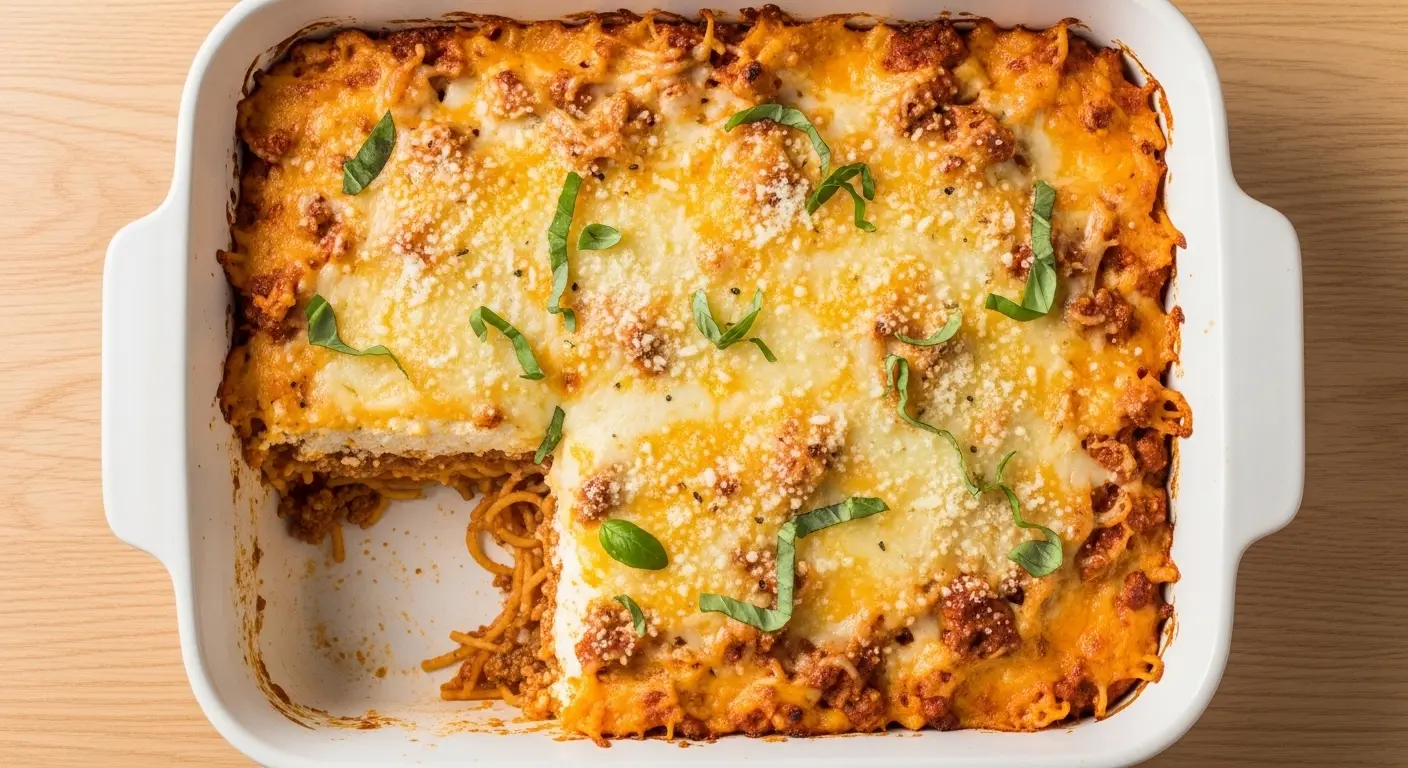
If you’ve been searching for the perfect crowd-pleasing pasta bake, this million dollar baked spaghetti recipe is about to become your new favorite go-to dinner.
It layers buttery spaghetti noodles with a rich, creamy cheese mixture and a deeply savory meat sauce, all blanketed under a golden, bubbly mozzarella crust. It earned that name for a reason.
Think of it as the lovechild of classic spaghetti and lasagna, but without the fuss of perfectly layering individual noodles. The cream cheese and ricotta tucked between the pasta give this dish an almost indulgent richness that regular baked spaghetti simply can’t touch.
This is the kind of recipe families come back to over and over again. It feeds a crowd on a budget, tastes even better the next day, and can be assembled hours before baking.
Once you try it, you’ll understand exactly why it went viral.
You might also enjoy: Easy Baked Spaghetti
Why You’ll Love This Million Dollar Baked Spaghetti Recipe
This dish brings together everything great about comfort food in one beautiful casserole. Here’s why it keeps winning over home cooks everywhere.
The combination of cream cheese, ricotta, and mozzarella creates a three-layer cheese situation that makes every single bite feel rich and satisfying. It’s the kind of meal that gets people going back for seconds without even thinking about it.
It’s also an absolute dream for meal planning. You can assemble the entire casserole the day before and just pop it in the oven when you’re ready.
- Feeds a crowd for a fraction of the cost. Ground beef, Italian sausage, pasta, and a few jars of marinara are all budget-friendly, and this recipe easily serves 10 to 12 people.
- Layered like a lasagna, but faster and easier. No delicate noodle-by-noodle assembly required. Just cook the pasta, layer everything in, and bake.
- The creamy cheese layer is the star. Softened cream cheese blended with ricotta creates a thick, spreadable filling that stays lusciously creamy in the oven rather than drying out.
- Deeply flavorful meat sauce. The combo of ground beef and Italian sausage delivers a sauce with way more depth than using just one type of meat.
- Completely make-ahead friendly. This casserole holds beautifully in the fridge overnight or in the freezer for up to 3 months.
- Crowd-tested and family-approved. This recipe has gone viral multiple times online, and for good reason.
This same layering approach works beautifully in baked spaghetti with ricotta cheese too if you want a slightly lighter version.
Ingredients
You don’t need anything fancy to make this dish extraordinary. The magic is in how the everyday ingredients come together when layered and baked.
Use full-fat cream cheese and whole-milk ricotta for the creamiest, most indulgent results. Low-fat versions tend to release excess moisture during baking and can make the casserole watery.
- 1 lb (450g) spaghetti
- 1 lb (450g) lean ground beef
- 1 lb (450g) Italian sausage, casings removed
- 1 medium yellow onion, finely diced
- 4 cloves garlic, minced
- 2 jars (24 oz / 680g each) marinara sauce
- 8 oz (225g) cream cheese, softened to room temperature
- 15 oz (425g) whole-milk ricotta cheese
- 1/2 cup (50g) grated Parmesan cheese, divided
- 3 cups (340g) shredded mozzarella cheese, divided
- 4 tablespoons (55g) unsalted butter, sliced thin
- 1 egg, beaten
- 1 teaspoon Italian seasoning
- 1 teaspoon garlic powder
- 1 teaspoon onion powder
- 1/2 teaspoon red pepper flakes (optional)
- Salt and black pepper to taste
- Cooking spray or butter for greasing the baking dish
- Fresh basil or parsley for garnish
This same cream cheese approach makes a wonderfully creamy base for baked spaghetti with cream cheese variations too.
Kitchen Equipment Needed
Having the right tools on hand makes this recipe smooth and stress-free. You don’t need anything highly specialized, but a few key pieces make a real difference.
A heavy-bottomed skillet or Dutch oven is essential for building a flavorful meat sauce without scorching. A 9×13-inch baking dish is the standard size for this recipe and ensures the layers bake through evenly.
- 9×13 inch baking dish
- Large pot for boiling pasta
- Large skillet or Dutch oven
- Colander/strainer
- Wooden spoon or heat-safe spatula
- Mixing bowls (medium and large)
- Sharp knife and cutting board
- Measuring cups and spoons
- Aluminum foil
- Box grater or pre-shredded mozzarella
- Ladle for sauce
Read Also: Baked Ziti Recipe
Recommended Products for This Recipe
These are products that truly make a difference in the final result, selected for quality and performance in this specific dish.
1. Rao’s Homemade Marinara Sauce
Rao’s consistently earns top marks among home cooks for its clean, rich tomato flavor with no added sugar or artificial ingredients. Using a high-quality marinara sauce directly impacts how complex and deep your meat sauce tastes. Two jars are needed for this recipe, and this one is absolutely worth it.
2. Le Creuset Enameled Cast Iron Casserole Dish
Even heat distribution is everything when baking a layered pasta casserole. A Le Creuset baking dish ensures the center heats through at the same rate as the edges, preventing overbrowning before the middle is cooked. The enamel surface also releases baked-on cheese effortlessly.
3. Barilla Spaghetti No. 5
The right pasta thickness matters here. Barilla No. 5 spaghetti is the standard thickness that holds up beautifully in a baked casserole without turning mushy. Thin spaghetti or angel hair will overcook before the cheese layer has time to set.
4. BelGioioso Whole Milk Ricotta
For the creamiest possible cheese layer, whole-milk ricotta is non-negotiable. BelGioioso’s whole milk ricotta has a smooth, slightly sweet flavor and creamy consistency that blends seamlessly with cream cheese. Part-skim versions often release extra moisture during baking and can thin out the layer.
5. KitchenAid Stand Mixer Bowl Scraper
When mixing softened cream cheese with ricotta, getting a completely smooth blend is key to a lump-free cheese layer. A silicone bowl scraper helps you thoroughly fold and scrape the mixture so every bite has that consistent creamy texture rather than pockets of unsoftened cream cheese.
You might also enjoy: Homemade Baked Spaghetti
Step-by-Step Instructions
Step 1: Preheat the Oven and Prepare the Baking Dish
- Preheat your oven to 350°F (175°C). Position the oven rack in the center of the oven for even baking.
- Lightly coat a 9×13-inch baking dish with cooking spray or a thin layer of softened butter. Make sure to grease the sides as well as the bottom so the pasta doesn’t stick during baking.
- Set the prepared baking dish aside while you work on the other components.
Step 2: Cook the Spaghetti Al Dente
- Fill a large pot with at least 5 quarts (4.7 liters) of water. Add 1 tablespoon of salt (the water should taste pleasantly salty, almost like light ocean water) and bring to a rolling boil over high heat.
- Add the spaghetti and cook for 2 to 3 minutes less than the package directions recommend. You want the pasta to be just barely al dente, since it will continue cooking in the oven. Undercooked pasta at this stage means perfectly cooked pasta in the finished dish.
- Reserve about 1/2 cup (120ml) of the starchy pasta water before draining, in case you need to loosen the meat sauce later.
- Drain the pasta thoroughly in a colander and return it immediately to the warm pot.
- Add the thinly sliced butter pieces to the hot, drained pasta and toss until the butter is fully melted and the pasta is evenly coated. This prevents the noodles from sticking together and adds a rich, subtle flavor that runs through the entire dish.
- Add the beaten egg to the buttered pasta and toss quickly with tongs, making sure to keep the pasta moving so the egg coats the noodles rather than scrambling. The egg helps the pasta layer hold its shape in the final baked casserole.
- Set aside.
Step 3: Brown the Meat and Build the Sauce
- Heat a large, deep skillet or Dutch oven over medium-high heat. You don’t need to add any oil since the sausage and beef will release enough fat.
- Add the ground beef and Italian sausage to the hot pan. Break the meat into small crumbles using a wooden spoon or spatula as it cooks.
- Once the meat begins to brown, add the finely diced onion and minced garlic. Stir everything together and continue cooking for about 8 to 10 minutes total, until the meat is fully browned (no pink remaining) and the onions are soft and translucent.
- Carefully drain excess grease from the pan. Tilting the pan and using a large spoon works well, or you can transfer the meat mixture to a colander briefly.
- Return the drained meat mixture to the pan. Add the Italian seasoning, garlic powder, onion powder, and red pepper flakes (if using). Stir well to evenly coat the meat with the spices and toast them briefly, about 1 minute.
- Pour both jars of marinara sauce over the seasoned meat mixture. Stir to combine thoroughly. If the sauce looks very thick, add a splash of the reserved pasta water to loosen it slightly.
- Reduce the heat to low and let the sauce simmer gently for 10 to 15 minutes, stirring occasionally. This allows the flavors to meld and the sauce to deepen in color and richness. Taste and adjust salt and pepper as needed.
Step 4: Make the Cream Cheese and Ricotta Mixture
- In a large mixing bowl, combine the softened cream cheese and whole-milk ricotta. The cream cheese must be fully at room temperature (not just slightly softened) for this step to work correctly. Cold cream cheese will leave stubborn lumps that won’t smooth out.
- Add 1/4 cup (25g) of the grated Parmesan cheese to the bowl.
- Add a pinch of salt and a few cracks of black pepper.
- Using a fork, rubber spatula, or hand mixer on low speed, mix everything together until smooth, creamy, and completely lump-free. A silicone bowl scraper is very useful here to pull mixture from the sides and bottom of the bowl. The final texture should be thick and spreadable, similar to a soft frosting.
- Taste the mixture. It should be savory and creamy. Adjust salt if needed.
Step 5: Assemble the Casserole
- To the buttered and egg-tossed spaghetti, add about 1/2 cup of the meat sauce and toss to combine. This thin coating of sauce on the pasta keeps the bottom layer from drying out during baking.
- Spread half of the sauced spaghetti in an even layer across the bottom of your prepared baking dish. Use tongs or a fork to distribute the noodles as evenly as possible, pressing them down lightly.
- Dollop the entire cream cheese and ricotta mixture over the pasta layer in large spoonfuls. Then use the back of a spoon or a rubber spatula to carefully spread it into an even layer across the noodles. Work gently so you don’t disturb the pasta underneath. The cheese layer should cover the pasta from edge to edge.
- Sprinkle 1/2 cup (55g) of the shredded mozzarella over the cheese layer. This creates a barrier between the cheese filling and the next layer of pasta, helping everything stay neatly separated after baking.
- Add the remaining spaghetti on top of the mozzarella layer, spreading it out evenly just as you did with the first layer.
- Spoon the remaining meat sauce evenly over the top layer of pasta, making sure to cover all the way to the edges so the pasta doesn’t dry out.
- Sprinkle the remaining 2 1/2 cups (280g) of shredded mozzarella generously and evenly over the top. Don’t hold back here. Finish with the remaining 1/4 cup (25g) of Parmesan cheese sprinkled over the mozzarella for extra browning and flavor.
Step 6: Bake the Casserole
- Cover the baking dish loosely with aluminum foil, making sure the foil doesn’t press down against the cheese (tenting it slightly will prevent the cheese from sticking to the foil).
- Place the baking dish on a rimmed baking sheet to catch any sauce that might bubble over the sides. This saves your oven from a mess.
- Bake covered in the preheated 350°F (175°C) oven for 30 minutes.
- After 30 minutes, remove the foil carefully (hot steam will escape) and continue baking uncovered for an additional 15 to 20 minutes.
- The casserole is done when the cheese on top is golden and bubbly in places, the edges are lightly browned, and the sauce is visibly bubbling around the perimeter. The internal temperature should reach at least 165°F (74°C).
- If the cheese starts browning faster than you’d like before the baking time is up, loosely re-tent with foil.
Step 7: Rest and Serve
- Remove the baking dish from the oven and place it on a heatproof surface or wire rack.
- Allow the casserole to rest for at least 10 to 15 minutes before serving. This resting period is not optional. As the casserole cools slightly, the layers firm up and the cheese and sauce have time to set, which means your servings will hold together neatly when you scoop them rather than collapsing into a pile.
- Garnish with freshly chopped basil or flat-leaf parsley just before serving for a pop of color and fresh herbal flavor that cuts through the richness.
- Scoop generous portions onto plates using a wide spatula and serve immediately.
This same layering method produces incredible results in lasagna with ricotta as well if you enjoy this style of baked pasta.
Tips for Success
A few extra steps make the difference between good and outstanding results with this recipe. These are the details that matter most.
Even experienced cooks sometimes run into issues with baked pasta dishes, but these tips will help you get perfect results every single time.
- Don’t skip softening the cream cheese. Cold cream cheese doesn’t incorporate smoothly with the ricotta, leaving unpleasant dense lumps in your cheese layer. Leave it on the counter for at least 45 minutes before you start.
- Undercook the pasta on purpose. The pasta continues cooking in the oven as the casserole bakes. Cooking it 2 to 3 minutes short of al dente on the stovetop prevents mushy noodles in the final dish.
- Toss the drained pasta immediately with butter and egg. The butter coats the noodles while they’re still hot, preventing clumping. The egg binds the pasta layer so it holds its shape when you scoop portions.
- Spread the cheese layer all the way to the edges. If you leave gaps around the perimeter, the pasta in those areas will dry out and become chewy during baking.
- Mix some sauce into the pasta before layering. Tossing the spaghetti with about half a cup of meat sauce before assembling ensures the pasta stays moist and flavorful throughout the baking process, not just where it touches the sauce on top.
- Use two jars of marinara. The casserole is deep and absorbs a lot of moisture during baking. One jar isn’t enough, and you’ll end up with a dry final result.
- Let it rest before cutting. This is the single most important tip for clean, neat servings. Fifteen minutes is the minimum, and 20 minutes is even better.
Read Also: Twice Baked Spaghetti Recipe
Serving Suggestions
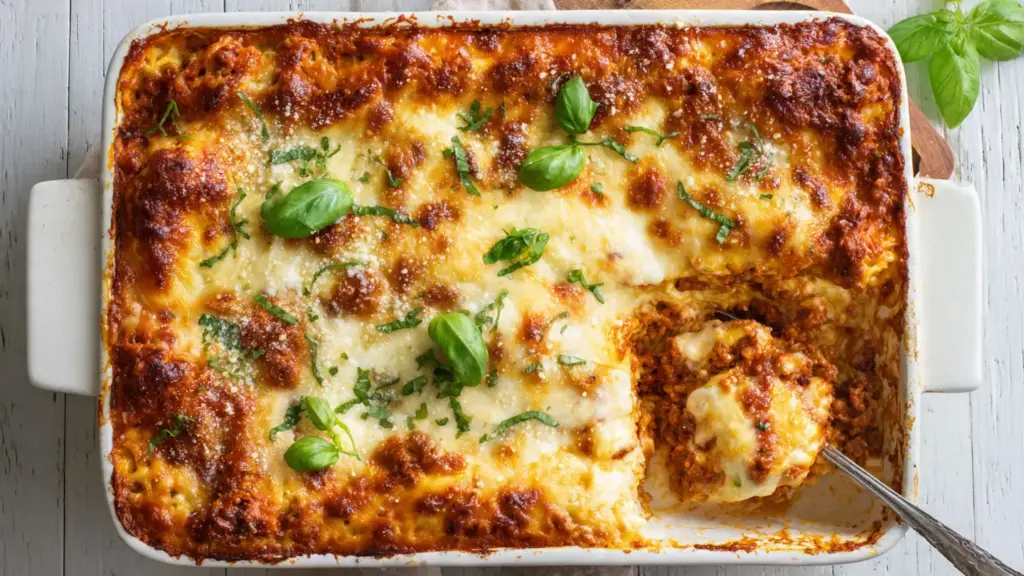
Million dollar baked spaghetti is hearty and rich enough to be the centerpiece of a full meal. Round it out with a few simple sides and you’ve got a dinner that feels truly special without a lot of extra work.
Because the casserole itself is cheesy and bold, lighter and crisper sides balance the meal beautifully.
- Garlic bread. This is the classic pairing, and for good reason. A slice of crusty Cheesy Garlic Bread soaks up every bit of sauce left on the plate. Make it extra-garlic-forward to complement the richness of the spaghetti.
- Simple green salad. A crisp romaine or mixed green salad with a bright lemon vinaigrette or red wine vinegar dressing cuts through the heaviness of the dish beautifully.
- Roasted broccoli. Roasted vegetables alongside a creamy pasta bake are an easy, nutritious addition. Roasted broccoli with a little olive oil and garlic gets wonderfully crispy and contrasts nicely with the cheesy casserole.
- Caesar salad. The tangy, umami-rich dressing of a classic Caesar works very well alongside the sweet marinara and creamy cheese of the spaghetti.
- Dinner rolls. Soft, fluffy dinner rolls are ideal for scooping up extra sauce from the plate. Set a basket in the center of the table and watch them disappear.
- Steamed green beans. A simple side of lightly salted steamed green beans adds color and a fresh, clean flavor that refreshes the palate between bites of the rich casserole.
This is the perfect pairing with a side of Classic Deviled Eggs when you’re feeding a crowd at a gathering or potluck.
Variations to Try
Once you’re comfortable with the base recipe, there are so many fun directions to take it. These variations all stay true to the spirit of the dish while changing up the flavor profile.
The beauty of this casserole structure is that it’s very flexible, so use these ideas as a launching pad.
- Add alfredo sauce to the meat sauce. One of the most popular viral versions of this recipe swaps half the marinara for a jar of alfredo sauce. The result is a richer, creamier meat sauce with a more indulgent, velvety texture. Try baked spaghetti with alfredo sauce for the full version.
- Use cottage cheese instead of ricotta. Cottage cheese is a classic substitute that many home cooks swear by. It melts beautifully, adds protein, and produces a slightly lighter cheese layer than ricotta.
- Swap the meat for ground turkey. For a lighter version with a similar flavor profile, substitute ground turkey for the beef and sausage. Amp up the seasoning with extra Italian seasoning and garlic powder since turkey has a milder flavor.
- Add spinach to the cheese layer. Fold 1 to 2 cups (30 to 60g) of fresh baby spinach or thawed, squeezed-dry frozen spinach into the ricotta and cream cheese mixture. It adds color, nutrition, and a subtle earthy flavor that works beautifully with the tomato sauce.
- Make it spicier. Use hot Italian sausage instead of mild and increase the red pepper flakes to 1 full teaspoon for a casserole with a noticeable kick.
- Go fully vegetarian. Omit the meat entirely and replace the meat sauce with a chunky marinara loaded with sauteed mushrooms, zucchini, and bell peppers for a hearty meatless option.
- Use penne or ziti instead of spaghetti. These tube-shaped pastas hold up beautifully in casseroles and are actually easier to layer than long noodles. They’re also less messy to serve to kids.
For the full meatless version of this dish, the Vegetarian Baked Spaghetti Recipe has all the details you need.
Storage and Reheating
One of the best things about this casserole is that it stores and reheats exceptionally well. Many people claim it tastes even better the next day after the flavors have had time to fully meld.
Plan ahead and make this dish on a Sunday to enjoy leftovers throughout the week with almost zero extra effort.
- Refrigerator: Store leftover casserole in an airtight container or cover the baking dish tightly with plastic wrap or aluminum foil. It keeps well in the refrigerator for up to 4 days.
- Freezer (unbaked): For the best results, freeze the casserole before baking. Assemble it completely, wrap the dish tightly in two layers of plastic wrap followed by a layer of heavy-duty aluminum foil, and freeze for up to 3 months. Thaw overnight in the refrigerator before baking as directed, adding about 10 to 15 minutes of additional baking time since the casserole will start cold.
- Freezer (baked): You can also freeze fully baked portions. Slice into individual servings, wrap each piece tightly in plastic wrap, and place in a freezer-safe bag or container. Freeze for up to 2 months. Note that the pasta texture will be slightly softer after freezing and reheating, but it’s still delicious.
- Reheating individual portions: Place a portion in a microwave-safe dish, add a small splash of water or marinara sauce over the top to prevent drying out, cover with a microwave-safe lid or damp paper towel, and heat in 90-second intervals until hot throughout.
- Reheating the full casserole: Cover the dish with foil and reheat in a 325°F (165°C) oven for 25 to 30 minutes, or until heated through. Remove the foil for the last 5 minutes to refresh the cheese topping.
For another comfort food bake with similarly great make-ahead properties, check out this Fazoli’s Baked Spaghetti recipe.
Nutritional Facts
The following estimates are based on one serving out of 10 total servings. Actual values will vary based on specific brands and any modifications made to the recipe.
- Calories: approximately 580 per serving
- Protein: 32g
- Total Fat: 28g
- Saturated Fat: 13g
- Cholesterol: 115mg
- Carbohydrates: 48g
- Fiber: 3g
- Sugar: 8g
- Sodium: 890mg
- Calcium: 320mg (approximately 25% DV)
- Iron: 3.5mg (approximately 20% DV)
Note that using leaner ground beef, reduced-fat cream cheese, or part-skim ricotta will noticeably reduce the calorie and fat content per serving, though it may affect the texture of the cheese layer slightly.
Another great protein-forward pasta option is this baked spaghetti with ground beef if you want a slightly simpler cheese profile.
Health Benefits of Key Ingredients
Beyond the comforting flavors, this casserole contains several ingredients that contribute meaningful nutrition to your meal.
The balance of protein-rich meat, calcium-heavy dairy, and tomato-based sauce makes this a surprisingly well-rounded dish.
- Ground beef is an excellent source of complete protein, providing all essential amino acids. It also delivers significant amounts of iron, zinc, and vitamin B12, all of which support energy metabolism and immune function.
- Ricotta cheese is rich in calcium and phosphorus, which are essential for bone health and strength. Whole-milk ricotta also provides a good dose of protein and vitamins A and B12.
- Marinara sauce (tomatoes) is one of the best dietary sources of lycopene, a powerful antioxidant that has been linked to reduced risk of certain cancers and cardiovascular disease. Lycopene actually becomes more bioavailable when tomatoes are cooked, which means baked tomato-based dishes maximize this benefit.
- Garlic contains allicin, a compound with well-documented antimicrobial and anti-inflammatory properties. It’s also linked to benefits for cardiovascular health and immune function.
- Mozzarella cheese is a good source of calcium and phosphorus and provides a moderate amount of protein. It’s also lower in sodium than many other aged cheeses.
- Eggs contribute high-quality protein along with choline, an essential nutrient that supports brain function and liver health. The egg used in this recipe also helps bind the pasta layer, so it’s pulling double duty.
For more tomato-forward dishes that bring similar health benefits, this homemade spaghetti sauce is a fantastic base to have in your cooking repertoire.
Frequently Asked Questions
1. Can I make million dollar baked spaghetti ahead of time?
Yes, and it’s actually one of the best recipes to prep in advance. Assemble the casserole completely up to 24 hours before baking, cover it tightly with plastic wrap, and refrigerate. When you’re ready to cook, let it sit at room temperature for about 30 minutes before putting it in the oven. Add 10 to 15 minutes of extra covered baking time since it will start cold.
2. Why is it called “million dollar” baked spaghetti?
The name refers to how incredibly rich and indulgent the dish tastes, despite being made with very affordable, everyday ingredients. The combination of cream cheese, ricotta, and mozzarella creates a creamy, luxurious texture that feels far more expensive than it actually is. Some say the name captures that “wow” reaction you get from every person who tries it for the first time.
3. Can I substitute the cream cheese with something else?
Sour cream is the most common substitute if you’re out of cream cheese. Use the same amount and combine it with the ricotta as directed. The texture will be slightly looser and the flavor a bit more tangy, but the overall result is still delicious. Cottage cheese is another option and works particularly well if you prefer a lighter, more protein-dense filling.
4. How do I know when the casserole is fully cooked?
The casserole is done when the cheese on top is golden and bubbly, the sauce is visibly bubbling around the edges, and the center is hot all the way through. If you have an instant-read thermometer, the internal temperature should read at least 165°F (74°C). The total baking time is usually around 45 to 50 minutes, but ovens vary, so keep an eye on it after the foil comes off.
5. Can I use different pasta shapes instead of spaghetti?
Absolutely. Penne, ziti, and rigatoni all work well and are actually a little easier to layer and serve than long strands of spaghetti. Use the same total weight of pasta (1 lb / 450g) and cook it the same way. The slightly shorter cooking time on penne versus spaghetti means you may need to reduce the par-cooking time by a minute or two.
You might also enjoy: Lasagna Soup Recipe
Final Thoughts
This million dollar baked spaghetti truly delivers on its name. Every layer serves a purpose, from the buttery pasta that holds its shape through baking, to the creamy ricotta and cream cheese filling that melts into a silky, indulgent center, to the golden mozzarella crust that pulls apart in long, satisfying strands.
It’s the kind of dinner that brings everyone to the table and keeps them there.
If you’ve been looking for a pasta bake that works for weeknight dinners, holiday gatherings, potlucks, and meal prep all at once, this is it.
Try it this week and let me know how it turns out in the comments below. Did you make any swaps or add your own twist? I’d love to hear about it!
Recommended:
- Stuffed Shells Recipe
- Southern Baked Spaghetti Recipe
- Baked Spaghetti with Cottage Cheese
- Easy Lasagna Recipe
- Classic Lasagna with Ricotta Recipe
- Baked Mac and Cheese
- Tuna Noodle Casserole Recipe
- Chicken Casserole Recipe
- Baked Chicken Spaghetti Recipe
- San Giorgio Lasagna Recipe