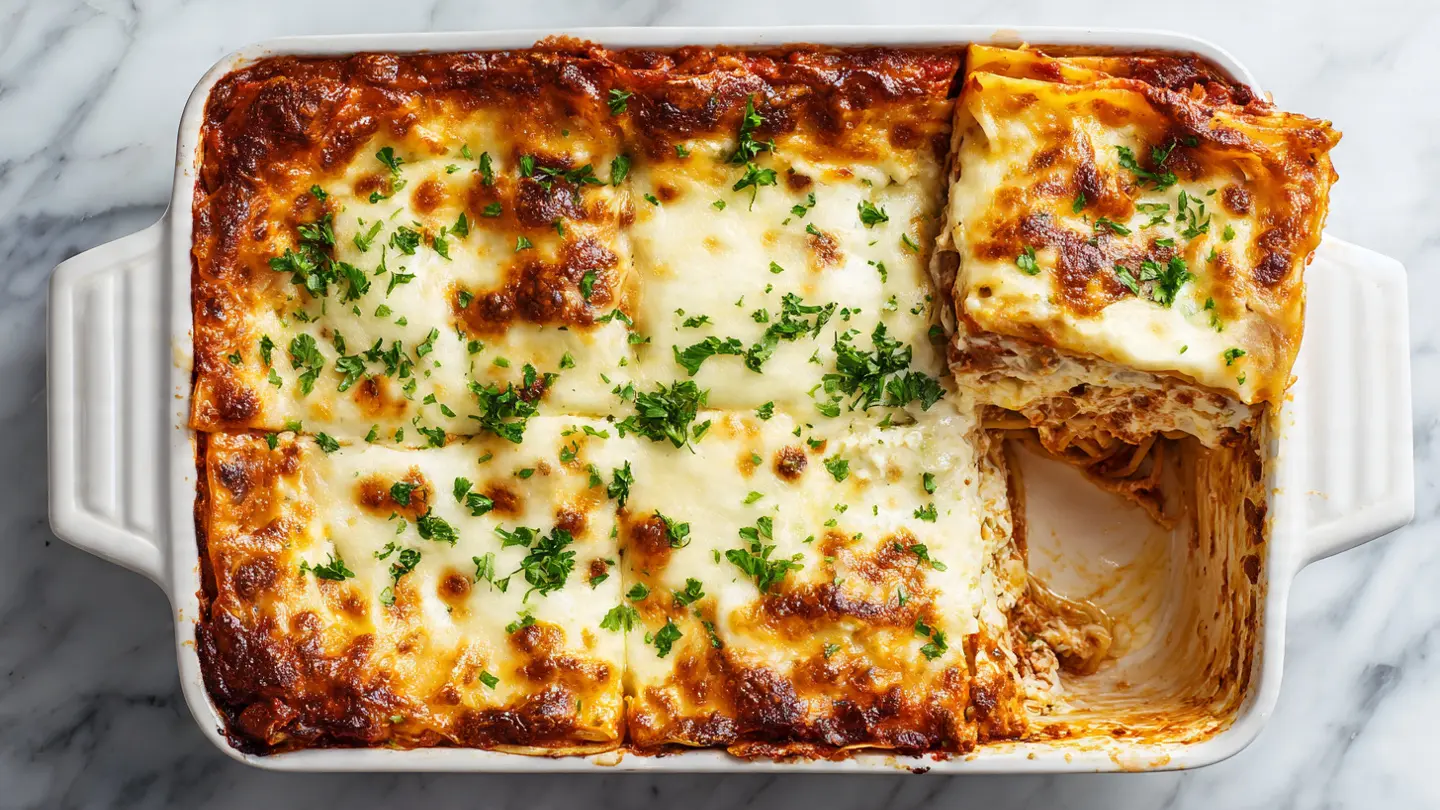
Few things hit the dinner table and cause an immediate round of excitement quite like a bubbling, golden pan of baked spaghetti recipe with ricotta cheese. It has everything you love about classic spaghetti but taken up a notch: hearty meat sauce, perfectly cooked noodles, and a creamy ricotta layer that melts into the pasta as it bakes.
Think of it as lasagna’s easier, more casual cousin. You get those beautiful layers of pasta, sauce, and cheese without having to fuss with wide, floppy noodles.
This is the kind of dish that makes your kitchen smell absolutely incredible and has everyone at the table asking for seconds. It’s a guaranteed crowd-pleaser for weeknight family dinners, potlucks, or any time you want a comforting, filling meal that comes together without a lot of drama.
The secret to why ricotta works so beautifully here is in its texture and fat content. Full-fat ricotta is smooth and creamy, and when it’s mixed with egg, Parmesan, and herbs, it forms a layer that binds the entire casserole together – similar to what happens in a classic lasagna. It stays creamy inside while the top layer of mozzarella gets golden and bubbly.
Best of all, you can prep the whole thing in advance, refrigerate it, and bake it when you’re ready. That makes it one of the smartest meals to have in your rotation.
You might also enjoy: Homemade Baked Spaghetti
Why You’ll Love This Baked Spaghetti Recipe with Ricotta Cheese
This dish earns a permanent spot in your regular meal rotation for so many good reasons.
It delivers all the comfort of a traditional baked pasta without requiring the precision or time commitment of homemade lasagna. The spaghetti noodles are more forgiving, and the layering process is refreshingly simple.
The ricotta layer is the real star here – it adds a creaminess that plain meat sauce and mozzarella just can’t replicate on their own. Each forkful gets a little of everything: savory sauce, tender pasta, and that luscious cheese filling.
It’s also incredibly family-friendly. Even picky eaters who turn their noses up at “fancy” food tend to devour this because, at its heart, it’s just cheesy, saucy pasta.
It reheats beautifully too. Many people agree that the leftovers taste even better the next day, once the flavors have had more time to meld together in the fridge.
Here’s a quick summary of why this recipe works so well:
- The ricotta filling (mixed with egg and Parmesan) creates a creamy, structured layer that holds the casserole together
- Cooking the spaghetti just shy of al dente ensures it won’t turn mushy after baking
- The meat sauce gets a full simmering time so it’s rich and deeply flavored before the casserole even goes in the oven
- The top layer of mozzarella browns and bubbles in the oven, creating that irresistible golden crust
- The layered structure means you get a perfect combination of ingredients in every single bite
- The dish scales up beautifully if you need to feed a larger group
The same cheese-layering technique is used to equally delicious effect in Baked Ziti – another comforting pasta bake worth adding to your lineup.
Ingredients
This recipe uses familiar, easy-to-find ingredients. Using whole-milk ricotta over part-skim will give you a noticeably creamier, richer filling – it’s worth the small extra cost.
Here’s everything you’ll need:
- 1 lb (450g) dry spaghetti
- 1 lb (450g) 80/20 ground beef
- 1 medium yellow onion, diced
- 4 cloves garlic, minced
- 1 teaspoon Italian seasoning
- 1/2 teaspoon dried oregano
- 1/2 teaspoon salt, plus more for pasta water
- 1/4 teaspoon black pepper
- 1/4 teaspoon red pepper flakes (optional, for heat)
- 24 oz (680g) marinara sauce (one large jar)
- 1/4 cup (60ml) water (to rinse out the jar)
- 15 oz (425g) whole-milk ricotta cheese
- 2 large eggs
- 1/2 cup (50g) grated Parmesan cheese, divided
- 1/4 cup fresh parsley, finely chopped (plus more for garnish)
- 2 cups (225g) shredded whole-milk mozzarella cheese, divided
- 1 tablespoon olive oil
Read Also: Lasagna Recipe with Ricotta
Kitchen Equipment Needed
You don’t need any specialty tools for this recipe – just solid, reliable basics. A 9×13-inch baking dish is the standard size for this recipe and gives you the ideal depth and surface area for the layers.
Here’s what to have ready:
- 9×13-inch baking dish
- Large pot (for boiling pasta)
- Large deep skillet or sauté pan (for the meat sauce)
- Medium mixing bowl (for the ricotta mixture)
- Colander (for draining pasta)
- Wooden spoon or spatula
- Fork or whisk (for mixing the ricotta filling)
- Measuring cups and spoons
- Sharp knife and cutting board
- Aluminum foil
This casserole pairs wonderfully with other cheesy Italian pasta dishes – try Stuffed Shells the next time you have ricotta left over from this recipe.
Recommended Products for This Recipe
These are products I recommend based on quality and performance. They’ll make a real difference in how this dish turns out.
1. Whole Milk Ricotta Cheese (Premium Quality)
Not all ricotta is created equal. Whole-milk ricotta has a richer, creamier texture than part-skim versions, which means your filling layer will be noticeably smoother and more indulgent. Look for brands like Galbani or BelGioioso for the best results. A watery ricotta can make the casserole soggy, so quality matters here.
2. Rao’s Homemade Marinara Sauce
The quality of your jarred sauce has a huge impact on the final dish. Rao’s is consistently one of the top-rated marinara sauces for its clean ingredient list, low sugar content, and truly rich tomato flavor. It tastes much closer to homemade than most other jarred options, and it shows in the final casserole.
3. Emile Henry Ceramic Baking Dish
A good ceramic baking dish distributes heat evenly, which helps your casserole bake through without the edges drying out or burning. Ceramic also retains heat much better than glass or metal, keeping the dish warm longer after it comes out of the oven. Emile Henry’s baking dishes are also oven-safe up to 500°F and come in beautiful colors.
4. Microplane Premium Zester/Grater
Freshly grated Parmesan from a block makes a noticeable difference compared to the pre-grated variety in the green can. A Microplane grater gives you finely grated cheese that melts seamlessly into the ricotta filling and on top of the casserole. It’s one of those tools you’ll use constantly once you have it.
5. OXO Good Grips Wooden Spoon Set
Breaking up ground beef and stirring a thick meat sauce calls for a sturdy wooden spoon that can handle heat and pressure. OXO’s wooden spoon set is solid, comfortable to hold, and won’t scratch your cookware. A must for any stovetop cooking.
Another great Italian-American baked pasta dish to try is Baked Chicken Spaghetti – a lighter, creamy variation that’s equally crowd-pleasing.
Step-by-Step Instructions
Step 1: Preheat the Oven and Prep Your Baking Dish
- Preheat your oven to 375°F (190°C). This slightly higher temperature (compared to 350°F) helps the top layer of mozzarella develop a beautiful golden-brown color within the 30-minute baking window.
- Grease a 9×13-inch baking dish thoroughly with cooking spray or a light coat of olive oil on a paper towel. Make sure to get the corners and sides – you don’t want any noodles sticking.
- Set the dish aside on your counter where it will be easy to access during assembly.
Step 2: Cook the Spaghetti to Just Under Al Dente
- Bring a large pot of water to a full rolling boil over high heat. The pot should be large enough to hold at least 4-5 quarts (4-5 liters) of water so the pasta has room to move and doesn’t stick together.
- Add a generous amount of salt to the boiling water – about 1 to 2 tablespoons. The water should taste lightly salty. This is the only opportunity you have to season the pasta itself.
- Add the spaghetti and cook for 1 to 2 minutes less than the package directions indicate for al dente. The pasta will continue cooking in the oven, and you want it firm enough to hold up during baking. Mushy pasta ruins the texture of the final dish.
- Drain the spaghetti in a colander. Do not rinse it – the starch on the surface helps the sauce cling to the noodles. If needed, toss the drained pasta with a drizzle of olive oil to prevent sticking while you prepare the sauce.
- Set the cooked spaghetti aside.
Step 3: Make the Meat Sauce
- Heat 1 tablespoon of olive oil in a large deep skillet over medium-high heat. You want the pan nice and hot before adding the beef so it browns rather than steams.
- Add the diced onion to the hot skillet and cook for 2 to 3 minutes, stirring occasionally, until it begins to soften and turn translucent.
- Add the 1 lb (450g) of 80/20 ground beef to the skillet. Use a wooden spoon to break it up into smaller pieces as it cooks. The fat content in 80/20 beef gives the sauce more flavor and richness. Cook until the beef is fully browned and no pink remains, about 6 to 8 minutes.
- Add the minced garlic, Italian seasoning, dried oregano, 1/2 teaspoon salt, black pepper, and red pepper flakes (if using). Stir everything together and cook for 1 additional minute until the garlic is fragrant.
- Pour in the 24 oz (680g) of marinara sauce. Fill the empty jar with 1/4 cup (60ml) of water, swirl it around to capture all the remaining sauce, and add that to the skillet as well. This step ensures you use every bit of sauce and also slightly loosens it to help it bake through evenly.
- Stir well to combine all ingredients. Bring the sauce to a gentle simmer over medium heat, then reduce to medium-low. Let the sauce simmer for 10 minutes, stirring occasionally. Simmering allows the flavors to deepen and the sauce to thicken slightly.
- Taste the sauce and adjust seasoning with additional salt and pepper if needed. Remove from heat and set aside.
Step 4: Make the Ricotta Filling
- In a medium mixing bowl, add the 15 oz (425g) of whole-milk ricotta cheese.
- Crack in the 2 large eggs and add 1/4 cup (25g) of the grated Parmesan cheese (save the other 1/4 cup for the topping).
- Add the 1/4 cup of finely chopped fresh parsley and a small pinch of salt and pepper.
- Using a fork or whisk, mix everything together until well combined and smooth. The eggs are essential here – they act as a binder that holds the ricotta layer together as it bakes, giving you a firm, sliceable casserole rather than a runny, loose filling.
- Taste the mixture and adjust with a little extra salt if needed. Set aside.
Step 5: Toss the Pasta with Some Sauce
- Transfer the drained spaghetti to a large bowl or back to the empty cooking pot.
- Add approximately one-third to one-half of the meat sauce to the pasta and toss gently to coat the noodles. This step is key – coating the pasta with sauce before layering means the bottom layer won’t taste dry or bland. The noodles absorb some sauce as they bake, so starting them sauced is important.
- Use tongs to gently toss and ensure the sauce coats the noodles evenly.
Step 6: Assemble the Casserole
- Spread a very thin layer of the remaining meat sauce (just a few spoonfuls) across the bottom of your greased baking dish. This prevents the bottom noodles from sticking and drying out.
- Add half of the sauced spaghetti to the baking dish. Use tongs to spread it into an even layer across the entire bottom.
- Dollop the entire ricotta filling evenly over the spaghetti layer. Use the back of a spoon or a spatula to gently spread it into an even layer. Don’t press too hard – you want it to sit on top of the noodles, not be pushed into the spaces between them.
- Sprinkle 3/4 cup (about 85g) of the shredded mozzarella evenly over the ricotta layer.
- Add the remaining sauced spaghetti on top of the mozzarella layer. Spread it gently with tongs to create an even layer.
- Pour all the remaining meat sauce evenly over the top layer of spaghetti. Make sure the noodles are completely covered with sauce – exposed noodles on top will dry out and become crunchy during baking.
- Sprinkle the remaining mozzarella cheese (about 1 and 1/4 cups, or 140g) evenly over the top, followed by the remaining 1/4 cup (25g) of grated Parmesan cheese.
Step 7: Bake the Casserole
- Place the baking dish, uncovered, on the middle rack of your preheated 375°F (190°C) oven.
- Bake for 25 to 30 minutes, until the edges are actively bubbling, the cheese on top is fully melted, and golden-brown spots have formed across the surface. The golden spots are a sign that the cheese has caramelized slightly – that’s exactly what you want for great flavor and texture.
- If the cheese is browning too quickly before the casserole has heated through (unlikely at this temperature but possible if your oven runs hot), tent it loosely with aluminum foil and continue baking.
- Remove the casserole from the oven and let it rest on a wire rack or counter for at least 10 to 15 minutes before serving. This resting period allows the ricotta layer to firm up completely, making the casserole much easier to cut and serve in clean squares.
Step 8: Garnish and Serve
- Once rested, use a sharp spatula or serving spoon to cut the casserole into squares or scoop portions directly onto plates.
- Sprinkle each serving with a pinch of fresh chopped parsley for a burst of fresh flavor and color.
- Serve immediately with your favorite sides and enjoy.
If you love a rich tomato-based meat sauce, be sure to also try this Easy Lasagna Recipe that uses many of the same techniques and layers.
Tips for Success
A few small details can make a big difference in how this casserole turns out. Keeping these points in mind will ensure you get the best possible result every single time.
Follow these tips for the best baked spaghetti with ricotta:
- Don’t overcook the pasta. Pull the spaghetti out 1 to 2 minutes before it reaches al dente. The pasta continues cooking in the oven, and overcooked noodles will become mushy and unpleasant in the final dish.
- Use whole-milk ricotta. Part-skim ricotta tends to be waterier, which can make the filling runny. Whole-milk ricotta gives you a firmer, creamier layer with a richer flavor.
- Always mix eggs into the ricotta. The eggs are what turn a loose cheese filling into a structured, sliceable layer. Don’t skip them.
- Cover the top layer of noodles completely with sauce. Any noodles left exposed will dry out and turn stiff or crispy during baking. Every noodle should be under a blanket of sauce.
- Let the casserole rest before cutting. This is the most skipped and most important tip. Resting for 10 to 15 minutes allows everything to firm up, which makes the difference between a neat, layered serving and a messy, falling-apart scoop.
- Use a large enough skillet for the sauce. You’re adding a full jar of marinara sauce plus water to browned ground beef – you need a pan deep enough to hold it all comfortably.
- Make it ahead of time. Assemble the entire casserole the night before, cover tightly with foil, and refrigerate. Let it sit at room temperature for 30 minutes before baking, then add 10 to 15 extra minutes to the baking time.
Read Also: Spaghetti Sauce Recipe
Serving Suggestions
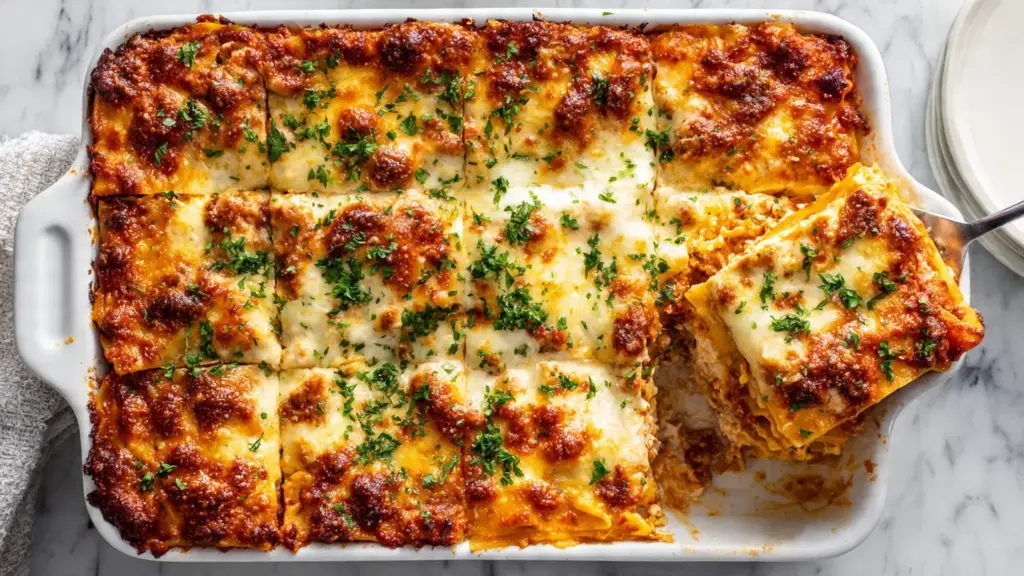
Baked spaghetti with ricotta is a complete, hearty meal on its own, but the right sides make the whole dinner feel more special and well-rounded. A crisp salad and good bread are the classic companions.
Here are some great ways to serve this dish:
- Cheesy Garlic Bread is the classic partner – perfect for soaking up any extra sauce on the plate
- A simple Broccoli Salad adds freshness and crunch that balances the richness of the casserole
- A green garden salad with a bright vinaigrette cuts through the richness beautifully
- Classic Deviled Eggs make a fun appetizer before a big pasta dinner
- A glass of medium-bodied red wine like Chianti or Montepulciano pairs wonderfully with the tomato-based meat sauce
- Warm Dinner Rolls are another excellent bread option, especially for a more casual family dinner setting
- Roasted vegetables like asparagus or zucchini work well as a lighter side if you want to balance the meal
Variations to Try
Once you’ve made this version and know you love it, there’s a whole world of variations worth exploring. This is a wonderfully flexible casserole that adapts to different tastes and ingredients easily.
Here are some popular variations to consider:
- Million Dollar Baked Spaghetti: Adds cream cheese and sour cream to the ricotta filling for an even richer, more indulgent version that’s earned its name
- Baked Spaghetti with Cottage Cheese: Swaps the ricotta for cottage cheese – a slightly lighter option with a similar creamy result
- Vegetarian Baked Spaghetti: Skip the ground beef and use sautéed mushrooms, zucchini, and bell peppers for a meat-free version that’s just as satisfying
- Baked Spaghetti with Alfredo Sauce: Replace the marinara with a creamy Alfredo sauce for a completely different but equally delicious flavor profile
- Southern Baked Spaghetti: A heartier version that typically includes a combination of ground beef and Italian sausage with extra layers of cheese
- Fazoli’s Baked Spaghetti: A copycat version inspired by the popular restaurant chain, with a slightly different cheese blend and sauce approach
- Spicy version: Add 1/2 teaspoon of crushed red pepper flakes to the meat sauce and use spicy Italian sausage in place of ground beef for a kick of heat
- Ground turkey version: Swap the beef for ground turkey for a leaner version – the flavor of the sauce carries the dish beautifully
Storage and Reheating
This casserole stores and reheats extremely well, which makes it one of the best meal-prep dishes in the Italian-American comfort food category. Leftovers are wonderful.
Follow these guidelines for storage and reheating:
- Refrigerator: Let the casserole cool completely before covering. Store leftovers in an airtight container or cover the baking dish tightly with plastic wrap or aluminum foil. It will keep well in the refrigerator for up to 4 days.
- Freezer: Allow the casserole to cool completely, then cut it into individual portions. Wrap each portion in plastic wrap followed by a layer of aluminum foil, or place them in freezer-safe containers. Store for up to 3 months. Thaw overnight in the refrigerator before reheating.
- Reheat in the oven (best method): Place leftover portions in an oven-safe dish, add a small spoonful of marinara or water to keep the noodles moist, cover with foil, and bake at 350°F (175°C) for about 20 minutes, or until heated through. Remove the foil for the last 5 minutes to crisp up the cheese.
- Reheat in the microwave (quick method): Place a single serving on a microwave-safe plate, cover loosely with a damp paper towel to trap moisture, and heat on medium power in 90-second intervals until heated through.
- Make ahead: Assemble the entire unbaked casserole up to 24 hours in advance, cover tightly with foil, and refrigerate. Add 10 to 15 minutes to the baking time and let the dish sit at room temperature for 30 minutes before putting it in the oven.
For another pasta bake that stores and reheats just as well, take a look at this Classic Lasagna with Ricotta recipe.
Nutritional Facts
The following nutrition information is based on one serving of this recipe, assuming it is cut into 8 equal portions from a 9×13-inch pan. Exact values will vary depending on the specific brands and products used.
| Nutrient | Per Serving |
|---|---|
| Calories | ~540 kcal |
| Total Fat | 23g |
| Saturated Fat | 11g |
| Cholesterol | 115mg |
| Sodium | 960mg |
| Total Carbohydrates | 47g |
| Dietary Fiber | 4g |
| Sugars | 7g |
| Protein | 33g |
| Calcium | 290mg |
| Iron | 3mg |
Note: Nutritional values are estimates. For the most accurate results, calculate based on the specific brands and quantities of ingredients you use.
Another balanced and satisfying pasta-based meal worth bookmarking is Baked Spaghetti with Ground Beef – a slightly simpler version that’s equally filling.
Health Benefits of Key Ingredients
While this is definitely a comfort food recipe, several of its core ingredients bring real nutritional value to the table.
Here’s a closer look at what some of the key ingredients contribute:
- Ricotta cheese is an excellent source of calcium and protein, and whole-milk ricotta also contains conjugated linoleic acid (CLA), a fatty acid that has been associated with various health benefits in research settings. It’s also lower in sodium than many other cheeses.
- Ground beef (80/20) provides a significant amount of complete protein – all essential amino acids – along with zinc, iron, and B vitamins including B12 and niacin, which support energy metabolism and red blood cell production.
- Garlic contains allicin, a compound with well-documented antimicrobial and anti-inflammatory properties. It also supports cardiovascular health and has antioxidant effects.
- Tomato-based marinara sauce is rich in lycopene, a powerful antioxidant that becomes more bioavailable when tomatoes are cooked and combined with a small amount of fat (which the olive oil in this dish provides).
- Parsley isn’t just a garnish – it’s a surprisingly rich source of vitamin K, vitamin C, and folate. Just two tablespoons of fresh parsley contain more than 150% of the recommended daily intake of vitamin K.
- Olive oil provides monounsaturated fats, which are associated with heart health. Extra virgin olive oil also contains polyphenols, which have antioxidant properties.
Read Also: Easy Baked Spaghetti Recipe
Frequently Asked Questions
1. Can I use part-skim ricotta instead of whole-milk ricotta?
Yes, you can use part-skim ricotta, but the filling will be slightly less creamy and rich in flavor. Part-skim ricotta also tends to contain more water, which can make the filling a bit runny if you’re not careful. To compensate, drain the part-skim ricotta briefly through a fine mesh strainer or cheesecloth for about 15 to 20 minutes before mixing it with the eggs and Parmesan. This removes excess moisture and helps the filling set more firmly during baking.
2. Can I make this dish ahead of time?
Absolutely, and it’s actually one of the best features of this recipe. Assemble the entire casserole as instructed but don’t bake it. Cover the dish tightly with aluminum foil and refrigerate for up to 24 hours. When you’re ready to bake, remove the casserole from the refrigerator and let it sit on the counter for about 30 minutes to take the chill off. This helps it bake evenly. Add approximately 10 to 15 minutes to the baking time to account for the cold temperature, and keep the foil on for the first 20 minutes before uncovering to brown the cheese.
3. Can I freeze baked spaghetti with ricotta?
Yes, this dish freezes well both before and after baking. To freeze before baking, assemble the casserole, cover tightly with a double layer of plastic wrap followed by aluminum foil, and freeze for up to 3 months. Thaw completely in the refrigerator overnight before baking as directed. To freeze after baking, let it cool fully, cut it into individual portions, wrap each tightly, and freeze for up to 3 months. Reheat from frozen or after thawing in the oven at 350°F (175°C), covered with foil, until heated through.
4. What can I use instead of ground beef?
This recipe is flexible when it comes to the protein. Ground Italian sausage (mild or hot) gives the sauce more pronounced herb and spice flavor and is one of the most popular substitutions. A combination of half ground beef and half Italian sausage is another classic approach that adds depth. Ground turkey or ground chicken work well for a leaner option – just be sure to season the meat generously since it has less inherent fat for flavor. For a vegetarian version, sautéed mushrooms (especially cremini or a mix) and diced eggplant are excellent choices that give the sauce a hearty, meaty texture.
5. Why did my baked spaghetti turn out watery?
A watery casserole is usually caused by one of two things. First, the marinara sauce may not have been simmered long enough – giving it that full 10-minute simmer on the stovetop allows excess liquid to cook off and the sauce to thicken before it goes into the oven. Second, a watery or low-quality ricotta can release liquid during baking and flood the bottom of the dish. Always use whole-milk ricotta when possible, and if using part-skim, drain it briefly before use. Also, make sure you’re baking the dish uncovered – covering it traps steam and encourages sogginess.
If you love Italian-American pasta dishes, you’ll also want to check out this San Giorgio Lasagna Recipe for another classic comfort food bake.
Final Thoughts
This baked spaghetti recipe with ricotta cheese is one of those recipes that earns a standing ovation every single time it hits the table. It’s comforting, satisfying, and layered with all the flavors that make Italian-American food so universally loved – savory meat sauce, creamy ricotta, tender pasta, and golden, bubbling mozzarella.
It’s approachable enough for a busy Tuesday night and impressive enough to bring to a potluck or serve at a dinner gathering. Once your family tastes it, it’s going to become a regular request.
Give this recipe a try and see just how easy it is to make a layered baked pasta that feels truly special. Drop a comment below to let us know how it turned out, and feel free to share any fun variations you tried!
Recommended:
- Twice Baked Spaghetti Recipe
- Baked Spaghetti Recipe with Cream Cheese
- Lasagna Recipe with Cottage Cheese
- Tomato Sauce Recipe
- Marinara Sauce Recipe
- Italian Meatballs Recipe
- Lasagna Soup Recipe
- Easy Garlic Bread Recipe
- Pasta Fagioli Recipe
- Turkey Tetrazzini Recipe