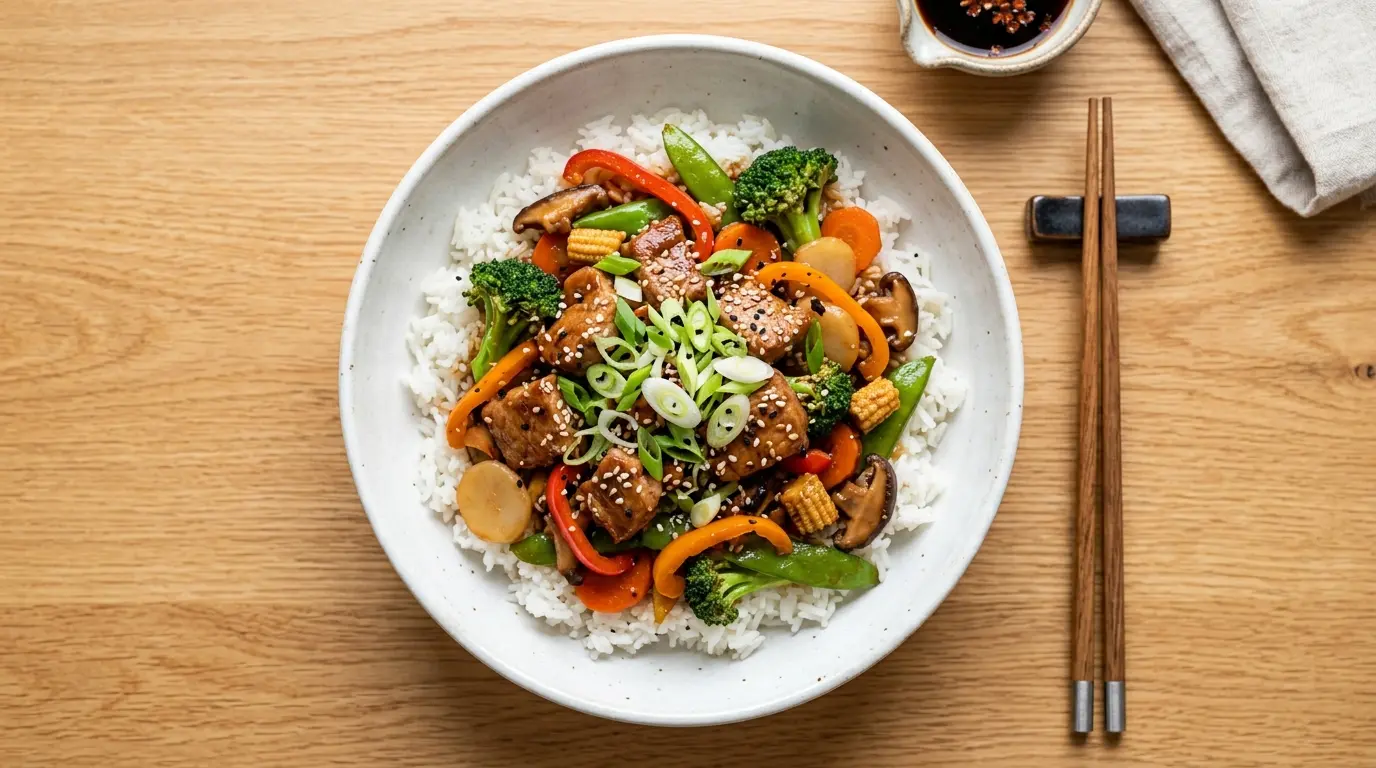
If you’ve been looking for a weeknight dinner that’s fast, flavorful, and satisfying, this pork chop stir-fry recipe is exactly what you need. Tender strips of pork chop are tossed with crisp vegetables in a savory, umami-packed sauce that clings to every bite. The whole dish comes together in under 30 minutes, making it an ideal choice for busy evenings when you want something homemade without the fuss.
What makes pork chop stir-fry so appealing is the balance of textures and flavors. The pork stays juicy on the inside with a slightly caramelized exterior, while the vegetables add freshness and crunch.
A classic stir-fry sauce built on soy sauce, oyster sauce, and sesame oil brings everything together with that unmistakable savory depth. Serve it over steamed white rice or noodles, and dinner is done.
This recipe follows the traditional Chinese-American stir-fry technique using a very hot pan and quick cooking, which is the key to getting that restaurant-quality sear at home.
For another fantastic Asian-inspired skillet dinner, check out this Skillet Chicken Bulgogi Recipe for another quick and flavorful option.

Why You’ll Love This Pork Chop Stir-Fry Recipe
This dish hits all the right notes for a satisfying weeknight meal. It’s fast, flexible, and endlessly customizable with whatever vegetables you have on hand.
Here’s why this recipe deserves a regular spot in your dinner rotation:
- Ready in under 30 minutes from start to finish, including prep
- Budget-friendly since boneless pork chops are one of the most affordable cuts of meat
- Packed with protein and vegetables in a single pan, so cleanup is minimal
- Versatile because you can swap in different veggies, noodles, or rice depending on what you have
- Better than takeout thanks to a homemade stir-fry sauce with no mystery ingredients
- Beginner-friendly with simple steps that don’t require any advanced cooking skills
- Meal-prep approved since leftovers reheat beautifully the next day
You might also enjoy: Chicken Stir-Fry Recipe
Ingredients
You’ll need a handful of pantry staples and fresh produce to make this stir-fry come together beautifully. The sauce ingredients are the most important part, so don’t skip any of them.
- 1.5 lbs (680g) boneless pork chops, thinly sliced against the grain
- 2 tablespoons soy sauce (for marinating)
- 1 tablespoon cornstarch (for marinating)
- 1 teaspoon sesame oil (for marinating)
- 3 tablespoons soy sauce (for the sauce)
- 2 tablespoons oyster sauce
- 1 tablespoon hoisin sauce
- 1 teaspoon sesame oil (for the sauce)
- 1 tablespoon cornstarch mixed with 2 tablespoons water (slurry)
- 1 teaspoon sugar
- 1/2 teaspoon white pepper
- 3 tablespoons neutral oil (vegetable or avocado oil), divided
- 1 medium bell pepper (red or green), thinly sliced
- 1 medium yellow onion, thinly sliced
- 2 cups (180g) broccoli florets
- 1 cup (90g) snap peas or snow peas
- 3 cloves garlic, minced
- 1 teaspoon fresh ginger, minced or grated
- 2 green onions, sliced, for garnish
- 1 teaspoon toasted sesame seeds, for garnish
- Cooked white rice or noodles, for serving
Read Also: Stir-Fry Sauce Recipe
Kitchen Equipment Needed
Having the right tools on hand makes a big difference in stir-fry cooking. High heat and quick movements are essential, so a proper pan and utensils matter.
- Large wok or 12-inch skillet (carbon steel or stainless steel preferred)
- Sharp chef’s knife and cutting board
- Wooden spoon or silicone spatula
- Mixing bowls (at least 2, for marinade and sauce)
- Measuring spoons and cups
- Garlic press or microplane grater for ginger
- Tongs (optional but helpful)
- Serving bowls or plates
Read Also: Asian Ground Beef Noodle Bowls
Recommended Products for This Recipe
These are products I genuinely recommend based on quality and performance. They can make a real difference in how your stir-fry turns out.
1. Carbon Steel Wok
A carbon steel wok heats up faster and reaches higher temperatures than a standard skillet, which is essential for achieving that slightly charred, restaurant-style flavor known as “wok hei.” It’s a worthwhile investment if you make stir-fries regularly. Lighter than cast iron but just as durable, it will last for decades with proper seasoning.
2. Premium Oyster Sauce
Not all oyster sauces are created equal. A high-quality oyster sauce with a rich, concentrated flavor makes a noticeable difference in the depth of your stir-fry sauce, giving it that savory, slightly sweet complexity you’d expect from a restaurant dish.
3. Toasted Sesame Oil
Cold-pressed toasted sesame oil has a much deeper, nuttier aroma than generic sesame oil. Just a small drizzle at the end of cooking elevates the entire dish. Look for 100% pure toasted sesame oil for the best results.
4. Microplane Zester and Grater
Freshly grated ginger makes a huge difference in stir-fry flavor compared to dried or powdered alternatives. A microplane makes it quick and effortless, and you can also use it for garlic, citrus zest, and more.
For another quick and satisfying dinner idea, try this Chicken Lo Mein Recipe that uses many of the same pantry ingredients.

Step-by-Step Instructions
Step 1: Slice and Marinate the Pork
- Place your boneless pork chops on a cutting board and pat them dry with paper towels. Moisture is the enemy of a good sear.
- Slice the pork chops thinly, about 1/4 inch (6mm) thick, cutting against the grain. Cutting against the grain shortens the muscle fibers, which makes the pork more tender when cooked.
- Place the sliced pork into a medium bowl and add 2 tablespoons soy sauce, 1 tablespoon cornstarch, and 1 teaspoon sesame oil.
- Toss everything together until the pork is evenly coated. The cornstarch creates a light coating that helps lock in moisture and gives the pork a slightly velvety texture once cooked.
- Let the pork marinate at room temperature for at least 15 minutes. If you have more time, marinate in the refrigerator for up to 2 hours.
Step 2: Mix the Stir-Fry Sauce
- In a small bowl, combine 3 tablespoons soy sauce, 2 tablespoons oyster sauce, 1 tablespoon hoisin sauce, 1 teaspoon sesame oil, 1 teaspoon sugar, and 1/2 teaspoon white pepper.
- Stir until the sugar is fully dissolved and everything is well combined.
- In a separate small bowl or cup, mix 1 tablespoon cornstarch with 2 tablespoons cold water until smooth. This is your slurry, which will thicken the sauce at the end.
- Set both the sauce and the cornstarch slurry aside near the stove, because stir-frying moves fast and you’ll need them ready to go.
Step 3: Prep All Your Vegetables
- Wash and dry all your vegetables before you begin cooking. Wet vegetables will steam instead of stir-fry.
- Thinly slice the bell pepper into strips, about 1/4 inch (6mm) wide.
- Slice the yellow onion into thin half-moons.
- Cut the broccoli into small, bite-sized florets so they cook quickly. If the florets are large, they won’t be done by the time everything else is ready.
- Trim the snap peas or snow peas and remove the strings if necessary.
- Mince the garlic cloves finely, and grate or mince the fresh ginger. Having everything prepped and within arm’s reach is essential in stir-frying, because you won’t have time to stop and chop once the heat is on.
Step 4: Sear the Pork
- Place your wok or large skillet over high heat. Let it get very hot before adding oil. You should see a faint wisp of smoke before you add anything.
- Add 2 tablespoons of neutral oil and swirl to coat the bottom of the pan.
- Add the marinated pork in a single layer. Do not stir immediately. Let it sear undisturbed for 1 to 1.5 minutes so it develops a golden-brown crust on one side.
- Flip the pork pieces and cook for another 30 to 60 seconds until just cooked through. Pork cooks very fast when sliced this thin, so watch carefully to avoid overcooking.
- Remove the cooked pork from the wok and set it aside on a plate. Do not discard any juices that have collected on the plate; you’ll add them back later.
Step 5: Stir-Fry the Vegetables
- Return the wok to high heat. Add the remaining 1 tablespoon of oil.
- Add the sliced onion and bell pepper to the hot wok first. These take a bit longer to soften. Stir-fry them for about 2 minutes, tossing constantly.
- Add the broccoli florets and snap peas. Toss everything together and stir-fry for another 2 minutes. The broccoli should be bright green and slightly tender but still have a crisp bite.
- Push the vegetables to the sides of the wok to create a hot spot in the center.
- Add the minced garlic and ginger to the center of the wok and stir them into the hot oil for about 30 seconds until fragrant. Be careful not to burn the garlic. Burnt garlic will turn the whole dish bitter.
Step 6: Combine and Sauce
- Return the seared pork to the wok along with any resting juices from the plate.
- Pour the prepared stir-fry sauce over everything and toss well to coat the pork and vegetables evenly.
- Give the cornstarch slurry a quick stir to recombine it (it settles quickly), then pour it into the wok while tossing everything together.
- Stir-fry for another 60 seconds. The sauce will thicken and become glossy as the cornstarch activates in the heat.
- Taste the stir-fry and adjust seasoning if needed. Add a pinch more sugar if you want a slightly sweeter profile, or a small splash of soy sauce for more saltiness.
Step 7: Garnish and Serve
- Remove the wok from the heat.
- Scatter the sliced green onions and toasted sesame seeds over the top of the stir-fry.
- Serve immediately over steamed white rice or noodles. Stir-fry is best eaten right away while the vegetables are still crisp and the sauce is glossy and hot.
For a great noodle-based alternative, this Chicken Pad Thai Recipe uses a similar quick-cooking method and flavor-forward sauce.
Tips for Success
A few key techniques make the difference between a great stir-fry and a soggy, unevenly cooked one. Keep these tips in mind every time you make this dish.
- Use the highest heat your stove allows. Stir-frying requires high heat to sear the meat and cook vegetables quickly without releasing too much moisture.
- Don’t overcrowd the pan. If you’re making a large batch, sear the pork in two separate batches. Crowding the pan causes steaming instead of searing.
- Have everything prepped before you turn on the heat. Stir-frying moves in minutes. There’s no time to chop mid-cook.
- Slice the pork thinly and against the grain. This is the single biggest factor in tender pork stir-fry.
- Pat the pork dry before marinating. Removing surface moisture helps the marinade stick and the pork sear properly.
- Don’t skip the cornstarch slurry. It’s what gives the sauce that glossy, restaurant-style consistency that coats every piece of pork and vegetable.
- Add garlic and ginger last during the vegetable phase. They burn quickly and will turn bitter if added too early.
You might also enjoy: Chicken Teriyaki Recipe
Serving Suggestions
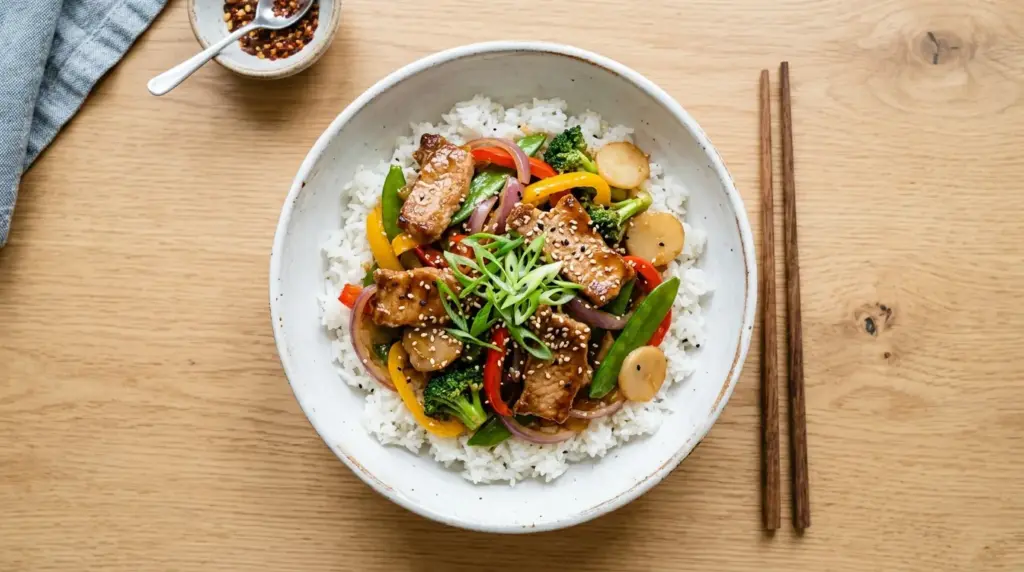
This pork chop stir-fry is a complete meal on its own, but it pairs wonderfully with a few simple accompaniments that round out the dinner table.
Serve the stir-fry over a bed of fluffy Basmati Rice or steamed jasmine rice to soak up every drop of that savory sauce. For a lighter option, Cilantro Lime Rice adds a bright, fresh contrast.
Here are a few other great pairings:
- Steamed or fried rice for a classic, satisfying base
- Ramen, udon, or lo mein noodles tossed with a little sesame oil as an alternative to rice
- Bok Choy quickly sauteed with garlic as a simple side dish
- Miso soup for a light starter that complements the Asian flavors
- Egg rolls or spring rolls as an appetizer before the main dish
- Sliced cucumbers dressed in rice vinegar for a cooling, refreshing side
Variations to Try
Once you’ve mastered the basic recipe, it’s easy to customize this stir-fry with different proteins, sauces, and vegetables. Here are some popular twists to keep things interesting.
This base recipe is incredibly adaptable. Swap proteins, change up the vegetables, or adjust the sauce to suit your preferences and pantry.
- Spicy Pork Stir-Fry: Add 1 to 2 teaspoons of chili garlic sauce or sambal oelek to the sauce for a fiery kick. A drizzle of chili oil at the end adds even more heat.
- Pork and Mushroom Stir-Fry: Replace the snap peas with sliced shiitake or cremini mushrooms. Mushrooms add a meaty, earthy depth that pairs beautifully with pork.
- Peanut Sauce Pork Stir-Fry: Swap the hoisin sauce for peanut sauce and finish with crushed roasted peanuts on top.
- Pork and Bok Choy Stir-Fry: Use baby bok choy instead of broccoli for a more traditional Chinese-restaurant feel. Halve them lengthwise and stir-fry until the leaves are wilted.
- Honey Ginger Pork Stir-Fry: Add 1 tablespoon of honey and an extra teaspoon of fresh grated ginger to the sauce for a sweeter, more fragrant profile.
- Noodle Stir-Fry: Skip the rice and toss cooked lo mein or rice noodles directly into the wok at the very end, letting them absorb all the sauce.
- Low-Sodium Version: Use low-sodium soy sauce and reduce the oyster sauce by half, supplementing with a splash of chicken broth for extra flavor without the sodium.
Read Also: Easy Pepper Steak Recipe
Storage and Reheating
This pork stir-fry stores and reheats well, making it a great option for meal prepping or next-day lunches. A few simple steps will keep the flavors intact.
- Refrigerator: Transfer leftovers to an airtight container and refrigerate for up to 3 to 4 days.
- Freezer: You can freeze stir-fry without the rice in a freezer-safe container for up to 2 months. The vegetables may lose some of their crunch after freezing, but the flavor remains excellent.
- Reheating on the stovetop: Add the stir-fry to a hot skillet or wok with a tablespoon of water or broth over medium-high heat. Toss for 2 to 3 minutes until heated through. This method keeps the sauce from drying out and restores some of the original texture.
- Reheating in the microwave: Place in a microwave-safe dish and cover loosely. Heat in 60-second intervals, stirring between each interval, until hot throughout.
- Storage tip: Store the pork stir-fry and the rice separately to prevent the rice from absorbing all the sauce and becoming mushy.
For another great meal-prep-friendly dish, this Easy Mongolian Beef Recipe uses a similar saucing technique and reheats just as well.
Nutritional Facts
The following is an approximate nutritional breakdown per serving, based on 4 servings of pork stir-fry without rice.
| Nutrient | Per Serving |
|---|---|
| Calories | 370 kcal |
| Protein | 34g |
| Total Fat | 18g |
| Saturated Fat | 4g |
| Carbohydrates | 16g |
| Dietary Fiber | 3g |
| Sugars | 6g |
| Sodium | 980mg |
| Cholesterol | 90mg |
Note: Nutritional values are estimates and will vary based on specific ingredients used, portion sizes, and any substitutions made. Adding rice will increase carbohydrate and calorie counts.
This stir-fry is also naturally dairy-free and can be made gluten-free by substituting tamari or coconut aminos for the soy sauce and a gluten-free version of oyster sauce.
You might also enjoy: Chicken Fried Rice Recipe
Health Benefits of Key Ingredients
This pork stir-fry isn’t just delicious; it’s also packed with nutrients that support a balanced diet. Here’s a look at what some of the key ingredients bring to the table.
Each component of this dish was chosen not just for flavor, but for its nutritional contribution as well.
- Pork chops are an excellent source of lean protein, B vitamins (especially B6 and B12), zinc, and selenium. These nutrients support muscle maintenance, immune function, and energy production.
- Broccoli is one of the most nutrient-dense vegetables available, providing vitamin C, vitamin K, folate, and fiber. It also contains sulforaphane, a compound studied for its antioxidant and anti-inflammatory properties.
- Bell peppers are loaded with vitamin C, often containing more than oranges. They also provide beta-carotene, which the body converts to vitamin A, supporting eye health and skin health.
- Snap peas add a satisfying crunch along with vitamin C, vitamin K, and plant-based fiber that supports digestive health.
- Garlic and ginger are both celebrated for their anti-inflammatory and immune-supportive properties. Ginger in particular has been studied for its ability to ease nausea and reduce muscle soreness.
- Sesame oil contains healthy monounsaturated and polyunsaturated fats, as well as sesamol and sesamin, which have been studied for their antioxidant effects.
- Onions provide quercetin, a natural flavonoid with antioxidant properties, as well as prebiotic fiber that feeds beneficial gut bacteria.
Read Also: Chicken and Broccoli Recipe
Frequently Asked Questions
1. Can I use bone-in pork chops for this stir-fry?
Boneless pork chops are strongly recommended for stir-fry because they’re much easier to slice thinly and cook quickly. Bone-in chops can be used, but you’ll need to remove the meat from the bone before slicing. The cooking method and timing remain the same once the pork is sliced.
2. What if I don’t have oyster sauce?
Oyster sauce adds a savory-sweet depth that’s hard to replicate exactly. If you don’t have it, you can substitute an equal amount of hoisin sauce mixed with a small splash of fish sauce. The flavor profile will be slightly different but still delicious. Avoid simply skipping it without a substitute, as the sauce will taste thin and flat.
3. Why is my stir-fry watery instead of saucy?
This usually happens for two reasons. First, the pan may not be hot enough, causing the vegetables and meat to steam and release water rather than sear. Second, the vegetables may have been wet when added to the pan. Always dry your vegetables thoroughly after washing them, make sure your pan is screaming hot before adding ingredients, and don’t skip the cornstarch slurry, which is specifically designed to thicken the sauce.
4. Can I make this ahead of time?
You can prep the pork (slice and marinate), chop all the vegetables, and mix the sauce up to 24 hours in advance. Store each component separately in the refrigerator. When you’re ready to cook, the actual stir-frying only takes about 10 minutes. This makes it a great option for easy weeknight meals when you want to minimize active cooking time.
5. What’s the best cut of pork for stir-fry besides pork chops?
Pork tenderloin is an excellent alternative to pork chops for stir-fry. It’s very lean and extremely tender when sliced thinly. Pork sirloin and pork shoulder (thinly sliced) also work well, though pork shoulder has more fat marbling, which adds flavor but a slightly different texture. Avoid very thick, tough cuts like pork butt for stir-frying.
This dish uses a very similar flavor base to this Bourbon Chicken Recipe, which is another quick and deeply savory option worth bookmarking.

Pork Chop Stir-Fry

Equipment
- Large wok or 12-inch skillet - Carbon steel or stainless steel preferred
- Sharp chef's knife
- Cutting board
- Wooden spoon or silicone spatula
- Mixing bowls - At least 2, for marinade and sauce
- Measuring spoons and cups
- Garlic press or microplane grater - For ginger
- Tongs - Optional but helpful
- Serving bowls or plates
Ingredients
- 1.5 lbs boneless pork chops - 680g, thinly sliced against the grain
- 2 tablespoons soy sauce - for marinating
- 1 tablespoon cornstarch - for marinating
- 1 teaspoon sesame oil - for marinating
- 3 tablespoons soy sauce - for the sauce
- 2 tablespoons oyster sauce
- 1 tablespoon hoisin sauce
- 1 teaspoon sesame oil - for the sauce
- 1 tablespoon cornstarch - mixed with 2 tablespoons water (slurry)
- 1 teaspoon sugar
- 0.5 teaspoon white pepper
- 3 tablespoons neutral oil - vegetable or avocado oil, divided
- 1 medium bell pepper - red or green, thinly sliced
- 1 medium yellow onion - thinly sliced
- 2 cups broccoli florets - 180g
- 1 cup snap peas or snow peas - 90g
- 3 cloves garlic - minced
- 1 teaspoon fresh ginger - minced or grated
- green onions - sliced, for garnish
- 1 teaspoon toasted sesame seeds - for garnish
- Cooked white rice or noodles - for serving
Instructions
- Slice pork chops thinly against the grain into 1/4-inch strips. In a bowl, combine pork with soy sauce, cornstarch, and sesame oil. Marinate for 15 minutes at room temperature.
- In a small bowl, whisk together soy sauce, oyster sauce, hoisin sauce, sesame oil, sugar, and white pepper. In a separate small bowl, mix cornstarch with cold water to make a slurry.
- Prep all vegetables by thinly slicing bell pepper and onion, cutting broccoli into bite-sized florets, and trimming snap peas. Mince garlic and grate ginger.
- Heat a wok or large skillet over high heat until smoking. Add 2 tablespoons oil and sear marinated pork in a single layer for 1-1.5 minutes per side until golden and cooked through. Remove and set aside.
- Return wok to high heat and add remaining oil. Stir-fry onion and bell pepper for 2 minutes, then add broccoli and snap peas and cook for 2 more minutes until bright and crisp-tender.
- Push vegetables to the sides, add garlic and ginger to the center, and cook for 30 seconds until fragrant. Return pork to the wok, pour in sauce, and toss to coat evenly.
- Stir cornstarch slurry and add to wok while tossing. Cook for 60 seconds until sauce thickens and turns glossy. Remove from heat, garnish with green onions and sesame seeds, and serve over rice or noodles.
Notes
- Slice pork thinly against the grain – this is the single most important factor for tender meat in stir-fry.
- Pat pork dry before marinating to help the marinade stick and achieve a better sear.
- Ensure your wok is screaming hot before adding ingredients to prevent steaming instead of searing.
- Have all ingredients prepped and ready before turning on the heat – stir-frying moves very quickly.
- Do not overcrowd the pan when searing pork; cook in batches if necessary to maintain high heat.
- Add garlic and ginger last to avoid burning them, which would make the dish bitter.
- For a spicy version, add 1-2 teaspoons of chili garlic sauce or sambal oelek to the sauce.
- Store leftovers in an airtight container for 3-4 days or freeze for up to 2 months.
- Reheat on the stovetop with a splash of water or broth to restore the sauce consistency.
- Make it gluten-free by using tamari or coconut aminos and a gluten-free oyster sauce.
Final Thoughts
This pork chop stir-fry recipe is the kind of dish that quickly becomes a household staple. It’s fast, satisfying, endlessly adaptable, and genuinely delicious.
Once you have the basic technique down, you can riff on it endlessly with different vegetables, sauces, and add-ins depending on what’s in your fridge. The most important thing is high heat, thin slices, and a well-balanced sauce.
Give this recipe a try and let me know how it goes in the comments below! I’d love to hear which vegetables you used, how spicy you went with it, or any creative twists you made your own.
Recommended:
- Chicken Stir-Fry Recipe
- Easy Pad Thai Recipe
- Chicken Lo Mein Recipe
- Chicken Teriyaki Recipe
- Egg Roll in a Bowl Recipe
- Bibimbap Recipe
- Easy Orange Chicken Recipe
- Hoisin Sauce Recipe
- Teriyaki Sauce Recipe
- Chicken Pad Thai Recipe