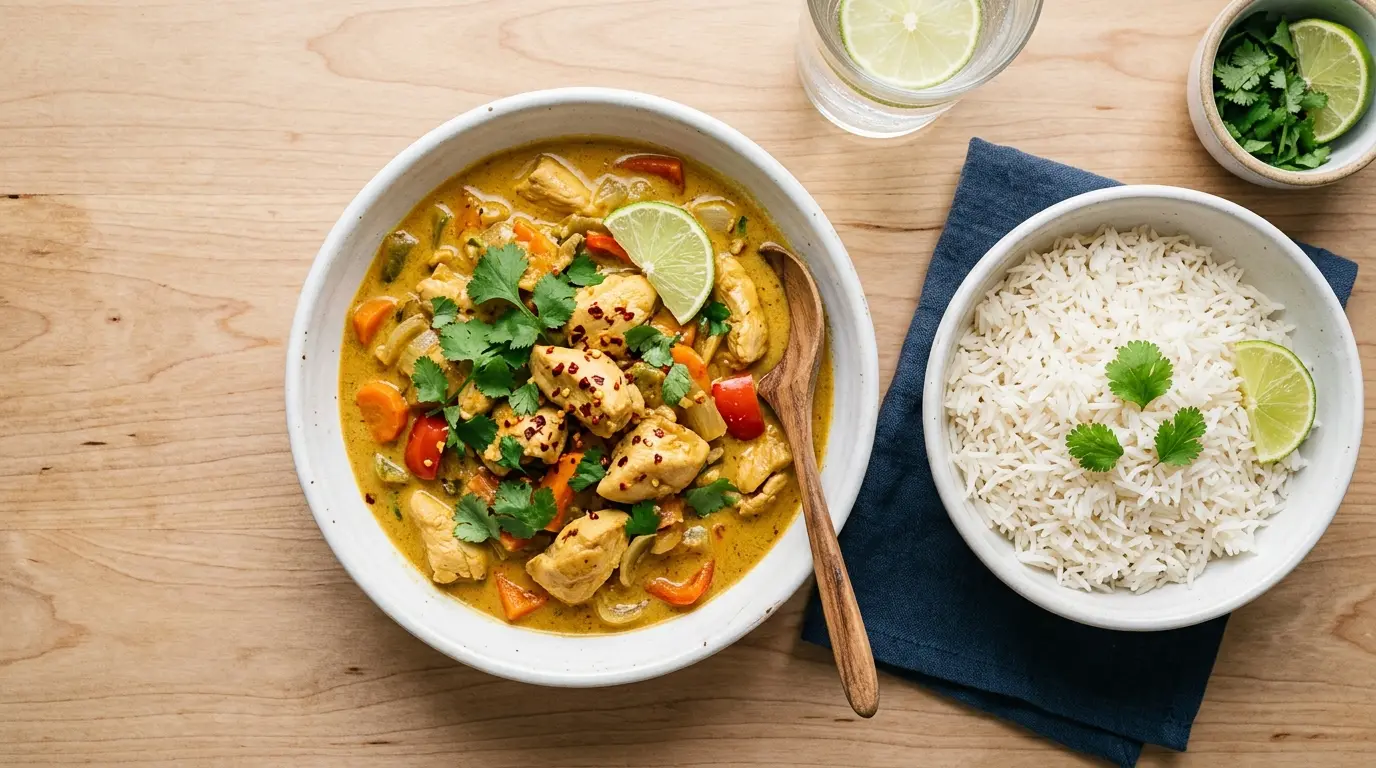
This coconut curry chicken recipe is the kind of dish that makes you forget takeout even exists. Rich, golden sauce. Tender, juicy chicken. A warmth that settles into every bite without being overwhelming. It is one of those meals that feels indulgent but comes together on a weeknight with minimal effort.
What makes this version so good is the combination of classic curry spices, full-fat coconut milk, and a touch of tomato that creates a deeply savory, subtly sweet sauce. The aromatics, including fresh garlic, ginger, and onion, do the heavy lifting on flavor, so you do not need a long grocery list to pull this off.
This recipe is built on the most widely recognized version of coconut curry chicken: a one-pan stovetop dish with curry powder, garam masala, full-fat coconut milk, and boneless chicken. It is inspired by the popular crossover between Indian-style curry and creamy coconut-based Southeast Asian cooking, a combination that has become beloved in home kitchens everywhere.
Serve it over a bed of fluffy Basmati Rice with warm naan on the side, and dinner is done.

Why You’ll Love This Coconut Curry Chicken Recipe
This dish checks every box for a great weeknight dinner.
It comes together in about 30 minutes from start to finish, making it genuinely faster than ordering delivery. Even with all those spices, it only uses one pan, which means easy cleanup.
The sauce is the real star here. Full-fat coconut milk creates a luxuriously creamy base that balances perfectly with earthy curry powder, warming garam masala, and a hint of lime.
It is incredibly versatile. You can make it mild enough for kids or crank up the heat for spice lovers, all from the same base recipe.
Finally, the leftovers are arguably better than the first serving. The spices deepen overnight, making this a meal worth making in a double batch.
- One pan, minimal cleanup
- Ready in about 30 minutes
- Creamy, rich coconut curry sauce
- Mild enough for the whole family, easily spiced up
- Works beautifully with rice, naan, or quinoa
- Great for meal prep and freezes well
- Dairy-free and naturally gluten-free
You might also enjoy: Chicken Tikka Masala Recipe
Ingredients
The ingredients for this recipe are straightforward and easy to find at most grocery stores. The key to a great sauce is using full-fat coconut milk (not lite), as it creates a richer, creamier consistency that will not water down during cooking.
- 1.5 lbs (680g) boneless, skinless chicken thighs or breasts, cut into 1-inch cubes
- 2 tablespoons coconut oil or vegetable oil
- 1 medium yellow onion, finely diced
- 4 cloves garlic, minced
- 1 tablespoon fresh ginger, grated
- 1 red bell pepper, sliced into thin strips
- 2 teaspoons curry powder
- 1 teaspoon garam masala
- 1 teaspoon ground cumin
- 1/2 teaspoon ground turmeric
- 1/2 teaspoon ground coriander
- 1/4 teaspoon cayenne pepper (optional, for heat)
- 1 teaspoon salt, plus more to taste
- 1 can (14 oz / 400ml) full-fat coconut milk
- 1 can (14 oz / 400g) diced tomatoes
- 1 tablespoon tomato paste
- 1 tablespoon fresh lime juice
- Fresh cilantro, for garnish
- Cooked basmati rice, for serving
This pairs beautifully with warm Garlic Naan Bread for a complete, satisfying meal.
Kitchen Equipment Needed
You do not need any specialized tools to make this recipe, but a wide, deep pan is important for getting good browning on the chicken and reducing the sauce properly. A narrow pot will trap steam and make the sauce watery.
- Large deep skillet or Dutch oven (12-inch / 30cm recommended)
- Wooden spoon or silicone spatula
- Sharp chef’s knife
- Cutting board
- Measuring spoons and cups
- Box grater or microplane (for grating ginger)
- Ladle for serving
- Can opener
Read Also: Chicken Korma Recipe
Recommended Products for This Recipe
These are products that I genuinely recommend based on quality and performance. They make a real difference in how this dish turns out.
1. Full-Fat Coconut Milk (Thai Kitchen or Chaokoh)
The quality of your coconut milk matters more than you might think. Thin or watery coconut milk will not create the rich, velvety sauce this recipe is known for. Thai Kitchen and Chaokoh are two brands that consistently deliver thick, creamy results.
2. Microplane Zester / Grater
Grating ginger by hand on a microplane gives you a fine, almost paste-like consistency that blends seamlessly into the sauce. It distributes flavor far more evenly than roughly chopped ginger would. This is one of those inexpensive tools that makes a big difference.
3. Enameled Cast Iron Dutch Oven
A good heavy-bottomed Dutch oven holds heat evenly and helps the sauce reduce without scorching. The enameled interior makes cleanup simple even after a rich, spiced curry. This is an investment piece that will serve you for decades.
4. Curry Powder Blend (Madras Style)
A good Madras-style curry powder gives you the layered warmth and complexity this dish deserves. Look for one with a blend of cumin, coriander, turmeric, fenugreek, and chili. It makes an enormous difference compared to generic grocery store blends.
5. Garam Masala
Garam masala is one of the key flavor elements that elevates this dish from a basic curry to something truly aromatic and complex. A good-quality garam masala adds warm notes of cardamom, cinnamon, and cloves that round out the sauce beautifully.
Another Indian-inspired favorite to try: Chicken Biryani Recipe

Step-by-Step Instructions
1. Prep All Your Ingredients
- Start by cutting the chicken into 1-inch (2.5cm) cubes. Bite-sized pieces cook evenly and pick up more sauce than larger chunks. Pat the chicken dry with paper towels before seasoning, as excess moisture prevents browning.
- Finely dice the onion into small, even pieces so it cooks down quickly and evenly into the sauce.
- Mince the garlic cloves as finely as possible, or press them through a garlic press for a smoother texture.
- Grate the fresh ginger using a microplane or the fine side of a box grater. You want it paste-like, not chunky, so it melts into the sauce without texture.
- Slice the red bell pepper into thin vertical strips, then cut those strips in half horizontally for bite-sized pieces.
- Open your canned coconut milk without shaking it. The thick cream that rises to the top is where the richness lives, so leave it undisturbed.
- Measure out all your spices into a small bowl: curry powder, garam masala, cumin, turmeric, coriander, cayenne (if using), and salt. Having them pre-measured means you can add them all at once without scrambling.
2. Sauté the Aromatics
- Heat the coconut oil in your large skillet or Dutch oven over medium-high heat. Let it fully melt and shimmer before adding anything.
- Add the diced onion to the hot oil. Spread it out in an even layer and cook for 3 to 5 minutes, stirring occasionally, until it turns translucent and begins to develop golden edges. Do not rush this step. Properly cooked onion forms the sweet, savory base of your entire curry.
- Add the minced garlic and grated ginger to the pan. Stir constantly for about 60 seconds, just until fragrant. Garlic burns quickly at this stage, so keep it moving.
- Add the sliced red bell pepper. Stir everything together and cook for another 2 minutes until the pepper begins to soften slightly.
3. Toast the Spices
- Reduce the heat to medium-low. Add all of your pre-measured spices directly to the pan: curry powder, garam masala, cumin, turmeric, coriander, cayenne, and salt.
- Stir the spices into the aromatics continuously for 60 to 90 seconds. This step is called “blooming” the spices. When spices hit hot oil, they release fat-soluble aromatic compounds that stay in the sauce long-term. You will smell the difference immediately.
- The mixture will look dry and paste-like. That is exactly what you want. Stir constantly to prevent any burning.
4. Brown the Chicken
- Increase the heat back to medium-high. Add the cubed chicken to the pan in a single layer, spreading the pieces out as much as possible.
- Let the chicken cook undisturbed for 2 to 3 minutes to develop a golden sear on one side. Resist the urge to stir too early. That sear adds a deeper, meatier flavor to the finished dish.
- Stir and turn the chicken pieces. Continue cooking for another 3 to 4 minutes, stirring occasionally, until the exterior is no longer pink on all sides. The chicken does not need to be cooked through at this stage. It will finish cooking in the sauce.
5. Build the Sauce
- Add the tomato paste to the pan. Stir it into the chicken and spice mixture and cook for 1 minute to let the tomato paste caramelize slightly. This removes the raw, tinny taste and adds depth.
- Pour in the canned diced tomatoes with their juices. Stir everything together and scrape up any browned bits stuck to the bottom of the pan. Those bits are packed with flavor.
- Pour in the full-fat coconut milk. Stir gently to combine all the components into a smooth, golden sauce.
- Bring the sauce to a gentle boil over medium-high heat. Once bubbling, reduce the heat to medium-low and let it simmer uncovered for 12 to 15 minutes. Stir occasionally. The sauce will thicken as it cooks and the chicken will absorb the surrounding flavors.
- Check the chicken for doneness. It is fully cooked when the internal temperature reaches 165°F (74°C) or when the pieces show no pink inside when cut. The sauce should be thick enough to coat the back of a spoon.
6. Finish and Serve
- Remove the pan from heat. Squeeze in the fresh lime juice and stir to combine. Lime brightens the entire dish and cuts through the richness of the coconut milk.
- Taste the sauce and adjust seasoning. Add more salt, a pinch of cayenne for heat, or a second squeeze of lime as needed.
- Ladle the coconut curry chicken generously over bowls of cooked basmati rice.
- Scatter fresh cilantro over the top right before serving for color and a fresh herbal note that pairs beautifully with the warm spices.
Read Also: Chicken Saag Recipe
Tips for Success
A few small adjustments can take this recipe from good to genuinely great. Keep these in mind the first time you make it.
- Use full-fat coconut milk, not lite. Lite coconut milk is too watery and will not thicken into a creamy sauce. Full-fat is non-negotiable here.
- Do not skip blooming the spices. Toasting them in oil for 60 to 90 seconds unlocks a depth of flavor you simply cannot get from adding them to liquid.
- Pat the chicken dry before cooking. Moisture on the surface of the chicken causes steaming rather than browning, which means less flavor.
- Simmer uncovered. Keeping the lid off allows steam to escape, which is how the sauce reduces and thickens properly.
- Grate your ginger. A microplane gives you ginger in a paste-like form that melts seamlessly into the sauce. Minced ginger works but leaves more texture.
- Add lime juice off the heat. Cooking lime juice dulls its brightness. Stir it in after removing the pan from the stove for maximum impact.
- Chicken thighs over breasts. Thighs are more forgiving and stay juicy even if slightly overcooked. If using breast meat, add it in the last 5 to 6 minutes of simmering to prevent drying out.
This recipe uses a similar technique to the one in this Palak Paneer Recipe, another fantastic Indian-inspired dish worth trying alongside this one.
Serving Suggestions
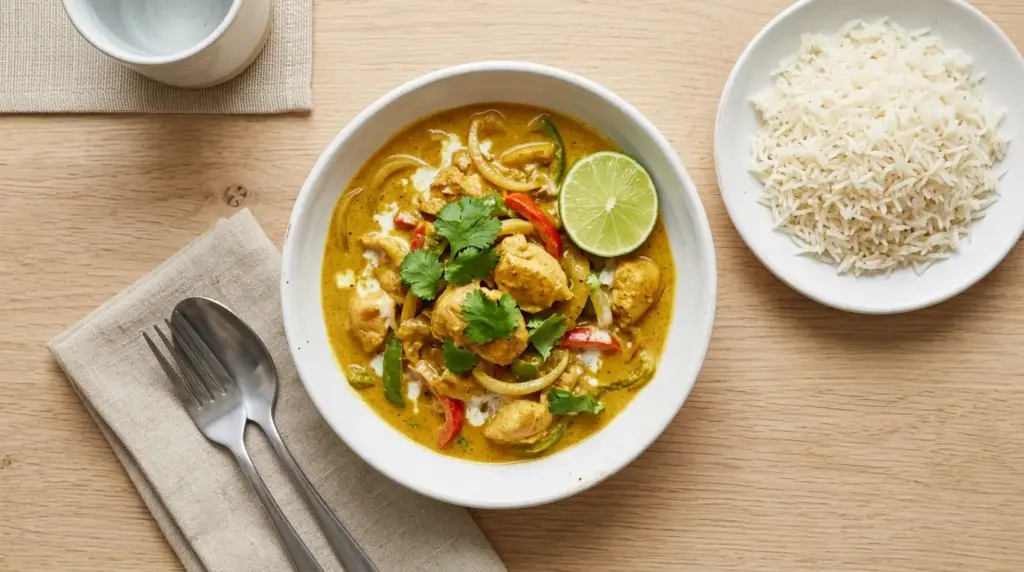
Coconut curry chicken is incredibly satisfying on its own, but the right accompaniments turn it into a full spread.
Fluffy basmati or Jeera Rice is the classic choice. The rice acts like a sponge for the sauce and makes every bite feel complete.
- Warm naan or garlic naan for scooping up sauce
- Cucumber Raita for a cool, tangy contrast to the warmth of the curry
- Mango Chutney for a sweet-fruity counterpoint
- A simple Indian Onion Salad with lemon juice and cilantro
- Steamed jasmine rice for a lighter alternative
- A simple green salad with cucumber and tomato
Variations to Try
Once you have the base recipe down, there are so many ways to customize it. These are some of the most popular spins on coconut curry chicken.
- Add vegetables. Stir in fresh spinach, diced sweet potato, chickpeas, or baby potatoes during the last 10 minutes of simmering for a heartier meal.
- Make it spicier. Add more cayenne, fresh sliced Thai chili, or stir in a spoonful of sambal oelek for real heat.
- Use curry paste instead of powder. Red or green Thai curry paste gives a different flavor profile. Use 2 to 3 tablespoons in place of the dry spice blend for a more Southeast Asian style.
- Try it with shrimp. Swap the chicken for large peeled shrimp and simmer for just 3 to 4 minutes, as shrimp cook very quickly.
- Make it vegan. Replace the chicken with cubed firm tofu, chickpeas, or cauliflower florets. The sauce is just as delicious.
- Slow cooker version. Brown the aromatics and spices on the stove first, then transfer everything to a slow cooker and cook on low for 4 to 5 hours.
- Instant Pot version. Use the sauté function for the aromatics, then pressure cook on high for 10 minutes with a natural release.
If you love bold, spicy Indian-style dishes, the Chicken Vindaloo Recipe is a fantastic next step.
Storage and Reheating
This curry stores exceptionally well, making it one of the best meal prep dishes in your rotation.
- Refrigerator: Store leftover coconut curry chicken in an airtight container for up to 4 days. The sauce will thicken as it cools, which is perfectly normal.
- Freezer: Freeze portions in airtight containers or zip-top freezer bags for up to 3 months. Allow to cool completely before freezing and lay flat to save space.
- Reheating on the stovetop: Warm over medium-low heat, stirring occasionally. Add a splash of coconut milk or water to loosen the sauce as needed.
- Reheating in the microwave: Heat in 60 to 90 second increments, stirring between each round, until heated through. Cover loosely to prevent splatter.
- Thawing: Transfer frozen curry to the refrigerator the night before to thaw slowly. Reheat as directed above.
- Note on rice: Store the rice and curry separately for best texture when reheating.
You might also enjoy: Cilantro Lime Rice Recipe
Nutritional Facts
The values below are approximate and based on one serving of coconut curry chicken (without rice), assuming the recipe serves 4 people.
| Nutrient | Per Serving |
|---|---|
| Calories | 420 kcal |
| Total Fat | 28g |
| Saturated Fat | 20g |
| Cholesterol | 110mg |
| Sodium | 580mg |
| Total Carbohydrates | 12g |
| Dietary Fiber | 2g |
| Sugars | 5g |
| Protein | 32g |
| Vitamin A | 18% DV |
| Vitamin C | 45% DV |
| Iron | 15% DV |
| Calcium | 6% DV |
Note: Nutritional values will vary depending on exact ingredients used, brand of coconut milk, and whether you use chicken thighs or breasts. Adding rice will increase calories and carbohydrates.
Read Also: Mulligatawny Soup Recipe
Health Benefits of Key Ingredients
Beyond being delicious, this coconut curry chicken is packed with ingredients that genuinely support your health.
This dish earns its place as a nutritious dinner option, not just a flavorful one. Here is a breakdown of what each key ingredient contributes.
- Chicken: A lean, high-quality protein source that supports muscle repair, immune function, and satiety. Chicken thighs also provide iron and zinc.
- Coconut milk: Contains medium-chain triglycerides (MCTs), a type of fat that the body metabolizes for quick energy. It is also dairy-free, making it ideal for those with lactose intolerance.
- Garlic: One of the most studied foods for its health effects. Regular garlic consumption is associated with reduced inflammation, improved cholesterol levels, and immune support.
- Fresh ginger: A well-known anti-inflammatory and digestive aid. Ginger contains gingerols and shogaols, compounds shown to reduce nausea and support gut health.
- Turmeric: Contains curcumin, a potent antioxidant and anti-inflammatory compound. Cooking turmeric with fat (as this recipe does) increases its bioavailability.
- Tomatoes: Rich in lycopene, vitamin C, and potassium. Cooked tomatoes actually have higher concentrations of lycopene than raw.
- Bell pepper: An excellent source of vitamin C, with a single red bell pepper providing more than a full day’s worth. Also rich in B vitamins and antioxidants.
- Lime juice: Provides vitamin C and helps with the absorption of iron from the spices and chicken.
If you enjoy Indian-inspired flavors, the Chicken Curry Recipe is another must-try with a similarly impressive ingredient lineup.
Frequently Asked Questions
1. Can I use chicken breasts instead of thighs?
Yes, chicken breasts work well in this recipe. The key difference is timing. Chicken breasts cook faster and dry out more easily, so cut them into slightly larger cubes (about 1.5 inches) and add them to the sauce for the final 5 to 6 minutes of simmering rather than from the start.
Chicken thighs are generally preferred because their higher fat content keeps them juicy and forgiving, even if they cook a few minutes longer than planned.
2. What if my sauce is too thin?
If your sauce has not thickened after 15 minutes of simmering, continue cooking uncovered for another 5 minutes. You can also stir in 1 teaspoon of cornstarch dissolved in 1 tablespoon of cold water and simmer for 2 minutes.
The type of coconut milk you use makes a significant difference. Full-fat coconut milk will always produce a thicker sauce than lite or reduced-fat versions.
3. How spicy is this recipe?
As written, this recipe is mild to medium, appropriate for most adults and older children. The spice level depends largely on your curry powder blend and whether you include the optional cayenne.
To make it milder, simply omit the cayenne entirely. To make it spicier, add 1/2 teaspoon to 1 teaspoon of cayenne, sliced fresh chili, or a spoonful of red curry paste.
4. Can I make this recipe ahead of time?
Absolutely, and many cooks prefer it that way. The flavors develop and deepen as the curry rests, making day-two leftovers particularly delicious.
You can make the full recipe up to 3 days in advance and store it in an airtight container in the refrigerator. Reheat gently on the stovetop over medium-low heat with a splash of coconut milk if the sauce has thickened too much.
5. Can I substitute the coconut milk with something else?
If you do not have coconut milk, heavy cream can be used as a substitute for a similar creamy texture, though the flavor profile will change noticeably. It will lose the subtle coconut sweetness that defines this dish.
For a dairy-free option without coconut, full-fat oat milk or cashew cream can work, though they will produce a thinner sauce. Coconut milk is strongly recommended for the most authentic result.
Read Also: Easy Butter Chicken Recipe

Coconut Curry Chicken

Equipment
- Large Deep Skillet or Dutch Oven - 12-inch / 30cm recommended for even heat distribution and proper sauce reduction
- Wooden spoon or silicone spatula
- Sharp chef's knife
- Cutting board
- Measuring spoons and cups
- Box grater or microplane - For grating ginger
- Ladle - For serving
- Can opener
Ingredients
- 1.5 lbs boneless skinless chicken thighs - 680g, or breasts, cut into 1-inch cubes
- 2 tablespoons coconut oil - or vegetable oil
- 1 medium yellow onion - finely diced
- 4 cloves garlic - minced
- 1 tablespoon fresh ginger - grated
- 1 red bell pepper - sliced into thin strips
- 2 teaspoons curry powder - Madras-style recommended
- 1 teaspoon garam masala
- 1 teaspoon ground cumin
- 0.5 teaspoon ground turmeric
- 0.5 teaspoon ground coriander
- 0.25 teaspoon cayenne pepper - optional, for heat
- 1 teaspoon salt - plus more to taste
- 1 can (14 oz) full-fat coconut milk - 400ml; Thai Kitchen or Chaokoh recommended
- 1 can (14 oz) diced tomatoes - 400g
- 1 tablespoon tomato paste
- 1 tablespoon fresh lime juice
- fresh cilantro - for garnish
- cooked basmati rice - for serving
For Serving (Optional)
- warm naan - or garlic naan for scooping sauce
- cucumber raita - for cooling contrast
- mango chutney - for sweet-fruity counterpoint
Instructions
- Cut chicken into 1-inch cubes and pat dry with paper towels. Finely dice onion, mince garlic, grate ginger, and slice bell pepper. Open coconut milk without shaking.
- Heat oil in a large skillet over medium-high. Cook onion 3-5 minutes until translucent. Add garlic and ginger, stir 60 seconds until fragrant. Add bell pepper and cook 2 minutes until softening.
- Reduce heat to medium-low. Add all spices and salt, stirring continuously for 60-90 seconds until fragrant and paste-like.
- Increase heat to medium-high. Add chicken in a single layer and cook undisturbed 2-3 minutes per side until golden brown on all sides.
- Add tomato paste and cook 1 minute to caramelize. Stir in diced tomatoes with juices and coconut milk, scraping up any browned bits. Bring to a gentle boil, then reduce heat and simmer uncovered 12-15 minutes until thickened.
- Remove from heat and stir in lime juice. Taste and adjust seasoning. Serve over basmati rice, garnished with fresh cilantro.
Notes
- Use full-fat coconut milk: Lite coconut milk is too watery and will not thicken into a creamy sauce. Full-fat is non-negotiable here.
- Don’t skip blooming the spices: Toasting them in oil for 60-90 seconds unlocks a depth of flavor you simply cannot get from adding them to liquid.
- Pat chicken dry: Excess moisture on the surface causes steaming rather than browning, which means less flavor.
- Simmer uncovered: Keeping the lid off allows steam to escape, which is how the sauce reduces and thickens properly.
- Add lime juice off the heat: Cooking lime juice dulls its brightness. Stir it in after removing the pan from the stove for maximum impact.
- Chicken thighs over breasts: Thighs are more forgiving and stay juicy even if slightly overcooked. If using breast meat, add it in the last 5-6 minutes of simmering to prevent drying out.
- Make it ahead: The flavors develop and deepen as the curry rests, making day-two leftovers particularly delicious. Store up to 4 days in the refrigerator.
- To freeze: Freeze portions in airtight containers for up to 3 months. Thaw overnight in the refrigerator and reheat gently on the stovetop.
- To thicken a thin sauce: Continue simmering uncovered for another 5 minutes, or stir in 1 teaspoon of cornstarch dissolved in 1 tablespoon of cold water and simmer for 2 minutes.
- Spice level: As written, this is mild to medium. Omit cayenne for milder, or add extra cayenne, fresh Thai chili, or sambal oelek for more heat.
Final Thoughts
This coconut curry chicken recipe is the kind of dish that earns a permanent spot in your weekly rotation.
It is quick, flexible, genuinely delicious, and made from ingredients that are easy to keep on hand. Once you make it the first time, you will feel confident enough to riff on it, adding vegetables, dialing up the spice, or trying it with shrimp.
Give this coconut curry chicken recipe a try this week and see how fast it disappears from the table. If you make it, drop a comment below to share how it turned out. Would love to know what you served it with!
Recommended:
- Chicken Korma Recipe
- Tandoori Chicken Recipe
- Samosa Recipe
- Authentic Butter Chicken Recipe
- Chicken Pad Thai Recipe
- Chicken Stir Fry Recipe
- Chicken Teriyaki Recipe
- Chicken Lo Mein Recipe
- Jeera Rice Recipe
- Chicken Shawarma Recipe