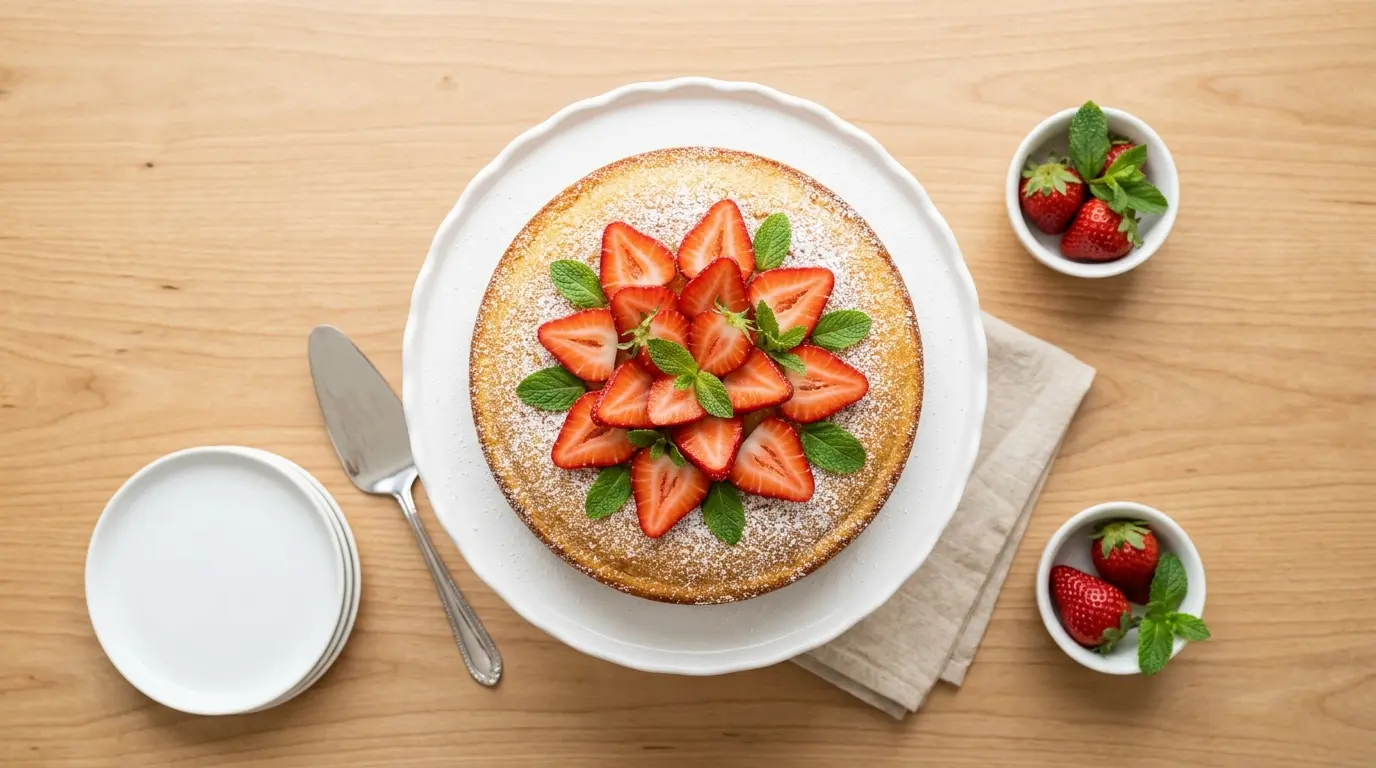
If you have ever been searching for the ultimate pound cake recipe, your search ends right here. This is the kind of cake that reminds you why simple, classic baking is still the best kind.
Made with just a handful of pantry staples, a traditional pound cake delivers a tight, velvety crumb that practically melts on your tongue. The golden crust is subtly crisp while the inside stays impossibly tender and moist.
What makes this recipe special is the attention to detail in technique. Creaming the butter and sugar together for a full 5 minutes, adding eggs one at a time, and alternating the flour and sour cream are all steps that directly impact the final texture.
This is not a cake that needs layers of frosting or elaborate decoration to shine. It is simply perfect on its own, warm from the oven with a light dusting of powdered sugar.
Whether you are serving it at a summer cookout, holiday table, or just a slow Sunday afternoon, this pound cake never fails to impress.
You might also enjoy: Classic Yellow Cake

Why You’ll Love This Pound Cake Recipe
This pound cake recipe is one of those reliable classics that earns a permanent spot in your baking rotation.
It uses pantry staples you almost certainly already have on hand, which means no last-minute grocery runs. The ingredient list is short, but the results are anything but ordinary.
The texture is what really sets this cake apart. The crumb is dense and velvety without ever feeling heavy or gummy, thanks to the ratio of butter to flour and the addition of sour cream.
Sour cream is the secret weapon in this recipe. It adds just enough fat and acidity to keep the cake moist for days while creating that signature tender bite.
This cake is also incredibly versatile. Serve it plain, dusted with powdered sugar, drizzled with a glaze, or piled high with fresh berries and whipped cream.
It bakes up beautifully in a standard Bundt pan or loaf pan, making it easy to slice and serve for any occasion. No special decorating skills required.
- Classic, timeless flavor that appeals to every age group
- Only 7 core ingredients most home bakers already own
- Stays moist and tender for up to 5 days at room temperature
- Incredibly versatile for dressing up or serving plain
- Beginner-friendly with easy-to-follow steps and no complicated techniques
- Feeds a crowd with generous slices from a single Bundt or loaf pan
- Freezes beautifully for make-ahead convenience
Read Also: Angel Food Cake Recipe
Ingredients
A great pound cake relies on quality ingredients and the right ratios. Use room-temperature butter and eggs for the best texture since cold ingredients will not cream together properly and can cause the batter to curdle.
- 3 cups (375g) all-purpose flour, spooned and leveled
- 1/2 teaspoon baking powder
- 1/2 teaspoon fine salt
- 1 cup (226g / 2 sticks) unsalted butter, softened to room temperature
- 3 cups (600g) granulated sugar
- 6 large eggs, at room temperature
- 1 teaspoon pure vanilla extract
- 1 cup (240ml) sour cream, at room temperature
- Powdered sugar for dusting, optional
You might also enjoy: Cream Cheese Frosting if you want to add a luscious topping to this cake.
Kitchen Equipment Needed
Having the right tools makes a noticeable difference in baking, especially with a cake that relies so heavily on proper creaming and structure.
- Stand mixer or electric hand mixer
- 10-cup Bundt pan or 9×5 inch loaf pan
- Large mixing bowls
- Rubber spatula
- Fine mesh sieve for sifting and dusting
- Wire cooling rack
- Measuring cups and spoons
- Kitchen scale (recommended for accuracy)
- Toothpick or cake tester
Read Also: Vanilla Buttercream Frosting Recipe
Recommended Products for This Recipe
These are products I genuinely recommend based on quality and how well they perform for classic pound cake baking.
1. Nordic Ware Platinum Collection Bundt Pan
The heavy-gauge aluminum construction of this pan distributes heat evenly across the entire surface, which is what gives pound cake that signature golden-brown crust without any burnt spots. The intricate ridged design also releases cleanly without any sticking, meaning your cake slides out looking picture-perfect. It is a worthwhile investment that will last for decades.
2. KitchenAid Stand Mixer
Properly creaming butter and sugar for 5 full minutes is essential to this recipe, and doing it by hand is exhausting. A KitchenAid stand mixer handles this effortlessly and consistently, giving you the light, pale, fluffy base that creates the pound cake’s signature tender crumb. It is the single most impactful piece of equipment you can own for baking.
3. Nielsen-Massey Madagascar Bourbon Pure Vanilla Extract
Vanilla is one of only seven ingredients in this cake, which means quality matters significantly. Nielsen-Massey uses cold extraction to preserve the full complexity of the vanilla bean, and the difference in flavor compared to imitation vanilla is remarkable. A good vanilla extract elevates the overall aroma and depth of the finished cake.
4. OXO Good Grips Digital Kitchen Scale
Measuring flour by volume is one of the most common reasons pound cakes turn out dry or dense. A digital scale removes all guesswork and ensures your flour measurement is accurate every single time. This OXO model is precise, easy to read, and includes a tare function that makes measuring multiple ingredients seamless.
5. Wilton Cake Release Non-Stick Pan Spray
Getting a Bundt cake out of the pan cleanly can be stressful, even with a greased pan. Wilton Cake Release is specifically formulated to coat every crevice of intricate pan designs, ensuring your cake pops out in one beautiful piece every time. It is a small investment that prevents a very frustrating baking mishap.
This cake also pairs wonderfully with a homemade lemon curd drizzled over each slice for a bright, tangy contrast to the rich butter flavor.

Step-by-Step Instructions
Step 1: Prepare Your Pan and Preheat the Oven
- Preheat your oven to 325°F (163°C). A lower temperature is key for pound cake because it bakes low and slow, giving the dense batter time to cook through evenly without burning the exterior before the center is done.
- Generously grease your 10-cup Bundt pan with softened butter or baking spray, making sure to coat every ridge and crevice thoroughly. Miss a spot and the cake will stick.
- Dust the greased pan lightly with flour, tapping out any excess. Alternatively, use a dedicated pan release spray for the most reliable results.
- Set the pan aside and allow it to sit while you prepare the batter. This gives the grease time to settle into all the details of the pan.
Step 2: Sift and Combine the Dry Ingredients
- Measure out 3 cups (375g) of all-purpose flour using the spoon-and-level method (spoon flour into the measuring cup, then level it off with a straight edge) or weigh it on a kitchen scale for accuracy.
- Add 1/2 teaspoon of baking powder and 1/2 teaspoon of fine salt to the flour.
- Whisk the dry ingredients together briefly in a medium bowl until evenly combined and no clumps remain.
- Set the bowl aside. You will add this mixture to the batter in three stages, alternating with the sour cream.
Step 3: Cream the Butter and Sugar
- Place 1 cup (226g) of room-temperature unsalted butter into the bowl of your stand mixer fitted with the paddle attachment. The butter must be fully softened, not melted. Press your finger into it, and it should leave an indent without any resistance.
- Add all 3 cups (600g) of granulated sugar to the butter.
- Beat on medium-high speed for a full 5 minutes, stopping once or twice to scrape down the sides of the bowl with a rubber spatula. Do not rush this step.
- After 5 minutes, the mixture should look visibly lighter in color, almost pale yellow, and noticeably fluffy and airy. This extended creaming is what creates the structure and lift in the finished cake.
Step 4: Add the Eggs One at a Time
- Crack your 6 room-temperature eggs into a small bowl or measuring cup individually. Adding them one at a time from a separate bowl makes it easy to fish out any shell that falls in.
- With the mixer running on medium speed, add the eggs one at a time, waiting until each egg is fully incorporated before adding the next.
- After each egg is added, scrape down the sides and bottom of the bowl to ensure everything is evenly mixed.
- If the batter looks slightly curdled at any point, do not panic. This is common and will come together once the flour is added.
- Add 1 teaspoon of pure vanilla extract with the last egg and mix until just combined.
Step 5: Alternate Adding Flour and Sour Cream
- Reduce the mixer speed to low. This is important to prevent overmixing, which develops too much gluten and makes the cake tough.
- Add one-third of the flour mixture to the batter and mix on low just until the flour streaks disappear, about 15 to 20 seconds.
- Add half of the 1 cup (240ml) sour cream and mix on low until just incorporated.
- Add another one-third of the flour mixture and mix briefly.
- Add the remaining half of the sour cream and mix until just incorporated.
- Finish with the final third of the flour mixture and mix on low speed until the batter is just smooth with no visible streaks of flour. Do not overmix.
- Remove the bowl from the mixer and use a rubber spatula to fold the batter a few times from the bottom, ensuring no pockets of flour are hiding at the base of the bowl.
Step 6: Transfer the Batter and Bake
- Pour the batter into your prepared Bundt pan. It will be thick, so use a rubber spatula to spread it evenly into the pan and smooth the top.
- Gently tap the pan against the counter two or three times to release any large air bubbles trapped in the batter.
- Place the pan on the center rack of your preheated 325°F (163°C) oven.
- Bake for 75 to 90 minutes. Start checking for doneness at the 75-minute mark by inserting a toothpick or cake tester into the thickest part of the cake. It should come out clean or with just a few moist crumbs attached.
- The top of the cake will be deep golden brown and the edges will have pulled away slightly from the sides of the pan when it is done.
- Do not open the oven door during the first 60 minutes of baking, as this can cause the center to sink.
Step 7: Cool the Cake
- Remove the pan from the oven and place it on a wire cooling rack.
- Allow the cake to cool in the pan for exactly 15 minutes. This resting time allows the cake to firm up enough to release cleanly.
- After 15 minutes, place a wire rack over the top of the pan and flip both together in one smooth motion to invert the cake onto the rack.
- Gently lift the pan away. If the cake does not release immediately, give the pan a few gentle taps on the sides.
- Allow the cake to cool completely on the wire rack, which takes about 1 to 1.5 hours, before slicing and serving.
Step 8: Dust and Serve
- Once the cake is completely cool, use a fine mesh sieve to lightly dust the top with powdered sugar if desired.
- Slice with a serrated knife using a gentle sawing motion to get clean, even slices without compressing the crumb.
- Serve as is or with your preferred toppings and enjoy.
This cake pairs beautifully with homemade fresh strawberry sauce spooned generously over each slice for a bright, summery dessert.
Tips for Success
Small details make a big difference with pound cake. These tips will help you bake a flawless cake every single time.
- Use room-temperature ingredients. Cold butter will not cream properly, and cold eggs can cause the batter to curdle. Set everything out 1 to 2 hours before baking.
- Measure flour correctly. Packing flour into the measuring cup adds up to 20% more flour than the recipe intends, leading to a dry, dense cake. Spoon flour into the cup and level it off, or use a kitchen scale.
- Do not rush the creaming. A full 5 minutes of creaming butter and sugar is not excessive. It is essential. The air beaten into the mixture creates the lift that helps the dense batter rise.
- Add eggs slowly. Adding all 6 eggs at once will deflate the creamed butter and cause the batter to break. One egg at a time, fully incorporated, keeps the emulsion stable.
- Alternate flour and sour cream. Always start and end with flour when alternating. This protects the batter structure and ensures even hydration.
- Do not overmix once the flour goes in. Overmixing develops gluten, which makes the cake chewy and tough rather than tender. Mix only until just combined.
- Trust the longer bake time. Because pound cake is so dense, it takes longer to bake through than lighter cakes. Pulling it early results in a gummy, undercooked center.
You might also enjoy: Chocolate Buttercream Frosting if you want to turn this into a more decadent dessert.
Serving Suggestions
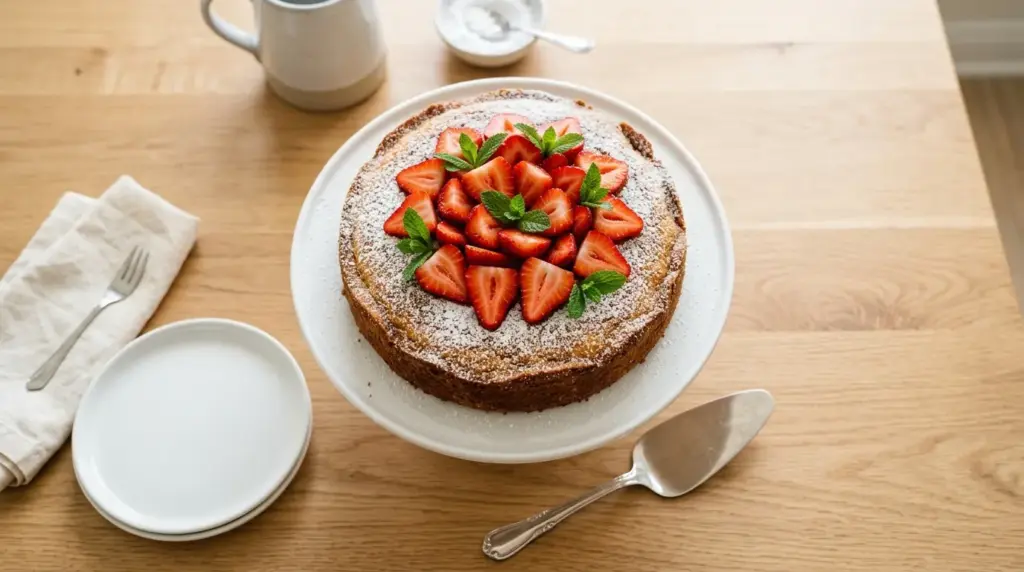
Pound cake is one of the most versatile desserts you can bake because it pairs well with so many different toppings and accompaniments.
Serve it in classic style with a generous scoop of Vanilla Bean Ice Cream alongside a warm slice for a simple but stunning dessert.
- Fresh berries and whipped cream for a light, summery presentation
- A warm drizzle of Caramel Sauce for a rich, indulgent serving
- Sliced and toasted in a pan with butter for a golden, caramelized edge
- Served with a spoonful of Pastry Cream for an elegant plated dessert
- Layered with Chocolate Ganache and sliced strawberries for a party-worthy presentation
- Dusted with powdered sugar and served alongside afternoon tea or coffee
- Topped with sliced fresh peaches and a drizzle of honey in the summer months
Read Also: Fruit Tart Recipe
Variations to Try
Once you have mastered the classic version, this pound cake recipe is a wonderful base for all kinds of creative spins.
- Lemon Pound Cake: Add the zest of 2 lemons and 2 tablespoons of fresh lemon juice to the batter. Finish with a simple lemon glaze made from powdered sugar and lemon juice.
- Cream Cheese Pound Cake: Replace 1/2 cup (113g) of butter with 8 oz (226g) of softened cream cheese for an even richer, denser crumb with a slight tang.
- Marble Pound Cake: Reserve one-third of the finished batter and fold in 3 tablespoons of cocoa powder. Spoon alternate dollops of plain and chocolate batter into the pan, then swirl with a knife.
- Almond Pound Cake: Replace the vanilla extract with 1 teaspoon of almond extract and fold in 1/2 cup of toasted sliced almonds for a fragrant, nutty variation.
- Brown Butter Pound Cake: Brown the butter in a saucepan before cooling and using it in the recipe. This adds a deep, nutty, caramel-like flavor that takes the cake to another level.
- Citrus Pound Cake: Use a combination of orange zest and lime zest along with a splash of fresh orange juice for a bright, tropical twist.
- Vanilla Bean Pound Cake: Split and scrape 1 full vanilla bean pod into the batter along with the extract for a more intense, speckled vanilla flavor.
For another buttery, indulgent cake experience, check out this Mastros Butter Cake.
Storage and Reheating
Pound cake stores exceptionally well, making it a great make-ahead option for parties and gatherings.
- Room temperature: Wrap the cooled cake tightly in plastic wrap or store in an airtight container. It will stay fresh and moist for up to 5 days at room temperature.
- Refrigerator: Pound cake can be refrigerated for up to 1 week. Wrap it well so it does not absorb any refrigerator odors. Let it come to room temperature before serving for the best texture.
- Freezer: Pound cake freezes beautifully. Wrap individual slices or the whole cake tightly in plastic wrap followed by a layer of aluminum foil. Freeze for up to 3 months.
- To thaw: Remove frozen slices from the freezer and let them thaw at room temperature for 1 to 2 hours before serving. Do not microwave to thaw, as this can make the texture rubbery.
- To reheat: Warm a slice in a 300°F (150°C) oven for 8 to 10 minutes, or microwave an individual slice for 15 to 20 seconds until just warmed through.
Another favorite: Tres Leches Cake
Nutritional Facts
Based on 12 slices per cake. Values are approximate and will vary based on specific ingredients and serving size.
| Nutrient | Per Serving |
|---|---|
| Calories | 495 kcal |
| Total Fat | 22g |
| Saturated Fat | 13g |
| Cholesterol | 145mg |
| Sodium | 135mg |
| Total Carbohydrates | 68g |
| Dietary Fiber | 0.8g |
| Total Sugars | 48g |
| Protein | 6.5g |
| Calcium | 55mg |
| Iron | 1.8mg |
Read Also: Classic Vanilla Cake Recipe
Health Benefits of Key Ingredients
While pound cake is an indulgent dessert, a few of its key ingredients do offer some genuine nutritional value when enjoyed as part of a balanced diet.
Moderation is the key word here. A single slice of homemade pound cake made with quality ingredients will always be a better choice than a highly processed store-bought alternative.
- Eggs: Eggs are one of the most complete protein sources available, delivering all nine essential amino acids. They also contribute choline, which supports brain health, and fat-soluble vitamins like A, D, E, and K.
- Butter: Real butter made from grass-fed cows contains conjugated linoleic acid (CLA), a naturally occurring fatty acid associated with anti-inflammatory properties. It also provides vitamins A and K2.
- Sour Cream: Sour cream contains live probiotic cultures that support gut health, along with calcium for bone strength and phosphorus for cellular function.
- All-Purpose Flour: While not a nutritional powerhouse on its own, flour provides carbohydrates for energy and small amounts of B vitamins and iron, especially when enriched.
- Vanilla Extract: Pure vanilla extract contains small amounts of antioxidants, and the vanillin compound has been studied for its potential anti-inflammatory and mood-lifting properties.
This cake pairs beautifully alongside a scoop of creamy Vanilla Pudding for a retro, comforting dessert combination.
Frequently Asked Questions
1. Why did my pound cake sink in the middle?
A sunken center is almost always caused by one of three things: underbaking, opening the oven door too early, or too much leavening.
Pound cake needs the full bake time to set the dense crumb properly. Pulling it early, even by 10 minutes, can result in a raw, collapsed center. Always test with a toothpick before removing from the oven.
2. Why is my pound cake dry?
Dry pound cake is almost always the result of too much flour or overbaking.
Too much flour throws off the fat-to-flour ratio that keeps the cake moist. Measure your flour carefully using the spoon-and-level method or a kitchen scale, and pull the cake from the oven as soon as the toothpick comes out clean.
3. Can I make this pound cake without a Bundt pan?
Yes, absolutely. This recipe works well in two standard 9×5 inch loaf pans.
Divide the batter evenly between the two greased and floured pans and reduce the baking time to 60 to 70 minutes, checking for doneness with a toothpick at the 60-minute mark.
4. Can I substitute the sour cream with something else?
Yes, full-fat plain Greek yogurt is the best substitute for sour cream in this recipe, used in the same amount.
Both have a similar fat content and acidity level, so the texture and moisture of the final cake should be virtually identical. Avoid low-fat or non-fat versions as they do not provide enough fat to keep the cake moist.
5. Why does my pound cake have a tough, gummy texture?
A tough or gummy texture usually comes from overmixing the batter after the flour has been added.
Once flour is mixed into a wet batter, gluten begins to develop. The more you mix, the stronger and chewier that gluten network becomes. Mix only until the flour streaks disappear and no more.
Read Also: Moist Chocolate Cake Recipe

Classic Pound Cake

Equipment
- Stand mixer or electric hand mixer
- 10-cup Bundt pan or 9×5 inch loaf pan
- Large mixing bowls
- Rubber spatula
- Fine-mesh sieve - for sifting and dusting
- Wire cooling rack
- Measuring cups and spoons
- Kitchen scale - recommended for accuracy
- Toothpick or cake tester
Ingredients
- 3 cups all-purpose flour - 375g, spooned and leveled
- 0.5 teaspoon baking powder
- 0.5 teaspoon fine salt
- 1 cup unsalted butter - 226g / 2 sticks, softened to room temperature
- 3 cups granulated sugar - 600g
- 6 large eggs - at room temperature
- 1 teaspoon pure vanilla extract
- 1 cup sour cream - 240ml, at room temperature
- powdered sugar - for dusting, optional
Instructions
- Preheat oven to 325°F (163°C). Generously grease a 10-cup Bundt pan with butter or baking spray, dust with flour, and tap out excess.
- Whisk together flour, baking powder, and salt in a medium bowl until evenly combined. Set aside.
- In a stand mixer fitted with the paddle attachment, beat softened butter and sugar on medium-high for 5 minutes until pale and fluffy, scraping down the bowl as needed.
- With the mixer on medium, add eggs one at a time, waiting until each is fully incorporated before adding the next. Add vanilla with the last egg.
- Reduce mixer speed to low. Add one-third of the flour mixture and mix until just combined. Add half the sour cream and mix. Repeat with another third of flour, remaining sour cream, and final third of flour. Mix until just smooth, then fold batter from the bottom with a spatula.
- Pour batter into prepared pan and spread evenly. Tap pan on the counter to release air bubbles. Bake on center rack for 75-90 minutes until a toothpick inserted comes out clean or with a few moist crumbs.
- Cool cake in the pan on a wire rack for exactly 15 minutes. Invert onto the rack and lift the pan away. Cool completely for 1-1.5 hours before serving.
- Dust with powdered sugar through a fine mesh sieve if desired. Slice with a serrated sawing motion and serve plain or with toppings.
Notes
- Room temperature is essential: Set butter, eggs, and sour cream out 1-2 hours before baking. Cold ingredients won’t cream properly and can cause the batter to curdle.
- Measure flour correctly: Always spoon flour into your measuring cup and level it off, or use a kitchen scale for accuracy. Packing flour adds up to 20% more than intended, leading to a dry cake.
- Don’t rush the creaming: The full 5 minutes of beating butter and sugar is critical for incorporating air that helps the dense batter rise.
- Add eggs slowly: Incorporating eggs one at a time maintains the emulsion. Adding all at once can deflate the butter mixture.
- Avoid overmixing: Once flour is added, mix only until streaks disappear. Overmixing develops gluten and makes the cake tough rather than tender.
- Trust the bake time: Pound cake is dense and requires the full time to cook through. Opening the oven door before 60 minutes can cause the center to sink.
- Storage: Wrap cooled cake tightly and store at room temperature for up to 5 days. It also freezes beautifully for up to 3 months.
- Lemon variation: Add the zest of 2 lemons and 2 tablespoons of fresh lemon juice to the batter for a bright citrus twist. Finish with a lemon glaze.
- Cream cheese variation: Replace 1/2 cup of butter with 8 oz of softened cream cheese for an even richer, denser crumb.
- To reheat: Warm individual slices in a 300°F oven for 8-10 minutes or microwave for 15-20 seconds until just warmed through.
Final Thoughts
This pound cake recipe is genuinely one of the most rewarding things you can bake. It looks impressive, it tastes incredible, and it comes together from ingredients you almost certainly already have in your kitchen.
The key is patience: proper creaming, careful flour measurement, and trusting the longer bake time. Follow the steps, resist the urge to rush, and you will pull a golden, fragrant cake out of the oven that rivals any bakery version.
Give this recipe a try and let it become your go-to for every occasion. If you make it, drop a comment below and let me know how it turned out. I love hearing your results and any creative variations you tried!
Recommended:
- Chocolate Ganache
- Hot Fudge Sauce
- Strawberry Sauce
- Easy Chocolate Cake
- Best Carrot Cake
- Carrot Cake with Cream Cheese Frosting
- Easy Vanilla Cake
- Rum Cake with Cake Mix
- Fruit Salad
- Banana Pudding