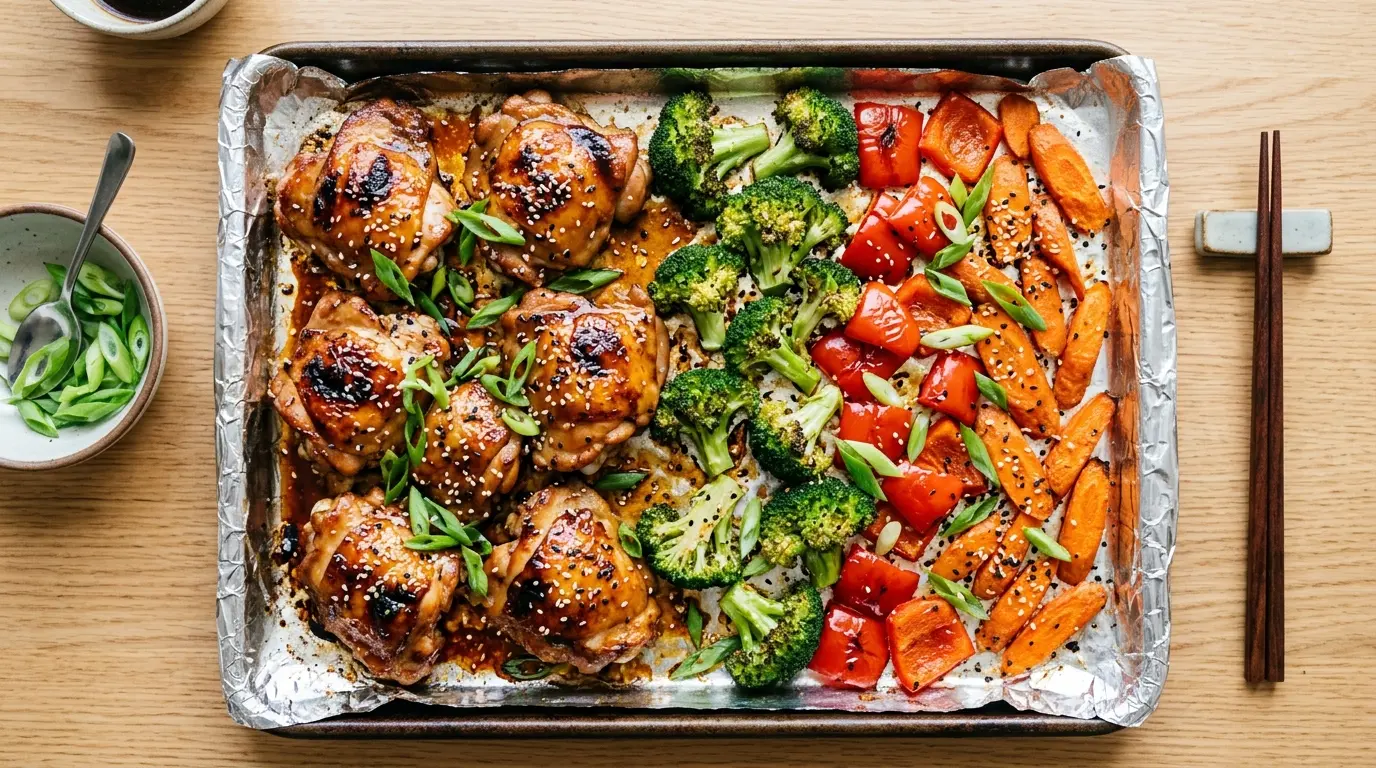
If you’re looking for a dinner that comes together fast, tastes like takeout, and leaves you with barely any dishes to wash, this Teriyaki Chicken Sheet Pan Dinner is exactly what you need.
Everything cooks together on one pan: juicy chicken thighs, crisp-tender vegetables, and a glossy homemade teriyaki sauce that caramelizes beautifully in the oven. It’s the kind of weeknight meal that hits every note — sweet, savory, satisfying — without asking much of you at all.
The secret is in the sauce. A quick homemade teriyaki glaze made with soy sauce, brown sugar, fresh ginger, garlic, and a touch of sesame oil takes just a few minutes to whisk together. Unlike bottled sauces that can be aggressively salty or overly sweet, homemade teriyaki lets you control the balance perfectly.
Chicken thighs are the cut of choice here, and for good reason. Their higher fat content keeps them moist and juicy through the full oven bake, and they develop gorgeous caramelized edges when finished under the broiler. Bone-in or boneless both work, but boneless skinless thighs give you the easiest experience with no fussing at the table.
Once the sauce is made and the chicken and veggies are coated, the oven does all the heavy lifting. This recipe truly delivers on the promise of a fuss-free family dinner.
If you love Asian-inspired chicken dinners, you might also enjoy this Chicken Stir Fry for another speedy weeknight option.

Why You’ll Love This Teriyaki Chicken Sheet Pan Dinner
This recipe has everything going for it, which is exactly why it keeps showing up on weekly dinner rotations in so many households.
It’s a true one-pan meal. The chicken and vegetables roast together on a single sheet pan, which means minimal cleanup and maximum convenience.
The homemade teriyaki sauce is simple but seriously delicious. You likely have every ingredient in your pantry right now.
It comes together in about 45 minutes from start to finish. That includes prep, roasting, and a quick broil for that gorgeous caramelized finish.
The vegetables are endlessly flexible. Broccoli, bell peppers, red onion, carrots, snap peas — use whatever you love or whatever needs to be used up.
It’s naturally gluten-free with one easy swap. Just use tamari or coconut aminos in place of regular soy sauce.
- One pan means one mess
- Ready in about 45 minutes
- Homemade sauce with pantry staples
- Packed with protein and vegetables
- Customizable with any veggies you have on hand
- Broiled to perfection for that caramelized, sticky glaze
- Great for meal prep — leftovers reheat beautifully
Read Also: Chicken Teriyaki Recipe
Ingredients
This dish keeps the ingredient list short and focused. The homemade teriyaki sauce is made from everyday pantry staples, and the vegetables are ones you’ll find at any grocery store. Here’s everything you’ll need for 4 servings.
For the Teriyaki Sauce:
- 1/2 cup (120 ml) soy sauce (or tamari for gluten-free)
- 3 tablespoons brown sugar, packed
- 1 tablespoon honey
- 1 tablespoon rice vinegar
- 1 teaspoon sesame oil
- 3 cloves garlic, minced
- 1 teaspoon fresh ginger, grated
- 1 tablespoon cornstarch
- 2 tablespoons water (to dissolve cornstarch)
For the Sheet Pan:
- 1.5 lbs (680 g) boneless, skinless chicken thighs
- 2 cups (180 g) broccoli florets
- 1 red bell pepper, cut into 1-inch (2.5 cm) pieces
- 1 cup (130 g) carrots, sliced into thin rounds or batons
- 1/2 red onion, cut into wedges
- 1 tablespoon olive oil
- Salt and black pepper, to taste
For Garnish:
- Sesame seeds, for topping
- 2 green onions, thinly sliced
- Cooked white or brown rice, for serving
For a similarly satisfying Asian-style chicken dinner, try this Chicken Lo Mein.
Kitchen Equipment Needed
You don’t need much equipment for this recipe. A large sheet pan is the star of the show, and everything else is basic kitchen gear. Having a good pan makes a real difference in how evenly the chicken and vegetables cook and caramelize.
- Large rimmed baking sheet (18×13 inch) — essential for the recipe
- Small saucepan, for the teriyaki sauce
- Mixing bowls, for tossing the vegetables
- Silicone basting brush, for glazing the chicken
- Sharp knife and cutting board
- Whisk
- Instant-read meat thermometer — highly recommended for food safety
- Measuring spoons and cups
- Aluminum foil or parchment paper (for easy cleanup)
Another favorite for easy cleanup: Sheet Pan Tacos.
Recommended Products for This Recipe
These are products I genuinely recommend based on quality, performance, and how much they improve this recipe. They make the cooking process easier and the results noticeably better.
1. Nordic Ware Natural Aluminum Commercial Baker’s Half Sheet
A quality sheet pan is the single most important piece of equipment for this recipe. Nordic Ware’s aluminum half sheets heat evenly, resist warping, and give you the golden caramelization you want on both the chicken and vegetables. Thin, flimsy pans create uneven hot spots that can burn the sauce.
2. Bachan’s Japanese Barbecue Sauce (Original)
If you want a shortcut that still delivers incredible flavor, Bachan’s is the best bottled teriyaki-style sauce on the market. It’s thin and drizzly (unlike gloppy bottled sauces that burn in the oven), and it adds a beautifully balanced sweet-savory flavor. Keep a bottle on hand for busy nights.
3. Kikkoman Soy Sauce
If you’re making the sauce from scratch (which I highly recommend), quality soy sauce is the backbone of the entire recipe. Kikkoman’s naturally brewed soy sauce delivers a clean, well-rounded umami flavor that cheaper alternatives simply can’t match. This is one ingredient worth not skimping on.
4. Microplane Premium Zester/Grater
Fresh ginger makes a huge difference in the flavor of the teriyaki sauce compared to ground ginger or ginger paste. A Microplane grater makes grating fresh ginger (and garlic) effortless and fast, producing a fine texture that melts seamlessly into the sauce.
5. ThermoPro TP03 Instant-Read Thermometer
No more guessing whether your chicken is cooked through. This thermometer gives you an accurate reading in seconds, so you can pull the chicken at exactly 165°F (74°C) without over-drying it. It’s a small investment that makes a big difference in getting perfectly cooked chicken every time.
You might also enjoy this easy Sheet Pan Chicken and Veggies Dinner for another crowd-pleasing one-pan meal.

Step-by-Step Instructions
Step 1: Make the Teriyaki Sauce
- In a small saucepan, combine the soy sauce, brown sugar, honey, rice vinegar, and sesame oil. Whisk together until the sugar starts to dissolve.
- Add the minced garlic and grated ginger to the saucepan and stir to combine.
- In a small bowl, mix the cornstarch and 2 tablespoons of cold water together until fully dissolved with no lumps. This is your slurry and it’s what thickens the sauce.
- Bring the sauce mixture to a gentle boil over medium heat, stirring frequently to prevent the sugar from burning on the bottom.
- Once it reaches a boil, add the cornstarch slurry and stir immediately to incorporate.
- Reduce the heat to low and simmer for 3 to 4 minutes, stirring occasionally, until the sauce has thickened enough to coat the back of a spoon. It will continue to thicken slightly as it cools.
- Remove the saucepan from the heat. Divide the sauce: reserve about one-third of it in a small bowl for glazing and serving, and set the rest aside for coating the chicken and vegetables.
Step 2: Preheat the Oven and Prepare the Pan
- Set your oven to 400°F (200°C) and allow it to preheat fully. A fully preheated oven is essential for getting good caramelization on the vegetables.
- Line a large rimmed baking sheet with aluminum foil or parchment paper. This step makes cleanup dramatically easier, especially since the teriyaki sauce will bubble and caramelize during baking.
- Lightly coat the lined pan with a small amount of olive oil or non-stick cooking spray to prevent sticking.
Step 3: Prep the Vegetables
- Cut the broccoli into medium-sized florets, about 1.5 to 2 inches (4 to 5 cm) across. Florets that are too large won’t cook evenly; too small and they’ll burn before the chicken is done.
- Slice the red bell pepper into 1-inch (2.5 cm) pieces. Removing the seeds and white membrane before cutting will prevent any bitterness.
- Cut the carrots into thin rounds or batons about 1/4 inch (6 mm) thick. Thinner slices cook faster and match the timing of the other vegetables.
- Slice the red onion into wedges. Keep them fairly large — about 1 inch (2.5 cm) thick — so they stay intact during roasting and develop a lovely sweet, jammy quality.
- Place all the vegetables in a large mixing bowl. Drizzle with 1 tablespoon of olive oil and season lightly with salt and black pepper. Toss to coat evenly.
- Pour about half of the prepared teriyaki sauce (the portion set aside for coating) over the vegetables and toss again so they’re well coated.
Step 4: Arrange the Chicken and Vegetables on the Pan
- Pat the chicken thighs dry with paper towels. Removing surface moisture helps the chicken brown rather than steam.
- Season both sides of the chicken thighs lightly with salt and black pepper. Because the teriyaki sauce is already salty, keep the seasoning restrained.
- Arrange the seasoned vegetables in a single layer around the edges and sides of the prepared sheet pan. Spreading them out in a single layer is important — crowded vegetables steam instead of roast.
- Place the chicken thighs in the center of the pan, nestled among the vegetables.
- Using your silicone basting brush, generously brush the remaining half of the coating teriyaki sauce over the tops of the chicken thighs. Reserve the small bowl of sauce you set aside earlier for serving.
Step 5: Bake the Sheet Pan
- Slide the sheet pan into the fully preheated 400°F (200°C) oven.
- Bake for 20 to 25 minutes. The exact time will depend on the size of your chicken thighs. Larger, thicker thighs may need the full 25 minutes.
- At the 20-minute mark, use your instant-read thermometer to check the internal temperature of the thickest chicken thigh. You’re looking for a reading of about 155°F to 160°F (68°C to 71°C) at this stage — it will finish cooking under the broiler.
- If the chicken hasn’t reached 155°F (68°C) yet, return it to the oven for another 5 minutes and check again.
- The vegetables should look bright, slightly caramelized at the edges, and tender when pierced with a fork.
Step 6: Broil for Caramelized Finish
- Once the chicken has reached about 155°F to 160°F (68°C to 71°C), remove the pan from the oven.
- Switch your oven to the broil setting on high. Position your oven rack so the sheet pan will sit about 6 inches (15 cm) below the broiler element.
- Brush the tops of the chicken thighs with some of the reserved serving sauce.
- Place the sheet pan back under the broiler. Broil for 2 to 3 minutes, watching closely the entire time. The sauce will bubble, darken, and caramelize — this is exactly what you want.
- Do not walk away from the oven during broiling. The difference between perfectly caramelized and burnt can be less than a minute.
- Remove the pan from the oven when the chicken is glossy, slightly charred at the edges, and the internal temperature reads 165°F (74°C).
Step 7: Garnish and Serve
- Allow the chicken to rest for 3 to 4 minutes before serving. Resting lets the juices redistribute throughout the meat, keeping every bite moist.
- Drizzle the remaining reserved teriyaki sauce over the chicken and vegetables for extra flavor.
- Sprinkle generously with toasted sesame seeds and thinly sliced green onions.
- Serve immediately over steamed white or brown rice to soak up all that gorgeous sauce.
Read Also: Chicken Breast Sheet Pan Dinner
Tips for Success
A few simple techniques make all the difference between a good sheet pan dinner and a great one. Keep these tips in mind and you’ll get perfect results every time.
- Pat the chicken dry before seasoning. Surface moisture prevents browning. Dry chicken = better caramelization.
- Don’t overcrowd the pan. If the pan looks too full, use two sheet pans. Crowded vegetables steam rather than roast, and you’ll miss out on those caramelized edges.
- Cut vegetables to similar sizes. Consistent sizing ensures everything finishes cooking at the same time.
- Reserve some sauce for serving. Never pour sauce that has touched raw chicken back over the cooked dish. Always keep a separate portion set aside from the start.
- Thicken the sauce properly. The sauce should coat a spoon before it goes on the chicken. Thin sauce will run off and burn on the pan instead of glazing the meat.
- Watch the broiler closely. Set a timer for 2 minutes and check at every minute after that. Teriyaki sauce is high in sugar and can go from perfect to burnt quickly.
- Use an instant-read thermometer. It’s the only reliable way to know your chicken is safe to eat without cutting it open and losing juices.
Another crowd-pleasing option to try: Lemon Chicken Sheet Pan Dinner.
Serving Suggestions
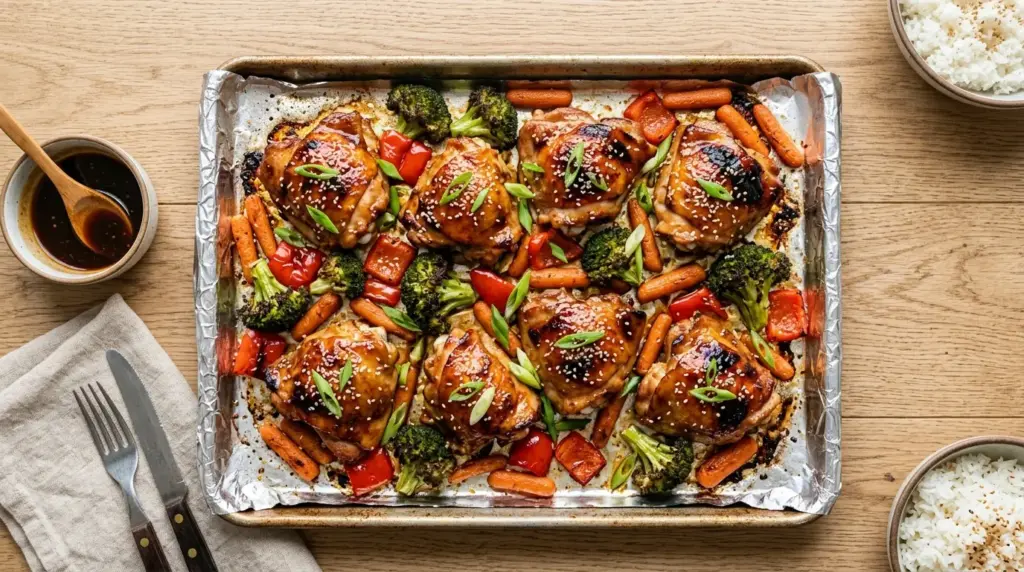
This Teriyaki Chicken Sheet Pan Dinner is a complete meal on its own, but it pairs beautifully with a handful of simple sides that soak up the extra sauce and round out the flavors.
Steamed jasmine or basmati rice is the classic pairing — a big fluffy bowl soaks up every drop of that sweet-savory glaze. Brown rice adds a nutty flavor and extra fiber if you prefer.
- Steamed white or brown rice
- Cilantro Lime Rice for a bright, herby contrast
- Lo mein noodles or udon noodles tossed with a little sesame oil
- Chicken Fried Rice if you want to stretch leftovers into another meal
- Simple cucumber salad with rice vinegar dressing
- Miso soup as a warming starter
- Cauliflower rice for a lower-carb option
- Easy Fried Rice as a classic side
Variations to Try
One of the best things about this recipe is how easy it is to customize. Once you’ve made it once, you’ll start seeing all the ways you can riff on it to keep it fresh.
Keep the base technique the same — coat, roast, broil — and swap in your preferred ingredients for endlessly different results.
- Chicken breasts instead of thighs: Boneless, skinless chicken breasts work well. Cut them into strips or leave whole, but check the internal temperature at 20 minutes as they can dry out more quickly than thighs.
- Pineapple teriyaki: Add 1 cup (160 g) of fresh pineapple chunks to the sheet pan for a sweet, tropical twist. The pineapple caramelizes beautifully in the oven.
- Spicy teriyaki: Add 1 to 2 teaspoons of sriracha sauce or chili garlic paste to the teriyaki sauce for a kick of heat.
- Tofu teriyaki: Swap the chicken for extra-firm tofu, pressed and cubed, for a plant-based version. Bake at the same temperature but check at 20 minutes.
- Different vegetables: Snap peas, zucchini, asparagus, mushrooms, baby bok choy, or sweet potato all work wonderfully. Just make sure denser vegetables like sweet potato are cut thin enough to cook through.
- Salmon instead of chicken: Use salmon fillets and reduce the bake time to 12 to 15 minutes. Finish under the broiler for 1 to 2 minutes only, watching closely.
- Add cashews: Toss a handful of roasted cashews over the dish after baking for crunch and richness.
For another Asian-inspired sheet pan idea, check out this BBQ Chicken Sheet Pan Dinner.
Storage and Reheating
This recipe is excellent for meal prep and stores beautifully for several days. Making a double batch on Sunday sets you up for easy lunches and dinners all week.
Allow the chicken and vegetables to cool completely to room temperature before transferring to storage containers. Storing hot food in sealed containers creates condensation that makes vegetables soggy.
- Refrigerator: Store in an airtight container for up to 4 days.
- Freezer: Freeze the cooked chicken (without vegetables, as they don’t freeze as well) in a freezer-safe container for up to 2 months. Thaw overnight in the refrigerator before reheating.
- Reheating in the oven: Spread leftovers on a baking sheet and reheat at 375°F (190°C) for 10 to 12 minutes. This method restores some caramelization and keeps the chicken juicy.
- Reheating in the microwave: Place in a microwave-safe dish with a splash of water, cover loosely, and heat in 60-second intervals until warmed through. Add a drizzle of fresh teriyaki sauce after reheating.
- Reheating in a skillet: For best results, reheat over medium heat in a non-stick skillet with a small amount of oil and a splash of teriyaki sauce. This re-caramelizes the sauce and brings the dish back to life.
- Meal prep tip: Store the rice and chicken/vegetables separately to prevent the rice from absorbing too much sauce and becoming mushy.
For another great meal-prep-friendly option, try this Chicken Thigh Sheet Pan Dinner.
Nutritional Facts
The following values are approximate and based on one serving (one-quarter of the total recipe), assuming the dish is served without rice. Actual values will vary based on the exact size of your chicken thighs and the specific brands of soy sauce and other ingredients used.
| Nutrient | Per Serving (approx.) |
|---|---|
| Calories | 340 kcal |
| Protein | 34 g |
| Total Fat | 14 g |
| Saturated Fat | 3 g |
| Carbohydrates | 18 g |
| Sugar | 13 g |
| Fiber | 3 g |
| Sodium | 920 mg |
| Cholesterol | 125 mg |
To reduce sodium, opt for a low-sodium soy sauce, which cuts the salt content significantly without sacrificing much flavor. Serving with cauliflower rice instead of white rice also keeps the overall carbohydrate count lower.
You might also love this Mediterranean Chicken Sheet Pan Dinner as a lighter variation.
Health Benefits of Key Ingredients
This dish isn’t just delicious — it delivers a genuinely balanced nutritional profile. Each component brings something meaningful to the table.
Chicken thighs are an excellent source of high-quality protein, B vitamins (especially niacin and B6), and zinc. The slightly higher fat content compared to chicken breast actually helps your body absorb fat-soluble vitamins from the vegetables on the pan.
- Broccoli is one of the most nutrient-dense vegetables available. It’s rich in vitamin C, vitamin K, folate, and sulforaphane, a compound studied for its antioxidant and anti-inflammatory properties.
- Red bell peppers contain more vitamin C per gram than citrus fruit and are a rich source of vitamin A in the form of beta-carotene. They add sweetness without adding significant calories.
- Carrots are packed with beta-carotene, which the body converts to vitamin A. They also provide fiber and potassium, and their natural sweetness complements the teriyaki glaze beautifully.
- Ginger has well-established anti-inflammatory and digestive properties. Fresh ginger contains gingerol, an active compound with antioxidant effects.
- Garlic supports cardiovascular health and immune function. It contains allicin, a compound produced when garlic is chopped or crushed that has antimicrobial properties.
- Sesame oil provides healthy monounsaturated and polyunsaturated fats, along with sesamol and sesamin, antioxidant compounds unique to sesame.
- Soy sauce contributes deep umami flavor and contains some manganese, but should be used in moderation due to its sodium content.
Read Also: Greek Chicken Sheet Pan Dinner
Frequently Asked Questions
1. Can I use chicken breasts instead of chicken thighs?
Yes, chicken breasts work well in this recipe. Slice them into strips about 1 inch (2.5 cm) wide to help them cook evenly with the vegetables. Whole chicken breasts can be used too, but they’ll need the full 25 minutes and may dry out if overcooked, so keep a close eye on the thermometer.
2. Can I use store-bought teriyaki sauce instead of making my own?
Absolutely. If time is tight, a good quality store-bought teriyaki sauce works perfectly. Look for a sauce that is thin and pourable rather than thick and gloppy — thick sauces tend to burn on the hot pan. Bachan’s Japanese Barbecue Sauce is a widely praised option that behaves well in the oven.
3. How do I stop the vegetables from getting soggy?
The key is spreading them in a single layer with space between pieces. Crowded vegetables trap steam and turn soft instead of roasting. If your pan looks full, use a second sheet pan. Also, make sure the oven is fully preheated before the pan goes in — putting a cold pan in a cold oven causes steaming rather than roasting.
4. Can I marinate the chicken overnight?
Yes, and it actually improves the flavor. Place the chicken thighs in a zip-lock bag or covered container with about half of the teriyaki sauce and refrigerate for up to 24 hours. Just make sure to cook the marinade that touches raw chicken in a saucepan before using it as a glaze.
5. Is this recipe gluten-free?
Traditional soy sauce contains wheat, so the standard version is not gluten-free. However, the swap is easy: use an equal amount of tamari (a Japanese soy sauce made without wheat) or coconut aminos. Both options deliver great flavor and are naturally gluten-free. Just double-check that any other condiments you use are also gluten-free certified.
For another family-friendly dinner idea, try this Chicken Sausage Sheet Pan Dinner.

Teriyaki Chicken Sheet Pan Dinner

Equipment
- Large rimmed baking sheet (18×13 inch) - essential for the recipe
- Small saucepan - for the teriyaki sauce
- Mixing bowls - for tossing the vegetables
- Silicone basting brush - for glazing the chicken
- Sharp knife
- Cutting board
- Whisk
- Instant-read meat thermometer - highly recommended for food safety
- Measuring spoons
- Measuring cups
- Aluminum foil or parchment paper - for easy cleanup
Ingredients
- 1/2 cup soy sauce - 120 ml, or tamari for gluten-free
- 3 tablespoons brown sugar - packed
- 1 tablespoon honey
- 1 tablespoon rice vinegar
- 1 teaspoon sesame oil
- 3 cloves garlic - minced
- 1 teaspoon fresh ginger - grated
- 1 tablespoon cornstarch
- 2 tablespoons water - to dissolve cornstarch
For the Sheet Pan
- 1.5 lbs boneless, skinless chicken thighs - 680 g
- 2 cups broccoli florets - 180 g, about 1.5 to 2 inches (4 to 5 cm) across
- 1 red bell pepper - cut into 1-inch (2.5 cm) pieces
- 1 cup carrots - 130 g, sliced into thin rounds or batons about 1/4 inch (6 mm) thick
- 1/2 red onion - cut into wedges about 1 inch (2.5 cm) thick
- 1 tablespoon olive oil
- salt and black pepper - to taste
For Garnish and Serving
- sesame seeds - for topping
- 2 green onions - thinly sliced
- cooked white or brown rice - for serving
Instructions
- Make the teriyaki sauce: combine soy sauce, brown sugar, honey, rice vinegar, and sesame oil in a small saucepan. Add garlic and ginger. In a small bowl, whisk cornstarch with cold water until dissolved.
- Bring the sauce mixture to a gentle boil over medium heat. Stir in the cornstarch slurry, reduce heat to low, and simmer 3-4 minutes until thickened. Reserve one-third for glazing and serving.
- Preheat oven to 400°F (200°C). Line a large rimmed baking sheet with foil or parchment paper and lightly coat with oil or cooking spray.
- Prep vegetables: cut broccoli into florets, slice bell pepper into 1-inch pieces, slice carrots into thin rounds, and cut red onion into wedges.
- Toss vegetables with olive oil, salt, and pepper in a large bowl. Add half of the teriyaki sauce and toss to coat evenly.
- Pat chicken thighs dry with paper towels and season lightly with salt and pepper. Arrange vegetables in a single layer on the pan, place chicken in the center, and brush with remaining coating sauce.
- Bake for 20-25 minutes until chicken reaches 155°F to 160°F (68°C to 71°C). Vegetables should be bright and slightly caramelized at the edges.
- Switch oven to broil on high. Brush chicken with reserved sauce and broil 2-3 minutes until glossy and caramelized, watching closely. Internal temperature should reach 165°F (74°C).
- Rest chicken 3-4 minutes. Drizzle with remaining reserved sauce, sprinkle with sesame seeds and green onions, and serve over steamed rice.
Notes
- Pat chicken dry before seasoning to ensure proper browning and caramelization.
- Don’t overcrowd the pan — if it looks full, use two sheet pans for proper roasting.
- Cut vegetables to similar sizes so they finish cooking at the same time.
- Reserve sauce that hasn’t touched raw chicken for serving — never reuse sauce from the pan.
- Watch the broiler closely; teriyaki sauce is high in sugar and can burn quickly.
- Use an instant-read thermometer to check doneness without losing juices.
- Store leftovers in an airtight container in the refrigerator for up to 4 days.
- Reheat in the oven at 375°F (190°C) for 10-12 minutes to restore caramelization.
- For a gluten-free version, use tamari or coconut aminos instead of regular soy sauce.
- Freeze cooked chicken without vegetables in a freezer-safe container for up to 2 months.
Final Thoughts
This Teriyaki Chicken Sheet Pan Dinner really does deliver on everything you want from a weeknight meal: bold flavor, easy cleanup, and ingredients that are always accessible.
The homemade teriyaki sauce is genuinely worth making — it takes less than 10 minutes and tastes miles better than anything from a bottle.
Once you have the base technique down, the variations are endless. Swap the vegetables, change the protein, add some pineapple, or crank up the heat with a little chili — this recipe is designed to adapt.
If you give this recipe a try, I’d love to hear how it turns out for you. Drop a comment below, share a photo, or tag a friend who needs this dinner in their life. The more the merrier at the sheet pan dinner table!
Recommended:
- Chicken Sheet Pan Dinner
- Pork Chop Stir Fry
- Skillet Chicken Bulgogi
- Chicken Pad Thai
- Asian Ground Beef Noodle Bowls
- Stir Fry Sauce
- Teriyaki Sauce
- Hoisin Sauce
- Shrimp and Sugar Snap Peas
- Baked Honey Mustard Chicken