If you have a jar of sourdough discard sitting in the fridge and a craving for something buttery and crisp, this sourdough discard shortbread recipe is exactly what you need. Traditional shortbread is already one of the most satisfying cookies in the world, with its rich, melt-in-your-mouth texture and barely-there sweetness. Adding sourdough discard takes it one step further, lending a gentle tang that deepens the flavor in the most unexpected, delightful way.
This is a slice-and-bake style cookie made with just a handful of pantry staples: butter, powdered sugar, flour, salt, vanilla extract, and your discard. No eggs, no leavening agents. That is intentional. Traditional shortbread relies entirely on the high fat content of butter for its signature crumbly texture, and sourdough discard acts purely as a flavor booster here rather than a leavener.
The ratio of butter to flour is the heart of good shortbread. Too much flour and the cookies turn dry and chalky. Too little and they spread too much and lose their structure. This recipe nails that balance, producing cookies that hold their shape beautifully when sliced and baked, with golden edges and a tender center.
Whether you are new to baking with sourdough discard or a seasoned pro who feeds their starter weekly, this recipe is approachable, fast, and consistently reliable. You can refrigerate the dough log for up to 3 days or freeze it for months, so you are always just a slice away from fresh cookies.
You might also enjoy: Sourdough Discard Chocolate Chip Cookies

Why You’ll Love This Sourdough Discard Shortbread Recipe
This recipe checks every box for an ideal baking project.
It uses up sourdough discard that might otherwise go to waste, turning it into something genuinely special. The cookies bake up with crisp, golden edges and a delicate crumb that practically dissolves on your tongue.
Powdered sugar, rather than granulated sugar, is one of the keys to achieving that signature melt-in-your-mouth shortbread texture. It dissolves more smoothly into the butter, creating a finer, more tender crumb than you would get with coarse sugar.
The dough comes together in under 15 minutes and requires no rolling pin or cookie cutters. Simply shape it into a log, chill it, slice, and bake.
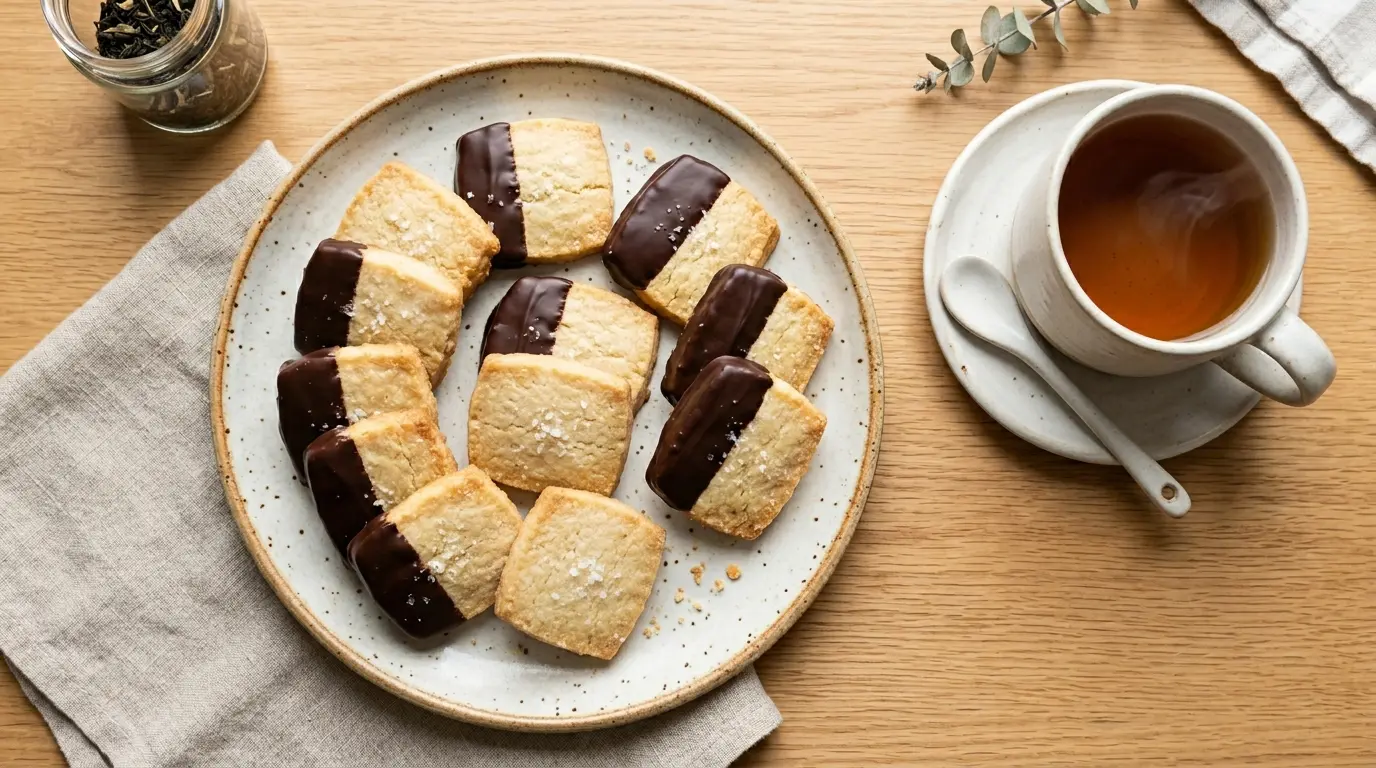
These cookies are not aggressively sweet, which makes them incredibly versatile. Serve them plain with coffee or tea, dip them in chocolate for a more indulgent treat, or package them up as gifts.
- The tang from sourdough discard adds subtle complexity that sets these cookies apart from plain shortbread
- No eggs needed, making this a great recipe when your fridge is running low
- The dough can be made days in advance and baked fresh when needed
- Excellent base for flavor variations like lemon zest, lavender, or rosemary
- Crisp texture that holds up well for days, making them ideal for gifting or snacking
- Simple enough for beginner bakers, with results that taste bakery-worthy
Read Also: Sourdough Discard Crackers Recipe
Ingredients
For this recipe, quality butter makes a significant difference. Since butter is the primary ingredient and the main source of flavor, using a good-quality unsalted butter will give you the richest, most buttery shortbread. The discard should be unfed, straight from the fridge, at 100% hydration (equal parts flour and water by weight).
- 1 cup (226g / 2 sticks) unsalted butter, softened to room temperature
- 3/4 cup (90g) powdered sugar, sifted
- 1/2 cup (120g) sourdough discard, at room temperature
- 1 tsp pure vanilla extract
- 2 cups (240g) all-purpose flour
- 1/4 cup (30g) cornstarch (the secret to an ultra-tender crumb)
- 1/2 tsp fine sea salt
- 2 tbsp raw or coarse sugar (optional, for rolling the log before slicing)
For best results, use a kitchen scale to measure your ingredients by weight, especially the flour and discard.
This recipe pairs wonderfully with Sourdough Discard Lemon Loaf for a bright, citrusy baking session.
Kitchen Equipment Needed
You do not need any specialty equipment to make this recipe, but a few key tools will make the process much smoother. A stand mixer or hand mixer is highly recommended because beating butter and sugar together properly is essential for the right texture.
- Stand mixer or hand mixer with paddle attachment
- Large mixing bowl
- Rubber spatula for scraping down the bowl
- Plastic wrap for chilling the dough log
- Sharp chef’s knife for slicing the cookies evenly
- Baking sheets (2, ideally)
- Parchment paper or silicone baking mats
- Cooling rack
- Measuring cups and spoons or a kitchen scale
You might also enjoy: Sourdough Discard Brownies
Recommended Products for This Recipe
These are products I genuinely recommend based on quality and performance for getting the best results from this recipe.
1. KitchenAid Stand Mixer
A stand mixer makes creaming the butter and powdered sugar effortless, achieving the light, fluffy consistency that gives these cookies their signature tender crumb. The paddle attachment distributes the ingredients evenly without overworking the dough once the flour is added. It is an investment that pays off across hundreds of baking projects.
2. Nordic Ware Half Sheet Baking Pan
Even, heavy-gauge baking sheets are critical for shortbread, which is sensitive to hotspots and uneven heat. The Nordic Ware half sheet pan distributes heat consistently, giving you evenly golden cookies without burnt bottoms. The rimmed edges also prevent any cookies from sliding off.
3. OXO Good Grips Kitchen Scale
Measuring by weight is the single most reliable way to get consistent shortbread. Even a small variation in flour can shift the texture from tender to dense. The OXO scale is easy to read, responsive, and accurate to 1 gram, making it ideal for baking.
4. Silpat Non-Stick Baking Mat
A silicone baking mat creates a non-stick surface that also moderates the heat reaching the bottom of the cookie, helping prevent over-browning. It is reusable, easy to clean, and consistently produces shortbread with a perfect golden base.
Another favorite: Sourdough Discard Coffee Cake

Step-by-Step Instructions
Step 1: Bring Your Butter and Discard to Room Temperature
- Remove your unsalted butter from the refrigerator at least 1 hour before baking.
- The butter should be soft enough to press a finger into easily, but it should not be melted or greasy. If it is too warm, your cookies may spread too much in the oven.
- Take your sourdough discard out of the fridge at the same time so it can come to room temperature. Cold discard can cause the butter to seize up when mixed.
- If you need to soften butter quickly, cut it into cubes and let it sit on the counter for 20 to 30 minutes.
Step 2: Cream the Butter and Powdered Sugar
- Place the softened unsalted butter (226g / 1 cup) in the bowl of your stand mixer fitted with the paddle attachment.
- Add the sifted powdered sugar (90g / 3/4 cup).
- Begin mixing on low speed for about 30 seconds to combine, then increase to medium-high speed.
- Beat for 3 to 5 minutes until the mixture is very light, pale, and fluffy. Do not rush this step. Properly creamed butter and sugar creates the airy structure that makes shortbread tender.
- Scrape down the sides of the bowl with a rubber spatula halfway through.
Step 3: Add the Sourdough Discard and Vanilla
- Add the sourdough discard (120g / 1/2 cup) and vanilla extract (1 tsp) to the butter mixture.
- Mix on medium speed until fully combined, about 1 minute. The mixture may look slightly curdled at first; this is normal and will smooth out once the flour is added.
- Scrape the bowl down again with your rubber spatula.
Step 4: Mix the Dry Ingredients
- In a separate medium bowl, whisk together the all-purpose flour (240g / 2 cups), cornstarch (30g / 1/4 cup), and fine sea salt (1/2 tsp).
- Whisking the dry ingredients together first ensures the cornstarch is evenly distributed throughout the dough. Cornstarch reduces gluten development, giving the cookies a lighter, more tender crumb.
Step 5: Combine the Wet and Dry Ingredients
- With the mixer on low speed, gradually add the dry ingredient mixture to the butter mixture in two to three additions.
- Mix just until a soft, cohesive dough forms and no dry streaks of flour remain. Do not overmix. Overworking the dough will develop gluten and make your cookies tough rather than tender.
- The dough will be soft but not sticky. If it feels very sticky, add 1 to 2 tablespoons of extra flour.
Step 6: Shape the Dough into a Log
- Lay a large sheet of plastic wrap on a clean counter or cutting board.
- Scrape the dough out onto the center of the plastic wrap.
- Use your hands and the plastic wrap to shape the dough into a log that is about 2 inches (5cm) in diameter and roughly 10 to 12 inches (25 to 30cm) long.
- If you are using coarse or raw sugar for the outside, spread it in a line on the plastic wrap before rolling so the log gets coated on the outside. This creates a sparkling, crunchy edge on each slice.
- Wrap the dough log tightly in the plastic wrap and roll it gently on the counter to smooth out any uneven edges.
Step 7: Chill the Dough
- Transfer the wrapped dough log to the refrigerator and chill for at least 1 hour, or up to 3 days.
- Chilling is non-negotiable for slice-and-bake shortbread. It firms the dough so the cookies hold their round shape when sliced and do not spread too much during baking.
- For a deeper flavor, chill overnight. The sourdough tang becomes more pronounced after a longer rest.
Step 8: Preheat the Oven and Prepare Your Baking Sheets
- When you are ready to bake, preheat your oven to 325°F (163°C). A lower baking temperature is intentional for shortbread. It allows the cookies to dry out slowly and evenly, developing a crisp texture without browning too quickly.
- Line two baking sheets with parchment paper or silicone baking mats.
Step 9: Slice and Arrange the Cookies
- Remove the dough log from the refrigerator and unwrap it.
- Using a sharp chef’s knife, slice the log into rounds about 1/4 inch (6mm) thick. Try to keep the slices as even as possible so the cookies bake at the same rate.
- If the log has flattened slightly on the bottom from resting in the fridge, roll it gently with your hands before slicing to restore its round shape.
- Place the sliced cookies on the prepared baking sheets, spacing them about 1 inch (2.5cm) apart. They will not spread much, so they do not need a lot of space.
Step 10: Bake the Shortbread
- Place the baking sheets in the preheated oven and bake for 18 to 22 minutes.
- The cookies are done when the edges are just turning a light golden color and the centers look set but still pale. Shortbread should not be deeply golden all over; it should look pale with lightly gilded edges.
- If your oven runs hot, start checking at the 15-minute mark. Rotate the pans halfway through baking for even results.
Step 11: Cool Completely
- Remove the baking sheets from the oven and let the cookies cool on the pans for 5 minutes. They will be very delicate when hot.
- Transfer the cookies carefully to a wire cooling rack using a spatula and allow them to cool completely before eating. The texture continues to firm up as they cool, and the full crisp, buttery flavor develops once they reach room temperature.
Read Also: Sourdough Discard Cinnamon Rolls Recipe
Tips for Success
Even the simplest recipes have a few tricks worth knowing. These tips will make sure your shortbread turns out perfectly every single time.
- Use room temperature butter and discard. Cold butter will not cream properly, and cold discard can cause the dough to break. Give them both at least an hour to warm up before you start.
- Do not skip the cornstarch. It is the secret ingredient that creates the softest, most tender crumb. You can substitute with rice flour for a slightly different but equally delicate texture.
- Chill the dough long enough. At least 1 hour is the minimum, but overnight chilling makes the dough easier to slice cleanly and deepens the sourdough flavor.
- Use a sharp knife. A dull knife will squash the dough log rather than cutting cleanly through it, resulting in uneven, misshapen cookies.
- Do not overbake. Shortbread should be pale and barely golden at the edges. If it turns deep brown all over, it will taste dry and overly crispy rather than buttery and tender.
- Sift the powdered sugar. Lumps of powdered sugar can prevent the butter from creaming smoothly, resulting in a slightly grainy texture.
- Weigh your flour. Scooping flour directly from the bag compacts it, and even 10 to 20 extra grams of flour can noticeably affect the texture of your shortbread.
For another brilliant use of your sourdough discard, try this Sourdough Discard Banana Bread.
Serving Suggestions
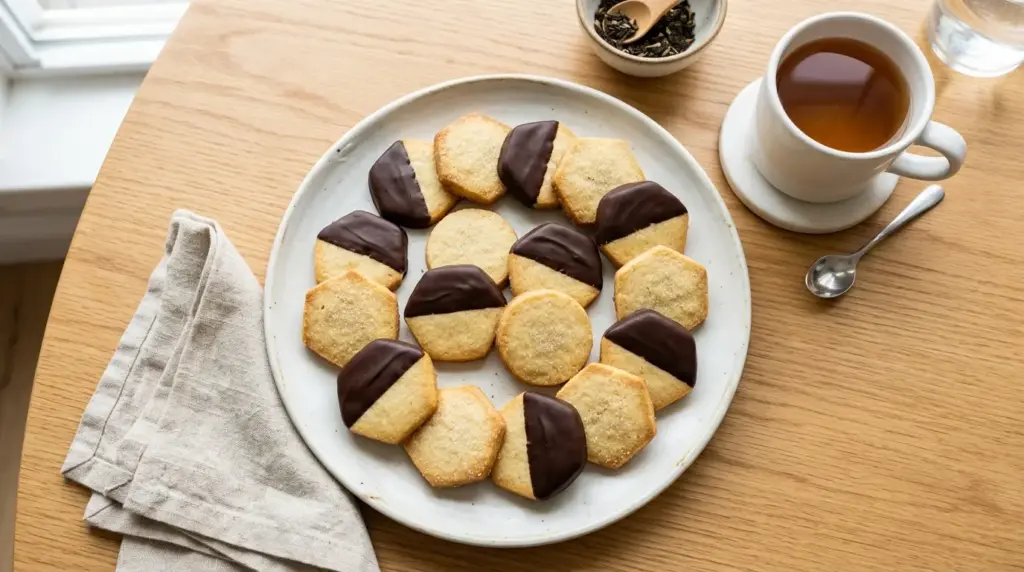
These sourdough discard shortbread cookies are endlessly versatile and work beautifully in so many settings.
Serve them alongside an afternoon cup of tea or coffee for a classic pairing that never gets old. Their buttery, lightly tangy flavor is the perfect counterpoint to a bold espresso or a floral Earl Grey.
They also make a wonderful addition to a holiday cookie box or a homemade gift. Wrapped in parchment and tied with a ribbon, these cookies feel genuinely special.
- Dip one half of each cookie in melted dark or white chocolate melting wafers and let them set on parchment for an elegant finish
- Sprinkle finished cookies with a pinch of flaky sea salt before baking for a sweet-salty contrast
- Arrange them on a dessert platter alongside Sourdough Discard Chocolate Cake for a beautiful baked goods spread
- Serve with a side of lemon curd for dipping, which echoes the gentle tang of the sourdough
- Crumble over vanilla ice cream or yogurt parfaits for an easy, impressive dessert
You might also enjoy: Whipped Shortbread Cookies
Variations to Try
Once you have the base recipe down, the flavor possibilities are nearly endless. Shortbread is one of the best canvases for creative additions because the simple, buttery base pairs with almost anything.
- Lemon Shortbread: Add 2 teaspoons of freshly grated lemon zest to the butter and sugar when creaming. The citrus brightens the sourdough tang beautifully.
- Lavender Shortbread: Mix in 1 teaspoon of culinary-grade dried lavender with the dry ingredients. Use sparingly since lavender can easily become overpowering.
- Rosemary Shortbread: Add 1 tablespoon of finely chopped fresh rosemary. This savory-sweet combination pairs remarkably well with tea or cheese.
- Chocolate Chip Shortbread: Fold in 3 oz (85g) of finely chopped dark or milk chocolate after the flour is incorporated. Chop rather than use chips for more even distribution.
- Almond Shortbread: Replace half the all-purpose flour with almond flour for a slightly nuttier, even more tender cookie. Add 1/2 teaspoon of almond extract along with the vanilla.
- Espresso Shortbread: Dissolve 1 teaspoon of instant espresso powder in the vanilla extract before adding to the dough for a mocha-like depth of flavor.
For more shortbread inspiration, explore this Lemon Shortbread Cookies Recipe.
Storage and Reheating
One of the best things about shortbread is how well it stores. These cookies actually get better over the first day or two as the flavors meld and the texture settles into that perfect crisp-yet-tender consistency.
- Room temperature: Store baked cookies in an airtight container at room temperature for up to 10 days. Place a sheet of parchment between layers to prevent them from sticking together.
- Refrigerator (unbaked dough): The shaped dough log can be kept wrapped tightly in the fridge for up to 3 days before slicing and baking.
- Freezer (unbaked dough): Wrap the dough log in plastic wrap, then in foil or a freezer bag. It will keep for up to 3 months. Slice directly from frozen and add 2 to 3 extra minutes to the baking time.
- Freezer (baked cookies): Fully cooled baked cookies can be frozen in an airtight container for up to 2 months. Thaw at room temperature for 20 to 30 minutes before serving.
- Refreshing stale cookies: If your cookies have softened slightly, place them on a baking sheet in a 300°F (150°C) oven for 5 minutes to crisp them up again.
Read Also: Sourdough Discard Granola Recipe
Nutritional Facts
Per cookie, based on a batch of approximately 30 cookies.
| Nutrient | Amount Per Cookie |
|---|---|
| Calories | ~110 kcal |
| Total Fat | 7g |
| Saturated Fat | 4.5g |
| Cholesterol | 18mg |
| Sodium | 40mg |
| Total Carbohydrates | 11g |
| Dietary Fiber | 0.3g |
| Sugars | 3g |
| Protein | 1g |
Note: These are approximate values and will vary depending on the exact ingredients used and the size of each cookie.
For another sweet sourdough treat, try this Sourdough Discard Carrot Cake.
Health Benefits of Key Ingredients
While shortbread is undeniably an indulgent treat, some of its core ingredients do bring real nutritional value to the table.
It is worth understanding what goes into what you are baking, especially if you are making these for people who care about the quality of their ingredients.
- Sourdough discard contains live bacteria and wild yeast that, while not as active as in a freshly fed starter, still contribute trace amounts of beneficial organisms and organic acids. These acids also make the cookies slightly easier to digest than their plain-flour counterparts.
- Unsalted butter provides fat-soluble vitamins A, D, E, and K2, which play roles in immune function, bone health, and cell growth. Butter from grass-fed cows has an even higher concentration of these nutrients.
- All-purpose flour supplies carbohydrates for energy. Choosing an unbleached flour preserves more of the wheat’s natural nutrients.
- Cornstarch is naturally gluten-free when used in small amounts and contributes to the light texture of the cookies without significantly impacting the nutritional profile.
- Vanilla extract (real, not imitation) contains small amounts of antioxidants and has been studied for mild anti-inflammatory properties. The genuine flavor it adds is also worth noting.
This recipe pairs beautifully with Sourdough Discard Blueberry Muffins for a full sourdough discard baking day.
Frequently Asked Questions
1. Can I use active sourdough starter instead of discard?
Yes, you can. The cookies will taste slightly less tangy since freshly fed starter has a milder flavor than older discard. Both active starter and discard work functionally the same way in this recipe since the cookies do not rely on any leavening. If your discard has been in the fridge for a week or more, expect a more pronounced sourdough flavor.
2. Why are my shortbread cookies spreading too much?
The most common culprit is butter that was too warm or melted when mixed. Make sure your butter is soft but still cool to the touch, not oily or greasy. Insufficient chilling time is another common cause. The dough must be cold and firm before it goes into the oven, so always chill for at least 1 hour. If your kitchen is very warm, pop the sliced cookies back into the fridge for 10 minutes before baking.
3. Can I make these cookies without a mixer?
Yes, though it requires a bit more effort. Start with very soft butter and beat it vigorously with a wooden spoon or rubber spatula before adding the powdered sugar. The key is to work the mixture until it is smooth and fluffy, which will take longer by hand than with a mixer. A properly creamed butter-sugar mixture is essential for good texture, so do not skip that step.
4. Do I have to use powdered sugar, or can I substitute granulated sugar?
Powdered sugar is strongly recommended for traditional shortbread texture. It dissolves completely into the butter and creates an ultra-fine, tender crumb. Granulated sugar does not dissolve as easily and will produce a slightly grainier, crisper cookie. That said, some people prefer the crunchier texture from granulated sugar, so it is a matter of preference. If substituting, use the same volume measurement.
5. How do I know when the cookies are done if the edges are barely golden?
Shortbread is done when it looks dry and set on top, with the very edges just beginning to take on a light golden color. The cookies will feel firm when you gently press the center. They should not look glossy or wet. Remember that they continue to firm up as they cool, so do not be tempted to leave them in the oven until they are deeply golden. That is a sign of over-baking.
Read Also: Shortbread Cookie Recipe

Sourdough Discard Shortbread

Equipment
- Stand mixer or hand mixer - with paddle attachment
- Large mixing bowl
- Rubber spatula
- Plastic wrap
- Sharp chef's knife
- Baking sheets - 2
- Parchment paper or silicone baking mats
- Cooling rack
- Measuring cups and spoons or kitchen scale - scale recommended for accuracy
Ingredients
- 1 cup unsalted butter - 226g, 2 sticks, softened to room temperature
- 3/4 cup powdered sugar - 90g, sifted
- 1/2 cup sourdough discard - 120g, at room temperature, unfed, 100% hydration
- 1 tsp pure vanilla extract
- 2 cups all-purpose flour - 240g
- 1/4 cup cornstarch - 30g
- 1/2 tsp fine sea salt
- 2 tbsp raw or coarse sugar - optional, for rolling the log before slicing
Instructions
- Bring butter and discard to room temperature for at least 1 hour. Cream softened butter and sifted powdered sugar on medium-high for 3–5 minutes until light and fluffy.
- Add sourdough discard and vanilla extract; mix on medium until fully combined, about 1 minute.
- Whisk together all-purpose flour, cornstarch, and salt in a separate bowl. Gradually add to butter mixture on low speed, mixing just until a soft dough forms.
- Shape dough into a 2-inch diameter log on plastic wrap, rolling in coarse sugar if desired. Wrap tightly and refrigerate for at least 1 hour or up to 3 days.
- Preheat oven to 325°F and line baking sheets with parchment. Slice chilled log into 1/4-inch rounds and place 1 inch apart on sheets.
- Bake for 18–22 minutes until edges are lightly golden and centers are set. Cool on pans for 5 minutes, then transfer to a wire rack to cool completely.
Notes
- Use room temperature butter and discard for best creaming results; cold ingredients can cause the dough to break.
- Do not skip the cornstarch; it’s the key to an ultra-tender, melt-in-your-mouth crumb.
- Chill the dough for at least 1 hour; overnight chilling deepens the sourdough flavor and makes slicing easier.
- Use a sharp knife to slice clean rounds; a dull knife will squash the log and create uneven cookies.
- Bake until pale with just golden edges; over-baking will make the cookies dry and crisp instead of buttery and tender.
- Weigh your flour for the most consistent results; scooping can compact flour and alter the texture.
- Store baked cookies in an airtight container at room temperature for up to 10 days.
- Freeze unbaked dough logs for up to 3 months; slice and bake from frozen, adding 2–3 extra minutes.
- For variation, add lemon zest, dried lavender, chopped rosemary, chocolate, or espresso powder.
- Dip cooled cookies in melted chocolate for a more indulgent treat or sprinkle with flaky sea salt before baking.
Final Thoughts
This sourdough discard shortbread recipe is one of those recipes that earns a permanent place in your baking rotation. It is simple, reliable, deeply satisfying, and a genuinely smart way to use up your discard before it piles up in the fridge.
The end result is something truly special: cookies that have all the classic shortbread qualities of buttery richness and a melt-away crumb, with an extra layer of flavor that plain shortbread simply cannot match.
Give these a try the next time you are feeding your starter, and I think you will agree that sourdough discard and shortbread are a combination worth making again and again. If you make a batch, leave a comment below and let me know how they turned out, or share a photo with the community!
Recommended:
- Sourdough Discard Muffins
- Sourdough Discard Pumpkin Muffins
- Sourdough Discard Waffles
- Sourdough Discard Crepes
- Sourdough Discard Donuts
- Sourdough Discard French Toast
- Sourdough Discard Pumpkin Bread
- Sourdough Discard Zucchini Bread
- Chocolate Shortbread Cookies
- Raspberry Shortbread Cookies