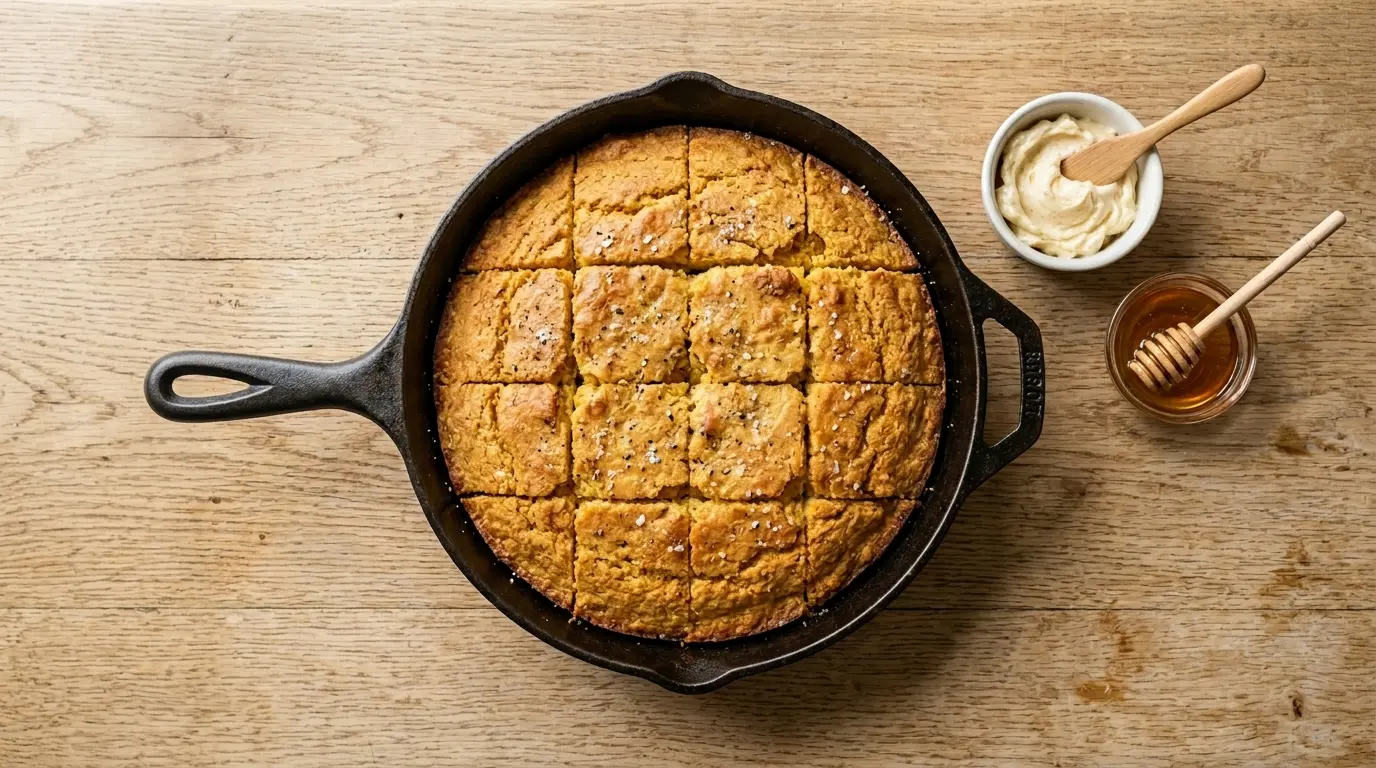
If you’ve been searching for the perfect gluten free cornbread recipe, your search ends here.
This version bakes up with a gorgeous golden crust, a soft and tender crumb, and that slightly sweet corn flavor that makes you reach for a second slice before the first one is even gone.
The secret to making gluten free cornbread that actually competes with the wheat-based original? It comes down to three things: the right ratio of cornmeal to gluten-free flour, the fat source (butter is non-negotiable here), and buttermilk for that classic tangy depth.
Whether you’re serving this alongside a big pot of chili, a holiday spread, or just a cozy weeknight dinner, this cornbread delivers every single time.
It’s a quick-mix batter that comes together in about 10 minutes, bakes in 25 minutes, and tastes so good that no one at your table will even realize it’s gluten-free.
You might also enjoy: Southern Cornbread
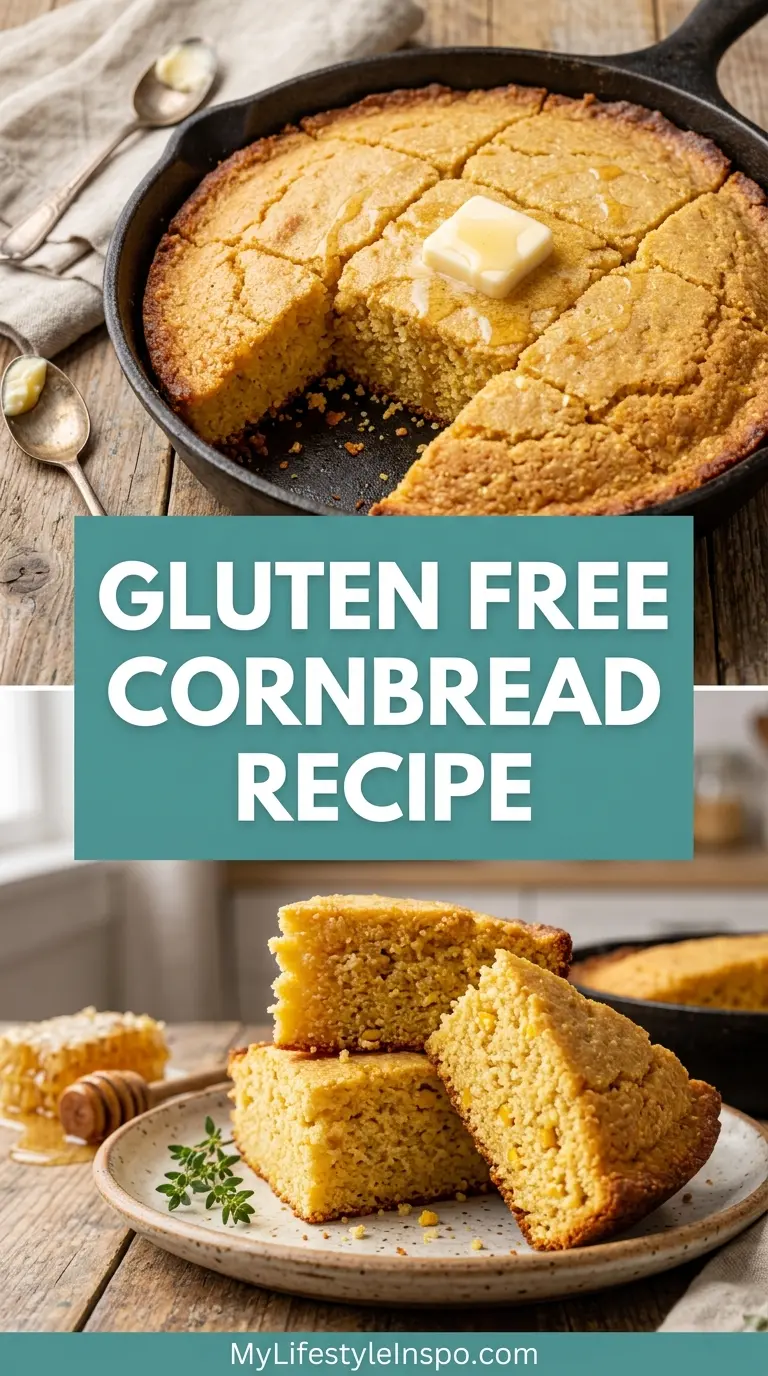
Why You’ll Love This Gluten Free Cornbread Recipe
This gluten free cornbread recipe is the kind of side dish that earns permanent rotation on your menu.
It hits all the right notes: a slightly crispy edge, a moist and fluffy interior, and a natural sweetness from real cornmeal that no boxed mix can replicate.
Here’s why readers keep coming back to this recipe:
- Ready in under 40 minutes from start to finish, including prep
- Simple pantry ingredients that you likely already have on hand
- No gummy texture because the cornmeal-to-flour ratio is perfectly balanced
- Works in a skillet or a square pan, giving you flexibility depending on what you have
- Naturally adaptable to be dairy-free with one easy swap
- Beginner-friendly with no complicated techniques required
The buttermilk in this recipe is what keeps each bite moist without being dense. It also reacts with the baking powder to create a beautiful rise that gives the cornbread its fluffy, open crumb.
Read Also: Skillet Cornbread Recipe
Ingredients
You only need a handful of simple ingredients, and the result is honestly stunning. The key is using fine-ground yellow cornmeal, which gives the bread its signature texture without being too coarse or gritty.
- 1 cup (120g) fine yellow cornmeal
- 1 cup (120g) gluten-free all-purpose flour blend (with xanthan gum included)
- 2 tablespoons (25g) granulated sugar
- 1 tablespoon (12g) baking powder
- 1/2 teaspoon (3g) fine sea salt
- 2 large eggs, lightly beaten
- 1 cup (240ml) buttermilk, room temperature
- 1/3 cup (75g) unsalted butter, melted and cooled slightly
- 2 tablespoons (30ml) neutral oil (such as avocado or vegetable oil)
Note: Make sure your gluten-free all-purpose flour blend contains xanthan gum. If yours doesn’t, add 1/4 teaspoon to the dry ingredients. Xanthan gum is what binds the batter together and prevents a crumbly, falling-apart loaf.
This recipe also pairs beautifully with a batch of Sourdough Discard Cornbread if you enjoy exploring different cornbread varieties.
Kitchen Equipment Needed
You don’t need any special tools for this recipe. A few basic pieces of kitchen equipment will get the job done beautifully.
- Large mixing bowl
- Medium mixing bowl
- Whisk
- Rubber spatula or wooden spoon
- 8×8 inch (20x20cm) baking pan or 10-inch cast iron skillet
- Measuring cups and spoons
- Oven thermometer (highly recommended for accurate baking temperature)
- Wire cooling rack
- Pastry brush (for greasing the pan)
Using a cast iron skillet is optional, but it makes a big difference if you have one. Cast iron conducts heat more evenly than a standard baking pan, which gives the cornbread a beautifully crisp bottom and sides while keeping the center light and moist.
Read Also: Sweet Cornbread Recipe
Recommended Products for This Recipe
These are products I genuinely recommend based on quality and how much of a difference they make in the final result.
1. Bob’s Red Mill Gluten-Free 1-to-1 Baking Flour
This is one of the most reliable gluten-free flour blends on the market for baked goods. It already contains xanthan gum, which means one less thing to measure, and it behaves almost identically to regular all-purpose flour in quick breads like cornbread. The texture of your finished cornbread will be significantly better with a quality blend like this versus a generic option.
2. Lodge 10-Inch Cast Iron Skillet
Baking cornbread in a cast iron skillet is the gold standard for a reason. The Lodge 10-inch skillet heats evenly from the bottom up, giving your cornbread that coveted golden-brown crust on the edges and base. It’s a kitchen workhorse that will last for decades with proper care, and it’s the single biggest upgrade you can make to your cornbread game.
3. Anthony’s Fine Yellow Cornmeal
The quality of your cornmeal matters more than most people realize. A fine, stone-ground yellow cornmeal like Anthony’s produces a smoother, more cohesive crumb compared to coarser varieties. It also has a cleaner, more pronounced corn flavor that makes this recipe taste bakery-fresh every time.
4. Redmond Real Salt Fine Sea Salt
Using a clean, mineral-rich sea salt like Redmond’s makes a subtle but noticeable difference in baked goods. Unlike heavily processed table salt, it enhances the natural sweetness of the corn without adding any bitterness or aftertaste.
This recipe is a natural companion to the Gluten Free Pumpkin Bread if you’re stocking up your gluten-free baking repertoire.
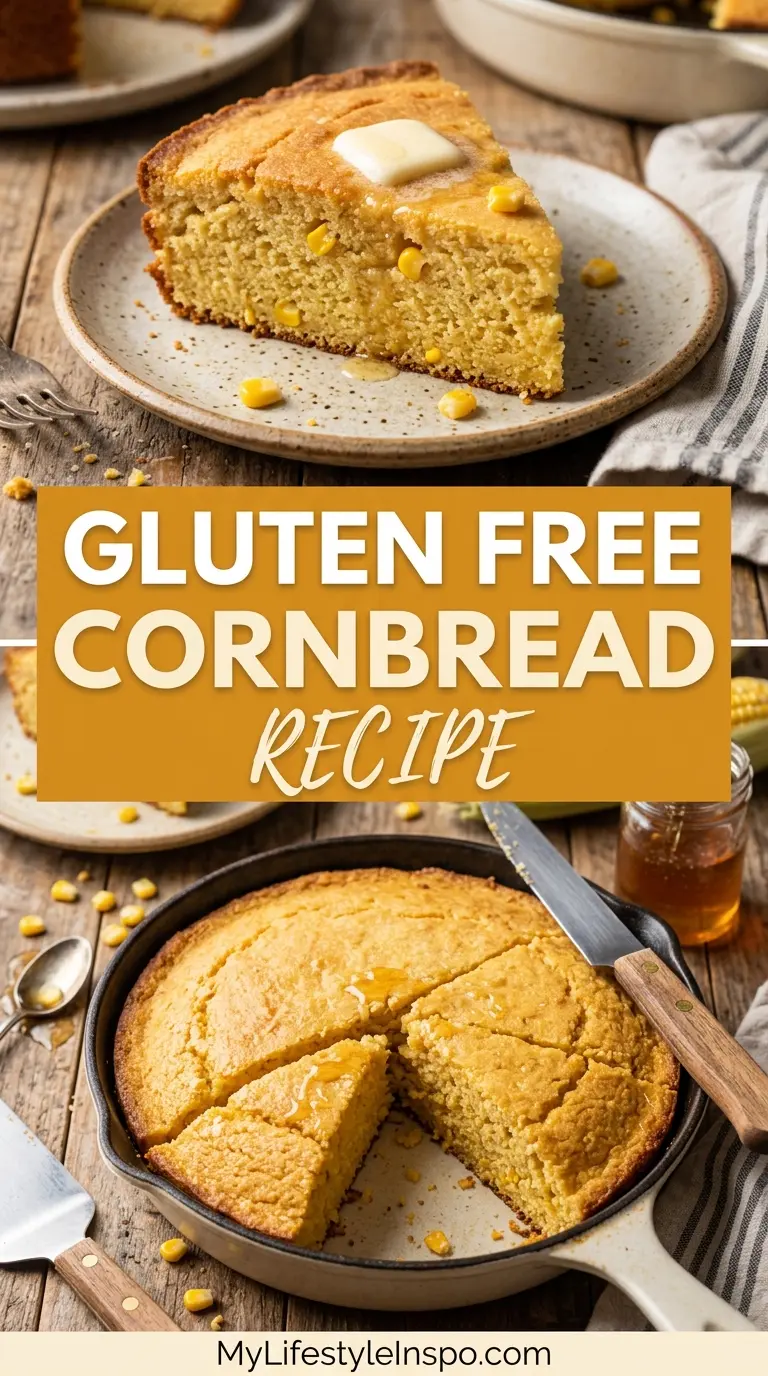
Step-by-Step Instructions
Step 1: Preheat the Oven and Prepare Your Pan
- Preheat your oven to 400°F (200°C). Allow at least 15-20 minutes for your oven to fully come up to temperature. An oven thermometer is the best way to confirm the actual temperature, as many ovens run hot or cool.
- If using an 8×8 inch baking pan, grease it thoroughly with butter or non-stick cooking spray, making sure to coat the corners and sides completely.
- If using a cast iron skillet, place it in the preheating oven now. Heating the skillet before adding the batter is the trick to getting that beautifully crispy bottom crust. Remove it carefully using oven mitts when you’re ready to pour in the batter.
- If using a baking pan (not cast iron), you can also line it with parchment paper for easy removal, leaving a small overhang on two sides to lift the cornbread out cleanly.
Step 2: Mix the Dry Ingredients
- In a large mixing bowl, add the 1 cup (120g) of fine yellow cornmeal.
- Add the 1 cup (120g) of gluten-free all-purpose flour blend.
- Add the 2 tablespoons (25g) of granulated sugar and the 1 tablespoon (12g) of baking powder.
- Add the 1/2 teaspoon (3g) of fine sea salt.
- If your gluten-free flour blend does not contain xanthan gum, add 1/4 teaspoon now.
- Whisk all the dry ingredients together thoroughly for about 30 seconds, making sure everything is well combined and the baking powder is evenly distributed throughout the flour and cornmeal. Uneven mixing at this stage is one of the main causes of an inconsistent rise.
Step 3: Mix the Wet Ingredients
- In a separate medium mixing bowl, crack in the 2 large eggs and lightly beat them with a fork or whisk until the yolks and whites are fully combined.
- Pour in the 1 cup (240ml) of buttermilk. If you don’t have buttermilk on hand, you can make a quick substitute: add 1 tablespoon of white vinegar or lemon juice to 1 cup of regular milk, stir, and let it sit for 5 minutes until it curdles slightly.
- Add the 1/3 cup (75g) of melted butter. Make sure it has cooled slightly before adding it so you don’t accidentally scramble the eggs. It should feel warm to the touch but not hot.
- Add the 2 tablespoons (30ml) of neutral oil.
- Whisk all the wet ingredients together until fully combined and smooth.
Step 4: Combine Wet and Dry Ingredients
- Pour the wet ingredient mixture into the bowl containing the dry ingredients.
- Using a rubber spatula or wooden spoon, fold the batter together with gentle, sweeping strokes. Do not overmix. Stir just until no dry streaks of flour remain and the batter looks smooth. Overmixing activates the starches in the gluten-free flour too much, which can result in a tough, gummy texture.
- The batter will be fairly thick, which is exactly what you want. It should drop slowly from the spatula rather than pour in a thin stream.
- Let the batter rest for 3-5 minutes. This allows the gluten-free flour to fully hydrate and the cornmeal to begin absorbing the buttermilk, both of which contribute to a better final texture.
Step 5: Pour the Batter and Bake
- If using a cast iron skillet that was preheating in the oven, carefully remove it using thick oven mitts. Add a small pat of butter (about 1 teaspoon) to the hot skillet and swirl it around quickly to coat the bottom and sides. The butter will sizzle immediately. This step is what creates the irresistible golden-brown crust.
- Pour the batter into the prepared pan or skillet. Use the rubber spatula to spread it evenly into the corners and smooth out the top.
- Place the pan on the center rack of your preheated oven.
- Bake at 400°F (200°C) for 22-26 minutes if using a baking pan, or 18-22 minutes if using a cast iron skillet (cast iron bakes faster due to its excellent heat retention).
- The cornbread is done when the top is deep golden brown, the edges have pulled away slightly from the sides of the pan, and a toothpick inserted into the center comes out clean with no wet batter clinging to it. A few dry crumbs are fine.
Step 6: Cool and Serve
- Remove the cornbread from the oven and place the pan or skillet on a wire cooling rack.
- Allow it to cool in the pan for at least 10 minutes before slicing. This resting time is important because the interior continues to set as it cools. Cutting too early can result in a wet, gummy crumb even if the outside looked fully baked.
- If you used parchment paper, use the overhang to lift the cornbread out of the pan and onto the cooling rack.
- Slice into squares or wedges and serve warm with butter, honey, or a drizzle of honey butter.
Tips for Success
Small adjustments make a big difference when baking gluten-free, and these tips will help you nail this recipe on the very first try.
- Use room temperature wet ingredients. Cold buttermilk and cold eggs can cause the melted butter to seize up and re-solidify, which creates uneven lumps in the batter. Pull them out of the fridge 20-30 minutes before you begin.
- Don’t skip the rest period. Letting the mixed batter rest for 3-5 minutes gives the cornmeal time to absorb liquid and results in a noticeably better crumb.
- Measure your flour correctly. Spoon the gluten-free flour into your measuring cup and level off the top with a straight edge. Scooping directly from the bag compacts the flour and you’ll end up using too much, leading to a dense result.
- Check for doneness visually and with a toothpick. Gluten-free baked goods can look done on the outside while still being underbaked in the center. Always use a toothpick as your final check.
- Don’t overbake. Once the toothpick comes out clean, pull it immediately. An extra 5 minutes in the oven will dry out gluten-free cornbread significantly faster than it would a traditional wheat-based version.
Another great gluten-free bake to add to your repertoire is this Gluten Free Banana Bread.
Serving Suggestions
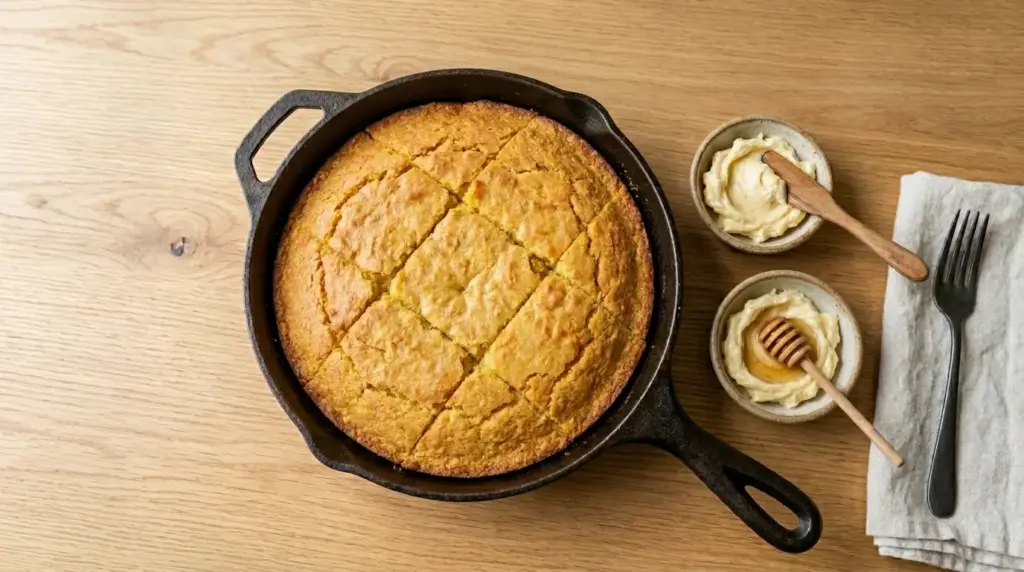
This cornbread was practically made for hearty, comforting meals, but it’s versatile enough to show up at breakfast, brunch, or as a standalone snack with a drizzle of honey.
Warm, golden cornbread with a generous smear of salted butter is a classic for a reason, but there are so many wonderful ways to serve it beyond that.
- Alongside a thick, smoky bowl of Chili for a classic cold-weather pairing
- With Slow Cooker Chili for an effortless weeknight dinner
- Next to a side of Collard Greens for a Southern-style spread
- Crumbled over a bowl of Corn Chowder instead of crackers
- Served with pulled pork or BBQ chicken for a backyard cookout
- As a breakfast base topped with a fried egg and hot sauce
- With a generous spread of Honey Butter and a cup of coffee for an afternoon treat
Read Also: Corn Casserole Recipe
Variations to Try
Once you’ve nailed the base recipe, there are endless ways to customize this cornbread to suit your mood or occasion.
- Jalapeño Cheddar Cornbread: Fold in 1/2 cup (55g) of shredded sharp cheddar and 2-3 tablespoons of finely diced fresh jalapeño into the batter just before pouring it into the pan. The cheese melts into pockets of richness while the jalapeño adds a pleasant kick.
- Honey Cornbread: Swap the granulated sugar for 3 tablespoons (60g) of honey and add an extra tablespoon to the butter when serving for a more pronounced sweetness.
- Blueberry Cornbread: Gently fold 3/4 cup (115g) of fresh or frozen blueberries into the batter for a fruity, slightly sweet variation that’s stunning at brunch.
- Herb and Garlic Cornbread: Add 1 teaspoon of garlic powder, 1 teaspoon of dried rosemary, and 1 teaspoon of dried thyme to the dry ingredients for a savory, herbed version that pairs beautifully with soups and stews.
- Dairy-Free Cornbread: Replace the buttermilk with full-fat coconut milk mixed with 1 tablespoon of apple cider vinegar, and substitute the butter with refined coconut oil. The result is every bit as moist and tender.
- Muffin Version: Divide the batter into a greased 12-cup muffin tin and bake at 400°F (200°C) for 15-18 minutes. Individual cornbread muffins are great for meal prep and portion control.
You might also enjoy the Jiffy Cornbread Recipe with Creamed Corn for a shortcut version on busy nights.
Storage and Reheating
Gluten-free baked goods tend to dry out faster than their wheat-based counterparts, so proper storage is key to keeping your cornbread fresh and enjoyable for days.
- Room temperature: Store cooled cornbread in an airtight container or wrapped tightly in plastic wrap at room temperature for up to 2 days.
- Refrigerator: Transfer to an airtight container and refrigerate for up to 5 days. Note that refrigerating can make cornbread slightly denser and firmer than it was when fresh.
- Freezer: Wrap individual slices tightly in plastic wrap, then place them in a zip-top freezer bag. Freeze for up to 3 months. Thaw at room temperature for 1-2 hours or overnight in the refrigerator.
- Reheating in the oven: Wrap slices loosely in foil and warm at 300°F (150°C) for 10-12 minutes. This method restores the most moisture and gets closest to freshly baked texture.
- Reheating in the microwave: Place a slice on a microwave-safe plate, cover loosely with a damp paper towel, and heat in 20-second increments until warmed through. The damp paper towel prevents the cornbread from drying out.
This Gluten Free Sourdough Bread is another excellent gluten-free bake that stores beautifully if you’re on a gluten-free baking streak.
Nutritional Facts
The following values are approximate and based on one serving, assuming the recipe is cut into 9 equal squares from an 8×8 pan. Values will vary depending on specific brands used.
| Nutrient | Per Serving |
|---|---|
| Calories | 195 kcal |
| Total Fat | 10g |
| Saturated Fat | 5g |
| Cholesterol | 60mg |
| Sodium | 230mg |
| Total Carbohydrates | 24g |
| Dietary Fiber | 1.5g |
| Total Sugars | 5g |
| Protein | 4g |
Note: Using full-fat buttermilk and real butter contributes to the higher fat content, but these are the ingredients that make the texture and flavor exceptional. If you’re watching your fat intake, you can substitute low-fat buttermilk, though it may slightly affect the final richness.
For another comforting corn-based recipe, the Corn Pudding Recipe is worth exploring.
Health Benefits of Key Ingredients
This recipe isn’t just delicious. Several of its key ingredients bring genuine nutritional value to the table.
Here are some of the standout health benefits in this gluten free cornbread recipe:
- Cornmeal is a good source of complex carbohydrates, which provide sustained energy. It also contains magnesium, phosphorus, and B vitamins including thiamine and niacin. Yellow cornmeal in particular contains lutein and zeaxanthin, two antioxidants linked to eye health.
- Eggs contribute high-quality complete protein, healthy fats, and essential vitamins including B12, vitamin D, and choline. Choline in particular supports brain health and cognitive function.
- Buttermilk is a fermented dairy product that contains live cultures and is generally easier to digest than regular milk. It provides calcium and a dose of probiotics that support gut health.
- Butter is a natural source of fat-soluble vitamins A, D, E, and K2. In moderation, it provides a source of short-chain fatty acids like butyrate, which has been studied for its anti-inflammatory properties.
- Gluten-free flour blends allow people with celiac disease or non-celiac gluten sensitivity to enjoy baked goods without triggering inflammation, digestive distress, or immune reactions associated with gluten ingestion.
Read Also: Gluten Free Pancake Recipe
Frequently Asked Questions
1. Can I make this gluten free cornbread without a gluten-free flour blend?
Yes, you can. In fact, if you increase the cornmeal to 1.5 cups (180g) and skip the gluten-free flour entirely, you’ll get a naturally gluten-free cornbread with a slightly coarser, more crumbly texture.
This works especially well if you prefer a traditional Southern-style cornbread. Just note that it won’t hold together quite as cleanly when sliced and will be denser than the flour-blend version.
2. Why did my cornbread come out dry?
The most common cause is overbaking. Gluten-free baked goods lose moisture much faster than wheat-based versions, so even an extra 3-5 minutes in the oven can make a real difference.
Always check with a toothpick at the lower end of the bake time and remove it as soon as the toothpick comes out clean. Using room temperature buttermilk and butter also helps keep the crumb moist.
3. Can I use a different type of milk instead of buttermilk?
Absolutely. You can use whole milk, oat milk, almond milk, or full-fat coconut milk as a substitute. For the best results, stir in 1 tablespoon of white vinegar or lemon juice per cup of milk, then let it sit for 5 minutes before using.
This creates a quick “homemade buttermilk” that provides the same acidity needed to activate the baking powder and tenderize the crumb.
4. Can this recipe be made vegan?
Yes, with a few easy swaps. Replace the 2 eggs with 2 flax eggs (2 tablespoons of ground flaxseed mixed with 6 tablespoons of water, rested for 10 minutes).
Replace the buttermilk with full-fat coconut milk plus 1 tablespoon of apple cider vinegar, and swap the butter for melted refined coconut oil or vegan butter. The texture will be slightly different but still very satisfying.
5. How do I know if my gluten-free flour blend is the right one to use?
Look for a blend that lists xanthan gum or guar gum as an ingredient, as this is what replaces the binding function of gluten. Blends specifically marketed for “1-to-1” or “measure-for-measure” substitution are ideal, because they’re formulated to work in the same ratios as regular all-purpose flour.
Avoid blends made primarily from bean flours for this recipe, as they can impart a slightly bitter flavor that doesn’t work well in cornbread.
Read Also: Gluten Free Dairy Free Bread

Gluten Free Cornbread

Equipment
- Large mixing bowl
- Medium mixing bowl
- Whisk
- Rubber spatula or wooden spoon
- 8×8 inch (20x20cm) baking pan or 10-inch cast iron skillet - Optional: cast iron skillet recommended for best crust
- Measuring cups and spoons
- Oven thermometer - optional but highly recommended for accurate temperature
- Wire cooling rack
- Pastry brush - for greasing the pan
Ingredients
- 1 cup fine yellow cornmeal - 120g
- 1 cup gluten-free all-purpose flour blend - 120g, with xanthan gum included
- 2 tablespoons granulated sugar - 25g
- 1 tablespoon baking powder - 12g
- 0.5 teaspoon fine sea salt - 3g
- 0.25 teaspoon xanthan gum - only if your flour blend doesn’t already contain it
- 2 large eggs - lightly beaten
- 1 cup buttermilk - 240ml, room temperature
- 0.33 cup unsalted butter - 75g, melted and cooled slightly
- 2 tablespoons neutral oil - 30ml, such as avocado or vegetable oil
- 1 teaspoon butter - for preheating skillet (optional)
For Serving
- butter - for serving
- honey - for serving
- honey butter - for serving
Instructions
- Preheat oven to 400°F (200°C). Grease an 8×8 baking pan or place a cast iron skillet in the oven to preheat.
- In a large bowl, whisk together cornmeal, gluten-free flour, sugar, baking powder, and salt. Add xanthan gum if your flour blend doesn’t include it.
- In a medium bowl, whisk the eggs, buttermilk, melted butter, and oil until smooth.
- Pour wet ingredients into dry and fold gently until just combined. Do not overmix. Let batter rest for 3-5 minutes.
- If using a preheated skillet, carefully remove from oven and swirl in a teaspoon of butter until melted. Pour batter into prepared pan or skillet and spread evenly.
- Bake for 22-26 minutes (baking pan) or 18-22 minutes (cast iron) until golden brown and a toothpick inserted in the center comes out clean.
- Cool in the pan on a wire rack for at least 10 minutes. Slice and serve warm with butter and honey.
Notes
- Make sure your gluten-free flour blend contains xanthan gum. If it doesn’t, add ¼ teaspoon to the dry ingredients to prevent a crumbly texture.
- Use room temperature buttermilk and eggs to prevent the melted butter from seizing and creating lumps.
- Let the batter rest for 3-5 minutes before baking to allow the cornmeal to hydrate and the flour to absorb liquid, which improves the crumb.
- For a dairy-free version, replace buttermilk with full-fat coconut milk mixed with 1 tablespoon apple cider vinegar, and substitute butter with refined coconut oil.
- To make this recipe vegan, use 2 flax eggs (2 tablespoons ground flaxseed mixed with 6 tablespoons water, rested for 10 minutes) in place of the eggs.
- For Jalapeño Cheddar Cornbread, fold in ½ cup shredded sharp cheddar and 2-3 tablespoons finely diced jalapeño before baking.
- Store leftover cornbread in an airtight container at room temperature for up to 2 days, in the refrigerator for up to 5 days, or freeze for up to 3 months.
- Reheat slices in the oven wrapped in foil at 300°F for 10-12 minutes, or microwave with a damp paper towel for 20-second intervals to prevent drying out.
- Measure gluten-free flour by spooning it into the measuring cup and leveling off; scooping directly compacts the flour and can lead to dense cornbread.
- Don’t overbake — gluten-free baked goods dry out quickly. Remove from the oven as soon as a toothpick comes out clean.
Final Thoughts
If you’ve been missing classic cornbread since going gluten-free, this recipe is going to feel like a real win.
It’s warm, golden, slightly sweet, and everything you remember cornbread being, just without the gluten.
The steps are simple, the ingredient list is short, and the result is a cornbread that holds its own next to any version made with wheat flour.
Give it a try the next time you’re making chili, soup, or just craving something comforting and homemade from scratch.
If you make this recipe, leave a comment below and let me know how it turned out. Did you try any of the variations? I’d love to hear about your experience, and sharing the recipe with a friend who’s gluten-free would mean the world.
Recommended:
- Southern Fried Chicken
- Corn Soup Recipe
- Mexican Street Corn Recipe
- Gluten Free Belgian Waffle Recipe
- Broccoli Salad Recipe
- Turkey Chili Recipe
- Corn Chowder Recipe
- 4 Ingredient Gluten Free Bread
- White Chicken Chili Recipe
- Buttermilk Biscuit Recipe